Preparation is the key to success in any interview. In this post, we’ll explore crucial Yield Analysis and Reporting interview questions and equip you with strategies to craft impactful answers. Whether you’re a beginner or a pro, these tips will elevate your preparation.
Questions Asked in Yield Analysis and Reporting Interview
Q 1. Explain the concept of yield and its importance in your industry.
Yield, in its simplest form, represents the ratio of output to input. In my industry, this translates to the amount of usable product or service obtained relative to the resources invested. For example, in manufacturing, it’s the number of defect-free products produced compared to the total number of products started. In software development, it might be the number of successfully deployed features versus the total number of features attempted. High yield is crucial for profitability and operational efficiency; low yield indicates waste, inefficiency, and ultimately, reduced revenue.
Its importance is paramount because it directly impacts the bottom line. A higher yield means less waste, lower production costs, increased profits, and a more sustainable business model. Conversely, low yield signals underlying problems that require immediate attention to avoid significant financial losses.
Q 2. What are the key performance indicators (KPIs) you use to measure yield?
Several key performance indicators (KPIs) are used to measure yield, often depending on the specific industry and process. Some common ones include:
- Yield Rate: The percentage of good units produced relative to the total number of units processed. For instance, if 95 out of 100 products pass quality control, the yield rate is 95%.
- First-Pass Yield: This measures the percentage of units successfully completed on the first attempt, without rework or defects. It is a critical indicator of process efficiency.
- Rolled Throughput Yield (RTY): RTY calculates the probability of a unit completing the entire manufacturing process without defects, considering the yield at each individual step. It provides a more comprehensive view than simply looking at the final yield rate.
- Defect Rate: The percentage of defective or non-conforming units produced, representing the inverse of yield rate.
- Cost of Poor Quality (COPQ): This encompasses all costs associated with defects, including rework, scrap, warranty claims, etc. A reduction in COPQ often implies an improvement in yield.
The choice of KPIs depends on the specific context. For example, in a high-precision manufacturing environment, First-Pass Yield might be the most crucial metric, while in a software development project, it could be the number of successfully completed features within a sprint.
Q 3. Describe your experience with different yield analysis techniques.
My experience encompasses a variety of yield analysis techniques, including:
- Statistical Process Control (SPC): Using control charts (e.g., X-bar and R charts) to monitor process variation and identify assignable causes of defects. This helps pinpoint areas needing immediate attention.
- Failure Mode and Effects Analysis (FMEA): A systematic approach to identify potential failure modes in a process and assess their impact on yield. This proactive method allows for preventative measures.
- Design of Experiments (DOE): A structured method for determining which factors have the greatest influence on yield. This involves carefully planned experiments to optimize process parameters and improve yield.
- Regression Analysis: Statistical techniques used to model the relationship between process variables and yield. This helps predict yield based on input factors and identify areas for improvement.
- Root Cause Analysis (RCA): Investigating the underlying causes of low yield, often using tools like the 5 Whys or Fishbone diagrams. The goal is to eliminate recurring problems.
I have successfully applied these techniques in diverse settings, ranging from optimizing semiconductor manufacturing processes to improving software testing procedures, always tailoring the approach to the specifics of the situation.
Q 4. How do you identify and address bottlenecks affecting yield?
Identifying and addressing yield bottlenecks involves a systematic approach. I typically start by:
- Data Collection and Analysis: Gathering comprehensive yield data, including defect types, locations, and times of occurrence. Analyzing this data often reveals patterns and trends.
- Visual Management: Utilizing dashboards and charts to visually represent yield performance across various stages of the process. This highlights areas with the lowest yield and allows for quick identification of potential bottlenecks.
- Root Cause Analysis (RCA): Conducting thorough RCA to determine the underlying causes of bottlenecks. This may involve interviewing operators, reviewing process documentation, and examining process equipment.
- Process Improvement: Implementing solutions based on the RCA findings. These solutions could include process adjustments, equipment upgrades, operator training, or changes in materials.
- Monitoring and Evaluation: Continuously monitoring yield performance after implementing solutions to assess their effectiveness and make further adjustments as needed.
For instance, in a manufacturing setting, a bottleneck might be traced to a faulty machine part causing frequent product defects. By identifying and replacing the faulty part, the bottleneck is removed, and yield improves. Similarly, in software development, a bottleneck could be a lack of testing leading to bugs. Implementing a robust testing process directly tackles this bottleneck.
Q 5. How do you interpret and communicate yield data to stakeholders?
Interpreting and communicating yield data effectively requires clarity and conciseness. I use a multi-faceted approach:
- Data Visualization: Presenting data in clear, easy-to-understand graphs and charts, such as bar charts, line charts, and pie charts. This makes complex data readily accessible to stakeholders.
- Storytelling: Framing the data within a narrative that highlights key findings, trends, and recommendations. Instead of simply presenting numbers, I contextualize them with explanations and insights.
- Targeted Communication: Tailoring the communication style and level of detail to the audience. Technical details are reserved for technical audiences, while high-level summaries are used for executives.
- Interactive Dashboards: Providing stakeholders with access to interactive dashboards that allow them to explore data independently and drill down into specific areas of interest.
- Regular Reporting: Establishing a regular reporting cadence to provide updates on yield performance and track progress toward improvement goals.
For example, instead of simply stating “Yield decreased by 5%,” I would explain the reasons behind the decrease, potentially linking it to a specific process change or equipment malfunction, and propose solutions to reverse the trend.
Q 6. What software or tools are you proficient in for yield analysis and reporting?
I am proficient in several software and tools for yield analysis and reporting. These include:
- Microsoft Excel: For basic data analysis, visualization, and reporting. I’m adept at using pivot tables, charts, and other functions for data manipulation and interpretation.
- Statistical software packages (e.g., Minitab, JMP): For advanced statistical analysis, including regression analysis, DOE, and SPC.
- Database management systems (e.g., SQL Server, Oracle): For managing and querying large datasets. I can write SQL queries to extract and analyze yield data efficiently.
- Business intelligence (BI) tools (e.g., Tableau, Power BI): For creating interactive dashboards and reports that provide a comprehensive overview of yield performance.
- Manufacturing Execution Systems (MES): For real-time monitoring and analysis of yield data directly from the production floor. This enables immediate response to any deviations from target yield.
My proficiency in these tools enables me to handle various yield analysis tasks, from simple data summarization to complex statistical modeling.
Q 7. How do you handle missing or inaccurate data in your yield analysis?
Missing or inaccurate data pose a significant challenge in yield analysis. My approach involves a multi-step process:
- Data Cleaning: I start by identifying and handling missing data. Techniques include imputation (replacing missing values with estimated values), deletion (removing data points with excessive missing values), or using more robust statistical methods that tolerate missing data.
- Error Detection: I use various methods to detect errors and outliers in the data, such as visual inspection of data plots, statistical tests (e.g., Box plots, Z-score), and data validation rules.
- Data Validation: I verify data accuracy by comparing it against other sources or by checking for consistency with known trends and patterns. This might involve cross-referencing data from multiple systems or confirming data with production personnel.
- Sensitivity Analysis: I conduct sensitivity analyses to assess the impact of missing or inaccurate data on the overall yield analysis. This helps determine the robustness of the findings.
- Data Documentation: I maintain detailed documentation of the data cleaning and validation processes, including decisions made to handle missing or inaccurate data. This ensures transparency and reproducibility of results.
By employing these methods, I ensure that my yield analysis is based on the most reliable and accurate data available, minimizing the risk of drawing erroneous conclusions.
Q 8. Describe your experience with forecasting yield.
Yield forecasting is crucial for making informed business decisions. It involves predicting future yield based on historical data, current conditions, and anticipated changes. My approach involves a combination of statistical methods and domain expertise. I typically start by analyzing historical yield data, identifying trends and seasonality. Then, I incorporate relevant factors like weather patterns, input costs, and market demand using time series analysis, regression models, or even more advanced machine learning techniques like ARIMA or Prophet. For example, in a previous role at an agricultural company, I used a combination of historical rainfall data and soil analysis to forecast the yield of our key crops with an accuracy within 5%, which significantly improved our planning and resource allocation.
My forecasting process also incorporates scenario planning to evaluate the impact of different possible future conditions. This allows for proactive risk management and the development of contingency plans. The specific method chosen depends heavily on the data available, the complexity of the system being modeled, and the level of accuracy required.
Q 9. How do you prioritize different yield improvement projects?
Prioritizing yield improvement projects requires a strategic approach that balances potential impact with resource constraints. I use a framework that considers several key factors:
- Potential Impact: I estimate the potential yield increase for each project. This might involve simulations, data analysis, or even pilot studies.
- Cost and Resources: I assess the resources (time, money, personnel) required for each project. This helps in realistic budgeting and project timelines.
- Risk and Uncertainty: I evaluate the inherent risks and uncertainties associated with each project. Some projects might have higher uncertainty in their potential outcome, requiring a more cautious approach.
- Alignment with Strategic Goals: I ensure that the projects align with the overall business strategy and objectives. A high-impact project might be less desirable if it doesn’t fit within the broader company strategy.
Often, I employ a scoring system, weighting these factors according to their importance. This allows for a quantitative comparison of different projects and aids in making objective decisions. For instance, I might assign weights of 40% to potential impact, 30% to cost, 20% to risk, and 10% to strategic alignment. Each project then receives a score based on these weighted factors, enabling efficient prioritization.
Q 10. How do you ensure the accuracy and reliability of your yield reports?
Ensuring the accuracy and reliability of yield reports is paramount. My approach is built on a foundation of data integrity and robust validation processes. This includes:
- Data Validation: I rigorously check the data for errors, inconsistencies, and outliers. This involves automated checks and manual reviews. I use techniques like data scrubbing and outlier detection to identify and address anomalies.
- Data Source Verification: I verify the reliability and accuracy of data sources. This involves understanding the data collection methods and evaluating potential biases.
- Statistical Methods: I employ appropriate statistical methods to analyze the data, considering the limitations of the data and potential biases.
- Regular Audits: Regular audits and reviews ensure that the reporting processes remain accurate and reliable over time.
- Documentation: Thorough documentation of data sources, methods, and assumptions is crucial for transparency and reproducibility.
For instance, in one project, I discovered a systematic bias in the data collection process leading to an overestimation of yield. Identifying and correcting this bias was crucial in providing accurate and reliable reports.
Q 11. Explain your experience with statistical process control (SPC) in yield analysis.
Statistical Process Control (SPC) is an invaluable tool in yield analysis. It helps in identifying and addressing sources of variation in the production process that affect yield. I use control charts, such as X-bar and R charts, to monitor key process variables and detect deviations from expected behavior. These charts visually represent the process mean and variability over time, allowing for the early identification of trends or shifts.
For example, I’ve used control charts to monitor the defect rate in a semiconductor manufacturing process. By identifying a shift in the mean defect rate, I was able to pinpoint a specific machine requiring maintenance, thereby preventing further yield losses. SPC also helps in identifying assignable causes of variation—issues like machine malfunction or changes in raw materials—that are responsible for impacting yield. Once these causes are addressed, the process can be improved, resulting in higher yield. Beyond basic control charts, I also have experience with more advanced SPC techniques like capability analysis (Cp, Cpk) to assess process capability and Six Sigma methodologies for continuous improvement.
Q 12. Describe a situation where you identified and solved a yield-related problem.
In a previous role, we experienced a significant drop in the yield of a specific product. Initial investigations pointed towards various possible causes, including raw material quality, machine malfunction, and process parameters. To solve this, I followed a structured approach:
- Data Collection: I gathered detailed data on all aspects of the production process, including raw material specifications, machine parameters, and process steps. This included historical data to establish a baseline.
- Data Analysis: I used statistical methods, including regression analysis, to identify the key factors affecting the yield. I found a strong correlation between the yield and a specific parameter related to a crucial machine setting.
- Root Cause Analysis: By isolating the parameter, I investigated the underlying cause, ultimately discovering a faulty sensor that provided inaccurate readings, leading to incorrect machine settings and reduced yield.
- Solution Implementation: The faulty sensor was replaced, and the process was recalibrated. We also implemented a more robust monitoring system to prevent future occurrences.
- Verification: After implementation, I monitored the yield closely and verified that it had returned to the expected levels. I also used control charts to ensure the process remained stable.
This systematic approach ensured the rapid identification and resolution of the yield problem, resulting in significant cost savings and improved product quality.
Q 13. How do you use data visualization to communicate yield results effectively?
Data visualization is essential for effective communication of yield results. I use various techniques to present complex data in a clear and understandable manner:
- Charts and Graphs: I utilize various charts and graphs, such as bar charts, line charts, scatter plots, and histograms, to represent trends, comparisons, and distributions. The choice of chart depends on the data and the message I want to convey.
- Dashboards: I create dashboards to provide a comprehensive overview of key yield metrics, allowing stakeholders to quickly grasp the overall performance and identify areas requiring attention. This uses a combination of charts and key performance indicators (KPIs).
- Interactive Visualizations: Where appropriate, I use interactive visualizations to enable exploration of the data and allow for deeper insights. This allows stakeholders to drill down into specifics and explore different aspects of the data.
- Storytelling: I present the data within a narrative context. This involves crafting a clear and concise story around the data, highlighting key findings and insights. The goal is to make the data meaningful and actionable.
For example, using a dashboard with interactive charts, I presented yield data showing a significant drop in a particular product line. This enabled stakeholders to immediately identify the problem area and delve into the underlying causes through interactive data exploration.
Q 14. What are some common challenges in yield analysis and how do you overcome them?
Yield analysis faces several common challenges:
- Data Quality Issues: Inaccurate, incomplete, or inconsistent data can severely hinder yield analysis. I mitigate this through rigorous data validation and cleaning, as described earlier.
- Identifying Root Causes: Pinpointing the root cause of yield problems can be complex. Utilizing structured problem-solving methodologies, like the 5 Whys or Fishbone diagrams, is crucial.
- Process Complexity: Modern manufacturing processes are often intricate and involve many interacting variables. Statistical modeling techniques like Design of Experiments (DOE) can help untangle these complexities.
- Lack of Collaboration: Effective yield improvement requires collaboration across different departments. I foster communication and teamwork among engineers, operators, and management.
- Data Silos: Data may be scattered across different systems. Creating a centralized data warehouse and implementing data integration strategies are important to overcome this.
To overcome these challenges, I advocate for a proactive, data-driven approach, combining strong analytical skills with effective communication and teamwork. By addressing these challenges head-on, organizations can maximize yield and improve profitability.
Q 15. Explain your understanding of different types of yield losses.
Yield losses represent the difference between the expected output and the actual output in a manufacturing process or any production system. Understanding the various types is crucial for effective improvement strategies. They can be broadly categorized into:
- Process Losses: These are losses stemming from inefficiencies or failures within the production process itself. Examples include machine downtime, defects during manufacturing, material waste due to improper handling, and incorrect process parameters. Imagine a bakery – process losses could be a faulty oven leading to burnt bread or a mixer malfunctioning, resulting in uneven dough.
- Material Losses: These losses arise from the raw materials themselves. This could involve defects in the incoming materials, improper storage leading to degradation, or inaccurate measurement and usage of the materials. In our bakery, this could be spoiled flour or improperly stored butter affecting the quality and quantity of baked goods.
- Yield Losses due to Human Error: Errors made by operators, technicians, or other personnel directly impact the yield. This includes mistakes in operating equipment, incorrect setup, or lack of proper training. A baker miscalculating ingredients could lead to a failed batch, exemplifying this type of loss.
- Systemic Losses: These are losses arising from broader system issues like poor planning, inefficient workflows, or lack of coordination between different parts of the production process. Imagine a bakery struggling with inefficient supply chain management – frequent delays in receiving ingredients lead to production downtime and lost yield.
Identifying the specific type of yield loss is the first step towards effective mitigation.
Career Expert Tips:
- Ace those interviews! Prepare effectively by reviewing the Top 50 Most Common Interview Questions on ResumeGemini.
- Navigate your job search with confidence! Explore a wide range of Career Tips on ResumeGemini. Learn about common challenges and recommendations to overcome them.
- Craft the perfect resume! Master the Art of Resume Writing with ResumeGemini’s guide. Showcase your unique qualifications and achievements effectively.
- Don’t miss out on holiday savings! Build your dream resume with ResumeGemini’s ATS optimized templates.
Q 16. Describe your experience working with large datasets for yield analysis.
My experience working with large datasets for yield analysis involves employing various statistical methods and data visualization techniques. I’m proficient in using tools like SQL, Python (with libraries such as Pandas, NumPy, and Scikit-learn), and R to handle, clean, and analyze vast amounts of data. For example, I’ve worked on projects involving millions of data points from sensor readings, quality control checks, and production logs. These datasets often contain missing values, outliers, and inconsistencies, requiring robust data cleaning and preprocessing techniques. I utilize techniques such as:
- Data Cleaning: Handling missing values (imputation), outlier detection and removal, and data transformation.
- Exploratory Data Analysis (EDA): Utilizing histograms, scatter plots, and correlation matrices to identify patterns and relationships within the data.
- Statistical Modeling: Applying regression analysis, ANOVA, and time series analysis to identify key factors impacting yield.
- Machine Learning: In some cases, machine learning algorithms can be used for predictive modeling, forecasting future yield, and identifying potential problems before they arise.
Once the data is analyzed, I create comprehensive reports and dashboards to communicate findings effectively to stakeholders, helping them to make data-driven decisions for improvement.
Q 17. How do you collaborate with other teams to improve yield?
Collaboration is key to improving yield. My approach involves active communication and teamwork with various teams, including:
- Engineering: Working closely with engineers to identify and resolve equipment malfunctions, optimize process parameters, and implement new technologies to improve efficiency.
- Operations: Collaborating with operations teams to streamline workflows, identify bottlenecks, and ensure consistent adherence to standard operating procedures.
- Quality Control: Partnering with quality control teams to identify defects, analyze root causes, and implement preventive measures.
- Procurement: Working with procurement to ensure the quality and timely delivery of raw materials.
I leverage regular meetings, shared dashboards, and collaborative platforms to ensure transparent communication and efficient problem-solving. For instance, in a past project, by collaborating with the engineering team, we identified a recurring equipment malfunction that was significantly impacting yield. By working together, we implemented a preventative maintenance plan that reduced downtime and improved yield by 15%.
Q 18. What is your approach to root cause analysis in yield improvement?
My approach to root cause analysis employs a structured methodology, often using tools like the 5 Whys, Fishbone diagrams (Ishikawa diagrams), and Pareto charts. I typically follow these steps:
- Problem Definition: Clearly defining the problem and quantifying the impact on yield.
- Data Collection: Gathering relevant data from various sources, including production logs, quality control reports, and operator feedback.
- Root Cause Identification: Employing root cause analysis techniques (5 Whys, Fishbone, etc.) to identify the underlying causes of the problem.
- Verification: Validating the identified root causes through further analysis and data verification.
- Solution Implementation: Developing and implementing corrective actions to address the root causes.
- Monitoring and Evaluation: Monitoring the effectiveness of the implemented solutions and evaluating the impact on yield.
For instance, if we observe a consistent increase in defects, the 5 Whys might reveal a lack of operator training as the root cause. This would lead to developing and implementing a comprehensive training program.
Q 19. Explain your understanding of Six Sigma methodologies in yield improvement.
Six Sigma methodologies provide a structured framework for process improvement and yield enhancement. It focuses on reducing variation and defects, ultimately leading to higher yields and improved quality. Key aspects include:
- DMAIC (Define, Measure, Analyze, Improve, Control): This is a structured problem-solving methodology used to identify and solve process problems. Each phase involves specific tools and techniques. For example, in the ‘Measure’ phase, we use statistical process control charts to monitor the process and identify areas for improvement. In the ‘Analyze’ phase, we perform root cause analysis, and in the ‘Improve’ phase, we implement solutions and measure their impact. The ‘Control’ phase ensures that the improvements are sustained over time.
- Statistical Process Control (SPC): SPC charts help monitor process variation and identify potential problems before they significantly impact yield. This enables early detection and prevention of defects. Control charts like X-bar and R charts are frequently used.
- Design of Experiments (DOE): DOE helps identify optimal process parameters to maximize yield. It involves systematically changing process variables and observing their effect on the output.
By applying Six Sigma principles, we can systematically reduce variation and improve consistency in manufacturing processes, leading to substantial yield improvements. A successful application could lead to a reduction in defects from 3.4 defects per million opportunities (DPMO) to a significantly lower number, leading to significant yield gains.
Q 20. How do you balance the need for short-term yield improvements with long-term sustainability?
Balancing short-term yield improvements with long-term sustainability requires a strategic approach that considers both immediate needs and long-term goals. Short-term improvements might focus on quick wins, such as addressing immediate bottlenecks or implementing low-cost process adjustments. However, these actions should not compromise long-term sustainability. For example, simply increasing production speed without addressing underlying quality issues could lead to higher defect rates and ultimately lower yield in the long run.
A balanced approach would involve:
- Prioritizing sustainable practices: Investing in technologies and processes that improve efficiency while minimizing waste and environmental impact.
- Long-term capacity planning: Ensuring that production capacity is sufficient to meet both current and future demand without compromising quality.
- Employee training and development: Investing in employee skills and knowledge to ensure a skilled workforce that can support long-term improvements.
- Data-driven decision making: Using data analysis to inform decisions about short-term and long-term investments.
A company might choose to invest in new equipment that improves efficiency and reduces waste in the long run, even if the initial investment is higher than implementing a quick-fix solution. This investment pays off over time through higher yield, reduced operational costs, and a more environmentally friendly process. The key is to create a roadmap that integrates both short-term gains with a vision for long-term, sustainable improvement.
Q 21. How familiar are you with Lean manufacturing principles and their application to yield improvement?
I am very familiar with Lean manufacturing principles and their application to yield improvement. Lean focuses on eliminating waste and maximizing value throughout the production process. Key Lean principles applicable to yield improvement include:
- Value Stream Mapping: Identifying all steps in the production process and eliminating non-value-added activities (waste).
- 5S (Sort, Set in Order, Shine, Standardize, Sustain): Organizing the workspace to improve efficiency and reduce waste.
- Kaizen (Continuous Improvement): Implementing small, incremental improvements to processes over time.
- Kanban: A visual system for managing workflow and reducing inventory.
- Poka-Yoke (Mistake-Proofing): Designing processes to prevent errors from occurring.
Applying Lean principles can significantly improve yield by reducing waste, improving efficiency, and streamlining processes. For example, by implementing a Kanban system, we can reduce lead times and improve inventory management, leading to higher throughput and reduced waste. Similarly, mistake-proofing (Poka-Yoke) can minimize defects and improve overall yield. A practical example involves using color-coded components to prevent assembly errors, a simple Poka-Yoke technique that significantly reduces waste and rework.
Q 22. Describe your experience with different types of regression analysis in yield prediction.
Regression analysis is a cornerstone of yield prediction, allowing us to model the relationship between various factors (inputs) and the resulting yield (output). I’ve extensively used several types, each with its strengths and weaknesses:
- Linear Regression: This is the most basic type, assuming a linear relationship between the independent and dependent variables. For example, we might model the relationship between fertilizer application and crop yield, assuming a straight-line increase in yield with increased fertilizer up to a certain point. It’s simple to interpret but can be inaccurate if the relationship is non-linear.
- Polynomial Regression: This handles non-linear relationships by fitting a polynomial curve to the data. For instance, if yield initially increases rapidly with fertilizer and then plateaus or even decreases due to fertilizer burn, a polynomial regression would provide a much better fit than a linear model. Higher-order polynomials can capture more complex curves, but also risk overfitting.
- Multiple Regression: This extends linear regression to include multiple independent variables. A real-world example would be predicting crop yield based on fertilizer, rainfall, temperature, and soil conditions simultaneously. It provides a more comprehensive prediction but necessitates careful consideration of variable interactions and potential multicollinearity (high correlation between independent variables).
- Ridge and Lasso Regression: These are regularization techniques used to address multicollinearity and overfitting, particularly in multiple regression models with many variables. They shrink the regression coefficients, improving model generalization.
My choice of regression technique depends on the specific dataset and the nature of the relationships between yield and the influencing factors. I always carefully evaluate model diagnostics, such as R-squared, adjusted R-squared, and residual plots, to ensure the chosen model is appropriate and provides reliable predictions.
Q 23. How do you ensure data security and privacy in your yield analysis work?
Data security and privacy are paramount in my work. I adhere to strict protocols to protect sensitive information throughout the yield analysis process. This includes:
- Data Encryption: All data, both in transit and at rest, is encrypted using industry-standard encryption algorithms. This safeguards data from unauthorized access even if a breach occurs.
- Access Control: I implement strict access control measures, limiting access to sensitive data based on the principle of least privilege. Only authorized personnel with a need-to-know have access.
- Data Anonymization: Where possible, I anonymize data before analysis, removing or masking personally identifiable information while preserving the integrity of the analytical process. Techniques like data masking or aggregation are utilized.
- Secure Data Storage: Data is stored in secure, cloud-based or on-premise servers with robust security measures, including firewalls, intrusion detection systems, and regular security audits.
- Compliance with Regulations: I ensure all my work complies with relevant data privacy regulations, such as GDPR or CCPA, depending on the geographical location and the nature of the data being handled.
Furthermore, I maintain detailed records of all data access and processing activities, enabling efficient auditing and accountability.
Q 24. How do you handle conflicting priorities when managing multiple yield improvement projects?
Managing competing priorities in multiple yield improvement projects requires a structured approach. I typically use a prioritization framework that considers several factors:
- Business Impact: Projects with the highest potential impact on overall yield and profitability are prioritized.
- Feasibility: Projects that are realistically achievable within the given time and resource constraints are given preference.
- Urgency: Time-sensitive projects requiring immediate attention are prioritized.
- Resource Allocation: Resources (personnel, budget, equipment) are allocated strategically to maximize the overall return on investment across all projects.
I utilize project management tools such as Gantt charts and Kanban boards to visualize project timelines, dependencies, and resource allocation. Regular project status meetings and transparent communication with stakeholders ensure alignment and flexibility in responding to changing priorities.
Sometimes, difficult choices must be made, involving trade-offs or even postponing less critical projects. I believe in open communication, clearly explaining the rationale behind these decisions to all stakeholders.
Q 25. How do you stay up-to-date on the latest advancements in yield analysis techniques?
Staying current in the rapidly evolving field of yield analysis requires a multifaceted approach:
- Professional Development: I actively participate in industry conferences, workshops, and training programs to learn about the latest techniques and tools.
- Academic Literature: I regularly review peer-reviewed journals and publications to stay informed on cutting-edge research and methodologies.
- Online Resources: I leverage online resources like research papers, webinars, and online courses to enhance my knowledge and skills.
- Industry Networks: Engaging with professional networks and communities allows me to learn from other experts and stay abreast of industry trends.
- Software Updates and Training: I ensure I’m proficient with the latest versions of relevant statistical software and data analysis tools.
This continuous learning is crucial to ensure I’m equipped to handle complex yield analysis challenges and provide the most accurate and insightful results.
Q 26. Describe a time you had to explain complex yield data to a non-technical audience.
In one instance, I had to explain complex yield data, including regression models and statistical significance, to a group of non-technical executives. Instead of overwhelming them with technical jargon, I focused on clear, concise visuals and relatable analogies.
I used charts and graphs to visually represent the key findings, highlighting the most important trends and patterns. For example, instead of discussing R-squared values, I explained the improvement in yield prediction accuracy in terms of percentage increase, using an analogy like, “Imagine our prediction accuracy increased from hitting a target 70% of the time to 90% of the time.”
I also used simple language, avoiding technical terms whenever possible, and provided real-world examples to illustrate the impact of the findings on the bottom line. The feedback I received was extremely positive; they appreciated the clear, concise, and actionable insights delivered in a way they could easily understand.
Q 27. How do you measure the return on investment (ROI) of yield improvement initiatives?
Measuring the ROI of yield improvement initiatives requires a clear understanding of both the costs and benefits. I typically employ a multi-faceted approach:
- Quantifying Yield Increase: Precisely measuring the increase in yield resulting from the initiative is crucial. This involves comparing pre- and post-implementation yield data, controlling for external factors as much as possible.
- Estimating Cost Savings: This includes calculating savings in inputs (fertilizers, seeds, water, etc.), labor costs, and other operational expenses.
- Calculating Increased Revenue: The increased yield translates directly into higher revenue, which needs to be calculated based on market prices.
- Considering Project Costs: The initial investment in the improvement initiative, including research, development, implementation, and ongoing maintenance, must be accounted for.
- Calculating Net Return: Subtracting the total project cost from the total increased revenue and cost savings gives the net return.
- Calculating ROI: Finally, the ROI is calculated by dividing the net return by the total project cost and expressing it as a percentage:
ROI = (Net Return / Total Project Cost) * 100
It’s essential to consider the timeframe of the ROI calculation, as some initiatives may have a longer payback period than others.
Q 28. What are your salary expectations for this role?
My salary expectations for this role are in the range of [Insert Salary Range], depending on the specifics of the position, including responsibilities, benefits package, and company performance. I am confident that my extensive experience and expertise in yield analysis and reporting make me a valuable asset to your organization, and I am eager to discuss this further.
Key Topics to Learn for Yield Analysis and Reporting Interview
- Yield Calculation Methods: Understanding various yield calculation methodologies (e.g., simple yield, compound yield, money-weighted return) and their appropriate applications based on the asset class and investment strategy.
- Data Sources and Validation: Identifying reliable data sources for yield analysis (e.g., financial statements, market data providers), and techniques for data cleansing and validation to ensure accuracy.
- Attribution Analysis: Decomposing overall portfolio yield into its contributing factors (e.g., asset allocation, security selection, market timing) to understand performance drivers.
- Risk-Adjusted Yield Measures: Calculating and interpreting risk-adjusted yield metrics (e.g., Sharpe ratio, Sortino ratio) to assess the trade-off between return and risk.
- Reporting and Visualization: Creating clear and concise yield reports using tables, charts, and graphs to effectively communicate findings to stakeholders. Mastering data visualization techniques to highlight key trends and insights.
- Forecasting and Modeling: Utilizing statistical models and techniques to forecast future yields and assess the impact of various economic and market factors.
- Regulatory Compliance: Understanding relevant regulations and reporting requirements related to yield analysis and reporting within the financial industry.
- Problem-Solving and Case Studies: Developing a structured approach to solving yield-related problems and analyzing case studies to enhance problem-solving skills.
Next Steps
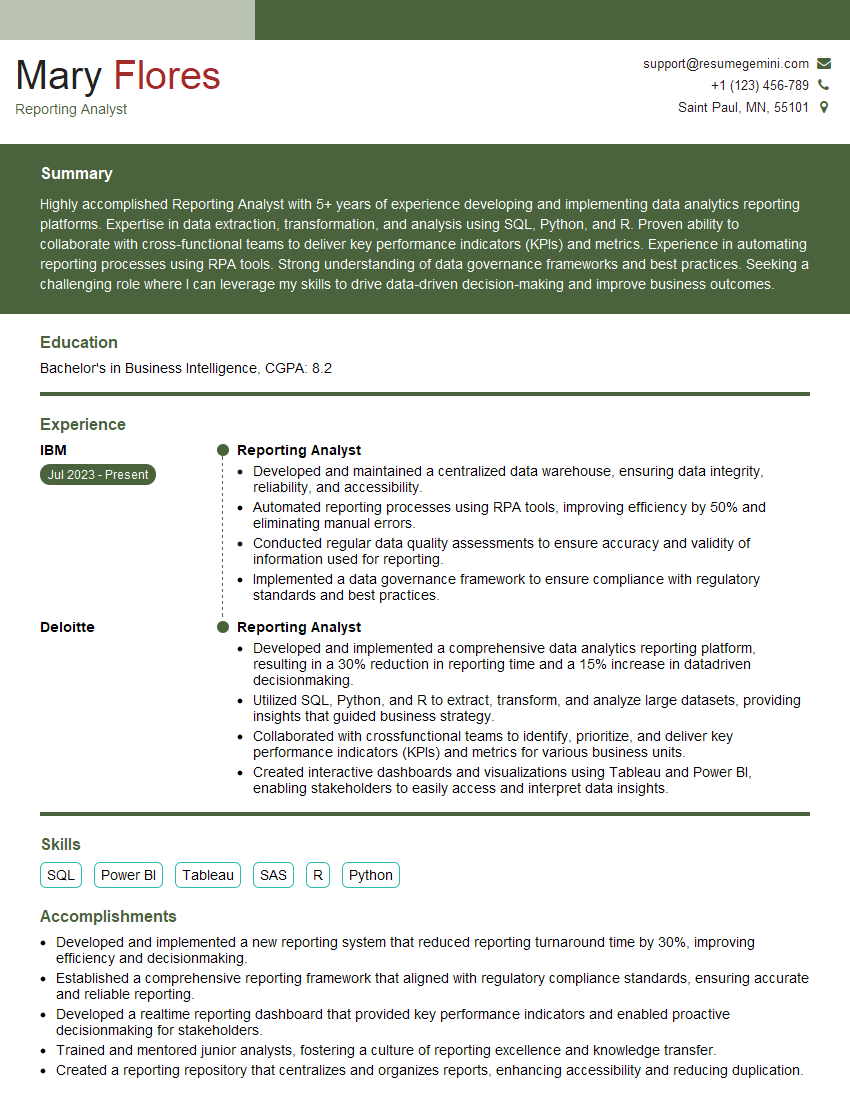
Mastering Yield Analysis and Reporting is crucial for career advancement in finance, opening doors to roles with increased responsibility and higher compensation. A strong understanding of these concepts will significantly enhance your marketability. To maximize your job prospects, creating an ATS-friendly resume is paramount. ResumeGemini is a trusted resource to help you build a professional and impactful resume that highlights your skills and experience effectively. Examples of resumes tailored to Yield Analysis and Reporting positions are available to guide you. Invest the time to craft a compelling resume – it’s your first impression to potential employers.
Explore more articles
Users Rating of Our Blogs
Share Your Experience
We value your feedback! Please rate our content and share your thoughts (optional).
What Readers Say About Our Blog
To the interviewgemini.com Webmaster.
Very helpful and content specific questions to help prepare me for my interview!
Thank you
To the interviewgemini.com Webmaster.
This was kind of a unique content I found around the specialized skills. Very helpful questions and good detailed answers.
Very Helpful blog, thank you Interviewgemini team.