The thought of an interview can be nerve-wracking, but the right preparation can make all the difference. Explore this comprehensive guide to Zoning Code and Ordinance Research interview questions and gain the confidence you need to showcase your abilities and secure the role.
Questions Asked in Zoning Code and Ordinance Research Interview
Q 1. Explain the difference between zoning codes and ordinances.
While often used interchangeably, zoning codes and ordinances are distinct. A zoning ordinance is the overarching legal document that establishes the rules and regulations for land use within a jurisdiction. Think of it as the complete rulebook. A zoning code, on the other hand, is a specific section *within* the zoning ordinance that details the permitted uses, building heights, setbacks, density, and other requirements for a particular zoning district. It’s like a chapter in that rulebook focusing on a specific area or type of development.
For example, a zoning ordinance might cover everything from residential districts to commercial zones, industrial areas, and special use districts. Within that ordinance, the zoning code for the ‘Residential Single-Family’ district would specify the allowed building sizes, lot coverage, and the number of dwelling units per lot.
Q 2. Describe your experience interpreting complex zoning regulations.
I have extensive experience interpreting complex zoning regulations, having worked on numerous projects involving intricate overlays, conditional uses, and variances. For instance, I recently navigated a situation where a client wanted to build a mixed-use development in an area with overlapping historical preservation and environmental protection overlays. This required meticulously analyzing several different sections of the zoning code, comparing their requirements, and identifying any potential conflicts or areas of ambiguity.
Another challenging project involved interpreting a zoning code with numerous amendments and outdated maps. I had to systematically track down all relevant amendments, cross-reference them with the base code, and ultimately create a clear and concise summary of the applicable regulations for the client. This involved careful attention to detail, adeptness in legal research, and a robust understanding of how various provisions interact.
Q 3. How do you identify conflicting provisions within a zoning code?
Identifying conflicting provisions requires a systematic approach. I begin by carefully reading each potentially relevant section of the zoning code. I then look for direct contradictions—for example, one section may state a maximum building height of 30 feet, while another allows for a 40-foot height in certain circumstances within the same zone. This calls for identifying the conditional statements that might trigger the different height restrictions.
I also look for indirect conflicts, where different sections impose seemingly compatible but ultimately contradictory requirements. For instance, one section might require a specific parking ratio, while another mandates minimum lot sizes that make meeting that ratio impossible. In such cases, I usually consult additional resources, like case law or interpretations from the zoning authority, to resolve the conflict. This often involves understanding the order of precedence among code sections and amendments.
Q 4. What resources do you use to research zoning information?
My research arsenal is multifaceted. I utilize the official zoning ordinance itself, usually available on the municipality’s website. I supplement this with online legal databases that provide annotated codes and case law relevant to zoning interpretations. I also rely heavily on GIS mapping systems that visually represent zoning districts, overlays, and other land-use designations, providing a crucial spatial context for the code’s application.
Furthermore, I regularly check for updated versions of the ordinance and amendments, paying close attention to official publications and notices from the planning department. Direct contact with the zoning department for clarification on ambiguities or specific interpretations is also a standard practice.
Q 5. How do you ensure accuracy in your zoning code research?
Accuracy is paramount. I follow several strategies to ensure precision: First, I always use the most current and officially adopted version of the zoning code. I diligently cross-reference different sections to ensure consistency and identify potential contradictions.
Secondly, I meticulously document my research process, including all sources consulted and my interpretation of the code’s provisions. This detailed documentation not only supports my conclusions but also serves as an audit trail for others to review and verify my findings. Finally, whenever there’s any ambiguity or a potential for misinterpretation, I seek clarification from the appropriate zoning authority before making any final conclusions.
Q 6. Explain the process of determining zoning compliance for a proposed development.
Determining zoning compliance for a proposed development is a multi-step process. It begins with identifying the specific zoning district where the project is located using GIS maps and the zoning code. Then, I carefully review the code’s provisions for that district, including permitted uses, building heights, setbacks, parking requirements, density regulations, and any applicable overlays (e.g., historic preservation, floodplains).
Next, I compare the proposed development’s plans and specifications to these requirements. Any discrepancies are carefully documented, and I investigate whether variances or special use permits might be necessary to address them. The process also involves analyzing any relevant case law or interpretations issued by the zoning board. Finally, I prepare a comprehensive report outlining the findings and recommending a course of action, such as seeking necessary approvals or making adjustments to the development plan to ensure compliance.
Q 7. How do you handle ambiguous or unclear zoning regulations?
Ambiguous or unclear zoning regulations pose a significant challenge. My approach focuses on first attempting to resolve ambiguities through careful textual analysis and considering the context within the broader ordinance. I will look for definitions of terms, cross-reference related sections, and analyze the intent behind the regulation.
If internal clarification isn’t possible, I escalate to external resources. This includes consulting case law to see how courts have interpreted similar provisions in other jurisdictions. I also engage in direct communication with the zoning department to seek official interpretations or clarifications. If the ambiguity remains unresolved, I will suggest options to the client, clearly indicating the uncertainties and potential implications of each approach. This might involve seeking a variance or preparing for a potential appeal process.
Q 8. Describe your experience with GIS software and its application to zoning research.
GIS software is indispensable for zoning research. It allows me to visualize and analyze spatial data related to land use, zoning districts, and infrastructure. My experience encompasses using software like ArcGIS and QGIS to overlay zoning maps with other datasets, such as property ownership, environmental data, and demographic information. For example, I once used GIS to identify properties within a specific zoning district that were also located within a designated floodplain, helping a client understand potential development restrictions. This allowed for a more comprehensive understanding of the limitations and opportunities present for development in a specific area.
I’m proficient in creating thematic maps, conducting spatial analyses (such as buffer analysis to determine proximity to sensitive areas), and using geoprocessing tools to automate repetitive tasks. This significantly accelerates the research process and enhances accuracy, minimizing the risk of human error inherent in manual review of large datasets.
Beyond basic mapping, I have experience with using GIS to model potential development scenarios, predict impacts of zoning changes, and present findings clearly and concisely through interactive maps and reports. This allows stakeholders to easily visualize potential outcomes and participate more effectively in the decision-making process.
Q 9. How familiar are you with variance and appeal processes?
I’m very familiar with variance and appeal processes. A variance is an exception granted by a zoning authority allowing a property owner to deviate from existing zoning regulations, typically when strict adherence would impose undue hardship. Appeals, on the other hand, are formal challenges to zoning decisions made by the authority. These could be related to denials of permits, interpretations of zoning codes, or other zoning-related actions.
My experience involves reviewing applications for variances and appeals, researching relevant codes and precedents, and preparing recommendations for decision-makers. I understand the necessary documentation, procedural steps, and legal standards involved in both processes. I’ve handled cases involving everything from minor dimensional variances (e.g., reducing setbacks) to more complex situations that involve substantial deviations from the zoning code. I’ve successfully assisted several clients in navigating these processes, ensuring their applications were properly prepared and that they fully understood their rights and obligations.
Understanding the nuances of zoning law, particularly where it intersects with due process and equal protection, is critical. This often requires a careful consideration of the applicant’s unique situation and a thorough analysis of the potential impacts of granting the variance or upholding the appeal. I’ve found that strong communication and clear documentation are crucial to navigating this complex legal landscape.
Q 10. What is your experience with interpreting legal precedents related to zoning?
Interpreting legal precedents is a fundamental aspect of my work. Zoning law is heavily reliant on case law, and understanding how courts have interpreted specific code provisions or zoning principles is crucial to providing accurate advice. I regularly research case law using legal databases like Westlaw or LexisNexis, focusing on jurisdictions relevant to the specific zoning matters at hand.
I’m adept at identifying key facts, legal issues, and holdings in relevant cases and applying those precedents to new situations. For example, I may analyze a case where a court ruled on the interpretation of a specific ‘density bonus’ provision. Understanding that ruling helps me advise clients and anticipate how a similar issue might be resolved in their jurisdiction.
My process involves not only finding relevant cases but also synthesizing information from multiple cases to establish a clear understanding of prevailing legal interpretations. I then explain the legal implications clearly to non-legal audiences, ensuring that stakeholders understand the potential risks and opportunities associated with particular zoning interpretations.
Q 11. Describe your understanding of zoning maps and their interpretation.
Zoning maps are visual representations of zoning regulations. They divide a jurisdiction into different zones, each with its own set of permitted uses, building height restrictions, density limitations, and other regulations. My expertise includes interpreting these maps, identifying property locations within specific zones, and understanding the associated regulations. This often involves understanding the legend, symbols, and notations used on the maps, as well as any accompanying text or explanatory documents.
For instance, a zoning map might show a residential zone with symbols indicating permitted building heights and setbacks. I’d be able to use this information to determine if a proposed development complies with the zoning code. Moreover, I can identify overlay zones—areas with additional regulatory requirements—and understand how those requirements interact with base zoning districts. This could involve, for instance, a floodplain overlay zone that adds additional requirements on building elevation above a designated flood level.
Beyond simple interpretation, I’m adept at identifying discrepancies or inconsistencies between the zoning map and the written code, situations that can arise due to errors or subsequent amendments to the code. I’m experienced in using various methods to verify and resolve such inconsistencies.
Q 12. How do you manage conflicting stakeholder interests in zoning disputes?
Managing conflicting stakeholder interests is a significant part of my work. Zoning disputes often involve diverse groups with competing priorities—residents, developers, businesses, and environmental advocates, for example. My approach emphasizes collaboration and communication.
I begin by facilitating open dialogue among stakeholders to understand their perspectives and concerns. I then work to identify common ground and areas of compromise. This may involve mediating discussions, suggesting alternative solutions, and presenting data-driven analyses to support my recommendations. Negotiation is crucial, and I’m skilled in finding win-win solutions that accommodate, to the extent possible, everyone’s interests while adhering to legal requirements.
In cases where consensus is difficult to achieve, I facilitate a structured decision-making process, often by presenting different scenarios and their potential impacts on all stakeholders. My goal is to ensure that all voices are heard and that decisions are made fairly and transparently.
Q 13. How do you stay current with changes in zoning codes and regulations?
Staying current with changes in zoning codes and regulations is vital. I utilize several strategies. I subscribe to relevant professional journals and newsletters, attending conferences and webinars to learn about emerging trends and best practices. I also actively monitor the websites of the relevant planning and zoning departments.
Many jurisdictions publish updates and amendments online, providing regular notifications on proposed changes. I use RSS feeds to receive alerts on such changes, allowing for a proactive approach rather than a reactive one. This ensures I am aware of new regulations, court decisions, and legislative developments that could impact my work. Furthermore, I actively maintain a network of professionals in the field, sharing information and insights to stay abreast of changes in relevant legislation and case law.
Q 14. What is your experience with zoning code amendments and updates?
I have extensive experience with zoning code amendments and updates. This involves understanding the processes for proposing, reviewing, and adopting changes to the zoning code. My experience ranges from assisting in the initial drafting of amendments, through the public hearing process, and ultimately to the final adoption and implementation of changes.
For example, I’ve worked on projects involving the creation of new zoning districts to accommodate specific development types or the amendment of existing regulations to address emerging community needs. This work involves research and analysis, public outreach, and collaboration with stakeholders to ensure that proposed amendments are well-considered and balanced.
My understanding extends to the legal requirements and procedural steps necessary for the amendment process, including compliance with due process requirements and public notice regulations. I’m comfortable navigating complex legal frameworks and ensuring that all procedural requirements are met. Furthermore, I understand the importance of assessing the potential environmental, economic, and social impacts of zoning code changes.
Q 15. Describe your understanding of zoning districts and their purpose.
Zoning districts are geographic areas within a municipality designated for specific land uses. Think of them as the city’s blueprint for how land should be used – residential, commercial, industrial, etc. Their purpose is to organize and regulate land use to achieve community goals such as promoting public health, safety, and welfare. They help manage things like traffic congestion, environmental protection, and the overall character of neighborhoods.
For example, a residential district might restrict the height and density of buildings, require setbacks from property lines, and prohibit certain businesses. A commercial district, on the other hand, might allow for taller buildings and a greater variety of businesses, but might impose regulations on parking requirements or noise levels.
Effective zoning ensures compatible land uses are placed together, preventing conflicts and protecting property values. It’s about creating balance and order in a growing community.
Career Expert Tips:
- Ace those interviews! Prepare effectively by reviewing the Top 50 Most Common Interview Questions on ResumeGemini.
- Navigate your job search with confidence! Explore a wide range of Career Tips on ResumeGemini. Learn about common challenges and recommendations to overcome them.
- Craft the perfect resume! Master the Art of Resume Writing with ResumeGemini’s guide. Showcase your unique qualifications and achievements effectively.
- Don’t miss out on holiday savings! Build your dream resume with ResumeGemini’s ATS optimized templates.
Q 16. How familiar are you with the different types of zoning permits?
I’m very familiar with various zoning permits. The specific types vary by jurisdiction, but common examples include:
- Building permits: Required for new construction, renovations, and additions, verifying plans meet zoning codes.
- Demolition permits: Needed before demolishing a structure, ensuring the process is safe and compliant.
- Sign permits: Regulate the size, location, and type of signage allowed in a zoning district.
- Use permits: Grant permission for a specific use that may not be explicitly allowed within a zoning district but is deemed compatible by the planning authority (e.g., a daycare in a residential area).
- Variance permits: Granted when a property owner needs an exception to existing zoning regulations due to unique circumstances preventing compliance (e.g., a narrow lot that can’t meet setback requirements).
- Special Use Permits (SUP): Allow certain activities or uses that are considered potentially incompatible but may be allowed with conditions to minimize negative impacts (e.g., a group home in a residential zone).
Understanding these permit types is crucial for navigating the development process and ensuring projects are compliant.
Q 17. How do you handle situations where zoning regulations conflict with other regulations?
When zoning regulations conflict with other regulations (e.g., environmental regulations, historical preservation ordinances, accessibility codes), the most restrictive regulation generally prevails. This is often referred to as the ‘hierarchy of regulations’.
I approach such conflicts methodically: I first meticulously document all applicable regulations. Then, I identify the points of conflict and analyze the legal basis for each. Next, I research case law or legal precedents in the jurisdiction to determine how similar conflicts have been resolved in the past. Finally, I consult with relevant stakeholders, including city attorneys and other experts, to find a legally sound and practical solution that balances all regulatory requirements.
For example, if a historical preservation ordinance restricts alterations to a building façade but the zoning code permits a larger storefront, I would work to find a solution that preserves the historical character while accommodating the permitted storefront size – possibly through design adjustments or alternative materials.
Q 18. How do you communicate complex zoning information to non-technical audiences?
Communicating complex zoning information to non-technical audiences requires clear, concise language, visual aids, and patience. I use several strategies:
- Plain Language: Avoid jargon and technical terms. If necessary, define any technical terms simply.
- Visualizations: Use maps, diagrams, and charts to illustrate zoning districts and regulations. A picture is truly worth a thousand words.
- Analogies: Relate complex concepts to everyday experiences. For example, explaining setbacks using the analogy of the “minimum distance from the road a house must be built” is easier to understand than using building codes.
- Interactive Sessions: Conduct workshops, Q&A sessions, or interactive presentations to allow for questions and clarification.
- Simplified Documents: Create summaries and FAQs to highlight key points, making dense documents accessible.
The goal is to empower the audience with the understanding needed to participate effectively in land use decisions.
Q 19. How would you research the zoning history of a specific property?
Researching the zoning history of a property involves accessing and reviewing historical zoning maps, ordinances, and associated documents. The process typically includes:
- Identifying the Property: Pinpointing the exact legal description of the property.
- Accessing Municipal Records: Contacting the local planning department, assessor’s office, or city archives to obtain historical zoning maps and ordinances.
- Reviewing Historical Documents: Examining maps to identify the property’s zoning classification over time and reviewing ordinances to understand any changes in regulations.
- Analyzing Permit History: Reviewing the property’s permit history (building permits, use permits, variances, etc.) to uncover past land uses and any modifications to the property.
- Documenting Findings: Creating a comprehensive report summarizing the property’s zoning history, including significant changes and relevant legal documents.
Online databases, GIS systems, and microfilmed documents can be valuable resources, but direct access to municipal archives is often necessary for complete and accurate information.
Q 20. What experience do you have with conducting due diligence on zoning compliance?
I have extensive experience conducting due diligence on zoning compliance. This involves a thorough investigation to determine if a property or proposed development project conforms to all applicable zoning regulations. My process typically includes:
- Site Analysis: Conducting a physical inspection of the property to verify its existing use and determine if it complies with zoning regulations.
- Zoning Map Review: Identifying the property’s zoning classification and reviewing applicable zoning regulations.
- Permit Review: Checking for any past or present permits and ensuring they align with current regulations.
- Legal Research: Analyzing case law and precedents to determine the legal interpretation of applicable zoning ordinances.
- Stakeholder Consultation: Consulting with city officials, planning departments, or legal experts, where appropriate.
- Report Preparation: Preparing a detailed report summarizing the findings, identifying any potential zoning compliance issues, and recommending solutions.
This process helps mitigate risks associated with non-compliance, ensuring smooth project progression.
Q 21. Describe your understanding of density regulations and their impact on development.
Density regulations control the intensity of development on a given piece of land, typically expressed as dwelling units per acre, or floor area ratio (FAR). They aim to balance development intensity with community needs, such as adequate infrastructure and environmental protection. A high-density area would have more buildings and inhabitants per unit area compared to a low-density area.
The impact on development is significant. High-density regulations can encourage more efficient land use, affordability (by reducing land costs per unit), and walkability. However, they can also lead to increased traffic congestion, strain on infrastructure like water and sewer systems, and potential negative environmental impacts if not carefully managed. Low-density regulations, on the other hand, might protect the character of a neighborhood but often lead to urban sprawl.
Finding the right balance requires careful consideration of factors like available infrastructure, environmental conditions, and community preferences. Effective density regulations are a crucial tool for sustainable and equitable development.
Q 22. How do you prioritize tasks when dealing with multiple zoning research projects?
Prioritizing zoning research projects requires a strategic approach. I typically employ a system that considers factors such as project deadlines, complexity, and client urgency. I use a project management system (like Trello or Asana) to list all projects, assign deadlines, and track progress.
- Urgency/Deadlines: Projects with imminent deadlines or critical time constraints are prioritized. For instance, a project requiring a zoning variance for a construction permit nearing expiration takes precedence.
- Complexity: Projects involving intricate regulations or multiple jurisdictions require more time, so they are often tackled strategically, perhaps breaking them down into smaller, manageable tasks. A project involving historical zoning overlays, for example, needs more upfront time for research compared to a simple lot-size check.
- Client Needs: Understanding the client’s needs and expectations is crucial. Projects critical for a client’s business operations naturally receive higher priority. A project for a large-scale development, compared to a single-family residence permit, may require more extensive and prioritized research.
This multi-faceted approach allows me to efficiently manage multiple projects while ensuring timely and accurate delivery of results.
Q 23. How do you handle situations where a zoning regulation is unclear or outdated?
Unclear or outdated zoning regulations present a significant challenge. My approach involves a multi-step process:
- Thorough Research: I begin with a comprehensive review of the relevant zoning code, including amendments and any related case law. Often, ambiguity stems from conflicting interpretations or outdated language. I’ll search for supporting documents like maps, ordinances, and interpretations.
- Jurisdictional Contacts: I contact the relevant zoning department or planning agency for clarification. Sometimes, informal interpretations from knowledgeable officials are necessary to bridge gaps in the written code. This conversation could even reveal that an update is underway, making the current ambiguity temporary.
- Legal Counsel (If Necessary): In complex or controversial cases, involving legal counsel can provide clarity on the interpretation of unclear ordinances, which may be particularly relevant if the outcome impacts a critical project decision.
- Documentation: All communication and interpretations are meticulously documented. This detailed record becomes essential if the interpretation is later challenged.
For example, I recently encountered an ambiguity regarding accessory dwelling units (ADUs) in a specific zone. By contacting the zoning department, I discovered a recent amendment clarifying the regulations, resolving the initial uncertainty.
Q 24. Describe your experience with using online zoning databases and portals.
I have extensive experience with online zoning databases and portals. These resources have dramatically improved efficiency in zoning research. I’m proficient in navigating various platforms, including those that provide:
- Interactive Zoning Maps: I regularly utilize tools that allow me to visually identify zoning designations based on property addresses or coordinates.
- Searchable Code Databases: Many jurisdictions offer online access to their complete zoning codes, allowing for quick keyword searches and efficient retrieval of relevant regulations.
- GIS Integration: I’m familiar with GIS (Geographic Information System) integration, which allows for powerful spatial analysis and overlaying of zoning data with other geographic information.
However, the reliability and user-friendliness of these platforms vary significantly. It is crucial to know which resources are updated regularly and cross-reference information where possible. One example was using the county’s online GIS system to locate a specific zoning designation, and I then verified that against the official zoning code document for full accuracy.
Q 25. How do you use zoning codes to evaluate the feasibility of a proposed project?
Zoning codes are fundamental in evaluating project feasibility. My process involves:
- Defining Project Parameters: I start by understanding the project’s scope, including proposed use, size, and intended features.
- Zoning Analysis: I then identify the specific zoning district(s) where the project is located using online maps and codes. I meticulously analyze applicable regulations, including:
- Permitted Uses: Does the zoning code allow the proposed use?
- Lot Size and Dimensions: Does the property meet the minimum requirements?
- Building Height and Setbacks: Are the proposed building dimensions compliant?
- Parking Requirements: Are sufficient parking spaces provided?
- Density Regulations: Does the project meet the density restrictions?
- Variance or Amendment Needs: Based on the analysis, I determine if variances or amendments to the zoning code are necessary. This requires careful assessment and planning.
- Feasibility Assessment Report: Finally, I prepare a comprehensive report outlining the findings and recommending a course of action.
For example, when evaluating the feasibility of a multi-family housing project, I examined the zoning code for permitted density, setbacks, parking requirements, and potential height restrictions, and subsequently helped the developer revise their plans to align with these parameters.
Q 26. What is your understanding of environmental impact assessments and their relation to zoning?
Environmental impact assessments (EIAs) are crucial and often directly connected to zoning decisions. EIAs evaluate the potential environmental consequences of proposed projects. Zoning regulations frequently incorporate environmental considerations, aiming to minimize negative impacts and promote sustainability.
For example, a zoning code might include requirements for:
- Buffer zones around environmentally sensitive areas like wetlands or forests.
- Stormwater management plans that minimize runoff and protect water quality.
- Energy efficiency standards for new buildings.
- Mitigation measures to offset any unavoidable environmental impacts.
Often, a project’s approval is contingent upon a satisfactory EIA. The findings of an EIA can significantly influence zoning decisions, and an inadequate environmental assessment might prevent a project from gaining approval, regardless of its compliance with other zoning requirements. The EIA process often identifies limitations or modifications necessary to meet both the project’s requirements and environmental regulations.
Q 27. Describe your experience with public hearings or community meetings related to zoning changes.
I have participated in several public hearings and community meetings related to zoning changes. These experiences have been invaluable in understanding the public’s perspective on zoning issues. My role typically includes:
- Preparation: Thoroughly researching the proposed zoning changes and preparing clear and concise presentations.
- Community Engagement: Engaging with community members, listening to their concerns, and answering questions in a respectful and informative manner.
- Data Presentation: Presenting relevant data, such as traffic studies or environmental impact assessments, to support the proposed changes.
- Responding to Concerns: Addressing concerns and objections in a constructive and transparent manner. Often, this involves presenting alternatives or compromises.
- Post-Meeting Follow-up: Documenting the discussions and feedback received to better inform the next steps in the zoning process.
One memorable experience involved a zoning amendment concerning the height restrictions in a historic district. I helped bridge the gap between developers and community members by presenting an alternative design that met zoning requirements while preserving the neighborhood’s character. This ultimately helped to reach a mutually acceptable outcome.
Q 28. How do you maintain accuracy and consistency in your zoning research methods?
Maintaining accuracy and consistency is paramount in zoning research. My approach involves several key strategies:
- Standardized Procedures: I follow a systematic approach to research, ensuring consistency in data collection and analysis across all projects. This includes using checklists and templates to guide my work.
- Source Verification: I always verify information from multiple sources, cross-referencing data from official government websites, planning documents, and other reliable sources. I avoid relying on a single source.
- Detailed Documentation: I meticulously document all research activities, including sources, dates, and findings. This detailed record ensures accountability and enables easy verification of my work.
- Regular Updates: Zoning codes and regulations frequently change. I regularly update my resources and knowledge base to maintain accuracy. Subscription services for code updates and actively monitoring government websites are vital tools.
- Quality Control: I implement quality control measures, including peer reviews and self-checks, to minimize errors and ensure consistency.
Maintaining accuracy is not just about the correctness of data but also about clarity and precision in presenting the information. It’s crucial to avoid misleading interpretations and present the information in a way that minimizes the risk of misinterpretation.
Key Topics to Learn for Zoning Code and Ordinance Research Interview
- Understanding Zoning Districts: Learn to identify and differentiate various zoning districts (residential, commercial, industrial, etc.) and their associated regulations.
- Interpreting Zoning Maps: Practice interpreting zoning maps to determine permitted uses, setbacks, height restrictions, and other key regulations for a given property.
- Analyzing Variance and Special Exception Requests: Understand the process and criteria for obtaining variances and special exceptions, and how to research existing precedents.
- Researching Code Amendments and Updates: Develop proficiency in locating and understanding recent changes and amendments to zoning codes and ordinances.
- Application of Zoning Regulations to Real-World Scenarios: Practice applying zoning regulations to hypothetical development projects, identifying potential conflicts and solutions.
- Legal Aspects of Zoning: Familiarize yourself with the legal framework surrounding zoning, including due process, appeals, and judicial review.
- Data Analysis and Interpretation: Develop skills in analyzing data related to zoning regulations and using this information for informed decision-making.
- Effective Communication of Findings: Practice clearly and concisely communicating complex zoning information to both technical and non-technical audiences.
- Use of Research Tools and Databases: Learn how to efficiently utilize online databases and other research tools to access relevant zoning information.
Next Steps
Mastering Zoning Code and Ordinance Research is crucial for career advancement in urban planning, land development, and related fields. A strong understanding of these regulations is highly sought after by employers and demonstrates a commitment to detail and legal compliance. To significantly improve your job prospects, create a compelling and ATS-friendly resume that highlights your skills and experience. ResumeGemini is a trusted resource that can help you build a professional and impactful resume. They provide examples of resumes tailored to Zoning Code and Ordinance Research, giving you a head start in crafting your application materials. Take the next step towards your dream career today!
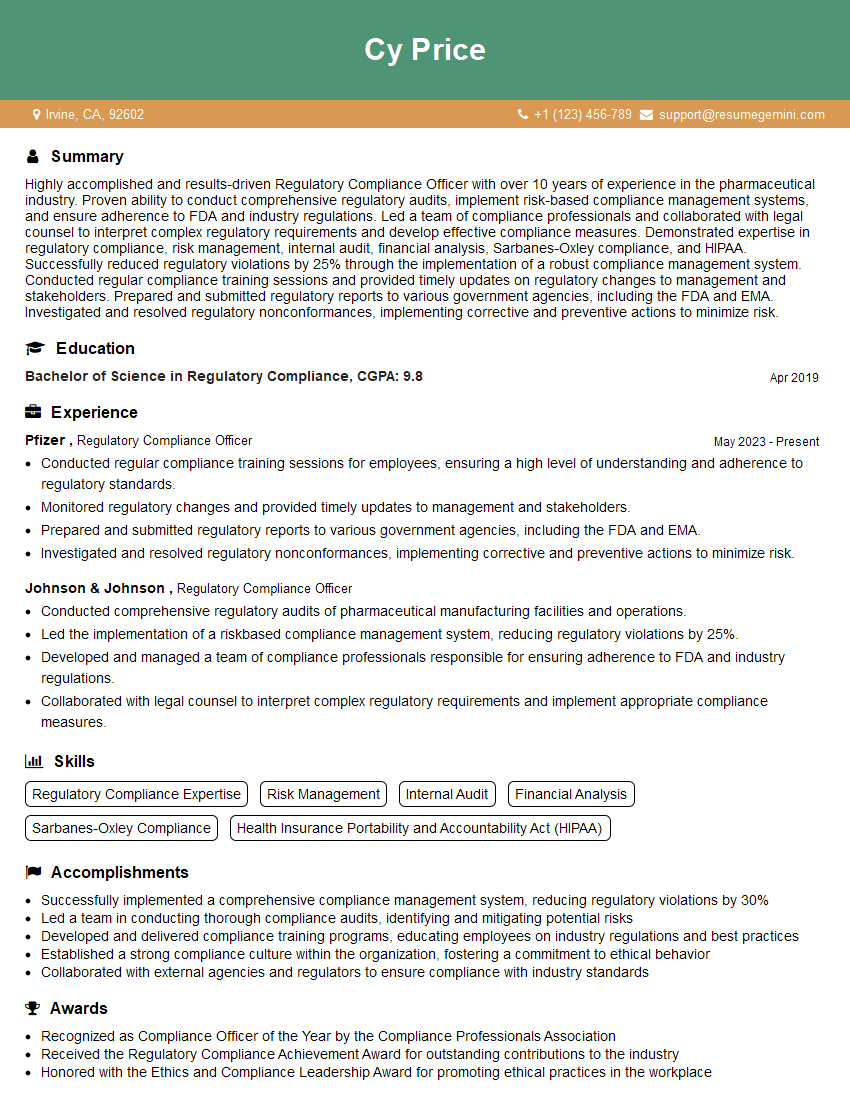
Regulatory Compliance Officer Resume Sample
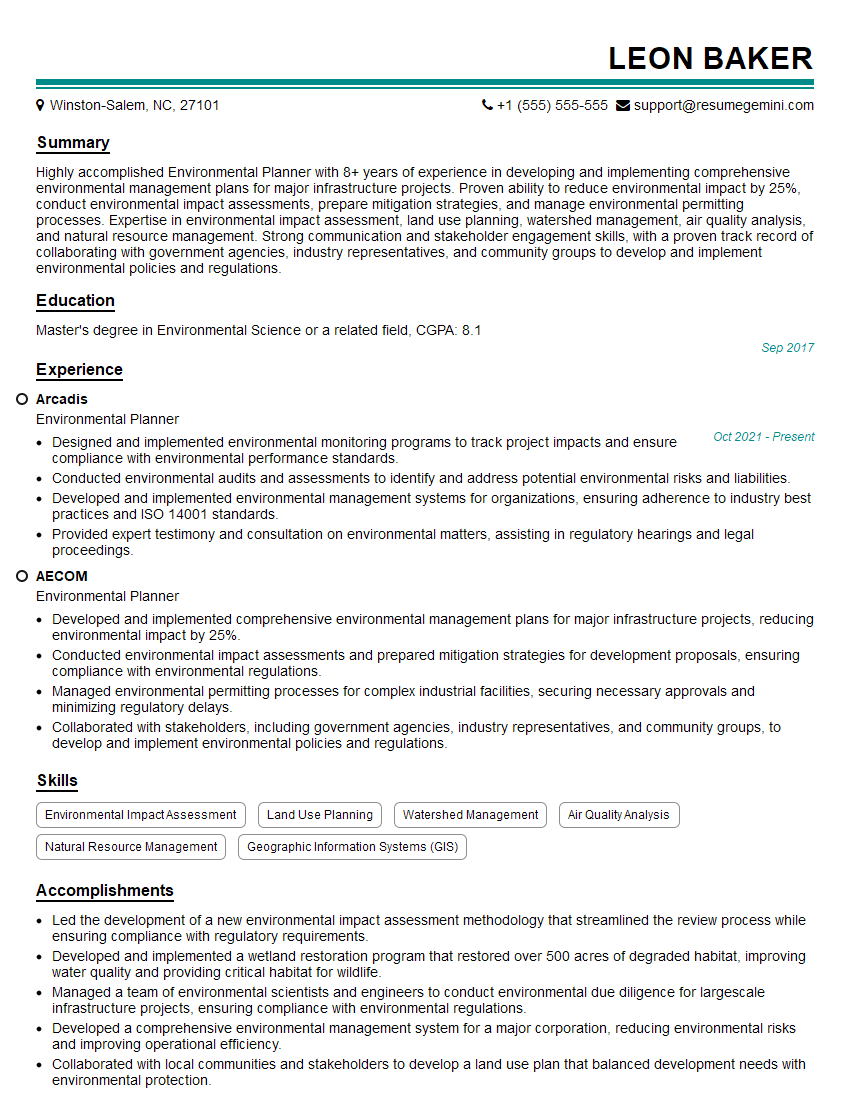
Environmental Planner Resume Sample
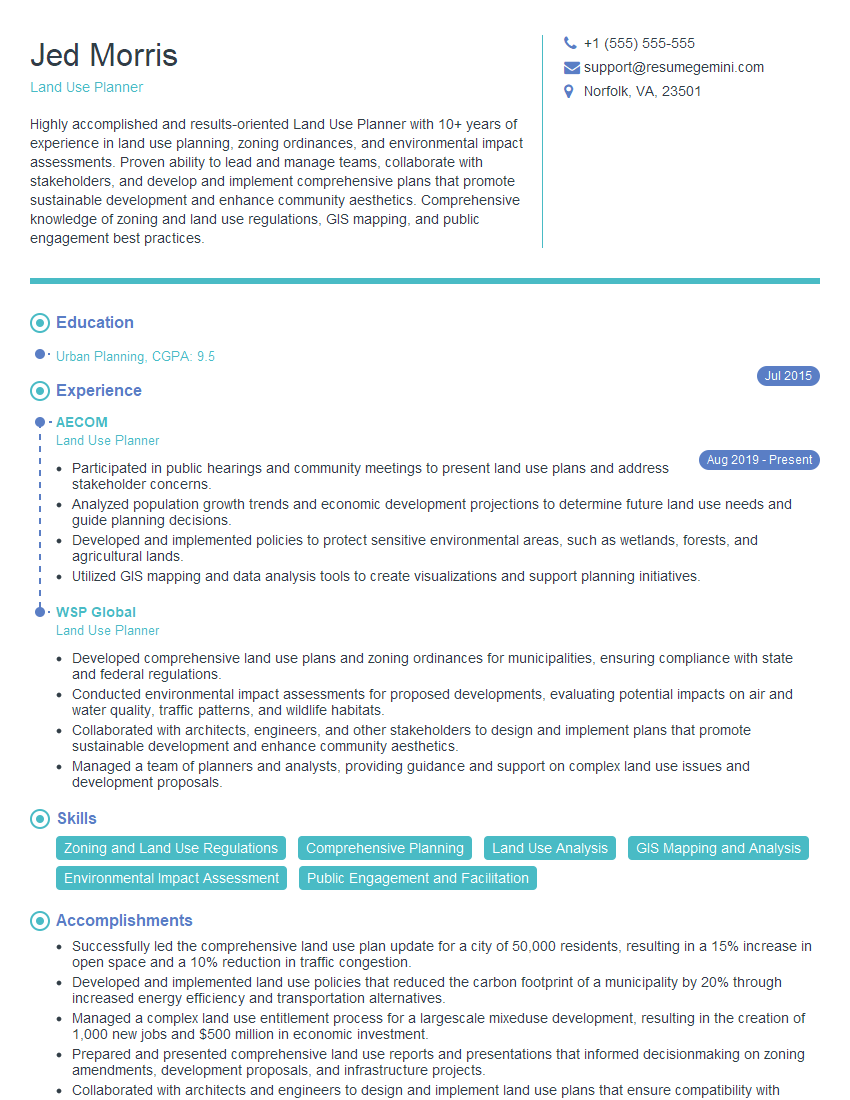
Land Use Planner Resume Sample
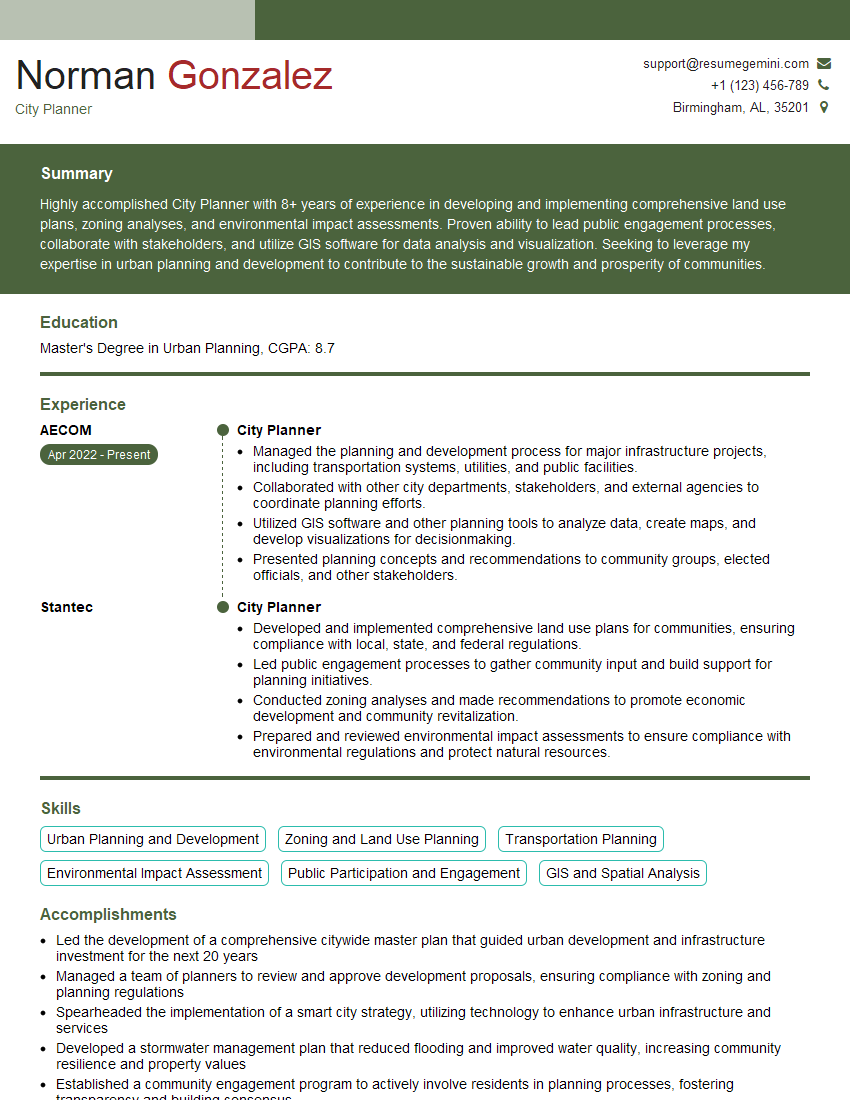
City Planner Resume Sample
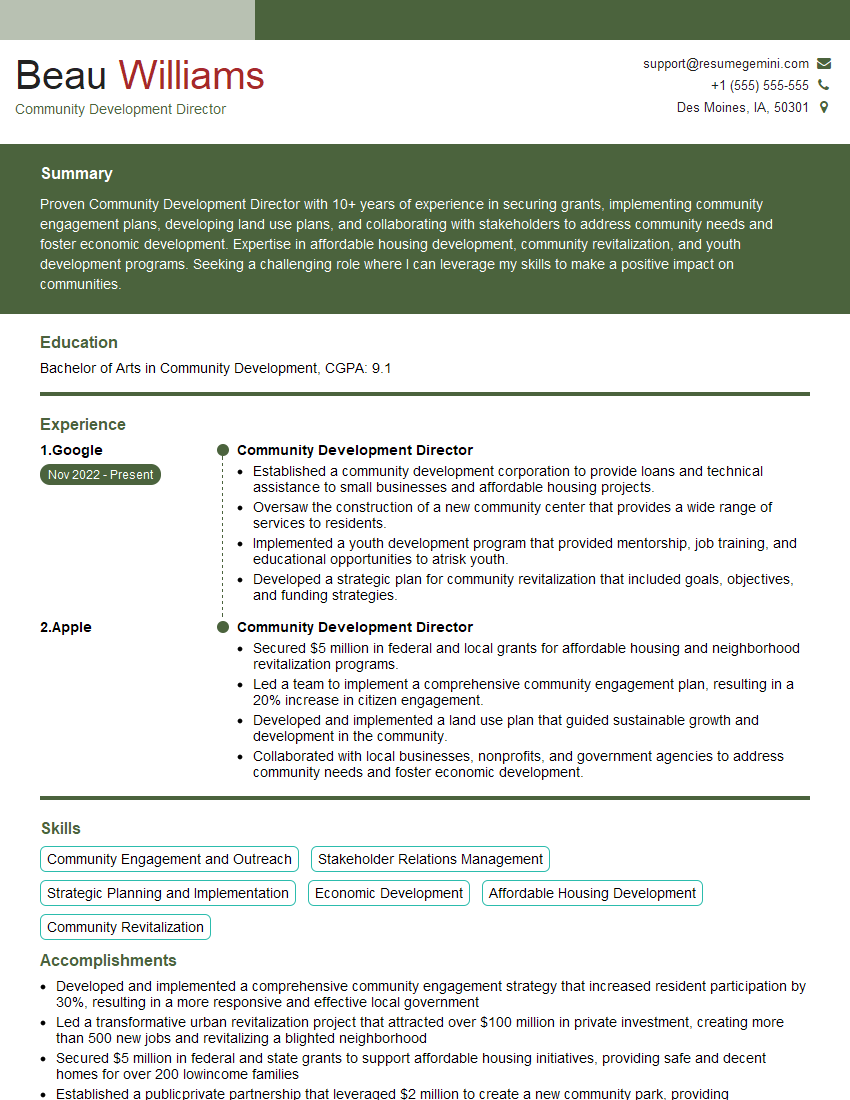
Community Development Director Resume Sample
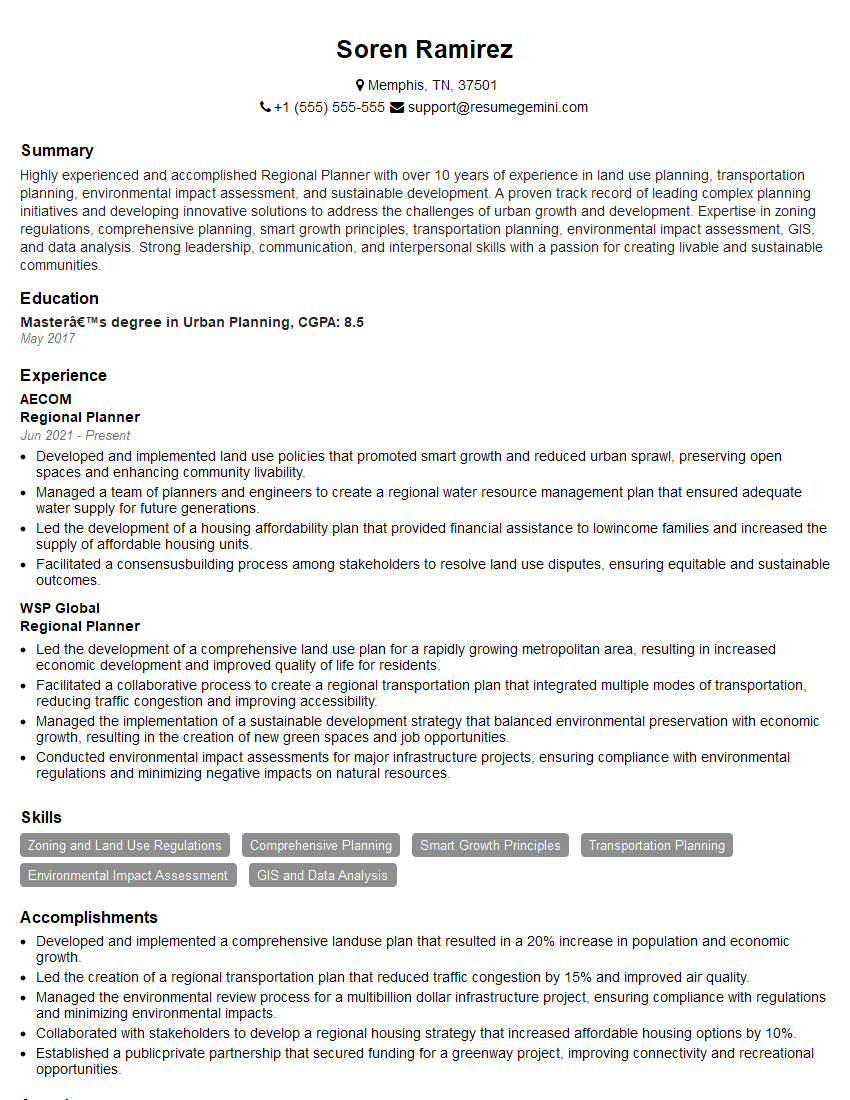
Regional Planner Resume Sample
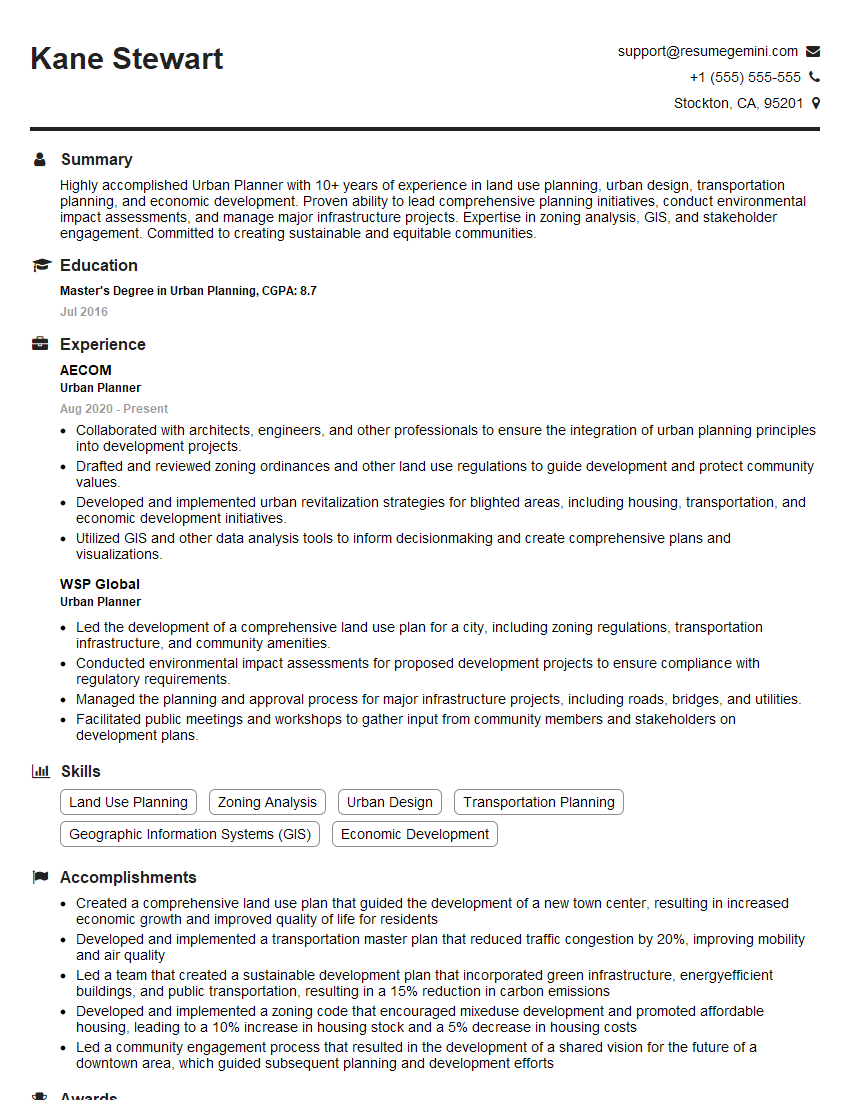
Urban Planner Resume Sample
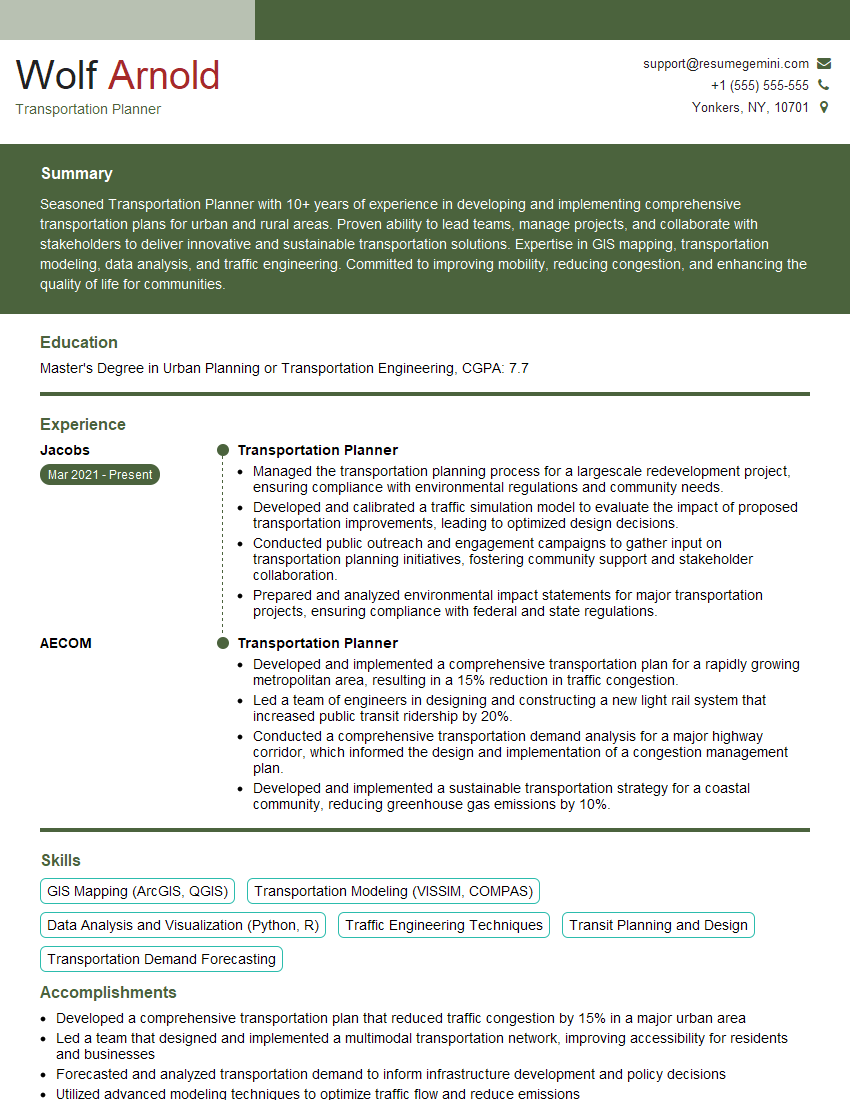
Transportation Planner Resume Sample
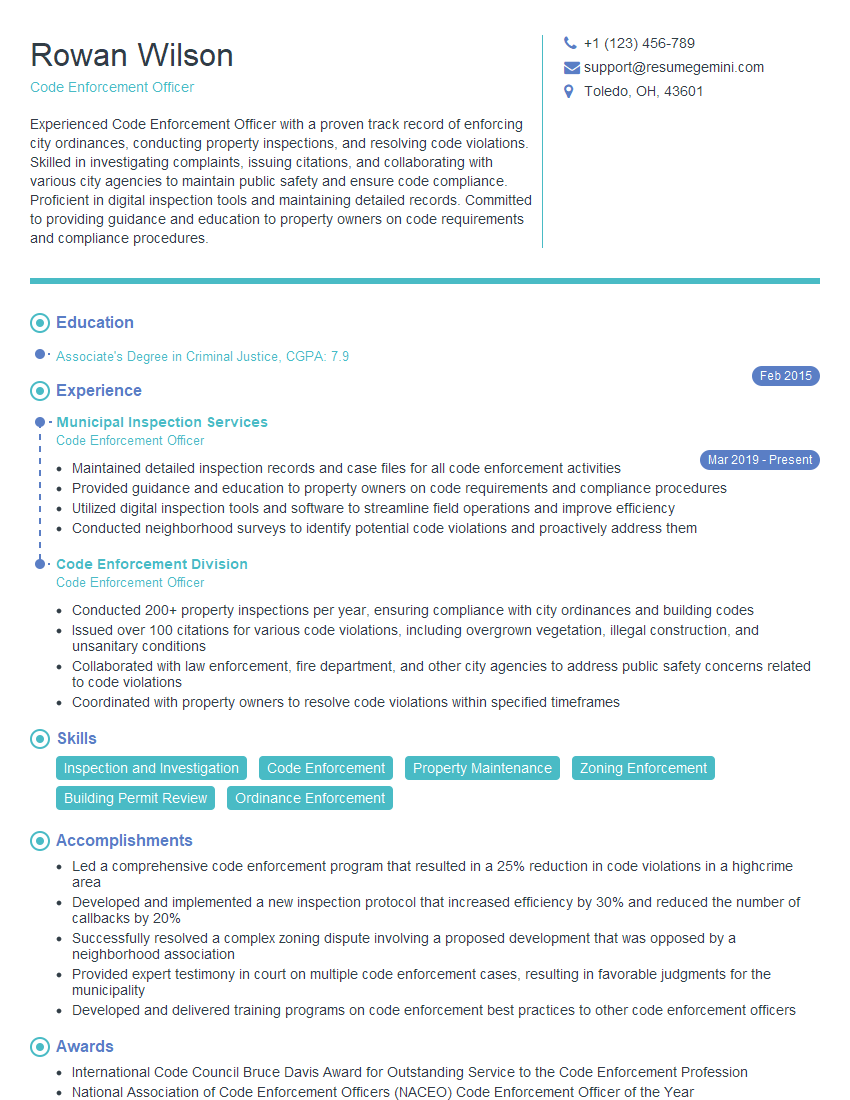
Code Enforcement Officer Resume Sample
Explore more articles
Users Rating of Our Blogs
Share Your Experience
We value your feedback! Please rate our content and share your thoughts (optional).
What Readers Say About Our Blog
To the interviewgemini.com Webmaster.
Very helpful and content specific questions to help prepare me for my interview!
Thank you
To the interviewgemini.com Webmaster.
This was kind of a unique content I found around the specialized skills. Very helpful questions and good detailed answers.
Very Helpful blog, thank you Interviewgemini team.