Feeling uncertain about what to expect in your upcoming interview? We’ve got you covered! This blog highlights the most important Zoning Code Enforcement and Inspections interview questions and provides actionable advice to help you stand out as the ideal candidate. Let’s pave the way for your success.
Questions Asked in Zoning Code Enforcement and Inspections Interview
Q 1. Describe your experience with interpreting zoning ordinances and regulations.
Interpreting zoning ordinances requires a meticulous approach, combining legal expertise with a deep understanding of the specific municipality’s regulations. It’s like deciphering a complex code, where each word and phrase has legal weight. My experience involves not just reading the ordinances themselves, but also understanding their context within the broader legal framework, including state laws and court precedents. For example, I’ve successfully navigated cases involving ambiguous language in density restrictions by referencing supporting documents, case law, and even contacting the zoning board for clarification. This process often requires analyzing maps, understanding setbacks, permitted uses, and lot coverage calculations. I also ensure I’m always up-to-date on any amendments or changes to the ordinances.
I’ve also developed a system for documenting my interpretation process, including notes on specific sections, relevant case law, and communications with stakeholders. This ensures consistency and transparency in my decision-making.
Q 2. Explain the process for issuing zoning permits.
The zoning permit issuance process is a multi-step procedure designed to ensure compliance with local regulations. It’s similar to a carefully orchestrated dance, where each step requires precise execution. First, the applicant submits a complete application, including detailed plans, relevant documentation, and the required fees. This might include site plans, architectural drawings, and engineering reports. Second, my role involves a thorough review of the application to ensure it meets all zoning requirements. This entails checking for compliance with setbacks, height restrictions, parking requirements, and permitted land uses. Third, if the application is complete and compliant, the permit is issued. However, if deficiencies are identified, I communicate these to the applicant, providing clear guidance on how to rectify them. Finally, after corrections are made and verified, the permit is issued, marking the beginning of the project.
For example, if an applicant proposes a building that exceeds the maximum height allowed in their zone, I would deny the permit until the design is modified to comply. I always aim to provide clear, constructive feedback, assisting applicants in navigating the process smoothly.
Q 3. How do you handle zoning violations?
Handling zoning violations involves a systematic approach, starting with investigation and confirmation. Think of it like a detective’s work, but with building codes instead of clues. I begin by verifying the alleged violation through site inspections, reviewing documentation, and consulting with property owners. If a violation is confirmed, the next step involves educating the property owner about the violation and the required corrective actions. This often involves providing a written notice detailing the violation, the relevant code sections, and the deadline for compliance. If the violation is not rectified within the specified timeframe, further action might be necessary. This could include issuing fines, issuing a stop-work order, or pursuing legal action. The severity of the response depends on the nature and severity of the violation.
I once dealt with a case involving illegal additions to a residential property. Through a thorough investigation, including photographic evidence and witness statements, we were able to successfully resolve the issue through a negotiated compliance agreement. This approach emphasized education and collaboration, resulting in a positive outcome for all parties involved.
Q 4. What is your experience with conducting site inspections?
Conducting site inspections is a crucial aspect of my work. It’s like being a building’s doctor, diagnosing issues and ensuring the patient – the structure – is healthy and complies with regulations. These inspections involve a thorough visual examination of the property to assess compliance with zoning and building codes. I use measuring tools, photographic documentation, and checklists to ensure comprehensive documentation. I look for things like setbacks, height restrictions, signage compliance, parking provision, and the overall condition of the structure. Pre-construction inspections verify that the foundation work aligns with the approved plans, and post-construction inspections ensure the building meets all final requirements before occupancy.
For instance, a recent inspection revealed an encroachment of a fence onto a neighboring property’s setback area. Through clear communication with the property owner and evidence-based documentation, I was able to successfully rectify the issue. Clear, detailed documentation ensures transparency and supports any subsequent enforcement actions.
Q 5. Describe your familiarity with building codes and their relationship to zoning regulations.
Building codes and zoning regulations are closely intertwined, yet distinct. Think of zoning as the city’s master plan, defining permitted uses and density in different areas, while building codes act as construction blueprints, specifying safety and structural requirements. Zoning ordinances often dictate *what* can be built (residential, commercial, industrial), while building codes dictate *how* it must be built (structural integrity, fire safety, accessibility). They work together to ensure safe and appropriately placed structures. For instance, a zoning ordinance might permit a three-story residential building in a certain zone; however, the building codes would specify the required structural elements, fireproofing, and egress provisions to ensure that building’s safety.
My experience involves interpreting both sets of regulations concurrently. For example, I might approve a building permit based on compliance with zoning restrictions on height and footprint but simultaneously ensure the construction plans adhere to building code requirements for structural integrity and fire safety systems.
Q 6. How do you prioritize competing demands and deadlines in code enforcement?
Prioritizing competing demands and deadlines in code enforcement necessitates a systematic approach. I use a prioritization matrix, similar to a project manager, considering factors such as the severity of the violation, potential public safety risks, and the urgency of the situation. Immediate threats to public safety, like unsafe structures or hazardous materials, naturally take precedence. Then, I systematically address violations based on their severity and potential impact. I utilize a case management system to track progress, deadlines, and communication with stakeholders, ensuring efficient resource allocation and effective time management.
For instance, I might prioritize resolving a case of an illegally operating business with significant health hazards over a minor setback violation, despite the latter having a prior deadline. This approach maximizes efficiency and ensures that critical issues are addressed swiftly.
Q 7. Explain your experience with conflict resolution in code enforcement situations.
Conflict resolution is an essential skill in code enforcement. It’s about finding common ground while maintaining the integrity of the regulations. My approach is to always start with clear, respectful communication. I explain the code violation in detail, providing the context and rationale behind the regulations. I actively listen to the property owner’s concerns and perspectives, searching for solutions that address both compliance and the owner’s practical challenges. Negotiation and mediation techniques are often employed to reach mutually agreeable solutions. In cases where negotiation fails, I am prepared to escalate the matter following established procedures. However, I always aim for collaborative problem-solving.
I recall a situation where a property owner was facing significant financial hardship and struggled to comply with a corrective order. By working with them collaboratively, exploring financial assistance programs, and extending reasonable deadlines, we were able to achieve compliance without resorting to punitive measures. This emphasizes that successful conflict resolution involves understanding the human element within the legal framework.
Q 8. How do you maintain accurate and detailed records of inspections and violations?
Maintaining accurate and detailed records is paramount in zoning code enforcement. Think of it like a meticulous detective’s case file – every detail counts. We utilize a comprehensive digital system, often incorporating a custom-built database or a specialized software solution designed for code enforcement. This system allows us to log each inspection, meticulously documenting the date, time, location, property owner, specific violations observed (with photographic and/or video evidence), the actions taken, and the follow-up procedures.
- Inspection Reports: Each inspection generates a detailed report, including GPS coordinates for precise location, clear descriptions of violations, and supporting documentation (photos, videos, sketches).
- Violation Tracking: The system tracks the status of each violation, from initial discovery to resolution, including dates of notices, responses from property owners, and any enforcement actions taken (e.g., fines, court orders).
- Data Backup and Security: Regular data backups and robust security measures are crucial to ensure data integrity and prevent loss. This includes both physical and digital security protocols.
This detailed record-keeping not only ensures accountability but also provides valuable data for analyzing trends, identifying problem areas, and improving enforcement strategies. For example, if we see a spike in violations related to illegal signage in a particular zone, we can allocate more resources to that area for proactive inspections.
Q 9. Describe your experience with using GIS or mapping software for zoning enforcement.
Geographic Information Systems (GIS) software is an indispensable tool in zoning enforcement. Imagine having a map that instantly shows you the location of every property, its zoning classification, and the history of violations. That’s the power of GIS. I have extensive experience using ArcGIS and similar platforms to map properties, overlay zoning districts, visualize violations, and even track enforcement progress.
- Zoning Overlay: GIS allows us to overlay zoning maps with property boundaries, identifying properties that are non-compliant or potentially at risk.
- Violation Mapping: We can pinpoint the location of violations on a map, identifying clusters or patterns that might indicate systemic issues.
- Data Analysis: GIS helps analyze data to identify trends, like high concentrations of illegal conversions or parking violations in specific areas, informing resource allocation for inspections.
- Reporting and Visualization: The software facilitates creating informative maps and reports for presentations, public meetings, or internal analysis.
In a recent case, we used GIS to quickly identify all properties within a specific radius of a proposed development that might be affected by increased traffic or shadowing. This proactive approach allowed for more informed decision-making and minimized potential conflicts.
Q 10. What methods do you use to communicate effectively with property owners regarding code violations?
Effective communication is crucial in zoning enforcement. It’s about building relationships, not just issuing fines. My approach prioritizes clarity, respect, and a collaborative problem-solving mindset. I start by providing detailed, easy-to-understand written notices explaining the violation, relevant code sections, and the required corrective actions. These notices are always followed up with a phone call to answer questions and offer guidance.
- Multiple Communication Channels: We utilize a variety of methods, including certified mail, email, phone calls, and even in-person meetings, tailoring the approach to the property owner’s preference and the nature of the violation.
- Clear and Concise Language: I avoid jargon and technical terms whenever possible, using plain language that’s easy for anyone to understand.
- Empathetic Approach: I approach each situation with empathy, recognizing that property owners may not be fully aware of the regulations or may face challenges in complying.
- Documenting Communication: All communication, regardless of the method, is carefully documented to maintain a clear and auditable record.
For example, I recently worked with a property owner who had unintentionally violated the setback requirements. Through clear communication, we were able to collaboratively find a solution that met both the code requirements and the owner’s needs, avoiding the need for formal enforcement actions.
Q 11. How do you ensure fair and equitable enforcement of zoning regulations?
Fair and equitable enforcement is the cornerstone of a just and effective zoning program. This requires consistent application of the code, transparency in decision-making, and a commitment to due process. We achieve this through standardized procedures, rigorous documentation, and impartial consideration of each case.
- Consistent Application of the Code: We strive to apply zoning regulations consistently across all properties, avoiding arbitrary or discriminatory enforcement.
- Transparency: All enforcement actions are documented, and the rationale behind decisions is clearly explained to property owners.
- Due Process: Property owners are given ample opportunity to respond to allegations, present evidence, and appeal decisions.
- Regular Training: Ongoing training ensures all enforcement officers understand and apply the code consistently and fairly.
Imagine two properties with similar violations; we’d apply the same enforcement procedures and penalties to both, regardless of the owners. However, we also consider extenuating circumstances, such as hardship or unforeseen events, when making enforcement decisions. This ensures that enforcement is both fair and effective.
Q 12. Explain your understanding of variances and special exceptions within the zoning context.
Variances and special exceptions are mechanisms that allow for flexibility in the strict application of zoning regulations. They’re akin to exceptions to the rule, but with strict criteria. A variance is granted when a property owner can demonstrate that strict adherence to the zoning code would create an undue hardship, unique to their property. A special exception, on the other hand, allows for a use that is otherwise prohibited by the zoning code, but deemed compatible with the surrounding area and serving a public benefit. Both require a formal application process and review by a designated board or authority.
- Undue Hardship (Variances): This requires demonstrating that the strict application of the code would result in a significant economic or practical hardship not shared by other properties in the same zone. For example, a variance might be granted for a smaller setback requirement if a property’s unique shape makes it impossible to meet the standard.
- Public Benefit (Special Exceptions): This involves demonstrating that the proposed use will serve a public purpose or benefit, while still being compatible with the character of the neighborhood. A special exception might be granted for a daycare center in a residential zone if it meets specific design and operational criteria.
The process for granting both variances and special exceptions involves a rigorous review, public notice, and often a hearing to allow for public comment. The decision-making process needs to be transparent and well-documented.
Q 13. Describe your experience with legal procedures related to zoning code violations.
Experience with legal procedures related to zoning code violations is an essential part of my role. This involves understanding the legal process from initial notice of violation to potential court action. It’s critical to accurately document all interactions, ensuring that any legal action is properly supported with evidence.
- Notice and Cure Periods: We follow established procedures for issuing notices of violation, including specific deadlines for property owners to address the violations.
- Administrative Hearings: In many cases, disputes are resolved through administrative hearings where property owners can present their case before a designated official.
- Legal Action: If violations remain unaddressed after all administrative remedies have been exhausted, legal action, including fines, injunctions, or even demolition orders, may be necessary.
- Evidence Gathering and Presentation: Careful record-keeping is crucial in supporting any legal action. This includes detailed inspection reports, photographic evidence, and a record of all communications with the property owner.
I’ve been involved in several cases progressing to court, where my meticulous record-keeping and detailed knowledge of zoning codes were instrumental in securing favorable outcomes. It’s crucial to understand the legal framework and to present evidence clearly and concisely in court.
Q 14. How do you stay current with changes in zoning regulations and building codes?
Staying current with changes in zoning regulations and building codes is a continuous process. It’s like keeping up with a constantly evolving legal landscape. This requires a proactive approach that involves monitoring legislative updates, attending industry conferences, and participating in professional development activities.
- Subscription to Regulatory Updates: We subscribe to newsletters and online resources that provide updates on new regulations and code changes.
- Professional Organizations: Membership in professional organizations, such as the International Code Council (ICC), provides access to training, publications, and networking opportunities.
- Conferences and Workshops: Attending industry conferences and workshops keeps me abreast of the latest trends and best practices.
- Collaboration with Other Agencies: Regular communication and collaboration with other relevant agencies, such as building departments and planning commissions, ensure that we’re all aligned on the latest regulations.
For example, I recently completed a training course on the updated accessibility requirements in the latest building code, ensuring that my enforcement practices are current and compliant. This ensures we maintain our expertise and consistently enforce the most up-to-date and appropriate regulations.
Q 15. How familiar are you with the different types of zoning classifications (e.g., residential, commercial, industrial)?
Zoning classifications are the backbone of land-use regulation, dictating what types of development are permitted in specific areas. My familiarity extends to all common classifications and their nuances. Think of it like a city’s personality; different neighborhoods have different roles.
- Residential: Ranges from single-family homes (R-1) to high-density apartments (R-5 or similar designations). Regulations focus on density, setbacks, parking, and lot sizes to maintain neighborhood character.
- Commercial: Covers retail, office, and service businesses. Zoning varies based on intensity – a small neighborhood shopping center will have different rules than a large regional mall (e.g., C-1, C-2, etc.). Considerations include building height, signage, parking requirements, and hours of operation.
- Industrial: Designated for manufacturing, warehousing, and distribution. Regulations prioritize safety and environmental protection, focusing on things like noise levels, emissions, hazardous materials storage, and heavy truck access.
- Mixed-Use: Increasingly common, these zones combine residential, commercial, and sometimes industrial elements, often to create vibrant, walkable communities.
- Agricultural: Protects farmland and agricultural activities, often with restrictions on development and lot sizes.
Beyond these basic types, many municipalities have specialized zones like planned unit developments (PUDs) which allow for greater flexibility in design but within pre-approved guidelines. I’m proficient in interpreting these diverse classifications and their associated regulations.
Career Expert Tips:
- Ace those interviews! Prepare effectively by reviewing the Top 50 Most Common Interview Questions on ResumeGemini.
- Navigate your job search with confidence! Explore a wide range of Career Tips on ResumeGemini. Learn about common challenges and recommendations to overcome them.
- Craft the perfect resume! Master the Art of Resume Writing with ResumeGemini’s guide. Showcase your unique qualifications and achievements effectively.
- Don’t miss out on holiday savings! Build your dream resume with ResumeGemini’s ATS optimized templates.
Q 16. How do you determine the appropriate enforcement action for a given violation?
Determining the appropriate enforcement action for a zoning violation is a multi-step process. I always begin by thoroughly understanding the violation, its severity, and its impact on the surrounding community.
- Identify the Violation: This involves a careful review of the zoning code, site plans, and any relevant permits. Is it an unpermitted structure? A non-conforming use? A violation of setback requirements?
- Assess the Severity: Some violations are minor and easily remedied (e.g., a slightly overgrown hedge), while others are significant (e.g., illegal construction of a multi-family dwelling).
- Consider Previous Violations: A history of violations might indicate a pattern of non-compliance, warranting a stricter response.
- Select Enforcement Action: Actions range from a verbal warning to a formal cease-and-desist order, fines, court action, or demolition. Factors influencing the choice include the severity of the violation, the owner’s cooperation, and the potential impact on public safety and welfare.
- Document Everything: Meticulous record-keeping is crucial. This includes photos, detailed descriptions of the violation, dates of contact with the property owner, and copies of all correspondence and enforcement actions.
For example, a minor landscaping issue might only require a verbal warning, while an unpermitted addition might lead to a stop-work order and subsequent fines. My goal is always to achieve compliance while balancing fairness and the need to uphold the zoning code.
Q 17. Describe your experience with utilizing digital inspection tools and reporting software.
I have extensive experience leveraging digital inspection tools and reporting software. This includes using mobile apps for conducting inspections in the field, creating detailed reports with photos and GPS coordinates, and managing data efficiently. Think of it as having a powerful, always-updated toolbox at my fingertips.
- Mobile Apps: I’m proficient in using apps that allow me to record observations, take photos and videos, and generate inspection reports directly on my mobile device. This streamlines the entire process, eliminating the need for handwritten notes and improving accuracy.
- Reporting Software: My experience extends to using software that allows for efficient data entry, report generation, and data analysis. This provides an organized, centralized database of all inspections and violations, which is crucial for tracking progress and identifying trends.
- Data Integration: I’m familiar with software that integrates with GIS mapping systems to provide a visual representation of violations on a map, allowing for better analysis and prioritization.
These tools significantly enhance efficiency and accuracy, while also improving transparency and accountability.
Q 18. What is your experience in investigating and documenting building code violations?
Investigating and documenting building code violations requires a methodical approach and a deep understanding of relevant codes. My experience encompasses the full lifecycle, from initial complaint to final report.
- On-Site Inspection: I systematically examine the property, looking for discrepancies between the construction and the approved plans or code requirements.
- Documentation: I take detailed photographs, measurements, and notes of all observed violations. This includes specific locations, descriptions of the problems, and any potential safety hazards.
- Plan Review: If applicable, I compare the construction to approved plans and highlight deviations.
- Report Writing: I prepare a comprehensive report detailing the findings, including photos, measurements, and citations of relevant building codes. The report clearly outlines the nature and severity of the violations.
- Follow-up and Corrective Actions: I follow up with the property owner, providing guidance on corrective measures and ensuring that violations are rectified within a reasonable timeframe.
I’ve dealt with a wide range of violations, from simple electrical issues to more serious structural defects. In each case, my focus is on ensuring public safety and compliance with applicable building codes.
Q 19. How do you handle situations involving complex or ambiguous zoning regulations?
Handling ambiguous zoning regulations requires careful analysis, research, and often, collaboration with legal counsel. My approach is systematic and thorough.
- Thorough Code Review: I carefully examine the relevant sections of the zoning code, considering all applicable definitions and interpretations.
- Legal Research: If needed, I consult case law, legal opinions, and other relevant sources to clarify ambiguous points.
- Consultation: I collaborate with colleagues, legal counsel, and other relevant parties to obtain different perspectives and ensure a consistent interpretation of the regulations.
- Documentation: I meticulously document my analysis and conclusions, supporting my findings with evidence from the code, relevant case law, or expert opinions.
- Transparency: I maintain transparency with all stakeholders, clearly explaining my interpretation of the code and the rationale behind my decisions.
For example, if a zoning code defines a ‘family’ ambiguously, I might need to consult case law to determine whether a specific living arrangement fits the definition. Clarity and careful documentation are essential in navigating these complex situations.
Q 20. Describe your approach to working with different stakeholders, such as contractors, developers, and the public.
Effective communication and collaboration are crucial in zoning enforcement. I approach interactions with all stakeholders with professionalism, respect, and a focus on achieving compliance.
- Contractors and Developers: My approach is collaborative, providing clear explanations of the regulations and working with them to find solutions that meet both code requirements and project goals. This often involves pre-construction meetings to review plans and address potential issues early on.
- Public: I strive to be approachable and responsive to public inquiries, providing clear and concise explanations of zoning regulations and enforcement procedures. This includes being readily available to address questions and concerns.
I believe that a respectful and collaborative approach is much more effective in achieving compliance than an adversarial one. Building trust and fostering positive working relationships are paramount to successful enforcement.
Q 21. Explain your understanding of the appeals process for zoning decisions.
The appeals process for zoning decisions is a critical component of ensuring fairness and due process. My understanding of this process includes the various avenues of appeal and the procedural requirements involved.
Typically, an appeal involves a formal request to a higher authority, such as a zoning board of appeals or a court, to review a decision made by a zoning official or planning commission. This might involve a hearing where evidence is presented and arguments are made. The appeals process usually involves specific timelines and procedural rules, which I’m familiar with.
The specifics of the appeals process vary by jurisdiction; however, I’m adept at navigating these procedures and advising parties on their rights and options. I know how to prepare for hearings, present evidence, and respond to challenges. Understanding the appeals process is critical to ensuring that zoning decisions are just and legally sound.
Q 22. How do you ensure compliance with accessibility standards in your inspections?
Ensuring compliance with accessibility standards is paramount in my inspections. I meticulously check for adherence to the Americans with Disabilities Act (ADA) and any relevant state or local accessibility codes. This involves a thorough examination of building features like ramps, elevators, doorways, signage, and restroom facilities.
- Ramps: I verify the proper slope, landing sizes, and handrail placement.
- Elevators: I check for appropriate button placement, audible and visual signals, and emergency communication systems.
- Doorways: I measure clearances to ensure they meet minimum width requirements for wheelchair accessibility.
- Signage: I assess the size, font, and braille compliance of signage.
- Restrooms: I inspect for grab bars, appropriate clearances, and accessible fixtures.
For example, during a recent inspection of a newly constructed commercial building, I discovered a ramp that was too steep, violating ADA standards. I issued a stop-work order until the ramp was corrected, ensuring the building would be accessible to people with disabilities. I also utilise checklists and reference materials like the ADA Standards for Accessible Design to ensure a comprehensive and consistent approach.
Q 23. What is your experience with environmental regulations as they relate to zoning?
My experience with environmental regulations intertwined with zoning is extensive. I’m familiar with the interplay between zoning ordinances and environmental protection laws, particularly regarding issues like stormwater management, hazardous waste handling, and environmental impact assessments.
For instance, zoning might dictate the location of industrial facilities, but environmental regulations control how those facilities handle waste and pollutants. I ensure that any development project complies with both sets of rules. This often involves reviewing site plans for compliance with things like buffer zones, erosion control plans, and wastewater treatment systems. If a project impacts wetlands or other environmentally sensitive areas, I work with other regulatory agencies to coordinate reviews and ensure compliance. Understanding these overlapping regulations is key to preventing environmental damage and promoting sustainable development.
Q 24. Describe your familiarity with site plan review and approval processes.
Site plan review and approval is a core part of my job. I’m proficient in reviewing plans for compliance with zoning ordinances, including land use, building setbacks, parking requirements, landscaping, and stormwater management. This involves interpreting engineering drawings, reviewing specifications, and identifying potential conflicts with existing regulations.
My process typically includes a thorough review of the submitted documents, followed by a site visit to verify information and assess the potential impact on surrounding properties. I often work collaboratively with engineers, architects, and other stakeholders to resolve issues and ensure the project meets all applicable standards. I then prepare a comprehensive report detailing my findings and recommendations for approval or modifications. This collaborative approach helps ensure that the final project is both functional and compliant.
Q 25. How do you handle situations where a property owner refuses to comply with a zoning order?
Handling non-compliance requires a systematic approach. I begin by providing the property owner with a clear and concise written notice explaining the violation and outlining the required corrective actions. This includes specific deadlines and potential penalties for non-compliance. I offer opportunities for discussion and collaboration to find a mutually agreeable solution.
However, if the property owner refuses to cooperate, I escalate the matter. This might involve issuing a cease-and-desist order, imposing fines, or pursuing legal action, depending on the severity of the violation and local regulations. I meticulously document all communication and actions taken, building a strong case should legal intervention become necessary. For example, I recently had to pursue legal action against a property owner who repeatedly violated parking restrictions. Maintaining a detailed record of our interactions and enforcement efforts proved crucial in obtaining a court order to correct the situation.
Q 26. Explain your experience with conducting inspections in various types of structures (residential, commercial, industrial).
My experience encompasses a wide range of structures – residential, commercial, and industrial. Residential inspections focus on things like building permits, occupancy limits, and compliance with building codes. Commercial inspections often involve reviewing fire safety systems, accessibility features, and compliance with specific use requirements. Industrial inspections require a deeper understanding of potentially hazardous materials and processes, ensuring compliance with environmental and safety regulations.
Each type of inspection requires a different set of skills and knowledge. For example, I need a solid understanding of plumbing and electrical systems for residential inspections, while industrial inspections may require familiarity with specialized equipment and safety protocols. I continuously update my knowledge and skills to stay current with relevant codes and best practices.
Q 27. How do you ensure the safety of yourself and others during inspections?
Safety is my top priority. Before each inspection, I assess the potential hazards and plan accordingly. This might include wearing appropriate personal protective equipment (PPE), such as safety vests, hard hats, and gloves. I also ensure I have sufficient lighting and communicate my presence clearly to any occupants of the property.
For sites with potential hazards, like active construction areas or industrial facilities, I may collaborate with site supervisors or managers to coordinate the inspection and ensure a safe environment. I always follow established safety protocols and never enter a situation where I feel my safety is compromised. If a situation presents an undue risk, I postpone the inspection until appropriate safety measures are in place.
Q 28. What is your experience with report writing and documentation in zoning enforcement?
Accurate and detailed report writing is essential in zoning enforcement. My reports include a clear description of the property, a detailed account of the inspection findings, photographic evidence, and a summary of any violations. I use standardized formats and templates to ensure consistency and clarity.
The documentation process also involves maintaining detailed records of all communications, including emails, letters, and phone calls with property owners. This comprehensive documentation serves as a vital record of enforcement actions, providing crucial evidence in case of legal disputes or appeals. I also utilize specialized software to manage inspection data, generate reports, and track compliance status efficiently. This technology ensures that all documentation is readily accessible and easily searchable.
Key Topics to Learn for Zoning Code Enforcement and Inspections Interview
- Understanding Zoning Ordinances: Thoroughly grasp the intricacies of local zoning codes, including permitted uses, setbacks, height restrictions, and density regulations. Be prepared to discuss amendments and interpretations.
- Field Inspections and Documentation: Practice detailing your approach to conducting thorough site inspections, accurately recording observations, and preparing comprehensive reports using clear and concise language. Consider how you would handle various scenarios, including non-compliance.
- Code Enforcement Procedures: Familiarize yourself with the legal process of issuing notices of violation, conducting hearings, and navigating appeals. Understand the importance of fairness and due process.
- Building Codes and Related Regulations: Demonstrate knowledge of how zoning regulations intersect with building codes and other relevant regulations, such as those pertaining to environmental protection or accessibility.
- Problem-Solving and Decision-Making: Prepare examples demonstrating your ability to analyze complex situations, identify solutions within the framework of the zoning code, and effectively communicate those solutions to property owners and stakeholders. Consider scenarios involving conflicting regulations or ambiguous interpretations.
- Communication and Interpersonal Skills: Highlight your ability to clearly and professionally communicate with diverse individuals, including property owners, developers, and colleagues. Practice explaining complex technical information in a readily understandable manner.
- Technology and Data Management: Showcase familiarity with relevant software and technology used in zoning enforcement and inspection, including GIS systems, permit tracking databases, and report generation tools.
Next Steps
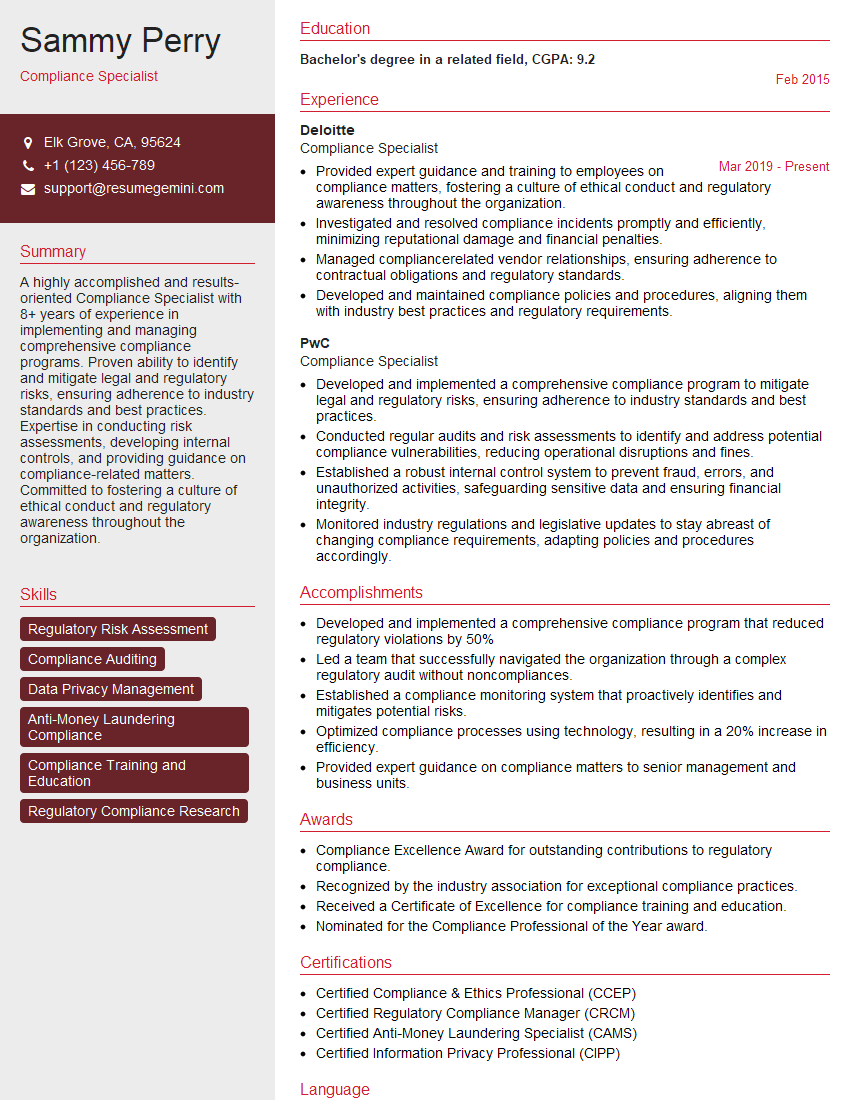
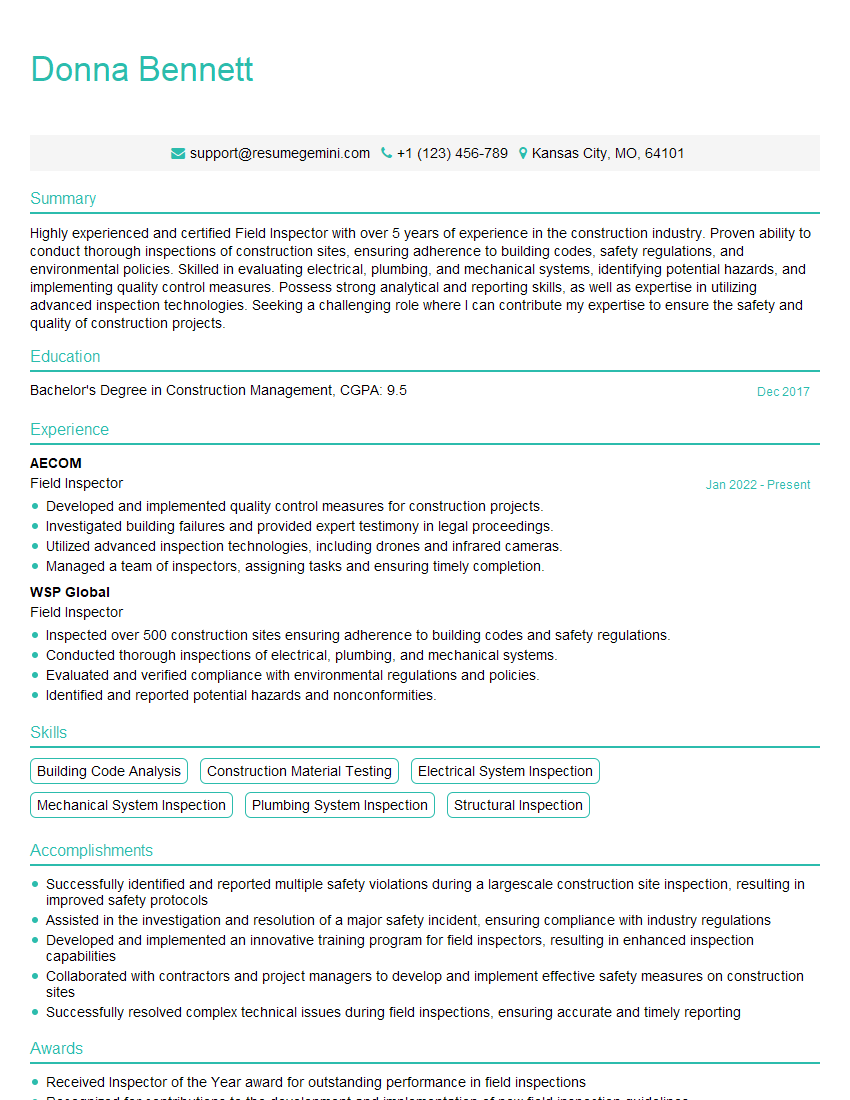
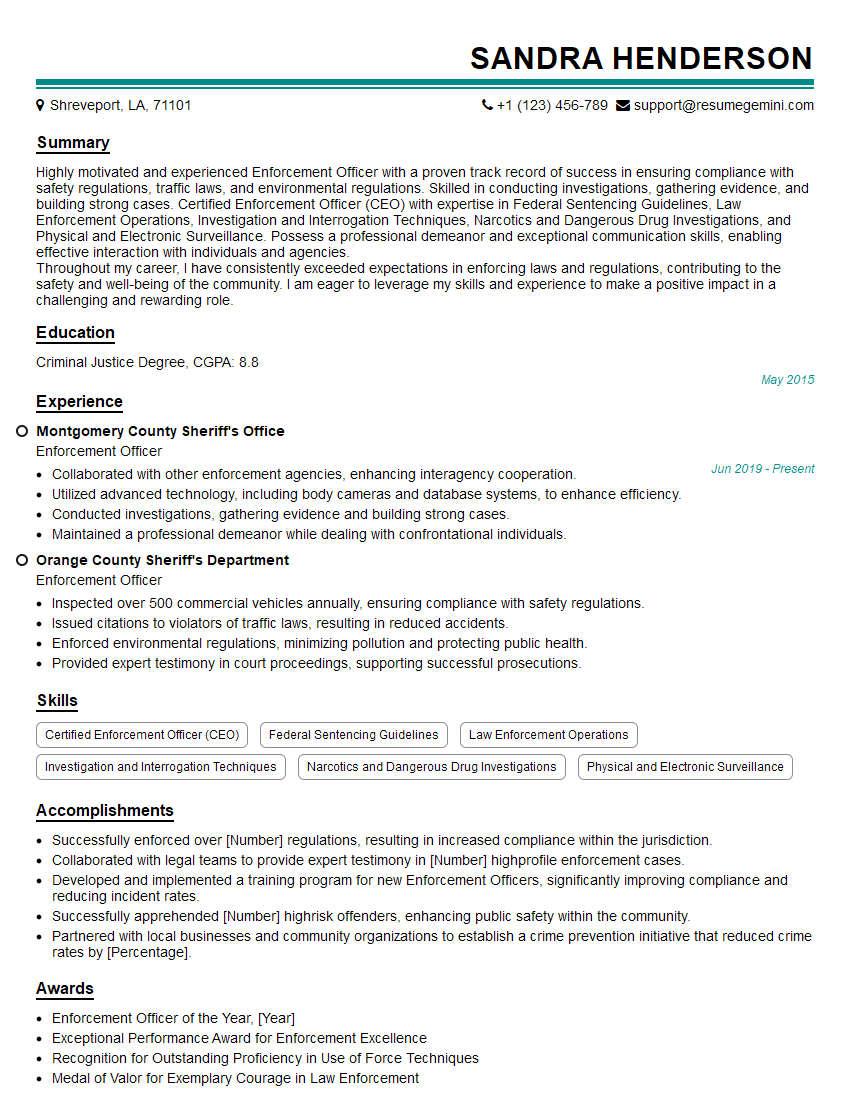
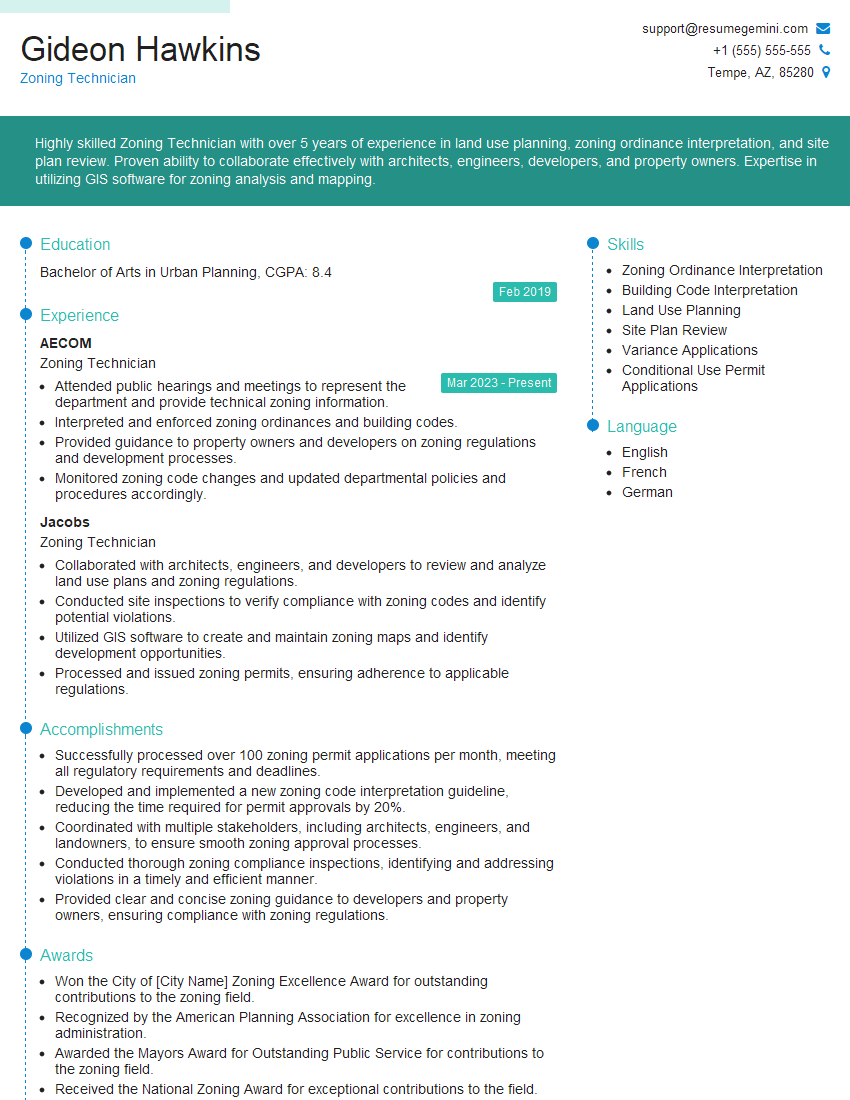
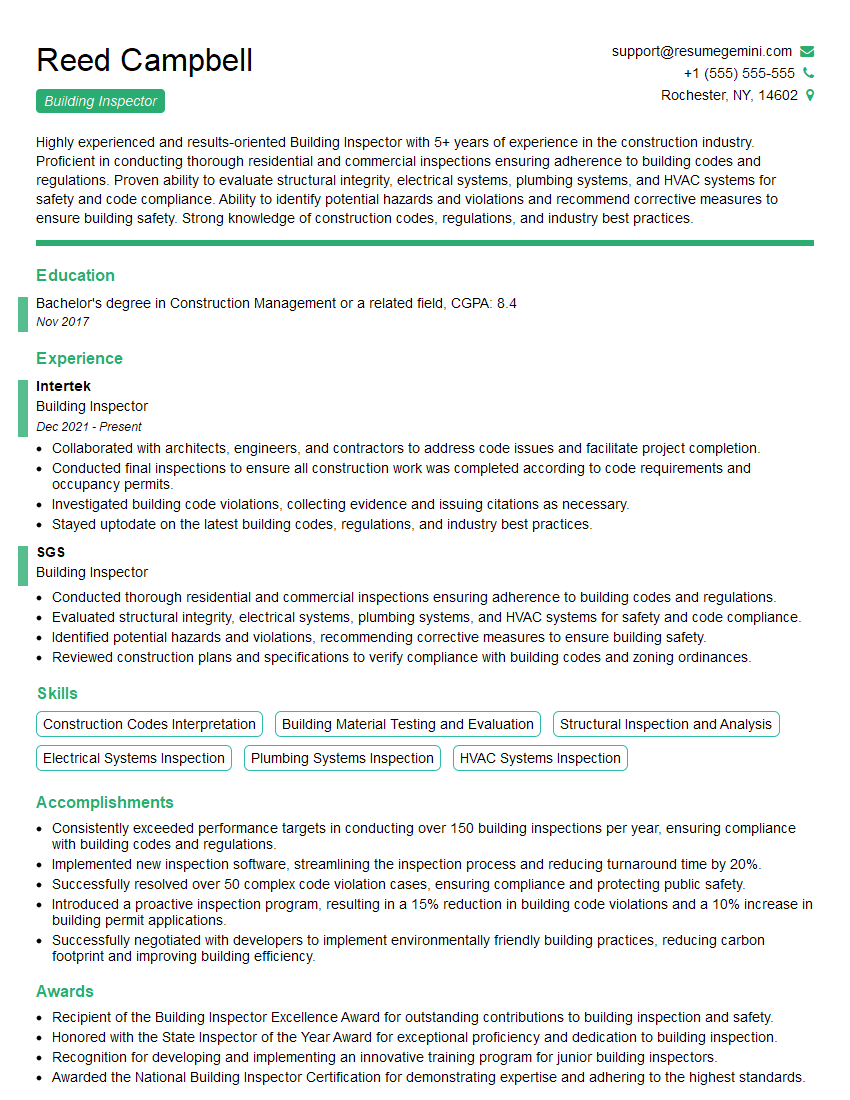
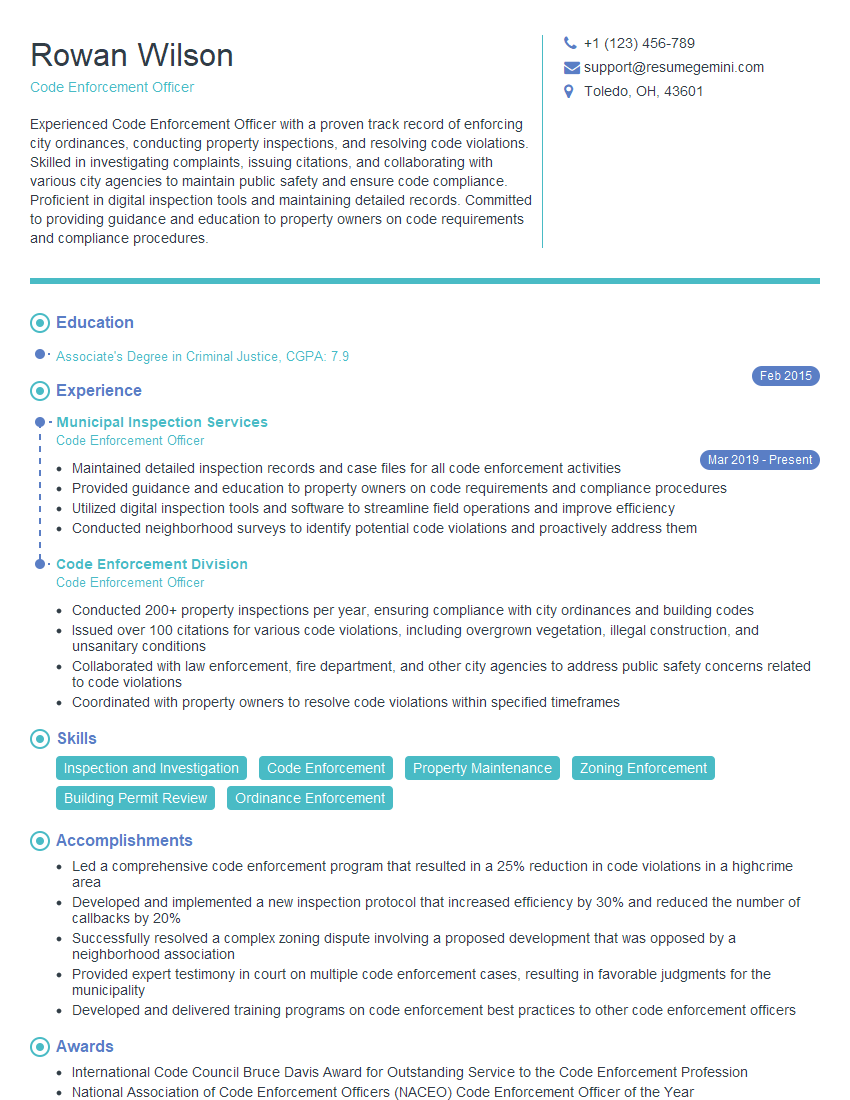
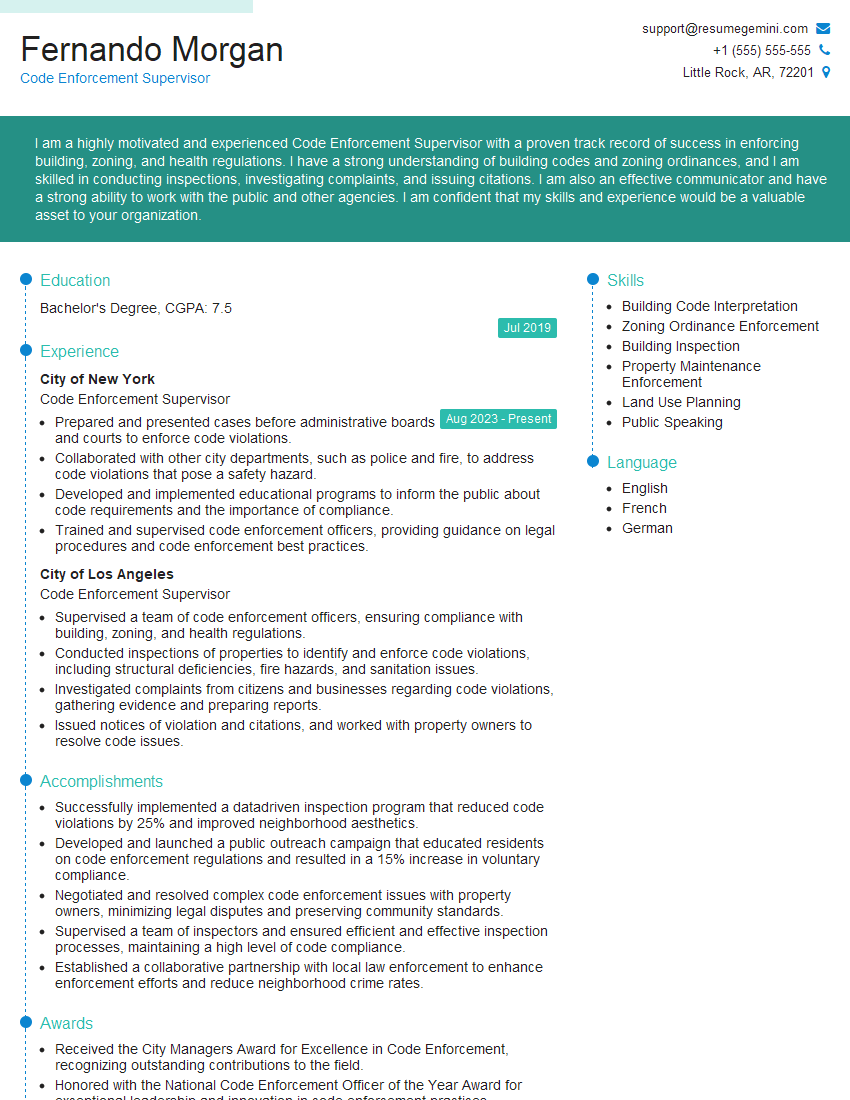
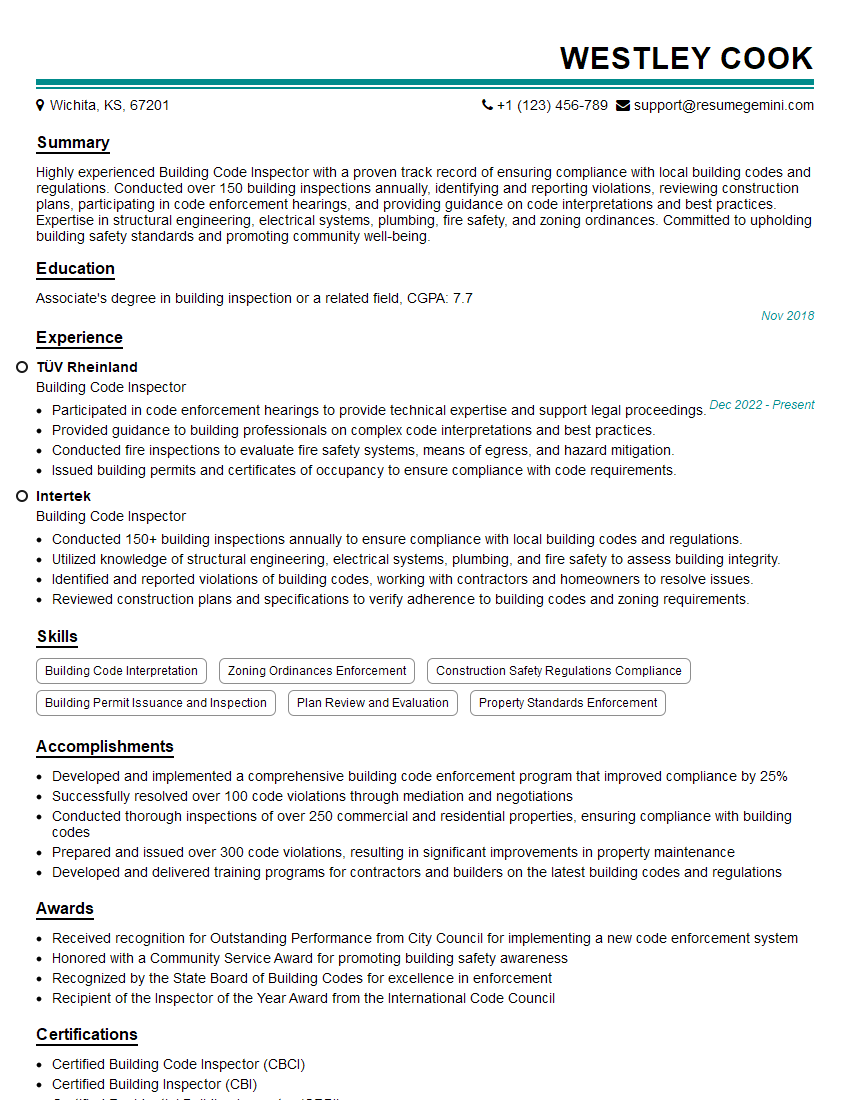
Mastering Zoning Code Enforcement and Inspections opens doors to a rewarding career with opportunities for growth and specialization. A strong understanding of these principles will significantly enhance your interview performance and position you for success in this field. To maximize your job prospects, create an ATS-friendly resume that effectively showcases your skills and experience. ResumeGemini is a trusted resource that can help you build a professional, impactful resume tailored to the specific requirements of Zoning Code Enforcement and Inspections positions. Examples of resumes tailored to this field are available to further guide your preparation.
Explore more articles
Users Rating of Our Blogs
Share Your Experience
We value your feedback! Please rate our content and share your thoughts (optional).
What Readers Say About Our Blog
To the interviewgemini.com Webmaster.
Very helpful and content specific questions to help prepare me for my interview!
Thank you
To the interviewgemini.com Webmaster.
This was kind of a unique content I found around the specialized skills. Very helpful questions and good detailed answers.
Very Helpful blog, thank you Interviewgemini team.