The thought of an interview can be nerve-wracking, but the right preparation can make all the difference. Explore this comprehensive guide to Zoning Compliance Enforcement interview questions and gain the confidence you need to showcase your abilities and secure the role.
Questions Asked in Zoning Compliance Enforcement Interview
Q 1. Explain the difference between a zoning variance and a zoning amendment.
A zoning variance and a zoning amendment are both ways to address situations where a property doesn’t comply with existing zoning regulations, but they differ significantly in their scope and process. Think of a zoning amendment as a large-scale change to the zoning rules themselves, while a variance is a smaller, specific exception granted to an individual property owner.
Zoning Amendment: This is a formal change to the zoning ordinance affecting a larger area, potentially impacting multiple properties or even an entire neighborhood. For example, a city might amend its zoning ordinance to allow for higher density housing in a previously low-density residential area. This requires a public hearing, significant community input, and approval from the relevant governing body (city council, planning commission, etc.).
Zoning Variance: A variance is a permission granted to a property owner to deviate from a specific zoning regulation. It’s usually granted when strict adherence to the regulation would create an undue hardship on the property owner. Imagine a lot that is slightly too narrow to meet the minimum lot width requirement for building a house. A variance could allow the house to be built despite this minor deviation. The variance process typically involves an application, review by zoning officials, and a possible hearing before a board of appeals.
In short: Amendments change the rules for everyone; variances grant exceptions to the rules for a specific property owner under specific circumstances.
Q 2. Describe your experience with reviewing site plans for zoning compliance.
My experience with reviewing site plans for zoning compliance is extensive. I’ve been involved in hundreds of projects, ranging from small residential additions to large-scale commercial developments. My review process involves a detailed examination of the plans against the applicable zoning ordinances. This includes verifying:
- Building setbacks: Ensuring the structure is the correct distance from property lines.
- Lot coverage: Confirming the percentage of the lot covered by buildings and impervious surfaces meets the regulations.
- Height restrictions: Checking that the building’s height doesn’t exceed the allowable limit.
- Parking requirements: Verifying sufficient parking spaces are provided as per the zoning ordinance.
- Use compliance: Ensuring the proposed use of the property aligns with the designated zoning district.
I’m adept at using GIS mapping software and zoning databases to quickly and accurately determine the applicable zoning requirements for each site. For example, I recently reviewed a site plan for a new daycare center. By cross-referencing the site plan with the zoning map and ordinance, I identified that a minor adjustment was needed to meet the required playground size. This prevented delays and potential violations later on.
Q 3. How do you handle a situation where a property owner is non-compliant with zoning regulations?
Handling non-compliance starts with a clear understanding of the violation. I first attempt to engage the property owner through education and communication. Often, a simple misunderstanding of the regulations is the root cause. A friendly letter explaining the violation, referencing the specific ordinance section, and outlining the necessary steps for correction is usually my first step.
If communication fails, I escalate the matter. This may involve issuing a formal notice of violation, outlining the timeline for compliance, and potential penalties for non-compliance. If the owner continues to ignore the notice, I will initiate enforcement actions. This can include fines, stop-work orders, and, in some cases, legal action. The goal is always compliance, but I’m firm in enforcing the regulations to ensure fairness and maintain the integrity of the zoning ordinances.
I had a case once where a homeowner had built a deck significantly extending beyond the allowed setback. After an initial letter, a follow-up meeting clarified their unawareness of the regulations. We worked collaboratively to modify the deck to meet compliance, averting a costly and time-consuming legal battle.
Q 4. What are the common zoning violations you’ve encountered and how did you address them?
Common zoning violations I’ve encountered include:
- Illegal additions or structures: Building additions or structures without obtaining necessary permits.
- Parking violations: Insufficient parking spaces or improper parking layout.
- Setback violations: Structures too close to property lines.
- Height violations: Exceeding the maximum allowable building height.
- Use violations: Using a property for a purpose not allowed in the zoning district (e.g., operating a business in a residential zone).
My approach to addressing these violations is consistent: First, I verify the violation through site visits and record review. I then communicate the violation to the property owner, providing specific details and offering the opportunity to correct the issue. If the violation remains uncorrected, I progress through the enforcement steps outlined previously, always documenting all actions taken.
Q 5. Describe your process for investigating zoning complaints.
My process for investigating zoning complaints begins with documenting all details received. This includes the nature of the complaint, the address of the property in question, and the name and contact information of the complainant (if provided). I then conduct a thorough site investigation, which often includes:
- Review of aerial and site photographs: To gain a visual understanding of the property and potential violations.
- On-site inspection: To physically verify the reported violation and document the findings through photos and detailed notes.
- Review of relevant records: This includes building permits, property records, and the zoning ordinance to determine compliance.
- Communication with the property owner: To understand their perspective and potentially facilitate a resolution.
After the investigation is complete, I compile a report summarizing the findings and recommending appropriate action. This report might support a dismissal of the complaint, recommend corrective action by the property owner, or initiate formal enforcement proceedings.
Q 6. How familiar are you with zoning ordinances and building codes?
My familiarity with zoning ordinances and building codes is extensive. I have a deep understanding of how these regulations interact and influence development. I’m proficient in interpreting complex legal language and applying these regulations to specific situations. I regularly attend training sessions and workshops to remain updated on changes in regulations and best practices. My understanding extends beyond mere familiarity; I actively use this knowledge daily in my work. I am also very comfortable working with GIS software and databases to locate and interpret zoning maps and relevant ordinance text.
Q 7. How do you interpret zoning maps and regulations?
Interpreting zoning maps and regulations involves a systematic approach. I start by identifying the property’s location on the zoning map to determine the designated zoning district. Next, I consult the text of the zoning ordinance for that specific district, carefully reading the regulations for permitted uses, building height restrictions, setbacks, parking requirements, lot coverage, and other relevant criteria.
I understand that zoning maps are visual representations of the written regulations, and both must be considered together. Inconsistencies between the map and the text require a careful analysis to determine the correct interpretation. I’m proficient in using GIS software to accurately locate property boundaries and overlay various data layers to facilitate a comprehensive interpretation. Think of it as a puzzle where the map and the ordinance text are the pieces that need to fit together to fully understand the zoning regulations governing a particular property.
Q 8. Explain your experience with issuing notices of violation.
Issuing a Notice of Violation (NOV) is a critical step in zoning enforcement. It’s a formal document that informs a property owner about a zoning code violation. The process begins with identifying the violation during an inspection. Then, I meticulously document the infraction, including photos and detailed descriptions. The NOV itself clearly states the specific violation, referencing the relevant zoning ordinance section. It also outlines the steps the property owner must take to correct the issue, including deadlines and potential penalties for non-compliance. I’ve issued hundreds of NOVs throughout my career, ranging from minor landscaping issues to significant structural modifications done without permits. For example, I issued an NOV to a homeowner who built a deck exceeding the allowed height limit in their residential zone. The NOV clearly stated the violation, the ordinance violated, the required corrective actions, and the deadline for compliance. Failure to comply would result in further penalties.
Q 9. Describe your experience with conducting zoning inspections.
Zoning inspections are the cornerstone of enforcement. My experience involves conducting both planned and reactive inspections. Planned inspections are routine checks to ensure ongoing compliance across various properties. Reactive inspections are triggered by complaints, observed violations, or permit applications. During an inspection, I carefully examine the property for any discrepancies from the zoning regulations. This includes verifying building setbacks, assessing land use, evaluating parking requirements, and checking for compliance with signage rules. I meticulously document every aspect of the inspection, taking photos and making detailed notes. This detailed record is crucial for building a strong case should a violation be found. For instance, I once conducted an inspection prompted by a neighbor’s complaint about illegal parking in a commercial zone. My thorough inspection confirmed the violation, leading to the issuance of an NOV and subsequent corrective action by the property owner.
Q 10. How do you prioritize multiple zoning compliance cases?
Prioritizing zoning compliance cases requires a strategic approach. I use a system that balances urgency and impact. Cases involving imminent safety hazards or significant public health concerns always take precedence. I also prioritize cases based on the severity of the violation, the potential environmental impact, and the history of compliance from the property owner. I maintain a detailed case management system that allows me to track the status of each case and allocate resources efficiently. A simple analogy would be a hospital triage system – the most critical cases receive immediate attention. For example, a case involving illegal dumping of hazardous materials would be prioritized over a minor landscaping issue. The system ensures fairness and effectiveness in managing the workflow.
Q 11. How do you communicate zoning regulations to property owners?
Communicating zoning regulations effectively is paramount. I utilize a multi-pronged approach. First, I provide clear and concise written explanations, avoiding technical jargon as much as possible. Second, I offer face-to-face meetings to explain complex regulations in person. This allows for a direct dialogue where the property owner can ask questions and clarify any misunderstandings. Third, I utilize visual aids such as maps and diagrams to illustrate zoning boundaries and requirements. Finally, I leverage readily accessible resources like the municipality’s website or educational brochures. For example, I helped a new business owner understand parking requirements by showing him a map highlighting the designated parking spaces for his commercial zone. Clarity and patience are key to successful communication.
Q 12. What is your experience with resolving zoning disputes?
Resolving zoning disputes often involves mediation and negotiation. I strive to find mutually agreeable solutions that adhere to zoning regulations. This may involve helping the property owner understand their options for correcting the violation or exploring alternative solutions. If negotiation fails, I guide the process towards formal resolution pathways, which could include hearings before zoning boards or legal action. I always prioritize finding a fair and equitable resolution while upholding the zoning code. For instance, I mediated a dispute between neighbors regarding a fence encroaching on property lines. Through discussion and compromise, we reached a solution that satisfied both parties and was compliant with zoning.
Q 13. Explain your experience with the legal aspects of zoning enforcement.
A strong understanding of the legal aspects of zoning enforcement is crucial. This includes familiarity with relevant state and local ordinances, court procedures, and legal precedents. I understand the proper procedures for issuing NOVs, conducting hearings, and pursuing legal action when necessary. I’m also aware of due process rights and ensure all actions comply with legal standards. For example, I understand the requirements for providing proper notice to property owners, the standards of evidence needed in a hearing, and the potential penalties for non-compliance. My knowledge ensures that enforcement actions are legally sound and effective.
Q 14. How familiar are you with different types of zoning districts (e.g., residential, commercial, industrial)?
I’m highly familiar with various zoning districts and their regulations. I understand the distinctions between residential zones (R-1, R-2, etc.), commercial zones (C-1, C-2, etc.), industrial zones (I-1, I-2, etc.), and mixed-use zones. Each district has specific rules regarding building height, density, permitted uses, parking requirements, setbacks, and signage. My knowledge extends to understanding the rationale behind these designations and how they contribute to the overall planning and development of a community. For example, I know that an industrial zone would have different regulations regarding noise levels, emissions, and the types of businesses permitted compared to a residential zone.
Q 15. How do you maintain accurate records of zoning compliance cases?
Maintaining accurate records in zoning compliance is crucial for transparency, accountability, and efficient enforcement. We utilize a comprehensive, multi-faceted approach. This includes a dedicated database management system, often integrated with GIS (Geographic Information System) software. This system allows for detailed tracking of each case, from initial complaint or inspection to final resolution.
- Case Files: Each case has a dedicated digital file containing all relevant documents: complaints, inspection reports, photographs, correspondence with property owners, and any legal documentation.
- Database Tracking: The database meticulously records key information: property address, case ID, violation type, status of the case (e.g., open, pending appeal, closed), dates of inspections and actions taken, and the names of individuals involved.
- Version Control: To prevent data loss and maintain audit trails, we utilize version control systems, ensuring every change made to a case file is documented and easily retrievable.
- Regular Data Backups: Robust data backup procedures, both on-site and off-site, safeguard against data loss due to hardware failure or other unforeseen events.
Think of it like a well-organized library – every book (case) has its own place, is clearly labeled, and can be easily found and accessed when needed. This ensures that all information remains readily available for reviews, audits, and potential legal proceedings.
Career Expert Tips:
- Ace those interviews! Prepare effectively by reviewing the Top 50 Most Common Interview Questions on ResumeGemini.
- Navigate your job search with confidence! Explore a wide range of Career Tips on ResumeGemini. Learn about common challenges and recommendations to overcome them.
- Craft the perfect resume! Master the Art of Resume Writing with ResumeGemini’s guide. Showcase your unique qualifications and achievements effectively.
- Don’t miss out on holiday savings! Build your dream resume with ResumeGemini’s ATS optimized templates.
Q 16. Describe your experience with using GIS software for zoning enforcement.
GIS software is an indispensable tool in zoning enforcement. It allows us to visualize properties, overlay zoning districts, and pinpoint violations with unprecedented accuracy. My experience includes using ArcGIS and QGIS to:
- Map Zoning Districts: GIS enables us to quickly identify properties within specific zoning districts, facilitating efficient targeting of potential violations and proactive inspections.
- Identify Violations: By overlaying building footprints and land use data on zoning maps, we can readily detect discrepancies, such as unauthorized structures or land use changes.
- Track Enforcement Actions: GIS allows for the mapping of enforcement actions, providing a visual representation of activity across the jurisdiction, which helps prioritize resources and identify trends.
- Create Reports and Visualizations: GIS facilitates the generation of maps and reports that are easily understandable to both internal stakeholders and the public, enhancing transparency and community engagement. For instance, I’ve created maps showing the concentration of code violations in particular neighborhoods to inform resource allocation decisions.
For example, I recently used GIS to identify a property that had expanded its commercial footprint without the necessary permits. The visual overlay immediately showed the encroachment beyond the permitted boundaries, leading to swift action.
Q 17. How do you handle situations involving appeals of zoning decisions?
Appeals of zoning decisions are a normal part of the process and are addressed fairly and according to established procedures. The process typically involves:
- Formal Appeal Submission: Appellants must submit a formal appeal, outlining their reasons and providing supporting evidence within a specified timeframe.
- Review of Appeal: The appeal is carefully reviewed by designated personnel to ensure it meets all procedural requirements. This often includes verifying the validity of claims and ensuring adherence to established timelines.
- Mediation (if applicable): In some cases, mediation is attempted to resolve the issue without formal hearing.
- Formal Hearing: If the appeal is not resolved through mediation, a formal hearing is held before the Zoning Board of Appeals (ZBA) or a similar body. Both sides present their cases, and the ZBA renders a decision based on applicable regulations and presented evidence.
- Decision and Notification: The ZBA issues a written decision, which is communicated to all parties involved. This decision is binding unless appealed further through the judicial system.
It’s crucial to meticulously document every step of the appeals process, ensuring transparency and accountability. We maintain detailed records of all appeals, including the reasons for appeal, the evidence submitted, the ZBA’s decision, and any subsequent actions taken.
Q 18. What is your understanding of zoning board of appeals procedures?
The Zoning Board of Appeals (ZBA) is a quasi-judicial body responsible for hearing and deciding appeals related to zoning ordinances. My understanding encompasses:
- Jurisdiction: The ZBA has the authority to grant variances, special exceptions, and other relief from strict adherence to zoning regulations under specific circumstances.
- Hearing Procedures: The ZBA follows established procedural rules, ensuring fairness and due process for all parties involved. This includes providing notice of hearings, allowing for presentations of evidence and arguments, and rendering a reasoned decision.
- Legal Standards: ZBA decisions must be based on applicable laws, zoning ordinances, and established precedents. They are expected to consider the public interest and the impact on surrounding properties.
- Decision-Making: ZBA decisions are usually made by a majority vote of its members. These decisions are generally binding unless challenged in court.
Understanding the ZBA’s procedures is crucial for effective zoning enforcement. Knowing their powers and limitations helps us anticipate potential challenges and effectively address zoning disputes. For example, understanding when a variance is appropriate versus when a full amendment to the zoning ordinance is required is critical.
Q 19. How do you ensure fairness and impartiality in your zoning enforcement activities?
Fairness and impartiality are paramount in zoning enforcement. To ensure this, we adhere to strict procedures:
- Consistent Application of Regulations: We apply zoning regulations consistently and fairly to all properties, regardless of the owner or the neighborhood. This minimizes bias and promotes equity.
- Objective Assessment of Violations: When assessing a potential violation, we rely on objective evidence and measurements, avoiding personal opinions or subjective interpretations.
- Due Process: We ensure property owners are given adequate notice of any alleged violations and opportunities to respond, present evidence, and appeal any decisions.
- Transparency: All actions are well documented and accessible to the public, promoting transparency and accountability. This allows for scrutiny of our actions and builds trust.
- Conflict of Interest Avoidance: We meticulously avoid any situations that could create a conflict of interest, ensuring decisions are based solely on the merits of the case.
For instance, if a property owner disputes a violation, we gather all necessary data and evidence before making a decision. We clearly explain the basis for the decision, enabling them to understand why action is being taken, fostering cooperation and respect.
Q 20. Describe your experience with working collaboratively with other departments (e.g., building, planning).
Collaboration with other departments, such as Building Inspections and Planning, is essential for effective zoning enforcement. Examples of collaborative work include:
- Joint Inspections: We frequently conduct joint inspections with building inspectors to ensure compliance with both zoning and building codes, often resulting in a more efficient and thorough evaluation.
- Data Sharing: We share data and information with the planning department to identify potential zoning issues early, especially during the development review process. This can often prevent violations from happening in the first place.
- Coordinated Enforcement: We coordinate enforcement actions with other departments to ensure a consistent approach and avoid conflicting actions. For instance, we might work together to address issues with illegal signage or unpermitted construction.
- Shared Training: We regularly participate in joint training sessions to improve communication, coordination, and understanding of each department’s roles and responsibilities.
For example, we recently worked with the Planning Department to revise our zoning regulations for a new mixed-use development. This collaborative effort resulted in regulations that better balance economic development goals with community needs, leading to improved overall compliance.
Q 21. How do you stay current with changes in zoning regulations and building codes?
Staying current with changes in zoning regulations and building codes is vital for effective enforcement. We use several methods:
- Professional Development: We actively participate in professional development courses and workshops offered by organizations such as the International Code Council (ICC) to stay up-to-date on code changes and best practices.
- Subscription to Regulatory Updates: We subscribe to newsletters, journals, and online resources that provide regular updates on changes to zoning regulations and building codes at both the local and state levels.
- Attendance at Industry Events: Attending conferences and seminars helps us connect with other professionals and learn about new technologies and approaches to enforcement.
- Regular Review of Codes: We regularly review and update our internal databases and resources to reflect any changes in the codes. This includes incorporating new interpretations and case law.
- Networking with Other Jurisdictions: Staying in contact with other zoning and building departments allows us to learn about challenges and successes other agencies have faced and how they solved them.
This proactive approach ensures we are always aware of the most current regulations and can apply them consistently and accurately. For example, the recent updates to accessibility codes required a review of all relevant case files and a comprehensive retraining of staff to ensure consistent application of the new standards.
Q 22. What strategies do you employ to improve zoning compliance within a community?
Improving zoning compliance requires a multi-pronged approach focusing on proactive measures, community engagement, and effective enforcement. It’s not just about punishing violations, but fostering a culture of understanding and adherence.
Education and Outreach: We need to make zoning regulations accessible and understandable. This involves creating clear, concise materials – brochures, websites, videos – and holding workshops and public forums to explain the ‘why’ behind the regulations, not just the ‘what’. For example, explaining how setbacks protect against flooding or how density regulations impact traffic flow helps residents see the benefit.
Proactive Inspections and Monitoring: Regular inspections, especially in high-risk areas or during periods of significant construction, help identify potential violations early. Technology, such as GIS mapping and drone surveillance, can significantly enhance these efforts (as discussed in a later answer).
Streamlined Permitting Process: A slow or confusing permitting process can incentivize non-compliance. Streamlining the application process, providing clear guidance, and ensuring timely review minimizes frustration and encourages adherence.
Community Partnerships: Building relationships with neighborhood associations, developers, and other stakeholders is crucial. This collaborative approach can foster a shared understanding of the zoning goals and facilitate early problem-solving.
Incentive Programs: Offering incentives for compliance, such as expedited permitting or reduced fees for projects that adhere to regulations, can positively influence behavior.
Q 23. How would you handle a situation where a property owner refuses to comply with a zoning order?
Handling non-compliance requires a systematic and measured response. The goal is to achieve compliance, not necessarily punishment. My approach follows these steps:
Formal Notice and Warning: First, the property owner receives a formal written notice outlining the violation and detailing the required corrective action. This is accompanied by a clear timeline for compliance.
Mediation and Negotiation: I attempt to resolve the issue through dialogue and negotiation, exploring possible compromises that address the zoning concerns while considering the owner’s perspective. Perhaps there’s a minor variance that can be granted or an alternative solution that meets the spirit of the regulations.
Administrative Enforcement: If negotiation fails, administrative actions, such as fines or suspension of permits, may be necessary. These actions are always documented meticulously and follow established procedures.
Legal Action: As a last resort, we may pursue legal action, including court injunctions to force compliance. This step is taken only when all other avenues have been exhausted and the violation poses a significant threat to public safety or the integrity of the zoning code.
Throughout this process, transparent communication and clear documentation are paramount. Each step is carefully recorded, providing a clear audit trail and ensuring fairness and accountability.
Q 24. Explain your experience with utilizing technology to improve zoning compliance enforcement.
Technology has revolutionized zoning compliance enforcement. In my previous role, we implemented several tech solutions to enhance efficiency and effectiveness.
Geographic Information Systems (GIS): GIS mapping allows us to visualize zoning districts, property boundaries, and permit data, enabling efficient identification of potential violations and monitoring of construction activity. We used this to create interactive maps accessible to the public, increasing transparency and understanding.
Online Permitting System: Moving to an online permitting system streamlined the application process, reduced processing time, and improved tracking of permit compliance. This system also allowed for automated notifications and reminders, minimizing oversight and improving communication.
Drone Surveillance: Drone technology offers a cost-effective and efficient way to monitor large areas for unauthorized construction or land use changes. The aerial perspective allows for quick identification of violations that might be missed from ground level. We used this particularly for large-scale construction projects.
Data Analytics: By analyzing data from various sources (permits, inspections, complaints), we identified patterns and trends in non-compliance, allowing us to focus resources more effectively on high-risk areas or common types of violations.
The integration of these technologies has significantly improved our response times, reduced administrative burden, and increased overall efficiency in enforcing zoning regulations.
Q 25. What are your strengths and weaknesses in the context of zoning compliance?
My strengths lie in my ability to combine a strong understanding of zoning law with effective communication and problem-solving skills. I am detail-oriented, ensuring thoroughness in my inspections and investigations. I also excel at building consensus and fostering positive relationships with stakeholders. My experience in public speaking and presentation allows for effective dissemination of information and engagement with the community.
My potential weakness is a tendency to be perfectionistic, which can sometimes slow down the decision-making process. I am actively working to improve my time management skills to balance this perfectionism with the need for timely action. I also recognize the importance of continuing education to stay current with evolving zoning regulations and technologies.
Q 26. How do you balance enforcement with promoting economic development within a community?
Balancing enforcement with economic development is a critical aspect of effective zoning management. It’s not an either/or situation; rather, it’s about finding the optimal balance that fosters both responsible growth and community well-being. This requires a nuanced understanding of the community’s unique needs and goals.
Targeted Enforcement: Focusing enforcement efforts on serious violations that pose risks to public safety or community character while being more flexible on minor infractions.
Proactive Collaboration: Working closely with developers early in the planning process, providing guidance to ensure that projects comply with zoning regulations while also allowing for innovative and economically viable designs.
Incentive Zoning: Employing incentive-based zoning approaches to encourage development that aligns with community goals. This might involve bonus density allowances for projects that include affordable housing or green building features.
Variance and Special Exception Processes: Utilizing these mechanisms to accommodate projects that might not perfectly conform to existing regulations but still contribute positively to the community. These processes need to be transparent and fairly applied.
Ultimately, the goal is to create a regulatory environment that promotes responsible growth and investment while protecting the quality of life for residents. This requires a careful and adaptive approach that considers both short-term and long-term implications.
Q 27. Describe your experience with conducting public presentations on zoning regulations.
I have extensive experience presenting zoning regulations to diverse audiences, ranging from neighborhood groups to developers to community boards. My presentations are designed to be informative, engaging, and accessible to all, regardless of their background in zoning law.
Clear and Concise Language: I avoid jargon and use plain language to explain complex regulations. Visual aids, such as maps, charts, and photographs, are incorporated to illustrate key concepts.
Interactive Format: I encourage audience participation through question-and-answer sessions and interactive exercises. This fosters a two-way dialogue and allows me to address specific concerns and misconceptions.
Targeted Content: I tailor the content of my presentations to the specific audience. For example, a presentation to a neighborhood association will differ significantly from a presentation to developers.
Follow-up Materials: I provide handouts and online resources to reinforce key points and provide additional information for those who wish to delve deeper into the subject.
Effective communication is essential for building community support and fostering compliance with zoning regulations. My presentations aim to be not only informative but also to build trust and collaboration.
Q 28. How do you measure the effectiveness of your zoning compliance enforcement efforts?
Measuring the effectiveness of zoning compliance enforcement requires a multi-faceted approach. It’s not simply about the number of citations issued; it’s about the overall impact on the community.
Violation Rates: Tracking the number and types of zoning violations over time provides a baseline measure of compliance. A decrease in violation rates suggests that enforcement efforts are effective.
Community Satisfaction Surveys: Gathering feedback from residents on their perception of zoning enforcement and their level of satisfaction with the process. This helps identify areas for improvement and assess the impact on quality of life.
Data Analysis: Analyzing data on permitting, inspections, and violations to identify trends and patterns. This can help focus resources on areas with high non-compliance rates or specific types of violations.
Economic Development Indicators: Monitoring economic development indicators such as building permits issued, property values, and investment in the community. Effective zoning enforcement should contribute to a healthy and sustainable economic climate.
Compliance Rate: Calculating the percentage of permits and projects that are fully compliant with zoning regulations. This provides a quantitative measure of the success of enforcement efforts.
By using a combination of quantitative and qualitative data, we can gain a comprehensive understanding of the effectiveness of our zoning compliance enforcement efforts and make adjustments as needed.
Key Topics to Learn for Zoning Compliance Enforcement Interview
- Zoning Ordinances and Regulations: Understanding the nuances of local, regional, and potentially state zoning codes. This includes interpreting complex legal language and identifying key provisions.
- Code Enforcement Procedures: Mastering the practical steps involved in investigating potential zoning violations, from initial complaint to final enforcement action. This includes documentation, evidence gathering, and communication with property owners.
- Building Codes and Inspections: Familiarity with building codes and how they intersect with zoning regulations. Understanding the inspection process and identifying discrepancies between approved plans and actual construction.
- Land Use Planning Principles: A grasp of fundamental land use planning concepts, including comprehensive planning, urban design, and environmental considerations. This allows you to contextualize zoning regulations within a broader framework.
- Conflict Resolution and Communication: Developing effective communication skills to address concerns of property owners, developers, and other stakeholders. Knowing how to navigate difficult conversations and reach mutually acceptable solutions.
- Legal Aspects of Enforcement: Understanding the legal ramifications of enforcement actions, including due process, appeals, and potential legal challenges. This includes knowledge of relevant case law and legal precedents.
- Data Analysis and Reporting: Proficiency in analyzing data related to zoning violations, generating reports, and tracking enforcement activities. This often involves using databases and reporting software.
- Technology and GIS: Familiarity with using Geographic Information Systems (GIS) software and other technology tools to map properties, track violations, and visualize land use data.
Next Steps
Mastering Zoning Compliance Enforcement opens doors to a rewarding career with opportunities for advancement and specialization. To maximize your job prospects, crafting an ATS-friendly resume is crucial. This ensures your application gets noticed by hiring managers. We strongly recommend using ResumeGemini to build a compelling and effective resume tailored to the specifics of this field. ResumeGemini provides valuable resources and examples of resumes specifically designed for Zoning Compliance Enforcement professionals, helping you showcase your skills and experience in the best possible light.
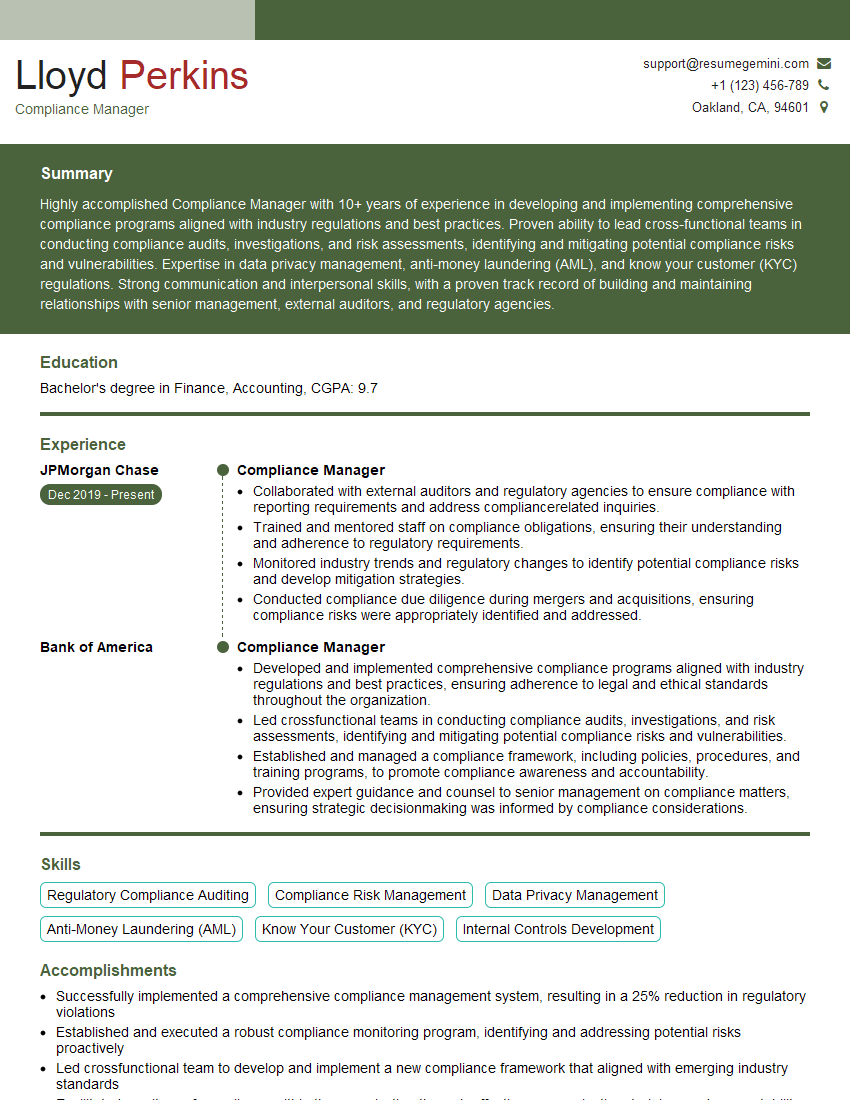
Compliance Manager Resume Sample
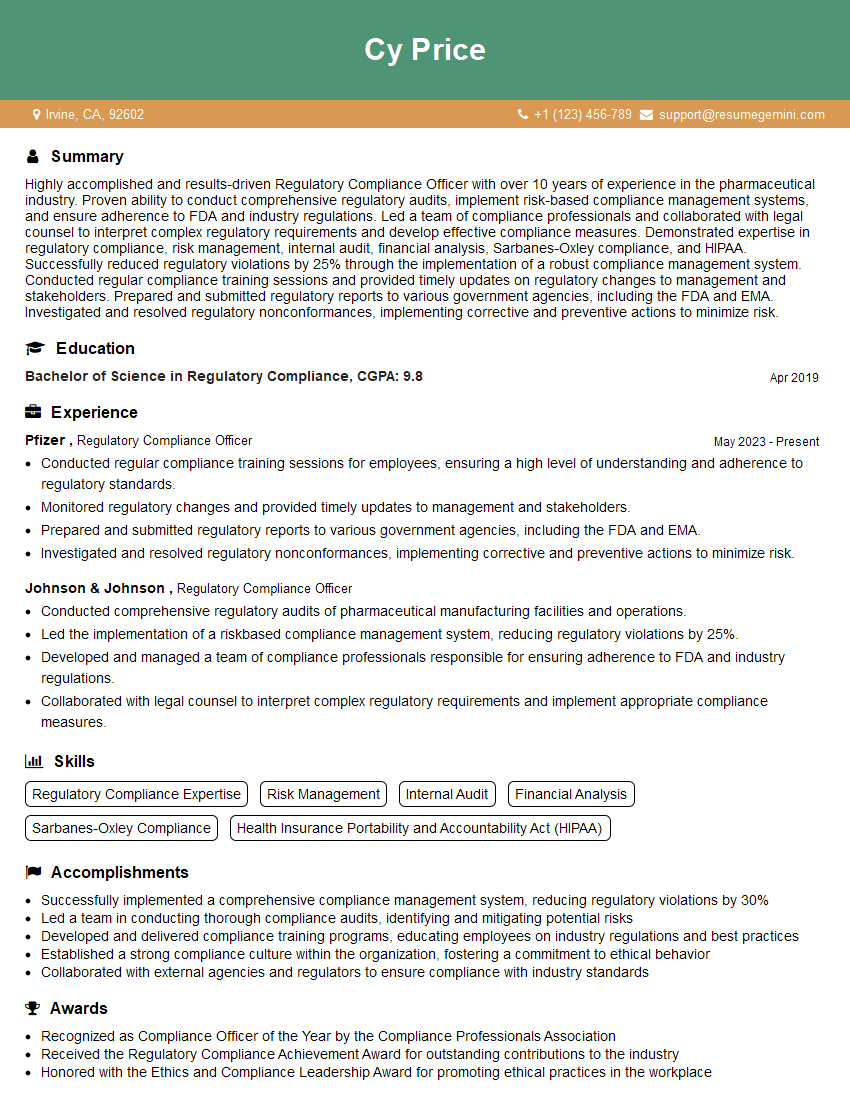
Regulatory Compliance Officer Resume Sample
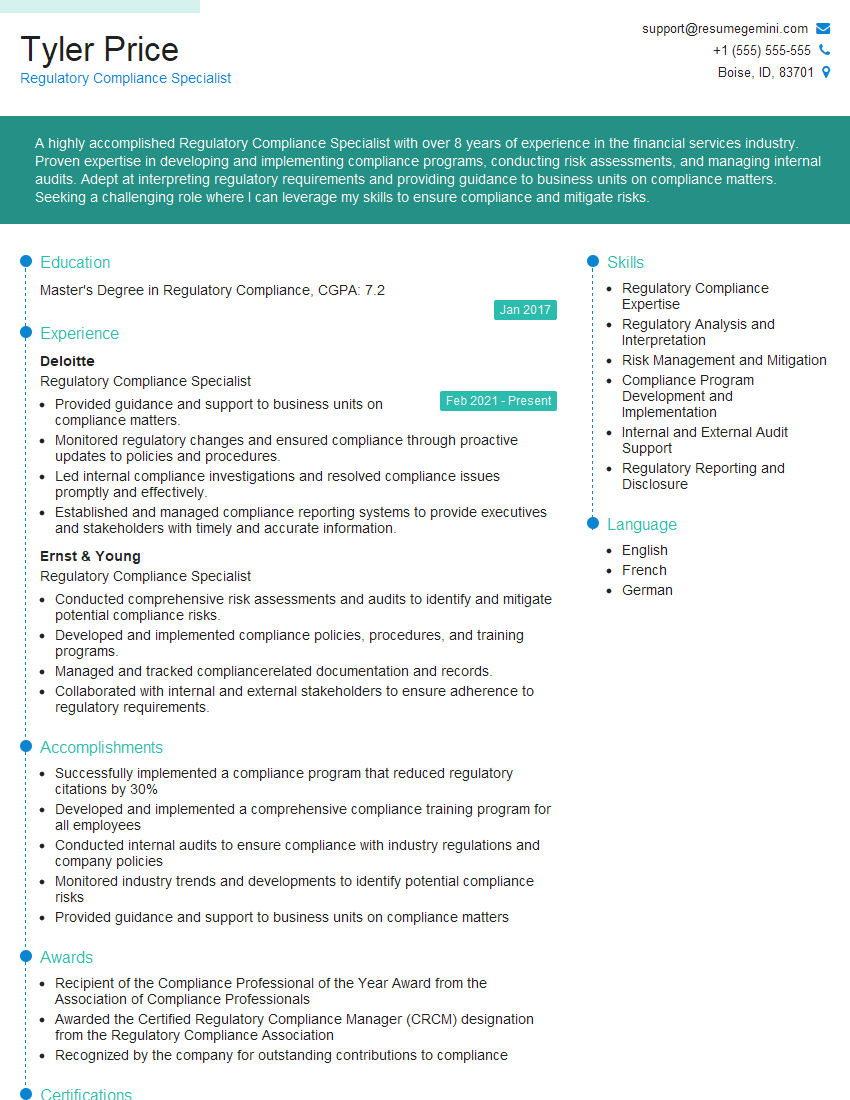
Regulatory Compliance Specialist Resume Sample
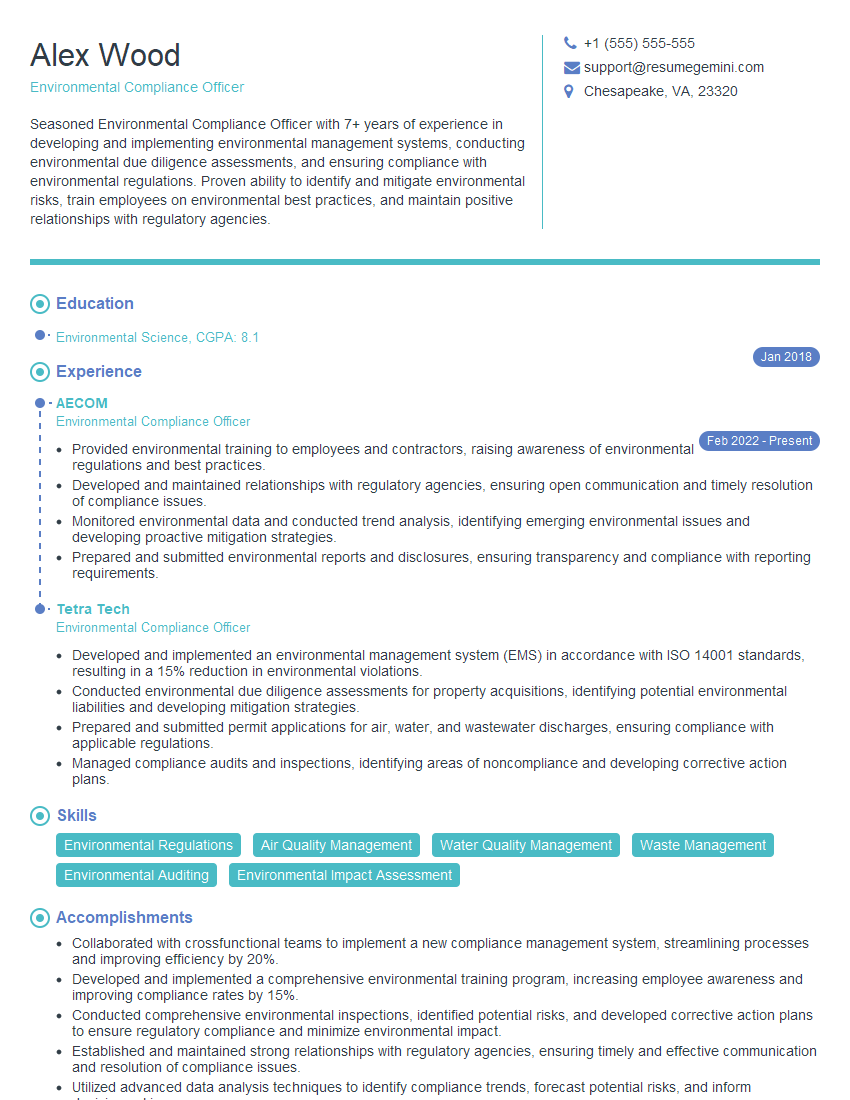
Environmental Compliance Officer Resume Sample
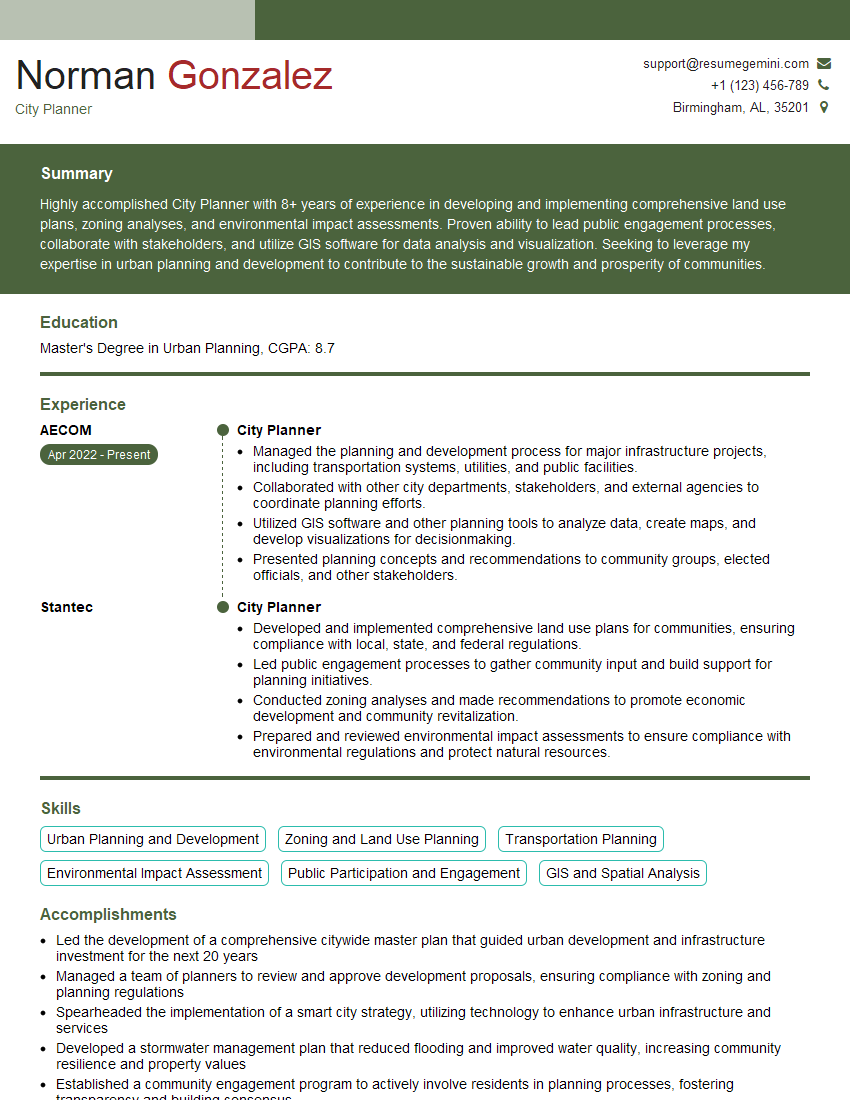
City Planner Resume Sample
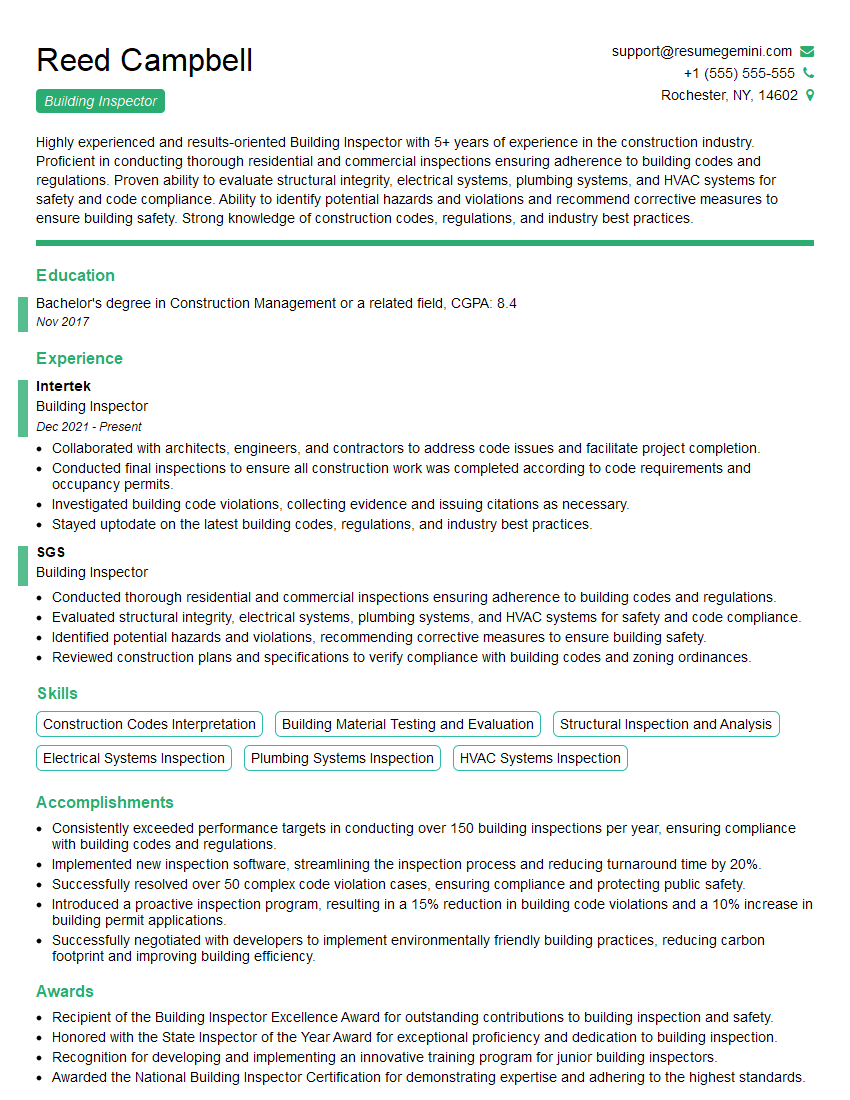
Building Inspector Resume Sample
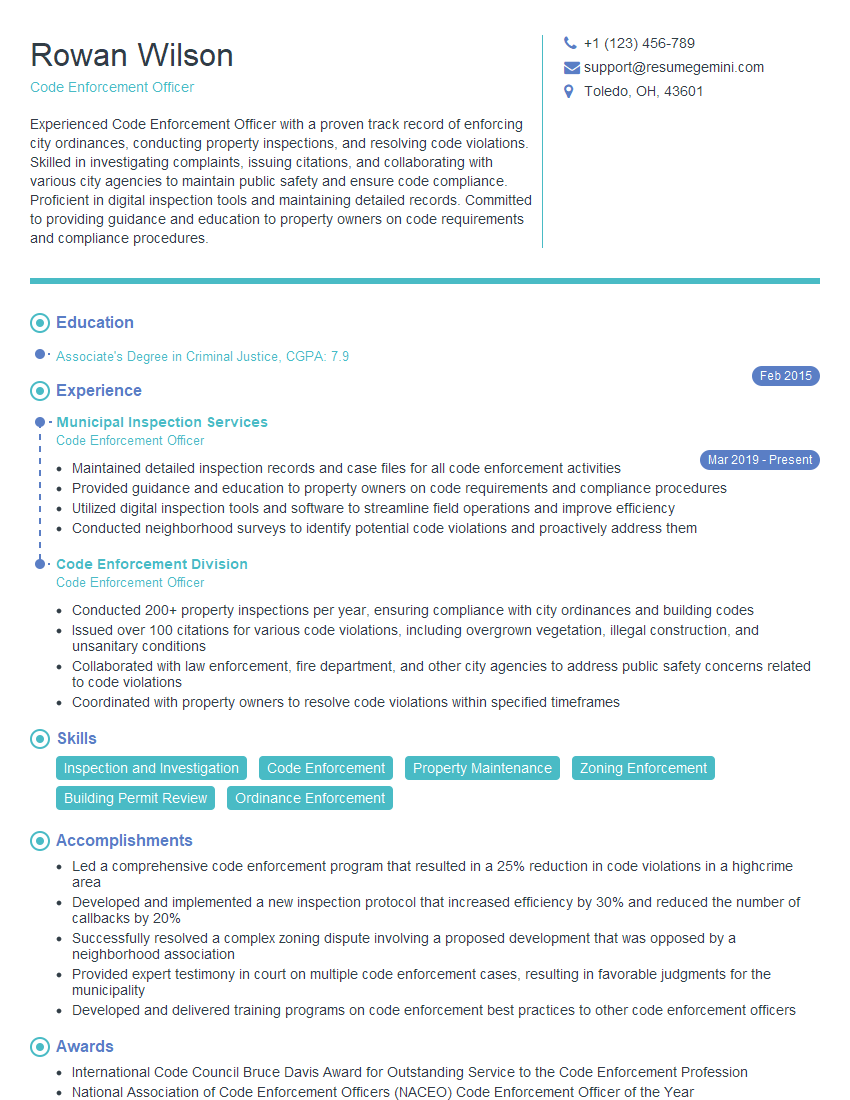
Code Enforcement Officer Resume Sample
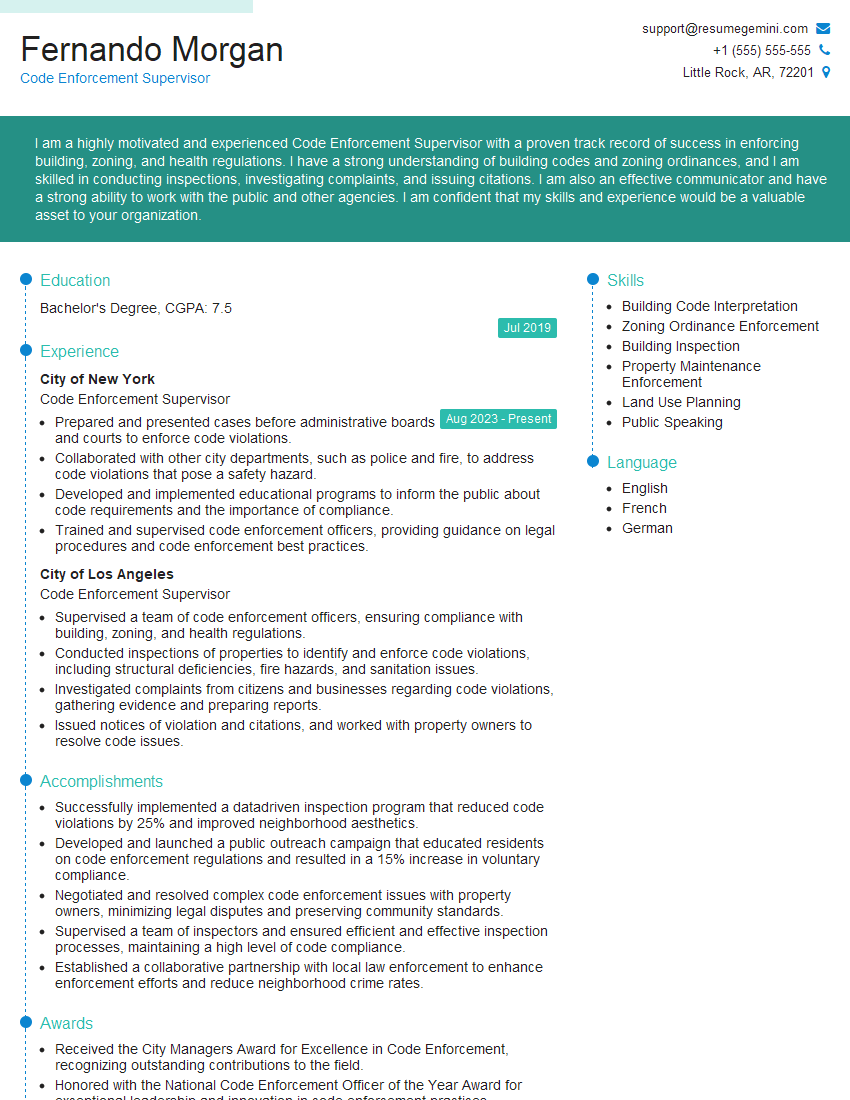
Code Enforcement Supervisor Resume Sample
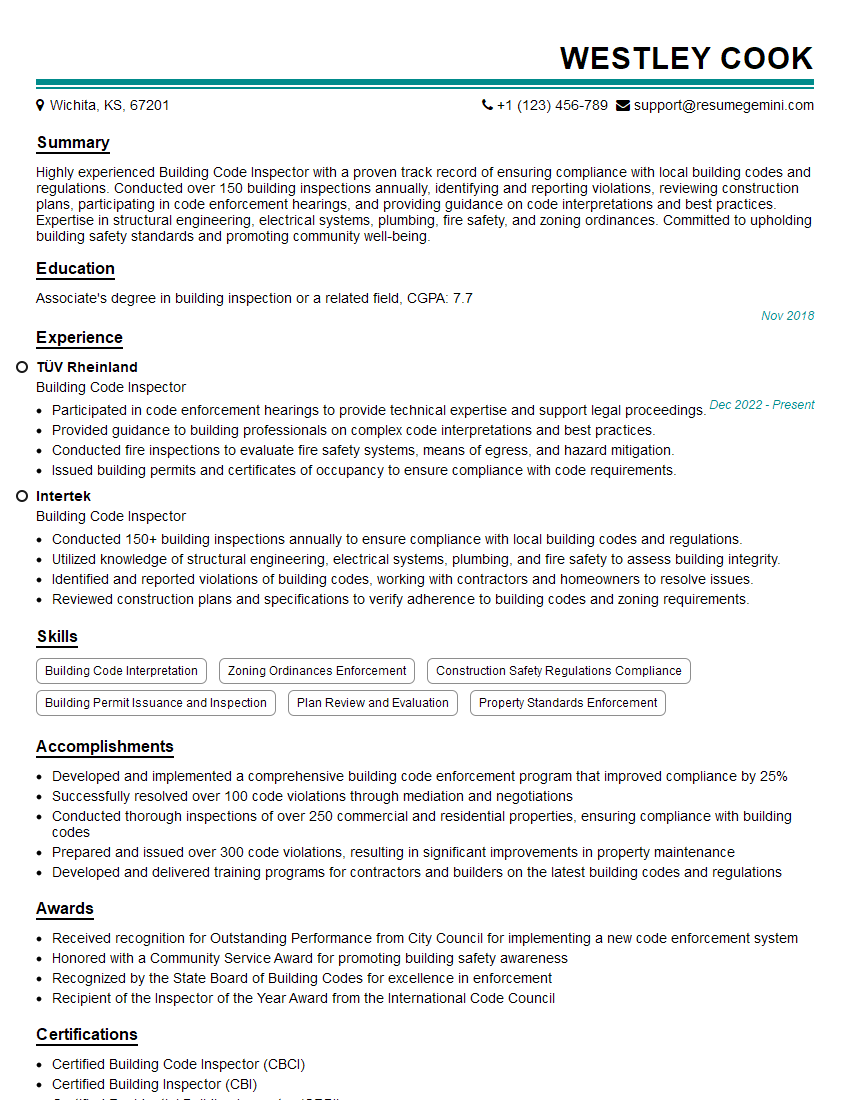
Building Code Inspector Resume Sample
Explore more articles
Users Rating of Our Blogs
Share Your Experience
We value your feedback! Please rate our content and share your thoughts (optional).
What Readers Say About Our Blog
To the interviewgemini.com Webmaster.
Very helpful and content specific questions to help prepare me for my interview!
Thank you
To the interviewgemini.com Webmaster.
This was kind of a unique content I found around the specialized skills. Very helpful questions and good detailed answers.
Very Helpful blog, thank you Interviewgemini team.