Unlock your full potential by mastering the most common Welder Certification interview questions. This blog offers a deep dive into the critical topics, ensuring you’re not only prepared to answer but to excel. With these insights, you’ll approach your interview with clarity and confidence.
Questions Asked in Welder Certification Interview
Q 1. What welding processes are you certified in?
I hold certifications in several welding processes, reflecting a broad range of skills applicable to diverse projects. My certifications include:
- Gas Metal Arc Welding (GMAW) or MIG: Certified to AWS D1.1 standards for various thicknesses and materials.
- Gas Tungsten Arc Welding (GTAW) or TIG: Certified to AWS D1.1 standards, with specific expertise in thin-gauge materials and precision work.
- Shielded Metal Arc Welding (SMAW) or Stick: Certified to AWS D1.1 standards, particularly adept at outdoor and challenging environments.
These certifications demonstrate my proficiency in adhering to safety regulations and producing high-quality welds consistently across different applications. My certifications are regularly updated to reflect the latest industry best practices and advancements in welding technology.
Q 2. Explain the difference between MIG and TIG welding.
MIG and TIG welding are both arc welding processes, but they differ significantly in their techniques and applications. Think of it like this: MIG is like using a spray gun for a broad, quick coat of paint, while TIG is like using a fine brush for detailed, meticulous work.
- MIG (Gas Metal Arc Welding): Uses a continuously fed wire electrode, acting as both the filler metal and the electrode. The wire feeds automatically, providing a fast and efficient welding process suitable for mass production. It’s forgiving for beginners due to its self-shielding nature and is ideal for joining thicker materials.
- TIG (Gas Tungsten Arc Welding): Employs a non-consumable tungsten electrode to create the arc. Filler metal is added separately, allowing for precise control over the weld bead. This process provides superior weld quality, particularly in terms of aesthetics and strength, and is preferred for thin materials and applications requiring high precision.
In essence, MIG prioritizes speed and efficiency, while TIG emphasizes precision and quality. The choice between them depends entirely on the project requirements.
Q 3. Describe your experience with different types of filler metals.
My experience encompasses a wide range of filler metals, each with specific properties suited to different base materials and applications. For example:
- Mild Steel Filler Metals: I’m proficient in using various ER70S-6 wires in MIG welding, and E6010/E7018 electrodes in SMAW, for common steel fabrication projects.
- Stainless Steel Filler Metals: My experience includes using 308L and 316L filler metals in both TIG and MIG welding for stainless steel applications requiring corrosion resistance.
- Aluminum Filler Metals: I’m experienced in using 4043 and 5356 filler metals in TIG welding for aluminum alloys, mastering the challenges presented by this material’s unique characteristics.
- Specialty Filler Metals: My work also includes experience with nickel alloys and other specialty filler metals for high-temperature or corrosive environments.
Selecting the appropriate filler metal is crucial for achieving optimal weld quality and performance. The wrong filler metal can lead to porosity, cracking, or other defects.
Q 4. What safety precautions do you take when welding?
Safety is paramount in welding. I religiously follow a comprehensive safety protocol, including:
- Personal Protective Equipment (PPE): Always wearing a welding helmet with appropriate shade lenses, flame-resistant clothing, gloves, and safety footwear.
- Ventilation: Ensuring adequate ventilation to minimize exposure to welding fumes and gases. This often involves using a dedicated ventilation system or working in a well-ventilated area.
- Fire Prevention: Maintaining a clean workspace, removing combustible materials, and having a fire extinguisher readily available.
- Eye Protection: Protecting myself and others nearby from sparks and UV radiation.
- Proper Handling of Materials: Handling cylinders and other materials according to safety regulations, with attention to proper storage and use.
My commitment to safety extends to pre-job risk assessments and regular checks of equipment to prevent accidents. Safety is not just a policy; it’s an ingrained habit.
Q 5. How do you ensure the quality of your welds?
Ensuring weld quality involves a multifaceted approach that starts before the welding process even begins:
- Proper Joint Preparation: Ensuring clean, properly fitting joints, free of contaminants.
- Correct Welding Parameters: Using the correct amperage, voltage, and travel speed based on the material, process, and filler metal.
- Visual Inspection: Conducting thorough visual inspections of the weld during and after the welding process to identify any imperfections.
- Non-Destructive Testing (NDT): Employing NDT methods such as radiographic testing (RT) or ultrasonic testing (UT) when required to detect internal defects.
- Documentation: Maintaining detailed records of welding procedures, parameters, and inspections.
Continuous improvement is key. I regularly review my work, learning from any mistakes and adapting my techniques to maintain the highest quality standards.
Q 6. What are the common welding defects and how are they identified?
Common welding defects can significantly compromise the structural integrity and functionality of a weld. Identifying them requires careful inspection:
- Porosity: Small holes or voids in the weld metal, often caused by gas entrapment. Detected visually or through NDT methods.
- Cracks: Breaks or fissures in the weld metal, usually caused by stresses or improper welding techniques. Identified visually or through NDT.
- Undercutting: A groove melted into the base metal at the edge of the weld, weakening the joint. Easily identified through visual inspection.
- Incomplete Penetration: The weld does not fully fuse the base materials. Easily identified with visual inspection and cross-section examination.
- Lack of Fusion: Lack of bonding between the weld metal and the base metal. Identified visually or through NDT.
Understanding the causes of these defects is essential to avoid them in future work. Regular training and adherence to proper welding procedures are key to minimizing defects.
Q 7. Explain the importance of pre-weld inspection.
Pre-weld inspection is crucial for ensuring the success of the welding process and the quality of the final product. It’s like checking your ingredients before baking a cake—you need the right ingredients in the right condition to get the desired outcome.
A thorough pre-weld inspection verifies:
- Material Condition: Checking the base metal for cleanliness, proper thickness, and the absence of defects or contaminants. This involves verifying material specifications.
- Joint Design and Fit-up: Ensuring the joint is properly designed, prepared, and fits together correctly. Incorrect fit-up will almost always lead to weld defects.
- Equipment and Supplies: Verifying that the welding equipment, electrodes, and filler metals are in good working order and suitable for the task. Incorrect parameters or damaged equipment can result in defects.
A pre-weld inspection saves time and resources by identifying and correcting problems before welding begins, reducing the risk of costly rework or repairs.
Q 8. How do you interpret welding symbols?
Welding symbols are a standardized graphical language used on engineering drawings to communicate all the necessary information about a weld. Think of them as a shorthand for complex welding instructions. They’re crucial for ensuring welders create consistent, high-quality welds that meet specifications. They convey information about the type of weld, its dimensions, the preparation of the joint, and the required welding process.
A typical symbol includes a reference line, an arrow, and various components attached to or near the reference line. The arrow points to the side of the joint where the weld is located. The symbol itself indicates the weld type (e.g., fillet, groove, plug), while other markings specify the size, length, spacing, and other crucial details. For instance, a small square on the reference line might indicate a particular type of weld preparation, while a number might denote the weld leg size or penetration depth.
- Basic elements: The reference line, arrow, and symbol itself are the core components.
- Supplementary symbols: These denote weld types, edge preparations, and finishing requirements.
- Dimensions: These specify size, length, spacing and other measurements.
Interpreting them requires a thorough understanding of the AWS (American Welding Society) standard symbols. I’ve been using and interpreting these symbols for years, consistently producing welds that meet specified requirements on various projects. For example, recently I was working on a project involving a complex pipe joint. The welding symbol clearly indicated the required groove weld preparation and the specific dimensions for the weld, allowing me to produce a flawless weld.
Q 9. What is the significance of WPS (Welding Procedure Specification)?
A Welding Procedure Specification (WPS) is a document that outlines the detailed parameters for a specific welding process, ensuring consistent and high-quality welds. It’s like a recipe for welding, meticulously detailing every step to achieve a desired outcome. The WPS acts as a blueprint, guaranteeing that each weld made using that procedure adheres to the same quality standards.
The significance lies in its role in ensuring weld quality and consistency across multiple welders and projects. A well-written WPS dictates the type of welding process (e.g., MIG, TIG, SMAW), the filler metal to use, the preheat temperature, the travel speed, the amperage, and voltage settings, and even post-weld heat treatment (PWHT) if required. By following the WPS precisely, welders reduce the risk of defects, improve productivity, and ensure that the welds meet the necessary quality standards and code requirements. This is critical for safety and structural integrity, especially in critical applications like pipelines, pressure vessels, and bridges.
Moreover, a qualified WPS is often a prerequisite for welder certification and project approval. In my experience, creating and implementing WPSs is a fundamental part of my role, guaranteeing that the welds I oversee, and those of my team, consistently meet or exceed the project’s specifications. For example, on a recent offshore platform construction project, strict adherence to our WPS was crucial in obtaining regulatory approvals.
Q 10. Describe your experience with different types of welding joints.
Throughout my career, I’ve worked extensively with various welding joints, each requiring a specific approach for optimal results. Different joints present unique challenges in terms of weld preparation, penetration, and potential defect formation.
- Butt Joints: These join two pieces of metal end-to-end. I’ve executed numerous butt welds on plates and pipes, using techniques like groove welding to ensure full penetration and strength. Preparation is key here, ensuring proper fit-up to avoid gaps or undercut.
- Fillet Welds: These are used to join two pieces of metal at an angle, creating a triangular-shaped weld. I’ve extensively used fillet welds in joining structural steel members, carefully controlling the leg length and penetration to ensure sufficient strength.
- Lap Joints: These overlap two pieces of metal and weld them together along the overlap. I’ve employed lap welds in sheet metal work, ensuring proper fusion and penetration to avoid defects.
- T-Joints: Joining two members at a right angle, these require careful preparation to ensure full penetration in the joint.
- Corner Joints: These join two members at a right angle at their edges, requiring precise control to avoid burning through.
My expertise extends to understanding the strengths and weaknesses of each joint type, enabling me to select the most appropriate joint design for a given application. For instance, choosing the right joint type and weld profile is critical for achieving the required stress distribution and structural integrity. I carefully consider the load requirements and material properties before deciding on the most suitable weld.
Q 11. How do you handle different types of base metals?
Handling different base metals requires adapting techniques and parameters to suit each material’s unique properties. Steel, aluminum, stainless steel, and various alloys each require a different approach to welding, primarily focusing on the proper pre-weld preparation and selection of the appropriate filler metal and welding process.
- Steel: A common base metal, requiring attention to factors such as carbon content which affects weldability. Preheat might be needed for thicker sections.
- Aluminum: Requires extreme cleanliness due to its oxide layer. Specialized filler metals and high-frequency TIG or MIG processes are commonly used.
- Stainless Steel: Prone to sensitization, requiring specific filler metals and control over heat input to prevent cracking.
- Other Alloys: Each has its own set of welding challenges. Nickel alloys, for instance, often require specialized shielding gases and precise temperature control.
My experience includes working with all these base metals. I’ve worked on projects using low-carbon steel, stainless steel, and aluminum, each project demanding specific expertise in weld preparation, filler selection, and welding techniques to ensure quality and avoid defects. A recent project required me to weld high-strength low-alloy steel, demanding careful control over the heat input to prevent cracking, something I achieved successfully by following the specified WPS and performing stringent quality checks.
Q 12. What is your experience with non-destructive testing (NDT) methods for welds?
Non-destructive testing (NDT) is crucial for verifying weld quality without damaging the weld. It allows for the detection of internal defects that may not be visible to the naked eye. I have considerable experience with various NDT methods, including:
- Visual Inspection (VT): The most basic method, checking for obvious defects like cracks, porosity, or lack of fusion.
- Radiographic Testing (RT): Uses X-rays or gamma rays to detect internal flaws. I have interpreted radiographs to identify porosity, cracks, and inclusions.
- Ultrasonic Testing (UT): Uses high-frequency sound waves to detect internal flaws, allowing me to assess weld penetration and detect laminar defects.
- Magnetic Particle Testing (MT): Detects surface and near-surface cracks in ferromagnetic materials.
- Liquid Penetrant Testing (PT): Detects surface-breaking defects in various materials.
Interpreting NDT results is a critical skill. I am proficient in evaluating NDT reports to identify potential defects and determine their acceptability based on relevant codes and standards. On a recent project, UT revealed a small lack of fusion in a critical weld. This was addressed through remedial action, preventing potential failure and ensuring structural integrity.
Q 13. How do you troubleshoot common welding problems?
Troubleshooting welding problems involves systematically analyzing the issue and addressing the root cause. It requires a blend of experience, knowledge, and observation skills.
My approach typically involves these steps:
- Visual Inspection: Carefully examine the weld for obvious defects like porosity, cracks, undercuts, or incomplete penetration.
- Process Parameter Review: Check the welding process parameters (amperage, voltage, travel speed, preheat, etc.) against the WPS. Inconsistencies or deviations can indicate the problem’s source.
- Material Assessment: Verify the base metal and filler metal are appropriate for the application and the welding process used.
- Equipment Check: Ensure the welding equipment is functioning properly, including the gas flow rate, electrode condition, and power source settings.
- Environmental Factors: Consider environmental factors that may affect the weld quality, such as wind, humidity, or ambient temperature.
For example, if I encounter excessive porosity in a MIG weld, I’d systematically review the shielding gas flow rate, electrode wire condition, and travel speed. Poor shielding gas coverage could lead to atmospheric contamination, resulting in porosity. Similarly, an improperly prepared joint will usually lead to undercut or incomplete penetration. By methodically examining each potential issue, I can efficiently pinpoint the root cause and implement the corrective measures.
Q 14. Describe your experience with different types of welding equipment.
My experience encompasses a wide range of welding equipment, each with its own strengths and limitations. Familiarity with different equipment types is essential for selecting the most appropriate tool for the task.
- Shielded Metal Arc Welding (SMAW): Proficient in using different electrode types for various applications, understanding the impact of electrode diameter and coating type on weld properties.
- Gas Metal Arc Welding (GMAW or MIG): Extensive experience with different wire feeds, gas types, and transfer modes (spray, short-circuiting, pulsed), adapting these based on the base metal and thickness.
- Gas Tungsten Arc Welding (GTAW or TIG): Proficient in precision welding of thin materials and critical applications, adept at controlling heat input and filler metal addition.
- Flux-Cored Arc Welding (FCAW): Experienced in using different flux-cored wires, understanding their applications and limitations, especially in outdoor settings.
Beyond the basic equipment, I’m also familiar with specialized equipment such as automated welding systems, robotic welders, and orbital welding machines. Choosing the right equipment depends heavily on the project’s specific requirements, such as the complexity of the joint, the thickness of the material, the required weld quality, and production volume. For example, on a recent large-scale project, we utilized robotic welders for consistent, high-volume production of identical welds, dramatically improving efficiency.
Q 15. What is your experience with robotic welding?
My experience with robotic welding spans over five years, encompassing programming, operation, and maintenance of various robotic welding systems, including ABB and FANUC models. I’ve worked on projects involving high-volume production runs of intricate components, requiring precise control and consistent weld quality. For instance, I was instrumental in optimizing a robotic cell for the welding of automotive chassis components, resulting in a 15% increase in production efficiency and a significant reduction in weld defects. This involved fine-tuning the robot’s path, adjusting welding parameters, and implementing advanced sensor technologies to ensure accurate and reliable welds.
My expertise extends to different robotic welding processes such as Gas Metal Arc Welding (GMAW) and Gas Tungsten Arc Welding (GTAW) with robots. I’m proficient in programming using industry-standard software like KUKA.KRC and FANUC Karel, allowing me to create complex weld paths and manage intricate robotic movements. I also possess a deep understanding of the safety protocols and maintenance procedures required for optimal robotic welding cell operation.
Career Expert Tips:
- Ace those interviews! Prepare effectively by reviewing the Top 50 Most Common Interview Questions on ResumeGemini.
- Navigate your job search with confidence! Explore a wide range of Career Tips on ResumeGemini. Learn about common challenges and recommendations to overcome them.
- Craft the perfect resume! Master the Art of Resume Writing with ResumeGemini’s guide. Showcase your unique qualifications and achievements effectively.
- Don’t miss out on holiday savings! Build your dream resume with ResumeGemini’s ATS optimized templates.
Q 16. How do you maintain your welding equipment?
Maintaining welding equipment is crucial for safety and consistent weld quality. My routine involves a multi-step process. Firstly, I perform daily visual inspections, checking for any damage to cables, gas lines, or the welding torch itself. I also ensure that all safety systems are functioning correctly. Secondly, I regularly clean the equipment, removing spatter and debris that can affect performance. This involves using appropriate cleaning tools and techniques to avoid damaging the equipment. Thirdly, I adhere to manufacturer’s guidelines for scheduled maintenance, including replacing consumables like welding tips and contact tips at specified intervals. This prevents premature wear and tear and ensures optimal performance. Finally, I maintain detailed records of all maintenance activities, including dates, procedures, and any parts replaced. This allows for effective tracking of equipment lifespan and proactive identification of potential issues before they arise. Think of it like regularly servicing your car – preventative maintenance is key.
Q 17. What are the limitations of different welding processes?
Different welding processes have unique limitations. For example, GMAW (MIG welding) is highly productive and versatile but can be susceptible to porosity (small holes in the weld) if the shielding gas is not properly managed. GTAW (TIG welding) produces high-quality welds with excellent control but is slower and requires more skilled operators. SMAW (stick welding) is portable and can be used in various environments but is prone to slag inclusion and requires more post-weld cleanup. Resistance welding, while fast for joining specific materials, has limitations in terms of material thickness and joint design. Understanding these limitations is crucial in selecting the appropriate welding process for a given application. For instance, if high-speed production is a priority, GMAW might be chosen; however, if impeccable quality is paramount, GTAW would be preferred even if it means a slower production rate. The choice hinges on balancing speed, quality, and cost effectiveness.
Q 18. Explain the concept of weld penetration and fusion.
Weld penetration and fusion are critical aspects of weld quality. Weld penetration refers to the depth of the weld into the base material. Sufficient penetration is essential for creating a strong joint; insufficient penetration weakens the weld. Fusion, on the other hand, refers to the complete melting and bonding of the base metal and the filler metal. Good fusion ensures a continuous and uniform weld bead without any discontinuities. Imagine two pieces of metal: penetration is how deeply the weld melts into each piece, while fusion is how completely those melted parts bond together. Insufficient penetration results in a weak weld that can easily fail under stress, while poor fusion can lead to cracks or porosity, compromising structural integrity. Proper welding parameters, such as current, voltage, and travel speed, are adjusted to achieve the desired penetration and fusion for each specific application.
Q 19. What are your strengths and weaknesses as a welder?
My strengths as a welder lie in my precision, attention to detail, and problem-solving abilities. I consistently produce high-quality welds that meet or exceed specifications, even under pressure. I’m also adept at troubleshooting welding issues, quickly identifying and resolving problems to minimize downtime. For example, I once diagnosed a recurring porosity issue in a GMAW weld by systematically analyzing the welding parameters and gas flow, ultimately determining that a faulty regulator was the root cause. My weakness would be delegating tasks in team environments when faced with tight deadlines, something I’m actively working to improve through effective communication and planning strategies.
Q 20. Describe your experience working in a team environment.
I thrive in team environments. My experience on large-scale projects has taught me the importance of collaboration and effective communication. I’m comfortable working alongside other welders, inspectors, and engineers to achieve a common goal. For instance, in a recent project involving the construction of a complex steel structure, I collaborated with a team of welders to ensure consistent weld quality across all components. This involved regular communication, joint planning, and mutual support to ensure that the project was completed on time and within budget. I value teamwork, actively participate in discussions, and contribute my expertise to enhance collective efficiency.
Q 21. How do you handle pressure in a fast-paced welding environment?
Handling pressure in a fast-paced welding environment requires a combination of skills and strategies. I stay organized, prioritizing tasks efficiently. I use checklists and maintain a clean workspace to minimize errors and maintain focus. If I encounter unexpected challenges, I approach them methodically, systematically analyzing the problem and seeking input from colleagues when necessary. I also prioritize my own well-being, ensuring adequate rest and avoiding burnout, because a well-rested and clear-headed welder is a safer and more productive welder. Maintaining a positive attitude and remembering the importance of safety are key to managing pressure effectively. It’s like a race; staying focused, strategic, and aware of your surroundings is crucial to success.
Q 22. Describe a time you had to solve a complex welding problem.
One challenging project involved welding a complex stainless steel assembly for a pharmaceutical processing plant. The design required intricate welds in tight spaces, with stringent requirements for zero porosity and minimal distortion. The difficulty stemmed from the material’s sensitivity to heat input, making it prone to cracking if the welding parameters weren’t precisely controlled.
My solution involved a multi-pronged approach. First, I meticulously planned the welding sequence, starting with the least constrained areas and working my way to the more complex joints. I then selected the appropriate welding process – Gas Tungsten Arc Welding (GTAW), also known as TIG welding – for its precise control over heat input. Finally, I implemented a rigorous pre- and post-weld inspection process, using radiographic testing (RT) to ensure the welds were free of defects. This methodical approach, combined with my experience in selecting the correct filler metal and adjusting parameters like amperage and travel speed, resulted in successful welds that met all specifications.
Q 23. How do you stay updated on the latest welding technologies and techniques?
Staying current in the dynamic field of welding requires a multifaceted approach. I regularly attend industry conferences and workshops, such as those hosted by the American Welding Society (AWS), to learn about the latest advancements in equipment, techniques, and codes. I also actively participate in online professional communities and forums where welders share their expertise and experiences. Furthermore, I subscribe to several trade journals and publications focused on welding technology, allowing me to stay informed about new research and developments. Finally, I actively seek out training opportunities, both formal courses and on-the-job training, to broaden my skillset and stay at the cutting edge of the profession.
Q 24. What are your salary expectations?
My salary expectations are in line with the industry standard for experienced welders with my qualifications and experience. I am open to discussing a specific salary range based on the complete compensation package and the responsibilities of this position. My focus is on finding a long-term, mutually beneficial employment situation where my skills and experience can contribute to the company’s success.
Q 25. Why are you interested in this specific welding position?
This specific welding position is particularly appealing due to several factors. First, the company’s reputation for excellence and commitment to safety aligns with my professional values. Second, the projects this role involves — specifically [mention specific projects or aspects from the job description] — directly leverage my expertise in [mention specific welding techniques or materials]. Finally, the opportunity to work with a skilled and experienced team is incredibly attractive, and I am eager to contribute to a collaborative environment. I believe my skills and dedication would be a valuable asset to your team.
Q 26. What are your long-term career goals in welding?
My long-term career goals involve becoming a highly respected and sought-after welding expert, possibly specializing in a niche area such as advanced robotic welding or high-pressure vessel fabrication. I am also interested in mentoring and training the next generation of welders, sharing my knowledge and experience to help elevate the profession. Ultimately, I strive to be a leader in my field, known for my technical skills, dedication, and commitment to safety and quality.
Q 27. Describe your experience with different welding codes and standards (e.g., AWS D1.1).
I have extensive experience with various welding codes and standards, including AWS D1.1 (Structural Welding Code – Steel), AWS D1.6 (Structural Welding Code – Aluminum), and ASME Section IX (Welding and Brazing Qualifications). My understanding extends beyond simply adhering to the codes; I understand the rationale behind the requirements and how they ensure structural integrity and safety. For example, AWS D1.1 outlines specific requirements for weld joint design, welder qualification, and non-destructive examination (NDE) methods, all crucial for ensuring the structural soundness of steel structures. I am proficient in interpreting these codes to determine the appropriate welding procedures and to ensure compliance throughout the welding process.
Q 28. What is your understanding of heat affected zones (HAZ)?
The Heat Affected Zone (HAZ) is the area of base material that is not melted but has had its microstructure and properties altered by the heat of the welding process. The extent and characteristics of the HAZ depend on several factors, including the base material, the welding process, the heat input, and the preheat temperature. Understanding the HAZ is crucial because the changes in microstructure can affect the mechanical properties of the material, such as hardness, toughness, and ductility, potentially leading to cracking or other defects if not properly managed. For instance, a high-carbon steel might experience a significant increase in hardness in the HAZ, making it susceptible to cracking. To mitigate this, preheating the base material, using appropriate welding procedures, and post-weld heat treatment can be employed to control the HAZ and ensure the integrity of the weldment.
Key Topics to Learn for Your Welder Certification Interview
- Welding Processes: Understanding different welding processes like MIG, TIG, Stick, and Flux-cored arc welding – their applications, advantages, and limitations. Be prepared to discuss specific scenarios where one process would be preferred over another.
- Joint Design and Preparation: Knowledge of various weld joint types (butt, lap, tee, corner) and their suitability for different applications. Explain the importance of proper joint preparation for ensuring strong and reliable welds. This includes topics like beveling, edge preparation, and cleaning.
- Welding Metallurgy: A grasp of the fundamental metallurgical changes that occur during the welding process. Understand the effects of heat input, cooling rate, and different filler metals on the properties of the weld metal and the Heat Affected Zone (HAZ).
- Weld Defects and Their Causes: Identify common weld defects (porosity, cracks, undercut, lack of fusion) and their root causes. Be prepared to discuss preventative measures and corrective actions.
- Welding Codes and Standards: Familiarity with relevant welding codes and standards (e.g., AWS D1.1, ASME Section IX). Knowing how these standards ensure consistent weld quality is crucial.
- Safety Procedures and Practices: Demonstrate understanding of safety regulations and procedures related to welding, including PPE, fire prevention, and handling of hazardous materials.
- Practical Problem-Solving: Be ready to discuss how you’ve approached and solved welding-related challenges in the past. Focus on your problem-solving methodology and the steps you took to find a solution.
- Blueprint Reading and Interpretation: Show your ability to interpret welding symbols and blueprints to understand the required weld specifications.
Next Steps
Mastering your Welder Certification opens doors to exciting career opportunities with higher earning potential and increased job security. To maximize your chances of landing your dream job, it’s vital to create an ATS-friendly resume that highlights your skills and experience effectively. ResumeGemini is a trusted resource to help you build a professional and impactful resume. We provide examples of resumes tailored to Welder Certification to guide you through the process. Invest time in crafting a compelling resume – it’s your first impression on potential employers.
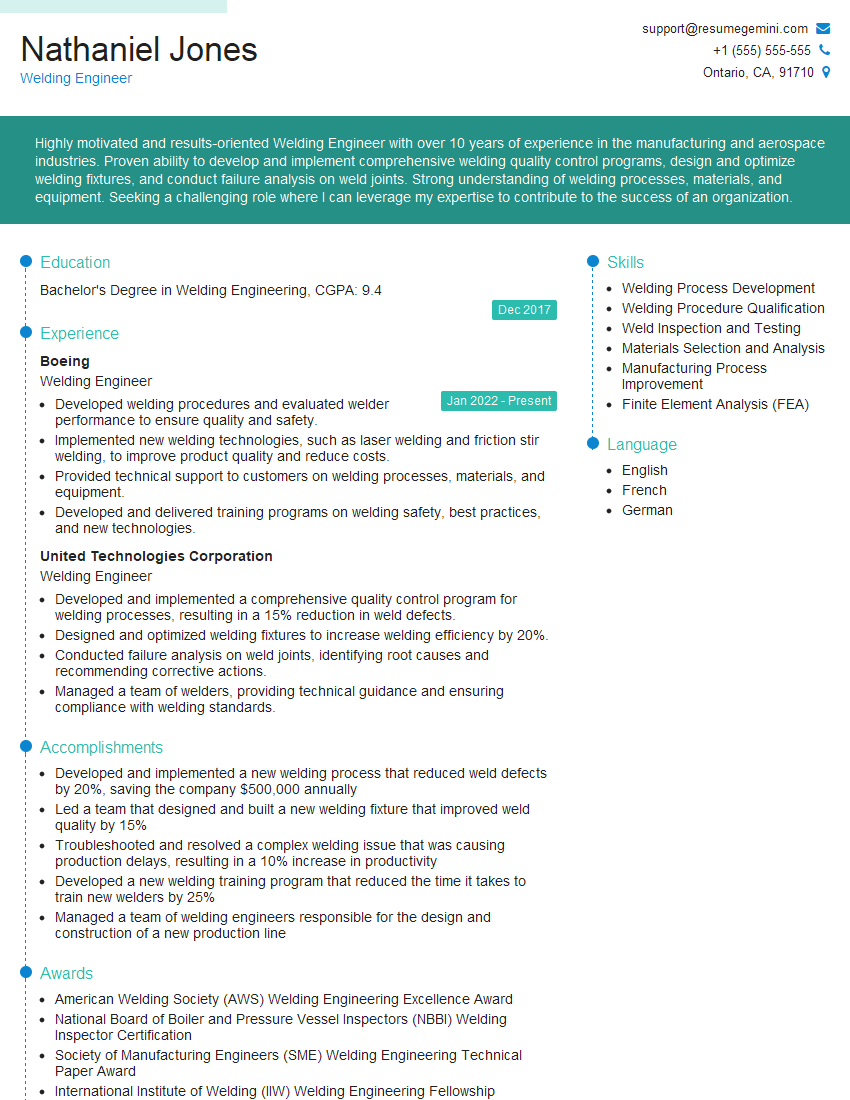
Welding Engineer Resume Sample
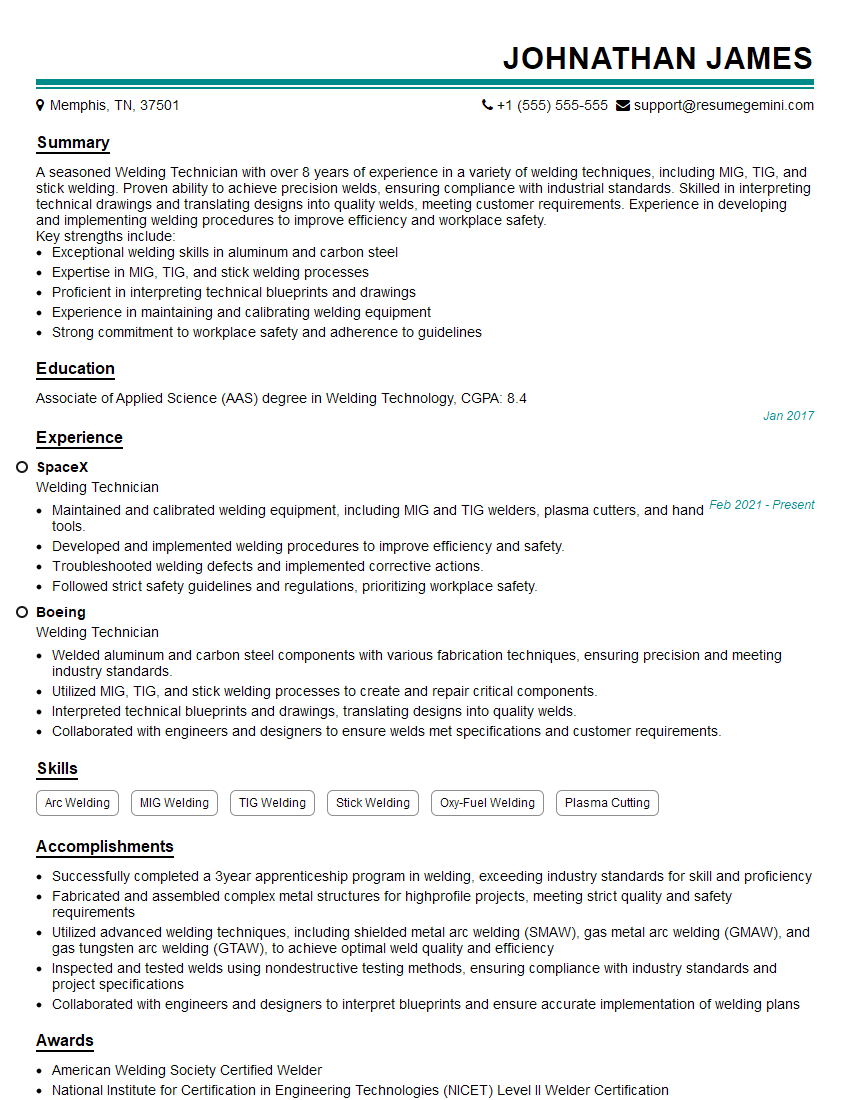
Welding Technician Resume Sample
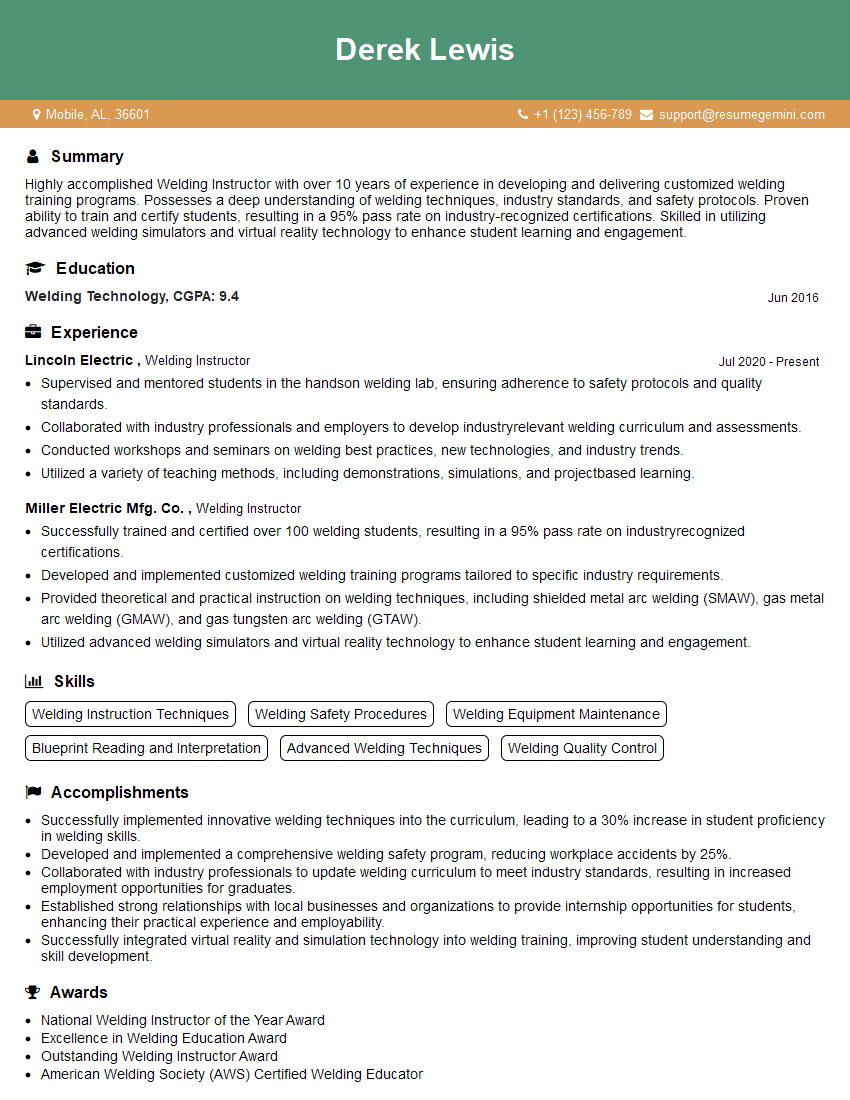
Welding Instructor Resume Sample
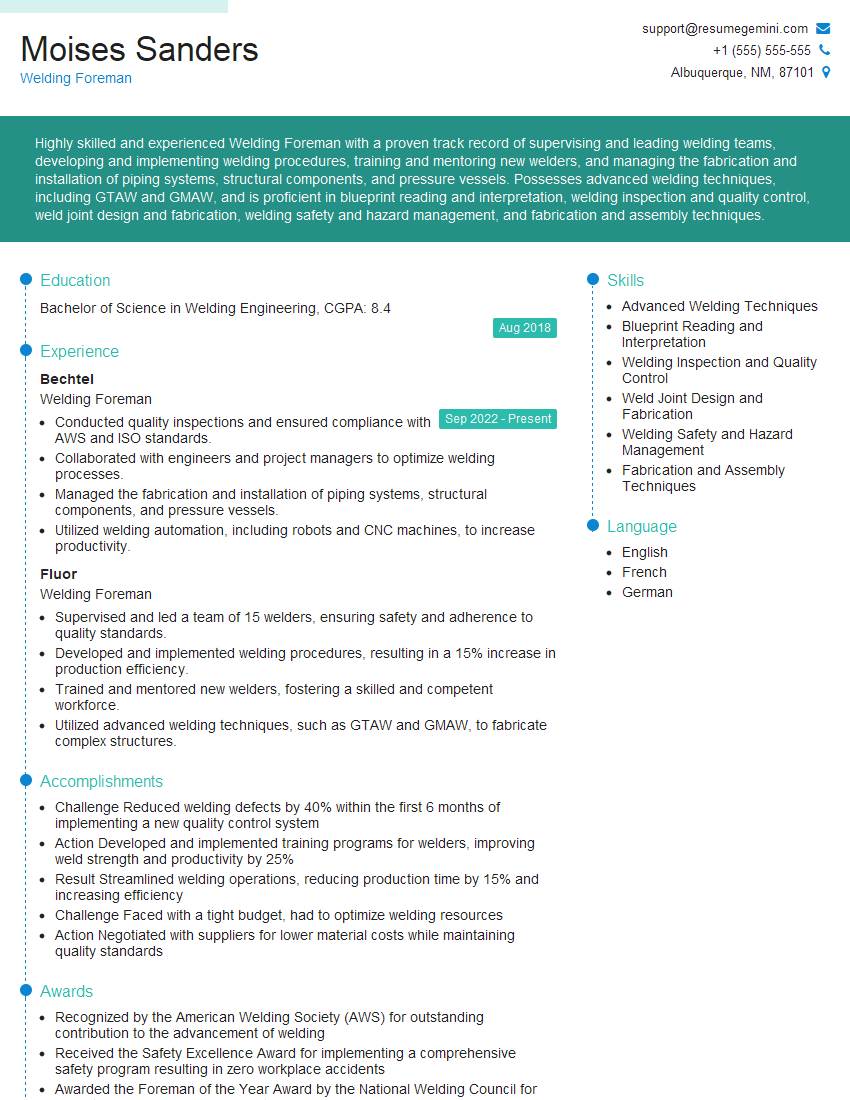
Welding Foreman Resume Sample
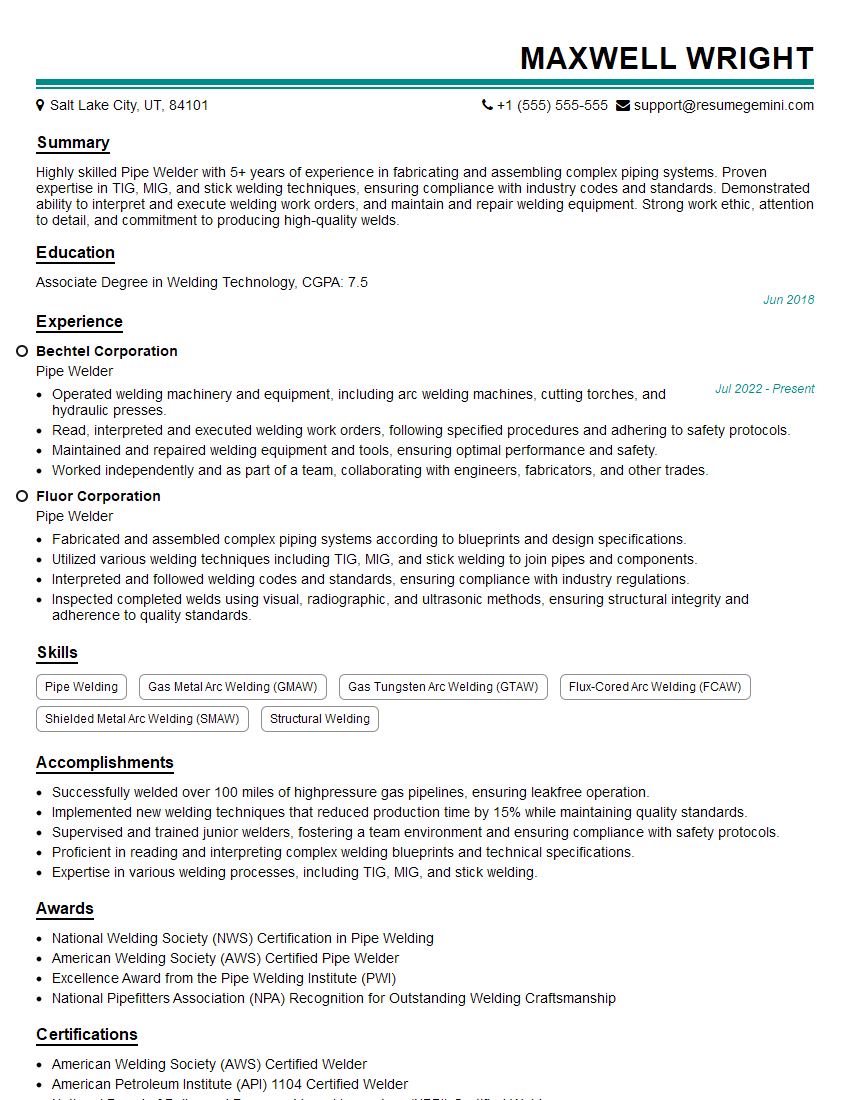
Pipe Welder Resume Sample
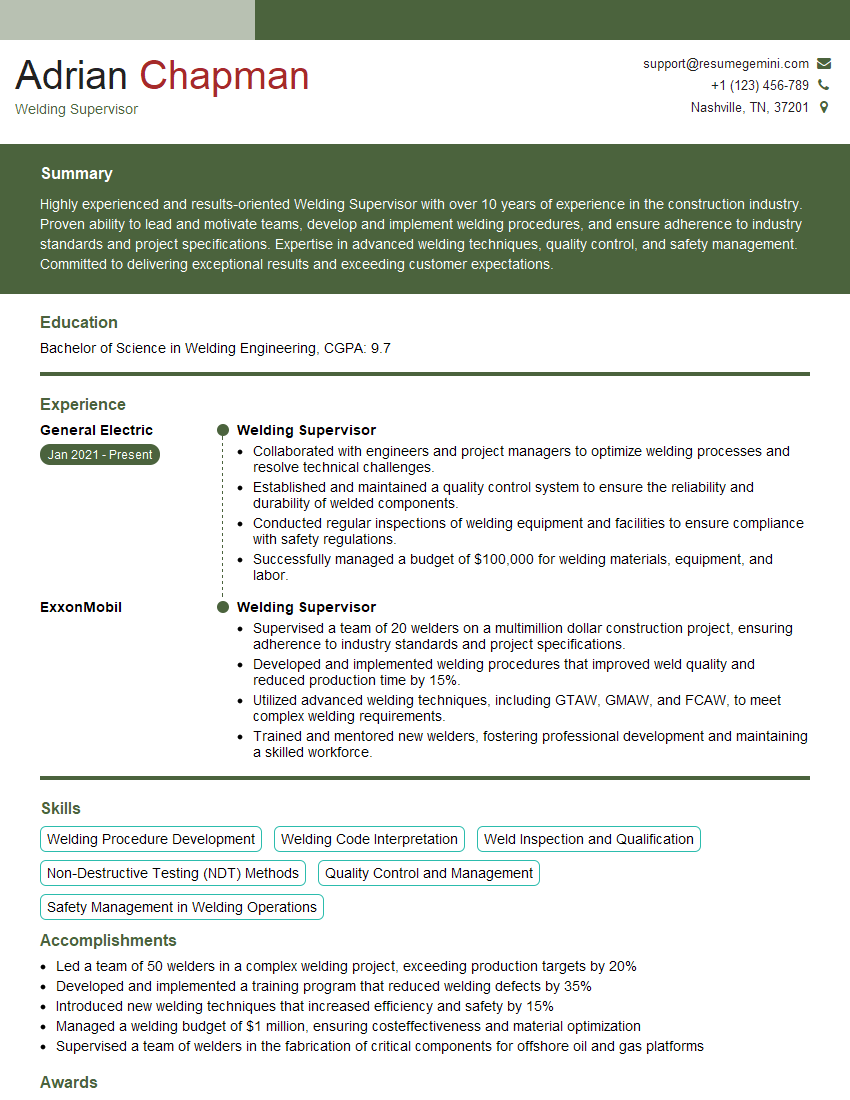
Welding Supervisor Resume Sample
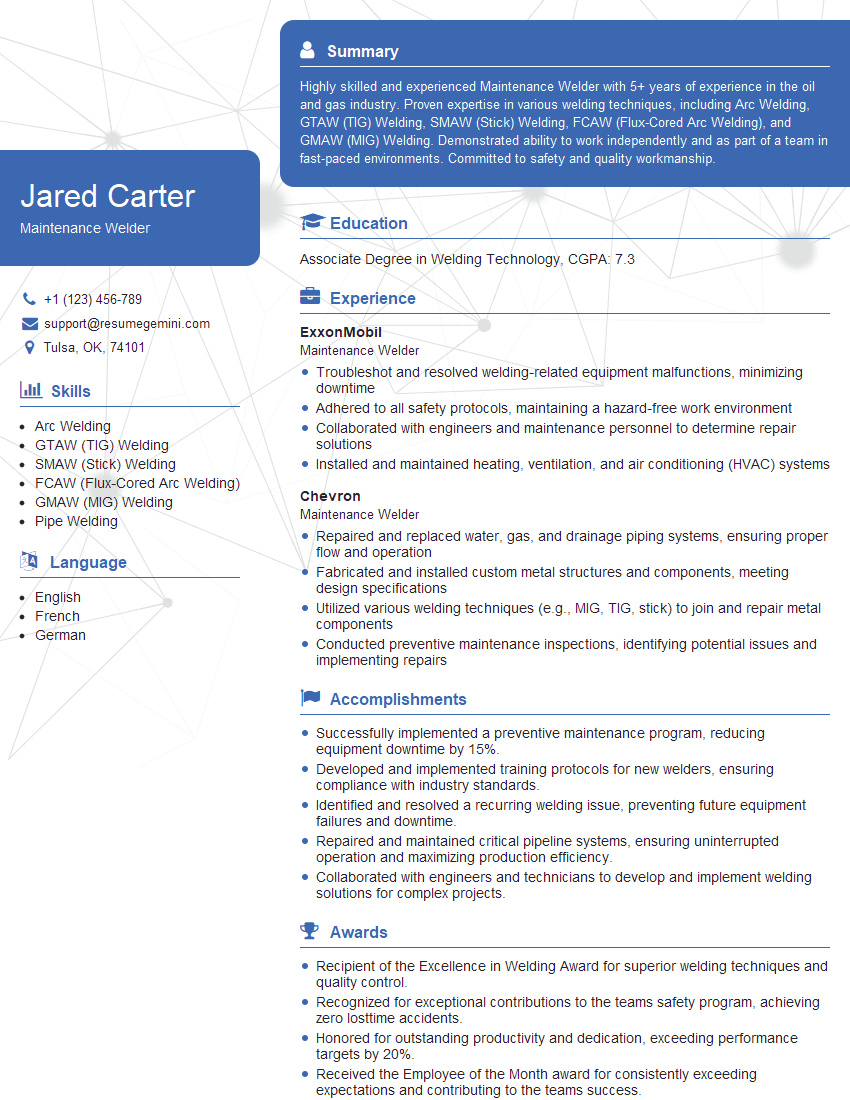
Maintenance Welder Resume Sample
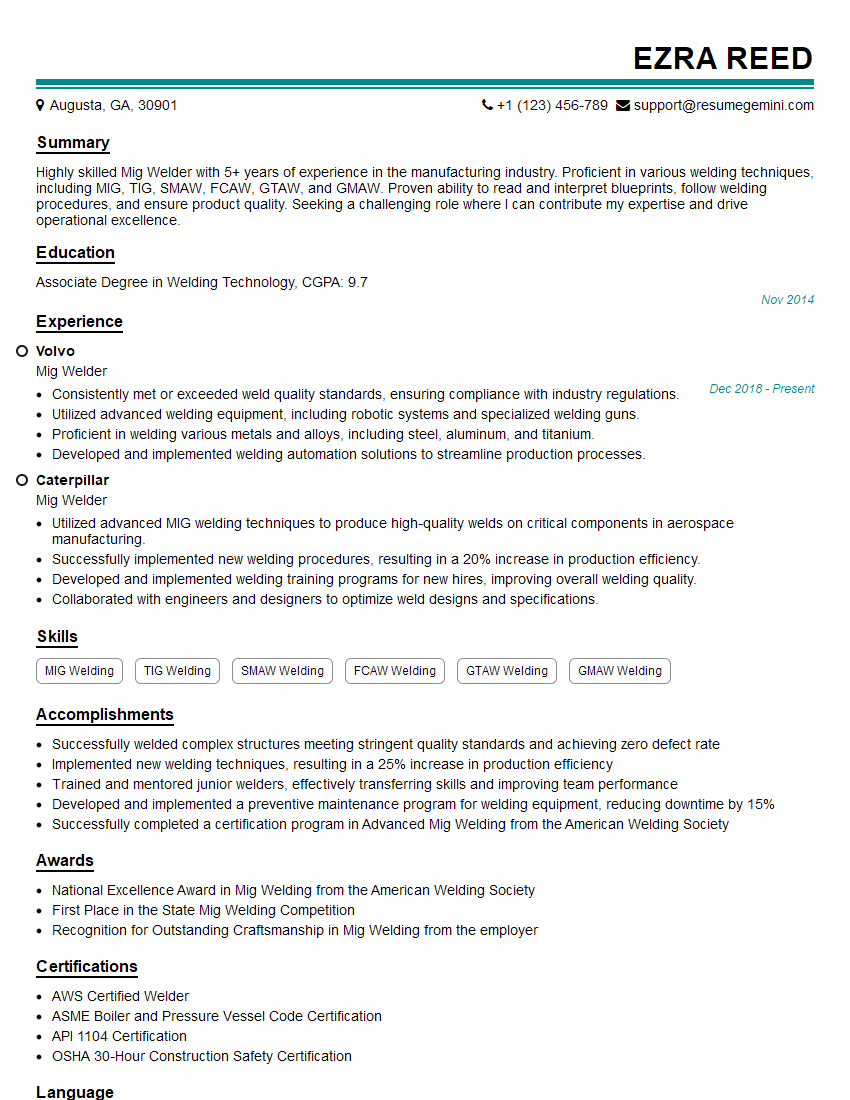
Mig Welder Resume Sample
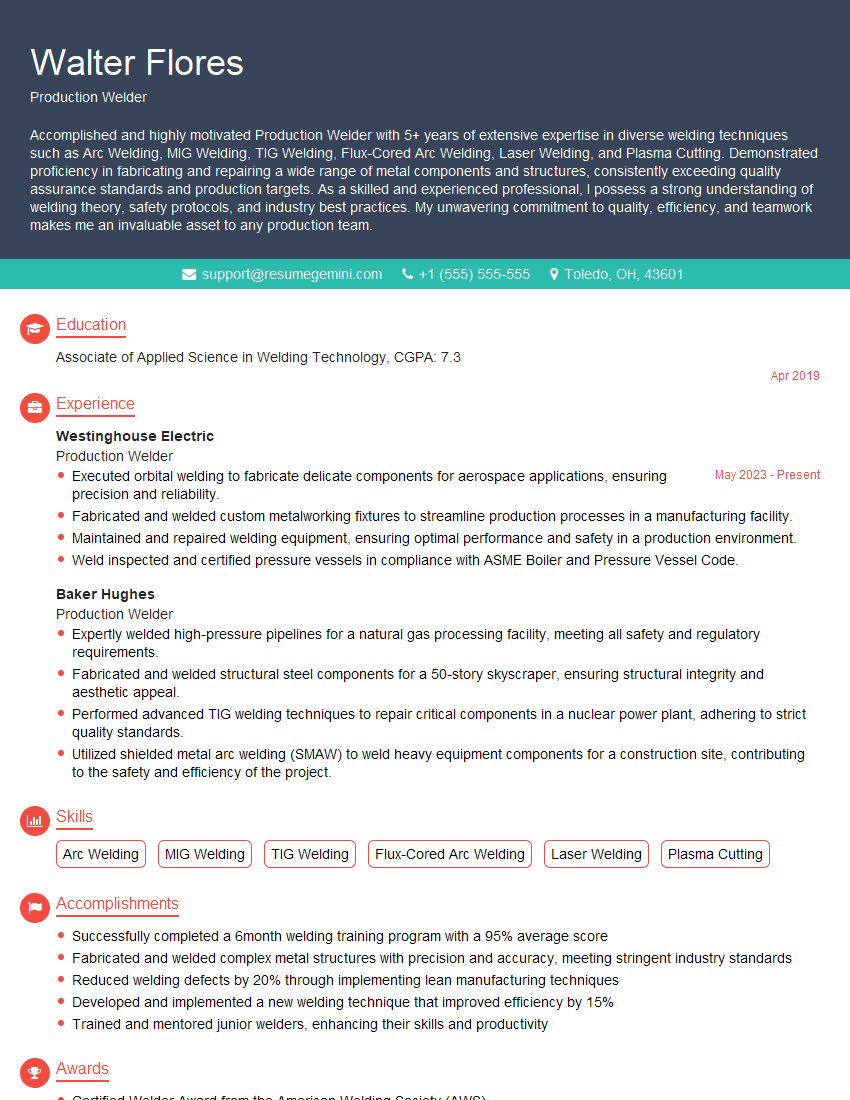
Production Welder Resume Sample
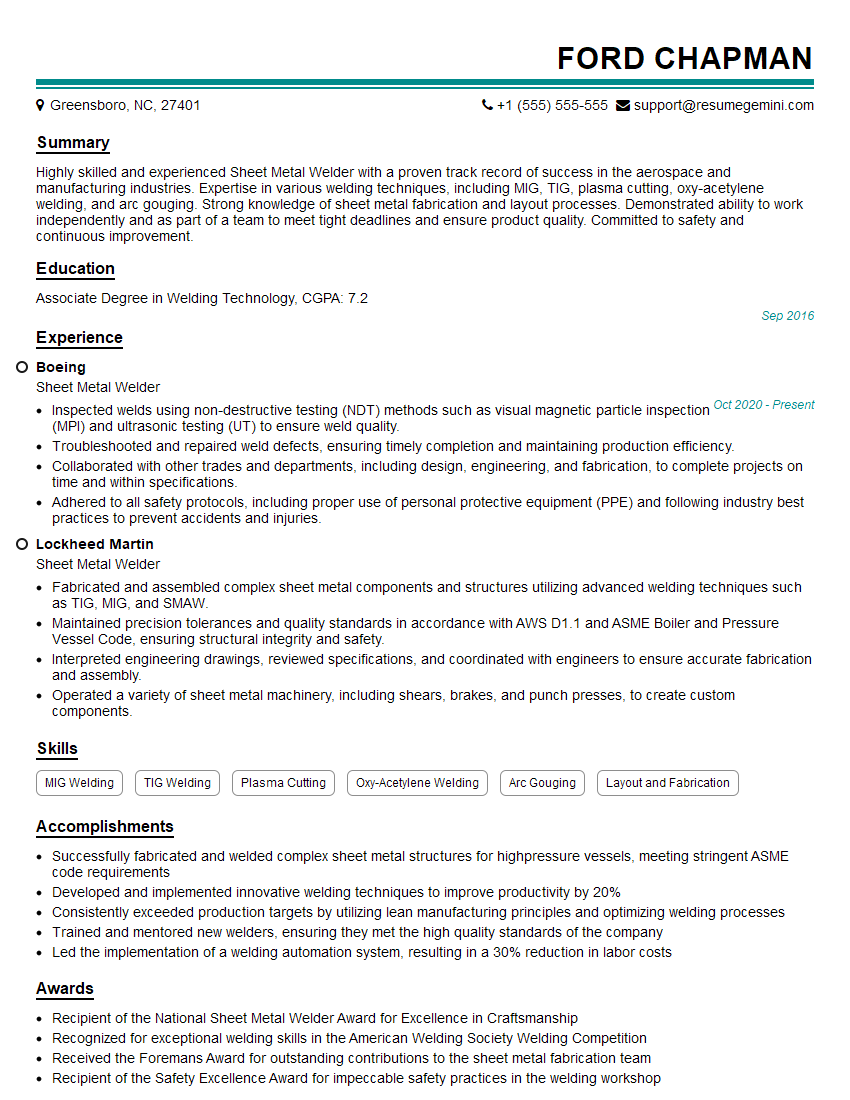
Sheet Metal Welder Resume Sample
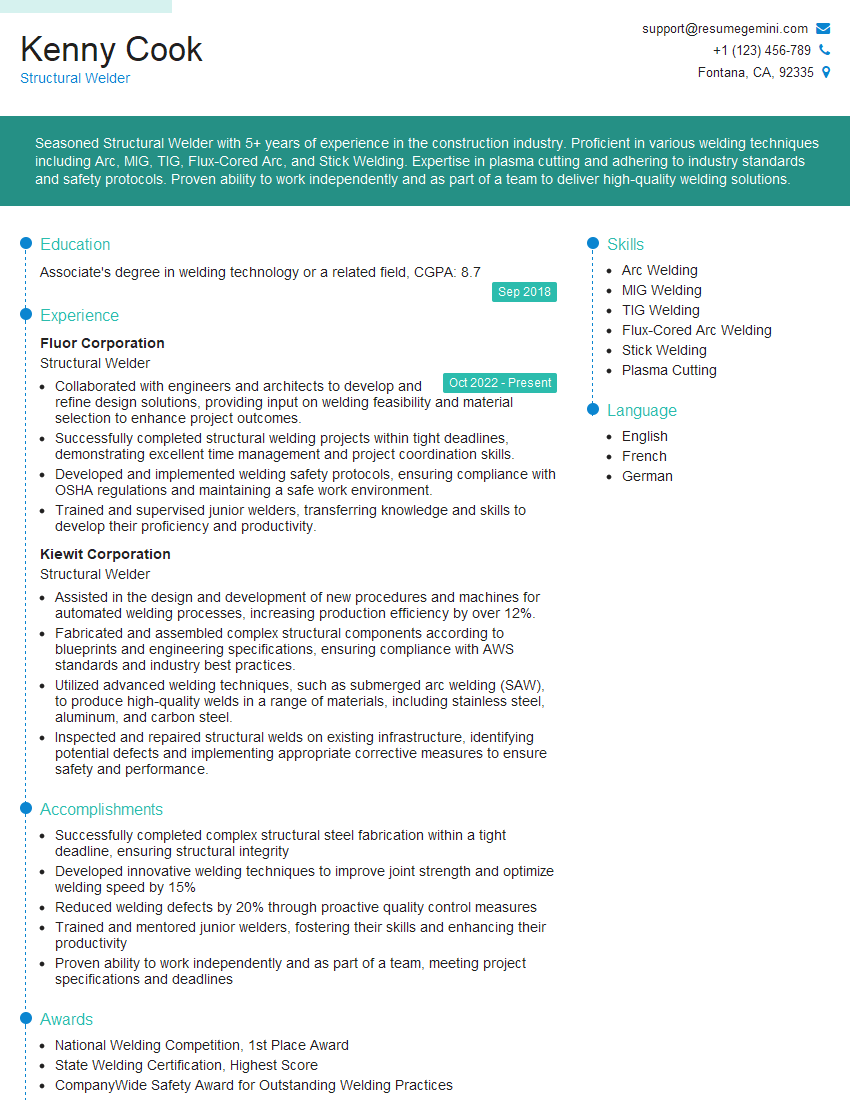
Structural Welder Resume Sample
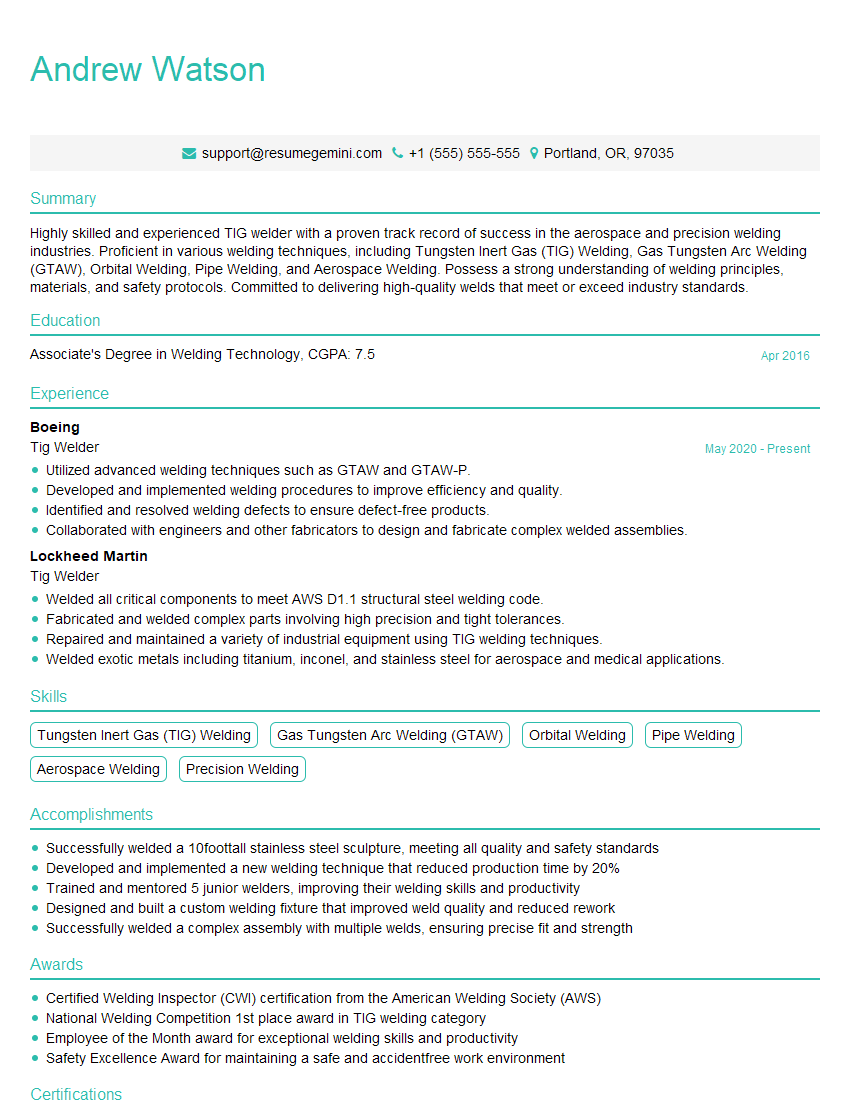
Tig Welder Resume Sample
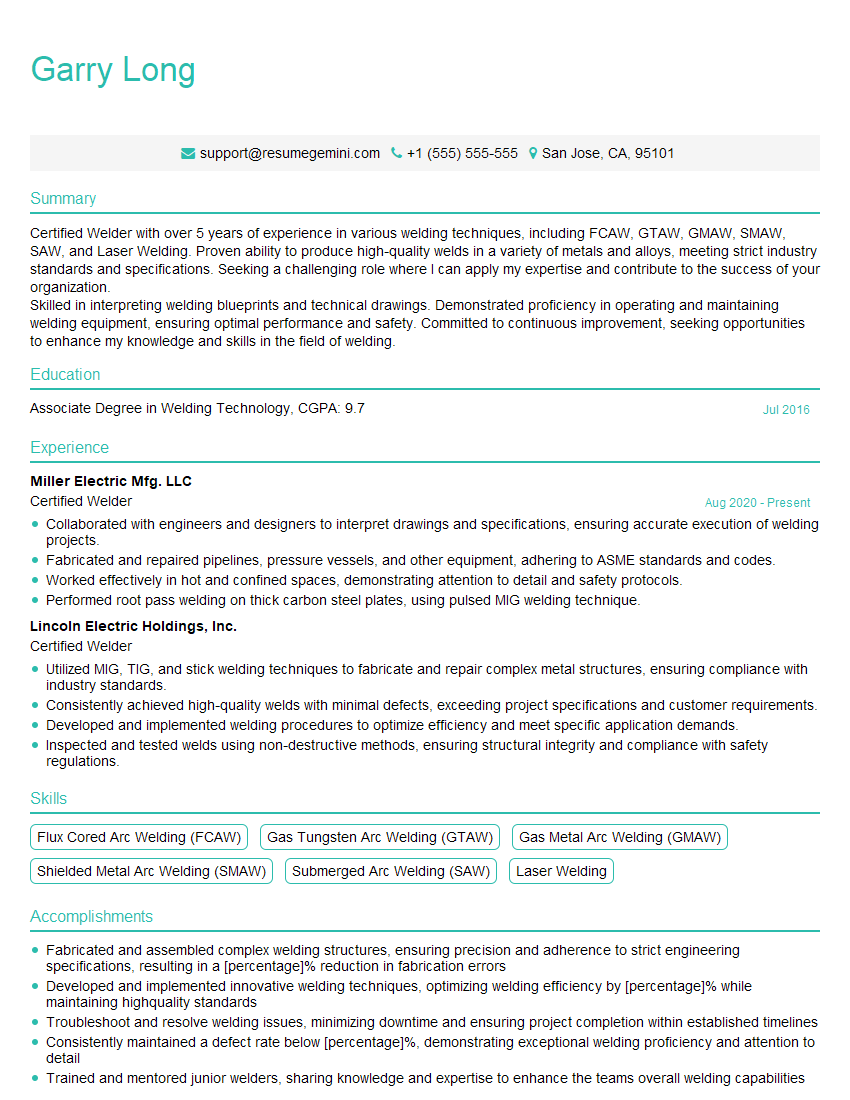
Certified Welder Resume Sample
Explore more articles
Users Rating of Our Blogs
Share Your Experience
We value your feedback! Please rate our content and share your thoughts (optional).
What Readers Say About Our Blog
To the interviewgemini.com Webmaster.
Very helpful and content specific questions to help prepare me for my interview!
Thank you
To the interviewgemini.com Webmaster.
This was kind of a unique content I found around the specialized skills. Very helpful questions and good detailed answers.
Very Helpful blog, thank you Interviewgemini team.