Unlock your full potential by mastering the most common Zoning Impact Studies interview questions. This blog offers a deep dive into the critical topics, ensuring you’re not only prepared to answer but to excel. With these insights, you’ll approach your interview with clarity and confidence.
Questions Asked in Zoning Impact Studies Interview
Q 1. Describe your experience conducting Zoning Impact Studies.
My experience in conducting Zoning Impact Studies spans over 15 years, encompassing a wide range of projects from small-scale residential developments to large-scale commercial and mixed-use projects. I’ve worked with municipalities, developers, and community groups across diverse geographic areas. My expertise includes not only analyzing the direct impacts of development, but also anticipating and mitigating potential indirect and cumulative effects. I’ve successfully navigated complex regulatory environments and worked collaboratively with stakeholders to reach mutually beneficial solutions. For instance, in one project involving a proposed shopping mall, my study identified potential traffic congestion issues which led to the implementation of improved road infrastructure and a comprehensive traffic management plan before construction even began. This proactive approach averted significant delays and community disruption later on.
Q 2. Explain the process of conducting a comprehensive Zoning Impact Study.
A comprehensive Zoning Impact Study follows a structured process. It begins with a thorough understanding of the proposed development, including its scale, design, and intended use. Next, we conduct a detailed analysis of the existing conditions – this involves reviewing zoning regulations, examining site characteristics, and assessing the surrounding environment. Key to this stage is collecting data on factors such as traffic patterns, population density, environmental resources, and community infrastructure. Then comes the impact assessment itself, where we project the potential changes the development will bring about. This includes detailed modeling of traffic flows, environmental impact assessments, and analysis of the impact on community resources. This step often involves the use of specialized software for simulations. Finally, we prepare the Zoning Impact Statement, presenting our findings, addressing potential mitigation measures, and offering recommendations. Throughout the entire process, transparent communication and collaboration with stakeholders are crucial.
Q 3. What are the key elements of a Zoning Impact Statement?
A key Zoning Impact Statement (ZIS) outlines the potential impacts of a proposed development on the surrounding area. Essential elements include a project description, a detailed analysis of existing conditions, a projection of future conditions following the development, an assessment of potential positive and negative impacts, a discussion of mitigation strategies to lessen negative impacts, and finally, conclusions and recommendations. The level of detail in each section depends on the project’s size and complexity and local regulations. For example, a ZIS for a large-scale development might require comprehensive traffic modeling, detailed environmental impact assessments, and an extensive analysis of its effects on schools and other community services. A smaller project might necessitate a more focused assessment.
Q 4. How do you identify potential impacts of a development project on surrounding areas?
Identifying potential impacts requires a multi-faceted approach. We start with a thorough site analysis, focusing on the immediate vicinity of the proposed development. This involves examining existing land uses, infrastructure, environmental features (e.g., wetlands, waterways), and community amenities. We then broaden our scope to consider secondary and cumulative impacts. For example, a new shopping center might increase traffic not just directly around it but also on surrounding roads. We also consider the potential impact on things like air and water quality, noise levels, and visual impacts. Utilizing GIS mapping is incredibly helpful to visualize these impacts and spatial relationships.
We also analyze potential impacts on community resources such as schools, parks, and emergency services. For instance, a large housing development could strain existing school capacity, necessitating expansion or alternative solutions. This requires careful consideration of existing resource utilization and projected increases in demand due to the new development.
Q 5. What are the common methods used to assess traffic impacts in a Zoning Impact Study?
Traffic impact assessment is critical in Zoning Impact Studies. Common methods include traffic counts (to understand baseline traffic conditions), traffic modeling (using software like Synchro or TransCAD to simulate traffic flow under different scenarios), and trip generation analysis (to estimate the number of vehicle trips generated by the development). Trip generation rates are usually established based on land use type (e.g., residential, commercial, industrial). We also consider the capacity of existing roads, intersections, and related infrastructure to identify potential bottlenecks and suggest mitigation measures. For example, a proposed large apartment complex might necessitate road widening, new traffic signals, or the construction of additional access points. The choice of methods depends on the scale and complexity of the project.
Q 6. How do you analyze the potential impacts of a development on environmental resources?
Analyzing environmental impacts requires a detailed understanding of the site’s ecological characteristics. We assess the potential impact on air and water quality, noise levels, wildlife habitats, and sensitive ecosystems. This often involves field surveys, data collection from relevant agencies (e.g., environmental protection agencies), and the use of specialized software for environmental modeling. We consider potential impacts like habitat fragmentation, water pollution from runoff, and greenhouse gas emissions. Depending on the specific context and project type, we might use tools such as stormwater management modeling software and techniques for assessing greenhouse gas emissions. For example, a development near a wetland would require detailed assessments of its potential impact on the wetland ecosystem, possibly involving mitigation strategies like wetland creation or restoration.
Q 7. How do you incorporate community input into a Zoning Impact Study?
Community input is integral to a successful Zoning Impact Study. We actively solicit community input through various channels, including public meetings, online surveys, and focus groups. This ensures that community concerns are incorporated into the study. Transparent communication is key – keeping the community informed of the study’s progress and findings. Feedback gathered is carefully analyzed and integrated into the final ZIS. For instance, concerns about increased noise levels from a proposed industrial development might lead to the implementation of noise mitigation measures, such as sound barriers. Active engagement fosters trust and ensures a more equitable and acceptable outcome for the development.
Q 8. What are the key legal and regulatory considerations in conducting a Zoning Impact Study?
Conducting a Zoning Impact Study requires navigating a complex web of legal and regulatory considerations. These vary significantly depending on the jurisdiction but generally include adherence to local, regional, and sometimes even state or federal regulations. Key aspects include:
Zoning Ordinances: The foundational document. These detail permitted land uses, building heights, setbacks, density limitations, parking requirements, and other development standards. Understanding these ordinances is paramount, as any proposed project must comply. For instance, if a zoning ordinance limits building height to 3 stories, a proposed 5-story building would require a variance or amendment.
Environmental Regulations: Many projects trigger environmental reviews under laws like the National Environmental Policy Act (NEPA) or similar state-level legislation. These reviews assess potential environmental impacts and require mitigation measures.
Building Codes: These establish minimum standards for construction, safety, and accessibility. The study must demonstrate that the project meets all relevant building codes.
Subdivision Regulations: If the project involves subdividing land, specific regulations governing lot sizes, street design, and infrastructure will apply.
Accessibility Regulations: The Americans with Disabilities Act (ADA) and similar regulations mandate accessibility features in buildings and public spaces. The study needs to confirm ADA compliance.
Historic Preservation Ordinances: In areas with designated historic districts, projects must often undergo a review to ensure they’re compatible with the historic character of the area.
Ignoring these legal and regulatory considerations can result in project delays, denials, costly revisions, and even legal challenges.
Q 9. Explain your experience with GIS software in the context of Zoning Impact Studies.
GIS software is indispensable for Zoning Impact Studies. My experience spans over a decade using various GIS platforms, including ArcGIS and QGIS. I utilize these tools extensively for:
Data Visualization: GIS allows me to visually represent zoning boundaries, existing land uses, infrastructure networks, and proposed development footprints on a map, providing a clear picture of the project’s context and potential impacts.
Spatial Analysis: I perform spatial analyses such as buffer analysis to assess proximity to sensitive areas like schools, parks, or wetlands; overlay analysis to identify areas of conflicting land uses; and network analysis to evaluate traffic impacts.
Data Integration: GIS helps seamlessly integrate data from various sources, including zoning maps, census data, environmental databases, and transportation networks, creating a comprehensive dataset for analysis.
Report Generation: GIS produces high-quality maps and charts, crucial for visualizing study findings and communicating them effectively to stakeholders. For example, I’ve used ArcGIS to create interactive maps showing projected traffic flow changes after a major development, allowing stakeholders to easily understand the potential implications.
In a recent project, using ArcGIS Pro, I successfully modeled the impact of a proposed shopping center on traffic congestion by integrating traffic simulation software with GIS data, resulting in a compelling visual presentation of the predicted impact on surrounding roadways.
Q 10. How do you interpret zoning regulations and apply them to a development project?
Interpreting zoning regulations requires meticulous attention to detail and a thorough understanding of legal language. My approach involves a systematic process:
Review of Zoning Ordinances: I begin by thoroughly reviewing the applicable zoning ordinances, paying close attention to definitions, permitted uses, dimensional standards (setbacks, height, lot coverage), and any special regulations for the specific area.
Site Analysis: I analyze the project site’s characteristics, including its size, shape, topography, and existing infrastructure. I then overlay the site on the zoning map to determine the applicable zoning district.
Development Plan Review: I meticulously compare the development plan’s specifications (building footprint, height, use, parking, etc.) to the zoning regulations. Any discrepancies are flagged and solutions (such as variances or modifications to the development plan) are explored.
Legal Interpretation: When ambiguity arises, I consult legal resources, engage legal counsel if necessary, or seek clarification from the zoning authority. For example, if a zoning ordinance uses vague terminology, such as “suitable landscaping,” I will research similar cases or consult with local authorities for a clear definition.
This step-by-step process ensures that the proposed development aligns with all applicable zoning regulations.
Q 11. How do you quantify the impacts of a development project?
Quantifying the impacts of a development project is crucial. It moves beyond qualitative descriptions and provides objective data for decision-making. Methods used include:
Traffic Impact Analysis: This involves modeling traffic flow using software to predict changes in traffic volume, speed, and congestion. Results are usually expressed as increases or decreases in traffic delays.
Density Calculations: Determining the density of the proposed development (e.g., dwelling units per acre) and comparing it to existing densities provides a measure of the project’s impact on population and infrastructure demand.
Environmental Impact Assessment: This involves quantifying changes in air and water quality, greenhouse gas emissions, and impacts on natural habitats. Results may be expressed in terms of pollutant levels or changes in biodiversity.
Economic Impact Analysis: This assesses the project’s potential economic contributions, such as job creation, tax revenue, and changes in property values. It considers both direct and indirect economic effects.
Social Impact Assessment: This examines potential effects on community character, neighborhood services, and social equity. It often uses surveys and community engagement to collect data.
These quantitative measures provide a robust basis for evaluating the project’s overall impact and informing mitigation strategies.
Q 12. Describe your experience with different types of zoning regulations.
My experience encompasses a variety of zoning regulations, including:
Form-Based Codes: These emphasize building design and the relationship between buildings and public spaces. They focus on regulating the physical form of development, rather than just the use of land. I’ve worked on projects in areas with form-based codes, carefully analyzing design standards related to building heights, setbacks, and streetscapes.
Traditional Zoning: This is the most common type, separating land into districts based on permitted uses (residential, commercial, industrial). I have extensive experience evaluating development proposals under traditional zoning ordinances, ensuring compliance with use restrictions and dimensional standards.
Performance Zoning: This focuses on regulating the impacts of development, rather than simply specifying permitted uses. I’ve worked on projects where performance standards related to noise levels, traffic generation, or stormwater runoff were critical.
Overlay Zones: These are superimposed on existing zoning districts and often apply additional regulations for specific purposes (e.g., historic preservation, floodplains, conservation). I carefully consider the implications of overlay zones when conducting studies, ensuring that any additional requirements are met.
This broad experience allows me to adapt my approach to the unique challenges presented by different zoning systems.
Q 13. What are the limitations of Zoning Impact Studies?
While Zoning Impact Studies are valuable tools, they have limitations:
Data Availability and Accuracy: The quality of the study depends heavily on the accuracy and completeness of available data. Incomplete or inaccurate data can lead to flawed conclusions. For example, outdated traffic data can lead to inaccurate predictions of traffic congestion.
Predictive Limitations: Studies often rely on predictive modeling, which inherently involves uncertainties. Future conditions (e.g., economic changes, population growth) are difficult to predict accurately.
Scope Limitations: Zoning Impact Studies typically focus on a specific set of impacts (traffic, density, environmental). They may not capture all potential social, economic, or environmental consequences of a project.
Subjectivity in Interpretation: Some aspects of zoning regulations or impact assessment may involve subjective judgments, leading to potential discrepancies in interpretation.
It’s crucial to acknowledge these limitations and to present study findings with appropriate caveats and uncertainty ranges.
Q 14. How do you address conflicts or discrepancies in data during a Zoning Impact Study?
Addressing conflicts or discrepancies in data requires a systematic and transparent approach. I employ the following strategies:
Data Source Validation: I meticulously check the reliability and accuracy of all data sources. This includes verifying data against multiple sources and reviewing data collection methodologies.
Data Reconciliation: When discrepancies arise between different data sets, I investigate the reasons for the inconsistencies. This might involve identifying errors, resolving conflicting information, or using statistical methods to adjust for inconsistencies.
Sensitivity Analysis: I conduct sensitivity analyses to assess how the study’s conclusions change depending on different data assumptions or values. This helps identify the most sensitive aspects of the analysis and highlight potential sources of uncertainty.
Transparency and Documentation: I document all data sources, methodologies, and assumptions clearly, ensuring the process and results are transparent and auditable. This allows for scrutiny and facilitates easier identification of potential errors.
Expert Consultation: In cases of complex or unresolved discrepancies, I may seek the advice of experts in relevant fields, such as transportation engineers, environmental scientists, or economists.
My commitment to transparency and rigorous data analysis ensures that the Zoning Impact Study is reliable and defensible.
Q 15. Describe your experience working with stakeholders in a Zoning Impact Study.
Stakeholder engagement is crucial for a successful Zoning Impact Study. It’s not just about informing people; it’s about building consensus and incorporating diverse perspectives. My approach involves a multi-phased strategy. Initially, I identify all relevant stakeholders – this includes residents, business owners, community groups, government agencies, and developers. Then, I utilize a mix of communication methods: public meetings, online surveys, focus groups, and one-on-one interviews. For example, in a recent study involving a proposed high-rise development, I held a series of community meetings to address resident concerns about increased traffic and shadowing. These meetings allowed for direct feedback, helping me refine the study and address specific anxieties. Crucially, I actively listen to feedback, document concerns, and incorporate them into the study’s analysis. Transparent communication, actively seeking diverse viewpoints, and demonstrating responsiveness are key to fostering trust and ensuring the study is widely accepted.
Career Expert Tips:
- Ace those interviews! Prepare effectively by reviewing the Top 50 Most Common Interview Questions on ResumeGemini.
- Navigate your job search with confidence! Explore a wide range of Career Tips on ResumeGemini. Learn about common challenges and recommendations to overcome them.
- Craft the perfect resume! Master the Art of Resume Writing with ResumeGemini’s guide. Showcase your unique qualifications and achievements effectively.
- Don’t miss out on holiday savings! Build your dream resume with ResumeGemini’s ATS optimized templates.
Q 16. How do you present and communicate the findings of a Zoning Impact Study?
Presenting findings requires clarity and accessibility. I avoid technical jargon and use visuals like maps, charts, and infographics to communicate complex data effectively. My presentations typically start with an executive summary highlighting key impacts. Then, I delve into a more detailed analysis, showing the methodology used and clearly explaining findings. Interactive elements, such as Q&A sessions and workshops, are also valuable. For instance, when presenting the results of a study on the impact of a proposed shopping mall on local traffic, I used a traffic simulation model to visually demonstrate the projected changes. This helped stakeholders understand the potential impacts more readily. Finally, I always provide a written report with detailed data and analysis for those who want a deeper dive. The goal is to ensure that everyone, from the layperson to the expert, can understand the study’s implications.
Q 17. What are some best practices for conducting an effective Zoning Impact Study?
Effective Zoning Impact Studies require meticulous planning and execution. Key best practices include:
- Clearly defined scope and objectives: The study must focus on specific, measurable impacts relevant to the zoning proposal.
- Robust data collection: This involves utilizing reliable sources, employing rigorous methodologies, and considering a variety of data types, including demographic data, traffic counts, environmental data, and economic indicators.
- Comprehensive analysis: The study should go beyond simply describing impacts; it needs to analyze the potential positive and negative consequences and their interrelationships.
- Transparent methodology: The study’s methods should be clearly documented and justifiable to ensure reproducibility and build trust.
- Peer review: Seeking independent review from experts ensures accuracy and objectivity.
- Iterative process: The study shouldn’t be a one-off event; it should be flexible and allow for adjustments based on stakeholder feedback and newly available information.
Q 18. How do you assess the potential social impacts of a development project?
Assessing social impacts requires a nuanced approach, looking beyond simple population changes. I use various methods, including surveys, interviews, and focus groups, to gauge the potential effects on community character, social equity, and access to services. For instance, in a study examining the impact of a new housing development, I explored potential impacts on neighborhood cohesion, displacement of existing residents, and access to schools and healthcare. Specific considerations include:
- Changes in population density and demographics: How will the development alter the existing community’s demographic makeup?
- Impact on community facilities and services: Will there be sufficient capacity in schools, hospitals, and other essential services to accommodate the increased population?
- Potential for displacement: Will the development displace existing residents or businesses?
- Changes in social interaction and community cohesion: How will the new development affect the social fabric of the existing neighborhood?
Q 19. Explain your experience with environmental impact assessments within the context of zoning.
Environmental impact assessments (EIAs) are integral to zoning studies, especially for larger projects. My experience involves incorporating EIAs into zoning impact analyses to assess the environmental consequences of development proposals. This often includes examining potential impacts on air and water quality, noise levels, biodiversity, and greenhouse gas emissions. For example, in a study for a proposed industrial park, I collaborated with environmental specialists to conduct an EIA evaluating potential air pollution and its impact on surrounding communities. This included using air dispersion modeling to predict pollutant concentrations under different scenarios. The EIA findings are then incorporated into the broader zoning impact analysis, providing a comprehensive picture of the project’s environmental and societal effects, ensuring alignment with environmental regulations and sustainable development principles.
Q 20. How do you address uncertainty or incomplete data in a Zoning Impact Study?
Uncertainty is inevitable in any study. My approach involves acknowledging and quantifying uncertainty whenever possible. This could involve using probabilistic models, sensitivity analyses, or scenario planning to explore the range of potential outcomes under different assumptions. For example, if data on future population growth is uncertain, I might run the analysis using several different population projections, showing the impact of each scenario on traffic congestion. Transparency is key – I clearly state the limitations of the data and the level of uncertainty associated with the findings. Using qualitative methods, like interviews with experts, can help fill some data gaps and provide valuable insights. The key is to not hide uncertainty but to present it clearly so that decision-makers can make informed choices.
Q 21. How do you ensure the accuracy and reliability of the data used in your studies?
Data accuracy and reliability are paramount. I begin by identifying reliable data sources, such as government agencies, academic institutions, and reputable private organizations. I then critically evaluate the data for completeness, consistency, and potential biases. For example, when using census data, I’m aware of potential undercounting of certain populations and adjust my analysis accordingly. Where data is sparse, I may use triangulation, comparing findings from multiple sources to corroborate results. I meticulously document data sources and methodology, allowing for scrutiny and reproducibility. Data quality control checks are conducted at each stage, and any limitations are openly reported. This commitment to data integrity ensures the credibility and trustworthiness of my studies.
Q 22. Describe a situation where you had to overcome a challenge in a Zoning Impact Study.
One significant challenge I encountered involved a proposed large-scale mixed-use development in a historically sensitive neighborhood. The initial zoning analysis indicated potential conflicts with existing height restrictions and parking requirements. The developer, however, was adamant about maximizing density and incorporating green spaces. Overcoming this involved a multi-step process.
- Thorough Site Analysis: We conducted an extensive site analysis beyond the initial zoning review, considering factors like the impact on sunlight access to neighboring properties, traffic flow, and the integration of the development’s architectural design with the neighborhood’s character.
- Stakeholder Engagement: We facilitated a series of meetings with the developer, community members, and local preservation groups. This helped us to identify common concerns and potential compromises. For instance, we explored the possibility of using underground parking to reduce the surface footprint.
- Variance Request: Based on our analysis and community feedback, we prepared a comprehensive variance request to the zoning board, presenting data showing the project’s potential benefits (e.g., economic growth, job creation, and enhanced green spaces) while mitigating potential negative impacts. The request detailed how the project could comply with the spirit of the zoning code while addressing the specific challenges.
Ultimately, we secured a favorable variance, enabling a successful project launch that respected both the community’s concerns and the developer’s goals. This highlights the importance of a holistic approach that goes beyond the strictly technical aspects of zoning regulations.
Q 23. How do you handle conflicting goals or priorities among stakeholders?
Balancing conflicting stakeholder goals is a crucial aspect of Zoning Impact Studies. Think of it like orchestrating a symphony – each instrument (stakeholder) has its own part, and the conductor (me) needs to ensure a harmonious outcome. My approach typically involves:
- Identifying and Prioritizing Concerns: I begin by clearly identifying all stakeholders (residents, developers, businesses, environmental groups, etc.) and meticulously documenting their respective concerns and priorities. This often involves surveys, meetings, and review of public comments.
- Facilitated Negotiation: I facilitate constructive dialogue between conflicting parties, focusing on finding common ground and exploring creative solutions. This may involve compromise, trade-offs, and iterative adjustments to the project proposal.
- Data-Driven Decision Making: I emphasize data-driven decision-making, presenting objective evidence to support proposals and demonstrate the potential impacts (positive and negative) of different options. This helps stakeholders understand the implications of their preferences and promotes informed decision-making.
- Documentation and Transparency: Maintaining comprehensive records of all discussions, agreements, and decisions ensures transparency and accountability throughout the process. This also helps resolve misunderstandings later on.
For instance, in a project involving affordable housing, we had disagreements between residents concerned about potential increased traffic and the developer’s need to keep housing costs manageable. By engaging in facilitated negotiations, we found solutions like incorporating traffic calming measures and optimizing building layouts to minimize the project’s impact.
Q 24. What software or tools are you proficient in using for Zoning Impact Studies?
My proficiency encompasses a variety of software and tools vital for conducting comprehensive Zoning Impact Studies. This includes:
- GIS Software (ArcGIS, QGIS): These are essential for spatial analysis, creating maps showing the project’s location, surrounding land uses, and potential impacts on infrastructure. For example, I use ArcGIS to model potential traffic patterns and assess their impact on existing road networks.
- Statistical Software (R, SPSS): I leverage statistical tools to analyze demographic data, traffic counts, and other relevant datasets to quantify project impacts. This helps to support claims and provide a robust evidence base for the analysis.
- CAD Software (AutoCAD): This is crucial for reviewing site plans, architectural drawings, and ensuring compliance with building codes and zoning regulations. For example, AutoCAD is useful in verifying the building’s setbacks and height in relation to zoning ordinances.
- Modeling Software: Specialized software for simulating traffic, noise levels, and other environmental factors helps accurately predict the project’s impact.
Proficiency in these tools enables me to conduct thorough, accurate, and well-supported studies.
Q 25. How do you stay updated on changes in zoning regulations and best practices?
Staying abreast of changes in zoning regulations and best practices is paramount in this field. I employ a multi-pronged approach:
- Subscription to Professional Journals and Publications: I subscribe to relevant journals and publications like the Journal of the American Planning Association, which provide updates on current zoning practices and research.
- Attendance at Industry Conferences and Workshops: Attending conferences and workshops allows me to learn from experts, network with colleagues, and gain insights into emerging trends and technologies.
- Monitoring of Local, State, and Federal Regulatory Websites: I regularly check websites of relevant planning and zoning agencies for updates, amendments, and new regulations. This is crucial for ensuring compliance with the most current laws and guidelines.
- Networking with Professionals: Maintaining a strong network within the planning and zoning community enables the exchange of information and insights on the latest developments.
Continuous learning ensures my expertise remains current and relevant, enabling me to provide the highest quality Zoning Impact Studies.
Q 26. Describe your experience with different types of development projects.
My experience spans a wide range of development projects, providing me with a well-rounded perspective on the complexities of zoning impact assessments. This includes:
- Residential Developments: From single-family homes to large-scale apartment complexes, I have assessed the impacts of various residential projects on neighborhood character, infrastructure, and environmental resources.
- Commercial Developments: I have evaluated the impact of retail centers, office buildings, and industrial parks, focusing on traffic generation, parking demands, and compatibility with surrounding land uses.
- Mixed-Use Developments: I have experience with projects combining residential, commercial, and recreational elements, requiring a nuanced understanding of diverse needs and potential conflicts.
- Infrastructure Projects: I have assessed the zoning implications of road widening, park expansions, and other public works projects, paying close attention to potential disruptions and public benefits.
This diverse experience allows me to adapt my approach to each project’s specific context and challenges, ensuring a comprehensive and relevant analysis.
Q 27. How do you ensure the sustainability of the projects you assess?
Sustainability is a core consideration in all my Zoning Impact Studies. I integrate sustainability principles throughout the assessment process, focusing on the environmental, social, and economic dimensions of projects. This includes:
- Environmental Impact Assessment: I evaluate potential impacts on air and water quality, energy consumption, and waste generation. This often involves using modeling tools to predict greenhouse gas emissions and the potential effects of stormwater runoff.
- Social Impact Assessment: I consider how the project will affect the community’s social fabric, including its impact on existing social networks, access to amenities, and potential displacement of residents.
- Economic Impact Assessment: I analyze the project’s economic viability and its potential to generate jobs, increase tax revenue, and contribute to the overall economic well-being of the community.
- Green Building Design: I advocate for sustainable design principles, such as energy efficiency, renewable energy sources, and water conservation measures, to minimize the project’s environmental footprint.
By considering these multifaceted aspects, I help ensure that projects are not only compliant with zoning regulations but also contribute to a more sustainable future.
Q 28. How do you ensure your Zoning Impact Studies comply with relevant legislation?
Compliance with relevant legislation is paramount in my work. I ensure this through a systematic approach:
- Thorough Review of Applicable Laws and Regulations: I begin by meticulously reviewing all relevant federal, state, and local zoning ordinances, building codes, environmental regulations, and other applicable legislation. This often involves working closely with legal counsel specializing in land use and environmental law.
- Detailed Documentation: All aspects of the study are comprehensively documented, including the methodology, data sources, assumptions, and conclusions, ensuring transparency and traceability of the findings.
- Data Validation: All data used in the study are carefully validated and sourced from reliable sources to ensure accuracy and integrity.
- Consultation with Regulatory Agencies: Where necessary, I proactively engage with relevant regulatory agencies to clarify ambiguities and seek guidance on specific issues.
- Peer Review: When appropriate, I involve peer review to ensure the study’s rigor, objectivity, and compliance with professional standards.
By following these steps, I minimize the risk of non-compliance and ensure that my Zoning Impact Studies provide a robust and reliable basis for decision-making.
Key Topics to Learn for Zoning Impact Studies Interview
- Zoning Regulations and Ordinances: Understanding the legal framework governing land use and development, including permitted uses, setbacks, density requirements, and height restrictions.
- Data Analysis and Interpretation: Analyzing demographic data, traffic patterns, environmental impact assessments, and other relevant data to predict the effects of proposed developments.
- Impact Assessment Methodologies: Familiarity with various techniques for assessing the impact of zoning changes, such as traffic impact studies, environmental impact statements, and fiscal impact analyses.
- GIS and Mapping: Utilizing Geographic Information Systems (GIS) software to visualize data, analyze spatial relationships, and create maps depicting project impacts.
- Stakeholder Engagement and Communication: Understanding the importance of effectively communicating study findings to stakeholders, including developers, community members, and government agencies.
- Environmental Considerations: Assessing the potential environmental impacts of development projects, including impacts on air and water quality, habitat, and biodiversity.
- Economic Impact Analysis: Evaluating the potential economic benefits and costs of zoning changes, including job creation, tax revenue, and property values.
- Problem-Solving and Critical Thinking: Developing solutions to address potential negative impacts identified during the study process and presenting clear, concise recommendations.
- Report Writing and Presentation: Preparing clear, concise, and well-organized reports that effectively communicate findings and recommendations to a diverse audience.
Next Steps
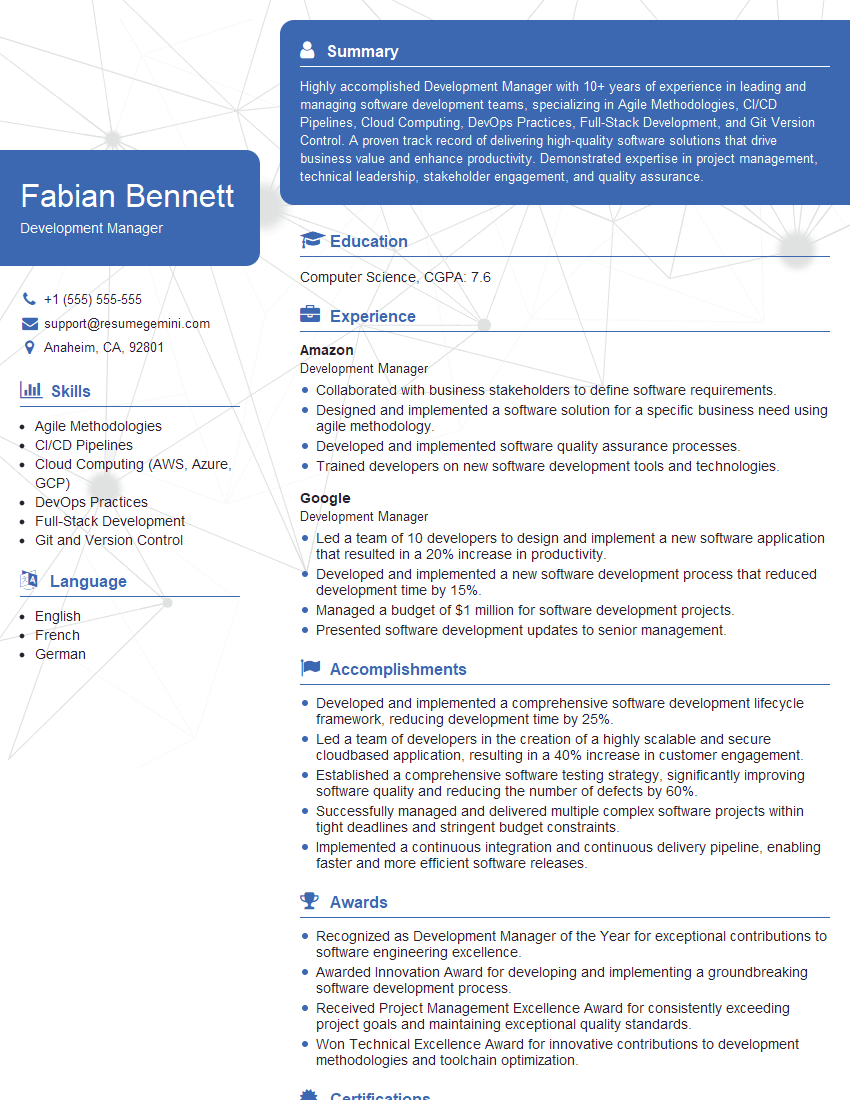
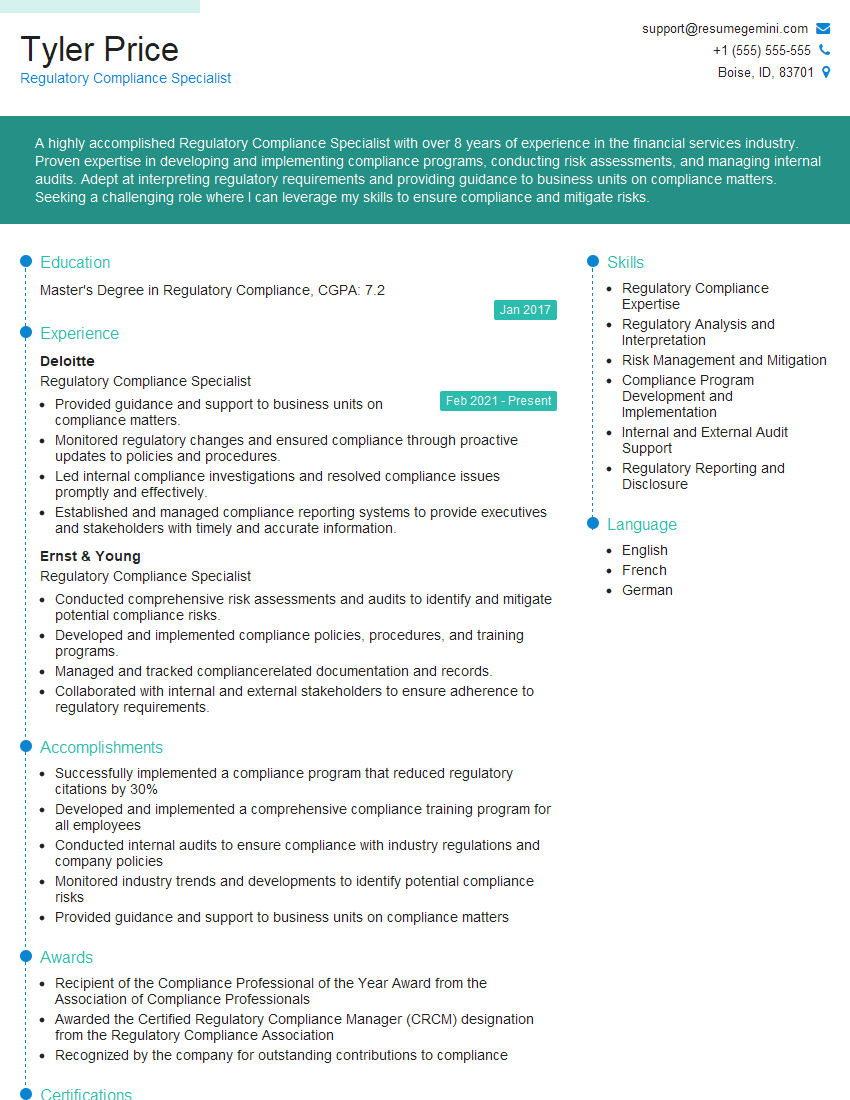
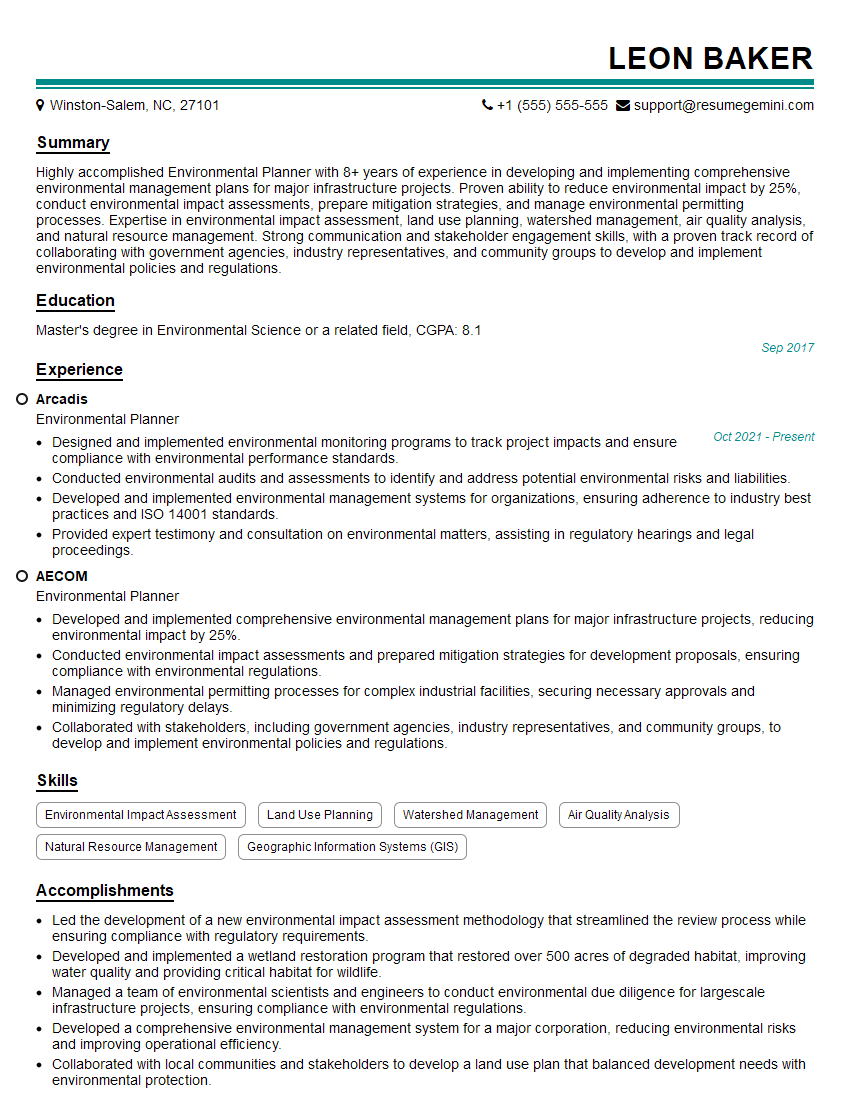
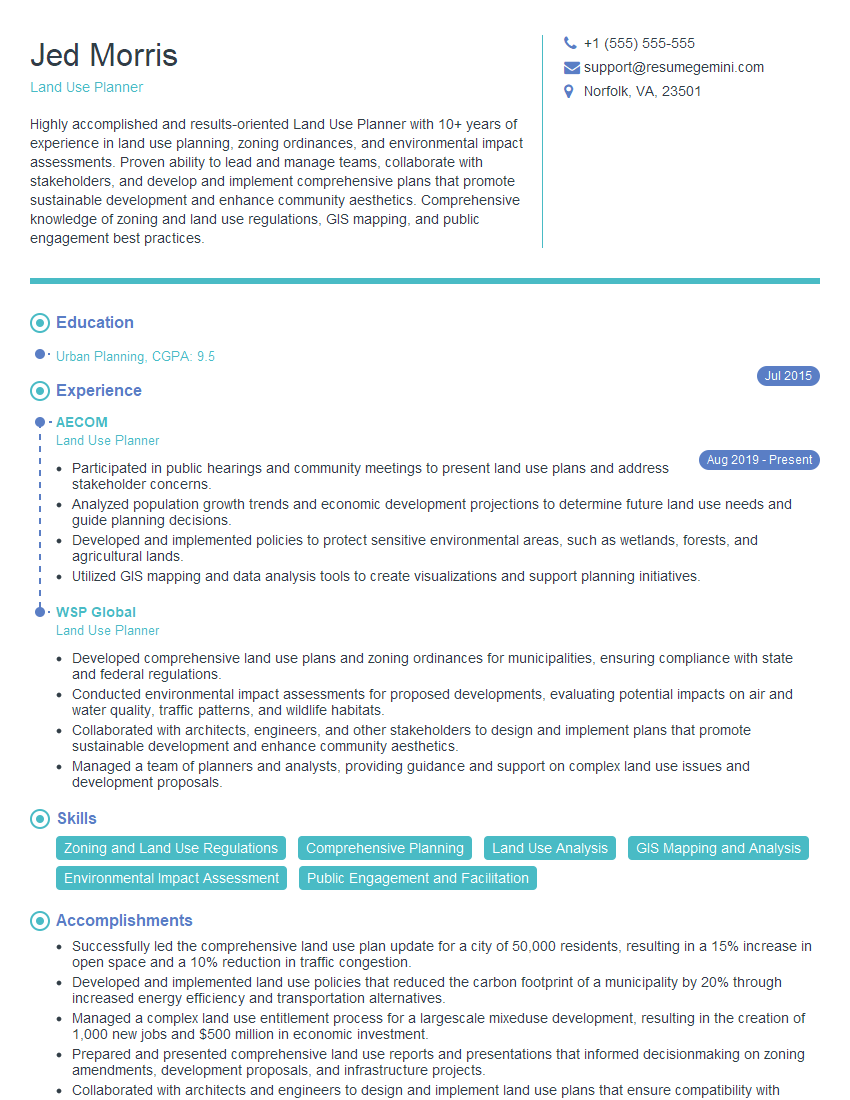
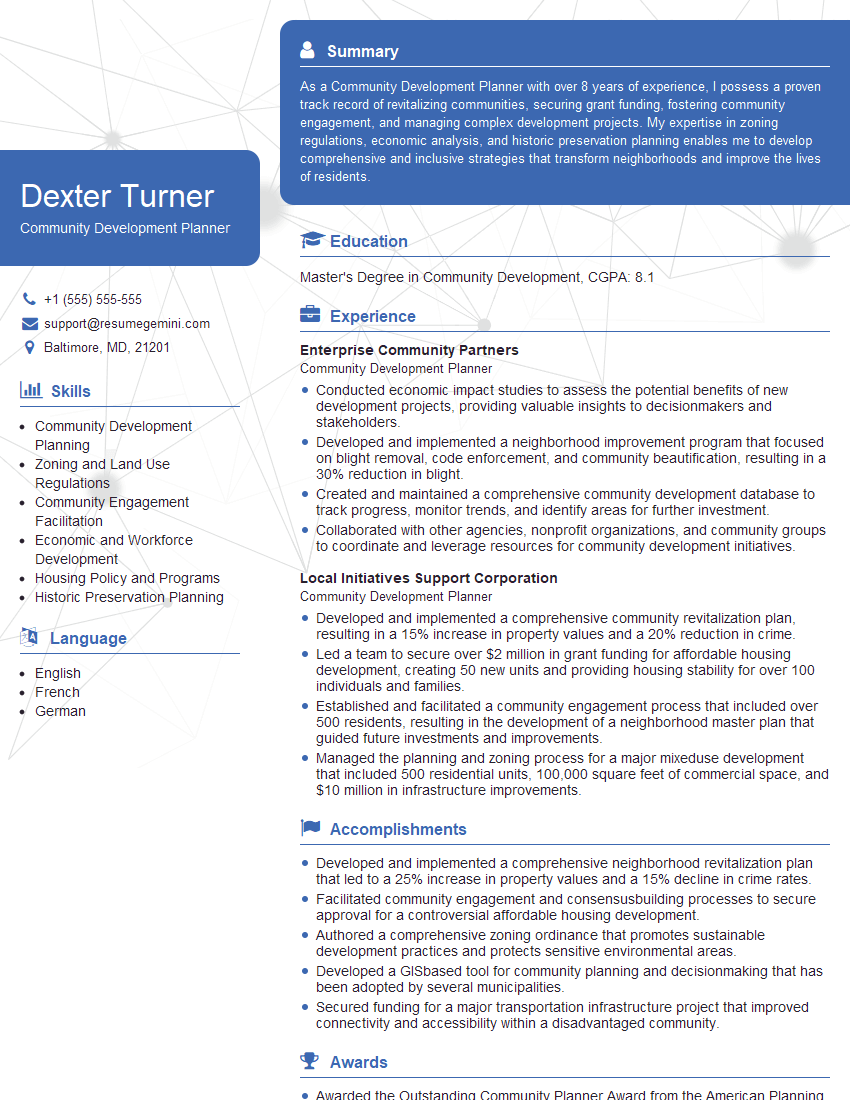
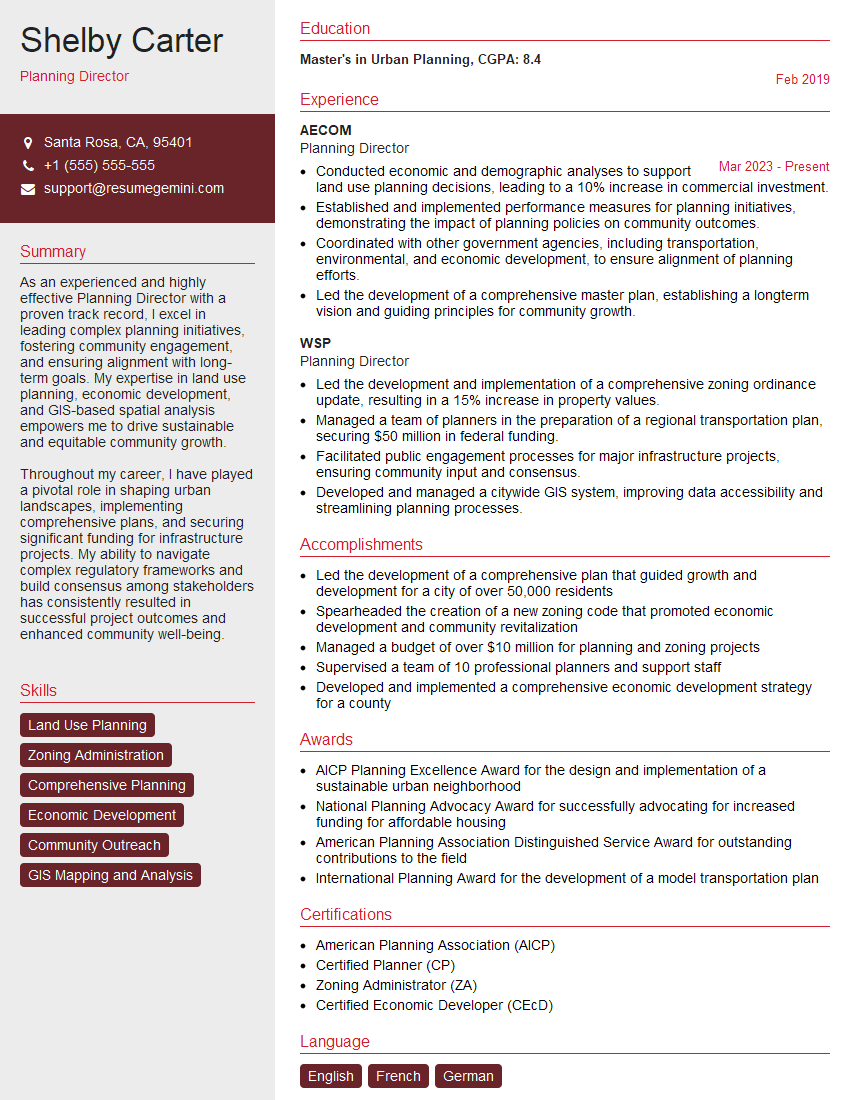
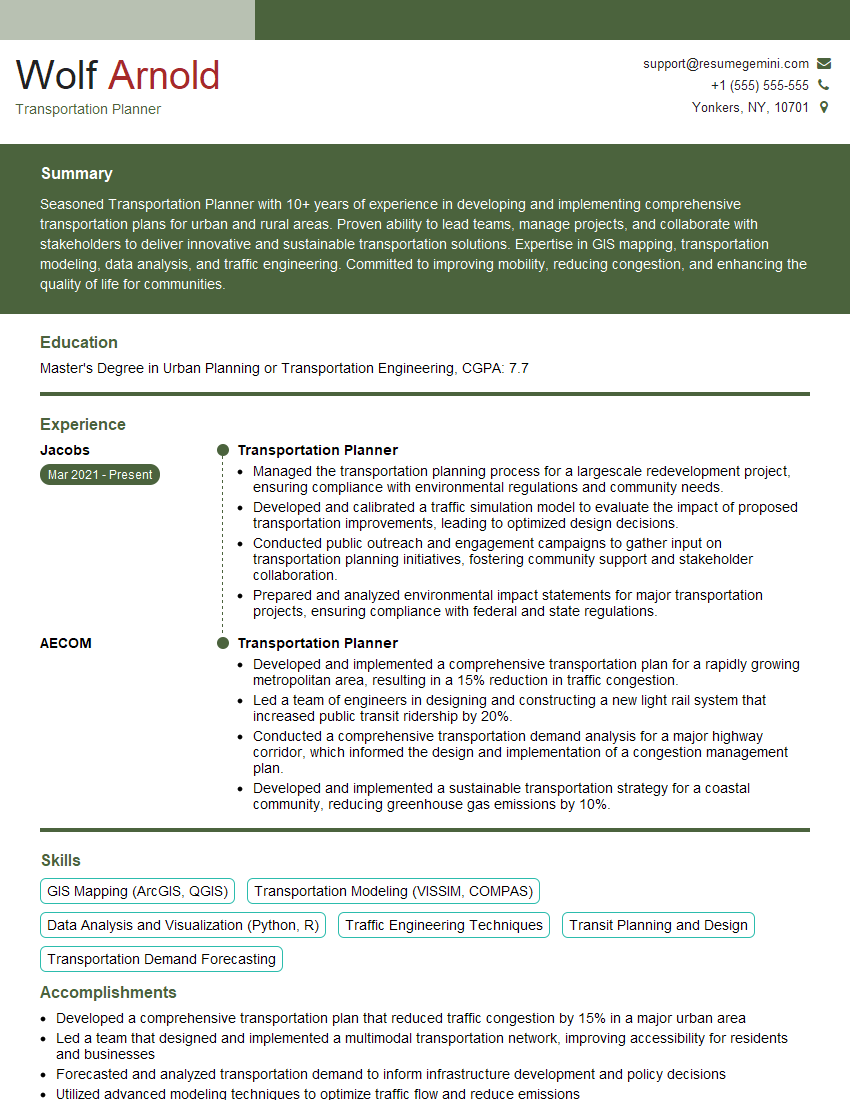
Mastering Zoning Impact Studies opens doors to exciting career opportunities in urban planning, environmental consulting, and real estate development. To significantly boost your job prospects, creating a compelling and ATS-friendly resume is crucial. ResumeGemini is a trusted resource that can help you craft a professional resume tailored to highlight your skills and experience in this field. We provide examples of resumes specifically designed for professionals in Zoning Impact Studies to help you get started. Invest the time in building a strong resume – it’s your first impression and a key to unlocking your career potential.
Explore more articles
Users Rating of Our Blogs
Share Your Experience
We value your feedback! Please rate our content and share your thoughts (optional).
What Readers Say About Our Blog
To the interviewgemini.com Webmaster.
Very helpful and content specific questions to help prepare me for my interview!
Thank you
To the interviewgemini.com Webmaster.
This was kind of a unique content I found around the specialized skills. Very helpful questions and good detailed answers.
Very Helpful blog, thank you Interviewgemini team.