Feeling uncertain about what to expect in your upcoming interview? We’ve got you covered! This blog highlights the most important Interventional Cardiology Support interview questions and provides actionable advice to help you stand out as the ideal candidate. Let’s pave the way for your success.
Questions Asked in Interventional Cardiology Support Interview
Q 1. Describe the steps involved in preparing a patient for a cardiac catheterization procedure.
Preparing a patient for cardiac catheterization is a crucial step ensuring patient safety and procedural success. It involves a multi-step process focusing on minimizing risks and optimizing the procedure.
- Pre-procedure assessment: This includes a thorough review of the patient’s medical history, medications, allergies, and current health status. We’ll also assess kidney function (as contrast dye is used) and coagulation parameters.
- Informed consent: The patient must fully understand the procedure, its benefits, risks, and alternatives. We discuss potential complications and answer all their questions thoroughly.
- NPO status: Patients are usually required to be NPO (nothing by mouth) for several hours before the procedure to reduce the risk of aspiration during sedation or anesthesia.
- IV access: An intravenous (IV) line is inserted to administer medications, fluids, and contrast dye.
- Medication adjustments: Certain medications like antiplatelet agents may need adjustment or temporary cessation before the procedure, depending on the patient’s overall health and the specific procedure planned. This is done to minimize bleeding risk.
- Pre-procedure monitoring: Vital signs are closely monitored, and an electrocardiogram (ECG) is performed to establish a baseline.
- Sedation/Anesthesia: Depending on the procedure, the patient may receive mild sedation or general anesthesia to ensure comfort and cooperation during the procedure.
For example, a patient with a history of renal insufficiency may require a modified contrast protocol to reduce the risk of contrast-induced nephropathy. A patient on warfarin will need careful assessment of their INR and potential bridging therapy.
Q 2. Explain the function of different types of catheters used in interventional cardiology.
Various catheters are used in interventional cardiology, each designed for a specific purpose. The choice of catheter depends on the anatomy of the vessel and the goals of the procedure.
- Diagnostic catheters: These are relatively thin catheters used to navigate the blood vessels and reach the heart chambers. They have side holes that allow for pressure measurements and blood sampling. For instance, a Judkins catheter is commonly used to access the coronary arteries.
- Balloon catheters: These catheters have an inflatable balloon at their tip used for angioplasty, expanding narrowed arteries. The balloon’s size is tailored to the specific blockage.
- Guiding catheters: These are larger catheters that serve as a support structure for other catheters, allowing smoother passage through the vessels. They provide stability during more complex procedures.
- Stent delivery catheters: These are specially designed to deliver stents to the narrowed arteries. They allow for precise placement of the stent and expansion to restore blood flow.
- Sheaths: These are introducer sheaths, which are essentially tubes that provide access to the vascular system and a stable environment for the introduction and manipulation of other catheters.
Imagine a plumbing system: diagnostic catheters are like a flexible snake camera, balloon catheters are like a tiny plunger, and stent delivery catheters are like a specialized tool to install a new pipe section.
Q 3. What are the potential complications of a cardiac catheterization procedure, and how are they managed?
Cardiac catheterization, while generally safe, carries potential risks. These can be minimized through careful patient selection, meticulous technique, and prompt management.
- Bleeding or hematoma at the puncture site: This is a common complication that can usually be managed with pressure dressing.
- Arterial dissection or perforation: These are serious complications requiring immediate intervention, possibly including surgical repair.
- Stroke: Embolic events during the procedure can rarely lead to stroke, hence the need for careful monitoring and proper technique.
- Allergic reaction to contrast dye: This is relatively uncommon, but patients with a history of allergies should be carefully screened and appropriately premedicated.
- Kidney injury: Contrast dye can affect kidney function, especially in patients with pre-existing renal impairment. Therefore we may use lower contrast volume or specific contrast agents in at-risk patients.
- Heart rhythm disturbances: Cardiac catheterization can sometimes trigger abnormal heart rhythms (arrhythmias). These can usually be managed with medication.
For instance, a large hematoma at the puncture site might necessitate surgical intervention to control bleeding. Any signs of stroke, such as sudden weakness or speech difficulty, necessitate immediate neurological evaluation.
Q 4. How do you ensure the sterility of equipment and the procedural environment during a cardiac catheterization?
Maintaining sterility is paramount in cardiac catheterization to prevent infection. A multi-layered approach is employed:
- Sterile field preparation: The procedure area is thoroughly cleaned and disinfected. A sterile drape is used to create a barrier against microorganisms.
- Sterile equipment: All equipment, including catheters, guidewires, balloons, stents, and other instruments, is sterilized using appropriate methods such as ethylene oxide or autoclaving before use.
- Surgical attire: The entire team wears sterile gowns, gloves, masks, and caps to maintain sterility.
- Aseptic technique: Strict adherence to aseptic technique by all personnel during the procedure is crucial. This involves meticulous hand hygiene and preventing contamination of sterile fields.
- Environmental control: The catheterization laboratory itself is designed with high standards of cleanliness and air filtration to minimize the risk of airborne contamination. Regular cleaning and disinfection protocols are followed.
Imagine this as akin to operating a cleanroom in the semiconductor industry – every step is precisely controlled to maintain a sterile environment.
Q 5. Describe the role of fluoroscopy in interventional cardiology procedures.
Fluoroscopy is a real-time X-ray imaging technique that provides dynamic visualization of the heart and blood vessels during interventional cardiology procedures. It’s indispensable for guiding catheter navigation and assessing the success of interventions.
- Catheter guidance: Fluoroscopy allows the physician to visualize the catheter’s position as it’s advanced through the blood vessels, guiding its precise placement in the target area.
- Assessment of lesions: Fluoroscopy helps assess the location, size, and severity of blockages in the coronary arteries or other vessels.
- Procedure monitoring: Real-time fluoroscopic images enable the physician to monitor the deployment of stents, balloons, and other devices, ensuring proper placement and expansion.
- Post-procedure evaluation: Fluoroscopy is used to confirm the patency of treated vessels and the overall outcome of the procedure.
Think of it like a GPS for the interventional cardiologist, providing real-time navigation and feedback during the procedure. Reducing radiation exposure is a priority, and we employ techniques such as pulse fluoroscopy to minimize radiation dose.
Q 6. What is the significance of hemodynamic monitoring during interventional procedures?
Hemodynamic monitoring during interventional cardiology procedures is critical for assessing the patient’s cardiovascular status and guiding therapeutic decisions. It involves continuous measurement of various parameters.
- Heart rate and rhythm: Continuous ECG monitoring allows for immediate detection of any arrhythmias or changes in heart rate that might indicate complications.
- Blood pressure: Continuous blood pressure monitoring is essential for assessing hemodynamic stability and identifying any signs of hypotension or hypertension.
- Oxygen saturation: Oxygen saturation (SpO2) monitoring ensures adequate oxygen delivery to the tissues.
- Cardiac output: Measurements of cardiac output help assess the effectiveness of interventions, especially in patients with heart failure.
- Intra-arterial pressure: Direct measurement of arterial pressure via an arterial line allows for more precise monitoring of hemodynamics and response to interventions.
Hemodynamic monitoring provides a real-time window into the patient’s cardiovascular response during the procedure, allowing for immediate adjustments if necessary. For example, a sudden drop in blood pressure might necessitate immediate fluid administration or the adjustment of medication.
Q 7. Explain the difference between diagnostic and interventional cardiac catheterization.
Diagnostic and interventional cardiac catheterization differ primarily in their objectives and procedures.
- Diagnostic cardiac catheterization: This procedure is primarily focused on identifying and assessing cardiovascular abnormalities, such as blockages in coronary arteries, valvular heart disease, or congenital heart defects. It mainly involves introducing catheters into the heart chambers and coronary arteries to obtain diagnostic images and pressure measurements. No therapeutic intervention is performed.
- Interventional cardiac catheterization: This procedure involves therapeutic interventions to correct or alleviate cardiovascular problems identified through diagnostic procedures. This may involve angioplasty, stent placement, valve repair, or other therapeutic interventions designed to restore blood flow and improve heart function.
In essence, diagnostic catheterization is like conducting a thorough investigation to find the problem, while interventional catheterization is akin to performing the necessary repair work to fix the identified problem. Sometimes, a diagnostic catheterization may lead directly to an interventional procedure if a significant blockage is found.
Q 8. How do you assist the physician during the placement of stents or other interventional devices?
My role during stent placement is multifaceted and crucial to the procedure’s success. I act as the physician’s highly trained right hand, ensuring a smooth and safe intervention. This involves preparing the equipment, meticulously monitoring hemodynamic parameters (heart rate, blood pressure, etc.), assisting with the insertion and manipulation of guidewires and catheters, and accurately recording all data. For example, I’ll be responsible for prepping the angiographic equipment, ensuring the contrast media is at the correct temperature and concentration, and accurately injecting it under the physician’s direction. I also manage the fluoroscopy unit to obtain optimal imaging and help maintain sterile conditions throughout the procedure. Precise communication with the physician is paramount, ensuring timely response to any changes in the patient’s condition or the procedure’s progress.
I also play a critical role in post-dilation techniques, ensuring the stent is properly deployed and expanded to achieve optimal luminal diameter. This requires precise manipulation of balloon catheters and a keen understanding of angiographic images. Finally, I help prepare the patient for recovery, ensuring the insertion site is adequately compressed to minimize bleeding.
Q 9. What are the key safety measures to be followed during a cardiac catheterization procedure?
Safety is paramount in cardiac catheterization. We strictly adhere to protocols that cover several key areas. First, we meticulously prepare the patient, including confirming their identity, allergies, and verifying the procedure site. Then comes sterile preparation of the access site – typically the femoral artery – to prevent infection. Throughout the procedure, continuous hemodynamic monitoring is critical, constantly checking for changes in heart rate, blood pressure, and rhythm. We also ensure adequate sedation and pain management for the patient’s comfort and to minimize movement. The use of radiation shielding is essential, both for the patient and the staff, to minimize radiation exposure. Finally, emergency equipment, including resuscitation drugs and defibrillators, is readily available and checked before every procedure, allowing for a rapid response to any complication.
Imagine it like a carefully orchestrated symphony: each instrument (step) plays its part, and a single missed note (error) can disrupt the whole process. That’s why we always prioritize safety.
Q 10. How do you handle emergencies such as bleeding or allergic reactions during the procedure?
Emergencies are rare but must be handled swiftly and efficiently. Bleeding at the access site is addressed immediately with direct pressure, and if necessary, surgical closure. We also have readily available clotting agents to assist in hemostasis. Allergic reactions to contrast media, ranging from mild hives to severe anaphylaxis, require immediate recognition and treatment. This involves administering antihistamines, corticosteroids, or even epinephrine (adrenaline) depending on the severity of the reaction. Oxygen is always administered during any emergency situation. Rapid response protocols are followed, including calling for immediate assistance from the anesthesia team or other specialists as needed. We conduct a post-event debriefing to analyze what happened and identify areas for improvement in our response.
Think of it like a fire drill – we practice these scenarios regularly so that our responses are automatic and efficient in a real emergency.
Q 11. Describe your experience with different types of angioplasty techniques.
My experience encompasses various angioplasty techniques, including balloon angioplasty, rotational atherectomy, directional atherectomy, and laser angioplasty. Balloon angioplasty is the most common, involving inflating a balloon catheter to compress the plaque and widen the artery. Rotational atherectomy uses a rapidly rotating burr to remove calcified plaque, while directional atherectomy uses a catheter with a cutting blade to shave away the plaque. Laser angioplasty utilizes a laser to vaporize or ablate plaque. The choice of technique depends on factors like the location and nature of the blockage, the severity of calcification, and the patient’s overall condition. For instance, a heavily calcified lesion might necessitate rotational atherectomy before balloon angioplasty for optimal results. I’m also familiar with the newer techniques like drug-eluting stents and bioresorbable vascular scaffolds, which help prevent restenosis (re-narrowing of the artery).
Q 12. What are the post-procedure care instructions for patients undergoing cardiac catheterization?
Post-procedure care is vital for patient recovery and preventing complications. Instructions usually involve bed rest for a few hours, followed by gradual mobilization. The access site is closely monitored for bleeding and hematoma formation. Patients are advised to keep the site clean and dry and avoid strenuous activity for a few days. Medication instructions are carefully explained, particularly regarding anticoagulants and antiplatelet agents to prevent thrombosis (blood clot formation) in the treated vessel. A follow-up appointment is scheduled to evaluate the patient’s recovery, monitor the stent, and address any potential issues. We also provide clear dietary guidelines and advice on managing pain and potential side effects.
We provide detailed written and verbal instructions, ensuring the patient and their caregivers fully understand the post-procedure care regimen. We encourage them to ask any questions they have.
Q 13. How do you recognize and respond to signs of complications such as perforation or dissection?
Recognizing and responding to complications like perforation or dissection is critical. Perforation (a hole in the artery) is often indicated by a sudden drop in blood pressure, rapid heart rate, and the appearance of extravasation of contrast media outside the vessel on the angiogram. Dissection (a tear in the artery wall) might manifest as a false lumen (new pathway) visible on angiography, potentially causing abrupt blood flow changes. Immediate action is required: the procedure is stopped, and the physician focuses on controlling bleeding and potentially repairing the damage using various techniques such as covered stents or surgical intervention. Constant monitoring of the patient’s condition is essential, and the patient is immediately transferred to an appropriate care setting – ICU if necessary.
Identifying these complications early is dependent on close observation of angiographic images, hemodynamic parameters and continuous patient assessment.
Q 14. Explain the process of managing contrast media reactions.
Contrast media reactions range from mild flushing and nausea to severe anaphylaxis. Mild reactions are typically managed with antihistamines. More serious reactions require immediate administration of corticosteroids and epinephrine (adrenaline) and might necessitate intubation and mechanical ventilation. Oxygen is always crucial. We continuously monitor the patient’s vital signs, including blood pressure, heart rate, and oxygen saturation. The severity of the reaction dictates the treatment pathway; in severe cases, it is an emergency situation requiring a rapid and coordinated response. Post-reaction care includes ongoing monitoring, assessing the patient for delayed reactions, and providing supportive care. Patient history and allergy status are reviewed thoroughly before the procedure to mitigate potential risks.
The key is rapid assessment and a tiered response based on the severity of the reaction. We have well-rehearsed protocols to handle a broad spectrum of reactions.
Q 15. Describe your experience with different types of imaging modalities used in interventional cardiology.
Interventional cardiology relies heavily on various imaging modalities to visualize the heart and its vasculature. My experience encompasses fluoroscopy, which provides real-time X-ray imaging during procedures, guiding catheter and device placement. I’m also proficient in intravascular ultrasound (IVUS), which uses high-frequency sound waves to create detailed images of the vessel walls, helping assess plaque burden and stent deployment. Furthermore, I have extensive experience with optical coherence tomography (OCT), offering even higher resolution images than IVUS, allowing for precise assessment of stent apposition and detection of subtle lesions. Finally, I’m familiar with 3D rotational angiography, creating a comprehensive three-dimensional view of the coronary arteries, useful in complex cases. For instance, during a complex bifurcation lesion PCI, IVUS helps determine optimal stent placement to minimize complications, while OCT ensures complete stent expansion and minimal edge dissection.
Career Expert Tips:
- Ace those interviews! Prepare effectively by reviewing the Top 50 Most Common Interview Questions on ResumeGemini.
- Navigate your job search with confidence! Explore a wide range of Career Tips on ResumeGemini. Learn about common challenges and recommendations to overcome them.
- Craft the perfect resume! Master the Art of Resume Writing with ResumeGemini’s guide. Showcase your unique qualifications and achievements effectively.
- Don’t miss out on holiday savings! Build your dream resume with ResumeGemini’s ATS optimized templates.
Q 16. How do you maintain accurate documentation of procedural details and patient information?
Maintaining accurate documentation is paramount in interventional cardiology. We use a comprehensive electronic health record (EHR) system to meticulously record all procedural details, including pre-procedure patient assessment (vital signs, allergies, medication history), procedural steps (type of catheter used, stent specifications, contrast media volume), intra-procedural events (hemodynamic changes, complications), post-procedure assessments, and follow-up instructions. We use standardized templates and checklists to ensure nothing is overlooked. Patient identifiers are verified multiple times throughout the process to avoid errors, and all imaging data (fluoroscopy, IVUS, OCT) is securely stored and electronically linked to the patient’s record. For example, I’ll always note the exact type and size of stent deployed, its location, and any complications encountered during the procedure such as dissection or perforation. This detailed documentation is crucial for patient care, quality assurance, and legal purposes.
Q 17. What is your understanding of radiation safety protocols in the cath lab?
Radiation safety is a top priority in the cath lab. We adhere to the ALARA principle (As Low As Reasonably Achievable) to minimize radiation exposure to both patients and staff. This involves optimizing fluoroscopy settings (reducing pulse rate and using pulsed fluoroscopy whenever possible), utilizing lead aprons and shielding, and employing the radiation safety officer’s guidance on optimal positioning. We use monitoring devices that measure radiation exposure for both the patient and personnel. Strict protocols are in place for lead apron use, and regular monitoring is conducted to ensure their integrity. For example, before a procedure we calculate the estimated radiation dose to the patient based on the planned procedure and then strive to stay below that threshold throughout the intervention. We also regularly review and train on radiation safety procedures and participate in safety audits.
Q 18. How do you ensure the proper functioning and calibration of equipment used in the cath lab?
Ensuring proper equipment function is crucial. A rigorous quality control (QC) program is followed. This involves daily equipment checks, including verifying pressure readings, flow rates, and image quality, documenting findings in dedicated logs. Regular preventative maintenance is carried out by biomedical engineers, and all equipment undergoes calibration checks according to manufacturer specifications. For example, the hemodynamic monitoring system is checked daily for accuracy by comparing its readings to a calibrated pressure transducer. We participate in phantom studies to validate image quality and ensure that the imaging systems are functioning within acceptable parameters.
Q 19. Describe your experience with troubleshooting equipment malfunctions.
Troubleshooting equipment malfunctions requires a systematic approach. My experience involves assessing the problem by systematically checking connections, power sources, and basic functionality. This often involves consulting the equipment’s troubleshooting guide or contacting biomedical engineering for assistance with complex issues. I’ve dealt with situations ranging from minor software glitches to major system failures. For example, if a pressure transducer fails, we have a backup system in place and we know exactly how to switch over. In the event of a more significant failure, a structured communication protocol with biomedical engineering is followed to ensure minimal procedural downtime and maintain patient safety.
Q 20. What is your understanding of different types of heart rhythms and their treatment?
Understanding heart rhythms is fundamental. I’m familiar with various arrhythmias, including atrial fibrillation (AFib), atrial flutter, supraventricular tachycardia (SVT), ventricular tachycardia (VT), and bradycardia. Treatment varies greatly depending on the type, severity, and patient’s overall health. For instance, AFib can be managed with medications, catheter ablation, or even anticoagulants. VT, being potentially life-threatening, may require immediate cardioversion or the implantation of an implantable cardioverter-defibrillator (ICD). Bradycardia might need pacemaker implantation. The decision-making process involves careful consideration of the electrocardiogram (ECG) findings, hemodynamic parameters, and patient history. My understanding includes not just identification but also the implications of each rhythm on the patient’s health and the appropriate therapeutic approach.
Q 21. How do you assist in the implantation of pacemakers or ICDs?
Assisting in pacemaker and ICD implantations involves preparing the equipment, assisting the physician with lead placement under fluoroscopic guidance, confirming lead placement and function, and ensuring the device is programmed according to the physician’s specifications. This includes verifying proper pacing thresholds, impedance readings, and ensuring correct sensing capabilities. I’m involved in preparing the patient, monitoring hemodynamics throughout the procedure, and providing technical support to the physician. We meticulously document lead positions, pacing parameters, and any complications during the procedure. For example, I’d help prepare the sterile field, ensuring all necessary equipment is available and functioning correctly. After the procedure, I’d assist in post-procedure monitoring of the patient’s vital signs and the proper functioning of the implanted device.
Q 22. Explain your knowledge of electrophysiology mapping techniques.
Electrophysiology (EP) mapping is a sophisticated technique used to create a detailed map of the heart’s electrical activity. It’s crucial in diagnosing and treating various arrhythmias (irregular heartbeats). We use catheters with electrodes at their tips, inserted through blood vessels, to record the electrical signals from different areas of the heart. This data is then processed by a sophisticated computer system to generate a 3D map of the heart, revealing the origin and pathway of abnormal electrical impulses.
For example, in atrial fibrillation (a common irregular heartbeat), EP mapping can pinpoint the specific areas in the atria (upper chambers of the heart) responsible for the chaotic electrical activity. This precise localization is essential for effective ablation, a procedure where the abnormal tissue is destroyed using energy (radiofrequency or cryoablation) to restore a normal rhythm. The mapping process involves careful catheter manipulation, precise electrode placement, and the interpretation of complex waveforms to identify the arrhythmia’s source. It’s a highly collaborative process, often involving a team of cardiologists, EP nurses, and technicians.
Another example is the mapping of ventricular tachycardia (rapid heartbeat originating in the ventricles, the lower heart chambers). Accurate mapping helps guide ablation to eliminate the source of the dangerous rhythm. Different mapping techniques exist, including activation mapping, which identifies the sequence of activation of heart muscle cells, and voltage mapping, which measures the electrical potential of different heart regions to identify areas of scar tissue that might be triggering arrhythmias.
Q 23. How do you maintain a sterile field during complex interventional procedures?
Maintaining a sterile field during complex interventional procedures is paramount to prevent infection. We meticulously follow a strict protocol, starting with thorough hand hygiene and the donning of sterile gowns, gloves, and masks by all personnel involved. The cath lab itself is meticulously cleaned and disinfected before each procedure. The patient’s skin at the insertion site is prepared with antiseptic solutions, following a circular scrubbing technique to minimize microbial contamination.
Draped sterile fields are created around the insertion site, ensuring no non-sterile items come into contact with the sterile area. All equipment used during the procedure is either sterile or appropriately disinfected and covered before use. We constantly monitor the sterile field, ensuring no breaks in sterility occur. Any breach, however minor, requires immediate rectification and often necessitates a repetition of the skin preparation and draping process. We also rigorously maintain air quality within the cath lab, using HEPA filters to minimize airborne particles. Regular audits of our sterile techniques and adherence to guidelines are essential for maintaining a high standard of infection control.
Think of it like a surgeon performing an open heart surgery—the principles of sterility are identical. Even a tiny break can have catastrophic consequences. Consistent attention to detail and a strong team ethic are crucial to maintaining a completely sterile environment throughout the duration of each procedure.
Q 24. Describe your experience with patient education before and after interventional procedures.
Patient education is a crucial aspect of interventional cardiology. Before a procedure, I thoroughly explain the procedure’s purpose, benefits, risks, and potential complications in a language the patient easily understands. I encourage them to ask questions and address any concerns. I provide detailed information about pre-procedure preparations, such as fasting requirements and medication adjustments. I also offer ample opportunity for patients to discuss their anxieties and fears, providing reassurance and a compassionate approach.
Post-procedure, I discuss the results, recovery expectations, medications, and follow-up appointments. I emphasize the importance of adhering to the prescribed medication regimen, lifestyle modifications (diet, exercise), and recognizing potential complications that require immediate medical attention. I provide written instructions and relevant contact information. We use various methods to reinforce learning, including visual aids, handouts, and scheduling follow-up consultations. For example, I’ll show patients a diagram illustrating the placement of stents or explain the function of implanted devices in simple terms. Patient satisfaction and comprehension are measured through feedback forms and follow-up calls.
I had a patient once, an elderly woman who was extremely anxious about a stent placement. We spent considerable time discussing her concerns. After the procedure, her recovery was remarkable thanks to clear communication and post-procedure guidance. Open, honest, and detailed communication with my patients is always a priority.
Q 25. How do you manage patient anxiety and concerns during the procedure?
Managing patient anxiety and concerns is paramount. I begin by creating a calm and reassuring environment. I actively listen to their concerns, validating their feelings, and providing honest and clear explanations. I use simple, non-technical language to describe the procedure and its implications. Before the procedure, I offer relaxation techniques like deep breathing exercises and discuss potential anxieties, creating space for them to openly share their feelings.
During the procedure, I maintain open communication, providing regular updates on the progress and explaining any sensations they may experience. A calming demeanor and a friendly approach create trust and reduce anxiety. In cases of severe anxiety, we may consider administering mild sedation in consultation with the anesthesiologist. Post-procedure, I thoroughly review the outcomes, answer any remaining questions, and schedule follow-up appointments to ensure continuous support and address any post-procedure concerns. We make sure that the patient has a designated family member or friend present for support, and offer reassurance and emotional comfort. Understanding and acknowledging the patient’s experience is key to a positive outcome.
Q 26. What is your understanding of the ethical and legal considerations in interventional cardiology?
Ethical and legal considerations in interventional cardiology are multifaceted. Informed consent is paramount, ensuring patients understand the procedure, its risks and benefits, and alternative treatments before giving their consent. Maintaining patient confidentiality according to HIPAA regulations is crucial. We must ensure that all documentation is accurate and complete, as it plays a critical role in legal cases. Appropriate billing practices are vital; any fraudulent billing activity is unethical and illegal.
Moreover, maintaining competence and adhering to best practices are ethical obligations. This includes staying up-to-date with the latest advancements and evidence-based guidelines. We must strive to provide the best possible care, avoiding unnecessary procedures. Conflicts of interest must be declared and avoided where possible to maintain professional integrity. In situations requiring difficult decisions, we must prioritize the patient’s best interests and act with the utmost ethical and professional standards.
For instance, when a patient’s condition makes them incapable of providing informed consent, ensuring appropriate legal guardians are involved in the decision-making process is paramount. Transparency, ethical decision-making, and strict adherence to legal and professional guidelines form the bedrock of responsible practice in interventional cardiology.
Q 27. Describe your experience with teamwork and communication within a cath lab setting.
Teamwork and communication are essential in the cath lab. We function as a highly coordinated unit, with each member having a defined role and responsibility. Effective communication, both verbal and non-verbal, is vital during procedures to ensure patient safety and procedural success. Prior to procedures, we conduct thorough briefings, reviewing the patient’s history, procedure plan, and potential challenges. During the procedure, we constantly communicate, exchanging information about the patient’s hemodynamics, fluoroscopy images, and equipment status.
Clear and concise communication minimizes errors and maximizes efficiency. For example, during complex interventions, the cardiologist will communicate directly with the scrub nurse, EP technologist, and anesthesiologist, who communicate their observations and manage equipment and patient monitoring. We use standardized terminology and communication protocols to prevent misunderstandings. A strong sense of mutual respect and collaboration fosters a safe and supportive work environment, leading to better patient outcomes. A hierarchical structure and a supportive teamwork culture are vital to the overall success.
I remember one particularly challenging case where a patient experienced a complication during a procedure. The rapid and coordinated response of the team, thanks to clear communication and seamless collaboration, prevented a critical event. This illustrates the critical importance of a highly functioning team in ensuring the best possible patient care.
Q 28. How do you stay updated on the latest advancements and best practices in interventional cardiology?
Staying updated on the latest advancements and best practices in interventional cardiology requires a multifaceted approach. I regularly attend national and international conferences and workshops, networking with colleagues and specialists, and participating in continuing medical education (CME) activities. I actively engage in professional organizations such as the American College of Cardiology (ACC) and the Society for Cardiovascular Angiography and Interventions (SCAI), accessing their journals, guidelines, and online resources. I participate in journal clubs within our department, where we critically appraise recently published research articles to enhance our clinical understanding and practice.
I stay abreast of new technologies and techniques by attending industry workshops and webinars, reading medical journals, and engaging with online medical communities. In addition, mentoring junior colleagues and participating in case conferences provide valuable opportunities for learning and sharing knowledge. Keeping a keen eye on research publications, particularly in high-impact journals, and actively seeking out novel techniques and treatments allows me to remain a highly skilled and updated Interventional Cardiology professional.
For example, the development of new drug-eluting stents, minimally invasive techniques, and novel ablation technologies requires continuous learning and adaptation to ensure patient safety and optimal treatment outcomes.
Key Topics to Learn for Interventional Cardiology Support Interview
- Cardiac Catheterization Lab Procedures: Understanding the workflow, equipment used (angiography systems, guidewires, catheters), and patient preparation involved in various procedures like coronary angiograms, angioplasties, and stent placements.
- Hemodynamics and Electrophysiology: Comprehending basic hemodynamic principles, interpreting waveforms, and understanding the role of electrophysiology in interventional procedures. Practical application includes recognizing potential complications and assisting in their management.
- Sterile Techniques and Infection Control: Mastering sterile procedures and infection control protocols within the cath lab environment is crucial. This includes understanding the importance of aseptic techniques and handling medical equipment properly.
- Emergency Response and Critical Care Support: Knowledge of managing emergencies, such as arrhythmias, bleeding complications, and allergic reactions during procedures. Practical application involves assisting the physician in responding effectively to such situations.
- Medical Imaging and Image Interpretation: Familiarity with fluoroscopy, interpreting angiograms, and understanding the role of imaging in guiding interventional procedures. This includes recognizing normal and abnormal anatomical structures.
- Patient Care and Communication: Understanding the importance of providing compassionate patient care, communicating effectively with patients and their families, and addressing patient anxieties.
- Regulatory Compliance and Safety Protocols: Familiarity with relevant regulations, safety procedures, and documentation requirements within the healthcare setting.
- Equipment Maintenance and Troubleshooting: Basic understanding of equipment function and troubleshooting minor issues. This contributes to efficient workflow and procedure success.
Next Steps
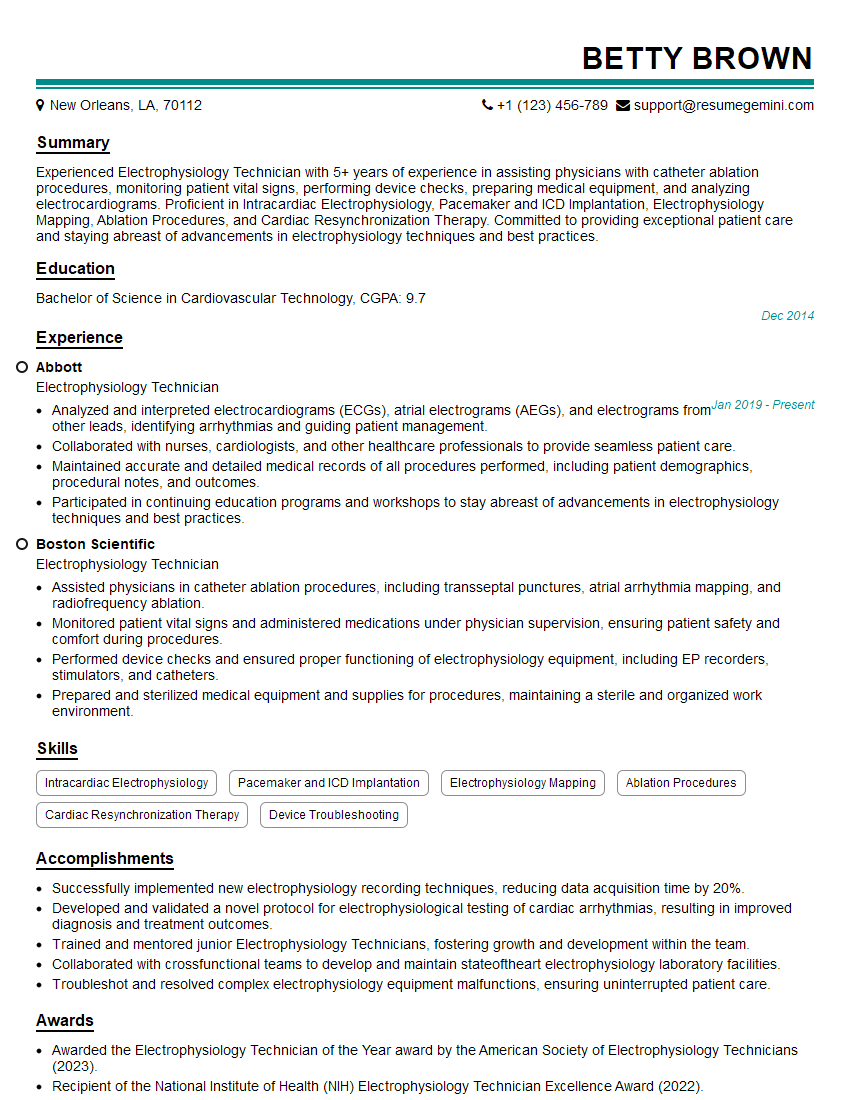
Mastering Interventional Cardiology Support opens doors to a rewarding career with excellent growth potential. As you develop your expertise, a strong resume is vital for showcasing your skills and experience to potential employers. Building an ATS-friendly resume is essential to maximize your job prospects. We highly recommend leveraging ResumeGemini to create a professional and impactful resume that highlights your qualifications effectively. ResumeGemini provides examples of resumes tailored to Interventional Cardiology Support, ensuring your application stands out.
Explore more articles
Users Rating of Our Blogs
Share Your Experience
We value your feedback! Please rate our content and share your thoughts (optional).
What Readers Say About Our Blog
To the interviewgemini.com Webmaster.
Very helpful and content specific questions to help prepare me for my interview!
Thank you
To the interviewgemini.com Webmaster.
This was kind of a unique content I found around the specialized skills. Very helpful questions and good detailed answers.
Very Helpful blog, thank you Interviewgemini team.