Unlock your full potential by mastering the most common Ability to build and manage relationships with the media interview questions. This blog offers a deep dive into the critical topics, ensuring you’re not only prepared to answer but to excel. With these insights, you’ll approach your interview with clarity and confidence.
Questions Asked in Ability to build and manage relationships with the media Interview
Q 1. Describe your experience pitching stories to journalists.
Pitching stories to journalists is about understanding their audience and needs. It’s not about simply sending a press release; it’s about building a relationship and offering a compelling narrative that aligns with their publication’s focus. My process involves thorough research to identify the right journalists covering relevant topics. I then craft a personalized pitch – not a generic email blast – highlighting the unique angle of the story and its newsworthiness. I tailor the pitch to the specific journalist’s past work, showcasing how my story fits their reporting style and interests. For instance, if a journalist frequently covers sustainability initiatives, I’d emphasize the eco-friendly aspects of my client’s new product in my pitch.
I always follow up, demonstrating persistence but also respect for their time. I might offer exclusive access to information or an interview with a key individual. Ultimately, a successful pitch is a win-win situation, offering valuable content to the journalist and exposure for my client.
Q 2. How do you build rapport with media contacts?
Building rapport with media contacts is crucial for long-term success. It’s about creating genuine connections, not just transactional relationships. I start by actively reading their work, showing I value their expertise and perspective. I personalize my communication, referencing their previous articles or interviews. I attend industry events and conferences to network and build relationships in person. This allows for more casual and personal interactions. I also proactively share relevant news or insights that might be of interest to them, even if it’s not directly related to my clients. Think of it like cultivating a friendship; genuine interest and mutual respect are key.
Regular, non-demanding communication is also vital. A simple email congratulating them on a well-written piece or sharing a relevant article can go a long way in nurturing the relationship.
Q 3. Explain your process for crafting a compelling press release.
Crafting a compelling press release is about conveying information clearly, concisely, and engagingly. It must grab attention within the first few lines. I begin with a strong headline that accurately reflects the story’s essence. The lead paragraph summarizes the most important information – the who, what, when, where, and why. The body expands on those details, providing supporting evidence and quotes from relevant sources. I always include a call to action, encouraging readers to take the next step, whether it’s visiting a website, contacting a specific person, or learning more.
A well-structured press release follows the inverted pyramid style, presenting the most important information first, followed by less critical details. I use strong verbs, avoid jargon, and maintain a clear, concise tone. I also ensure the release is visually appealing and easy to read, using bullet points and white space effectively. Finally, I always proofread meticulously for errors in grammar and spelling.
Q 4. How do you handle negative media coverage?
Negative media coverage is inevitable. The key is to respond promptly, transparently, and strategically. First, I acknowledge the criticism and express empathy for any concerns raised. Next, I offer a factual response, addressing the specific points of contention with evidence and data. I avoid getting defensive or engaging in a public battle. Instead, I aim to correct inaccuracies and present a balanced perspective. If appropriate, I offer a sincere apology where warranted. Building and maintaining credibility is crucial during these moments. In some cases, a proactive outreach to the journalist involved might help to clarify misunderstandings and offer additional context.
For example, if there’s a false claim, I’d provide documented evidence to contradict it. I might also offer an exclusive interview to share the full story and mitigate any further negative attention.
Q 5. What metrics do you use to measure the success of your media relations efforts?
Measuring the success of media relations efforts requires a multi-faceted approach. I don’t just focus on the quantity of media placements; I look at the quality and impact as well. Key metrics include:
- Media Impressions: The total number of people potentially exposed to the media coverage.
- Website Traffic Referrals: The number of visitors driven to the client’s website from media outlets.
- Social Media Engagement: The level of interaction (likes, shares, comments) on social media platforms regarding the media coverage.
- Lead Generation: The number of qualified leads generated from media mentions.
- Brand Sentiment Analysis: Tracking public perception and opinion about the brand after the media coverage.
By analyzing these metrics, I can understand which campaigns are most effective and refine my strategies accordingly. It’s important to set clear, measurable goals before initiating a campaign to ensure effective measurement.
Q 6. Describe a time you had to manage a crisis involving the media.
During a product recall, we faced intense media scrutiny. A minor defect in a popular product resulted in several reported incidents. My initial response was to establish a dedicated crisis communication team. We immediately issued a comprehensive press release acknowledging the issue, detailing the recall process, and assuring customer safety. We proactively contacted key media outlets, providing them with updates and arranging interviews with our CEO. Transparency was our guiding principle. We addressed all concerns openly, honestly, and promptly. We also set up a dedicated helpline and online resource center to assist affected customers. The situation was challenging, but by prioritizing open communication and swift action, we successfully managed the crisis and mitigated long-term reputational damage.
The key takeaway was the importance of having a pre-defined crisis communication plan in place before an issue arises. This allows for a more coordinated and effective response when under pressure.
Q 7. How do you identify and target key media outlets for your campaigns?
Identifying and targeting key media outlets requires thorough research. I begin by analyzing the target audience for the campaign. Who are we trying to reach? What are their interests and media consumption habits? Then, I identify publications and journalists that cater to that audience. I utilize media databases, social media monitoring tools, and press release distribution platforms to compile a list of relevant outlets. I consider factors such as the publication’s reach, editorial focus, and audience demographics. I then segment my media list, targeting specific journalists based on their expertise and past coverage. A personalized approach maximizes the likelihood of securing coverage in the right places. For example, if launching a new tech product, I’d prioritize technology publications and bloggers specializing in that area.
Ultimately, my goal is to ensure our message resonates with the right audience through the most impactful channels.
Q 8. What strategies do you employ for building relationships with influencers?
Building relationships with influencers requires a strategic, long-term approach that goes beyond transactional interactions. It’s about cultivating genuine connections based on mutual respect and shared interests.
- Targeted Outreach: I begin by identifying influencers whose audiences align with my clients’ target demographics and brand values. This isn’t a shotgun approach; it’s about precision targeting.
- Value-Driven Engagement: Instead of directly pitching, I focus on providing value. This might involve sharing insightful content, offering exclusive access to events or information, or collaborating on projects that benefit both parties.
- Personalized Communication: Generic emails are ineffective. I tailor my communication to each influencer, referencing their work and demonstrating I understand their specific interests and areas of expertise.
- Relationship Nurturing: This is an ongoing process. I maintain regular communication, even when there’s no immediate need for collaboration. This includes sharing relevant articles, congratulating them on achievements, or simply engaging with their content.
- Transparency and Authenticity: Honesty and transparency are crucial. Influencers can easily spot inauthentic engagement, so building trust is paramount.
For example, I recently worked with a sustainable fashion brand. Instead of simply asking influencers to post about their clothing, I collaborated with them on a campaign promoting ethical sourcing. This led to much more authentic and engaging content.
Q 9. How familiar are you with media databases and monitoring tools?
I’m extremely familiar with media databases and monitoring tools. They’re essential for effective media relations. I regularly use platforms like Cision, Meltwater, and Factiva to identify relevant journalists, track media coverage, and analyze trends.
These tools allow me to:
- Identify Key Journalists: Find reporters covering specific beats or industries relevant to my clients.
- Monitor Media Coverage: Track mentions of my clients, competitors, and industry trends. This helps understand brand perception and identify potential reputational risks.
- Analyze Media Landscape: Gain insights into media trends, including preferred communication styles and publication frequency.
- Build Targeted Media Lists: Create refined contact lists for effective outreach.
I also use social media monitoring tools like Brand24 to track mentions across various platforms, providing a holistic view of brand perception.
Q 10. How do you manage multiple media inquiries simultaneously?
Managing multiple media inquiries simultaneously requires organization, prioritization, and excellent time management. My approach involves:
- Centralized System: I utilize a CRM (Customer Relationship Management) system to track all inquiries, deadlines, and responses. This ensures no request slips through the cracks.
- Prioritization Matrix: I prioritize inquiries based on urgency, media outlet influence, and alignment with client objectives. High-impact outlets and time-sensitive requests receive immediate attention.
- Teamwork: For large-scale campaigns, I leverage the expertise of my team, assigning tasks efficiently and providing clear guidelines.
- Template Responses: For frequently asked questions, I create template responses to streamline communication while maintaining personalization.
- Regular Check-ins: I schedule regular check-ins with clients and team members to ensure everyone is informed and aligned.
Think of it like an air traffic controller: guiding numerous ‘planes’ (media requests) safely and efficiently to their destination (successful response).
Q 11. What is your approach to media training for executives or spokespeople?
My approach to media training is highly practical and tailored to the individual. It’s not about memorizing talking points; it’s about empowering spokespeople to communicate effectively and authentically.
- Needs Assessment: I begin by understanding the spokesperson’s communication style, strengths, and areas for improvement. This includes assessing their comfort level with media interactions.
- Message Development: We collaboratively develop key messages that align with the overall communication strategy. These messages are concise, clear, and resonate with the target audience.
- Mock Interviews: I conduct mock interviews to simulate real-life media interactions. This allows spokespeople to practice their responses, build confidence, and identify areas for improvement.
- Crisis Communication Training: For senior executives, crisis communication training is a must. We develop protocols for handling difficult questions and unexpected situations.
- Feedback and Refinement: I provide constructive feedback after each session, focusing on areas for improvement and reinforcing successful communication strategies.
The goal is to equip spokespeople with the skills and confidence to handle any media situation with grace and professionalism.
Q 12. Describe your experience using social media to build relationships with journalists.
Social media is an invaluable tool for building relationships with journalists. It allows for more informal and personal interactions.
- Targeted Following: I follow journalists who cover relevant topics and engage with their content regularly. This demonstrates genuine interest and builds visibility.
- Thought Leadership: I share insightful articles and commentary related to my client’s industry. This positions my clients and myself as thought leaders and attracts attention.
- Direct Messaging: I use direct messaging sparingly but strategically. For instance, I might share relevant information or comment on a journalist’s article to start a conversation.
- Participation in Relevant Conversations: I participate in online discussions related to my client’s industry, demonstrating knowledge and expertise.
- Monitoring and Engagement: I monitor social media for relevant conversations and opportunities to engage with journalists in a thoughtful and relevant way.
Remember, it’s about building relationships, not just self-promotion. Authentic engagement is key.
Q 13. How do you measure the ROI of media relations activities?
Measuring the ROI of media relations is crucial for demonstrating value. It’s not just about counting media mentions; it’s about understanding the impact on key business objectives.
- Media Coverage Analysis: I track the number and quality of media mentions, noting the reach and influence of each publication. I use tools to analyze sentiment and tone.
- Website Traffic Analysis: I monitor website traffic from media mentions to determine the impact on lead generation and brand awareness.
- Social Media Engagement: I analyze social media engagement related to media coverage to understand audience reaction and sentiment.
- Sales and Lead Generation: Where applicable, I track the correlation between media coverage and sales or lead generation to quantify the direct impact on business growth.
- Brand Sentiment and Awareness: I monitor changes in brand sentiment and awareness using surveys and social listening to assess the long-term impact of media relations efforts.
A holistic approach, combining quantitative and qualitative data, provides a comprehensive understanding of ROI.
Q 14. How do you adapt your communication style to different media outlets?
Adapting communication style to different media outlets is critical for effective media relations. Each outlet has its own audience, editorial style, and preferred communication methods.
- Understanding Target Audience: I research each outlet’s target audience and tailor my pitch to resonate with their interests and needs.
- Respecting Editorial Style: I adhere to each outlet’s style guide, using appropriate language, tone, and format.
- Choosing Appropriate Channels: I utilize the most effective communication channels for each outlet. This could involve email, phone calls, or social media.
- Personalization: I personalize my pitch to each journalist, referencing their previous work and demonstrating knowledge of their area of expertise.
- Building Relationships: Cultivating long-term relationships with journalists builds trust and understanding, allowing for more effective communication.
For example, a pitch to a trade publication would differ significantly from a pitch to a consumer magazine. Understanding these nuances is key to success.
Q 15. Describe your experience with media monitoring and analysis tools.
Media monitoring and analysis tools are essential for understanding media coverage and its impact. My experience spans several platforms, including Cision, Meltwater, and Brandwatch. These tools allow for comprehensive tracking of mentions across various media outlets – from newspapers and magazines to blogs and social media. I use them to:
- Track brand mentions: Identifying positive, negative, and neutral sentiment surrounding our brand or key initiatives.
- Monitor competitor activity: Understanding their strategies and messaging to inform our own.
- Analyze media trends: Identifying emerging themes and topics relevant to our industry.
- Measure campaign effectiveness: Assessing the reach and impact of our media relations efforts.
For example, using Cision, I can set up alerts for specific keywords and phrases, receive daily reports summarizing coverage, and analyze sentiment scores to gauge public perception. This data-driven approach allows for more strategic and effective communication planning.
Career Expert Tips:
- Ace those interviews! Prepare effectively by reviewing the Top 50 Most Common Interview Questions on ResumeGemini.
- Navigate your job search with confidence! Explore a wide range of Career Tips on ResumeGemini. Learn about common challenges and recommendations to overcome them.
- Craft the perfect resume! Master the Art of Resume Writing with ResumeGemini’s guide. Showcase your unique qualifications and achievements effectively.
- Don’t miss out on holiday savings! Build your dream resume with ResumeGemini’s ATS optimized templates.
Q 16. How do you stay informed about current events and trends in the media?
Staying informed requires a multi-faceted approach. It’s not just about reading headlines; it’s about understanding the context and nuances. My daily routine includes:
- Reading key publications: I subscribe to a range of industry-specific publications, both print and digital, to stay abreast of the latest news and trends.
- Utilizing news aggregators: Tools like Google News and Apple News help me quickly scan a broad spectrum of news sources.
- Following key journalists and influencers: On social media platforms like Twitter and LinkedIn, I follow journalists known for their work in my industry, allowing me to see their perspectives and upcoming stories.
- Attending industry events and conferences: These offer invaluable opportunities to network with journalists and understand their perspectives firsthand.
- Listening to podcasts and watching news broadcasts: This expands my exposure to different reporting styles and viewpoints.
This comprehensive approach allows me to identify emerging trends and anticipate potential media opportunities or challenges proactively.
Q 17. What is your process for developing a media relations strategy?
Developing a media relations strategy is a systematic process. It begins with a clear understanding of the objectives and key messages. My approach involves:
- Defining objectives: What do we hope to achieve through media relations? (e.g., increase brand awareness, launch a new product, manage a crisis).
- Identifying target audiences: Which journalists and media outlets are most influential in reaching our target demographic?
- Crafting key messages: Developing concise and compelling messages that align with our objectives and resonate with our target audiences.
- Selecting appropriate media outlets: Choosing the platforms best suited to disseminate our key messages.
- Developing a media list: Compiling a targeted list of journalists, bloggers, and influencers relevant to our objectives.
- Implementing and monitoring: Executing the strategy, regularly monitoring media coverage, and making adjustments as needed.
For instance, during a product launch, we might focus on securing interviews with tech journalists and publishing articles in relevant trade publications. A crisis situation, however, would require a more immediate and reactive strategy, focusing on prompt communication and accurate information dissemination.
Q 18. How do you ensure consistent messaging across different media platforms?
Maintaining consistent messaging across different media platforms is crucial for building a strong and credible brand. This requires careful planning and execution. My strategies include:
- Developing a central message document: This document serves as a guide for all communication efforts, outlining key messages, talking points, and frequently asked questions.
- Training spokespeople: Ensuring all spokespeople are well-versed in the key messages and can articulate them effectively across different media.
- Utilizing a media kit: Providing journalists with a comprehensive package containing background information, high-resolution images, and supporting data.
- Regularly reviewing and updating messages: Ensuring messages remain relevant and accurate.
- Monitoring and adjusting: Continuously monitoring media coverage to identify any inconsistencies and make necessary adjustments.
By adhering to these steps, we can ensure a cohesive and impactful narrative, regardless of the platform.
Q 19. Describe a time you had to negotiate with a journalist.
I once had to negotiate with a journalist who wanted to publish a story suggesting a potential flaw in our product before we had a chance to thoroughly investigate. My approach involved:
- Building rapport: I acknowledged the journalist’s concerns and established a professional relationship.
- Offering transparency: I explained our internal investigation process and timeline for addressing the issue.
- Providing alternative angles: I offered the journalist access to our internal testing data and expert opinions to present a more balanced perspective.
- Suggesting a delay: I proposed a delay in publication to ensure accuracy and avoid potential misinformation.
Through open communication and a collaborative approach, we reached an agreement. The journalist agreed to a delay, allowing us to thoroughly investigate and address the reported issue before publication, resulting in a more accurate and balanced article.
Q 20. How do you handle difficult or challenging journalists?
Handling challenging journalists requires a combination of professionalism, patience, and strategic communication. My approach centers around:
- Remaining calm and professional: Even in tense situations, maintaining a professional demeanor is crucial.
- Understanding their perspective: Attempting to understand the journalist’s angle and motivations can help in finding common ground.
- Answering questions directly and honestly: Transparency and honesty build trust, even with critical journalists.
- Setting boundaries: It’s important to politely but firmly set boundaries regarding timelines, information sharing, and accuracy.
- Referring to appropriate colleagues: If a question falls outside my expertise, I’ll direct the journalist to the most appropriate person.
Sometimes, despite best efforts, a journalist may remain critical. In such cases, it’s crucial to document the interaction and consult with legal counsel if necessary.
Q 21. What is your experience with different types of media (print, broadcast, online)?
My experience encompasses all major media types: print, broadcast, and online. I’ve worked with:
- Print media: Securing interviews and features in newspapers and magazines, understanding their editorial calendars and styles.
- Broadcast media: Preparing spokespeople for television and radio interviews, managing live appearances, and coordinating media kits for broadcast.
- Online media: Working with bloggers, online journalists, and social media influencers, leveraging digital platforms for maximum reach.
Each media type has its own unique characteristics and requires a tailored approach. Understanding these nuances allows for effective communication and maximizing impact.
Q 22. How do you measure the effectiveness of different media channels?
Measuring the effectiveness of media channels requires a multi-faceted approach. It’s not simply about the number of mentions, but rather the quality and impact of those mentions. We need to consider reach, engagement, and ultimately, the influence on key metrics like brand awareness, website traffic, or sales leads.
- Reach: This measures the potential audience exposed to the message. We track this through circulation numbers (for print), website analytics (for online), and social media impressions. For example, securing a feature in a national newspaper with a large circulation has a significantly greater reach than a local blog post.
- Engagement: We analyze metrics beyond reach. How did the audience interact with the content? Did they share it, comment, or click through to our website? High engagement signifies a resonant message. Social media analytics are particularly useful here.
- Influence on KPIs: The ultimate measure is the impact on your pre-defined Key Performance Indicators (KPIs). Did media coverage lead to increased website traffic? Did it drive sales? We use tools like Google Analytics to track website traffic from specific media sources and marketing automation platforms to link media coverage to sales conversions.
We often use a combination of quantitative (numbers-based) and qualitative (impact-based) data to get a holistic view of media channel effectiveness. For instance, even a smaller publication might generate significant influence if its audience is highly engaged and relevant to our target market.
Q 23. How do you maintain relationships with journalists over the long term?
Maintaining long-term relationships with journalists is crucial. It’s about building trust and providing value. Think of it as a mutually beneficial partnership, not a transactional exchange.
- Regular Communication: Even without a specific news story, staying in touch periodically with relevant journalists helps maintain the connection. This might involve sharing industry news, interesting data, or invitations to relevant events.
- Providing Exclusive Information: Offering journalists exclusive insights or access to information can foster a stronger relationship. However, it’s essential to maintain journalistic integrity and only offer information that’s factual and verifiable.
- Being Responsive and Reliable: Quickly responding to queries and providing accurate, well-researched information builds trust. Being dependable, especially with deadlines, is paramount.
- Building Personal Connections: Journalists are individuals, and building personal rapport (within professional boundaries) helps build stronger, more lasting relationships. Remembering their interests and showing genuine interest in their work goes a long way.
One example: I maintain contact with a science journalist by regularly sharing relevant research papers and inviting them to expert panels. This not only keeps them informed but also positions me as a reliable source when they are working on a relevant story.
Q 24. Describe your experience with working with different media budgets.
My experience spans a wide range of media budgets, from very modest allocations in startups to significant budgets in established corporations. The approach adapts to the available resources.
- Small Budgets: With limited funds, the focus shifts towards strategic targeting and creative storytelling. This involves identifying high-impact, cost-effective channels like targeted online publications or influencer marketing. Earned media – securing free publicity – becomes especially important.
- Large Budgets: Larger budgets offer greater flexibility to leverage a wider range of channels, including broader advertising campaigns, extensive public relations efforts, and sponsorship opportunities. However, strategic planning and careful measurement remain crucial, even with increased resources.
Regardless of budget size, efficient resource allocation and clear objectives are essential. A clear media strategy guides every decision, ensuring that spending is aligned with business goals. For example, I’ve used a small budget successfully by focusing on niche publications relevant to our target market rather than trying to reach a broader, less engaged audience with a large-scale, less targeted campaign.
Q 25. How do you track media coverage and analyze its impact?
Tracking media coverage and analyzing its impact involves a systematic process that combines technology and human judgment.
- Media Monitoring Tools: We use media monitoring services (like Cision or Meltwater) to track mentions across various platforms—news websites, blogs, social media, and broadcast media. These tools provide alerts and reports on our brand mentions.
- Sentiment Analysis: We don’t just count mentions; we analyze the sentiment (positive, negative, neutral). This gives valuable insights into public perception. Tools can automatically assess sentiment, but human review is essential for context and nuance.
- Reach and Engagement Analysis: We analyze reach (audience size), engagement (shares, comments, likes), and the overall impact on key performance indicators (KPIs). This includes analyzing website traffic, lead generation, and sales conversions linked to specific media coverage.
- Qualitative Analysis: Beyond quantitative data, we carefully review the tone and framing of media coverage. We assess whether the message aligns with our intended narrative and identify potential areas for improvement in our communication strategy.
For example, a positive article in a respected industry publication with high engagement may be considered more impactful than numerous mentions on less-authoritative sites, even if the latter has a greater reach.
Q 26. What are your strategies for responding to media inquiries promptly?
Responding promptly to media inquiries is critical for building trust and securing favorable coverage. Timeliness is key.
- Establish a Clear Process: Designate specific individuals or a team to manage incoming media requests. This ensures timely responses, even outside of normal business hours.
- Utilize Media Monitoring Tools: Employ media monitoring tools that alert us to new inquiries immediately. This ensures no requests slip through the cracks.
- Pre-Prepared Materials: Having a library of frequently asked questions and key messages readily available streamlines responses. This is especially useful for routine inquiries.
- Prioritize Urgency: Assess the urgency of each request and prioritize accordingly. Time-sensitive inquiries, such as breaking news, require immediate attention.
For instance, we use a dedicated media inbox monitored by a 24/7 team, and a pre-prepared media kit with factsheets, frequently asked questions, and executive biographies. This allows us to respond to basic requests within minutes, reserving more time for in-depth inquiries.
Q 27. How do you prioritize different media requests?
Prioritizing media requests involves a strategic approach that balances urgency, impact, and alignment with business goals.
- Urgency: Time-sensitive requests, such as breaking news or immediate crisis communication, take precedence.
- Impact: Requests from high-impact media outlets (with large audiences or significant influence in our industry) are given higher priority.
- Alignment with Goals: We prioritize requests that align with our communication objectives and current campaigns. Requests that help us reach key target audiences or promote specific products or services are prioritized.
- Relationship Value: Requests from journalists with whom we’ve developed strong relationships may be given preferential treatment, acknowledging the long-term value of those connections.
Using a simple prioritization matrix, scoring each request based on these factors helps ensure a systematic approach. A high score (urgency, impact, alignment) gets immediate attention while lower-scoring requests are handled sequentially according to our overall media strategy.
Q 28. Describe your experience working with diverse teams to manage media relations.
Effective media relations require collaboration across different teams. This includes working seamlessly with marketing, communications, legal, and even product development.
- Cross-Functional Collaboration: I foster clear communication and collaboration channels between teams. This might involve regular meetings, shared documents, and collaborative project management tools.
- Shared Goals and Objectives: Aligning the media relations strategy with the overall business objectives of all relevant teams is paramount. This ensures everyone is working towards a common goal.
- Clear Roles and Responsibilities: Defining roles and responsibilities for each team prevents overlap and confusion, streamlining the process.
- Regular Feedback and Communication: Establishing a feedback loop between teams allows for continuous improvement and adaptation of the media relations strategy.
For example, when preparing for a product launch, I work closely with the product team to understand the key features and benefits, with the marketing team to develop messaging and targets, and with the legal team to ensure compliance with all regulations. This integrated approach ensures a cohesive and effective media campaign.
Key Topics to Learn for Ability to build and manage relationships with the media Interview
- Understanding Media Landscapes: Identify key media outlets (print, broadcast, online) relevant to your industry and their respective audiences. Analyze their editorial styles and target demographics.
- Crafting Compelling Narratives: Develop concise, impactful messaging that resonates with journalists and aligns with your organization’s goals. Practice tailoring your message to different media platforms.
- Building Media Contacts: Discuss strategies for proactively building relationships with journalists and influencers. This includes attending industry events, utilizing social media, and demonstrating genuine interest in their work.
- Media Pitching & Communication: Explore effective techniques for pitching stories, responding to media inquiries, and handling challenging questions. Practice clear, concise, and transparent communication.
- Crisis Communication & Reputation Management: Outline strategies for managing negative media coverage and protecting your organization’s reputation. Discuss proactive measures and reactive responses.
- Measuring Media Impact: Describe methods for tracking media coverage and assessing its effectiveness. This includes analyzing media mentions, sentiment analysis, and measuring reach.
- Ethical Considerations in Media Relations: Discuss the importance of transparency, accuracy, and responsible communication in media interactions. Understand the potential ethical dilemmas and how to navigate them.
Next Steps
Mastering the ability to build and manage relationships with the media is crucial for career advancement in today’s dynamic communication environment. It opens doors to increased visibility, stronger brand reputation, and enhanced influence within your field. To maximize your job prospects, create an ATS-friendly resume that clearly showcases your skills and experience in this area. ResumeGemini is a trusted resource that can help you build a professional and impactful resume tailored to your specific needs. Examples of resumes tailored to highlight “Ability to build and manage relationships with the media” are available to guide you through the process. Take the next step towards a successful career today!

Communications Director Resume Sample

Marketing Communications Manager Resume Sample
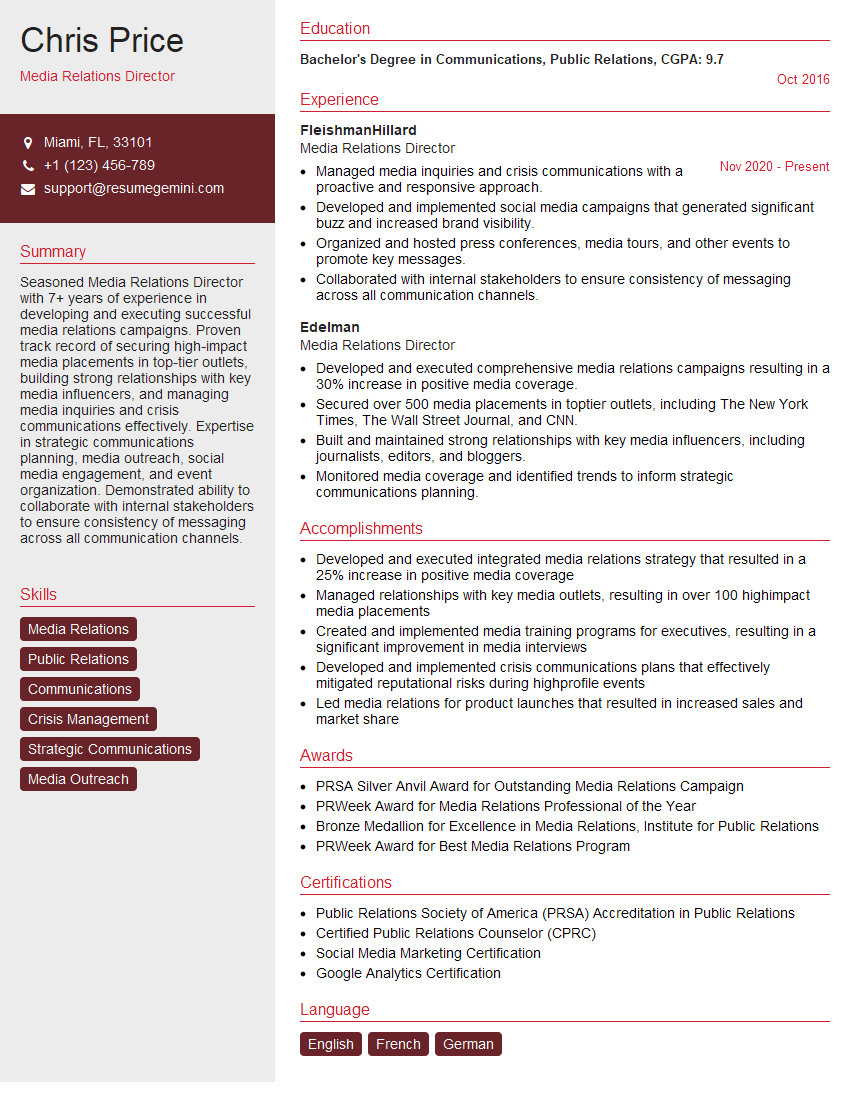
Media Relations Director Resume Sample
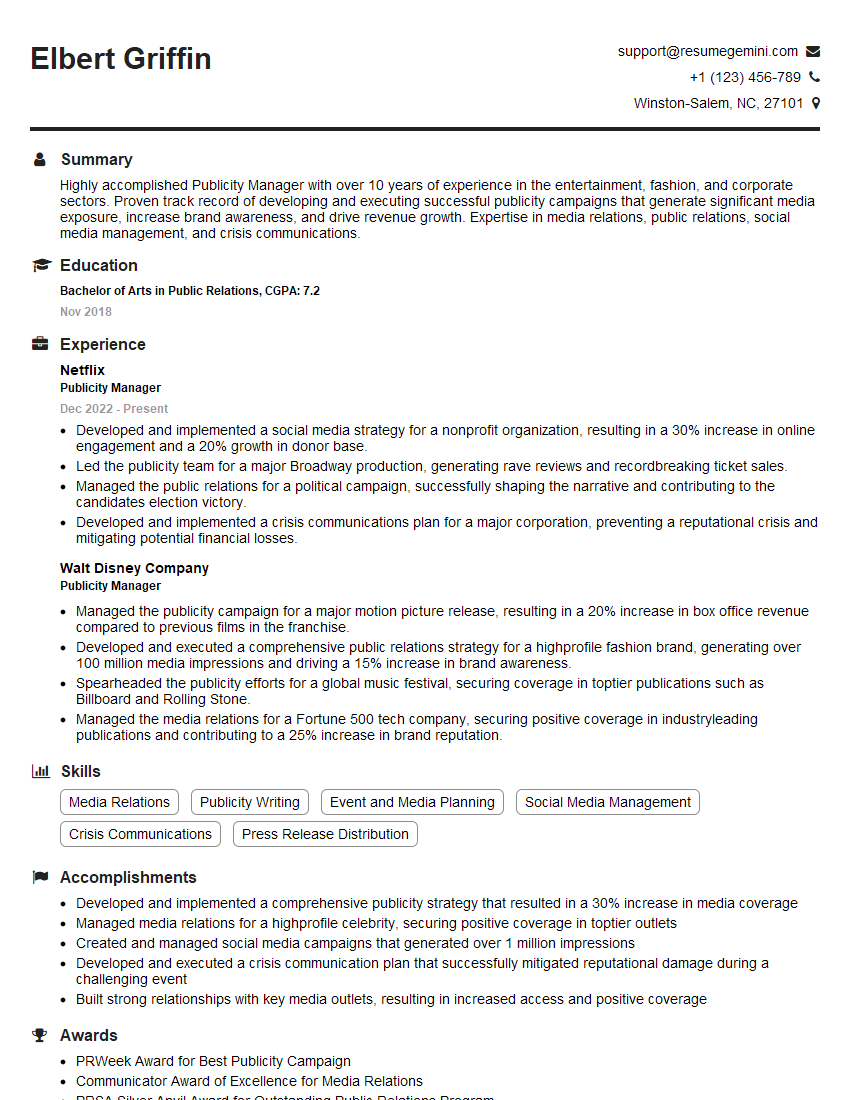
Publicity Manager Resume Sample

Social Media Manager Resume Sample

Communications Consultant Resume Sample
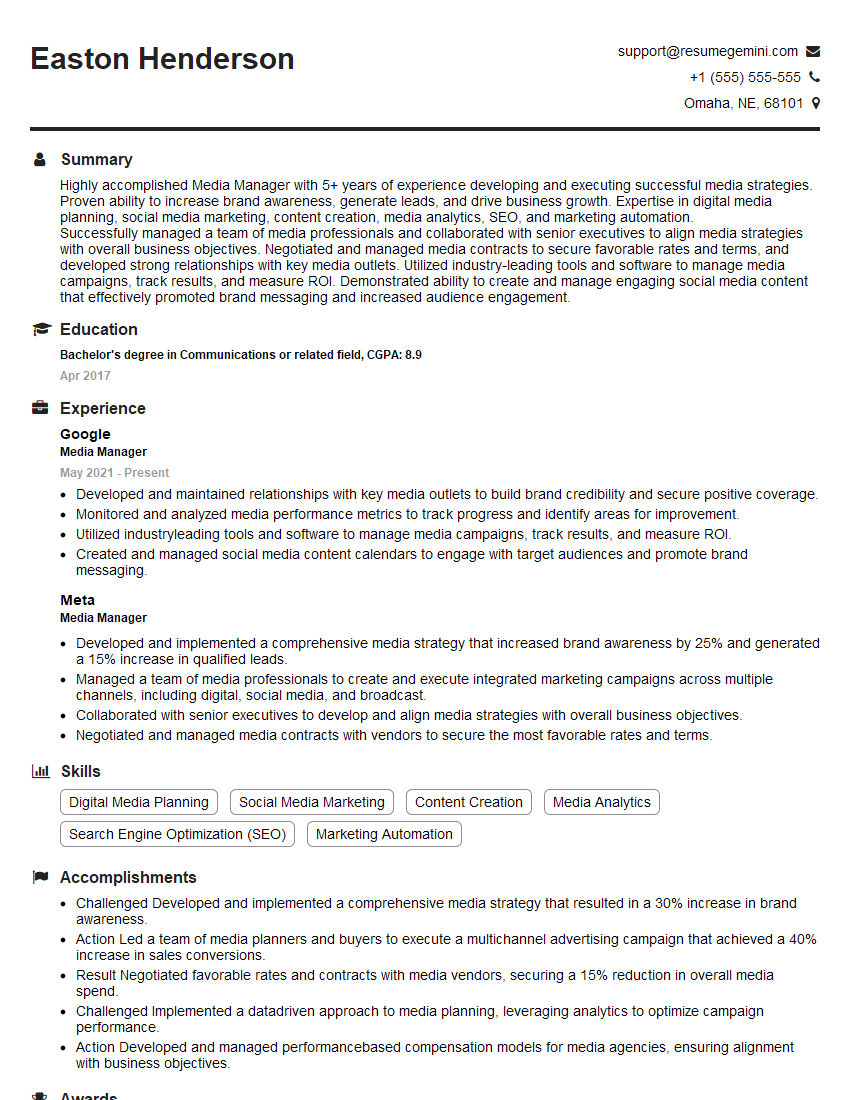
Media Manager Resume Sample
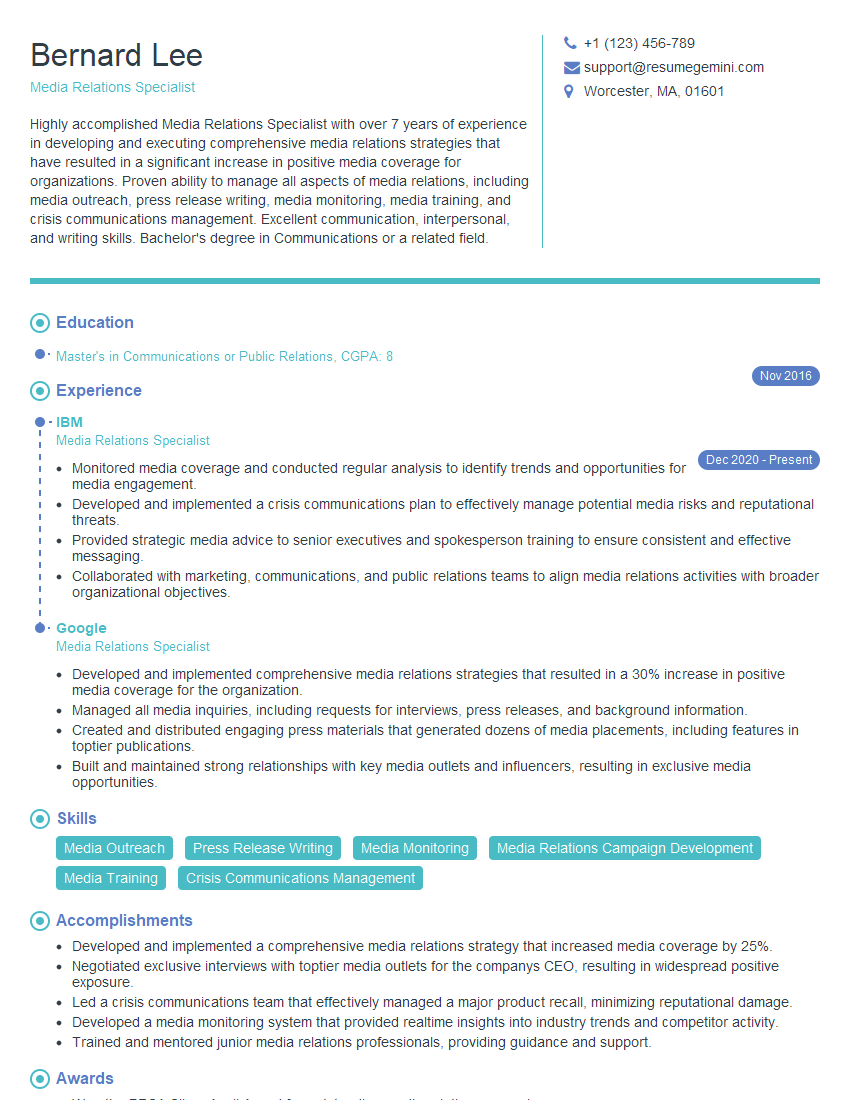
Media Relations Specialist Resume Sample
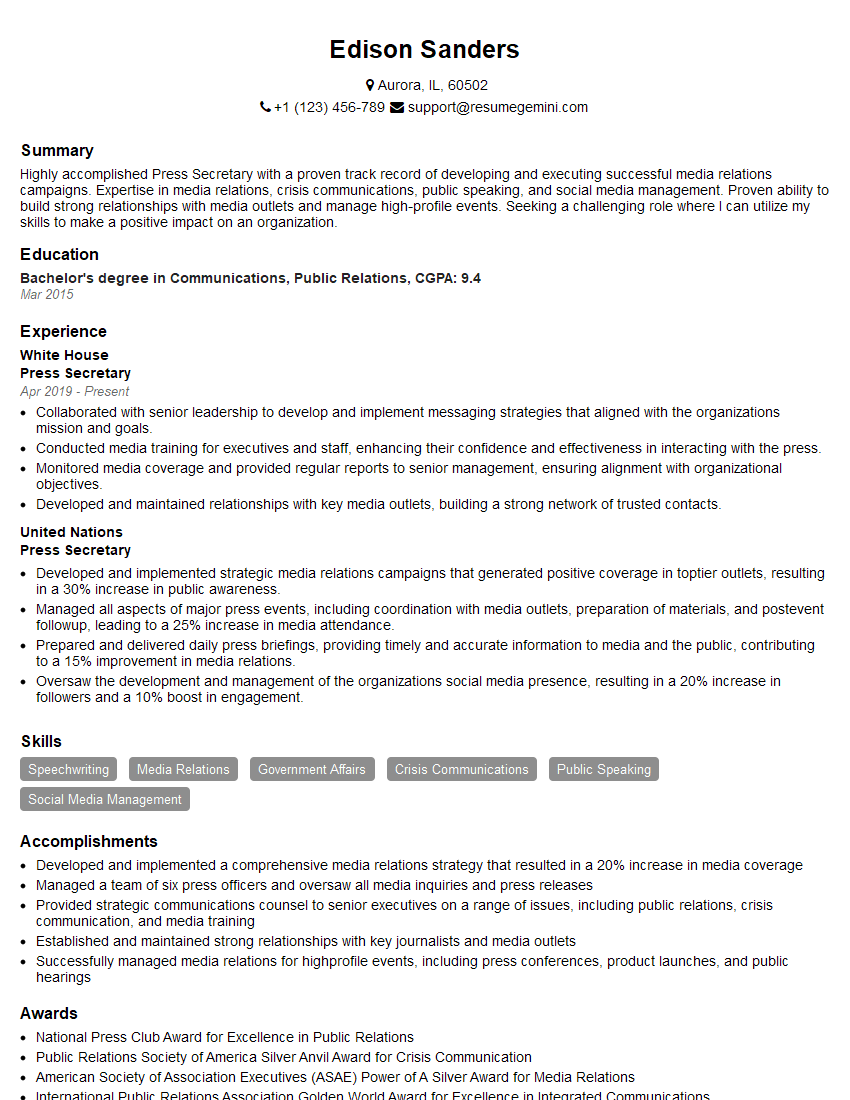
Press Secretary Resume Sample
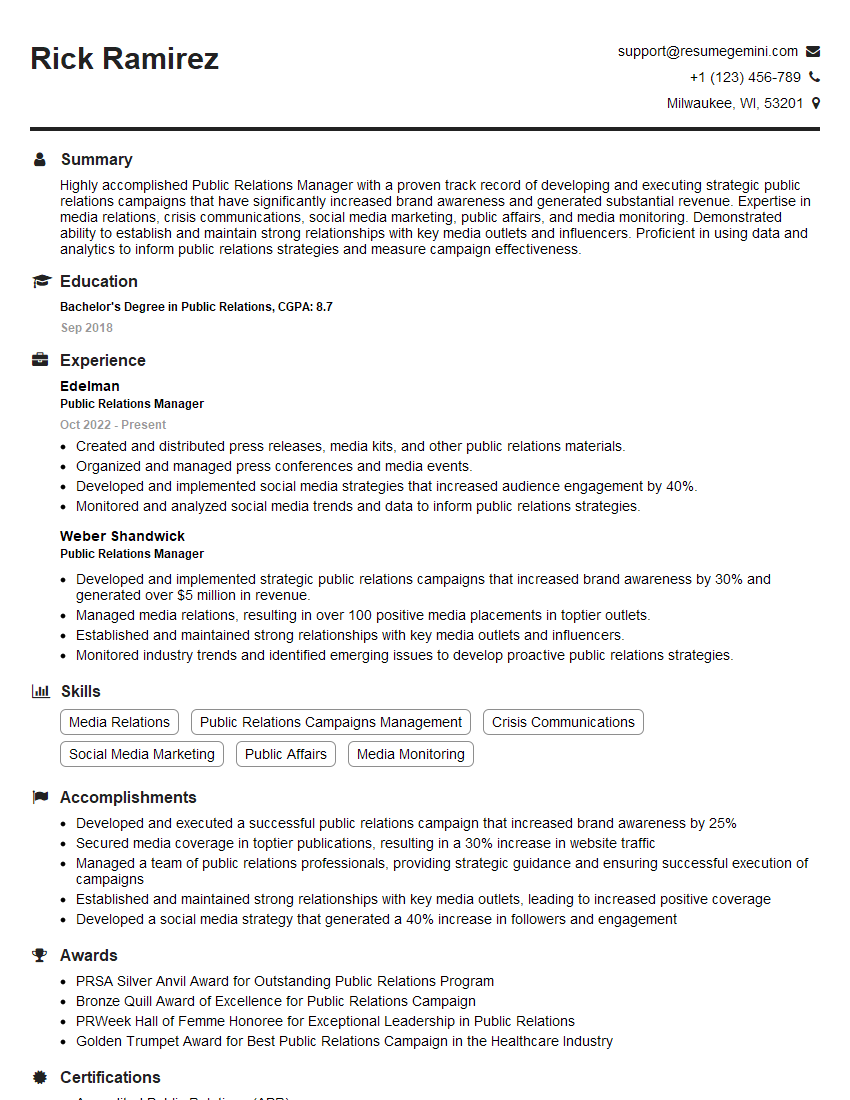
Public Relations Manager Resume Sample
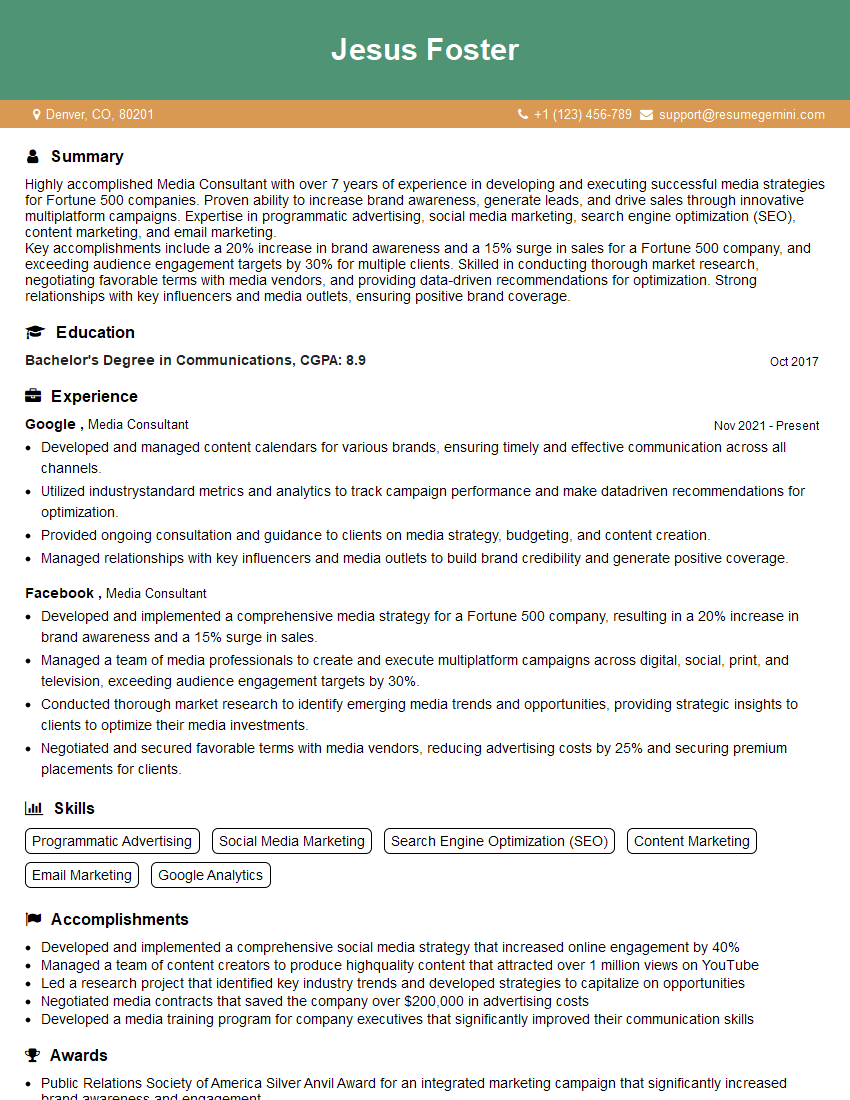
Media Consultant Resume Sample
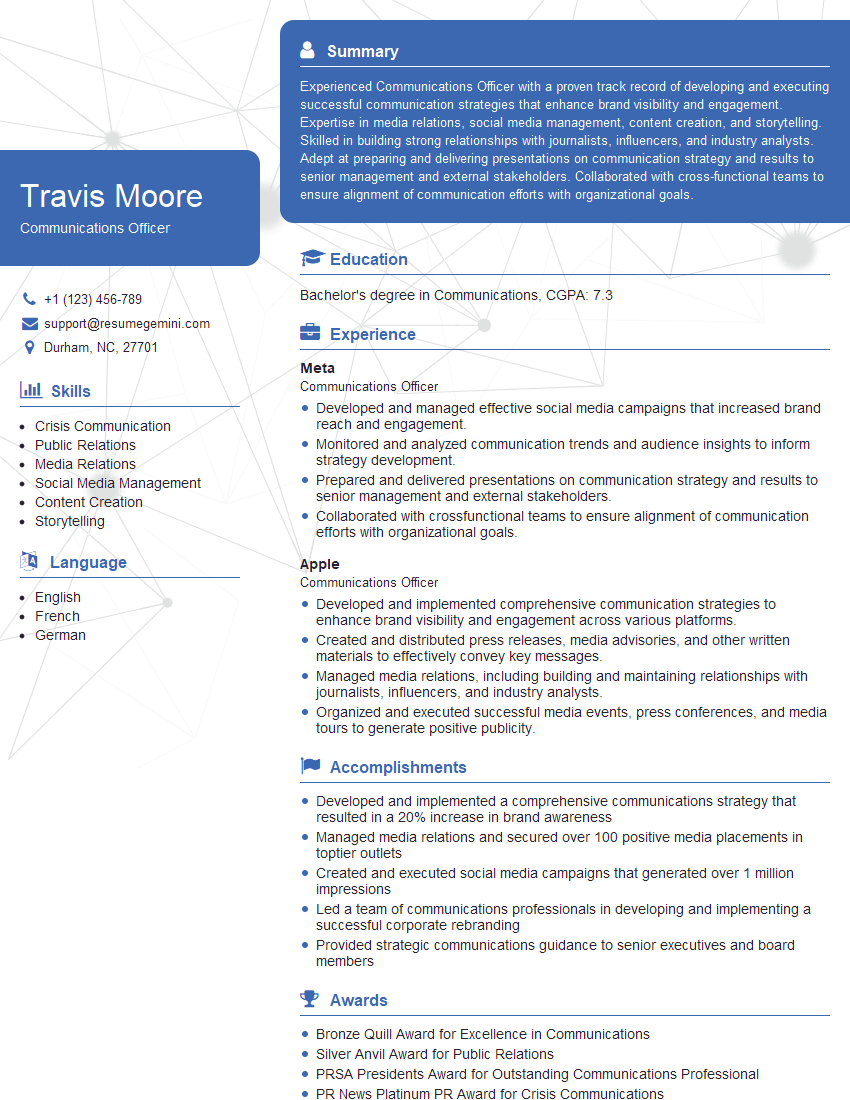
Communications Officer Resume Sample
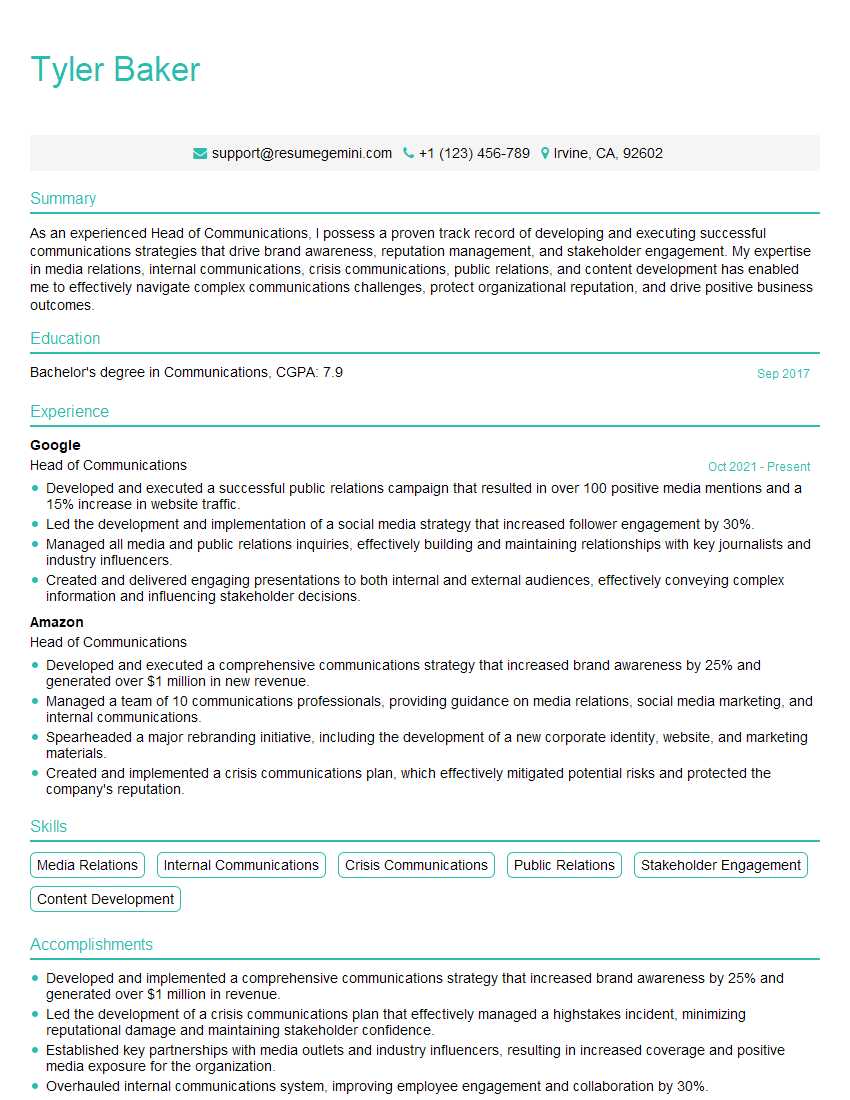
Head of Communications Resume Sample
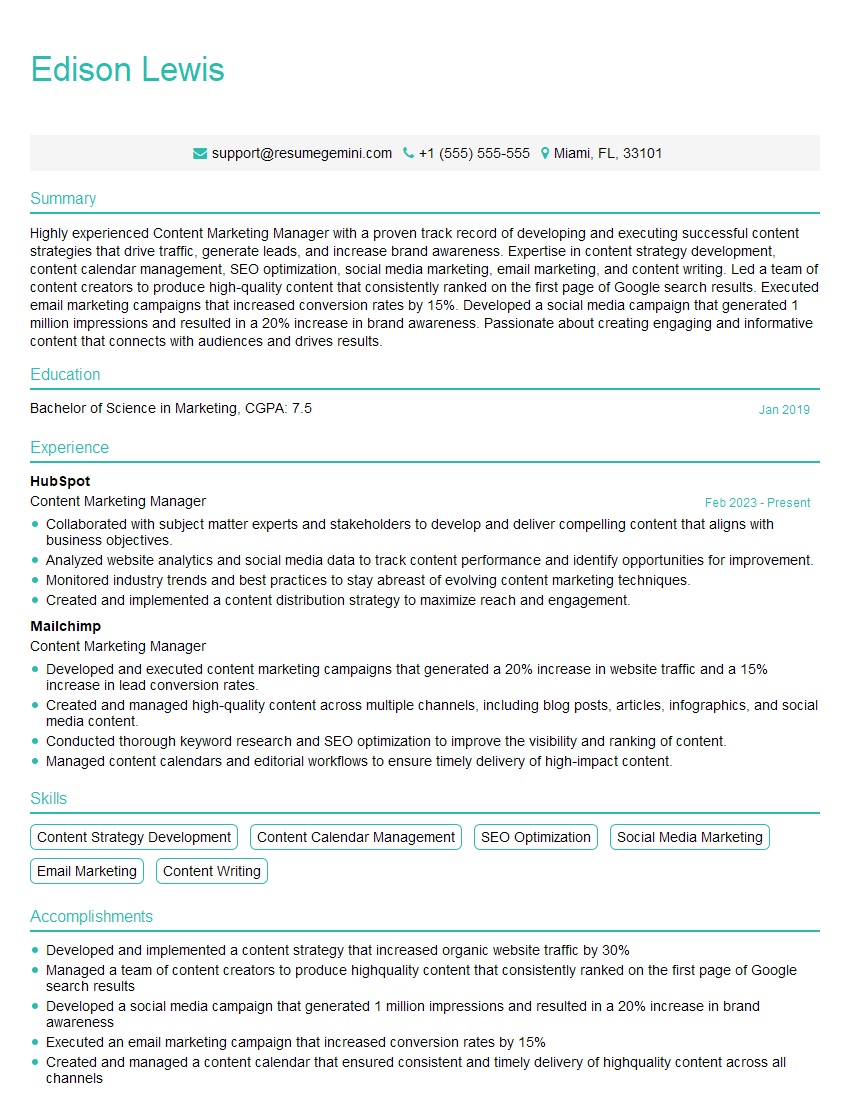
Content Marketing Manager Resume Sample
- Communications Director
- Marketing Communications Manager
- Media Relations Director
- Publicity Manager
- Social Media Manager
- Communications Consultant
- Media Manager
- Media Relations Specialist
- Press Secretary
- Public Relations Manager
- Media Consultant
- Communications Officer
- Head of Communications
- Content Marketing Manager
Explore more articles
Users Rating of Our Blogs
Share Your Experience
We value your feedback! Please rate our content and share your thoughts (optional).
What Readers Say About Our Blog
To the interviewgemini.com Webmaster.
Very helpful and content specific questions to help prepare me for my interview!
Thank you
To the interviewgemini.com Webmaster.
This was kind of a unique content I found around the specialized skills. Very helpful questions and good detailed answers.
Very Helpful blog, thank you Interviewgemini team.