The thought of an interview can be nerve-wracking, but the right preparation can make all the difference. Explore this comprehensive guide to Advanced Boat Handling interview questions and gain the confidence you need to showcase your abilities and secure the role.
Questions Asked in Advanced Boat Handling Interview
Q 1. Describe your experience with various types of boat handling in different weather conditions.
My experience encompasses a wide range of boat handling scenarios across diverse weather conditions. I’ve handled everything from small, nimble sailboats in light breezes to large motor yachts in challenging offshore environments with significant wave heights and strong winds. For instance, navigating a 40-foot sailing yacht through a squall with 30-knot winds and torrential rain required precise sail handling, quick decision-making to reef the sails, and constant monitoring of the vessel’s position and speed to avoid hazards. In calmer conditions, I’ve piloted various vessels, including powerboats and RIBs, executing precise maneuvers in tight spaces such as harbors and marinas. The key is adaptability. Understanding how different boat types respond to varying weather conditions—their stability, responsiveness, and limitations—is paramount. This is achieved through extensive experience and continuous learning, including paying close attention to weather forecasts and adjusting maneuvers accordingly.
- Calm conditions: Focus is on efficient maneuvering and fuel economy.
- Moderate conditions: Increased vigilance, careful speed control, and anticipation of wave patterns are key.
- Challenging conditions: Prioritization of safety, reducing speed significantly, and possibly seeking shelter are crucial. Understanding the limitations of the vessel and crew are critical elements of risk mitigation.
Q 2. Explain your understanding of maneuvering in confined spaces, including techniques for docking and undocking.
Maneuvering in confined spaces demands precise boat control and a thorough understanding of the vessel’s characteristics. Docking and undocking require a systematic approach, combining careful use of engines, rudder, and fenders. I always start with a thorough assessment of the space, wind, and current conditions. For example, docking a large yacht in a crowded marina requires precise thrust vectoring, using forward and reverse gears effectively, and accurate rudder inputs to counter wind and current influences. It’s like a three-dimensional chess game; anticipating the boat’s response and adjusting accordingly is vital. For undocking, I typically engage reverse gear at a slow speed, using the rudder to steer clear of nearby boats, gradually increasing speed as clear space is created. I’ve learned that using fenders strategically helps protect the vessel and surrounding docks from minor impacts. I also always have crew members assisting with lines and fenders to assist in the maneuver.
- Step 1: Planning: Assess the space, wind, and current.
- Step 2: Approach: Approach the dock slowly and at a slight angle.
- Step 3: Maneuvering: Use engines, rudder, and lines to control the boat’s movement.
- Step 4: Securing: Secure the boat properly with lines and fenders.
Q 3. How do you manage risk associated with boat handling, particularly in challenging situations?
Risk management in boat handling is paramount. It’s a proactive, not reactive, process. I always begin with a pre-departure checklist, verifying engine operation, navigation equipment functionality, and reviewing weather forecasts. This allows me to anticipate potential hazards and develop contingency plans. For instance, during a night passage, I would account for reduced visibility, using radar and appropriate navigation lights. Furthermore, I maintain a constant watch for other vessels and obstructions, employing collision avoidance techniques. During challenging situations, I prioritize safety—slowing down, avoiding risky maneuvers, and seeking shelter if needed. The key here is acknowledging limitations; I wouldn’t attempt a maneuver I’m not confident executing. This philosophy is rooted in my experience—knowing my capabilities and those of the boat and crew is the foundation of safe operation.
- Risk Assessment: Identify potential hazards and their likelihood.
- Mitigation Strategies: Develop plans to reduce the risk.
- Contingency Planning: Develop backup plans for unexpected events.
- Crew Briefing: Ensure the crew is aware of the risks and mitigation strategies.
Q 4. Describe your knowledge of navigation rules and regulations (COLREGs).
My understanding of the International Regulations for Preventing Collisions at Sea (COLREGs) is comprehensive. These rules are fundamental to safe navigation and I adhere to them strictly. They cover everything from right-of-way rules and navigation lights to sound signals and actions in restricted visibility. For example, I understand the significance of maintaining a proper lookout and the rules governing overtaking and crossing situations. I know how to interpret navigational aids and how to use charts and electronic charting systems (ECS) effectively to comply with these regulations. Proficiency in COLREGs is not just about knowing the rules but also understanding how to apply them in real-world scenarios, factoring in factors like traffic density, weather conditions, and limitations of the vessel.
Q 5. How would you handle an engine failure during a critical maneuver?
An engine failure during a critical maneuver requires immediate action. The first priority is safety and preventing a collision. My response is always systematic: I would immediately attempt to restart the engine, checking for obvious issues like fuel supply or circuit breakers. Simultaneously, I’d assess my position and surroundings, identifying safe areas and potential hazards. If restart attempts fail, I’d deploy any available emergency means of propulsion, such as a secondary engine, auxiliary power, or sails if equipped. Radioing a mayday if needed, or requesting assistance is the next step. The ability to quickly assess the situation and react appropriately is crucial. This has been reinforced by participation in emergency drills and simulations.
- Step 1: Assess: Engine failure, position, and surrounding conditions.
- Step 2: Restart: Attempt engine restart, checking for fuel, breakers, etc.
- Step 3: Emergency Propulsion: Deploy auxiliary power, sails (if applicable).
- Step 4: Mayday: If necessary, contact emergency services.
Q 6. Explain your experience with various types of anchoring techniques.
My experience with anchoring techniques includes various types, selected according to the location, bottom conditions, and weather. For instance, I’m proficient in deploying a standard anchor, using a scope (length of rode to depth ratio) appropriate for the sea state, as well as more advanced techniques like using two anchors for greater holding power in strong winds or currents. I’ve also used specialized anchors like a Bruce anchor for rocky bottoms and a mushroom anchor in sandy areas. The key is understanding the limitations of each anchor type and how the specific bottom conditions and prevailing weather affect their performance. Prior to setting anchor I always ensure that a thorough check of the sea floor using depth sounder is done to avoid any underwater obstructions.
- Standard Anchor: Used in most situations.
- Two-Anchor Set: For increased holding power in adverse conditions.
- Specialized Anchors: For specific bottom types (e.g., Bruce, Mushroom).
Q 7. What is your approach to maintaining a safe working environment onboard?
Maintaining a safe working environment onboard is a continuous process, prioritizing the well-being and safety of the crew. This involves several key elements: pre-departure checks ensure everything is functioning correctly, a clear and concise communication plan, including procedures for emergencies, is in place. Regular equipment checks and maintenance help prevent malfunctions, and ensuring the crew understand safety procedures, including emergency drills and life raft training is vital. We also take time to ensure that the boat is well maintained, clean, and organized, which helps to prevent accidents and keeps everyone feeling safe and comfortable. The environment onboard should foster teamwork, mutual respect, and a proactive attitude towards safety. A comprehensive safety management system is paramount for success.
Q 8. Describe your experience using electronic charting systems and other navigation equipment.
Electronic charting systems (ECS) are indispensable for modern navigation. My experience spans over ten years, encompassing various systems like Navionics, Raymarine, and Furuno. I’m proficient in utilizing their features, including chart plotting, route planning, depth sounding, and integration with other navigational instruments like GPS, radar, and AIS (Automatic Identification System). For example, during a recent transatlantic voyage, I used the ECS to accurately plot a course, avoiding known hazards like shallow waters and shipping lanes. The system’s integration with the weather routing software allowed me to optimize the route based on predicted wind and wave conditions. I’m also adept at understanding and interpreting the limitations of ECS, ensuring that I always maintain visual and traditional paper chart backups for redundancy and safety. I regularly update chart data and software to maintain accuracy and functionality.
Q 9. How do you manage crew during boat handling operations?
Managing a crew effectively during boat handling requires clear communication, delegation, and a strong understanding of each individual’s capabilities. I start by assigning roles and responsibilities based on experience and skill levels before any operation. For example, experienced crew members might handle the lines during docking while less experienced crew focus on lookout duties. I use a combination of verbal instructions and hand signals, ensuring everyone understands their role and the planned maneuvers. Regular briefings before each operation, clearly outlining the tasks and potential hazards, are crucial. Maintaining a calm and professional demeanor, even under pressure, is vital for effective crew management. Open communication channels encourage feedback and help identify and address any issues promptly. Building trust and rapport with the crew creates a cohesive team environment, critical for safe and efficient boat handling.
Q 10. Explain your understanding of tidal currents and their impact on boat handling.
Tidal currents, the horizontal movement of water due to the gravitational pull of the sun and moon, significantly impact boat handling, especially in coastal areas and estuaries. Understanding tidal predictions—strength, direction, and timing—is paramount. Ignoring tidal currents can lead to delayed arrival times, difficulty in docking, or even dangerous situations. For instance, attempting to enter a narrow harbor against a strong ebb current could result in losing steerage. I utilize tidal charts, prediction tables, and online resources to accurately forecast tidal flow. I factor these predictions into my route planning, adjusting speeds and maneuvering strategies accordingly. I also account for the effect of currents on speed, calculating the set and drift, the change in vessel’s position and speed due to the current. This ensures a safer and more efficient passage.
Q 11. How do you conduct pre-departure checks and safety briefings?
Pre-departure checks and safety briefings are non-negotiable components of any responsible boat handling operation. My checklist covers essential systems: engine functionality, fuel levels, navigation equipment operation, safety gear (life jackets, flares, EPIRB), and communication systems. I physically inspect the vessel’s hull, rigging (if applicable), and any safety equipment. The safety briefing covers potential hazards, emergency procedures (man overboard, fire, etc.), communication protocols, and crew responsibilities. The briefing uses clear, concise language and adapts to the experience levels of the crew. I ensure everyone understands their role in executing emergency procedures. Documentation of pre-departure checks provides a record for future reference and demonstrates due diligence.
Q 12. Describe your experience with emergency procedures, such as man overboard and fire drills.
Emergency procedures require prompt, decisive action. Man overboard drills are practiced regularly, establishing efficient recovery techniques, using the vessel’s equipment and crew coordination. I’m proficient in using various man overboard recovery methods, including heaving lines, rescue boats and deploying personal locator beacons. Fire drills are similarly important, focusing on identifying fire sources, utilizing fire extinguishers, and evacuating the vessel if necessary. Regular maintenance and inspections of fire suppression systems are integral parts of these procedures. All crew members receive thorough training, fostering preparedness and teamwork. My experience includes handling real-life scenarios, reinforcing the importance of quick response and methodical action during emergencies.
Q 13. How do you handle communication with other vessels and port authorities?
Communication with other vessels and port authorities is crucial for safe navigation. I use VHF radio, adhering strictly to international maritime communication protocols (e.g., COLREGs). Before entering harbors or busy waterways, I maintain continuous listening to monitor traffic and communicate intentions. I employ clear, concise language, confirming all messages received and relaying accurate information about my vessel’s position, course, and intentions. When approaching restricted areas or needing assistance, I contact port authorities in advance, providing details of my arrival time and vessel specifics. Documenting all communications is standard practice.
Q 14. Explain your experience with mooring techniques in different types of harbors.
Mooring techniques vary significantly depending on the type of harbor and environmental conditions. My experience includes various mooring methods: using fenders and lines in marinas, stern-to mooring against a quay, med mooring in exposed areas, anchoring in open waters and utilizing mooring buoys. For example, in a crowded marina, I’d carefully assess wind and current conditions before maneuvering to avoid collisions. In a challenging open anchorage, I’d account for wave action and seabed type when setting anchor. I always ensure a suitable margin of safety and adapt my techniques to the specific characteristics of each harbor. My skills encompass a range of knotting and line handling techniques for secure and reliable mooring.
Q 15. Describe your understanding of different types of knots and their applications.
Knots are fundamental to boat handling, providing secure connections for mooring, rigging, and various other tasks. Understanding their strengths and weaknesses is crucial for safety. There are many types, but some key ones include:
- Bowline: A classic knot forming a closed loop that won’t slip. Ideal for attaching a line to a ring or cleat, such as securing a mooring line to a piling. Think of it as a reliable ‘lifeline’ for your vessel.
- Clove Hitch: A quick and easy knot used for temporary attachments, often for securing a line around a post or cleat. Useful for quickly securing a fender or temporarily tying off a boat.
- Figure Eight Knot: A stopper knot used to prevent a line from running through a block or pulley. Essential for safety, especially when using halyards or sheets on sailboats.
- Cleat Hitch: Used to secure a line to a cleat, providing a strong and secure fastening. Proper execution is vital to prevent slippage and potential damage.
- Sheet Bend: Used to join two lines of different diameters, commonly used to combine a heavier mooring line with a lighter running line. It’s like a marriage knot, binding lines together strongly.
Choosing the right knot depends on the specific application and the load it will bear. Improper knot tying can lead to failure under stress, resulting in equipment loss or even accidents. Regular practice and understanding knot strength are paramount.
Career Expert Tips:
- Ace those interviews! Prepare effectively by reviewing the Top 50 Most Common Interview Questions on ResumeGemini.
- Navigate your job search with confidence! Explore a wide range of Career Tips on ResumeGemini. Learn about common challenges and recommendations to overcome them.
- Craft the perfect resume! Master the Art of Resume Writing with ResumeGemini’s guide. Showcase your unique qualifications and achievements effectively.
- Don’t miss out on holiday savings! Build your dream resume with ResumeGemini’s ATS optimized templates.
Q 16. How do you adapt your boat handling techniques to various vessel types (e.g., sailboats, motorboats, tugs)?
Boat handling differs significantly depending on the vessel type. The key lies in understanding each vessel’s unique characteristics and responding accordingly.
- Sailboats: Require an understanding of wind and current, sail trim, and skillful maneuvering using sails and rudder. Anticipating wind shifts and adapting sail settings are paramount for efficient and safe sailing.
- Motorboats: Focus on engine control, propeller wash, and managing speed and direction precisely. Understanding the vessel’s turning radius and maneuvering in tight spaces is vital, especially in crowded marinas or harbors.
- Tugs: Demand exceptional control and coordination, often in challenging conditions. Precise thruster use, understanding of the vessel’s response to towing forces, and strong communication are crucial for safe and efficient towing operations.
For example, docking a sailboat might involve careful sail adjustments to control speed and position, while maneuvering a tug alongside a large vessel requires coordinated use of the engines and thrusters to maintain precise alignment.
Q 17. Explain your knowledge of load management and stability.
Load management and stability are interconnected and crucial for safe boat operation. Overloading a vessel can compromise its stability, increasing the risk of capsizing or swamping.
Understanding the vessel’s capacity, including weight limits for passengers, cargo, and fuel, is essential. Proper weight distribution is also important, ensuring the vessel’s center of gravity remains within safe limits. This often involves strategically placing heavier items lower and towards the center of the boat.
Factors like water conditions (waves and currents) also affect stability. Heavier seas require more caution and may necessitate reduced speed or adjustments to the vessel’s trim. Regular checks of bilge levels are critical to prevent compromising stability through water ingress.
Think of it like balancing a seesaw – if you overload one side, it will tilt. Similarly, improper load management in a boat can lead to instability and potential danger.
Q 18. How do you interpret weather forecasts and make decisions based on the information?
Interpreting weather forecasts is a vital skill for safe boat handling. I use several sources such as marine-specific weather reports, radar, and satellite imagery. I look for details beyond just wind speed and direction, including:
- Wind direction and speed: This influences sailing angles, navigation, and potential wave heights.
- Wave height and period: Larger waves can significantly impact stability and maneuverability.
- Visibility: Poor visibility necessitates reduced speed and increased caution.
- Sea state: Describes the overall condition of the sea, combining waves, currents, and swell.
- Barometric pressure: Changes in pressure can indicate approaching storms.
Based on the forecast, I make decisions about route planning, departure times, and whether to proceed with a trip or seek shelter. For example, if a strong storm is predicted, I would postpone the trip or seek a safe harbor well in advance. Safety is paramount, and the forecast provides the information needed to make informed decisions.
Q 19. Describe your experience with maintaining vessel logs and records.
Maintaining accurate vessel logs and records is crucial for safety, regulatory compliance, and efficient operation. My logs include:
- Voyage records: Detailed descriptions of each voyage, including departure and arrival times, locations, weather conditions, and any notable events. This detailed information can be critical if any incidents occur.
- Maintenance logs: Detailed records of all maintenance performed, including dates, services carried out, and any parts replaced. This ensures the vessel is always in top condition.
- Fuel logs: Records of fuel purchases, consumption rates, and associated costs. This helps in monitoring efficiency and fuel management.
- Crew and passenger lists: Records of all personnel onboard for each trip. This ensures compliance with safety regulations.
These logs are essential for tracking vessel performance, complying with maritime regulations, and providing crucial information in case of an incident or investigation.
Q 20. What are your strategies for fuel efficiency and environmental considerations?
Fuel efficiency and environmental considerations are increasingly important. My strategies include:
- Optimized speed and trim: Maintaining an efficient cruising speed minimizes fuel consumption. Proper trim reduces drag and improves fuel economy.
- Regular maintenance: Ensuring the engine is properly tuned and maintained maximizes fuel efficiency.
- Hull cleaning: A clean hull reduces drag and improves fuel efficiency. Regular cleaning also prevents the spread of invasive species.
- Waste management: Responsible disposal of waste, including greywater and garbage, is vital to protecting the marine environment. Proper storage and disposal are always followed.
- Fuel conservation techniques: Planning routes to minimize time spent at high speeds and using advanced navigation techniques to optimize routes contribute to improved fuel efficiency.
Reducing fuel consumption not only saves money but also minimizes the vessel’s environmental impact. I believe in responsible boating that prioritizes both economic and environmental sustainability.
Q 21. How do you perform a proper safety check before each boat handling operation?
A comprehensive safety check before each operation is non-negotiable. My checklist includes:
- Engine check: Verify oil levels, coolant levels, and overall engine functionality. A quick check of belts and hoses is also prudent.
- Navigation systems: Ensure GPS, charts, and other navigational tools are functioning correctly and updated with the latest charts and weather information.
- Safety equipment: Verify that all life jackets, flares, fire extinguishers, and other safety equipment are readily accessible and in good working order.
- Communication systems: Test VHF radio and other communication devices to ensure clear communication.
- Hull and deck inspection: Inspect for any damage or leaks, checking hatches, windows, and other potential entry points for water.
- Weather check: Review the latest weather forecast and assess the suitability of conditions for the planned operation.
This comprehensive check ensures that the vessel is safe and ready for operation. Skipping even one step can have serious consequences. My approach is based on a proactive, ‘better safe than sorry’ mentality.
Q 22. Describe your understanding of the principles of buoyancy and hydrodynamics.
Buoyancy is the upward force exerted on an object submerged in a fluid, equal to the weight of the fluid displaced. Hydrodynamics is the study of how fluids (like water) behave and interact with moving objects. Understanding both is fundamental to safe and efficient boat handling.
Buoyancy: A boat floats because its hull displaces a volume of water weighing more than the boat itself. Archimedes’ principle governs this: the buoyant force is directly proportional to the submerged volume. A heavier boat needs a larger hull to displace sufficient water and remain afloat. Changes in load affect buoyancy – adding weight lowers the boat in the water, reducing its freeboard (distance between waterline and deck).
Hydrodynamics: This field explains how water resistance (drag) affects a boat’s speed and maneuverability. Factors like hull shape, speed, and water conditions (waves, currents) all influence drag. A streamlined hull minimizes resistance, enabling greater speed with less engine power. Understanding hydrodynamic principles helps predict boat behavior in various conditions.
Practical Application: Knowing how load distribution affects buoyancy is critical for safe operation. Overloading a boat reduces its freeboard, increasing the risk of swamping. Understanding drag allows for efficient route planning, accounting for currents and wave conditions to minimize fuel consumption and travel time.
Q 23. How would you handle a collision avoidance situation?
Collision avoidance relies on a combination of vigilance, good seamanship, and effective communication. My approach follows the COLREGs (International Regulations for Preventing Collisions at Sea) and emphasizes proactive risk assessment.
Steps:
- Identify: Continuously scan the horizon using radar, AIS, and visual observation for potential hazards – other vessels, obstructions, etc.
- Assess: Determine the risk of collision. Consider speed, course, distance, and the other vessel’s actions. Is there a risk of a close-quarters situation?
- Action: If a risk exists, take appropriate action to avoid collision. This could involve altering course, speed, or sounding appropriate signals.
- Communication: Use VHF radio to communicate with the other vessel, especially in close-quarters situations. Confirm understanding of your actions and ensure they are aware of your intentions.
- Manoeuvre: Make alterations to speed and course to ensure the safety of your vessel and others. Remember to give way to the appropriate vessels according to COLREGs.
Example: If I see a vessel crossing my bow at a close range, I’ll alter course to starboard, giving the other vessel sufficient space while maintaining a safe speed. I would also make a radio call to confirm my intentions to avoid any misunderstandings.
Q 24. Explain your experience with search and rescue operations.
I have extensive experience in search and rescue (SAR) operations, including participation in several coordinated efforts. My involvement ranges from initial response and searching techniques to assisting survivors and recovery operations.
Key aspects of my SAR experience include:
- Search patterns: Proficient in various search patterns (e.g., expanding square, parallel lines) and their application based on environmental conditions and available resources.
- Communication: Effective communication is crucial in SAR. I’m skilled in using VHF radio, EPIRB signals interpretation, and coordinating with other rescue teams.
- Safety procedures: Adherence to safety protocols is paramount. I’m trained in risk assessment, personal safety equipment use, and emergency procedures specific to SAR operations.
- Data interpretation: Interpreting information like weather forecasts, currents, and tide data to refine search strategies and optimize resource deployment.
- Post-SAR procedures: Completing the necessary documentation and reporting processes following a rescue operation.
Example: In one instance, we used an expanding square search pattern after a sailboat was reported overdue. Using GPS data and wind conditions, we successfully located the vessel and its crew.
Q 25. Describe your understanding of different types of propellers and their performance characteristics.
Propellers are crucial for boat propulsion, and their design significantly impacts performance. Different types offer various advantages and disadvantages depending on the vessel’s requirements.
Common propeller types include:
- Fixed-pitch propellers: Simplest and most common type; pitch (angle of the blades) is fixed, providing a single speed-to-engine-rpm relationship. Suitable for boats that operate at a relatively constant speed.
- Controllable-pitch propellers (CPP): Allow the pitch to be adjusted while the engine is running. Offers greater control over speed and fuel efficiency by selecting optimal pitch for different speeds and conditions. Better suited to varied-speed operations.
- Folding propellers: Blades fold against the hub when not in use, reducing drag when sailing or trolling. Ideal for sailboats or boats that spend time at low speed.
- Feathering propellers: Similar to folding propellers, but the blades rotate to minimize drag. More efficient than folding propellers in some circumstances.
Performance Characteristics: Propeller performance is influenced by blade shape, diameter, pitch, and material. A larger diameter propeller generally generates more thrust at low speeds but may cavitate (form bubbles due to low pressure) at high speeds. Pitch determines the speed for a given engine rpm. Material choice affects durability and corrosion resistance. Selecting the appropriate propeller is critical for achieving optimal speed, efficiency, and maneuverability.
Q 26. How do you use radar and AIS effectively for navigation and collision avoidance?
Radar and AIS are indispensable tools for navigation and collision avoidance, providing crucial situational awareness.
Radar: Provides a picture of surrounding vessels and obstacles, regardless of visibility. It shows the range and bearing of targets, and allows you to predict their future positions to assess collision risks. I use radar to detect other vessels, navigate in low visibility conditions, and identify potential hazards like land masses or floating debris.
AIS (Automatic Identification System): Transmits information about vessels’ identities, position, course, speed, and other relevant details. AIS enhances situational awareness by providing data on nearby vessels, aiding in collision avoidance and traffic management. It’s vital for identifying vessels that might not be easily seen visually, particularly in crowded waters or at night.
Effective Use: I integrate both systems. Radar provides a visual representation of the surroundings, while AIS gives the crucial identification and other information of targets. Comparing the information from both systems helps in confirming the nature of detected targets. Careful interpretation is key; AIS relies on vessel transponders and can be unreliable if a vessel’s transponder is malfunctioning or not active. I routinely check for updates, proper functioning, and overlaying the data from both to ensure accurate navigation and safe decision-making.
Q 27. Explain your approach to training junior crew members in safe boat handling practices.
Training junior crew members is a crucial aspect of my work. My approach focuses on a layered system of theoretical instruction, hands-on practical experience, and continuous assessment.
Training Methodology:
- Classroom Instruction: I begin with theoretical knowledge of boat handling principles, safety procedures, navigation, and emergency response. This includes comprehensive explanations of COLREGs, and the use of charts and navigational tools.
- Practical Training: Hands-on training is crucial. I start with basic maneuvers (docking, anchoring) in calm conditions, gradually increasing complexity as the crew member gains proficiency. This includes instruction in engine operation, sail handling (if applicable), and emergency procedures.
- Simulation and Role-Playing: Simulating various scenarios (e.g., man overboard, engine failure) allows crews to practice responses under controlled conditions. This improves reaction time and builds confidence.
- Assessment and Feedback: Regular evaluation through observation, quizzes, and practical exercises allows me to identify areas requiring further attention and provide targeted feedback.
- Mentorship: I encourage a supportive learning environment where junior crew members feel comfortable asking questions and receiving guidance.
Emphasis: Safety is paramount. I instill a strong safety culture, emphasizing the importance of following procedures and always prioritizing safe practices. My goal is to create competent and confident crew members.
Q 28. Describe your experience with managing boat maintenance and repairs.
Boat maintenance and repairs are essential for ensuring safe and reliable operation. My experience encompasses preventative maintenance, troubleshooting, and undertaking various repairs.
Maintenance Approach:
- Preventative Maintenance: I follow a strict schedule of regular inspections and maintenance tasks, including engine servicing, hull cleaning, rigging checks (for sailboats), and systems checks.
- Record Keeping: Detailed records are maintained to track all maintenance activities, repairs, and parts replaced, including dates and any relevant notes. This information aids in future maintenance planning and troubleshooting.
- Troubleshooting: I’m skilled in diagnosing and resolving mechanical and electrical issues, working methodically to isolate the problem and implement the necessary repair.
- Repairs: I can undertake a wide range of repairs, including engine repairs, hull patching, rigging work, and plumbing repairs. If a repair is beyond my capability, I’ll engage qualified professionals.
- Parts Management: Effective management of spare parts inventory is essential. I maintain a stock of commonly needed components to minimize downtime in case of repairs.
Example: During a recent voyage, a fuel leak was detected. By systematically checking the fuel lines, I identified a loose connection, promptly tightened it, and averted a potential hazard. This exemplifies a proactive maintenance approach.
Key Topics to Learn for Advanced Boat Handling Interview
- Advanced Navigation Techniques: Understanding and applying celestial navigation, electronic charting systems (ECDIS), and GPS integration for precise route planning and execution in challenging conditions.
- Vessel Maneuvering in Confined Waters: Mastering techniques for docking, berthing, and maneuvering in tight spaces, including the use of tugs and other assistance. Practical application includes demonstrating proficiency in various docking maneuvers under different weather conditions.
- Emergency Procedures and Response: Knowledge of emergency protocols, including fire suppression, man overboard procedures, collision avoidance, and distress signaling. This includes practical problem-solving scenarios, such as responding to engine failure or navigating a sudden storm.
- Heavy Weather Sailing and Seamanship: Understanding and applying strategies for safe navigation and vessel management in challenging weather conditions, encompassing storm avoidance, seamanship skills, and damage control procedures. This extends to decision-making under pressure and risk assessment.
- Advanced Engine Systems and Maintenance: Comprehensive knowledge of marine engine systems, including troubleshooting, preventative maintenance, and emergency repairs. This includes practical experience diagnosing engine issues and performing routine maintenance tasks.
- Regulatory Compliance and Safety Regulations: Understanding and adhering to international maritime regulations, safety standards, and environmental protection guidelines. This necessitates a strong awareness of relevant legislation and their practical implications.
- Crew Management and Leadership: Effective communication, delegation, and conflict resolution skills for managing a crew effectively in demanding situations. This includes teamwork and leadership in crisis management scenarios.
Next Steps
Mastering advanced boat handling significantly enhances your career prospects, opening doors to more challenging and rewarding roles within the maritime industry. A strong, ATS-friendly resume is crucial for showcasing your skills and experience to potential employers. To elevate your job search, consider using ResumeGemini to craft a professional and impactful resume that highlights your expertise in advanced boat handling. ResumeGemini offers examples of resumes tailored to this specific field, helping you present your qualifications effectively and increase your chances of landing your dream job.
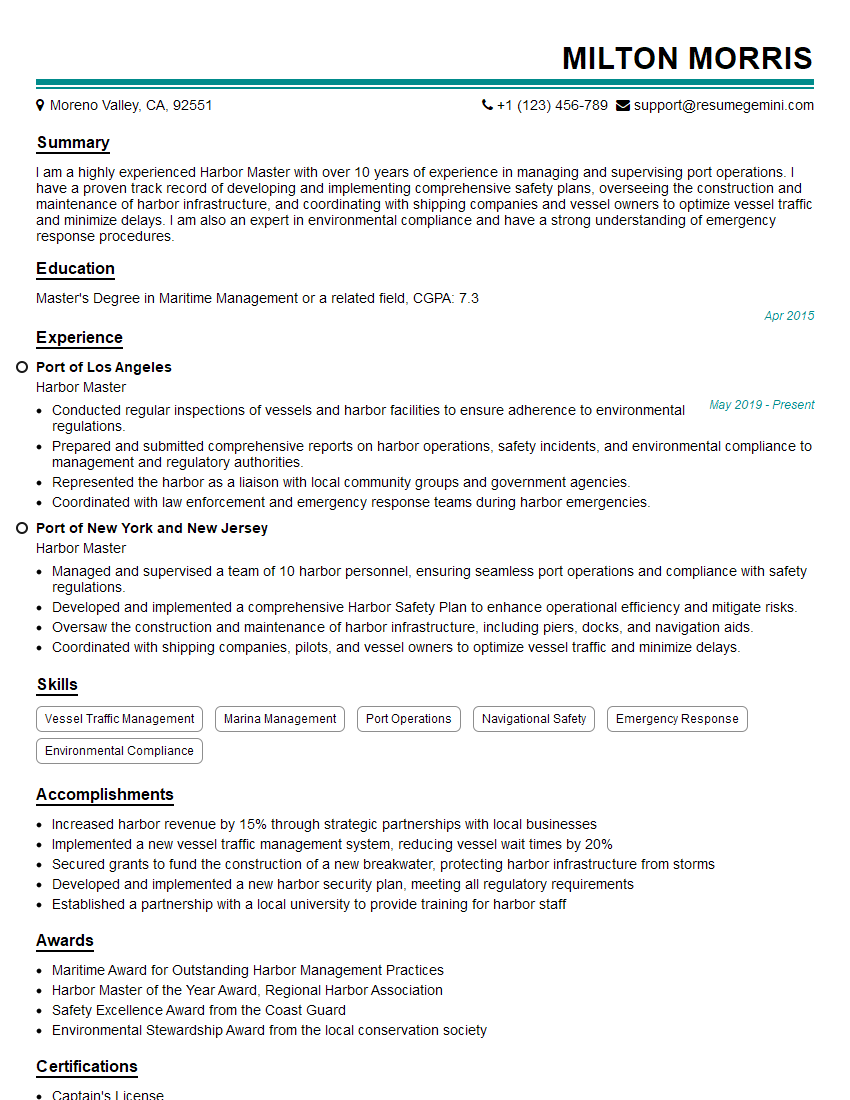
Harbor Master Resume Sample
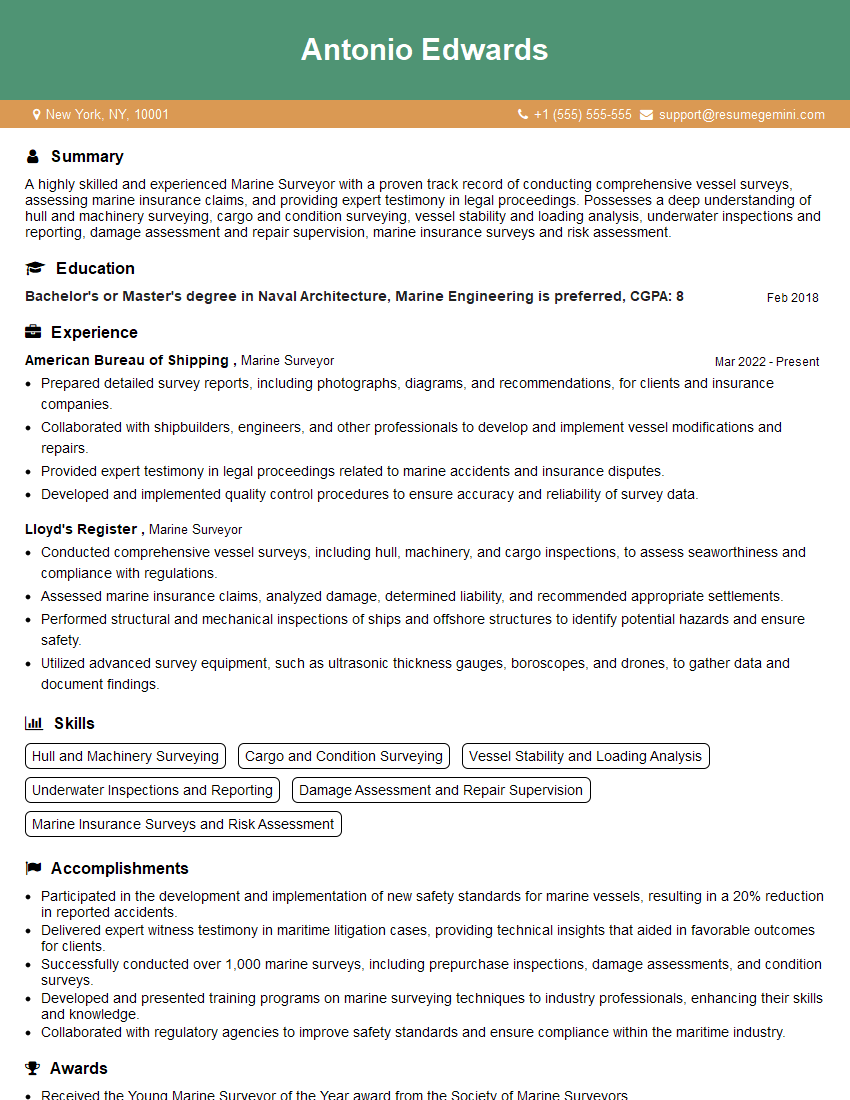
Marine Surveyor Resume Sample
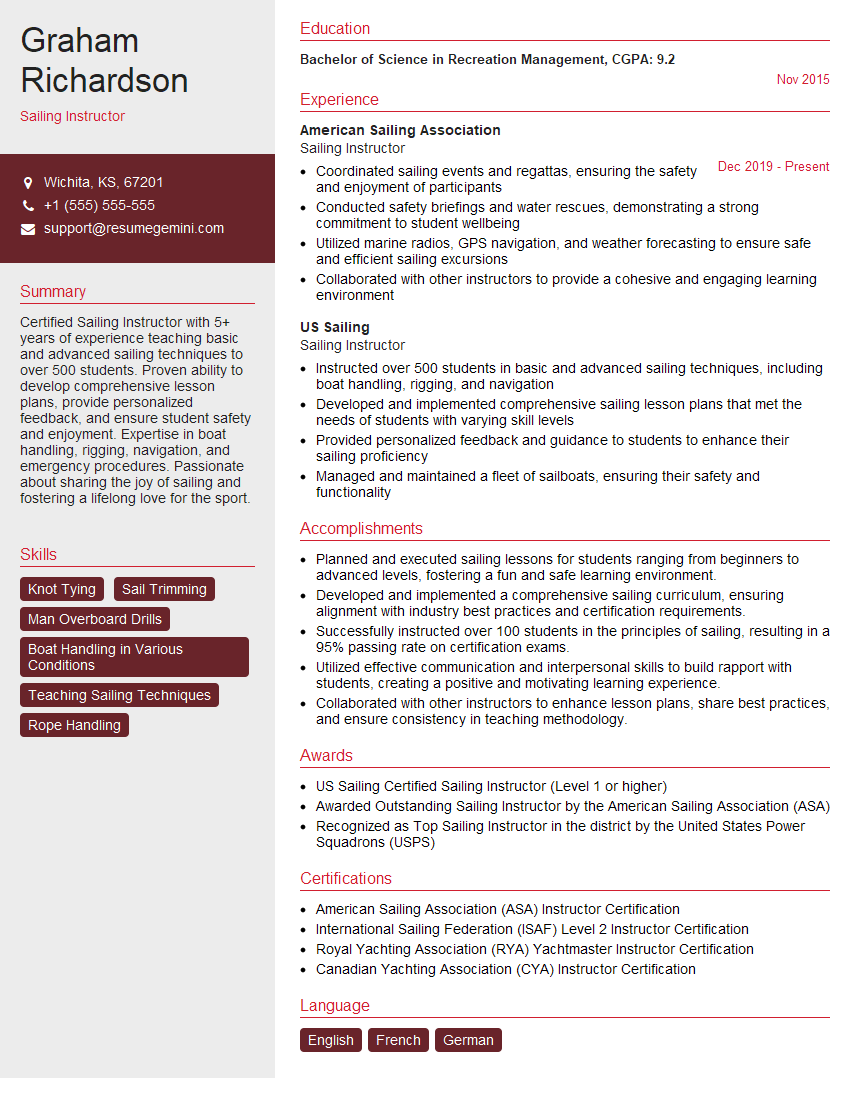
Sailing Instructor Resume Sample
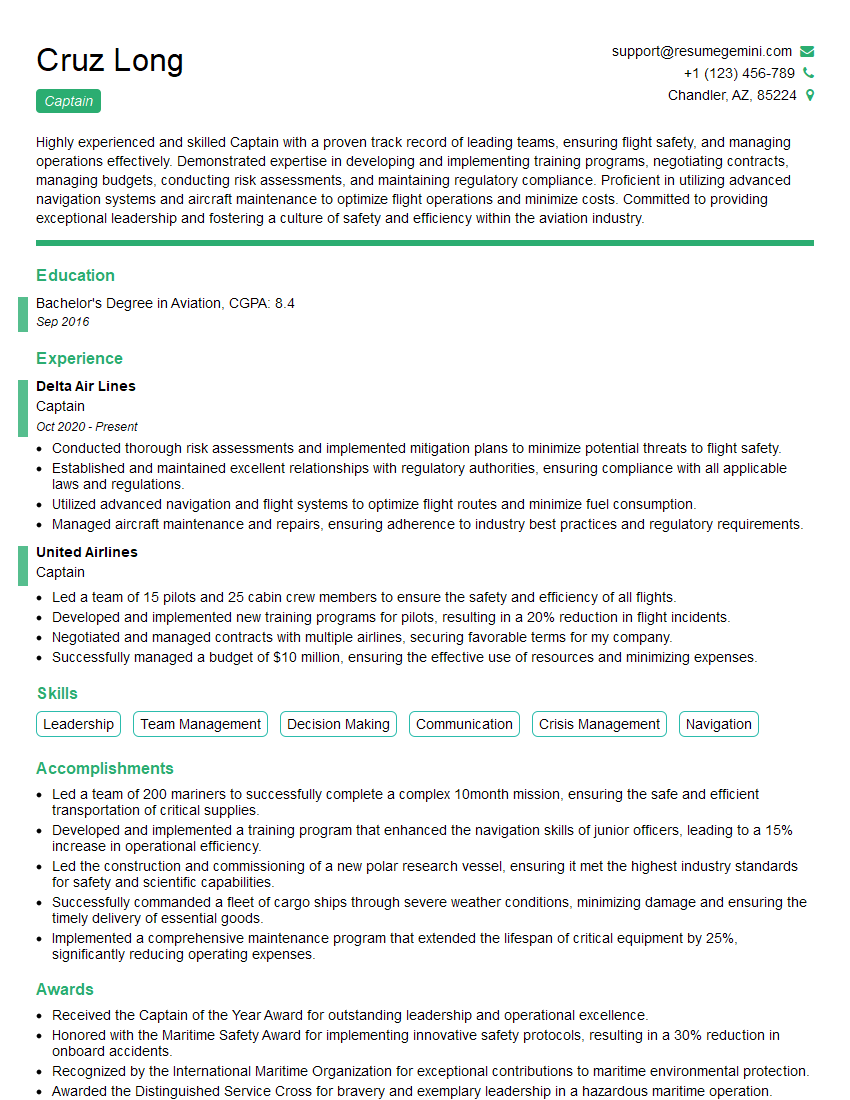
Captain Resume Sample
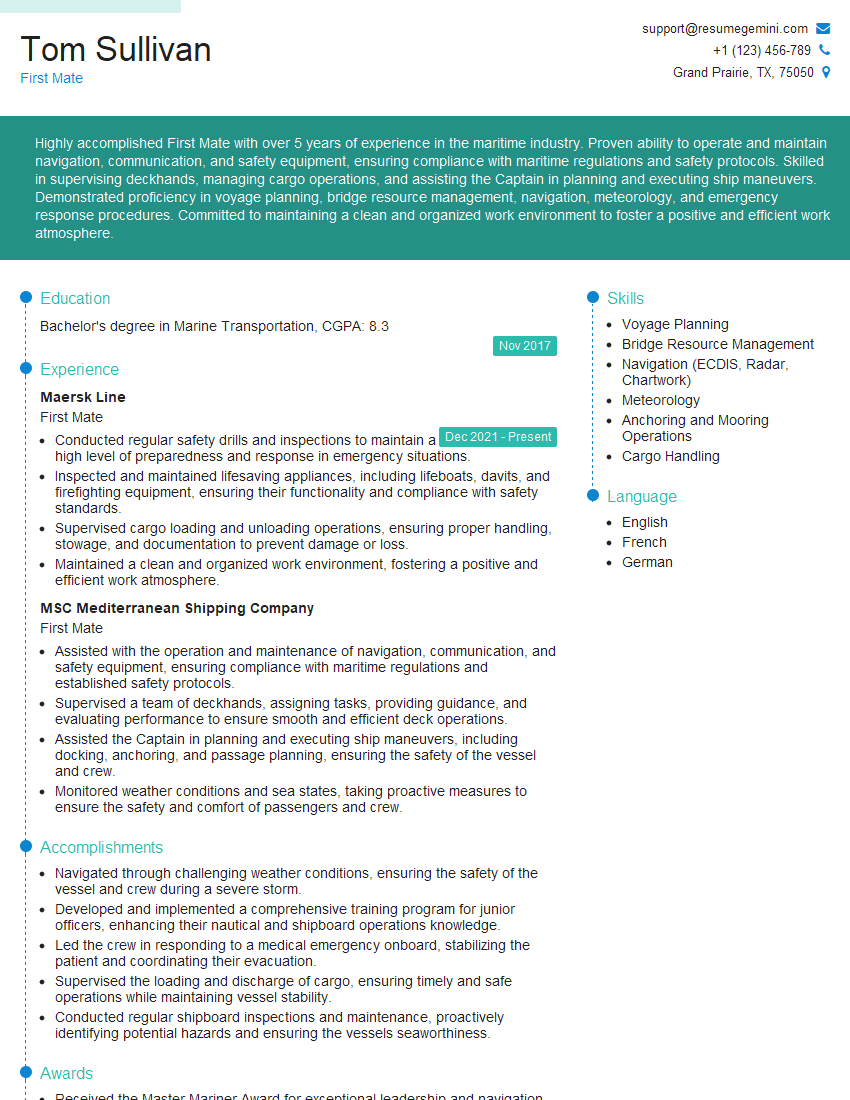
First Mate Resume Sample
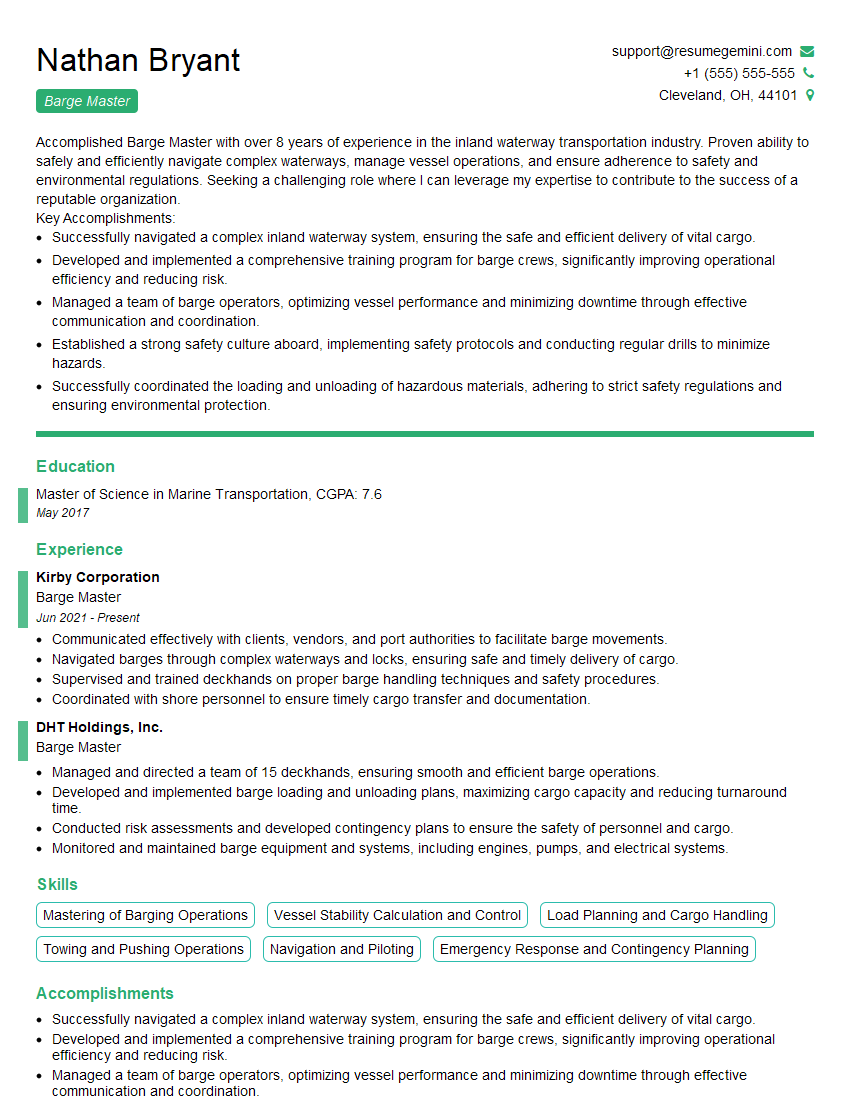
Barge Master Resume Sample
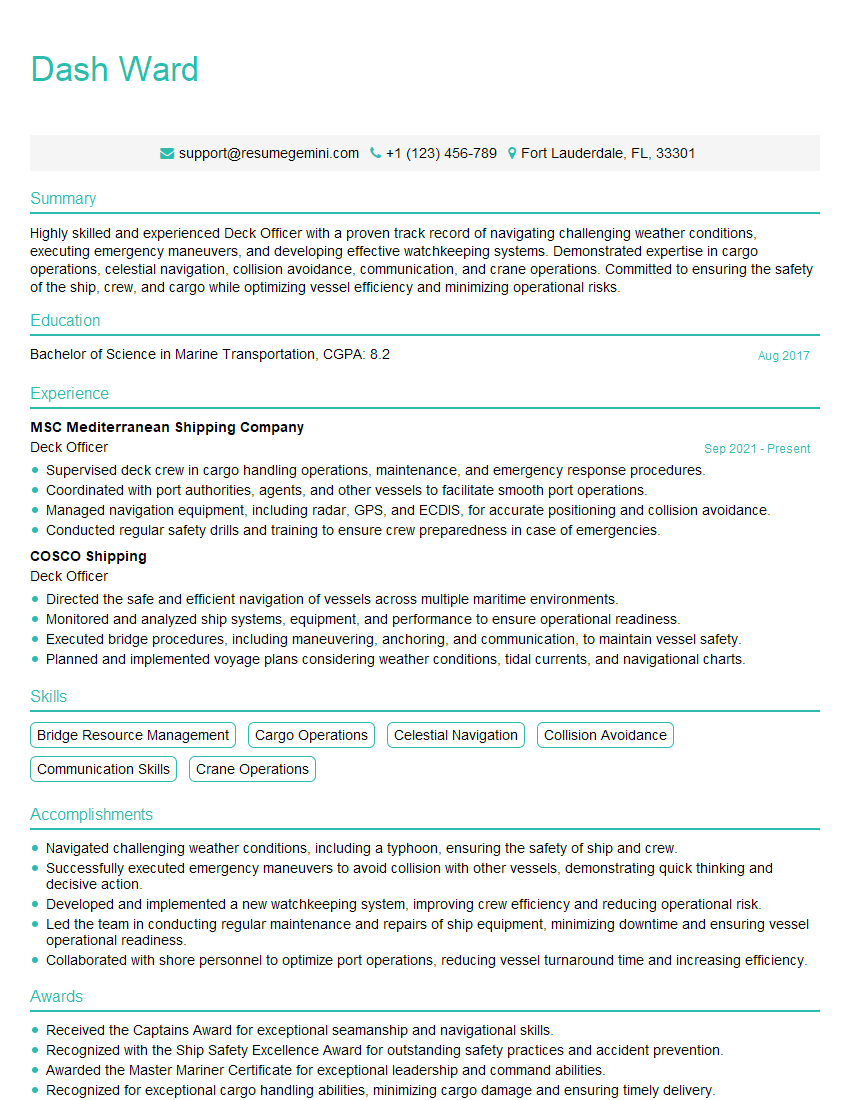
Deck Officer Resume Sample
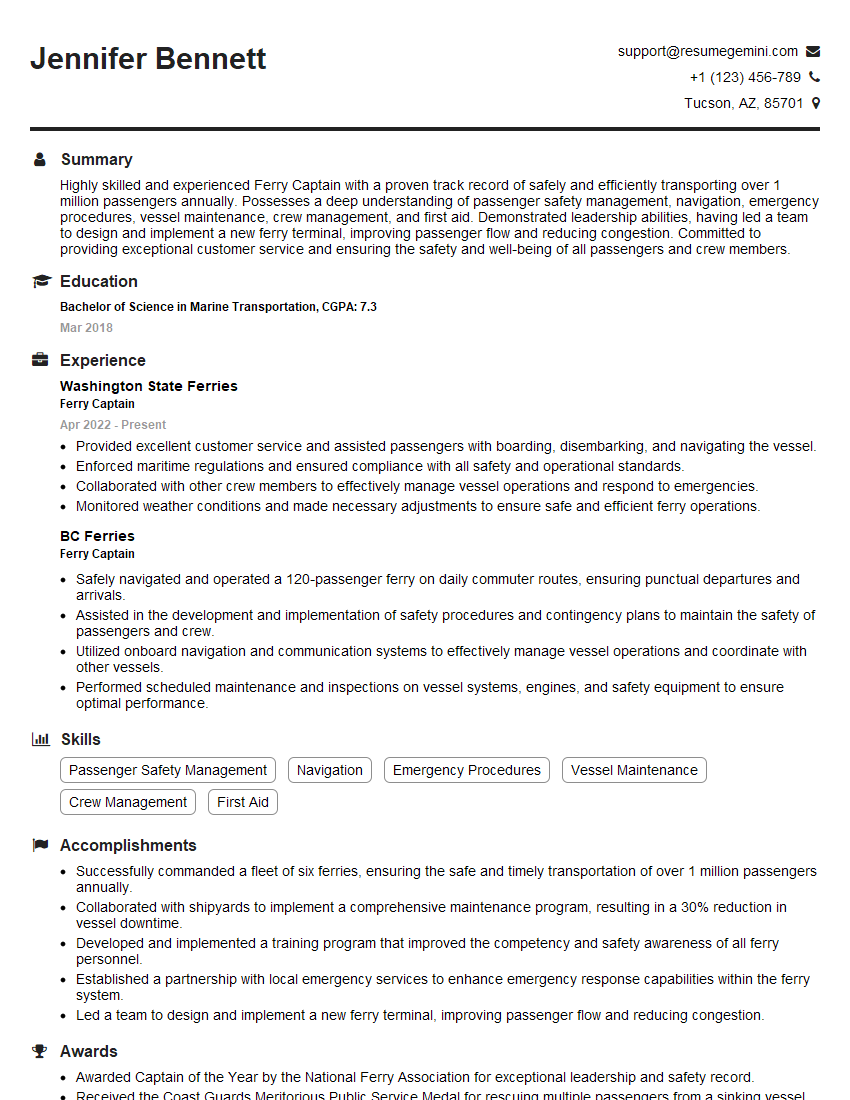
Ferry Captain Resume Sample
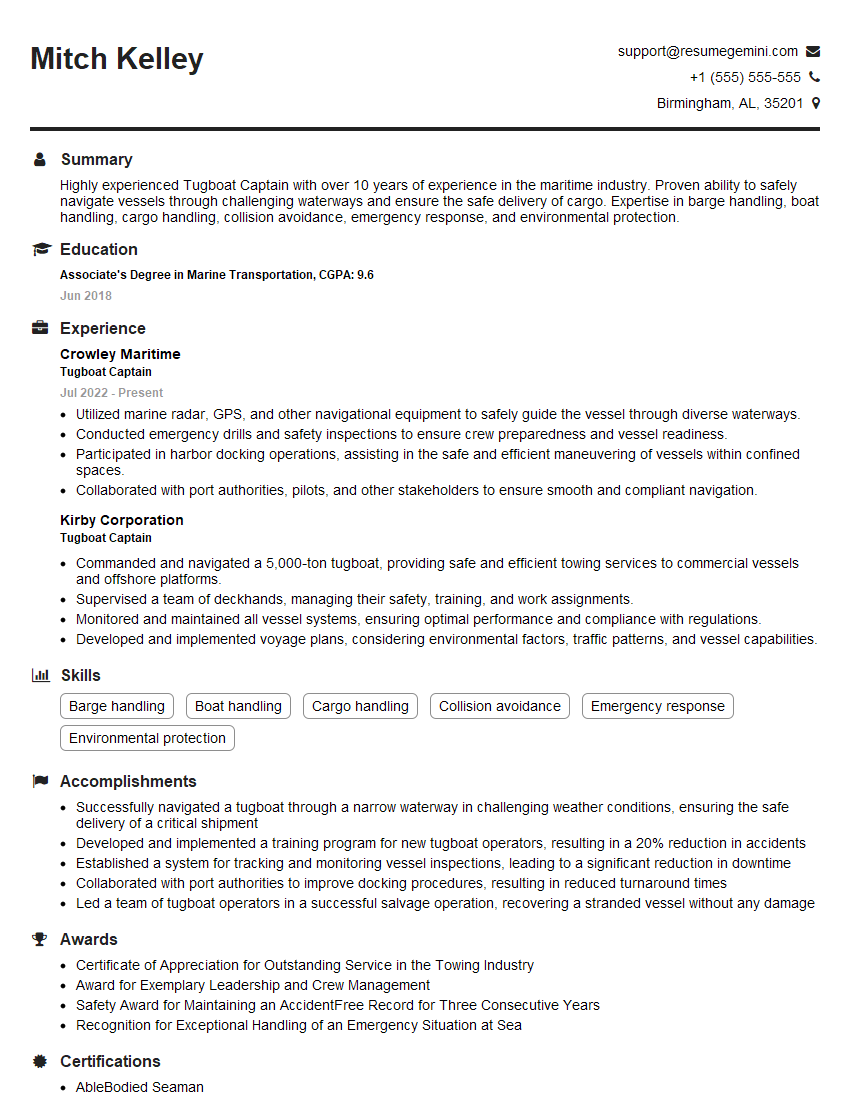
Tugboat Captain Resume Sample
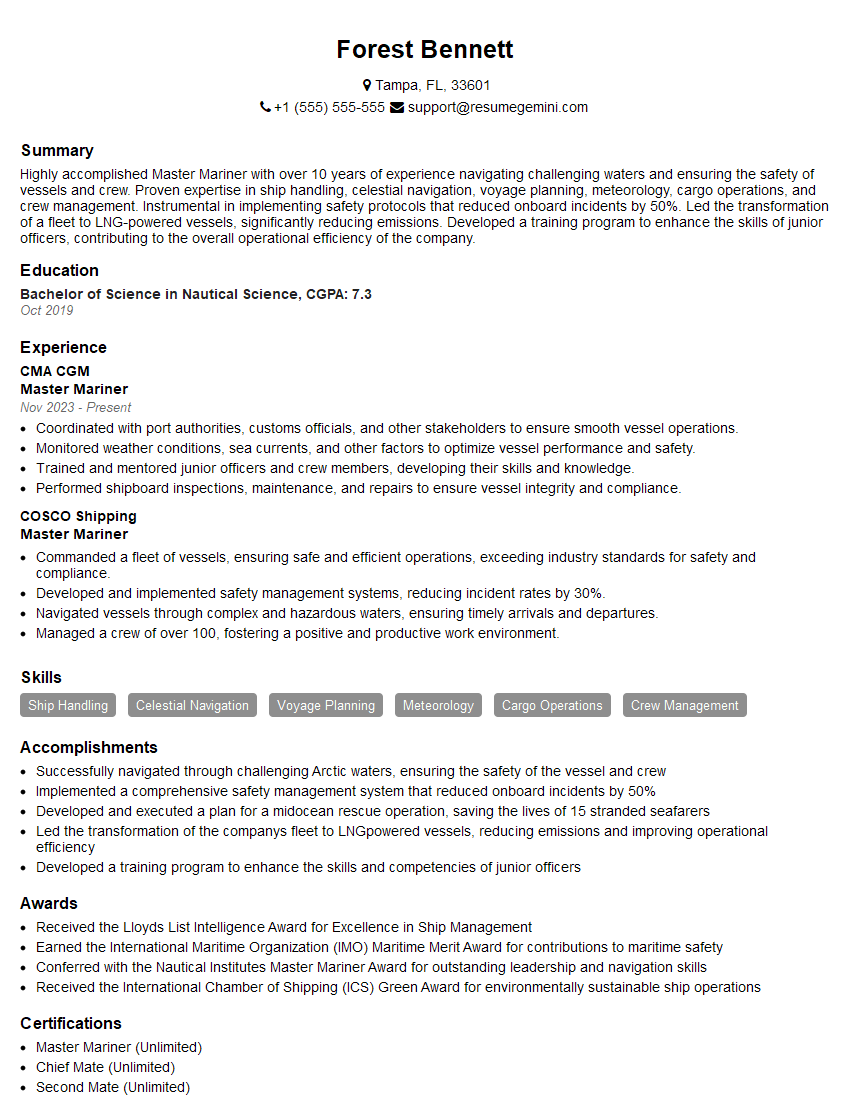
Master Mariner Resume Sample
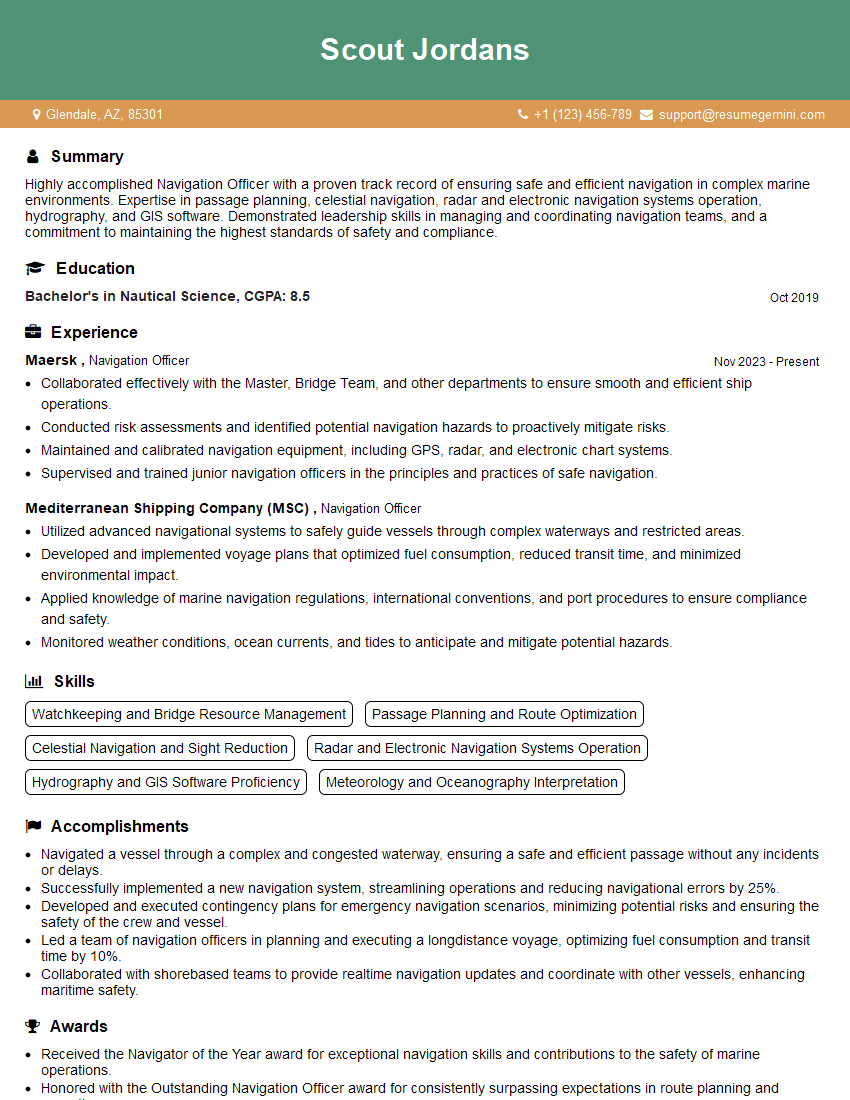
Navigation Officer Resume Sample
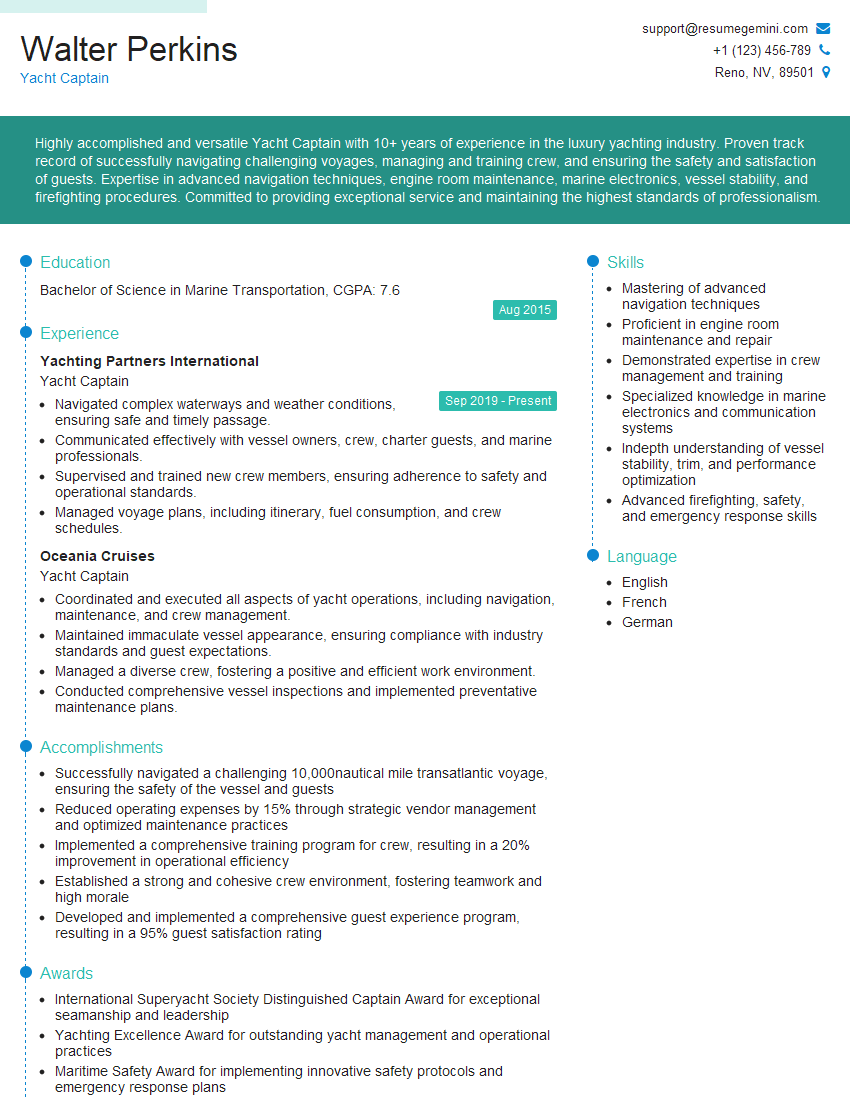
Yacht Captain Resume Sample
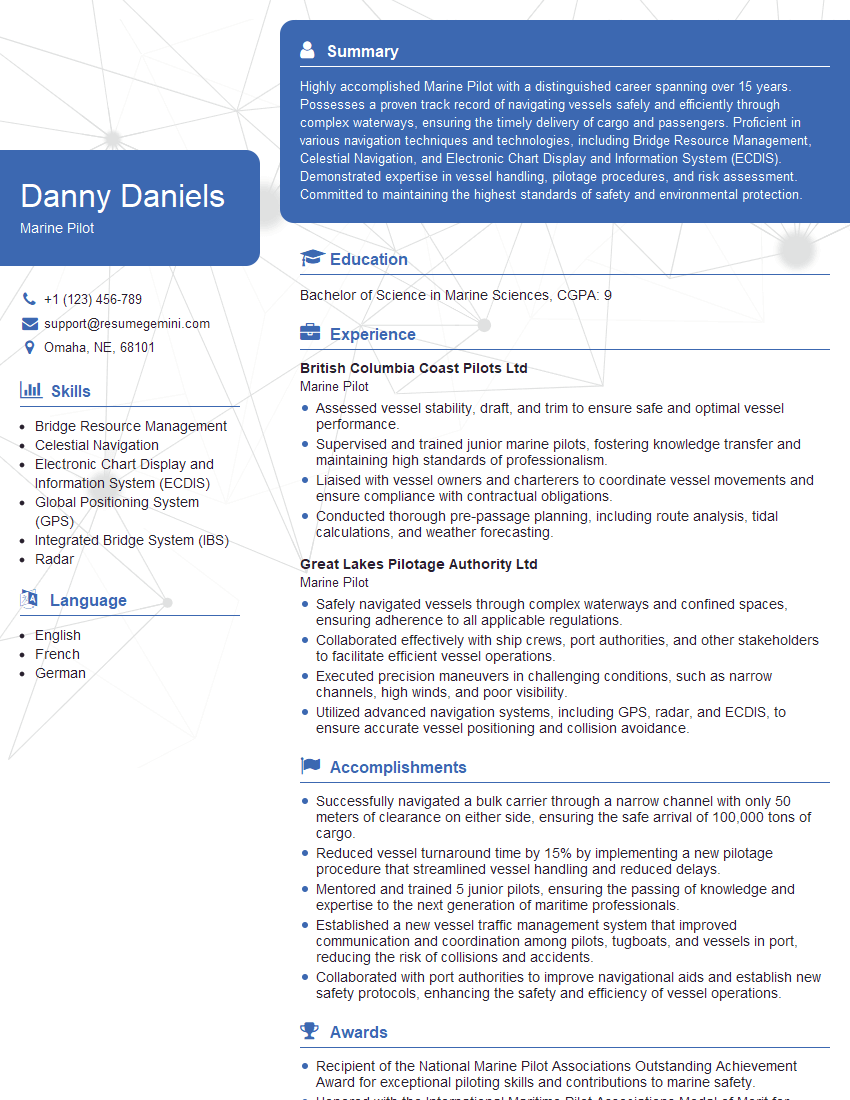
Marine Pilot Resume Sample
Explore more articles
Users Rating of Our Blogs
Share Your Experience
We value your feedback! Please rate our content and share your thoughts (optional).
What Readers Say About Our Blog
To the interviewgemini.com Webmaster.
Very helpful and content specific questions to help prepare me for my interview!
Thank you
To the interviewgemini.com Webmaster.
This was kind of a unique content I found around the specialized skills. Very helpful questions and good detailed answers.
Very Helpful blog, thank you Interviewgemini team.