Interviews are opportunities to demonstrate your expertise, and this guide is here to help you shine. Explore the essential Excavating and Backfilling Graves interview questions that employers frequently ask, paired with strategies for crafting responses that set you apart from the competition.
Questions Asked in Excavating and Backfilling Graves Interview
Q 1. What safety regulations must be followed when excavating a grave?
Grave excavation demands strict adherence to safety regulations to protect both the workers and the surrounding environment. These regulations vary slightly by location but generally include:
- Personal Protective Equipment (PPE): This is paramount and includes hard hats, safety glasses, gloves, steel-toe boots, and high-visibility clothing. Ignoring this is simply unacceptable.
- Site Security: The excavation site must be properly cordoned off and clearly marked to prevent accidental entry by unauthorized personnel or equipment. Think of it like creating a safe zone around the work area.
- Slope Stability: The sides of the grave must be properly sloped or shored to prevent cave-ins, especially in loose soil. This is crucial for worker safety. The angle of repose will dictate the slope needed.
- Confined Space Entry Procedures: If the grave is unusually deep or in a confined area, specific confined space entry procedures, including air monitoring and rescue plans, must be followed. This often requires specialized training and permits.
- Emergency Response Plan: A detailed emergency response plan must be in place, readily available, and understood by all personnel involved. This should include procedures for handling accidents, injuries, and equipment malfunctions.
- Compliance with OSHA (or relevant local authority) regulations: All work must comply with Occupational Safety and Health Administration regulations (or the equivalent in other countries) concerning excavation and burial practices.
Failure to comply with these safety regulations can lead to serious injury or even death. A thorough risk assessment should be conducted before commencing any excavation.
Q 2. Describe the proper procedure for excavating a grave of standard dimensions.
Excavating a standard-sized grave is a precise process. Let’s assume a standard grave is approximately 8 feet long, 3 feet wide, and 6 feet deep. The steps are:
- Precise Marking: Using the provided coordinates and surveying equipment, accurately mark the grave’s dimensions on the ground. Double-checking is crucial to avoid misplacement.
- Initial Cut: Begin excavation using a backhoe or excavator to remove the topsoil and create the initial outline of the grave. This stage focuses on speed and efficiency, while still maintaining accuracy.
- Careful Excavation: Once the initial cut is complete, switch to hand tools like shovels and spades for precise excavation to reach the desired depth and dimensions. This requires meticulous attention to detail.
- Leveling the Grave Floor: The bottom of the grave must be level to ensure the casket rests evenly. Use a rake and level to accomplish this.
- Final Inspection: Before proceeding with interment, a thorough inspection ensures the grave meets the specified dimensions and is properly prepared.
Remember, precision is key to ensuring a respectful and accurate burial. Any deviation from the planned dimensions must be addressed promptly and documented.
Q 3. What tools and equipment are commonly used in grave excavation?
Grave excavation requires a combination of heavy machinery and hand tools. Commonly used equipment includes:
- Backhoe or Excavator: For initial digging and removing large amounts of soil efficiently.
- Shovels and Spades: For precise digging, especially in the final stages and around the edges of the grave.
- Rakes and Levels: For smoothing and leveling the grave floor.
- Wheelbarrow or Dump Truck: For transporting excavated soil away from the site.
- Measuring Tapes and Surveying Equipment: For accurate measurements and location determination.
- Post Hole Digger (Optional): For assisting in deeper excavations, especially in challenging soil conditions.
The selection of tools depends on the soil type, grave size, and site accessibility. Safety considerations must always guide the choice of equipment.
Q 4. How do you ensure accurate grave placement based on provided coordinates?
Accurate grave placement is crucial. We use a combination of methods to ensure precise location based on provided coordinates:
- GPS Surveying: GPS technology provides highly accurate coordinates, allowing for precise placement of the grave’s location. It’s best for large cemeteries.
- Traditional Surveying: Using a transit, level, and measuring tape, surveyors establish reference points and accurately mark the grave location. This method works well with or without GPS.
- Mapping Software: Cemetery maps and dedicated software can assist in visualizing the plot location and calculating precise coordinates. These tools are very useful in coordinating the whole process.
- Double-Checking: After the grave is marked, a thorough double-check is always performed to ensure accuracy before beginning excavation.
Mistakes in grave placement can be devastating, so meticulous attention to detail and multiple verification steps are essential throughout the entire process.
Q 5. What are the different types of soil and how do they affect excavation?
Different soil types present unique challenges during excavation. Understanding soil characteristics is vital:
- Clay: Clay soil is very dense and can be difficult to excavate. It can also become very slick when wet, increasing the risk of cave-ins. Special care and shoring is often required.
- Sandy Soil: Sandy soil is generally easier to excavate, but it can be loose and prone to collapse. Proper shoring is often still necessary.
- Silty Soil: Silty soil is relatively easy to work with, but it can be prone to erosion and settling. It’s important to maintain proper slope stability to minimize these risks.
- Rocky Soil: Rocky soil presents the most significant challenges. Specialized tools and techniques may be required, such as blasting or rock breaking equipment. This will significantly impact the timing and expense of the excavation.
- Organic Soil: Organic soil, such as peat, is often soft and wet, posing a significant risk of cave-ins. Specialized techniques and equipment are often needed to safely excavate this type of soil.
The specific soil type significantly impacts excavation speed, required equipment, and safety precautions. A soil assessment should always be conducted prior to excavation to determine the best approach.
Q 6. How do you handle unexpected obstacles during grave excavation (e.g., rocks, utilities)?
Unexpected obstacles during grave excavation require immediate attention and careful consideration. Here’s how to handle them:
- Rocks: For small rocks, hand tools can usually suffice. Larger rocks may necessitate the use of specialized equipment like rock breakers or even explosives (under the guidance of professionals). Proper safety precautions are essential.
- Utilities: Discovering utilities (gas, water, electric lines) is an extremely serious situation. Work immediately stops. The appropriate utility company must be contacted immediately to shut down the service and safely relocate or protect the utility lines before work can continue. This often requires extensive documentation and approvals.
- Previous Graves or Obstructions: Finding previous graves or other unexpected obstructions requires careful documentation and notification to the relevant authorities. The excavation process might need to be adjusted or even halted depending on the circumstances.
Proper planning, thorough site investigations (including utility locates), and a detailed understanding of the site’s history can help minimize the risk of unexpected obstacles. However, having a plan for dealing with such issues is essential.
Q 7. Explain the process of backfilling a grave after interment.
Backfilling a grave after interment is a crucial step to ensure the site’s stability and appearance. The process typically involves:
- Careful Soil Placement: The soil removed during excavation is carefully placed back into the grave, avoiding any damage to the casket or vault. It’s important to use the same types of soil and in the same order.
- Compaction: The soil is compacted in layers to prevent settling and ensure stability. This often involves using a plate compactor or other compaction equipment. This is crucial for preventing the ground from settling unevenly over time.
- Leveling and Smoothing: Once the grave is filled, it’s leveled and smoothed to create a neat and even surface. This involves careful raking and grading.
- Seeding or Sodding (Optional): Depending on the cemetery’s procedures, the site may be seeded with grass or sodded to restore the landscape and encourage grass growth.
- Final Inspection: A final inspection is conducted to ensure the grave is properly filled, compacted, and aesthetically pleasing.
Proper backfilling techniques prevent settling, improve long-term stability, and contribute to the overall aesthetic appeal of the burial site. It is a fundamental part of the process and showcases the respect for the process and the deceased.
Q 8. What are the best practices for soil compaction during backfilling?
Proper soil compaction during backfilling is crucial for preventing settling and ensuring the long-term stability of the grave site. Think of it like building a house – you need a solid foundation. We achieve this through a layered approach, using heavy machinery like a plate compactor or even a smaller hand tamper for smaller areas. Each layer of backfill is compacted to a specified level, usually checked with a density test, before the next layer is added. This process ensures the soil is dense and minimizes the risk of future subsidence. For example, in clay-rich soil, we might use a vibratory compactor to break up clumps and achieve optimal density. In sandy soil, we’d be more cautious to avoid over-compaction which could lead to reduced permeability.
- Layering: Backfilling happens in layers, usually 6-12 inches thick, depending on soil type and machinery used.
- Compaction Equipment: We use equipment appropriate for the soil type and site conditions.
- Density Testing: Regular density tests are performed to ensure compaction meets specifications.
Q 9. How do you maintain proper site drainage after backfilling?
Maintaining proper site drainage is essential to prevent water accumulation around the grave, which could lead to instability or erosion. We typically achieve this by ensuring the grave is dug to a level that allows for adequate drainage. This might involve sloping the area around the grave slightly away from the headstone to divert water runoff. We also often install a drainage system, such as perforated pipes, within the backfill to help water flow away from the grave. For example, in areas with high water tables, we’ll work with the site’s drainage infrastructure or design a custom solution to prevent waterlogging.
- Grading: The surrounding area is graded to create a gentle slope that diverts water.
- Drainage Systems: Installation of perforated pipes or other drainage systems may be necessary.
- Soil Permeability: Soil selection during backfilling is often carefully considered to allow for sufficient water infiltration.
Q 10. What are the signs of ground instability and how do you address them?
Signs of ground instability can include visible cracks in the surrounding soil, settling of the land, or the presence of unstable soil types like peat or highly organic matter. Identifying these issues early is crucial to prevent accidents and ensure the long-term integrity of the grave site. Addressing them might involve soil stabilization techniques, such as adding geotextiles or using specialized backfill materials to improve the soil’s bearing capacity. In extreme cases, it might require completely redesigning the grave location.
- Visible Cracks: Cracks in the surrounding soil indicate underlying instability.
- Settling: Gradual settling of the land around the grave is another warning sign.
- Soil Type: Peat or highly organic soils are inherently less stable and require specialized treatment.
- Solutions: Soil stabilization techniques, including geotextiles or specialized backfill materials, can address instability. In extreme cases, relocation of the grave might be necessary.
For instance, I once encountered a site with significant soil erosion. We had to install retaining walls and use a stronger, more stable backfill material to prevent further instability and maintain the integrity of the gravesite.
Q 11. Describe your experience with operating heavy machinery (e.g., backhoe, excavator).
I have over 15 years of experience operating heavy machinery, including backhoes and excavators. This includes everything from the initial excavation of the grave to the precise backfilling and compaction process. My expertise extends to operating these machines safely and efficiently, paying close attention to depth, slope and environmental considerations. I’m proficient in using the machine’s controls to ensure the grave is dug to the correct dimensions and shape, minimizing damage to the surrounding area. For instance, I’ve successfully maneuvered excavators in tight spaces within cemeteries, showcasing both skill and precision. Safety is my top priority, and I always adhere to strict safety protocols while operating heavy machinery.
Q 12. What is your experience with grave liner installation?
I have extensive experience in grave liner installation. This involves carefully placing the liner within the grave to provide a waterproof barrier and help maintain the integrity of the grave site. We ensure the liner is properly positioned and sealed to prevent leakage or collapse. Different materials such as concrete liners or vault liners require specific techniques for proper placement. The process requires precision to avoid damaging the liner, and careful attention to detail is crucial in ensuring a proper fit and seal. For example, I’ve worked with various liner materials, each requiring specific installation methods to ensure a secure and watertight seal.
Q 13. How do you ensure the grave is properly sealed after backfilling?
Proper sealing after backfilling is critical to prevent settling and maintain the aesthetics of the grave site. This often involves ensuring the backfill is appropriately compacted to create a solid, level surface. We also take care to shape the soil around the grave marker and avoid damaging it during the process. In some cases, we use sealant to prevent erosion and water damage to the grave site. We carefully check the final appearance, ensuring a smooth, level surface consistent with the standards of the cemetery. For instance, a neatly finished grave site reflects our professionalism and commitment to providing respectful burial services.
Q 14. What measures do you take to prevent soil erosion after backfilling?
Preventing soil erosion after backfilling is important for maintaining the stability and appearance of the grave site. This often involves careful grading of the soil to direct water away from the grave. We may also use erosion control techniques, such as seeding the area with grass or using erosion control blankets. The choice of method depends upon the soil type and local climate. For instance, in arid regions, we would focus on techniques that promote water retention while in areas with heavy rainfall, we’d prioritize methods to increase drainage and prevent runoff. The goal is to leave the area stable and aesthetically pleasing. The result is a beautifully maintained grave site that stands the test of time.
Q 15. What are the different types of grave liners and their applications?
Grave liners serve a crucial role in protecting the environment and ensuring the integrity of the burial site. Several types exist, each with specific applications:
- Vault Liners: These are rigid, typically made of concrete or metal, offering the most robust protection against ground settling and water infiltration. They are often chosen for their longevity and strength, especially in areas with challenging soil conditions or high water tables. Think of them as a fortified shell for the casket.
- Grave Boxes (Outer Caskets): These are less expensive alternatives to vault liners. Typically made of wood or cardboard, they offer some protection but less than a vault. They are primarily used to contain the casket and offer a degree of aesthetic presentation.
- Liner Inserts: These are sometimes used within vaults for additional cushioning or water resistance. They primarily address cosmetic considerations and might be made of fabrics or other materials designed for containment.
- Environmentally Friendly Liners: Increasingly popular, these liners are made from biodegradable materials. They aim to minimize environmental impact by gradually decomposing along with the casket.
The choice of liner depends on factors like budget, environmental concerns, cemetery regulations, and the specific soil conditions. For example, a vault liner would be preferred in an area known for shifting soil or groundwater issues.
Career Expert Tips:
- Ace those interviews! Prepare effectively by reviewing the Top 50 Most Common Interview Questions on ResumeGemini.
- Navigate your job search with confidence! Explore a wide range of Career Tips on ResumeGemini. Learn about common challenges and recommendations to overcome them.
- Craft the perfect resume! Master the Art of Resume Writing with ResumeGemini’s guide. Showcase your unique qualifications and achievements effectively.
- Don’t miss out on holiday savings! Build your dream resume with ResumeGemini’s ATS optimized templates.
Q 16. How do you handle difficult soil conditions (e.g., clay, rocky soil)?
Excavating in difficult soil conditions requires careful planning and specialized techniques. Clay, for example, can be very sticky and difficult to remove cleanly. We use techniques like pre-soaking to soften it, or specialized digging tools designed for such conditions. Rocky soil requires the use of specialized equipment such as rock breakers or jackhammers, always prioritizing safety precautions like wearing proper protective gear.
In both cases, the careful removal of soil is paramount to avoid damaging the surrounding area or causing a cave-in. We proceed slowly and methodically, constantly monitoring the stability of the excavation.
For instance, when encountering a large rock, we carefully assess its position and potential impact before deciding on the best method for its removal, this may involve partial excavation around it or carefully breaking it up in place, using methods that avoid damage to surrounding soil or structural elements.
Q 17. What is your understanding of OSHA regulations regarding grave excavation?
OSHA (Occupational Safety and Health Administration) regulations are crucial for grave excavation. They primarily focus on protecting workers from hazards like cave-ins, struck-by hazards (falling objects), and exposure to harmful substances. Key regulations include:
- Protective Systems: OSHA mandates the use of appropriate protective systems such as shoring, sloping, or benching to prevent cave-ins, especially in trenches over 5 feet deep. These techniques ensure the stability of the excavation site.
- Safe Access and Egress: Workers must have safe access to and from the excavation site, with proper ladders and ramps available. This is crucial for preventing falls and injuries.
- Personal Protective Equipment (PPE): Workers are required to use appropriate PPE, including hard hats, safety glasses, gloves, and high-visibility clothing. This safeguards them against hazards like falling objects and exposure to chemicals.
- Training and Supervision: Workers must receive adequate training on safe excavation practices, and qualified personnel must supervise the work. This ensures a clear understanding of the safety measures and prevents accidents.
Compliance with these standards is essential to ensure worker safety and prevent legal consequences. We strictly adhere to all OSHA guidelines and conduct regular safety briefings.
Q 18. How do you prioritize safety during both excavation and backfilling?
Prioritizing safety is paramount throughout the entire process. During excavation, we employ multiple strategies including:
- Careful Planning: We assess the ground conditions before starting, choosing the appropriate excavation methods and safety precautions based on the assessment.
- Proper Equipment: Using well-maintained equipment is vital. We conduct regular checks on our equipment, ensuring all safety features are functional.
- Teamwork and Communication: Clear communication between team members ensures everyone is aware of potential hazards and safety protocols.
- Continuous Monitoring: We constantly monitor the excavation site for signs of instability. This allows us to address issues promptly and prevent accidents.
During backfilling, our safety measures include careful compaction to prevent settling, proper disposal of excess soil, and ensuring the backfilled area is stable and level to avoid future hazards.
Q 19. Describe your experience with working in a cemetery environment.
I’ve worked extensively in various cemetery environments, including large, established cemeteries and smaller, rural ones. This experience has provided me with valuable insight into different burial practices, soil conditions, and the unique challenges posed by each setting. I’ve learned the importance of respecting the sacred nature of these spaces and adapting my techniques to the specific needs of each site. For example, working in a historic cemetery requires additional care to avoid damage to existing infrastructure or nearby graves.
One memorable experience involved working in a cemetery with extremely rocky soil. We had to use specialized equipment and techniques to ensure both the safety of the crew and the preservation of adjacent graves. This situation highlighted the importance of careful planning and adaptability in this line of work.
Q 20. How do you maintain professional conduct during sensitive tasks?
Maintaining professional conduct during such sensitive tasks is paramount. This includes:
- Respectful Demeanor: We treat the deceased and their families with dignity and respect, understanding the emotional weight of the situation.
- Appropriate Attire: We dress professionally and modestly, showing sensitivity to the surroundings.
- Quiet and Efficient Work: We minimize noise and disruptions to allow for quiet reflection and observance.
- Compassionate Communication: We interact with family members and cemetery staff with empathy and understanding.
The work we perform is often connected to deep personal grief; our actions reflect not only our professionalism but also our respect for those we serve.
Q 21. What is your experience with different burial methods?
My experience encompasses various burial methods, including traditional in-ground burial, cremation burials (including inurnment and scattering), and entombment in mausoleums. Each method has its own set of requirements and demands different techniques during excavation and backfilling. For instance, in-ground burials require careful excavation to ensure a stable grave, while cremation burials might involve preparing a niche within a columbarium or handling the careful placement of urns.
Entombment in mausoleums demands a different skill set involving knowledge of masonry and structural integrity. The process involves working within existing structures, adhering to strict procedures to ensure the stability and safety of the mausoleum itself.
Q 22. Explain your understanding of environmental considerations during grave excavation.
Environmental considerations during grave excavation are paramount. We must minimize our impact on the surrounding ecosystem and comply with all relevant regulations. This involves several key aspects:
- Soil Management: Careful excavation and backfilling techniques are essential to prevent soil erosion and contamination. We avoid disturbing the natural water table and implement measures to prevent runoff containing sediment or chemicals. For example, we might use silt fences or erosion control blankets.
- Water Management: We manage water carefully, preventing groundwater contamination from any chemicals used (e.g., those used to solidify unstable ground). Dewatering, if necessary, is done responsibly and with proper disposal of extracted water.
- Flora and Fauna Protection: We take great care not to damage surrounding vegetation or disrupt animal habitats. We plan the excavation to minimize tree removal and, if necessary, replant vegetation after completion.
- Waste Disposal: All excavated material is handled responsibly and disposed of according to local regulations. Hazardous materials, if encountered, are reported immediately and handled by certified professionals. This can involve everything from properly disposing of unearthed construction debris to safely containing and reporting potential artifacts of historical significance.
Ignoring these considerations can lead to environmental damage, fines, and reputational harm. Our goal is always to leave the site better than we found it.
Q 23. How do you handle the emotional aspects of working in a cemetery?
Working in a cemetery is inherently emotionally charged. We handle this by approaching each task with the utmost respect and solemnity. Remembering that each grave represents a life lived and a family grieving is central to our work ethic.
- Respectful Conduct: We maintain a quiet and respectful demeanor on site. All conversations are kept low and appropriate to the setting.
- Professional Detachment: While empathy is crucial, maintaining a level of professional detachment allows us to perform our duties effectively without undue emotional distress.
- Team Support: We support each other emotionally. Open communication allows us to share feelings and offer mutual support after particularly difficult days.
- Self-Care: Prioritizing our well-being outside of work is essential. This might involve mindful practices or engaging in activities that bring us joy and relaxation.
Treating each family with sensitivity and dignity is not only ethically correct, but also helps us to maintain our emotional well-being over the long term.
Q 24. What are your strengths in teamwork and coordination?
My strengths in teamwork and coordination stem from years of experience working in teams of various sizes. I excel at:
- Clear Communication: I communicate clearly and concisely, ensuring all team members understand their roles and responsibilities.
- Active Listening: I actively listen to my colleagues’ ideas and concerns, fostering a collaborative environment where everyone feels heard.
- Delegation: I delegate tasks effectively, matching individual skills to specific responsibilities.
- Conflict Resolution: I address conflicts promptly and fairly, ensuring they don’t disrupt workflow or team morale.
- Coordination: I coordinate effectively with other professionals on-site, including funeral home personnel and other contractors, ensuring seamless operation.
For example, during a particularly challenging excavation involving unstable ground, my ability to delegate responsibilities to team members with specialized expertise allowed us to complete the work safely and efficiently, exceeding expectations.
Q 25. Describe your problem-solving skills in relation to unexpected challenges during grave excavation.
Unexpected challenges during grave excavation are common. My problem-solving approach focuses on:
- Assessment: I first assess the situation calmly and thoroughly, identifying the nature and extent of the problem.
- Risk Assessment: A thorough safety risk assessment is immediately conducted. Team safety is always the top priority.
- Resource Identification: I identify the resources needed to address the problem, which might include specialized equipment, additional personnel, or expert consultation.
- Solution Development: I develop a plan to address the problem, considering all safety aspects and potential consequences. This might involve modifying the excavation technique, seeking expert advice from geologists or engineers, or halting work until a safe resolution is found.
- Implementation & Review: I implement the chosen solution and monitor the results closely. I’ll conduct a post-incident review to identify lessons learned and improve future practices.
For instance, during one excavation, we encountered unexpectedly hard bedrock. We quickly assessed the situation, consulted with a geological engineer, and adjusted our equipment and methods to ensure safe and successful completion of the task.
Q 26. How do you ensure the accuracy and efficiency of your work?
Accuracy and efficiency are paramount in our work. We ensure both through:
- Precise Measurement: We use precise measuring tools to ensure the grave is excavated to the correct dimensions. Any discrepancies from plot plans are immediately reported and resolved.
- Careful Planning: Meticulous planning before excavation is crucial; this includes reviewing plot maps, conducting site surveys, and considering any potential challenges.
- Regular Checks: Frequent checks throughout the excavation process ensure accuracy and prevent errors.
- Technology: We leverage GPS and other technologies to ensure precise location and measurement.
- Standardized Procedures: We follow standardized procedures for each stage of excavation and backfilling, minimizing errors and maximizing consistency.
This rigorous approach ensures we handle each grave with the utmost care and respect, minimizing disruptions to surrounding plots and respecting the deceased.
Q 27. What is your experience with maintaining and repairing equipment?
I have extensive experience maintaining and repairing various types of excavation and backfilling equipment, including:
- Excavators: I’m proficient in routine maintenance checks, including oil changes, filter replacements, and minor repairs on excavators.
- Backhoes: I can perform similar maintenance and minor repairs on backhoes, ensuring they’re always in optimal working condition.
- Other Equipment: My experience also includes maintaining smaller tools such as shovels, rakes, and levels.
- Troubleshooting: I am adept at troubleshooting mechanical issues, diagnosing problems, and making necessary repairs or contacting specialized mechanics for more complex issues.
Regular maintenance prevents costly breakdowns and ensures our efficiency on every job. I also keep detailed records of all equipment maintenance and repairs, contributing to our overall safety and efficiency.
Q 28. Describe a time you had to adapt to a challenging situation during grave excavation.
During a heavy rainfall, a grave we were excavating became flooded. This presented a significant challenge because the water made the soil unstable and created a safety hazard. We couldn’t simply wait for the rain to stop as we had a funeral scheduled for the following day.
Adaptation: We immediately adapted by:
- Safety First: Halting work to assess the risks and ensuring team safety was paramount.
- Pumping: We used heavy-duty pumps to remove the excess water from the grave site, working in shifts to expedite the process.
- Soil Stabilization: Once the water level was sufficiently reduced, we used specialized techniques to stabilize the soil, preventing further collapse.
- Collaboration: We collaborated closely with the funeral home to adjust their schedule as needed.
Though challenging, we successfully completed the excavation safely and on time, demonstrating our adaptability and commitment to delivering results under pressure.
Key Topics to Learn for Excavating and Backfilling Graves Interview
- Site Preparation and Safety: Understanding site surveys, identifying potential hazards (utilities, underground obstructions), and implementing appropriate safety protocols and personal protective equipment (PPE) use.
- Excavation Techniques: Mastering various excavation methods (manual, mechanical), appropriate equipment operation and maintenance, and adhering to depth and dimension specifications while minimizing ground disturbance.
- Grave Dimensions and Regulations: Knowledge of local and national regulations regarding grave size, depth, and location; understanding the importance of accurate measurements and adherence to cemetery guidelines.
- Backfilling Procedures: Proper techniques for backfilling graves, including material selection (soil type, compaction), layering methods, and ensuring appropriate settling and stability to prevent future ground subsidence.
- Environmental Considerations: Awareness of environmental impact, minimizing soil erosion, and proper disposal of excavated materials in accordance with environmental regulations.
- Equipment Maintenance and Troubleshooting: Basic understanding of excavator maintenance, common equipment malfunctions, and troubleshooting procedures to ensure efficient and safe operation.
- Communication and Teamwork: Effective communication with colleagues, supervisors, and potentially bereaved families; understanding the sensitivity required in this role and the importance of professional conduct.
- Documentation and Record Keeping: Accurate completion of all necessary paperwork, maintaining detailed records of excavation and backfilling activities, adhering to company policies and procedures.
Next Steps
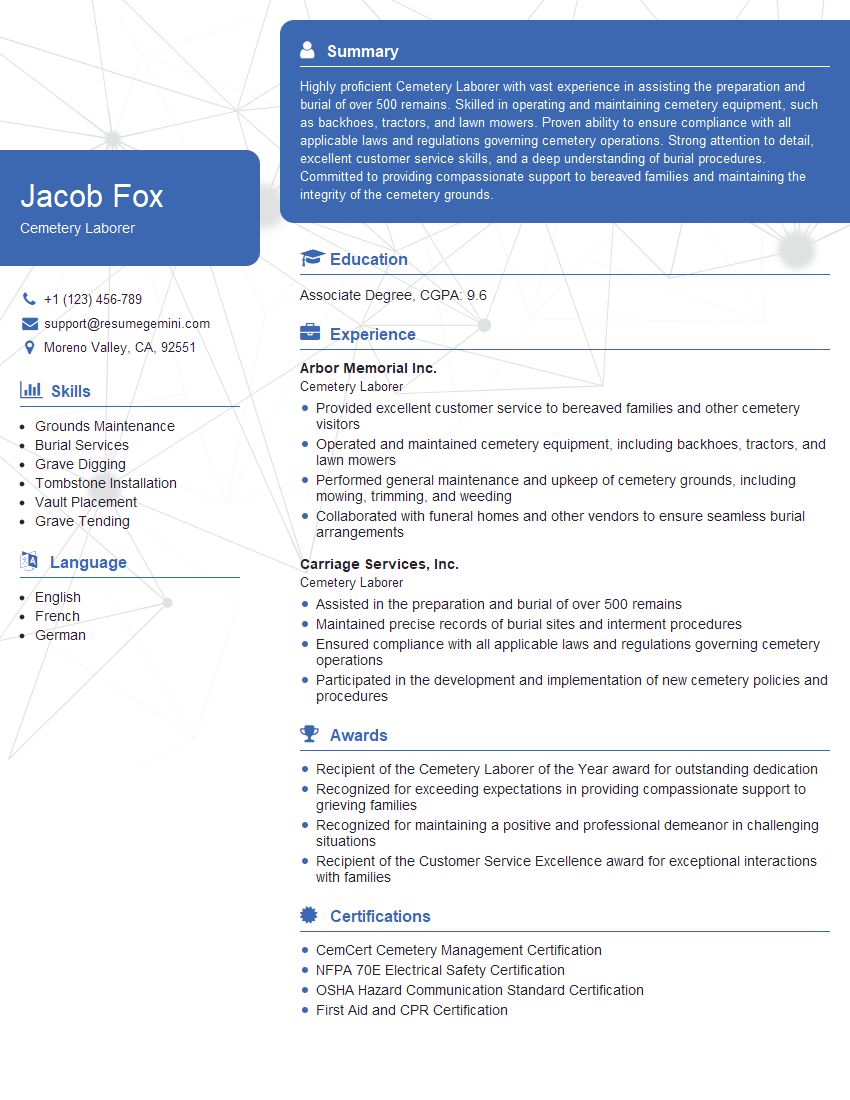
Mastering the skills and knowledge related to excavating and backfilling graves is crucial for a successful and fulfilling career in this vital profession. It demonstrates respect, precision, and a commitment to providing a dignified final resting place. To significantly enhance your job prospects, creating a strong, ATS-friendly resume is essential. ResumeGemini is a trusted resource that can help you build a professional resume that highlights your skills and experience effectively. Examples of resumes tailored to the specifics of Excavating and Backfilling Graves are available through ResumeGemini to help you create a compelling application.
Explore more articles
Users Rating of Our Blogs
Share Your Experience
We value your feedback! Please rate our content and share your thoughts (optional).
What Readers Say About Our Blog
To the interviewgemini.com Webmaster.
Very helpful and content specific questions to help prepare me for my interview!
Thank you
To the interviewgemini.com Webmaster.
This was kind of a unique content I found around the specialized skills. Very helpful questions and good detailed answers.
Very Helpful blog, thank you Interviewgemini team.