The right preparation can turn an interview into an opportunity to showcase your expertise. This guide to Art Authentication and Appraisal interview questions is your ultimate resource, providing key insights and tips to help you ace your responses and stand out as a top candidate.
Questions Asked in Art Authentication and Appraisal Interview
Q 1. Describe the process of authenticating a painting.
Authenticating a painting is a meticulous process that requires a combination of scientific analysis and art historical research. It’s like solving a complex puzzle, where each piece of evidence contributes to the overall picture.
Visual Examination: This is the first step, involving a close inspection of the painting’s style, brushstrokes, color palette, and composition, comparing it to known works by the suspected artist. Are the brushstrokes consistent with the artist’s known techniques? Does the palette match their typical use of pigments?
Technical Analysis: This might involve X-ray fluorescence (XRF) to identify pigments, infrared reflectography (IRR) to reveal underdrawings, or gas chromatography-mass spectrometry (GC-MS) to analyze the paint’s binding medium. This helps determine the age of the materials and detects any inconsistencies.
Documentary Research: This crucial step involves tracing the artwork’s provenance – its history of ownership and location. Examining sales records, exhibition catalogs, and archival documents helps establish a chain of custody and links the painting to the artist.
Stylistic Comparison: Experts compare the painting’s style and technique to the artist’s established oeuvre. This requires extensive knowledge of the artist’s evolution, influences, and known forgeries. Think of it like comparing handwriting samples – subtle differences can reveal a lot.
Expert Consultation: Often, multiple experts in different areas (e.g., art historians, conservators, scientists) are consulted to form a comprehensive opinion.
For example, a suspected Rembrandt painting might undergo XRF analysis to verify the pigments used during his lifetime. Inconsistencies in pigment composition might indicate a later date, suggesting a forgery.
Q 2. Explain the difference between intrinsic and market value in art appraisal.
In art appraisal, intrinsic value and market value are distinct but related concepts. Intrinsic value refers to the inherent worth of the artwork based on its artistic merit, historical significance, and aesthetic qualities – essentially, its value independent of the market. Market value, on the other hand, represents the price the artwork is likely to fetch in the current market, influenced by supply, demand, and market trends.
Think of it this way: a painting might possess significant intrinsic value due to its historical importance and artistic brilliance, but its market value could be lower if the market for that particular artist’s work is currently weak. Conversely, a painting with moderate intrinsic value might command a high market price due to increased demand or a recent record-breaking sale of a similar piece.
A skilled appraiser considers both aspects. Intrinsic value helps establish a baseline, while market value reflects its current economic worth.
Q 3. What are the key factors you consider when determining the authenticity of a sculpture?
Authenticating a sculpture involves a similar multi-faceted approach as with paintings, but with a focus on material properties and sculptural techniques. Key factors include:
Material Analysis: Scientific analysis such as XRF, microscopic examination, and metallurgical testing is crucial to identify the materials used (e.g., type of bronze, marble, wood). This helps establish the age and authenticity of the sculpture. Inconsistencies in material composition or techniques could point towards a later date or forgery.
Stylistic Analysis: The sculpture’s style, pose, and overall aesthetic are compared to the artist’s known work. This requires in-depth knowledge of the artist’s stylistic evolution and potential influences. Subtle variations in proportions, details, or carving techniques can reveal the hand of a different artist.
Technical Examination: Examination of the sculptor’s technique (e.g., casting methods, carving tools, assembly techniques) plays a critical role. Evidence of modern tooling or manufacturing processes might indicate a forgery.
Provenance Research: Tracing the sculpture’s ownership history is essential. Documentation from sales records, museum archives, and historical accounts strengthens the claim of authenticity.
Surface Condition: The presence of age-related patina (a natural surface discoloration) can provide valuable information, although this needs to be carefully evaluated by a conservator.
For example, a suspected ancient Greek bronze statue might undergo metallurgical analysis to verify the alloy composition and casting techniques used during that era. The presence of modern alloys or casting methods would raise serious doubts.
Q 4. How do you handle conflicting information regarding an artwork’s provenance?
Conflicting information in an artwork’s provenance is a common challenge. Handling it requires a systematic approach:
Verify Sources: Assess the reliability and credibility of each source. Are they primary sources (e.g., original sales records) or secondary sources (e.g., auction catalogs)? Primary sources generally carry more weight.
Analyze Inconsistencies: Carefully examine the conflicting information to identify the discrepancies. Are there clear errors or omissions in the documentation? Consider the context of the information and the potential reasons for any discrepancies.
Cross-Reference Data: Compare the information with other independent sources to see if they corroborate or contradict the existing data. Consider archival documents, museum records, and scholarly publications.
Consult Experts: Seek the advice of art historians and provenance researchers to interpret the conflicting information and reach a well-informed conclusion. Their expertise in historical context and documentation can be invaluable.
Document Findings: Thoroughly document the research process, including the sources examined, the discrepancies identified, and the reasoning behind the final conclusions. This transparency is crucial for accountability and future reference.
For instance, if two different sales records offer conflicting dates for the artwork’s sale, the appraiser would thoroughly investigate both records, comparing them with other historical data such as auction house archives and newspaper reports to pinpoint the correct date.
Q 5. What methods do you use to verify the signature on a painting?
Verifying a signature on a painting is a critical aspect of authentication. It’s not just about visual similarity, but a deeper understanding of the artist’s signature evolution.
Comparative Analysis: The signature is compared with authenticated signatures from the artist’s known works. This requires access to a comprehensive database of their signatures, noting variations across their career. Signatures often evolve over time in style, size, and firmness.
Technical Examination: Microscopical examination of the ink and its application technique can provide valuable insights. For example, the type of ink, its age, and the brushstrokes used to apply it can be scientifically analyzed and compared to known examples.
Contextual Evidence: The position of the signature on the canvas (e.g., placement, integration with the paint layers) can offer clues. A poorly integrated signature might suggest later addition.
Expert Opinion: Consulting with experts who have extensive knowledge of the artist’s signature style is crucial. Their experience in recognizing subtle differences and variations is invaluable.
For example, a supposed Van Gogh signature would be scrutinized under a microscope to examine the ink properties and brushstrokes, comparing them to his authenticated works. Disparities could point to a forgery.
Q 6. Explain the significance of provenance documentation in art authentication.
Provenance documentation is the documented history of ownership of an artwork. It’s essentially a chronological chain of custody that traces the artwork’s journey from the artist’s studio to its current owner. It’s a cornerstone of art authentication because it provides crucial evidence linking the artwork to its creator and its historical context. A robust provenance strengthens the claim of authenticity, providing verifiable evidence of ownership and handling through time.
Gaps or inconsistencies in the provenance can raise red flags, suggesting that the artwork’s history might be unclear or even fabricated. A complete and well-documented provenance often significantly increases the artwork’s value because it assures buyers of its authenticity and adds to its historical significance. The more documentation available – bills of sale, exhibition catalogs, letters, photographs, appraisals – the stronger and more reliable the provenance becomes.
Think of it like a family tree for an artwork – it’s a vital link to its origins and its past.
Q 7. How do you identify and document signs of restoration or forgery?
Identifying and documenting signs of restoration or forgery requires a keen eye and a combination of visual inspection and scientific analysis.
Visual Examination: This involves looking for inconsistencies in paint layers, brushstrokes, texture, or color that might suggest later additions or alterations. Areas of overpainting or retouching might be visible under different lighting conditions or magnification. Discrepancies in craquelure (the network of fine cracks that form in aged paintings) might indicate that a section has been repainted.
Technical Analysis: Techniques like infrared reflectography (IRR) can reveal underdrawings or previous paint layers that are not visible to the naked eye. X-ray fluorescence (XRF) can detect different pigment compositions, revealing areas of repainting or the use of modern pigments. Microscopic analysis can examine the characteristics of paint layers.
Documentation: All findings, whether visual or scientific, should be meticulously documented with detailed descriptions, photographs, and any scientific data. This creates a comprehensive record for future reference and evaluation.
For example, a painting suspected of restoration might be examined using IRR to reveal a previous underlying layer that differs from the visible surface. This discrepancy could indicate later alteration or overpainting.
Q 8. Discuss different valuation methods used in art appraisal.
Art valuation is a complex process relying on several methods, each with its strengths and weaknesses. The goal is to arrive at a fair market value, representing what a willing buyer would pay a willing seller in a typical transaction. These methods are often used in combination.
- Comparable Sales Method: This is the most common approach, relying on recent sales of similar artworks. We look at factors like the artist, size, medium, date, condition, provenance (ownership history), and subject matter. For example, if we’re valuing a Monet landscape, we’d research recent auction results for similar Monet landscapes of comparable size and condition. The more comparable the works, the stronger the valuation.
- Adjusted Net Asset Value (ANAV): While less common for fine art, this method can be relevant for works with embedded materials (like mosaics or sculptures with precious metals). It assesses the value of the materials plus the artistic labor and expertise involved.
- Income Approach: This method focuses on the potential income generated by the artwork, like licensing fees or anticipated future resale value. It’s mostly relevant for works with proven commercial success and predictable income streams, such as highly sought-after prints or photographs by renowned artists.
- Replacement Cost Method: This method focuses on the cost of recreating the artwork. It is rarely applied to fine art because the skill and reputation of the artist are irreplaceable elements of the value. It is more useful for assessing things like custom-made furniture or bespoke crafts.
Ultimately, a successful appraisal considers the interplay of these methods, weighting them according to the specifics of the artwork and the available data. No single method provides a definitive answer; the appraiser’s judgment and expertise are crucial.
Q 9. How do you research the market value of a contemporary artwork?
Researching the market value of contemporary art presents unique challenges because the market is often less established than for historical works. There’s less historical data to rely on. However, we can employ a multi-pronged approach:
- Auction Records: Search online databases like Artnet, Invaluable, and Sotheby’s/Christie’s auction archives for sales of works by the same artist or similar artists. Pay close attention to the sale dates and condition reports.
- Gallery Records: Contact galleries representing the artist or handling similar works. They often have internal sales data and can provide insights into the artist’s market performance.
- Art Market Publications and Indices: Specialized publications and indices track market trends and artist performance. These resources can provide valuable context for interpreting sales data.
- Expert Consultation: Consulting with specialists or other experienced appraisers familiar with the artist’s work and the contemporary art market can be invaluable.
- Exhibition History: A strong exhibition history in reputable galleries and museums can significantly influence market value.
For contemporary art, the artist’s reputation, gallery representation, critical reception (reviews and articles), and participation in significant exhibitions are critical factors influencing value beyond just comparable sales data. It requires a nuanced understanding of the art world’s current dynamics.
Q 10. What are the ethical considerations in art authentication and appraisal?
Ethical considerations are paramount in art authentication and appraisal. Maintaining objectivity, transparency, and independence is crucial to avoid conflicts of interest and maintain professional integrity. Key aspects include:
- Objectivity and Impartiality: The appraiser must remain unbiased, avoiding personal opinions or biases that could compromise the valuation. If a personal connection to the artwork or its owner exists, this should be disclosed.
- Transparency and Disclosure: Complete transparency about the appraisal methodology, data sources, and any limitations should be provided to the client. This builds trust and ensures clarity.
- Confidentiality: Information about the artwork, its owner, and the appraisal should be kept confidential. This is particularly crucial with high-value or sensitive pieces.
- Competence and Expertise: Appraisers should only work within their area of expertise. Attempting to appraise works outside one’s knowledge base is unethical and could lead to inaccurate valuations.
- Conflict of Interest: Appraisers should disclose any potential conflicts of interest, including financial interests or relationships with the artwork’s owner or seller.
Adherence to these ethical principles ensures the integrity of the appraisal process and protects the interests of all parties involved. Professional organizations often have strict codes of conduct that appraisers must follow.
Q 11. Explain the role of scientific testing in art authentication.
Scientific testing plays a vital role in art authentication, providing objective evidence to support or refute claims about an artwork’s authenticity, age, and materials. Techniques include:
- Pigment Analysis: Determining the composition of pigments using techniques like X-ray fluorescence (XRF) or gas chromatography-mass spectrometry (GC-MS) can reveal if pigments were available during the purported creation date.
- Material Analysis: Analyzing the canvas, wood panel, or paper can reveal the type of materials used and their age through methods like dendrochronology (tree-ring dating) or carbon dating.
- Infrared Reflectography (IRR): IRR allows the examination of underdrawings and pentimenti (artist’s changes) invisible to the naked eye. This can offer insights into the artwork’s creation process and potentially reveal inconsistencies with the artist’s known techniques.
- Ultraviolet (UV) Fluorescence: UV light reveals restoration efforts, aging, and the presence of certain pigments. This can help distinguish between original materials and later additions.
- X-Radiography: This technique reveals the underlying structure of the artwork, exposing any hidden alterations or changes.
Scientific testing alone cannot definitively authenticate an artwork. It is used in conjunction with stylistic analysis, historical documentation, and provenance research to build a comprehensive case. The results of scientific analysis should always be interpreted by experienced art historians and conservators.
Q 12. Describe a situation where you had to resolve a discrepancy in an artwork’s history.
I once appraised a purported early 20th-century landscape painting attributed to a well-known, but relatively obscure, American artist. The stylistic elements were consistent with the artist’s known work, and the provenance documentation seemed sound. However, a closer examination of the canvas revealed a weave pattern inconsistent with the period. Further scientific testing, specifically pigment analysis, revealed the presence of pigments not used until much later in the century.
This discrepancy forced a re-evaluation of the artwork’s history. After extensive research and consultation with other experts, we discovered the painting was likely a very skillful and convincing forgery created much later. The stylistic mimicry was exceptional, but scientific testing revealed the truth. The initial provenance documentation was likely fabricated. The final appraisal report accurately reflected these findings and clearly detailed the reasons for our conclusion. The client, while disappointed, appreciated the thoroughness of the investigation.
Q 13. How do you deal with high-value or controversial artworks?
High-value and controversial artworks require a meticulous and cautious approach. The potential financial stakes and public interest necessitate extra diligence and a heightened awareness of ethical considerations.
- Enhanced Due Diligence: Extensive research into provenance, exhibition history, and any related legal disputes is essential. This may involve contacting multiple archives, museums, and legal professionals.
- Expert Consultation: Consulting with multiple specialists in the relevant fields ensures a more robust and reliable assessment. This minimizes the risk of overlooking critical details.
- Detailed Documentation: Maintaining a meticulous record of all research findings, analyses, and communications is crucial for transparency and accountability. This will be vital if any dispute arises later.
- Legal Counsel: Seeking legal advice, especially when dealing with complex ownership issues or potential legal disputes, is prudent. This ensures that the appraisal process adheres to all relevant legal requirements and protects the appraiser from liability.
Ultimately, handling high-value or controversial artworks requires a blend of expertise, caution, and a commitment to the highest ethical standards. A thorough, transparent, and well-documented approach is crucial to mitigate risks and build confidence in the appraisal findings.
Q 14. What are the legal aspects of art authentication and appraisal?
The legal aspects of art authentication and appraisal are significant, particularly concerning liability, fraud, and intellectual property.
- Liability: Appraisers can face legal action if their valuations are deemed negligent or fraudulent. Maintaining thorough documentation, adhering to professional standards, and disclosing any limitations of the appraisal are essential to mitigate liability risks.
- Fraud: The art world is unfortunately susceptible to fraud, involving forgery, misattribution, and stolen artworks. Appraisers play a crucial role in detecting and preventing such fraud. Any suspicion of fraud needs to be reported to the relevant authorities.
- Copyright and Intellectual Property: Authenticating and appraising artworks often involves issues of copyright and intellectual property rights. Respecting these rights is a legal and ethical imperative. For example, an appraiser must respect the copyright of images and descriptions of artworks they use in their reports.
- Contract Law: Appraisals are often part of contracts for sale or insurance purposes. Therefore, understanding contract law and its implications is crucial. The appraisal report should be precise and unambiguous to avoid any contractual disputes.
Staying current with relevant laws and regulations is vital for art authentication and appraisal professionals. Consultations with legal professionals can help navigate these complex areas and ensure compliance.
Q 15. How do you manage client expectations in the appraisal process?
Managing client expectations in art appraisal is crucial for a positive experience. It starts with a clear upfront conversation about the process, including timelines, costs, and the limitations of appraisal. I always explain that an appraisal isn’t an absolute guarantee of value, but rather an informed professional opinion based on available evidence. We discuss the type of appraisal needed – fair market value, insurance replacement value, or donation value – as each has a different methodology and purpose. Regular updates throughout the process keep clients informed and help avoid misunderstandings. For instance, if a critical piece of research takes longer than anticipated, I proactively communicate that to the client. This transparency builds trust and ensures realistic expectations from the outset.
For example, I recently appraised a collection of vintage posters for an estate sale. I clearly outlined that the final value would depend on market conditions at the time of sale and the specific condition of each poster. This upfront communication prevented any disappointment when the final appraisal slightly differed from the client’s initial hopes.
Career Expert Tips:
- Ace those interviews! Prepare effectively by reviewing the Top 50 Most Common Interview Questions on ResumeGemini.
- Navigate your job search with confidence! Explore a wide range of Career Tips on ResumeGemini. Learn about common challenges and recommendations to overcome them.
- Craft the perfect resume! Master the Art of Resume Writing with ResumeGemini’s guide. Showcase your unique qualifications and achievements effectively.
- Don’t miss out on holiday savings! Build your dream resume with ResumeGemini’s ATS optimized templates.
Q 16. What are some common forgery techniques you’ve encountered?
Forgery techniques are constantly evolving, but some common methods persist. One frequent technique involves creating a fake canvas using materials and methods that mimic the artist’s historical practices. Forgers might utilize aged canvas, period-appropriate paints, and even try to replicate the artist’s brushstrokes. Another common approach is using a genuine artwork as a base and altering it – adding elements or overpainting sections to make it appear as a work by a more valuable artist. Sometimes, forgers cleverly copy the artist’s style, but these pieces often lack the genuine artist’s unique subtleties and emotional depth. I’ve also encountered forgeries that utilize modern printing techniques to imitate the textures and details of an original. Distinguishing these from originals requires a keen eye for detail, combined with scientific analysis, such as pigment testing or stylistic comparisons.
For instance, I once analyzed a painting purportedly by a famous Impressionist. While the initial brushstrokes appeared authentic, closer examination using infrared reflectography revealed underpainting inconsistent with the artist’s known techniques, exposing it as a forgery.
Q 17. How do you determine the condition of an artwork and its impact on value?
Determining the condition of an artwork is a critical aspect of appraisal. It involves a meticulous examination for any damage, including cracks, tears, discoloration, fading, and previous restorations. I use magnification tools, UV light, and sometimes X-rays to reveal hidden problems. The condition significantly impacts value; a pristine artwork commands a higher price than one with significant damage. Factors like the type of damage, its extent, and the quality of any previous restoration all influence the final assessment. Documentation is paramount; I create detailed photographic records and condition reports outlining every imperfection. I then factor this assessment into the final valuation, often using a percentage deduction from the artwork’s potential value were it in perfect condition.
For example, a sculpture with a small chip might only lose a small percentage of its value, whereas a painting with extensive craquelure (cracking of the paint) could see a more substantial reduction.
Q 18. Explain the importance of maintaining detailed records in your work.
Maintaining meticulous records is paramount for ethical and legal reasons. It protects both the appraiser and the client. My records include comprehensive photographic documentation, detailed condition reports, provenance research notes (tracing the artwork’s ownership history), and a complete record of all analytical tests conducted. These records are essential for supporting the appraisal’s conclusions and demonstrating the methodology used. Furthermore, detailed records provide a valuable historical account of the artwork, potentially influencing its future valuations. They also serve as evidence in cases of dispute or potential litigation.
This rigorous approach is especially important in high-value appraisals. Each step is documented, offering transparency and accountability. It helps to prevent errors, disputes, and potential legal issues. Imagine a case where a question arises about a previous restoration; the record clearly shows the details, protecting both the client and myself.
Q 19. Describe your experience using art databases and reference materials.
Art databases and reference materials are indispensable tools. I regularly consult resources such as auction records from major auction houses (e.g., Sotheby’s, Christie’s), scholarly catalogs raisonnés (comprehensive catalogs of an artist’s work), and online databases specializing in art historical information. These resources help me establish comparable sales data, verify provenance information, and assess the stylistic features of an artwork. I also utilize specialized databases for identifying pigments and materials used in the artwork’s creation. This cross-referencing allows for a robust comparison to similar works and enhances the accuracy of my appraisal.
For example, when appraising a print, I would consult auction records to determine recent prices for similar prints by the same artist, considering edition number, condition, and printing method.
Q 20. How do you stay updated on the latest developments in art authentication techniques?
Staying current in art authentication is crucial. I regularly attend conferences, workshops, and seminars organized by professional organizations like the Appraisers Association of America (AAA). I subscribe to relevant academic journals and follow leading experts in the field. I also regularly consult with colleagues and collaborate on challenging cases to learn from diverse perspectives and stay abreast of cutting-edge analytical techniques. Emerging technologies in scientific analysis, such as advanced imaging techniques and material science advancements, profoundly impact authentication. Keeping up with these developments is essential for maintaining a high level of competence.
For instance, recent advances in hyperspectral imaging allow for non-invasive analysis of artworks, revealing subtle details not visible to the naked eye, helping in the identification of forgeries.
Q 21. What are the challenges of appraising digital art?
Appraising digital art presents unique challenges. Unlike traditional artworks, digital art lacks physical materiality. Determining authenticity hinges on verifying the digital signature, blockchain provenance (if available), and the artist’s claim to ownership. Establishing market value is also complex due to the nascent nature of the market, the potential for easy replication, and the lack of established comparable sales data for many digital pieces. Factors such as the scarcity of the artwork, its aesthetic merit, the artist’s reputation, and the platform where it is sold significantly influence value. The potential for rapid technological obsolescence also needs consideration.
Currently, there’s a lack of standardized appraisal methods for digital art. Further development in this field is needed, including the creation of robust authentication and valuation frameworks specific to this unique medium.
Q 22. What is your experience with different art mediums (painting, sculpture, etc.)?
My expertise spans a wide range of art mediums, encompassing paintings (oil, watercolor, acrylic, tempera), sculptures (bronze, marble, wood, clay), prints (etchings, lithographs, woodcuts), drawings (pencil, charcoal, pastel), and mixed media works. I’ve had the opportunity to authenticate and appraise pieces from various historical periods and artistic movements. For example, I recently assessed a collection of 18th-century French oil paintings, requiring expertise in identifying pigments, brushstrokes, and canvas preparation techniques specific to that era. Similarly, I’ve worked with contemporary sculptures, needing a strong understanding of modern materials and fabrication methods. This broad experience allows me to approach each piece with the appropriate level of specialized knowledge.
- Paintings: Deep understanding of pigments, canvas preparation, brushwork analysis, and stylistic trends across different periods.
- Sculptures: Expertise in identifying materials, casting techniques (lost-wax, sand casting), and recognizing stylistic signatures.
- Prints: Knowledge of printmaking techniques, paper types, and inking methods to differentiate originals from reproductions.
Q 23. How do you assess the impact of artist reputation on value?
An artist’s reputation significantly influences an artwork’s value. Think of it like this: a well-established artist with a proven track record and consistent demand creates a higher expectation of quality and scarcity, driving up prices. We consider factors such as the artist’s prominence in art history, museum collections featuring their work, critical acclaim, market history (past auction results), and their current standing in the art world. For instance, a painting by a lesser-known artist, even if technically excellent, will likely have a lower value than a comparable work by a renowned master. However, the artist’s reputation is just one piece of the puzzle; condition, provenance (history of ownership), and the artwork’s unique qualities also play crucial roles.
We use a multi-faceted approach to assess the impact of reputation: analyzing auction records for similar works by the artist, researching critical reviews and scholarly publications, and considering the artist’s position within relevant artistic movements. This ensures a fair and accurate reflection of market value, weighted against other crucial factors.
Q 24. Describe your approach to handling disputes or disagreements regarding an appraisal.
Disagreements are an occasional part of the appraisal process. My approach prioritizes transparency, meticulous documentation, and professional courtesy. When a dispute arises, I carefully review my findings, ensuring thorough research and a robust methodology. I welcome open dialogue with all parties involved. If the disagreement persists, I often suggest seeking a second opinion from another qualified appraiser, to provide an independent assessment. In cases of significant financial implications, arbitration might be considered, relying on a neutral third party to mediate the dispute. Maintaining a professional demeanor and clearly documenting my rationale are critical for resolving conflicts effectively.
For example, I once had a disagreement regarding the attribution of a painting. To resolve it, I provided detailed photographic documentation, comparative analysis with known works by the attributed artist, and pigment analysis results. This thorough documentation helped to clarify my assessment and ultimately resolved the dispute.
Q 25. How do you present your findings in a clear and concise manner?
Clarity and conciseness are paramount in appraisal reports. My reports follow a standardized format, beginning with a clear description of the artwork, including dimensions, medium, and subject matter. The provenance, or history of ownership, is detailed. The methodology section outlines the techniques used to assess authenticity and value, followed by a concise summary of findings, including estimated market value, and a detailed explanation of my reasoning. I always include high-quality photographic documentation. The report is written in clear, non-technical language whenever possible, avoiding unnecessary jargon. For clients needing a deeper understanding, I am always available for further discussion.
I use visual aids such as charts and graphs to represent data effectively, especially when presenting complex information about market trends or comparable sales. The overall goal is to provide a report that is both comprehensive and easily understandable.
Q 26. What is your experience with insurance appraisals?
I have extensive experience with insurance appraisals, understanding the specific requirements and standards set by insurance companies. These appraisals differ from those for sale or estate purposes because they focus primarily on the insurable value – the cost to replace or repair the artwork in case of loss or damage. This often involves a careful assessment of the artwork’s condition, research into comparable works, and consideration of restoration costs. Insurance companies need accurate valuations to avoid underinsurance and, conversely, to prevent overpayment in the event of a claim. My reports for insurance purposes are thorough, precise, and comply with industry best practices and any specific requirements outlined by the insurance provider.
For instance, I recently completed an insurance appraisal for a collection of antique maps. The report included detailed descriptions of each map, their condition assessment, and an analysis of comparable sales to establish a replacement cost, factoring in the rarity and historical significance of each item.
Q 27. What software and technologies do you utilize for your work?
Technology plays a vital role in my work. I utilize specialized software for image analysis, enabling detailed examination of brushstrokes, pigments, and other technical aspects of artworks. Database programs help me track market trends, auction results, and artist biographies. I also use digital photography equipment and software for high-resolution image capture and documentation. Furthermore, I leverage online resources like auction house databases and scholarly articles to gather research data. In some cases, I consult with scientific specialists using techniques like X-ray fluorescence to analyze pigments. My technology use is a critical component in ensuring accuracy and efficiency in my appraisals.
- Image Analysis Software: For detailed examination of artwork features.
- Database Management Systems: To track market data and artist information.
- Digital Photography Equipment: For high-resolution image documentation.
Q 28. Discuss your experience working with museums or auction houses.
I’ve collaborated extensively with both museums and auction houses, providing authentication and appraisal services. My work with museums often involves assessing the authenticity of pieces being considered for acquisition or exhibition, providing reports used to support collection decisions and aid in cataloging. For auction houses, I provide pre-sale estimates for important works, helping to establish realistic expectations for price. This requires deep knowledge of the market, a keen eye for detail, and the ability to communicate effectively with both museum curators and auction house specialists. The collaborative nature of these engagements necessitates clear communication, thorough documentation, and adherence to high professional standards. These experiences have provided valuable insights into market trends and the highest levels of authentication processes.
For example, I recently collaborated with a major auction house on the appraisal of a significant collection of Impressionist paintings, requiring detailed research, market analysis, and collaboration with their in-house specialists.
Key Topics to Learn for Art Authentication and Appraisal Interview
- Art Historical Research Methods: Understanding provenance research, stylistic analysis, and the use of archival materials to verify an artwork’s authenticity and history.
- Material Analysis Techniques: Familiarity with scientific methods like pigment analysis, radiography, and infrared reflectography used to determine an artwork’s age and materials, and detect forgeries.
- Attribution and Authorship: Developing the ability to distinguish between the works of different artists and identify stylistic characteristics that can pinpoint authorship.
- Market Analysis and Valuation: Understanding the factors that influence artwork value, including artist reputation, rarity, condition, and market trends. Practical application includes conducting comparable sales research.
- Legal and Ethical Considerations: Knowledge of copyright law, ethical guidelines for appraisers, and the importance of maintaining objectivity and transparency in assessments.
- Report Writing and Presentation Skills: Ability to clearly and concisely communicate findings, supporting your conclusions with evidence and presenting them professionally to clients.
- Forgery Detection Techniques: In-depth knowledge of common forgery methods and the strategies used to identify them, including understanding the psychology behind art forgeries.
- Database and Archival Research: Proficiency in navigating art historical databases, auction records, and museum archives to gather information crucial for authentication and appraisal.
Next Steps
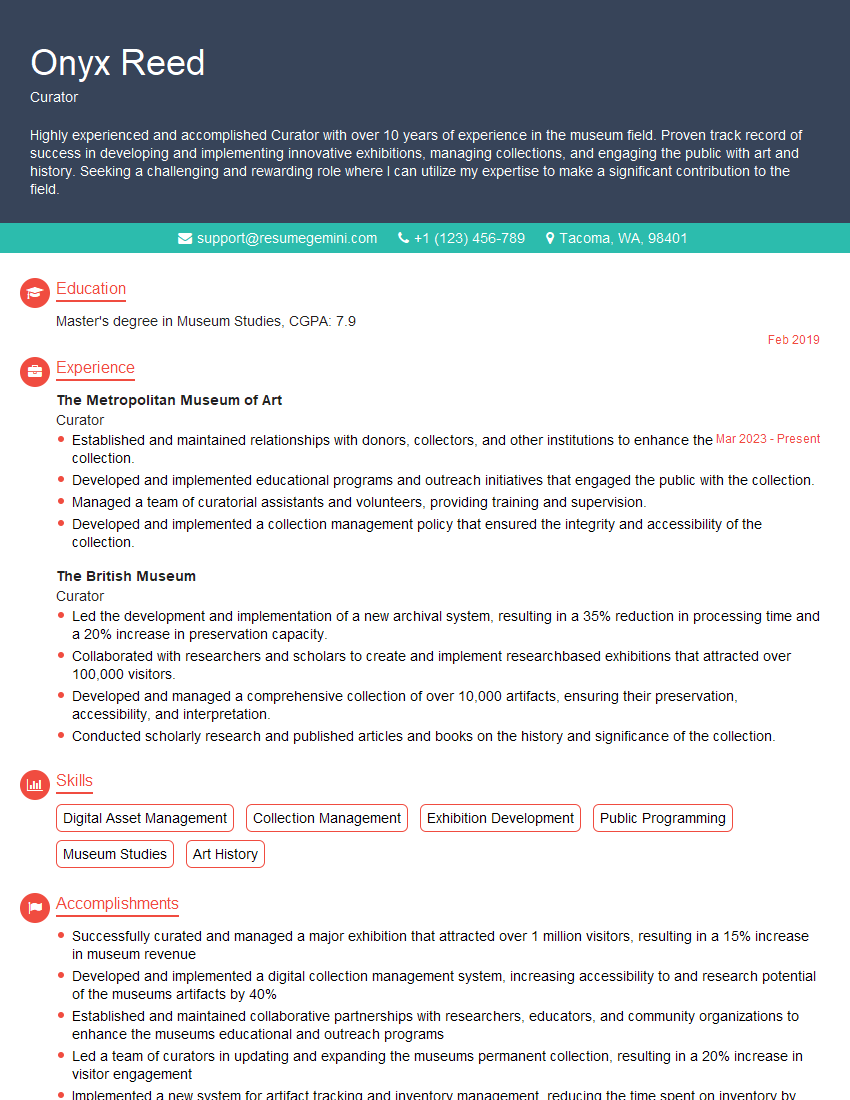
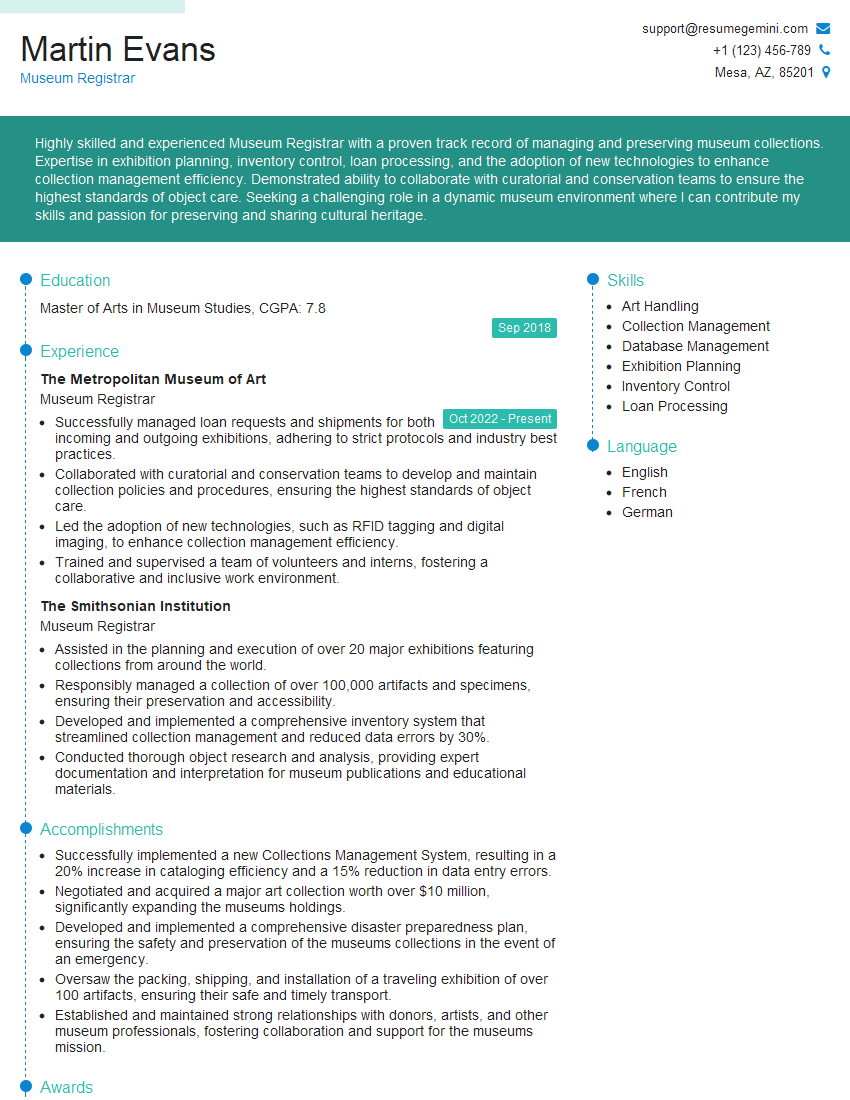
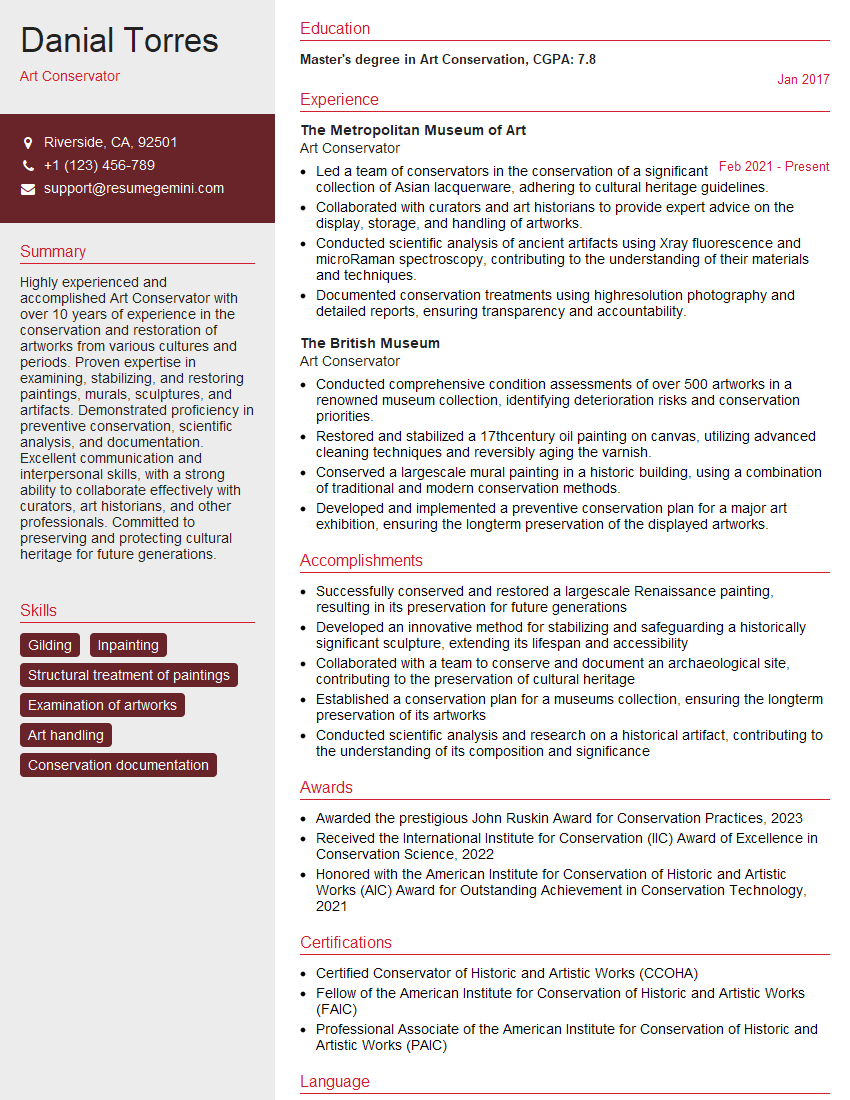
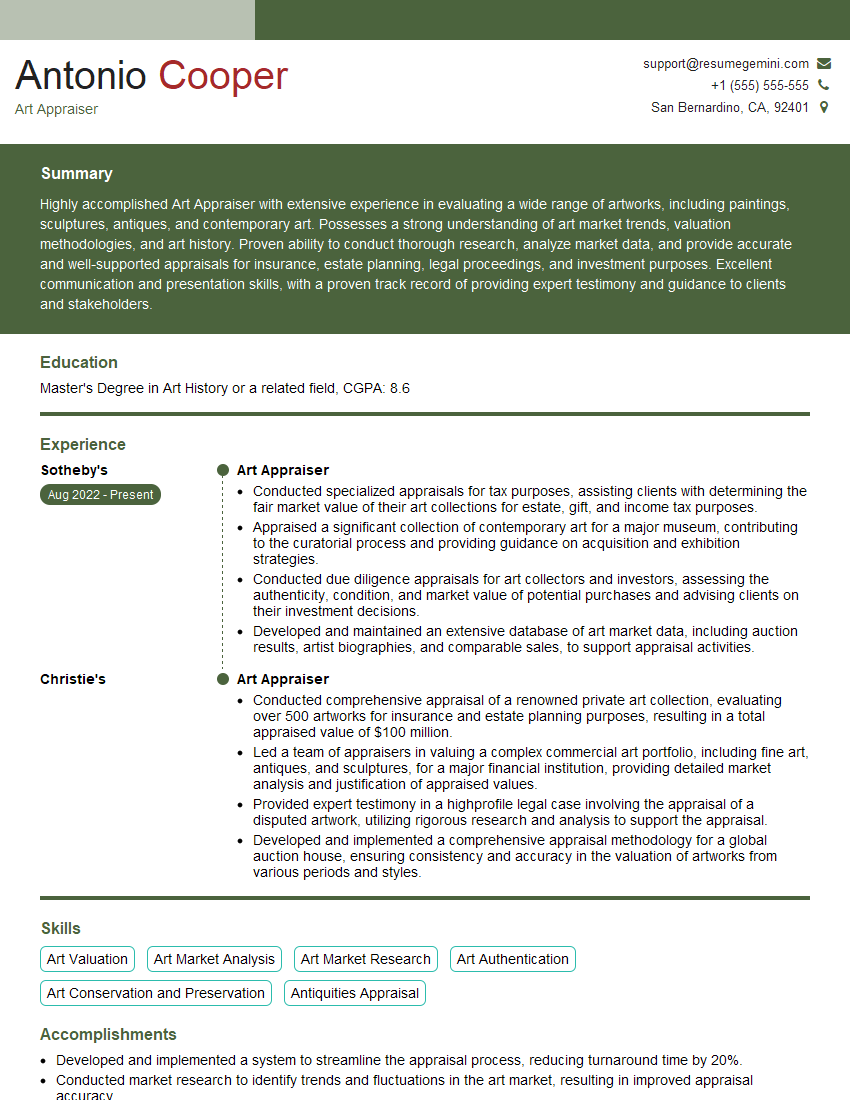
Mastering Art Authentication and Appraisal opens doors to exciting career opportunities in museums, auction houses, galleries, and private collections. A strong resume is crucial to showcasing your expertise and securing your dream role. Building an ATS-friendly resume is essential for getting past applicant tracking systems and into the hands of hiring managers. To help you create a compelling and effective resume, we recommend using ResumeGemini, a trusted resource for building professional resumes. Examples of resumes tailored to Art Authentication and Appraisal are available to guide you.
Explore more articles
Users Rating of Our Blogs
Share Your Experience
We value your feedback! Please rate our content and share your thoughts (optional).
What Readers Say About Our Blog
To the interviewgemini.com Webmaster.
Very helpful and content specific questions to help prepare me for my interview!
Thank you
To the interviewgemini.com Webmaster.
This was kind of a unique content I found around the specialized skills. Very helpful questions and good detailed answers.
Very Helpful blog, thank you Interviewgemini team.