Interviews are more than just a Q&A session—they’re a chance to prove your worth. This blog dives into essential Basic Carpentry and Masonry Skills interview questions and expert tips to help you align your answers with what hiring managers are looking for. Start preparing to shine!
Questions Asked in Basic Carpentry and Masonry Skills Interview
Q 1. What are the different types of wood commonly used in carpentry?
Choosing the right wood is crucial in carpentry, as different types offer varying properties like strength, durability, and aesthetic appeal. Here are some common types:
- Softwoods: Generally less expensive and easier to work with. Examples include Pine (common for framing and general construction due to its affordability and workability), Fir (known for its strength and is often used in structural applications), and Cedar (highly valued for its rot resistance and aromatic qualities, making it ideal for outdoor projects).
- Hardwoods: More expensive and denser than softwoods, offering superior durability and often a more attractive grain. Examples include Oak (strong, durable, and beautiful; used in furniture and flooring), Maple (hard, strong, and stable; popular for flooring and cabinetry), and Mahogany (rich color and fine grain; a prized hardwood for high-end furniture).
The choice depends heavily on the project. For example, you wouldn’t use a delicate hardwood like Mahogany for framing a house – the cost and potential waste are prohibitive. Pine would be a much more practical and cost-effective option. Conversely, for fine furniture, a hardwood like Oak or Maple would be preferred for its strength, longevity, and aesthetic value.
Q 2. Explain the process of framing a wall.
Framing a wall is a fundamental carpentry skill. It involves creating a sturdy framework that supports the wall’s sheathing and finish materials. The process typically involves these steps:
- Layout: Measure and mark the wall’s location on the floor or foundation according to the blueprints.
- Sole Plate: Install a pressure-treated sole plate (a horizontal bottom piece) directly onto the foundation or floor, ensuring it’s level and plumb (perfectly vertical).
- Studs: Erect vertical studs (typically 2x4s or 2x6s, depending on the wall’s requirements) at 16-inch or 24-inch on-center intervals. Ensure they are plumb and properly spaced using a level and measuring tape. This spacing allows for consistent placement of sheathing and insulation.
- Top Plate: Place a top plate (another horizontal piece) on top of the studs, ensuring it’s level and aligned with the sole plate. Use nails or screws to secure it firmly.
- Bracing: Add bracing to ensure wall stability, particularly in taller walls or those subject to high winds. This can involve using diagonal bracing or additional blocking between studs.
Imagine building a LEGO wall – the sole and top plates are the base and top, and the studs are the vertical bricks. Bracing adds extra support to prevent the wall from collapsing.
Q 3. Describe the different types of mortar used in masonry.
Mortar is the binding agent in masonry, holding bricks, blocks, or stones together. Different types exist, each suited for specific applications:
- Type N Mortar: A general-purpose mortar suitable for most masonry applications, including residential construction. It offers a good balance of strength, workability, and water retention.
- Type S Mortar: A higher-strength mortar than Type N, used for applications requiring greater compressive strength, such as load-bearing walls or projects in high-stress environments.
- Type M Mortar: The strongest type of mortar, used in demanding situations such as high-rise buildings or foundation walls where exceptional strength is critical. It’s less workable than other types.
- Type O Mortar: A low-strength mortar typically used for non-load-bearing applications where minimal compressive strength is required. It’s easier to work with but less durable.
Choosing the right mortar is crucial. Using Type O mortar in a load-bearing wall would be dangerous, as it wouldn’t provide the necessary strength. Conversely, using Type M mortar for a simple garden wall is overkill and unnecessary.
Q 4. How do you ensure the proper leveling of brickwork?
Proper leveling in brickwork is paramount for aesthetic appeal and structural integrity. Here’s how to achieve it:
- Establish a Level Foundation: Begin with a perfectly level foundation or base. Any unevenness will be amplified as the wall goes higher.
- Use a Level and Line: Regularly check the levelness of each course (layer) of bricks using a mason’s level. A chalk line can help establish a consistent height for each course.
- Mortar Bed: Apply a consistent thickness of mortar to the bed (the surface on which the bricks are laid). An uneven bed will result in uneven brickwork.
- Adjust Brick Placement: Gently tap bricks into place to ensure they are level and aligned with the chalk line. Don’t be afraid to remove and readjust if necessary.
- Check Plumbness: Also, check the plumbness (vertical alignment) of the wall using a plumb bob or level to prevent leaning.
Think of it like stacking coins – if the first coin isn’t level, the entire stack will be crooked. Consistent checking and adjustment are key to creating a perfectly level brick wall.
Q 5. What safety precautions are essential when using power tools?
Safety is paramount when using power tools. These precautions are essential:
- Eye Protection: Always wear safety glasses or a face shield to protect your eyes from flying debris.
- Hearing Protection: Many power tools are extremely loud. Earplugs or earmuffs are crucial to prevent hearing damage.
- Respiratory Protection: When working with materials that produce dust (like cutting wood or working with concrete), wear a dust mask to prevent inhaling harmful particles.
- Proper Clothing: Wear close-fitting clothing to prevent it from getting caught in moving parts. Avoid loose sleeves, long hair, or jewelry.
- Tool Maintenance: Ensure tools are properly maintained and sharp. A dull blade requires more force, increasing the risk of kickback or injury.
- Work Area: Maintain a clean and organized work area, free of clutter that could cause tripping or accidents.
Safety isn’t just a suggestion; it’s a necessity. A moment’s carelessness can lead to serious injury. Always prioritize safety above speed or efficiency.
Q 6. How do you read and interpret blueprints for carpentry?
Blueprints are the roadmap for any carpentry project. Reading them effectively requires understanding their conventions:
- Scales and Dimensions: Pay close attention to the scale indicated on the blueprint. This tells you how the drawing relates to the actual dimensions. Accurately measuring and transferring dimensions from the blueprint to the project is critical.
- Symbols and Notations: Familiarize yourself with standard symbols and notations used in carpentry blueprints. These symbols represent different materials, construction details, and specifications.
- Views: Blueprints often include multiple views – plan views (looking down from above), elevation views (looking at the side of a structure), and section views (showing a cross-section). Understanding how these views relate to each other is crucial.
- Details: Examine details carefully. These close-up drawings provide more information about specific components and connections.
Imagine a blueprint as a detailed recipe for a building. Understanding all the ingredients, instructions, and measurements is essential for creating the final product correctly. Take your time, be meticulous, and double-check your measurements before starting any work.
Q 7. What are the different types of concrete mixes and their applications?
Concrete mixes are categorized by their strength and intended use. The mix ratio (cement, sand, and aggregate) determines the final properties:
- High-Strength Concrete: Used for high-load-bearing applications, such as bridge supports or high-rise buildings. Requires a higher cement-to-aggregate ratio.
- Standard-Strength Concrete: Suitable for most residential and commercial applications, such as foundations, sidewalks, and driveways. Offers a good balance of strength and cost-effectiveness.
- Low-Strength Concrete: Used for applications where high strength isn’t required, such as leveling pads or paving. Uses a lower cement-to-aggregate ratio, resulting in a less expensive but weaker mix.
- Lightweight Concrete: Uses lightweight aggregates like expanded clay or shale to reduce weight, commonly used in roofs or walls.
- High-Performance Concrete: Specifically engineered for increased strength, durability, and workability, often incorporating additives to improve properties.
Choosing the appropriate mix is crucial. Using low-strength concrete for a foundation would be disastrous, leading to structural failure. High-strength concrete may be unnecessary and expensive for applications like a garden path.
Q 8. Explain the process of mixing and pouring concrete.
Mixing and pouring concrete is a fundamental process in construction. It involves combining cement, aggregates (sand and gravel), and water in precise proportions to create a strong, durable material. The process requires careful attention to detail to achieve the desired consistency and strength.
- Mixing: You can mix concrete manually using a shovel and wheelbarrow, but for larger jobs, a concrete mixer is essential. The key is to ensure all ingredients are thoroughly combined. Start by adding the dry ingredients (cement and aggregates) to the mixer, then slowly add the water while mixing continuously. The goal is to achieve a workable consistency – not too wet (which weakens it) or too dry (which makes it difficult to work with). A good mix will have a uniform colour and texture, free of dry patches or excess water.
- Pouring: Once mixed, the concrete needs to be poured into the prepared forms promptly. This often involves using shovels, wheelbarrows, or even pumps for larger projects. The concrete needs to be evenly distributed within the forms, using a vibrating tool (such as a poker vibrator) to remove air bubbles, which improves the density and strength of the final product. Proper compaction ensures uniform settling and prevents voids. After pouring, the concrete needs to be cured (kept moist) for several days to allow it to gain its full strength.
Example: When pouring a concrete foundation, you would typically use a mixer, ensure proper grading of the base, and vibrate the concrete during placement to eliminate air pockets. After pouring, covering the concrete with plastic sheeting to maintain moisture for curing is crucial.
Q 9. Describe different techniques for cutting and shaping stone.
Cutting and shaping stone is a specialized skill requiring knowledge of different stone types and appropriate tools. Techniques vary depending on the hardness and type of stone.
- Hand tools: For smaller jobs or intricate shapes, hand tools such as chisels, hammers, and mallets are used. This method requires skill and patience. Different chisels are used for various cuts; for example, a point chisel is used for making precise cuts, while a bolster chisel is better suited for rough shaping.
- Power tools: Larger projects often involve power tools like angle grinders with diamond blades. These can quickly cut through hard stones, but require safety precautions like eye protection and dust masks. Other power tools such as jackhammers can be employed for breaking larger pieces of stone.
- Water jet cutting: This modern technique uses high-pressure water jets with abrasive materials to cut intricate designs with incredible precision. It’s particularly useful for delicate or complex shapes.
Example: Shaping a granite countertop requires precision cutting and polishing. A skilled mason might use a combination of hand tools for intricate details and an angle grinder with a diamond blade for rough shaping, followed by polishing with specialized equipment.
Q 10. What are the common problems encountered in bricklaying and how are they addressed?
Bricklaying, while seemingly straightforward, presents several common challenges. Addressing these issues efficiently is crucial for a structurally sound and aesthetically pleasing wall.
- Uneven Mortar Joints: Inconsistent mortar joints compromise the wall’s appearance and structural integrity. Using a proper mortar tool and consistent technique is key. Regularly check the joint thickness with a gauge to maintain uniformity.
- Leaning or Bowed Walls: This is usually due to inconsistent foundations or poor bricklaying technique. Using a level frequently and ensuring the foundation is level are preventative measures. If the wall is already bowed, corrective measures might include shoring up the wall and then carefully reconstructing affected sections.
- Cracks in the Mortar: Cracks can be caused by improper mixing of mortar, poor curing, or movement in the foundation. Using high-quality mortar and adequate curing helps. Severe cracks might require repairing and possibly addressing underlying foundation issues.
- Insufficient Bond Strength: The bricks need a good bond to the mortar for structural integrity. This is achieved with proper laying technique and appropriate mortar consistency. If the bond is weak, the wall is susceptible to failure.
Example: A bowed wall can be addressed by identifying the point of maximum deflection. Supporting the wall with temporary shoring before careful removal and relaying of the affected bricks allows for a structural repair.
Q 11. How do you measure and cut lumber accurately?
Accurate measurement and cutting of lumber is fundamental to carpentry. This involves using the right tools and techniques to ensure the final product meets specifications.
- Measuring: Always measure twice before cutting once! Use a measuring tape to accurately determine the required length. For longer pieces, consider using a longer tape measure or a chalk line to ensure accuracy.
- Marking: Clearly mark the cut line with a pencil. Make sure the mark is precise and easy to see. Use a marking gauge for repetitive cuts.
- Cutting: The appropriate saw should be selected based on the wood type and desired cut. Hand saws are great for precise cuts while power saws like miter saws or circular saws are used for quicker cuts on larger projects.
- Safety First: Always wear safety glasses when using any saw. For power saws, ensure the workpiece is securely clamped to avoid kickback.
Example: When cutting a 2×4 for a stud in a wall frame, use a measuring tape to get the exact length, mark the cut line clearly with a pencil, and make the cut using a mitre saw or a hand saw with a sharp blade. Make sure the cuts are square to maintain the structural integrity of the wall framing.
Q 12. What are the different types of joints used in woodworking?
Wood joints are crucial for the strength, durability, and aesthetic appeal of woodworking projects. Many types exist, each suited for different applications. Here are some common examples:
- Butt Joint: The simplest joint, where two pieces of wood meet end-to-end. It’s inherently weak and often requires additional support like glue and screws or dowels.
- Miter Joint: Two pieces are cut at angles (typically 45 degrees) and joined to form a corner. Ideal for frames and picture frames but requires precise angles for a strong, clean fit.
- Lap Joint: One piece of wood overlaps the other, creating a stronger joint than a butt joint. Several variations exist, including half-lap, quarter-lap, and mitered lap joints.
- Dovetail Joint: A strong and visually appealing joint, formed by interlocking “tails” and “pins” cut into the ends of the wood. Difficult to make but creates exceptional strength.
- Mortise and Tenon Joint: A strong joint where a tenon (a projection) on one piece fits into a mortise (a hole) in the other. Used extensively in furniture making.
Example: A sturdy table leg might use a mortise and tenon joint to connect it to the table apron, ensuring strong and stable support, while a picture frame often uses a miter joint to create a neat, visually pleasing corner.
Q 13. Explain the importance of proper scaffolding safety.
Scaffolding safety is paramount in construction. Falls from height are a leading cause of injuries, so understanding and implementing safety measures is critical.
- Proper Erection and Dismantling: Scaffolding should be erected according to manufacturer instructions and local regulations. Each level should be checked for stability before use. Dismantling should be done carefully and in reverse order of assembly.
- Safe Working Load: Never exceed the scaffolding’s safe working load, as indicated by the manufacturer. This considers the weight of the materials and workers.
- Guardrails and Toe Boards: These prevent falls from the scaffolding platform. Ensure they are properly installed and maintained.
- Personal Protective Equipment (PPE): Workers should always wear safety harnesses, hard hats, and appropriate footwear when working at height. Fall arrest systems are recommended.
- Regular Inspection: Scaffolding should be inspected regularly for any signs of damage or instability before and during use. Damaged components should be immediately replaced.
Example: Before using any scaffolding, a thorough inspection should be carried out. All components should be securely fastened, and a level should be used to check for stability. Guardrails, toe boards, and fall protection systems should be in place. Workers should be trained in the safe use of scaffolding.
Q 14. Describe the process of installing drywall.
Drywall installation is a crucial step in interior finishing. It involves attaching large sheets of gypsum board to wall or ceiling framing. Proper techniques ensure a smooth, finished surface.
- Framing Preparation: Ensure the framing is straight and plumb. Any unevenness will show through the finished drywall.
- Cutting Drywall: Use a utility knife and straight edge to score the drywall before snapping it to ensure clean, straight cuts. Measure carefully to minimize waste.
- Fastening: Drywall is typically attached to the framing using drywall screws. These should be spaced approximately every 6-8 inches, and slightly countersunk to allow for joint compound.
- Taping and Mudding: This process involves applying joint compound (also known as mud) over the seams and screw heads to create a smooth surface. This usually requires multiple coats, sanding between each, to achieve a flawless finish. Special tape is used to reinforce the joints.
- Priming and Painting: After the mudding and sanding are complete, a primer is applied to seal the surface before painting.
Example: When installing drywall on a wall, ensure the studs are plumb using a level. Cut the drywall sheets to size using a utility knife and straight edge, ensuring the cuts are neat and straight. Fasten with screws and then apply tape to the joints before mudding, sanding and priming for painting. Each step of the process is important for a clean and professional finish.
Q 15. How do you troubleshoot common problems with power tools?
Troubleshooting power tools starts with safety! Always disconnect the power source before attempting any repairs. Common issues often stem from simple problems. For example, a saw that won’t start might have a tripped breaker or a faulty cord. I’d first check the power supply and the cord for any damage. If the cord looks fine, I’d examine the tool’s power switch and look for any debris obstructing it. A drill that’s running slow might have a worn-out carbon brush; replacing them usually resolves this.
More complex issues may involve internal mechanical problems, like a jammed motor or broken gears. For these, a visual inspection might help pinpoint the problem, but often, a consultation with a repair specialist or referring to the tool’s manual is necessary. I always keep a detailed record of maintenance and repairs for each tool – that helps with tracking down recurring issues and ensures warranty claims can be easily addressed.
For example, once I was working on a renovation and my circular saw suddenly stopped mid-cut. After checking the power, I found a small piece of wood lodged in the blade guard, jamming the mechanism. A quick removal solved the issue! But a different time, my nail gun started misfiring – that needed a professional repair because of a problem with the internal firing mechanism.
Career Expert Tips:
- Ace those interviews! Prepare effectively by reviewing the Top 50 Most Common Interview Questions on ResumeGemini.
- Navigate your job search with confidence! Explore a wide range of Career Tips on ResumeGemini. Learn about common challenges and recommendations to overcome them.
- Craft the perfect resume! Master the Art of Resume Writing with ResumeGemini’s guide. Showcase your unique qualifications and achievements effectively.
- Don’t miss out on holiday savings! Build your dream resume with ResumeGemini’s ATS optimized templates.
Q 16. What is the importance of maintaining your tools?
Maintaining your tools is crucial for safety, efficiency, and longevity. Think of it like this: a well-maintained tool is a precision instrument, just like a finely tuned car. Regular cleaning removes dust and debris that can clog mechanisms, causing malfunctions or even accidents. Lubrication keeps moving parts smooth and prevents premature wear and tear. Sharpening blades ensures clean cuts and prevents damage to materials. Regular inspections help detect minor problems before they become major, expensive repairs.
For instance, I always clean my saws after each use, removing sawdust and debris. I lubricate the moving parts of my drills and impact drivers periodically. Keeping my tools in a well-organized, dry storage area is also a major part of my maintenance routine. Neglecting this can lead to rust, corrosion, and ultimately, the need to replace expensive equipment much sooner than necessary.
Q 17. How do you handle different types of concrete finishes?
Concrete finishes are diverse, each offering a unique look and functionality.
- Broomed Finish: Created by brushing the concrete surface while it’s still wet, providing a textured, slip-resistant finish. This is perfect for driveways and patios.
- Troweled Finish: Achieved by smoothing the surface with a trowel, resulting in a smooth, polished appearance. It’s suitable for interior floors and countertops.
- Stamped Finish: Imprinting patterns onto the wet concrete using stamps, creating decorative designs. Popular for patios and walkways.
- Exposed Aggregate Finish: Washing away the cement paste from the surface reveals the aggregate, resulting in a rugged, textured look. Often used for walkways and driveways.
Q 18. Explain the process of waterproofing a brick structure.
Waterproofing a brick structure is essential to prevent water damage and maintain its structural integrity. The process involves several steps, starting with a thorough inspection to identify any cracks or gaps. These are typically repaired using appropriate mortars or sealants. A waterproofing membrane is then applied to the exterior walls; this can be a liquid-applied membrane or a sheet membrane, depending on the project’s specifics and the level of protection required. Proper flashing around windows and doors is crucial to divert water away from the structure. Finally, the brickwork might require a sealant to protect it from moisture penetration.
For example, I once worked on a historic building where we used a breathable membrane to allow moisture vapor to escape while preventing water ingress. This prevented damage to the underlying brickwork while preserving the building’s historic character. It’s important to choose the right waterproofing materials for the climate and the type of brick used. For example, a highly porous brick would need a different treatment than a dense, fired brick.
Q 19. What are the different types of bricks and their uses?
Bricks come in a variety of types, each with unique properties and applications.
- Common Bricks: The most widely used, offering good strength and durability for general construction.
- Facing Bricks: Specifically designed for aesthetic appeal, they’re available in various colors and textures and are often used for exterior walls.
- Engineering Bricks: High-strength bricks used in load-bearing applications where exceptional durability is crucial.
- Clay Bricks: Made from clay fired in a kiln, they offer good strength, durability, and thermal insulation.
- Concrete Bricks: Manufactured from concrete, they are strong and versatile, commonly used in both residential and commercial constructions.
Q 20. Describe the different types of stone and their applications in masonry.
Stone offers a wide range of options for masonry work.
- Granite: Extremely durable and resistant to weathering, granite is ideal for exterior cladding and paving.
- Marble: Known for its elegant appearance and smooth texture, marble is often used for interior applications, like flooring and countertops.
- Limestone: A versatile stone suitable for both interior and exterior uses. Its porous nature may require sealing.
- Sandstone: A relatively soft stone, often used for decorative features and architectural details.
- Slate: Known for its durability and ability to split into thin sheets, slate is often used for roofing and flooring.
Q 21. How do you estimate materials needed for a carpentry project?
Estimating materials for a carpentry project involves a systematic approach. First, detailed plans and measurements are crucial. I’d carefully measure each component, accounting for waste and overages. Then, I’d calculate the quantity of each material needed, such as lumber, fasteners, and adhesives. Software or spreadsheets can be immensely helpful here. For instance, if I’m building a deck, I’d calculate the total board feet needed for the decking, joists, and supports, adding extra for potential defects or cutting mistakes. I’d also factor in the number of screws, nails, and any additional materials such as stain or sealant.
Experience plays a vital role in accurate estimation. Knowing typical waste factors for different materials helps avoid over-ordering and unnecessary costs. I regularly review my past projects, analyzing material usage to refine my estimations over time. This iterative process continually improves the precision of my material calculations, leading to reduced waste and cost savings on future projects.
Q 22. How do you estimate materials needed for a masonry project?
Estimating materials for a masonry project requires careful planning and precise calculations. It’s not just about adding up bricks; it involves considering waste, breakage, and the specific project requirements.
- Determine the volume: First, you need the precise dimensions of the structure – length, width, and height. For example, a 10ft x 5ft x 1ft retaining wall has a volume of 50 cubic feet.
- Calculate the quantity per unit: Next, find out the volume of a single masonry unit (brick, block etc.). A standard brick might be approximately 0.16 cubic feet.
- Account for waste and breakage: Realistically, some materials will be broken or wasted during the project. A 5-10% waste factor is usually added, depending on the complexity and the skill level of the mason.
- Consider mortar: Mortar takes up volume between units. The ratio of mortar to brick varies depending on the type of brick and construction style.
- Add extra: Always have a little extra material on hand – a safety buffer. This avoids delays if there are problems or unforeseen needs.
Example: For our 50 cubic foot retaining wall, and using bricks with a volume of 0.16 cubic feet, we need 50/0.16 = 312.5 bricks. Adding a 10% waste factor (31.25 bricks), we’d order approximately 344 bricks. Mortar needs are calculated separately based on the volume of the mortar joints.
Q 23. What are the building codes and regulations relevant to carpentry?
Building codes and regulations for carpentry vary by location but generally cover aspects like structural integrity, fire safety, and accessibility. Key areas include:
- Structural Load Capacity: Framing must be designed to withstand anticipated loads (snow, wind, weight of the building itself). Codes specify allowable stresses for different wood species and sizes.
- Fire Resistance: Codes often mandate fire-resistant materials (fire-retardant treated lumber, specific spacing for framing) to prevent fire spread.
- Fastener Requirements: Specific types and numbers of nails, screws, and bolts are mandated for various structural components. This ensures adequate connection strength.
- Accessibility: Codes address accessibility requirements for people with disabilities, including ramp slopes, door widths, and handrail placement.
- Energy Efficiency: Increasingly, codes address insulation requirements in walls, roofs, and floors, to meet energy-efficiency standards.
Example: The International Building Code (IBC) is a widely adopted model code which provides detailed specifications for many carpentry aspects. Non-compliance can result in significant delays and penalties.
Q 24. What are the building codes and regulations relevant to masonry?
Masonry building codes focus on structural stability, strength, and durability. They cover aspects like:
- Mortar Specifications: Codes define the type and strength of mortar suitable for different applications, brick types, and climates.
- Wall Thickness and Height: Minimum wall thicknesses are specified based on the height, load bearing requirements, and location (wind zones).
- Reinforcement: Codes specify when and how to use reinforcement (steel bars) within masonry walls, particularly for load-bearing applications or seismic zones.
- Bonding Patterns: Codes often regulate the pattern in which bricks or blocks are laid (e.g., running bond, English bond) to ensure adequate strength and stability.
- Lintel and Sill requirements: Proper sizing and support of openings are required to maintain structural integrity.
Example: If building a retaining wall, the code will specify the minimum thickness required based on its height and the type of soil. Failure to comply can lead to structural failure.
Q 25. Explain the importance of proper site cleanup and safety procedures.
Proper site cleanup and safety procedures are critical for several reasons:
- Prevent Accidents: A clean site reduces trip hazards (nails, tools, debris), preventing injuries.
- Maintain Efficiency: A cluttered work area slows down work and makes it more difficult for workers to find tools and materials.
- Protect Materials: Proper storage prevents materials from being damaged by weather or theft.
- Environmental Protection: Safe disposal of waste prevents environmental contamination.
- Professionalism: A clean and organized job site reflects professionalism and commitment to the client.
Example: At the end of each workday, all tools should be put away, debris should be removed, and materials covered or stored appropriately. Personal Protective Equipment (PPE) such as safety glasses, gloves, and hard hats, should be used at all times.
Q 26. How do you deal with unexpected problems on a job site?
Dealing with unexpected problems on a job site is a routine part of construction. My approach involves:
- Assessment: First, calmly assess the problem’s nature and extent. Take pictures or videos for documentation.
- Communication: Inform the supervisor or client about the issue, providing a clear and concise explanation.
- Problem-solving: Brainstorm possible solutions, weighing their feasibility and impact. Consult with colleagues or experts if necessary.
- Implementation: Implement the chosen solution, ensuring it complies with safety and building codes.
- Documentation: Document all actions taken, including modifications to the plan, extra materials needed, and time spent resolving the problem.
Example: If I discover rotted wood during framing, I wouldn’t just proceed. I’d assess the damage, discuss it with the supervisor, propose replacement options, and get approval before continuing.
Q 27. Describe your experience working with different types of building materials.
My experience includes working with a wide range of building materials, including:
- Wood: Various species of lumber, plywood, engineered wood products (LVL, OSB).
- Masonry: Different types of bricks, concrete blocks, stones, and mortar.
- Concrete: Ready-mix concrete, and various admixtures.
- Metals: Steel, aluminum, and galvanized steel for framing, reinforcement, and accessories.
- Insulation: Fiberglass, cellulose, foam insulation.
I understand the properties and limitations of each material and can select the appropriate material for a given application. For example, I know that pressure-treated lumber is essential for ground contact applications to prevent rot.
Q 28. What is your experience with using hand tools and power tools?
I’m proficient in using a wide variety of both hand and power tools. My hand tool experience includes:
- Measuring tools (tapes, squares, levels)
- Cutting tools (saws, chisels, planes)
- Fastening tools (hammers, mallets)
- Other hand tools (trowels, screwdrivers)
My power tool experience includes:
- Circular saws, miter saws, jigsaws
- Drills, impact drivers
- Routers
- Grinders, sanders
- Concrete mixers, brick saws
I prioritize safety when using any tool and always follow manufacturer instructions. Regular maintenance is critical for keeping tools in optimal working condition.
Key Topics to Learn for Basic Carpentry and Masonry Skills Interview
- Carpentry: Measuring and Cutting Lumber: Understanding different measuring techniques, using hand and power saws accurately, and calculating material needs for projects.
- Carpentry: Basic Joinery Techniques: Practical application of joints like butt joints, lap joints, and dado joints; understanding their strengths and weaknesses in different applications.
- Carpentry: Framing and Construction: Knowledge of basic framing techniques for walls, floors, and roofs; understanding load-bearing principles and building codes.
- Masonry: Mortar Mixing and Application: Understanding different mortar types and their uses; proper mixing techniques for achieving desired consistency; applying mortar effectively for various masonry units.
- Masonry: Bricklaying Techniques: Practical experience with laying bricks, understanding bond patterns (running bond, common bond, etc.), and ensuring structural integrity.
- Masonry: Blocklaying Techniques: Similar to bricklaying, but focusing on the techniques specific to concrete blocks; understanding different block types and their applications.
- Safety Procedures: Understanding and adhering to relevant safety regulations and procedures for both carpentry and masonry work, including proper use of personal protective equipment (PPE).
- Problem-Solving & Troubleshooting: Demonstrating the ability to identify and resolve common issues encountered during carpentry and masonry projects, such as uneven surfaces, inaccurate measurements, or material defects.
- Tool Knowledge & Maintenance: Familiarity with common hand and power tools used in carpentry and masonry, as well as their proper maintenance and safe operation.
Next Steps
Mastering basic carpentry and masonry skills opens doors to a wide range of rewarding careers in construction, renovation, and home improvement. These skills are highly valued, offering excellent job security and growth potential. To maximize your chances of landing your dream job, it’s crucial to present your qualifications effectively. Creating an ATS-friendly resume is essential for getting your application noticed by recruiters and hiring managers. We highly recommend using ResumeGemini to build a professional and impactful resume that showcases your skills and experience. ResumeGemini provides valuable tools and resources, including examples of resumes tailored specifically to Basic Carpentry and Masonry Skills, to help you stand out from the competition.
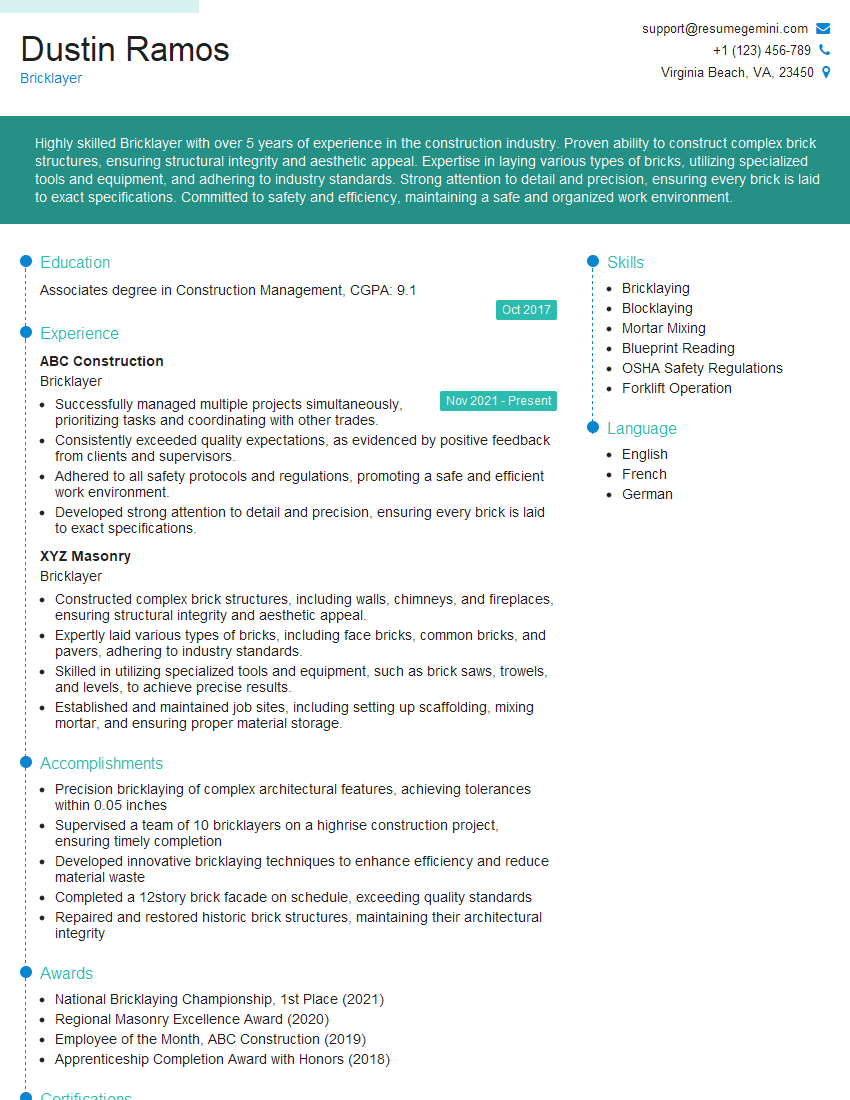
Bricklayer Resume Sample
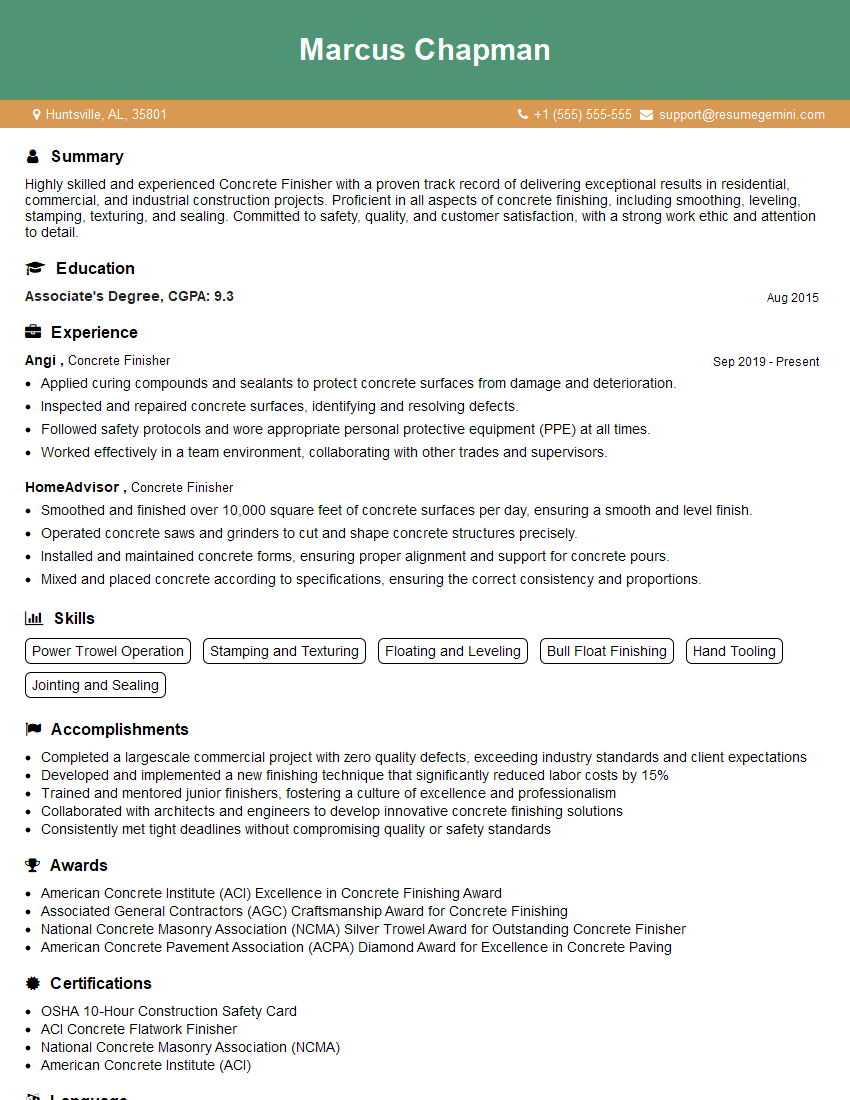
Concrete Finisher Resume Sample
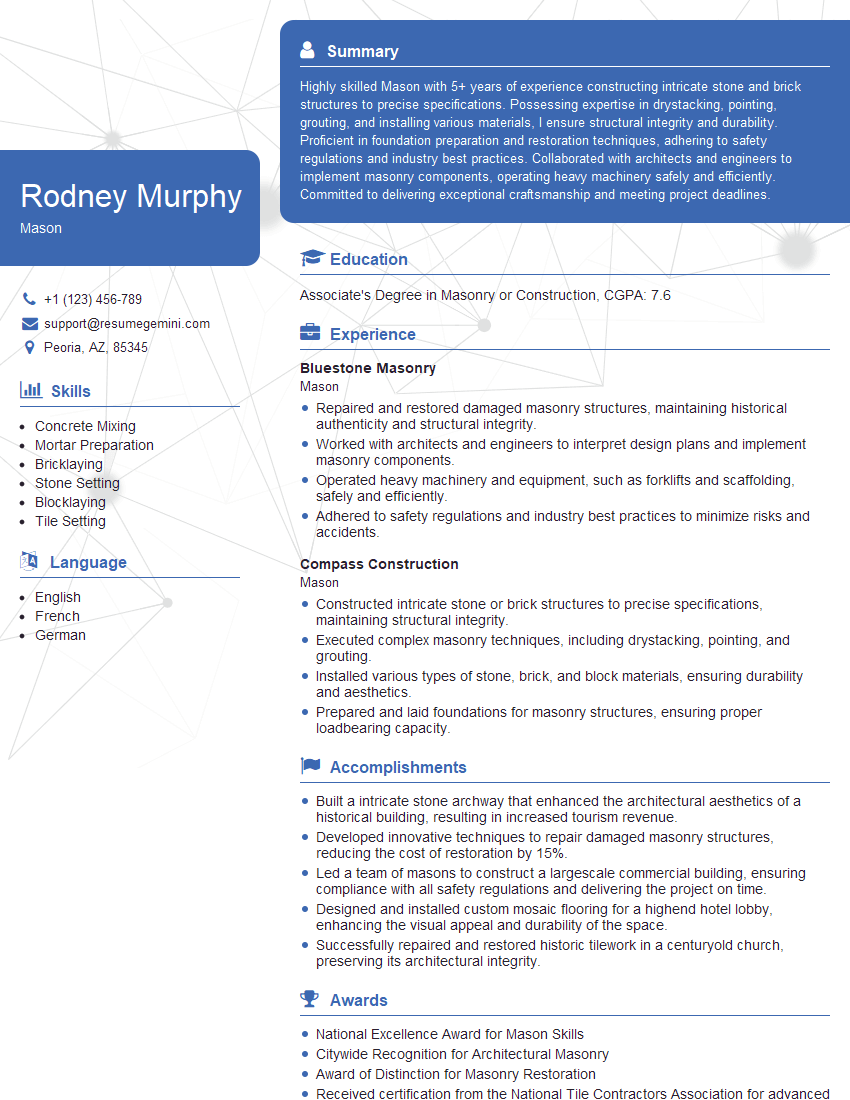
Mason Resume Sample
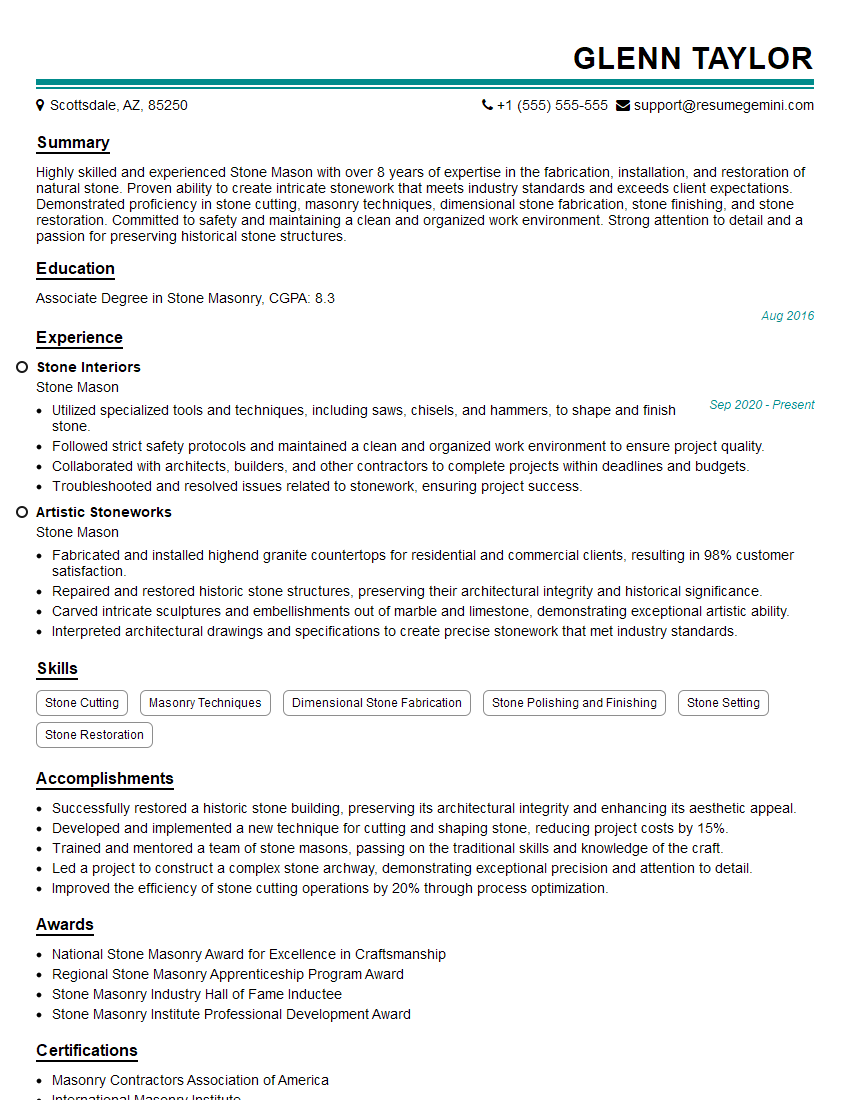
Stone Mason Resume Sample
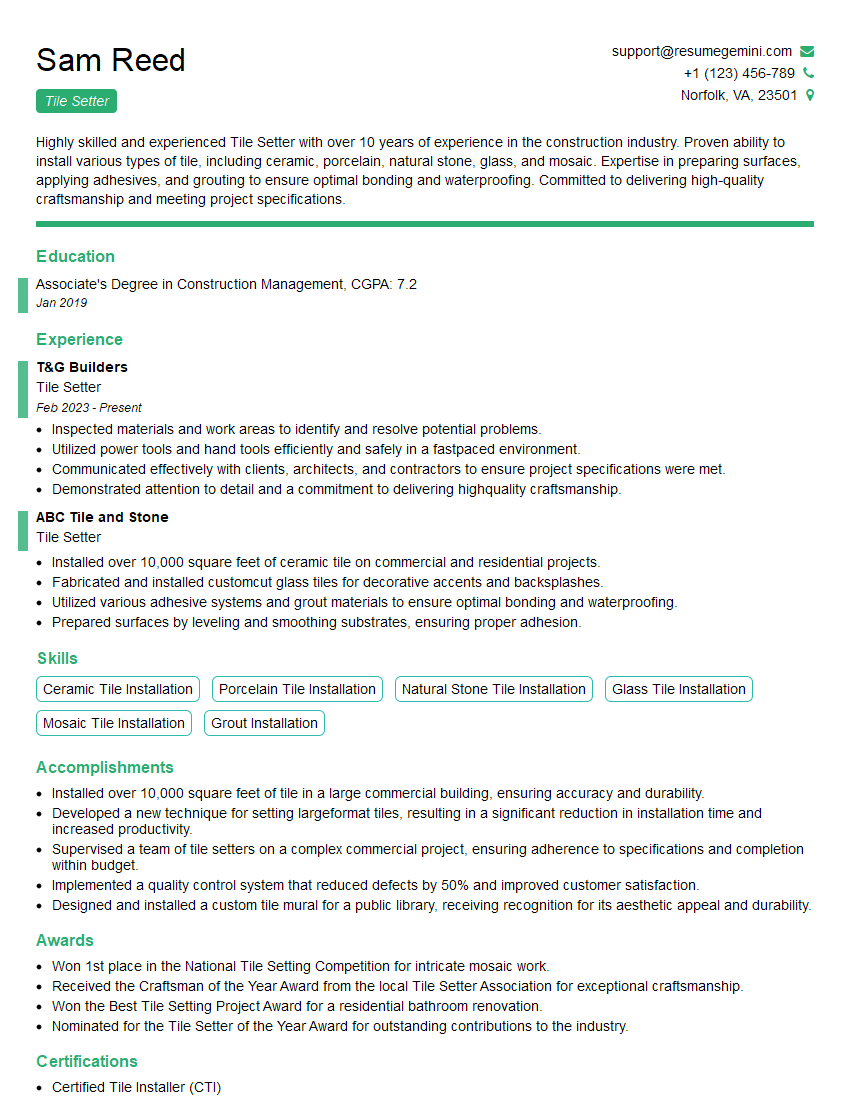
Tile Setter Resume Sample
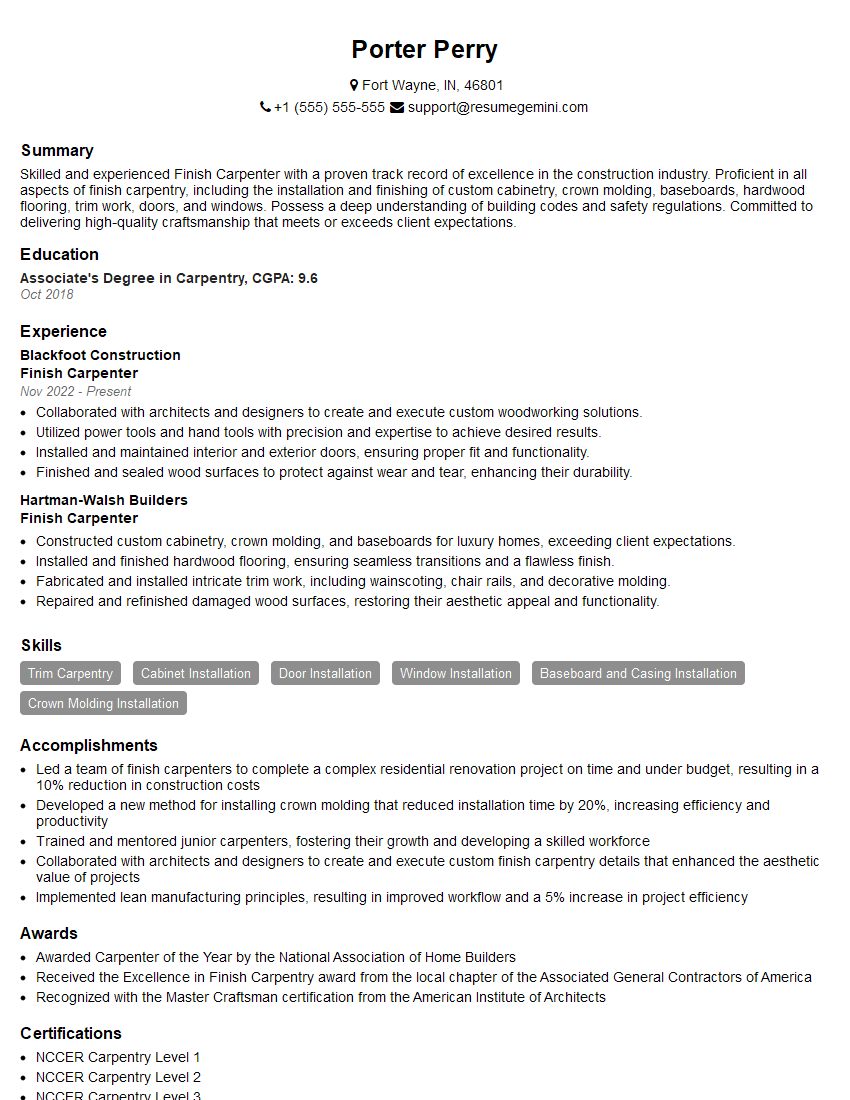
Finish Carpenter Resume Sample
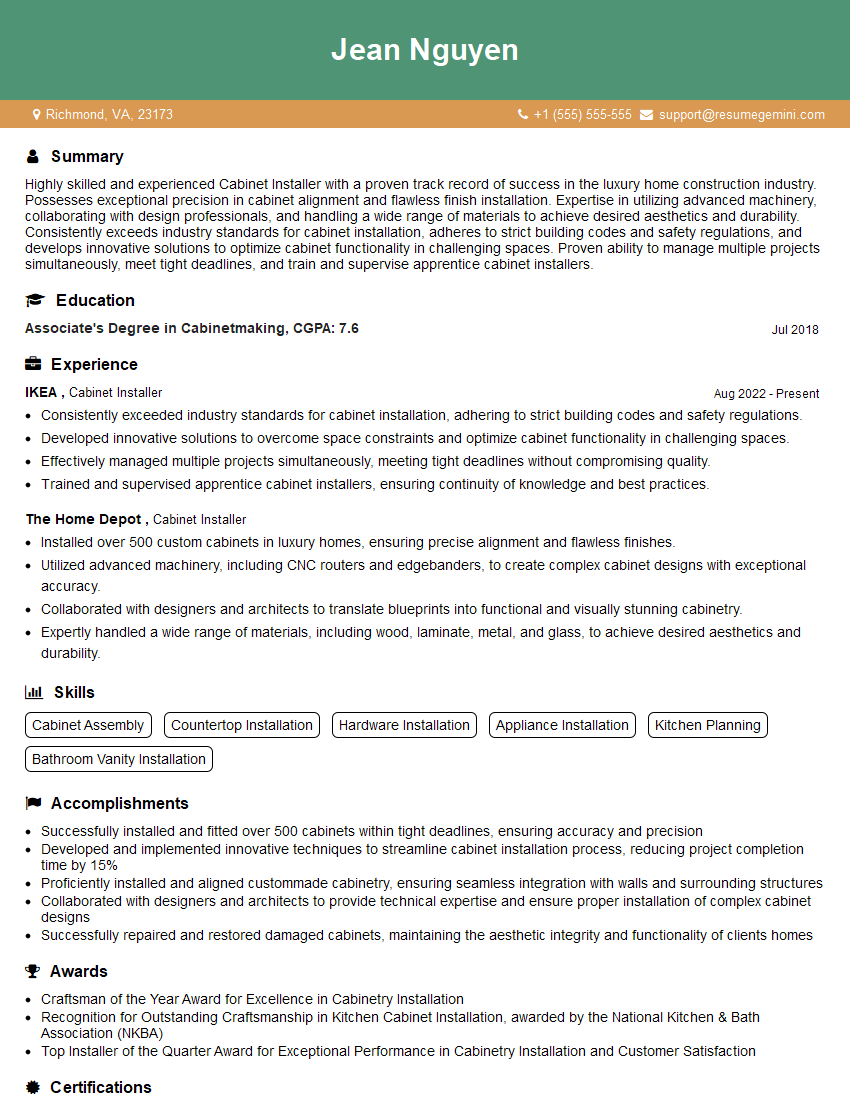
Cabinet Installer Resume Sample
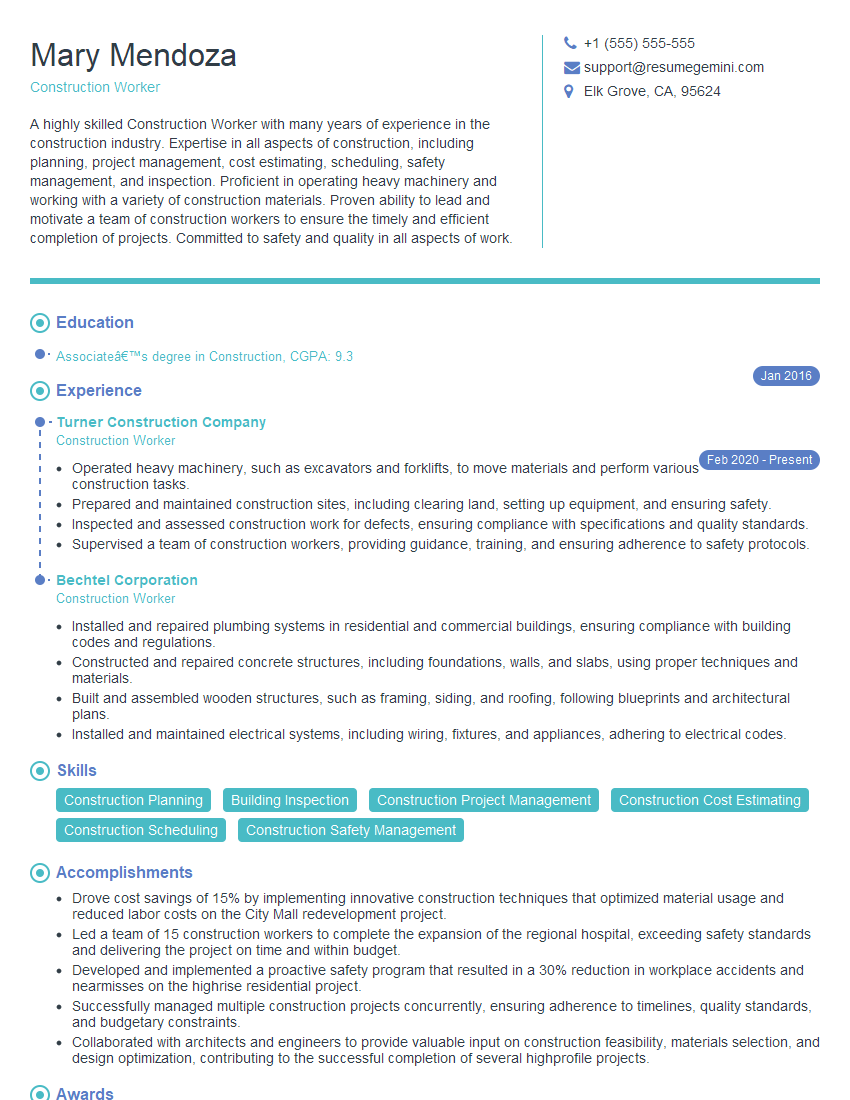
Construction Worker Resume Sample
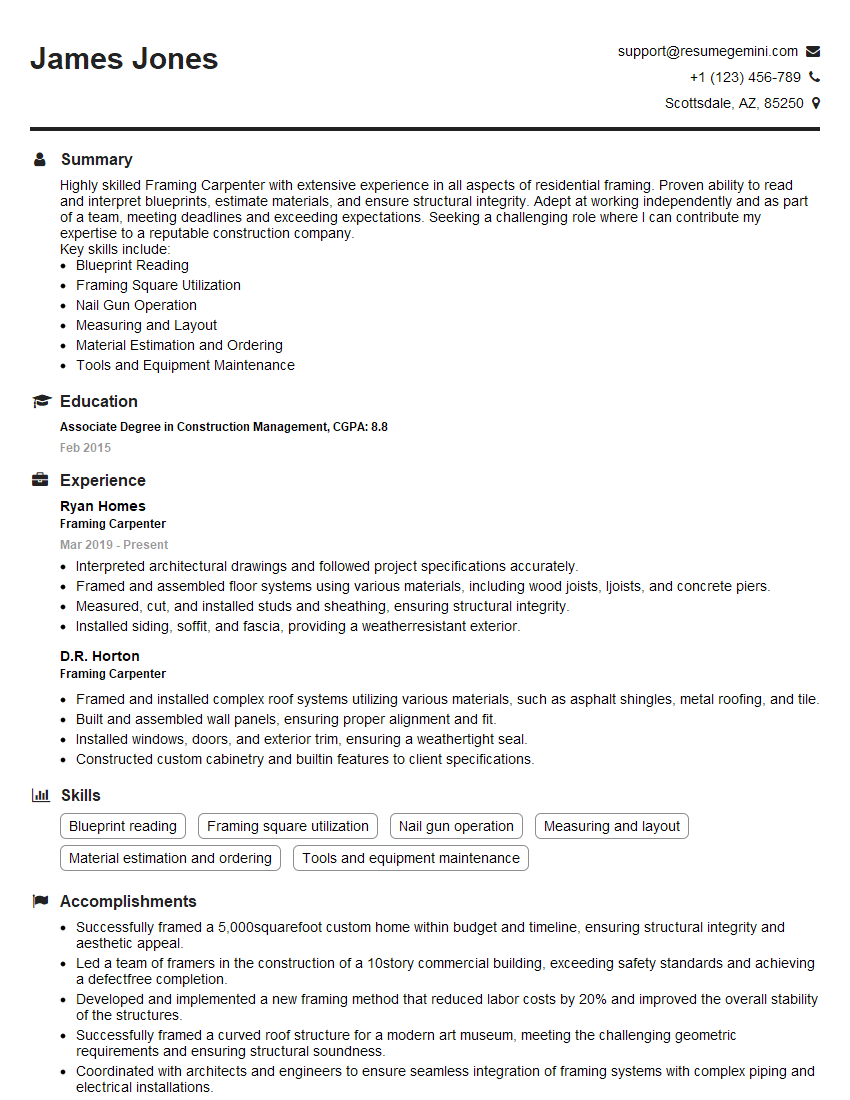
Framing Carpenter Resume Sample
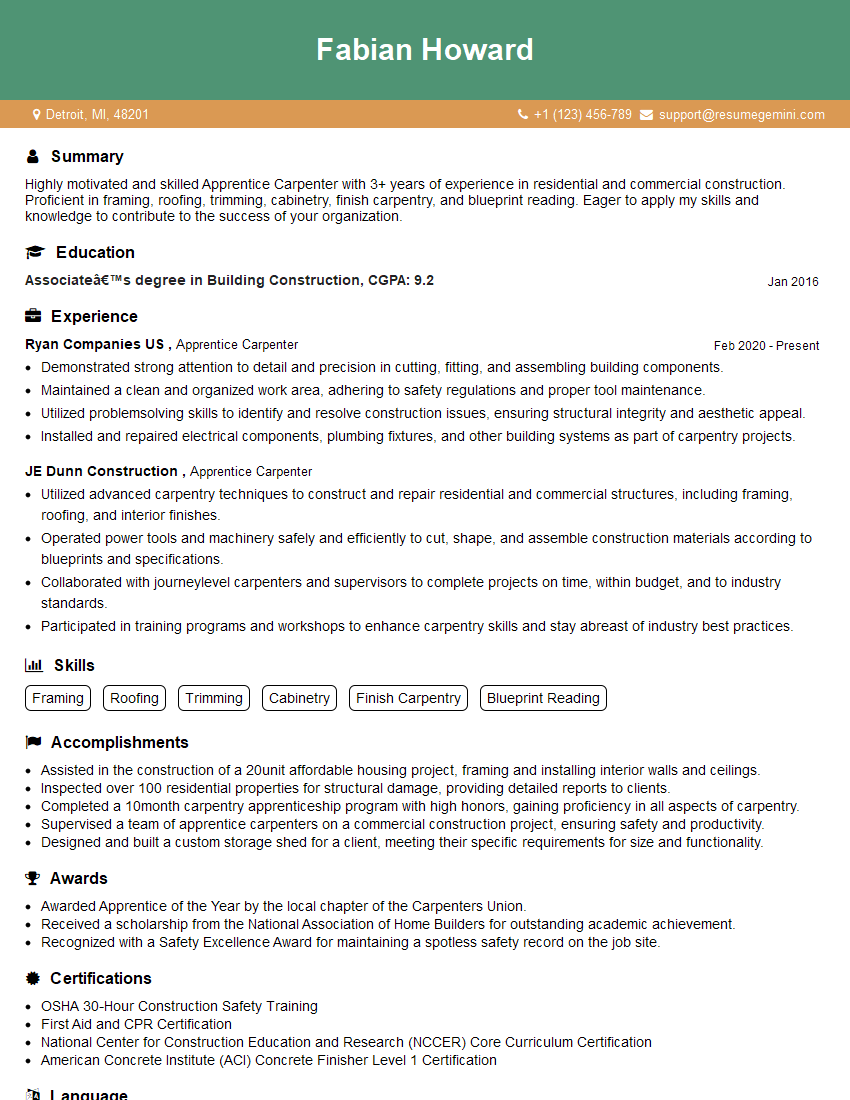
Apprentice Carpenter Resume Sample
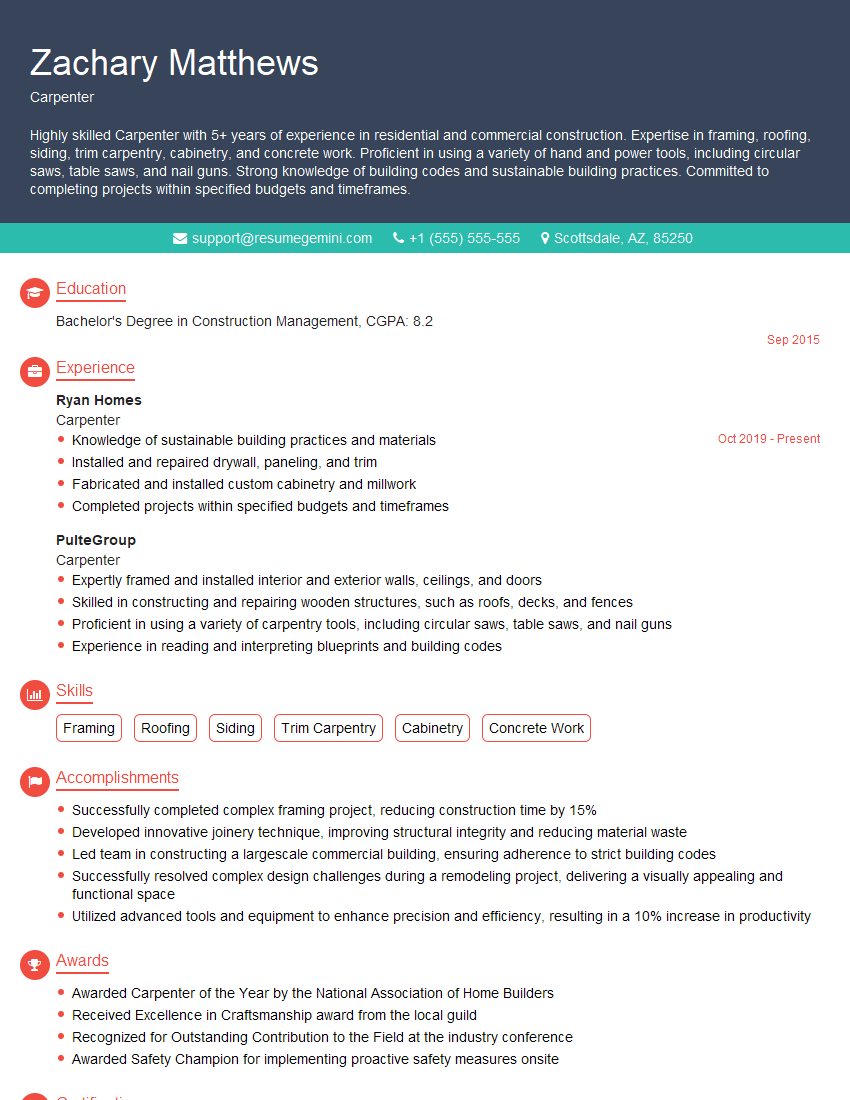
Carpenter Resume Sample
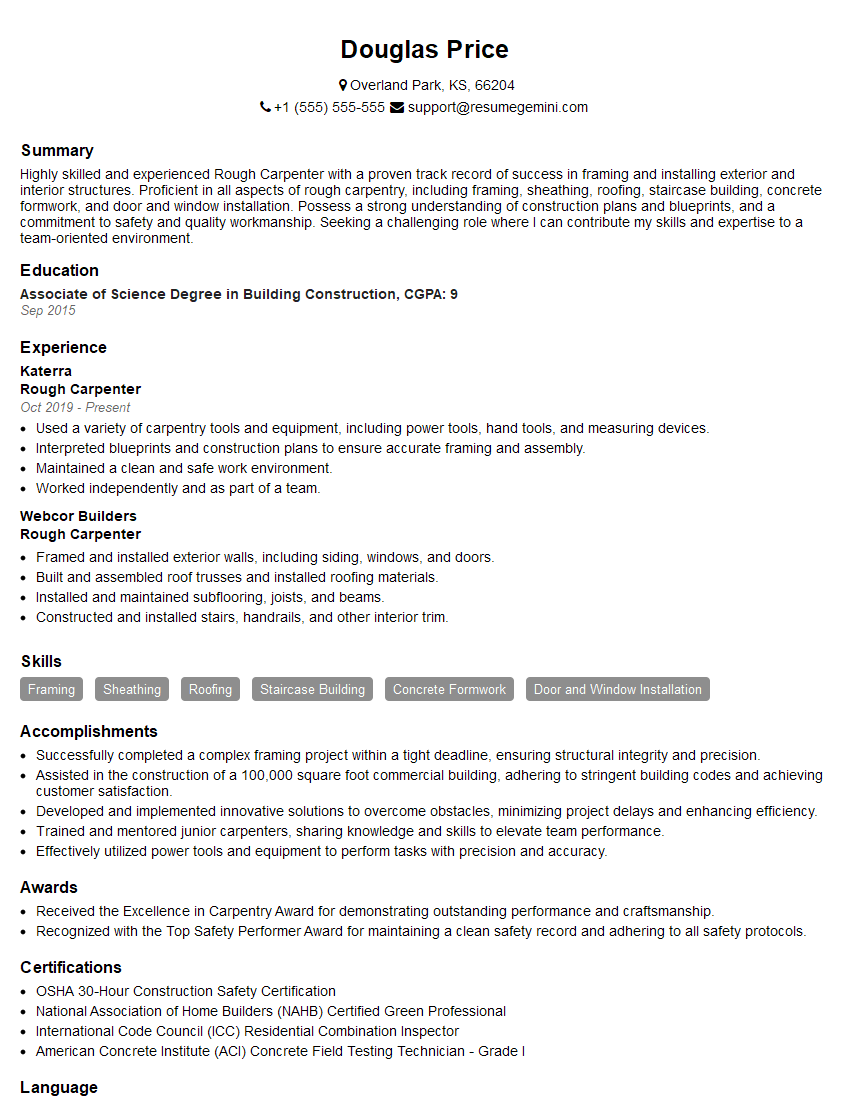
Rough Carpenter Resume Sample
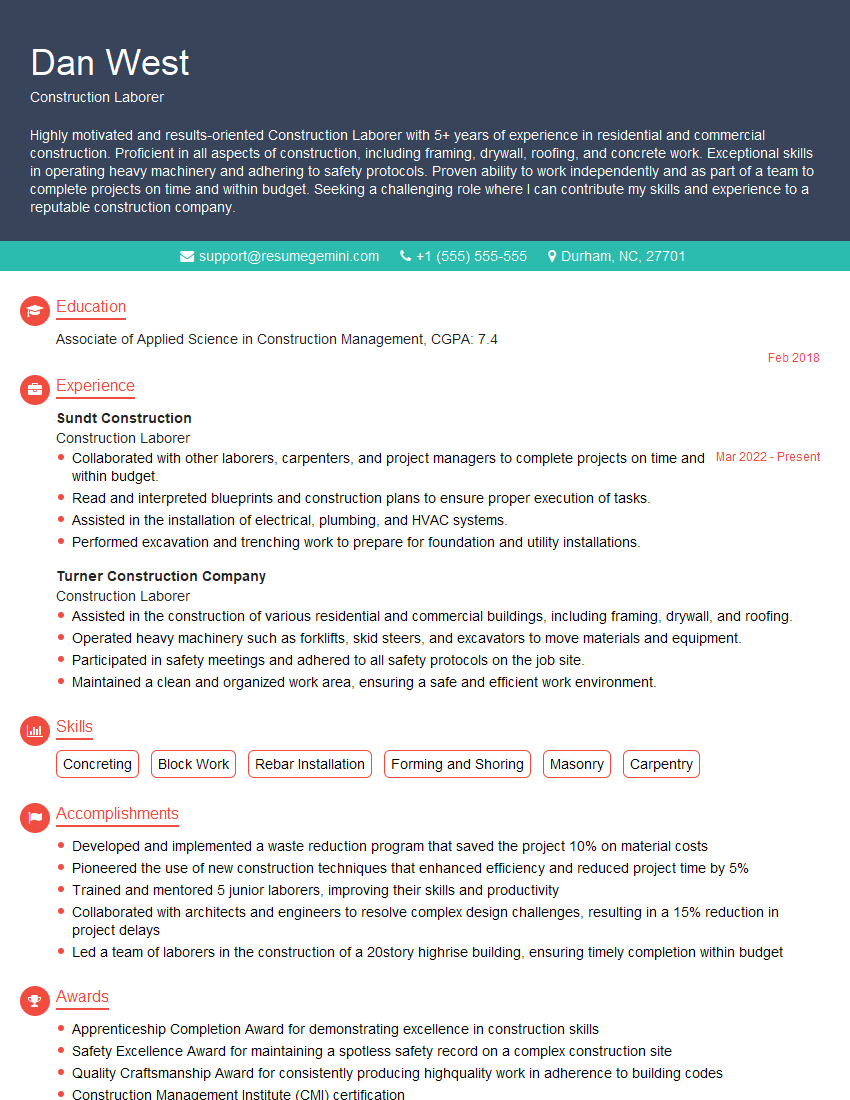
Construction Laborer Resume Sample
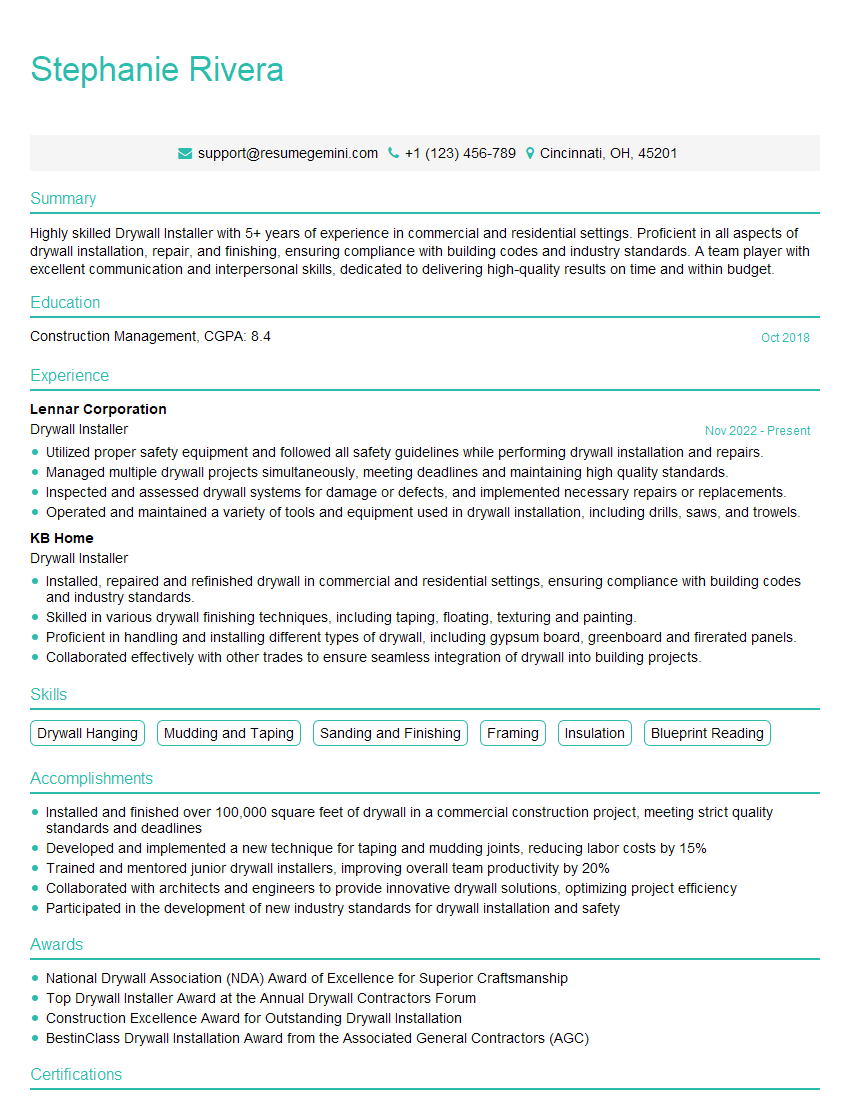
Drywall Installer Resume Sample
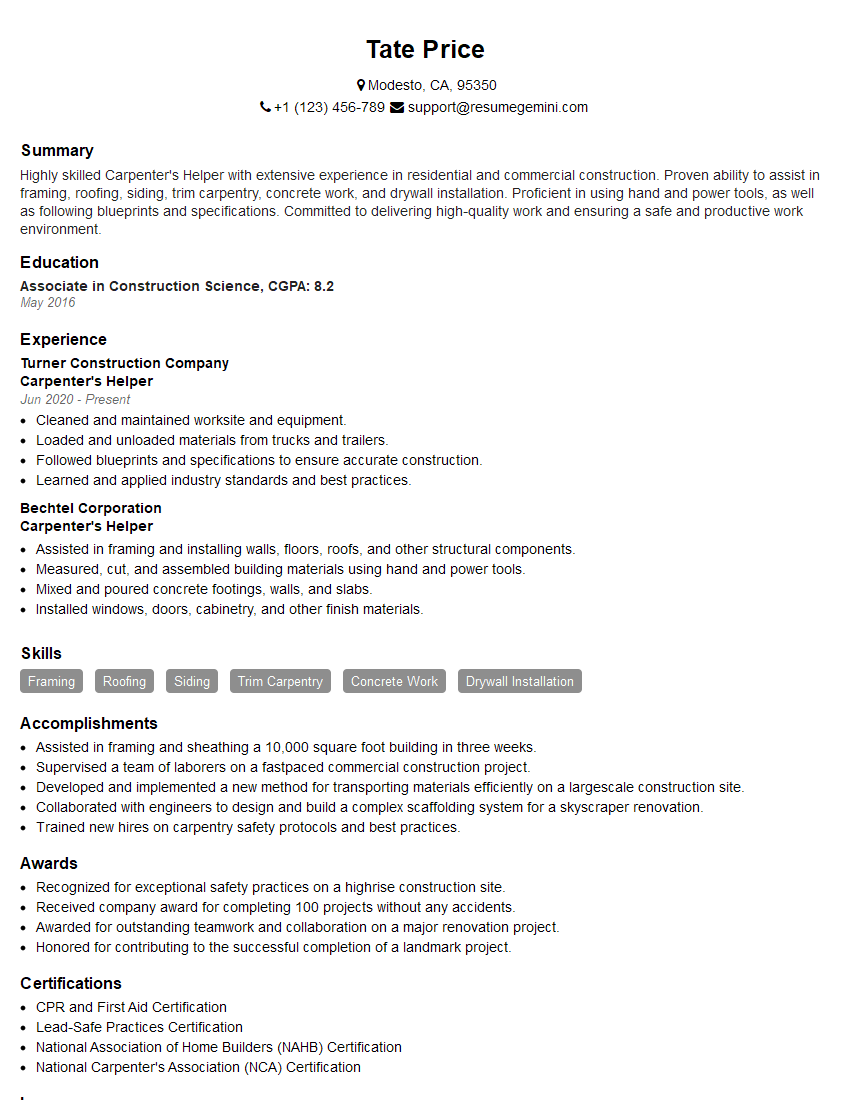
Carpenter’s Helper Resume Sample
Explore more articles
Users Rating of Our Blogs
Share Your Experience
We value your feedback! Please rate our content and share your thoughts (optional).
What Readers Say About Our Blog
To the interviewgemini.com Webmaster.
Very helpful and content specific questions to help prepare me for my interview!
Thank you
To the interviewgemini.com Webmaster.
This was kind of a unique content I found around the specialized skills. Very helpful questions and good detailed answers.
Very Helpful blog, thank you Interviewgemini team.