Are you ready to stand out in your next interview? Understanding and preparing for Blending and Assemblage interview questions is a game-changer. In this blog, we’ve compiled key questions and expert advice to help you showcase your skills with confidence and precision. Let’s get started on your journey to acing the interview.
Questions Asked in Blending and Assemblage Interview
Q 1. Explain the difference between batch and continuous blending processes.
Batch and continuous blending are two fundamentally different approaches to mixing ingredients. Think of it like baking a cake: batch blending is like mixing all ingredients in a single bowl at once, while continuous blending is like having a conveyor belt constantly feeding and mixing ingredients as they move along.
In batch blending, all ingredients are added to a mixer at the beginning of the process. The mixer runs for a predetermined time until the desired homogeneity is achieved. This method is suitable for smaller production volumes or when handling ingredients with unique sensitivities requiring specific mixing times and conditions. The entire batch is processed together, and once complete, the process starts again with a new batch.
Continuous blending, on the other hand, involves a constant flow of ingredients into a mixer, continuously blending as the mixture flows through the system. This is ideal for large-scale production as it offers higher throughput and better control over the consistency of the final product. However, it requires more sophisticated equipment and precise control of feed rates to maintain consistent output quality. Think of it as a never-ending stream of perfectly mixed material.
- Batch: Simpler equipment, smaller batches, better for sensitive materials, but lower throughput.
- Continuous: Higher throughput, consistent output, more complex equipment, better for large-scale production.
Q 2. Describe your experience with various mixing equipment (e.g., ribbon blenders, high-shear mixers).
My experience encompasses a wide range of mixing equipment, focusing primarily on the selection and optimization of the right equipment for the specific application. This often involves dry blending and wet blending scenarios, requiring different approaches.
- Ribbon Blenders: I’ve extensively used ribbon blenders for dry blending applications, particularly for powders and granular materials. They are excellent for handling materials with varying particle sizes and densities, achieving a good level of homogeneity. I’ve found that adjusting the ribbon speed and mixing time is crucial to prevent segregation and ensure even distribution.
- High-Shear Mixers: High-shear mixers have been invaluable for wet blending, especially when dealing with viscous liquids or pastes. Their high-speed impeller generates intense shear forces, leading to rapid and efficient mixing. I have experience optimizing impeller design and speed to achieve the desired particle size reduction and homogeneity, while also minimizing heat generation.
- Nauta Mixers: These are particularly useful for handling heavy, abrasive materials and offer good mixing efficiency in applications where gentle mixing is necessary, like blending sensitive food ingredients.
- Fluid Bed Processors: I have experience leveraging fluid bed processors for applications requiring the creation of homogenous coatings on particles. Precise control of air flow and ingredient delivery are key.
The choice of equipment always depends on factors such as material properties, desired homogeneity, production scale, and budget constraints. It’s not just about knowing *how* to use the equipment, but understanding *why* a particular mixer is the best fit for the given task. For example, using a high-shear mixer for delicate materials could lead to damage, whereas using a ribbon blender for a high-viscosity fluid would be highly inefficient.
Q 3. How do you ensure the homogeneity of a blended product?
Ensuring homogeneity is the cornerstone of successful blending. It’s not just about mixing, but about achieving a uniform distribution of all components throughout the final product. This requires a multi-faceted approach.
- Careful ingredient selection and pre-processing: Before blending begins, ensuring that the size and properties of components are compatible is crucial to reduce the risk of segregation. Screening and sizing of powders are key steps.
- Optimized mixing parameters: This involves careful control of mixing time, speed, and intensity based on the chosen equipment and the properties of the ingredients. Monitoring the process through visual inspection and possibly using online sensors to measure the degree of homogeneity is essential.
- Statistical Sampling and Analysis: Taking multiple samples from various points within the blended product and analyzing their composition allows assessment of the homogeneity of the blend and allows for process adjustments to improve homogeneity.
- Process Monitoring and Control: Employing online sensors (e.g., near-infrared spectroscopy, laser diffraction) for real-time monitoring of the blending process can provide continuous feedback, allowing for immediate adjustments to maintain homogeneity.
For example, in pharmaceutical blending, ensuring a homogenous distribution of active pharmaceutical ingredients (APIs) within the final dosage form is critical for patient safety and efficacy. A lack of homogeneity would lead to variations in drug delivery and potential adverse effects.
Q 4. What are the critical parameters to control during the blending process?
Controlling critical parameters is essential for reproducible and high-quality blends. These parameters can vary depending on the specific blending process and the nature of the materials involved, but some key aspects include:
- Mixing Time: Insufficient mixing time leads to inhomogeneous blends. Too much can lead to unnecessary energy consumption or damage to sensitive materials.
- Mixing Speed/Intensity: The speed of the mixer and the intensity of the mixing action (e.g., shear rate in high-shear mixers) directly impact the efficiency of blending.
- Ingredient Feed Rates (for continuous blending): Precise and consistent feed rates are critical for maintaining a consistent blend composition in continuous processes. Inconsistent feed rates can lead to product heterogeneity.
- Temperature: Temperature control is particularly important in wet blending or when dealing with temperature-sensitive ingredients. Excessively high temperatures can degrade certain compounds or cause unwanted reactions.
- Moisture Content: In many cases, moisture content directly affects the flowability and blending characteristics of the materials. Maintaining a controlled moisture level is often crucial for achieving a homogeneous blend.
- Particle Size Distribution: The distribution of particle sizes among the blended components is a crucial parameter. Segregation during mixing is more likely if the size range is significantly different between materials.
Careful monitoring and precise control of these parameters are vital for producing high-quality consistent blends.
Q 5. How do you troubleshoot common blending problems (e.g., segregation, agglomeration)?
Troubleshooting blending problems requires systematic investigation. Let’s consider segregation and agglomeration:
Segregation: This refers to the separation of ingredients during the blending process, often due to differences in particle size, density, or shape. Troubleshooting steps include:
- Adjust mixing parameters: Increase mixing time or intensity. Experiment with different mixing patterns or speeds.
- Improve material handling: Ensure uniform feeding of ingredients. Consider pre-blending smaller batches before introducing them to the main mixer.
- Modify ingredient properties: In some cases, pre-treating the ingredients (e.g., using additives to improve flowability or using a binder to minimize segregation) might be necessary.
- Change blending equipment: If the current equipment is unsuitable, consider switching to a different type of mixer better suited for the material properties.
Agglomeration: This involves the formation of clumps or lumps of particles, often due to moisture, electrostatic forces, or sticky materials. Troubleshooting involves:
- Control moisture content: Reduce moisture levels through drying or using desiccants.
- Adjust mixing parameters: Reduce mixing speed to minimize shear forces if agglomeration is shear-induced. Use a gentler mixing technique.
- Add anti-caking agents: Incorporate suitable additives to prevent agglomeration.
- Screen or mill materials: Breaking up existing agglomerates before blending can improve homogeneity.
Always thoroughly document the changes made and their effect on the blending process to systematically optimize it.
Q 6. What are your methods for scaling up a blending process from lab to production scale?
Scaling up a blending process from lab to production requires careful consideration of various factors to maintain homogeneity and consistency.
1. Geometric Similarity: Maintaining the same geometry ratios between mixer dimensions (e.g., diameter to height) in both lab and production scales is often critical for consistent blending performance.
2. Power Input per Unit Mass: Maintaining similar power input per unit mass of material in both scales is critical. Simply scaling up the mixer size without considering power input can lead to poor mixing in the larger scale. If the power is inadequate in the large scale for the increased mass of material, poor mixing results.
3. Mixing Time: The mixing time may not scale linearly. Experimental data from the lab scale needs to inform the determination of an optimal mixing time for the production scale. It’s usually longer for the larger-scale.
4. Material Handling: Ensuring that the material handling systems (feeding, discharge) are appropriately scaled is critical. Efficient feed systems in the large scale will minimize segregation.
5. Process Monitoring: Implement robust process monitoring and control systems in the production scale to ensure consistent product quality. This may involve online sensors to measure homogeneity, temperature, and other critical parameters.
6. Pilot Plant Trials: Conducting pilot plant trials with a scale-up version of the lab-scale mixer provides valuable data before full-scale production. This allows for validation of the scaling-up calculations and identification of potential problems before large scale production is initiated.
Scaling up is not simply increasing the size; it’s about replicating the critical mixing dynamics of the lab-scale process in the production environment to achieve a consistent product.
Q 7. Explain your experience with different blending techniques (e.g., dry blending, wet blending).
Dry and wet blending are distinct techniques with different applications and considerations:
Dry Blending: This involves mixing dry, solid ingredients, often powders or granules. Common methods include ribbon blending, V-blending, and fluidized bed processing. The focus is on achieving a homogeneous distribution of particles with minimal breakage or degradation. Critical parameters include particle size distribution, flow characteristics of the materials, and control of moisture content to prevent agglomeration.
Wet Blending: This involves mixing ingredients in a liquid medium. The process frequently involves the use of high-shear mixers or other specialized equipment. Achieving a uniform dispersion of the ingredients within the liquid is essential. Careful control of factors such as viscosity, temperature, and the addition of solvents or emulsifiers is often necessary to optimize the outcome. Wet blending is common in the pharmaceutical, food, and cosmetic industries to create solutions, suspensions, or emulsions.
My experience includes both dry and wet blending processes across diverse applications. The selection of a specific blending technique is heavily influenced by the nature of the components, the desired outcome, and the overall production scale. For instance, creating a homogenous powder blend for a pharmaceutical application would require meticulous dry blending, whereas producing a stable emulsion for a cosmetic product would necessitate efficient wet blending.
Q 8. How do you validate a blending process?
Validating a blending process is crucial for ensuring consistent product quality and meeting specifications. It involves a multi-step approach, combining sensory evaluation with objective measurements. First, we define acceptance criteria based on the final product’s characteristics – this could include color, viscosity, particle size distribution, and aroma profile for a food product, or specific chemical compositions and physical properties for other applications. Then, we conduct trial blends, systematically varying parameters like ingredient ratios, mixing time, and speed. Each trial blend is rigorously analyzed against the pre-defined acceptance criteria. This could involve using instruments like spectrophotometers for color measurement, rheometers for viscosity, laser diffraction for particle size, and gas chromatography-mass spectrometry (GC-MS) for aroma compound analysis. Statistical analysis of the results helps identify the optimal blending parameters and assess the process’s reproducibility. For example, if we’re blending a coffee, we’d meticulously track the extraction yield and analyze the sensory profile using a trained panel to check for consistency in aroma, flavor, and body. Any deviations from the acceptance criteria trigger an investigation into the root cause, leading to process adjustments and further validation runs.
Q 9. What quality control measures do you implement to ensure product consistency?
Maintaining product consistency in blending requires a robust quality control (QC) system incorporating several measures. This starts with meticulous raw material inspection. We verify the quality of each ingredient against predefined specifications using methods like titration, spectroscopy, and visual inspection. Throughout the blending process, we monitor key parameters such as temperature, mixing speed, and time using automated data acquisition systems. Regular calibration and maintenance of equipment are essential for accuracy. In-process sampling and testing at various stages are crucial, allowing for immediate corrective actions if any deviation from the desired characteristics is detected. Finally, we implement rigorous finished product testing, including sensory evaluation and laboratory analysis to ensure the final product meets the quality standards. Imagine blending spices for a curry powder: We would inspect each spice for purity, moisture content, and particle size before blending, then monitor the temperature during the process to prevent overheating, which could degrade the flavor compounds. Finally, we’d analyze the final product for color, aroma, and microbial contamination, ensuring it conforms to safety and quality regulations.
Q 10. Describe your experience with statistical process control (SPC) in blending.
Statistical Process Control (SPC) is invaluable in optimizing and controlling blending processes. We use control charts, such as X-bar and R charts, to monitor key process parameters like ingredient ratios, blend viscosity, and particle size distribution over time. By plotting these parameters on control charts, we can easily identify trends and potential issues before they lead to product inconsistencies. For instance, a sudden shift in the mean viscosity or an increase in the variability of particle size might indicate a problem with the equipment or the raw materials. SPC allows us to promptly address these issues, preventing costly rework or product recalls. For example, when blending a paint, we would monitor the viscosity and color using SPC. This continuous monitoring ensures that the paint remains within the specified consistency and color range. We use this data to make informed decisions regarding equipment calibration or ingredient adjustments to maintain consistent product quality.
Q 11. How do you determine the optimal blending time and speed?
Determining the optimal blending time and speed is a critical aspect of achieving a homogeneous and high-quality final product. It’s not a one-size-fits-all solution but rather depends on several factors, including the nature of the ingredients (particle size, viscosity, density), desired final product characteristics, and the type of blending equipment used. We typically use a combination of experimental design and process simulation to optimize these parameters. We might start with a series of trial blends, systematically varying the time and speed while carefully monitoring the results using analytical techniques such as microscopy or particle size analysis. We aim to find the minimum blending time and speed that achieves the desired level of homogeneity without causing excessive wear and tear on the equipment or negatively impacting the product’s quality. For example, blending delicate ingredients like fruits for a jam would require a gentler approach with lower speeds and shorter times compared to blending abrasive materials such as dry pigments for a paint.
Q 12. How do you handle ingredient substitutions during blending?
Ingredient substitutions during blending require careful consideration to maintain product quality and consistency. Before making any substitutions, a thorough evaluation of the substitute’s properties is critical. This involves comparing its physical and chemical characteristics (particle size, viscosity, density, color, etc.) to the original ingredient. A rigorous testing process is required to determine whether the substitution will significantly impact the final product’s characteristics and whether adjustments to other parameters (e.g., blending time, speed, other ingredient ratios) are necessary. Detailed documentation of all substitutions, along with the results of the testing, is vital for maintaining traceability and complying with regulatory requirements. For instance, if a certain type of cocoa powder isn’t available, we need to evaluate the substitute’s fat content, particle size, and flavor profile to determine its suitability and assess how it will affect the final chocolate’s taste and texture.
Q 13. What are the safety considerations when working with blending equipment?
Safety is paramount when working with blending equipment. Several measures need to be implemented to prevent accidents and injuries. This begins with proper training of personnel on the safe operation and maintenance of the equipment. Lockout/Tagout procedures must be strictly followed during maintenance to prevent accidental starts. Personal protective equipment (PPE) such as safety glasses, gloves, and hearing protection should be worn at all times during operation. Regular inspection of equipment for wear and tear, ensuring proper grounding, and implementing emergency shutdown procedures are also crucial for safety. The work area should be kept clean and organized to minimize tripping hazards. Furthermore, proper ventilation is important to avoid inhalation of dust or fumes, and appropriate procedures must be in place for handling hazardous materials. For example, using interlocks to prevent access to the mixing chamber while the blades are operating, or incorporating emergency stop switches easily accessible to operators.
Q 14. Describe your experience with different types of blending containers.
My experience encompasses various types of blending containers, each suited to specific applications and ingredient properties. I’ve worked extensively with ribbon blenders, which are excellent for dry, free-flowing powders and granules, ensuring thorough mixing and minimizing segregation. High shear mixers are particularly effective for creating very fine dispersions and emulsions, often used in the food and pharmaceutical industries. Nauta mixers are versatile and handle both dry and wet materials effectively, ideal for larger-scale production. Finally, I have experience with fluidized bed processors for coating and granulation processes. The choice of container depends on factors like the volume to be blended, the nature of the ingredients (e.g., viscosity, particle size), and the desired level of homogeneity. For example, a ribbon blender might be ideal for blending spices for a curry powder, while a high-shear mixer would be better suited for creating a homogeneous emulsion for a cosmetic product.
Q 15. How do you manage deviations from the established blending procedures?
Managing deviations from established blending procedures requires a systematic approach that balances maintaining product quality with efficient production. My first step is always to identify the root cause of the deviation. This often involves reviewing process parameters like ingredient ratios, mixing times, and equipment performance data logged by our systems.
For minor deviations, within acceptable quality control limits (for instance, a slight variation in color or viscosity that doesn’t affect the final product’s functionality), I’d adjust subsequent batches to compensate. This might involve fine-tuning ingredient proportions or extending mixing time. Detailed records of these adjustments are meticulously documented, and the data is analyzed to prevent similar deviations in the future.
Significant deviations, however, those that fall outside the acceptable quality limits, necessitate a more thorough investigation. This could involve recalibrating equipment, reviewing raw material specifications, or even re-evaluating the blending recipe itself. In such cases, I would collaborate with the quality control team and production engineers to implement corrective actions and prevent recurrence. A root cause analysis (RCA) using tools like the 5 Whys method is often employed to pinpoint the underlying issues.
Career Expert Tips:
- Ace those interviews! Prepare effectively by reviewing the Top 50 Most Common Interview Questions on ResumeGemini.
- Navigate your job search with confidence! Explore a wide range of Career Tips on ResumeGemini. Learn about common challenges and recommendations to overcome them.
- Craft the perfect resume! Master the Art of Resume Writing with ResumeGemini’s guide. Showcase your unique qualifications and achievements effectively.
- Don’t miss out on holiday savings! Build your dream resume with ResumeGemini’s ATS optimized templates.
Q 16. What software or tools are you familiar with for blending process optimization?
For blending process optimization, I’m proficient in several software packages and tools. For example, I utilize process simulation software like Aspen Plus or COMSOL Multiphysics to model and predict blending outcomes, allowing us to optimize parameters before conducting physical experiments. This reduces time and material waste considerably.
Data analysis and statistical process control (SPC) software, such as Minitab or JMP, are essential for analyzing historical blending data, identifying trends, and predicting potential problems. This helps us fine-tune our processes and maintain consistency. In terms of manufacturing execution systems (MES), I’m familiar with systems like Rockwell Automation’s FactoryTalk MES or Siemens’ SIMATIC IT, which provides real-time monitoring and control of the blending process. These systems track key parameters and help generate reports, providing insights for optimization.
Beyond software, I also rely on advanced analytical techniques like Design of Experiments (DOE) to systematically explore the effect of multiple factors on the final blend. This allows for efficient optimization of the blending process and the identification of optimal parameter settings.
Q 17. How do you manage raw material inventory for blending?
Managing raw material inventory for blending is crucial for efficient production and preventing stockouts or spoilage. We use an inventory management system (IMS) that provides real-time visibility into stock levels. This system integrates with our production planning software to forecast demand and trigger automatic purchase orders when stock falls below a predefined threshold. We utilize a First-In, First-Out (FIFO) method to ensure that older materials are used first, minimizing the risk of spoilage.
Regular inventory audits are conducted to verify physical stock levels against the IMS data. We also employ quality control measures, such as incoming inspection of raw materials to ensure they meet specified quality standards before being added to the inventory. This ensures that only high-quality materials are used in our blending process. Careful consideration is given to material storage conditions – proper temperature and humidity control – to maintain product quality and extend shelf life.
Q 18. How do you ensure traceability throughout the blending process?
Traceability throughout the blending process is paramount for ensuring product safety and quality. Our system incorporates batch tracking from the moment raw materials are received until the finished product is shipped. Each batch is assigned a unique identification number that’s tracked through our MES system. This system records all relevant information, including the date and time of processing, ingredient quantities, equipment used, and any adjustments made during the process.
We also implement rigorous documentation procedures, including batch records, material certificates of analysis (CoA), and equipment calibration records. This comprehensive documentation trail allows us to trace the origin of any materials, monitor the process parameters, and identify potential sources of contamination or defects if a problem arises. In case of a recall, this detailed traceability enables us to quickly and efficiently isolate and remove affected batches.
Q 19. Explain your understanding of Good Manufacturing Practices (GMP) related to blending.
Good Manufacturing Practices (GMP) are fundamental to our blending operations. GMP guidelines emphasize hygiene, sanitation, and quality control throughout the manufacturing process. This includes maintaining clean and sanitary equipment, using appropriate personal protective equipment (PPE), and adhering to strict cleaning and sanitation protocols between batches.
We implement comprehensive quality control checks at various stages of the blending process, including incoming raw material inspection, in-process checks during blending, and final product testing. All personnel involved in blending are trained in GMP principles and follow established Standard Operating Procedures (SOPs). Regular audits are conducted to ensure compliance with GMP regulations and identify areas for improvement. Detailed records of all quality control activities are maintained and readily available for inspection.
Q 20. What are your methods for optimizing energy consumption during blending?
Optimizing energy consumption during blending involves several strategies. Firstly, we use high-efficiency mixing equipment, such as those with optimized impeller designs and reduced friction. This minimizes the energy required for achieving the desired mixing intensity. Secondly, we optimize blending cycles, utilizing techniques to reduce mixing time without compromising blend quality. This often involves using advanced process modelling and simulation software to find the shortest efficient blending time.
Furthermore, we employ energy-efficient motor drives that precisely control the mixing speed, avoiding unnecessary energy consumption. We also regularly maintain our equipment to ensure optimal performance and prevent energy losses due to mechanical inefficiencies. Additionally, we implement a program of continuous improvement, analyzing energy consumption data to identify areas for further reductions. This might involve exploring alternative mixing techniques or implementing energy recovery systems.
Q 21. How do you assess the rheological properties of a blended product?
Assessing the rheological properties of a blended product is essential for ensuring its quality and performance. Rheology refers to the flow and deformation of materials. We use a range of instruments to characterize these properties. For instance, viscometers measure the viscosity (resistance to flow) of the blend at different shear rates. This helps us understand how the product will behave during processing, packaging, and use.
Rheometers provide more comprehensive information about the material’s viscoelastic behavior (its ability to both flow and deform elastically), providing insights into its texture and stability. We might use techniques such as oscillatory shear rheometry to determine the yield stress (the minimum stress required for flow) and the storage and loss moduli (representing elastic and viscous components). These tests are vital for products where consistency and texture are critical, such as in food or cosmetic applications. The results obtained from rheological testing inform the formulation and optimization of the blending process, ensuring the final product meets required specifications.
Q 22. Describe your experience with process analytical technology (PAT) in blending.
Process Analytical Technology (PAT) in blending involves using real-time monitoring and control to ensure consistent product quality. Instead of relying solely on end-product testing, PAT employs sensors and analytical tools throughout the blending process. This allows for immediate adjustments, minimizing waste and improving efficiency.
In my experience, I’ve utilized PAT extensively in the pharmaceutical industry, where we used near-infrared (NIR) spectroscopy to monitor the concentration of active pharmaceutical ingredients (APIs) during the blending of tablets. This allowed for continuous monitoring of the blend uniformity and real-time adjustments to the feed rates of the different components, ensuring every batch met stringent quality standards. Another example involves using in-line particle size analyzers to ensure consistent particle distribution, crucial for preventing issues like segregation and ensuring consistent drug release profiles.
The data collected through PAT is invaluable for process understanding, enabling us to optimize the blending parameters and reduce variability. This continuous improvement approach translates directly into higher product quality and reduced production costs.
Q 23. Explain how you ensure the stability of a blended product over time.
Ensuring the stability of a blended product requires a multi-faceted approach, focusing on both the formulation and storage conditions. It’s like making a perfect cake – if the ingredients aren’t right or the oven temperature is off, the end result suffers.
- Ingredient Selection: Choosing stable raw materials is paramount. We assess the individual components’ stability profiles and select those with minimal degradation over the expected shelf life.
- Formulation Design: The formulation itself plays a crucial role. Incorporating stabilizers, antioxidants, or other protective agents can significantly extend the product’s shelf life. For instance, adding nitrogen to a blend sensitive to oxidation is a common strategy.
- Environmental Control: Storage conditions are vital. Protecting the blend from light, temperature fluctuations, and moisture is crucial. Appropriate packaging, such as light-resistant containers or sealed bags with desiccants, prevents degradation.
- Accelerated Stability Testing: We conduct rigorous testing under stressed conditions (high temperatures, humidity) to predict the product’s shelf life under normal conditions. This allows for proactive measures to address potential stability issues before they affect the final product.
By carefully considering these factors, we can develop a stable, high-quality product with a predictable shelf life.
Q 24. How do you design and conduct experiments to optimize blending parameters?
Optimizing blending parameters involves a systematic approach combining experimental design and data analysis. Think of it as a recipe – we need to find the perfect combination of ingredients and mixing time to achieve the desired result.
We typically employ Design of Experiments (DOE) methodologies, such as factorial designs or response surface methodology (RSM), to systematically investigate the effect of multiple parameters (e.g., mixing time, speed, ingredient ratios) on the blend’s properties (e.g., uniformity, particle size distribution). We collect data on these properties and use statistical software to analyze the results, identifying optimal parameter settings.
For instance, in a recent project involving the blending of powdered pigments, we used a 23 factorial design to study the effect of mixing time, mixing speed, and the ratio of two pigments on the color uniformity of the final blend. The analysis showed that mixing time had the most significant effect, followed by the pigment ratio. This allowed us to optimize the blending process and achieve a more uniform color with reduced energy consumption.
Iterative experimentation is key. Based on the initial results, we may refine the experimental design and conduct further experiments to further narrow down the optimal parameters.
Q 25. Describe your experience with different types of sensors and their applications in blending.
Various sensors play critical roles in modern blending operations, providing real-time data that enhances quality control and process efficiency. Each sensor offers unique advantages depending on the specific application.
- Near-Infrared (NIR) Spectroscopy: Measures the absorption of near-infrared light to determine the composition and concentration of components in the blend. Excellent for real-time monitoring of blend uniformity.
- Raman Spectroscopy: Similar to NIR, but uses Raman scattering to analyze molecular vibrations, providing complementary information about the blend’s composition.
- Particle Size Analyzers (Laser Diffraction): Measure the size distribution of particles in the blend, crucial for controlling product properties and preventing segregation.
- Moisture Sensors: Monitor the moisture content, vital in many industries to prevent spoilage or undesirable reactions.
- Temperature Sensors: Maintain the desired temperature throughout the process, ensuring product quality and preventing degradation.
The choice of sensors depends on the specific blending process and the desired quality attributes. For example, in blending pharmaceuticals, NIR spectroscopy is frequently used to ensure API uniformity, while in food blending, moisture sensors are crucial for maintaining product stability.
Q 26. How do you handle unexpected issues during a blending operation?
Handling unexpected issues during blending requires a systematic approach. The first step is identifying the problem through careful observation and data analysis. Is the blend not mixing properly? Are there clumps? Is the composition off?
Troubleshooting Steps:
- Review Process Parameters: Check if any parameters (speed, time, ingredient ratios) deviated from the established norm.
- Inspect Equipment: Look for blockages, malfunctions, or other mechanical issues in the blender.
- Analyze Raw Materials: Verify the quality and properties of the incoming raw materials. Were there any deviations?
- Consult Historical Data: Compare the current process data to historical data to pinpoint potential causes.
- Implement Corrective Actions: Based on the root cause analysis, implement corrective actions to address the issue. This might involve adjusting parameters, cleaning or repairing the equipment, or replacing substandard raw materials.
Effective communication is essential. Alerting the relevant team members and documenting the issue, the troubleshooting steps, and the corrective actions are crucial for improving future processes and preventing similar incidents.
Q 27. Describe your experience with cleaning and maintenance of blending equipment.
Cleaning and maintenance of blending equipment are critical for preventing cross-contamination, ensuring product quality, and extending the equipment’s lifespan. This is like regularly servicing your car; neglecting it leads to breakdowns and costly repairs.
Our cleaning procedures are based on Standard Operating Procedures (SOPs) and involve:
- Disassembly (when necessary): Careful disassembly allows for thorough cleaning of all components.
- Cleaning-in-Place (CIP) or Cleaning-out-of-Place (COP): We use appropriate cleaning agents (water, detergents, solvents) according to the material being processed, ensuring complete removal of residues.
- Sterilization (when required): For pharmaceutical or food applications, sterilization might be required to eliminate microorganisms.
- Visual Inspection: After cleaning, a thorough visual inspection ensures that all components are clean and free of defects.
- Preventive Maintenance: Regular preventive maintenance, including lubrication, adjustments, and parts replacement, prevents equipment failure and extends its lifespan.
Detailed records are kept of all cleaning and maintenance activities, including the date, time, personnel involved, cleaning agents used, and any observations or problems encountered. This documentation is crucial for regulatory compliance and continuous improvement.
Q 28. How do you document and communicate results from blending operations?
Documenting and communicating results from blending operations is essential for maintaining quality control, traceability, and continuous improvement. This ensures that every batch can be tracked back to its components and processing parameters, crucial for troubleshooting and regulatory compliance.
Our documentation process includes:
- Batch Records: Detailed records of each batch, including the date, time, raw materials used (with batch numbers), process parameters, and the results of quality control tests.
- Process Data: Data from PAT sensors, including real-time measurements of temperature, pressure, blend uniformity, and other relevant parameters.
- Quality Control Reports: Formal reports summarizing the quality control tests performed on each batch and their results.
- Deviation Reports: Detailed reports of any deviations from the standard operating procedures (SOPs), including the cause, corrective actions, and preventive measures.
This information is communicated internally through reports, presentations, and team meetings. In regulated industries, this documentation is also crucial for regulatory inspections and audits.
Key Topics to Learn for Blending and Assemblage Interview
- Material Properties and Selection: Understanding the characteristics of different materials (e.g., viscosity, density, reactivity) and their impact on the blending and assemblage process. This includes knowing how to choose appropriate materials for a specific application.
- Mixing Techniques and Equipment: Familiarize yourself with various blending methods (e.g., high-shear mixing, low-shear mixing) and the types of equipment used (e.g., mixers, homogenizers, reactors). Be prepared to discuss the advantages and disadvantages of each.
- Process Optimization and Control: Understanding the parameters that influence the blending and assemblage process (e.g., temperature, pressure, mixing time) and how to optimize these parameters to achieve desired product quality and efficiency. This also includes troubleshooting techniques for common process issues.
- Quality Control and Assurance: Learn about various quality control methods used to ensure the consistency and quality of blended and assembled products. This includes understanding relevant standards and regulations.
- Safety Procedures and Regulations: Demonstrate awareness of safety protocols and regulations relevant to handling and processing materials used in blending and assemblage. This showcases your commitment to a safe work environment.
- Scale-up and Process Transfer: Understand the principles involved in scaling up a blending and assemblage process from a laboratory setting to a larger-scale production environment. This demonstrates your ability to adapt processes to different contexts.
- Troubleshooting and Problem Solving: Be ready to discuss your approach to identifying and resolving issues that may arise during the blending and assemblage process. Prepare examples from your experience where you successfully troubleshot a problem.
Next Steps
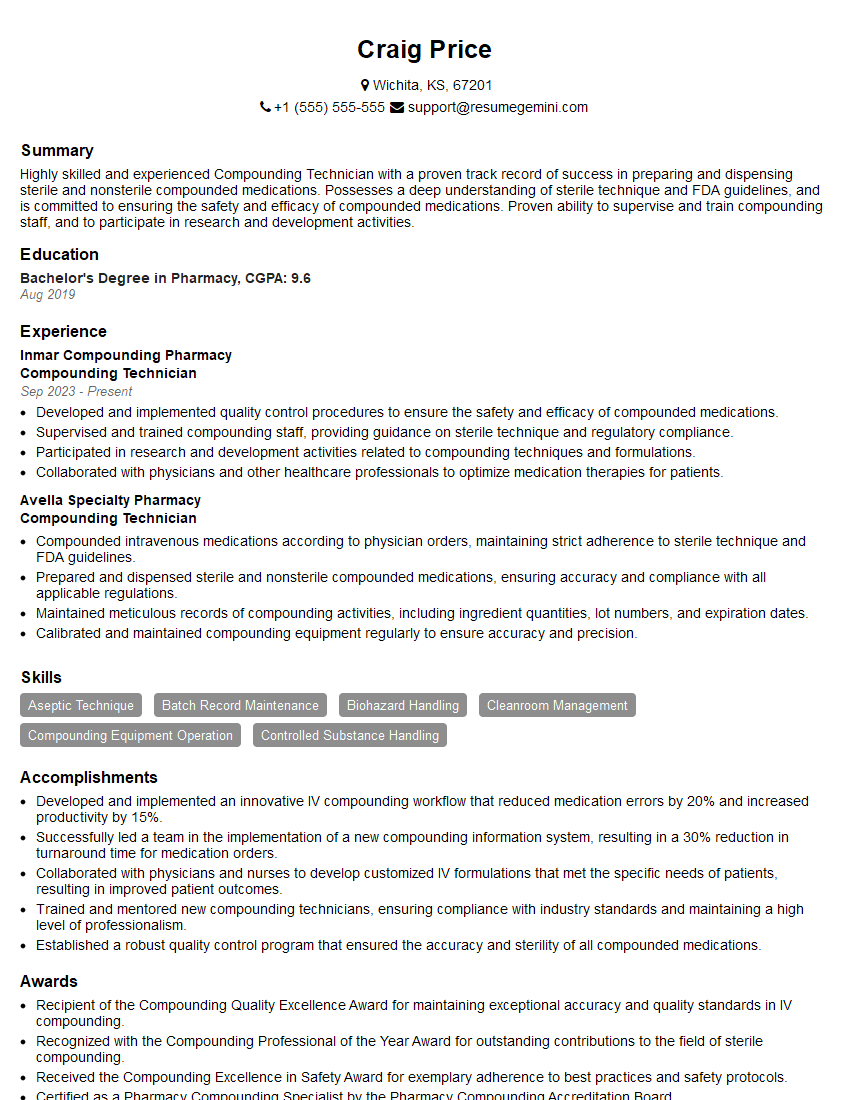
Mastering Blending and Assemblage opens doors to exciting career opportunities in various industries. A strong understanding of these processes is highly valued by employers, leading to increased job prospects and career advancement. To maximize your chances of landing your dream role, create an ATS-friendly resume that highlights your skills and experience effectively. ResumeGemini is a trusted resource that can help you build a professional resume tailored to the specific requirements of Blending and Assemblage roles. Examples of resumes tailored to this field are available to help guide your resume creation process.
Explore more articles
Users Rating of Our Blogs
Share Your Experience
We value your feedback! Please rate our content and share your thoughts (optional).
What Readers Say About Our Blog
To the interviewgemini.com Webmaster.
Very helpful and content specific questions to help prepare me for my interview!
Thank you
To the interviewgemini.com Webmaster.
This was kind of a unique content I found around the specialized skills. Very helpful questions and good detailed answers.
Very Helpful blog, thank you Interviewgemini team.