Every successful interview starts with knowing what to expect. In this blog, we’ll take you through the top Exercise Program Development interview questions, breaking them down with expert tips to help you deliver impactful answers. Step into your next interview fully prepared and ready to succeed.
Questions Asked in Exercise Program Development Interview
Q 1. Explain the principles of training adaptations (overload, progression, specificity, individualization).
The principles of training adaptations guide effective exercise program design. They ensure the body responds positively to exercise and achieves desired fitness goals. These principles work synergistically:
- Overload: To improve, the body must be stressed beyond its current capabilities. This is achieved by increasing the intensity, duration, or frequency of exercise. Think of it like this: if you always lift 5kg, your muscles won’t grow. You need to gradually increase the weight.
- Progression: Overload should be applied gradually to avoid injury and promote consistent improvement. We’re not talking about drastic jumps, but rather a systematic increase in training demands over time. For instance, if you’re running 5km, slowly increase the distance or speed.
- Specificity: Training should be specific to the desired outcome. Want to improve your marathon time? Focus on endurance training. Want stronger biceps? Include bicep curls in your routine. The body adapts specifically to the type of stress applied.
- Individualization: Training programs must consider individual factors like age, fitness level, goals, and any pre-existing conditions. What works for a marathon runner won’t necessarily work for a senior citizen.
These principles ensure that an exercise program is both effective and safe, fostering optimal adaptation.
Q 2. Describe your experience designing exercise programs for different populations (e.g., elderly, obese, athletes).
My experience spans diverse populations. For the elderly, I focus on programs that prioritize balance, flexibility, and low-impact cardiovascular exercise to improve functional fitness and reduce fall risk. This often involves exercises like chair yoga, walking, and resistance training with light weights. For example, I designed a program for a 70-year-old client with arthritis focusing on range of motion exercises and strength training with resistance bands to manage their pain and improve their daily mobility.
With obese individuals, I emphasize gradual weight loss through a combination of moderate-intensity cardio, resistance training, and dietary modifications. It’s crucial to start slowly to avoid injuries. My approach includes building confidence and self-efficacy through achievable goals. I once helped a client lose 30 pounds through a program focusing on low-impact exercises like swimming and walking, coupled with nutritional counseling.
For athletes, my programs are tailored to their specific sport, emphasizing high-intensity interval training (HIIT), plyometrics, and strength training to enhance power, speed, and endurance. I designed a high-intensity training program for a collegiate basketball team, incorporating speed drills, agility training, and strength exercises to maximize on-court performance.
Q 3. How do you assess a client’s fitness level before designing a program?
A thorough fitness assessment is paramount. I use a multi-faceted approach:
- Health History Questionnaire: This identifies any pre-existing conditions, injuries, or limitations that need to be considered.
- Resting Heart Rate and Blood Pressure: Provides baseline cardiovascular data.
- Body Composition Analysis (e.g., skinfold measurements, bioelectrical impedance): Assesses body fat percentage and lean muscle mass.
- Cardiovascular Fitness Tests (e.g., graded exercise test, 1-mile run): Measures aerobic capacity.
- Muscular Strength and Endurance Tests (e.g., 1-rep max, push-up test, sit-up test): Evaluates strength and endurance levels.
- Flexibility Tests (e.g., sit-and-reach test): Assesses range of motion.
This comprehensive assessment paints a clear picture of the client’s fitness level, guiding program design and ensuring safety.
Q 4. What are the key components of a well-designed exercise program?
A well-designed exercise program incorporates several key components:
- Warm-up: Prepares the body for exercise by increasing blood flow and muscle temperature.
- Workout: Includes specific exercises targeting different fitness components.
- Cool-down: Gradually reduces heart rate and promotes recovery.
- Frequency: How often the exercise is performed (e.g., 3 times per week).
- Intensity: The level of exertion during exercise (e.g., moderate to vigorous).
- Time: The duration of each exercise session (e.g., 30-60 minutes).
- Type: The type of exercise performed (e.g., cardio, strength, flexibility).
- Progression: A gradual increase in the intensity, duration, or frequency of exercise over time.
- Rest and Recovery: Adequate rest allows the body to recover and rebuild.
These components ensure the program is effective, safe, and sustainable for the client.
Q 5. How do you incorporate different training modalities (cardio, strength, flexibility) into a program?
Integrating cardio, strength, and flexibility training creates a holistic program. I tailor the balance based on client goals and needs.
- Cardio: Improves cardiovascular health and burns calories. Examples include running, swimming, cycling, or elliptical training. The intensity and duration vary depending on the client’s fitness level.
- Strength Training: Builds muscle mass, increases metabolism, and improves bone density. This could involve weightlifting, bodyweight exercises, or resistance band training. Progressive overload is key.
- Flexibility Training: Improves range of motion, reduces muscle stiffness, and prevents injuries. Stretching, yoga, and Pilates are effective methods.
For instance, a program might include 3 cardio sessions, 2 strength training sessions, and 1 flexibility session per week, adjusting the intensity and duration based on individual needs and progress.
Q 6. How do you progress an exercise program to ensure continued improvement?
Progression is crucial for continued improvement. It involves systematically increasing training demands. This could be:
- Increasing Intensity: Lifting heavier weights, running faster, or increasing resistance.
- Increasing Volume: Increasing the number of sets, repetitions, or exercise duration.
- Increasing Frequency: Adding more training sessions per week.
- Introducing new exercises: Incorporating new movements to challenge the muscles differently.
Progression should be gradual and monitored closely to prevent overtraining and injury. Regular assessments and client feedback are vital to adjust the program accordingly.
Q 7. Explain the concept of periodization and its application in exercise programming.
Periodization is a systematic approach to training that involves manipulating training variables (volume, intensity, frequency) over time. It’s like planning a strategic campaign, not just a single battle. It prevents overtraining and plateaus by cycling through different phases:
- Preparation Phase: Focuses on building a base level of fitness with higher volume and lower intensity.
- Competition Phase (or Peak Phase): Intensity increases while volume decreases to optimize performance.
- Recovery Phase (or Transition Phase): Active recovery, lower volume, and intensity, allowing for rest and regeneration.
For example, a runner might have a preparation phase of several months focusing on high mileage, followed by a competition phase of several weeks with shorter, more intense runs, ending with a recovery phase for rest and injury prevention. Periodization enhances long-term progress by strategically cycling through varying training stresses.
Q 8. How do you address client adherence issues and maintain motivation?
Client adherence is crucial for successful exercise programs. Addressing this involves a multifaceted approach focusing on building a strong client-trainer relationship and fostering intrinsic motivation. I start by collaboratively setting realistic, achievable goals, ensuring the client feels ownership of the process. This isn’t just about weight loss or muscle gain; it’s about identifying what truly motivates them – improved energy levels, stress reduction, or better sleep, for instance.
We then create a program that aligns with their lifestyle and preferences. If someone hates running, we won’t include it! Instead, we explore activities they enjoy, making exercise a positive experience, not a chore. Regular check-ins, both in-person and through communication outside of sessions, help monitor progress and address any emerging challenges. I also use positive reinforcement, celebrating milestones and acknowledging effort, even on days when progress seems slow. This builds confidence and encourages continued participation. Finally, I adapt the program as needed, understanding that life throws curveballs, and flexibility is key to long-term adherence.
For example, I once worked with a client who struggled to maintain consistency due to demanding work hours. We adjusted the program to incorporate shorter, more frequent workouts that could be easily integrated into their schedule. We also explored at-home exercises to minimize travel time. This resulted in much improved adherence, and she ultimately surpassed her initial fitness goals.
Q 9. Describe your experience with designing exercise programs for individuals with specific medical conditions (e.g., hypertension, diabetes).
Designing programs for individuals with medical conditions requires a thorough understanding of their limitations and potential risks. Before designing any program for someone with hypertension, diabetes, or other conditions, I always consult with their physician to get clearance and specific guidelines. This ensures the safety and effectiveness of the exercise plan. For example, with hypertension, I would avoid exercises that cause extreme spikes in blood pressure, such as intense weightlifting. Instead, I’d focus on aerobic exercises like brisk walking or cycling, performed at a moderate intensity, incorporating resistance training with lighter weights and higher repetitions. For diabetes, we would need to carefully consider the timing of exercise relative to meals and insulin administration to prevent hypoglycemia. Exercise should be balanced with a healthy diet and medication to achieve optimal blood glucose control.
My approach involves a gradual progression of exercise intensity and duration, allowing the body to adapt and minimize the risk of injury or complications. I closely monitor their vital signs, such as heart rate and blood pressure, during and after exercise to ensure they are within safe limits. Regular communication with their physician is essential to ensure the program remains effective and safe over time.
Q 10. How do you monitor client progress and make adjustments to the program as needed?
Progress monitoring is an ongoing process that involves a combination of objective and subjective measures. Objectively, I use various tools, such as fitness trackers, to monitor metrics like steps taken, heart rate variability, and sleep patterns. I also regularly assess strength, endurance, and flexibility using standardized tests, such as push-up tests, sit-and-reach, and one-minute step tests. Subjectively, we track things like client’s perceived exertion levels, sleep quality, and energy levels. This provides a holistic view of their progress.
Program adjustments are made based on the data collected and the client’s feedback. If progress plateaus, we might increase the intensity or duration of the workouts, change the exercise selection, or adjust the training frequency. If the client experiences pain or discomfort, we’ll reduce the intensity, modify the exercises, or even temporarily halt the program until the issue is resolved. It’s a continuous feedback loop, ensuring the program remains challenging yet safe and effective. For example, if a client is consistently exceeding their target heart rate during cardio, we might reduce the intensity or duration of the workout.
Q 11. Explain the importance of warm-up and cool-down periods in an exercise program.
Warm-up and cool-down periods are crucial components of any effective exercise program. Think of a warm-up as preparing your engine before driving; it gradually increases your heart rate and body temperature, preparing your muscles and joints for more strenuous activity. This helps prevent injuries like muscle strains or tears. A typical warm-up might include light cardio, such as jogging or jumping jacks, followed by dynamic stretching, involving movements that take your joints through their full range of motion, like arm circles or leg swings.
The cool-down period serves as a transition back to a resting state, allowing your body to gradually recover. It usually involves light cardio and static stretching, holding each stretch for 15-30 seconds. Static stretching improves flexibility and helps reduce muscle soreness. Skipping a cool-down can lead to increased muscle stiffness and soreness. Both warm-up and cool-down sessions should last approximately 5-10 minutes, depending on the intensity and duration of the main workout.
Q 12. How do you select appropriate exercises based on a client’s goals and physical limitations?
Exercise selection is highly individualized, based on the client’s goals, physical limitations, and preferences. If a client aims to improve cardiovascular health, I would select exercises like running, swimming, or cycling. For strength building, we might incorporate weight training, bodyweight exercises, or resistance band training. Flexibility and balance improvements can be targeted with yoga, Pilates, or tai chi. Before selecting exercises, a thorough assessment is done to identify any physical limitations or pre-existing injuries. This could include range-of-motion tests and observing their movement patterns.
For example, a client with knee osteoarthritis might not be suitable for high-impact exercises. Instead, we would focus on low-impact options such as swimming, cycling, or elliptical training, combined with exercises that strengthen the muscles supporting the knee joint. Similarly, a client with back pain might need modifications to traditional exercises, such as using proper form and avoiding twisting movements. The program should always be adjusted to accommodate individual needs and limitations, promoting safety and effectiveness.
Q 13. What are some common mistakes to avoid when designing an exercise program?
Several common mistakes can hinder the effectiveness and safety of an exercise program. One major mistake is starting too aggressively. A gradual progression of intensity and duration is crucial to avoid injury and burnout. Ignoring proper form is another common pitfall. Incorrect form can significantly increase the risk of injury and reduce the effectiveness of the exercise. Similarly, neglecting rest and recovery is a significant problem. Muscles need time to rebuild and repair, and lack of rest can lead to overtraining, injury, and decreased performance.
Failing to individualize the program to the client’s specific needs and goals is another critical error. A generic program is unlikely to be effective for everyone. Finally, neglecting to assess the client’s overall health status and limitations is a serious omission. It’s important to know if they have any pre-existing conditions or injuries that need to be considered when designing the exercise program. By avoiding these common mistakes, trainers can ensure a safe and effective program that leads to achieving client goals.
Q 14. How do you ensure safety during exercise sessions?
Safety is paramount in any exercise program. I begin by conducting a thorough health screening and obtaining informed consent before starting any program. This helps identify any potential risks or contraindications. Proper warm-up and cool-down routines are essential, as mentioned earlier, to prepare the body for exercise and facilitate recovery. Appropriate exercise selection based on the individual’s fitness level and any pre-existing conditions is crucial to minimize the risk of injury. I always ensure clients use correct form and technique for all exercises to prevent injuries.
Furthermore, I provide clear instructions and demonstrations, ensuring clients understand how to perform exercises safely and effectively. I also closely supervise clients during exercise sessions to ensure they are performing exercises correctly and safely, providing immediate feedback and corrections as needed. The workout environment should also be safe, with proper equipment and adequate space to perform exercises without risk of injury. It’s crucial to have emergency procedures and contact information readily available.
Q 15. What is your experience with different types of exercise equipment?
My experience with exercise equipment is extensive, encompassing both traditional weight training machines and free weights, as well as cardio equipment like treadmills, elliptical trainers, stationary bikes, and rowing machines. I’m also familiar with functional training tools such as kettlebells, resistance bands, stability balls, and suspension trainers. I understand the biomechanics of each and how to safely and effectively incorporate them into personalized workout plans. For example, I’ve successfully used resistance bands to modify exercises for clients recovering from injuries, providing a controlled and progressive strengthening program. Similarly, I’ve designed high-intensity interval training (HIIT) programs using treadmills and stationary bikes for clients aiming to improve cardiovascular fitness. My experience extends to understanding the maintenance and safety protocols for all equipment types.
Career Expert Tips:
- Ace those interviews! Prepare effectively by reviewing the Top 50 Most Common Interview Questions on ResumeGemini.
- Navigate your job search with confidence! Explore a wide range of Career Tips on ResumeGemini. Learn about common challenges and recommendations to overcome them.
- Craft the perfect resume! Master the Art of Resume Writing with ResumeGemini’s guide. Showcase your unique qualifications and achievements effectively.
- Don’t miss out on holiday savings! Build your dream resume with ResumeGemini’s ATS optimized templates.
Q 16. How do you handle client injuries or complaints during an exercise session?
Client safety is paramount. If a client experiences an injury or complaint during a session, I immediately stop the exercise. I assess the situation, asking questions to understand the nature and severity of the issue. Minor discomfort might require modification of the exercise or a brief rest. For more significant injuries, I provide first aid if needed and advise them to seek medical attention. I maintain detailed records of all incidents and communicate with the client and, if necessary, their physician regarding their progress and recovery. For example, a client experienced knee pain during a squat. I immediately stopped the exercise, assessed their knee (looking for swelling or deformity), and modified the program to focus on exercises that didn’t stress the knee. This included incorporating low-impact cardio and alternative strengthening exercises. Documentation of the incident, modification, and client communication was meticulously maintained.
Q 17. What is your knowledge of exercise program software and tracking tools?
I’m proficient in several exercise program software and tracking tools, including Trainerize, TrueCoach, and MyFitnessPal. These platforms allow me to create, deliver, and track client progress effectively. I utilize features such as workout scheduling, progress tracking, exercise libraries, and communication tools. For example, I use Trainerize to send customized workout plans and nutritional guidance to clients, receive feedback from them through progress tracking features, and provide timely encouragement and modifications based on their progress. The data collected allows me to objectively assess effectiveness and tailor programs to meet their evolving needs. I’m also experienced using wearable technology like Fitbits and Apple Watches to track client activity outside of scheduled sessions, providing a more holistic view of their fitness journey.
Q 18. Describe your experience with creating written workout plans and nutritional guides.
I have extensive experience in creating detailed, individualized written workout plans and nutritional guides. My plans incorporate progressive overload principles, ensuring gradual increases in intensity and volume to optimize results. Nutritional guides provide balanced meal plans that complement the workout plan, considering client preferences, dietary restrictions, and health goals. For instance, I recently created a program for a client aiming to lose weight and improve strength. The workout plan included a mix of strength training, high-intensity interval training, and flexibility exercises, meticulously designed to increase progressively over 12 weeks. The accompanying nutritional guide outlined a calorie-controlled diet with macro and micronutrient targets, designed to support their fitness goals and dietary preferences. The success of these plans is always documented and reviewed regularly to maintain effectiveness.
Q 19. Explain your understanding of different types of exercise intensity and methods of monitoring heart rate.
Exercise intensity refers to the level of effort during physical activity. It can be measured using different methods, including heart rate monitoring. Intensity can be categorized as light, moderate, or vigorous. Light intensity is typically 30-40% of maximum heart rate, moderate is 40-60%, and vigorous is above 60%. Heart rate can be monitored using various tools such as heart rate monitors (chest straps, wrist-worn devices), or by manually checking the pulse. The Karvonen formula (Maximum Heart Rate - Resting Heart Rate) x %Intensity + Resting Heart Rate) is often used to calculate target heart rate zones for different intensity levels. For example, a client with a maximum heart rate of 180 bpm and a resting heart rate of 60 bpm would have a target heart rate range of 114-150 bpm for moderate-intensity exercise (using 50-75% of the heart rate reserve).
Q 20. How do you adapt exercise programs for clients with different fitness levels within a group setting?
Adapting exercise programs for clients with different fitness levels in a group setting requires careful planning and execution. I achieve this by offering modifications and progressions for each exercise. For example, in a group fitness class, I might demonstrate three variations of a squat: a bodyweight squat for beginners, a goblet squat with a dumbbell for intermediate, and a barbell back squat for advanced participants. Verbal cues and demonstrations are vital to ensure proper form and safe execution for all fitness levels. I encourage participants to listen to their bodies and choose modifications that are appropriate for their level. I also incorporate principles of progressive overload by adding resistance, repetitions, or sets over time for everyone while remaining mindful of individual progress. This inclusive approach ensures everyone feels challenged and supported in a group setting.
Q 21. Describe your experience in creating and implementing fitness programs in corporate settings.
My experience in corporate fitness settings involves designing and implementing comprehensive wellness programs tailored to the specific needs of employees. This encompasses needs assessments to determine fitness levels and goals, designing programs to improve productivity and morale, and educating employees about healthy habits. I’ve worked with corporations to create lunchtime fitness classes, corporate wellness challenges, and on-site fitness consultations. A recent project involved developing a program to reduce sedentary behaviour and increase employee engagement in a large technology firm. This included developing a range of lunchtime fitness sessions (yoga, HIIT, strength training), wellness workshops (nutrition, stress management), and a company-wide step challenge, all of which led to improved employee engagement and health outcomes. Data analysis showed significant improvements in overall health and morale, validating the effectiveness of the customized corporate wellness program.
Q 22. How do you maintain professional certifications and stay up-to-date with current fitness trends?
Maintaining professional certifications and staying current in the fitness field is crucial for providing safe and effective training. I achieve this through a multi-pronged approach.
- Continuing Education: I actively participate in workshops, conferences, and online courses offered by reputable organizations like the American College of Sports Medicine (ACSM) and the National Strength and Conditioning Association (NSCA). This ensures I’m up-to-date on the latest research, exercise techniques, and safety protocols.
- Professional Organizations: Membership in professional organizations provides access to journals, webinars, and networking opportunities. These interactions allow me to learn from leading experts and discuss emerging trends.
- Industry Publications and Research: I regularly read peer-reviewed journals and reputable fitness publications to stay abreast of the latest research findings and evidence-based practices. This ensures my programs are grounded in science.
- Certifications Renewal: I diligently renew my certifications according to the respective organization’s requirements. This ongoing process necessitates continued learning and demonstrates my commitment to professional development.
For example, recently I completed a course on functional movement screening, which significantly improved my ability to assess clients’ movement patterns and design individualized programs that address any limitations.
Q 23. Explain your understanding of the role of nutrition in exercise program success.
Nutrition plays a pivotal role in exercise program success; it’s inseparable from physical activity. Optimal nutrition fuels workouts, aids recovery, and supports overall health goals.
- Energy Provision: Proper nutrition provides the carbohydrates, fats, and proteins necessary for energy production during exercise. Insufficient energy intake can lead to fatigue, reduced performance, and increased risk of injury.
- Muscle Growth and Repair: Protein is crucial for muscle protein synthesis, which is essential for building and repairing muscle tissue after workouts. Adequate protein intake is particularly important for strength training programs.
- Recovery and Adaptation: Nutrients such as carbohydrates replenish glycogen stores, while antioxidants help reduce oxidative stress from exercise. This efficient recovery is vital for maximizing training adaptations.
- Overall Health and Well-being: A balanced diet improves immune function, reduces the risk of chronic diseases, and supports mental well-being, all of which positively impact exercise adherence and results.
I often collaborate with registered dietitians or provide clients with resources to help them develop a nutrition plan that aligns with their fitness goals. For instance, a client aiming for weight loss will need a different nutritional approach than an athlete training for endurance.
Q 24. How do you communicate effectively with clients about their progress and program adjustments?
Effective communication is the cornerstone of client success. I use a multi-faceted approach to communicate progress and program adjustments.
- Regular Check-ins: I schedule regular check-ins – weekly or bi-weekly – to monitor progress, answer questions, and address concerns. This creates an open dialogue and builds rapport.
- Progress Tracking: I use a variety of methods to track progress, including weight, measurements, strength assessments, and feedback on how the client feels. Data visualization, such as charts and graphs, helps clients see their progress visually.
- Clear and Concise Explanations: I ensure explanations of program adjustments are clear, concise, and tailored to the client’s understanding. I avoid technical jargon and use analogies to explain complex concepts.
- Active Listening: I actively listen to client feedback, concerns, and any challenges they are facing. This helps identify areas where modifications are needed and fosters a collaborative relationship.
- Visual Aids: When making program adjustments, I might use visual aids like diagrams or videos to illustrate the new exercises or modifications.
For example, if a client is struggling with a particular exercise, I would not just tell them to “try harder.” Instead, I would assess their form, identify the problem area, and suggest modifications or alternative exercises that are easier to perform and still achieve the intended goals.
Q 25. Describe a time you had to modify an exercise program due to unexpected circumstances.
I once had a client who was following a strength training program aimed at increasing muscle mass. However, halfway through the program, he injured his knee.
The initial program heavily involved squats and lunges. Given the knee injury, I immediately stopped those exercises and replaced them with low-impact alternatives. This included exercises like leg press, seated calf raises, and hamstring curls, focusing on maintaining strength without further stressing the knee.
I also reduced the overall training volume and intensity to allow for adequate recovery. I collaborated closely with his physical therapist to ensure the modified program aligned with his rehabilitation plan. The program modifications emphasized functional movements and exercises that promoted knee stability and strength. Open communication was key to keeping him engaged and motivated during his recovery. We focused on achievable goals, celebrating small victories along the way, and ultimately, he regained his strength and was able to return to a modified version of his original program.
Q 26. How do you deal with clients who are resistant to following their exercise program?
Resistance to an exercise program is often rooted in underlying factors. My approach focuses on understanding and addressing these issues.
- Identifying Barriers: I start by carefully listening to the client to understand their reasons for resistance. This could involve time constraints, lack of motivation, fear of injury, or dislike of the exercises.
- Collaborative Goal Setting: I work with the client to collaboratively reset realistic and attainable goals. This shared ownership increases buy-in and commitment.
- Program Modification: Sometimes, resistance stems from an inappropriate program. Adjusting the program to better suit the client’s preferences, fitness level, and lifestyle can significantly improve adherence.
- Building Rapport and Trust: A strong client-trainer relationship is crucial. I focus on building trust, providing support, and celebrating successes, no matter how small.
- Problem-Solving: I help clients identify potential obstacles and develop strategies to overcome them. This may involve finding alternative times to exercise, incorporating exercise into their daily routine, or providing emotional support.
For example, if a client expresses difficulty finding time to exercise, we might explore strategies like incorporating short workouts into their daily routine, utilizing their lunch break, or finding an exercise buddy for accountability.
Q 27. What are your strategies for creating engaging and motivating exercise programs?
Engaging and motivating exercise programs are built on a foundation of understanding client preferences and incorporating variety.
- Variety: Monotony is the enemy of motivation. I incorporate a variety of exercises, training methods (e.g., circuit training, interval training), and equipment to prevent boredom.
- Goal Setting: Clearly defined and achievable goals are critical. These goals should be collaboratively set, specific, measurable, attainable, relevant, and time-bound (SMART goals).
- Progress Tracking and Feedback: Regularly tracking progress and providing positive reinforcement builds confidence and encourages continued effort.
- Client Preferences: I take into account the client’s preferences in terms of exercise types, music, workout environment, and social interaction.
- Gamification: Incorporating elements of games or challenges can make exercise more fun and engaging. This could involve setting challenges, rewarding progress, or tracking achievements.
- Social Support: Encouraging participation in group classes or finding an exercise buddy can promote social interaction and accountability.
For instance, for a client who enjoys team sports, I might incorporate elements of team-based training into their program, while for someone who prefers solitary activities, I might design a program that they can comfortably follow independently.
Q 28. How do you handle conflicting client needs or goals when designing a group fitness class?
Handling conflicting needs in group fitness classes requires careful planning and communication.
- Needs Assessment: Before designing the class, I conduct a needs assessment to identify the range of fitness levels and goals among participants. This might involve questionnaires or initial consultations.
- Modifications and Progressions: I design the class to include modifications and progressions for different fitness levels. This allows participants to work at their own pace and still participate fully.
- Variety of Exercises: A diverse range of exercises caters to different preferences and fitness levels. This avoids alienating participants with specific limitations or preferences.
- Clear Communication: I clearly explain modifications and progressions during the class, and encourage participants to listen to their bodies and choose the appropriate level of intensity.
- Individualized Attention: While this is a group setting, I aim to provide individualized attention as much as possible, providing feedback and guidance based on each participant’s needs.
- Pre-class Consultation: For classes with significant variations in fitness level, offering pre-class consultations could help address individual needs and concerns beforehand.
For example, in a group yoga class, I might offer different variations of poses for beginners and advanced practitioners. This ensures everyone can participate while still being challenged appropriately. Open communication and a supportive environment are essential to ensure everyone feels comfortable and respected.
Key Topics to Learn for Exercise Program Development Interview
- Needs Analysis & Goal Setting: Understanding client needs, limitations, and goals; designing programs aligned with SMART goals (Specific, Measurable, Achievable, Relevant, Time-bound).
- Exercise Selection & Programming: Applying principles of training specificity, progressive overload, and periodization; selecting appropriate exercises considering biomechanics and client limitations.
- Program Design Principles: Integrating various training methods (e.g., strength training, cardiovascular training, flexibility training) into a cohesive and effective program.
- Exercise Prescription & Modification: Adapting exercises based on individual fitness levels, experience, and limitations; providing safe and effective modifications.
- Program Evaluation & Progression: Monitoring client progress, assessing program effectiveness, and making necessary adjustments to ensure continued improvement.
- Safety & Risk Management: Identifying and mitigating potential risks associated with exercise; ensuring client safety through proper instruction and supervision.
- Communication & Client Interaction: Building rapport with clients, providing clear instructions, motivating clients to achieve their goals, and addressing client concerns effectively.
- Legal & Ethical Considerations: Understanding professional responsibilities, liability, and ethical guidelines in exercise programming.
- Technology & Data Analysis: Utilizing technology (e.g., fitness trackers, software) to monitor client progress and inform program adjustments; analyzing data to inform decision-making.
Next Steps
Mastering Exercise Program Development opens doors to exciting career opportunities in fitness, health, and wellness. A strong understanding of these principles is crucial for showcasing your expertise and securing your dream role. To significantly enhance your job prospects, crafting an ATS-friendly resume is vital. ResumeGemini is a trusted resource that can help you build a professional and impactful resume. We provide examples of resumes tailored to Exercise Program Development to guide you in creating a document that effectively highlights your skills and experience. Invest the time to build a compelling resume – it’s your first impression with potential employers.
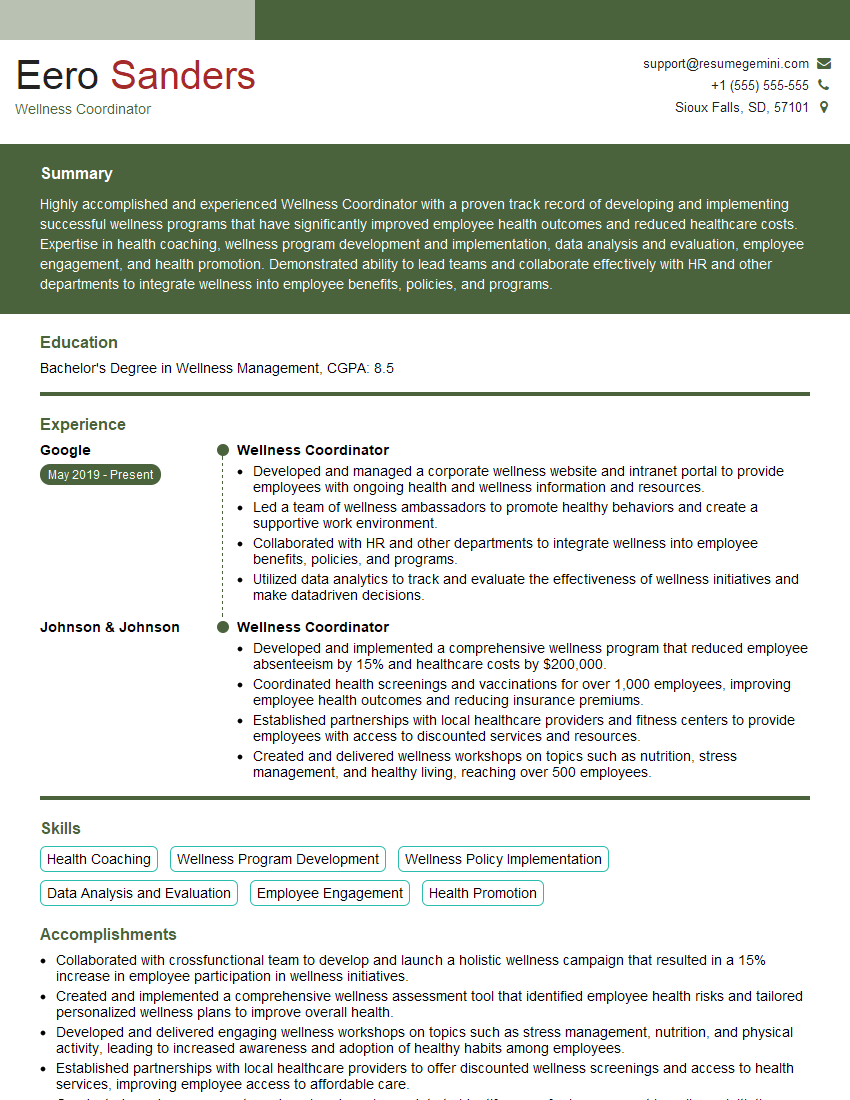
Wellness Coordinator Resume Sample
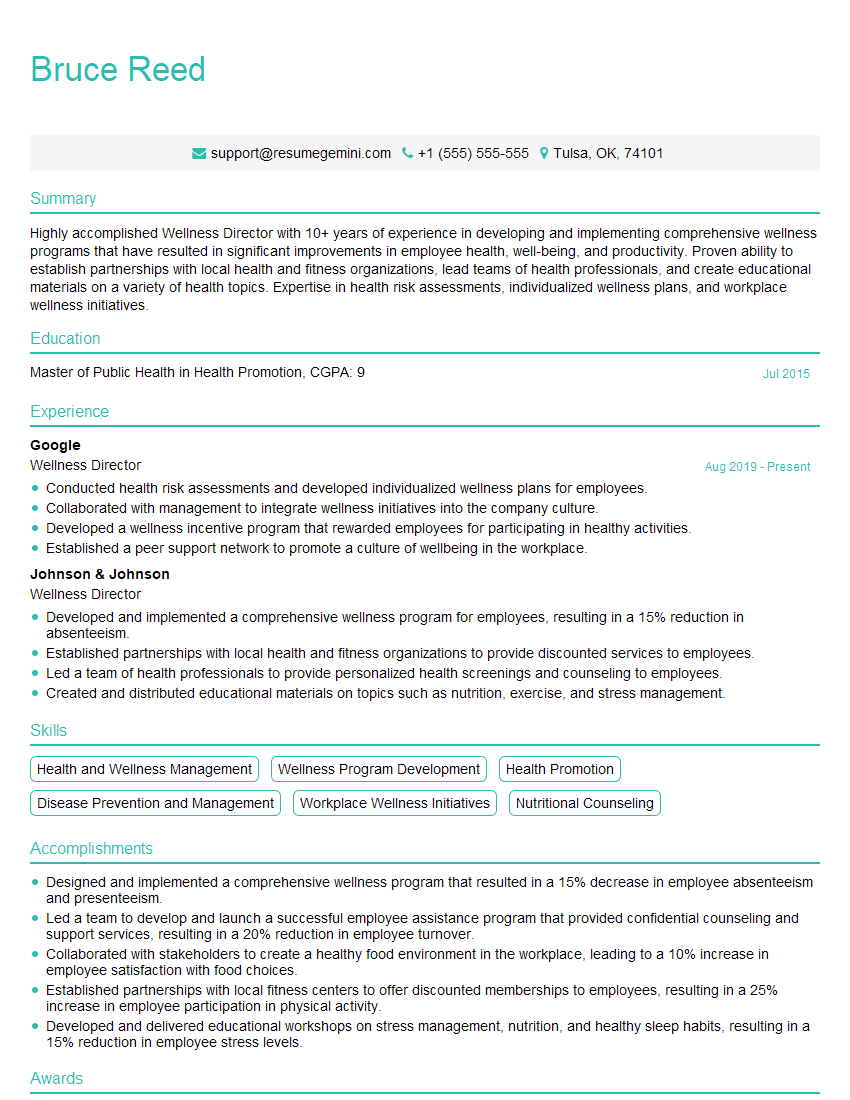
Wellness Director Resume Sample
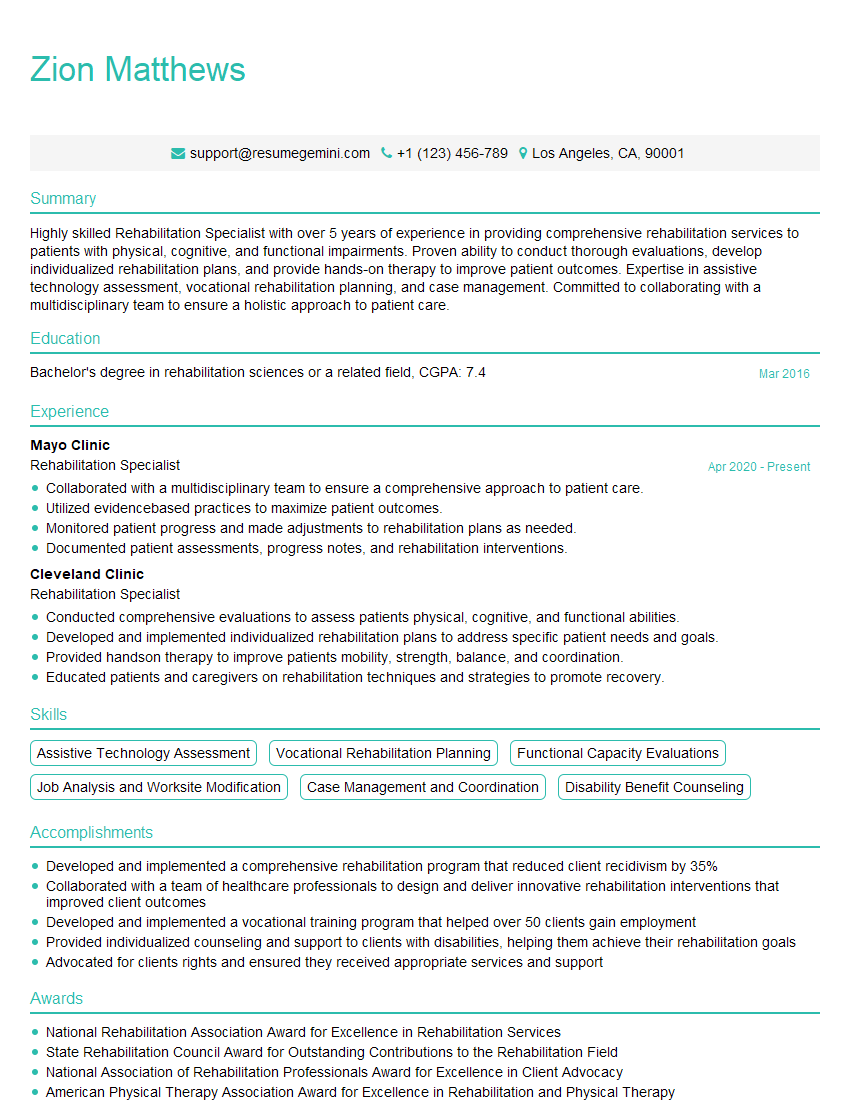
Rehabilitation Specialist Resume Sample
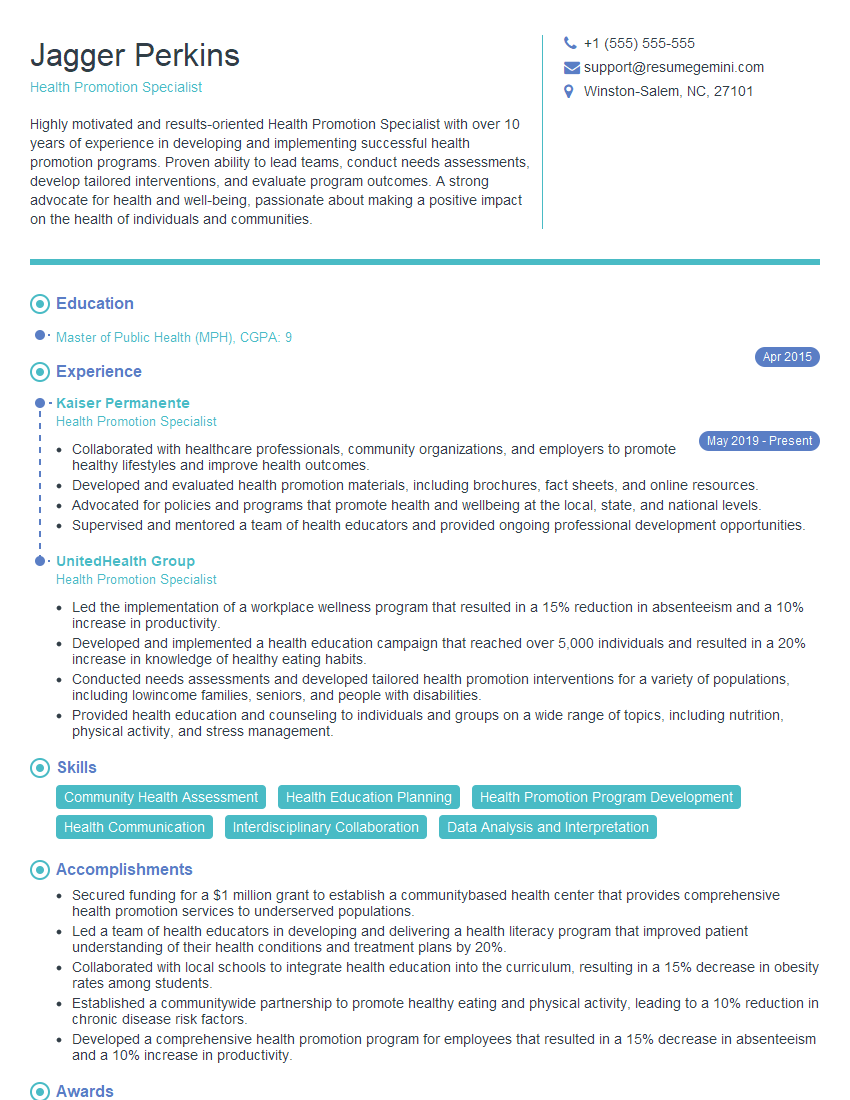
Health Promotion Specialist Resume Sample
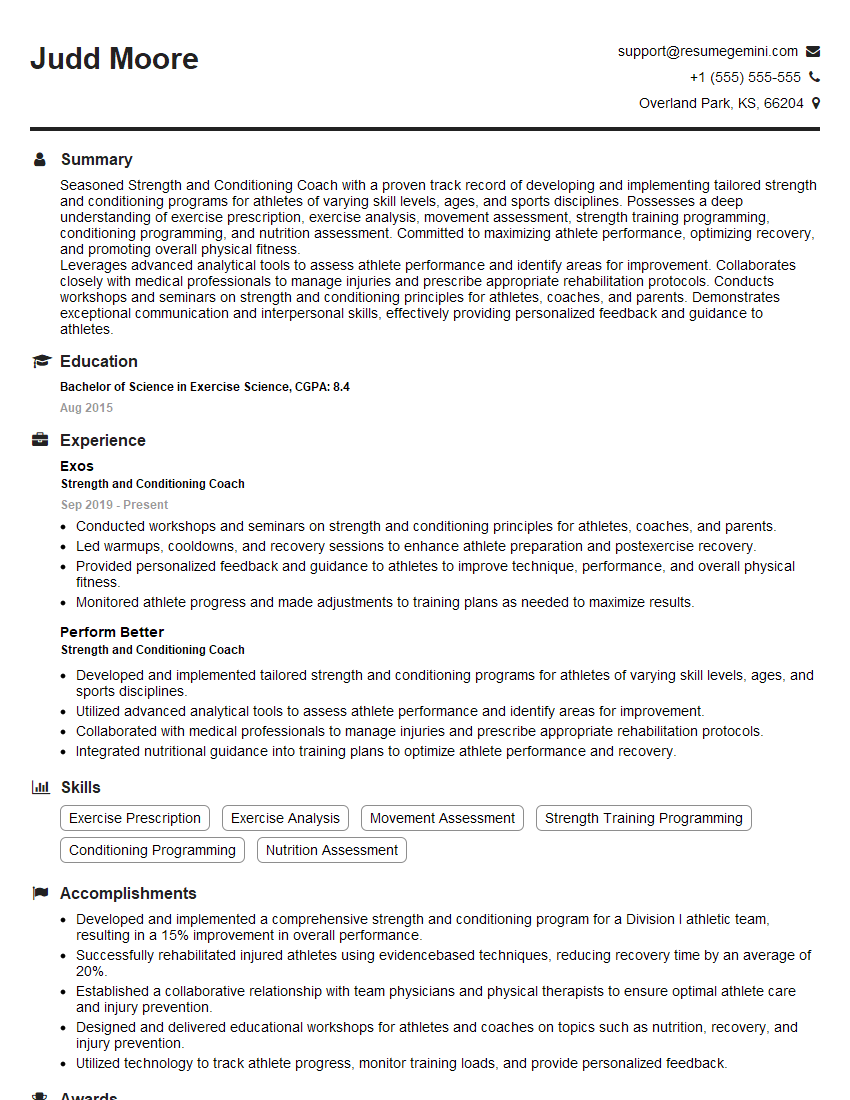
Strength and Conditioning Coach Resume Sample
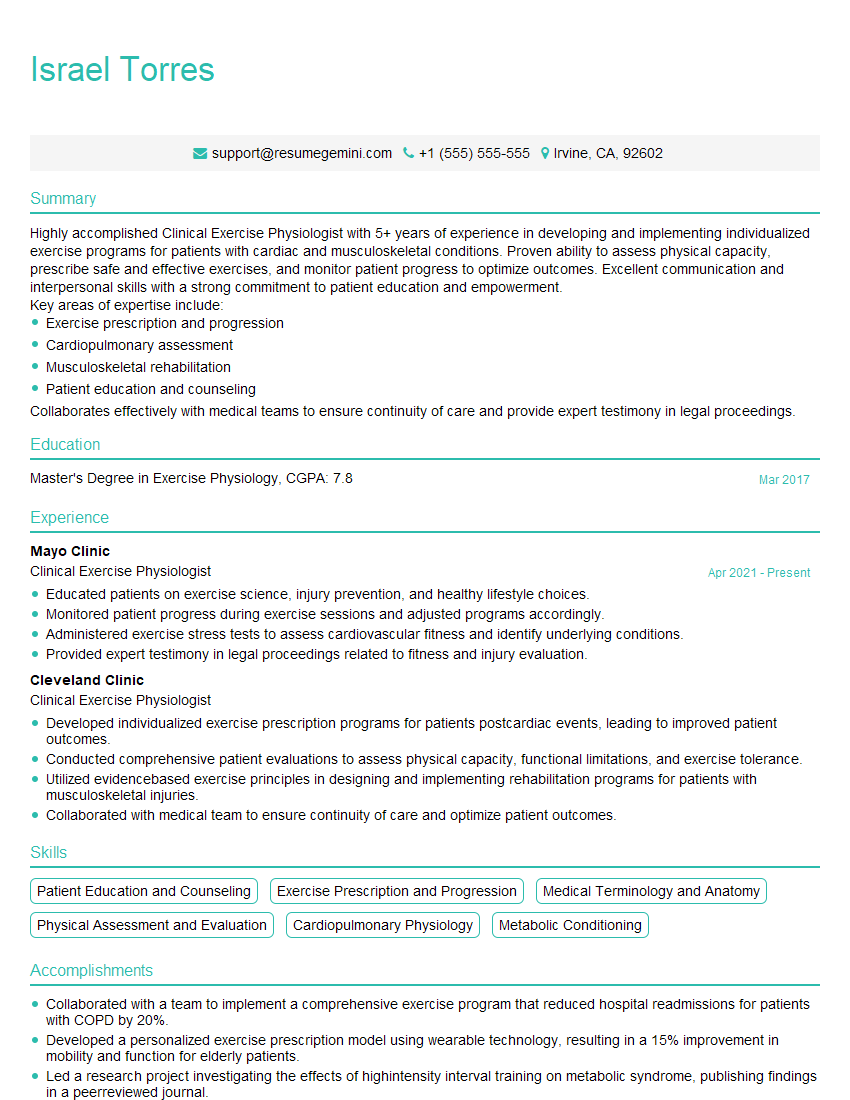
Clinical Exercise Physiologist Resume Sample
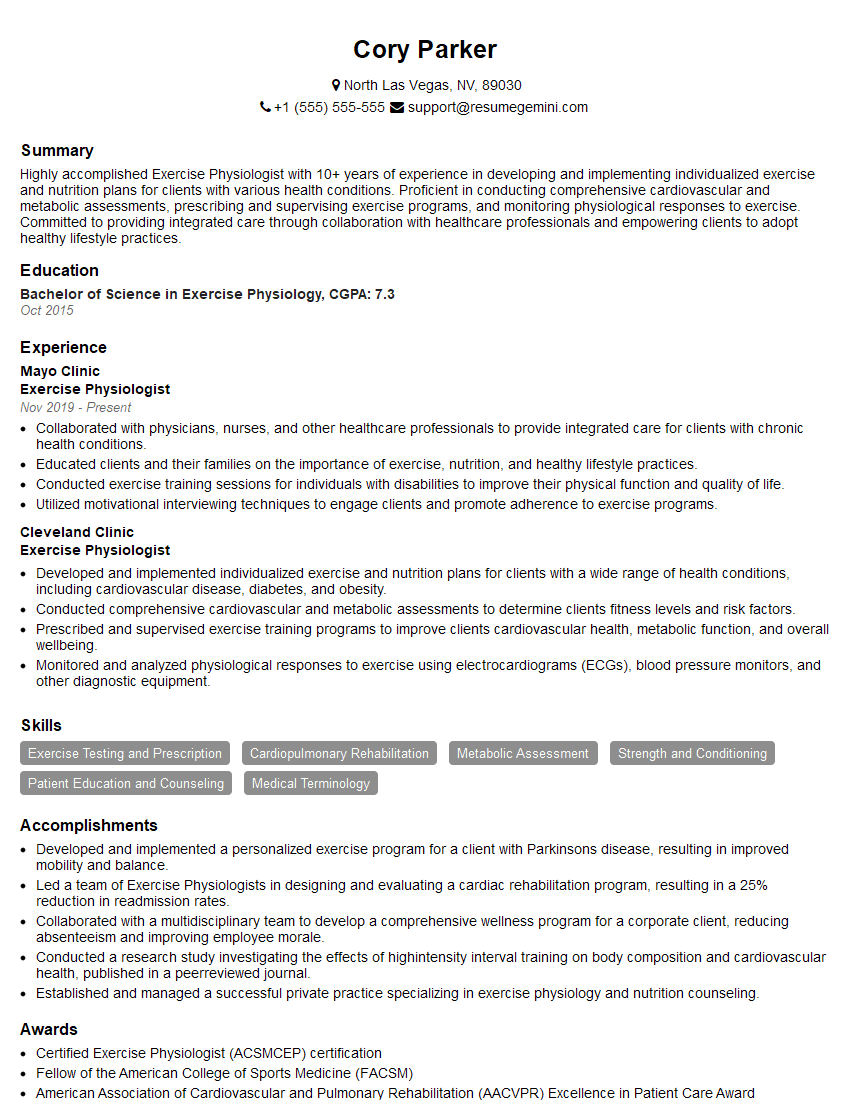
Exercise Physiologist Resume Sample
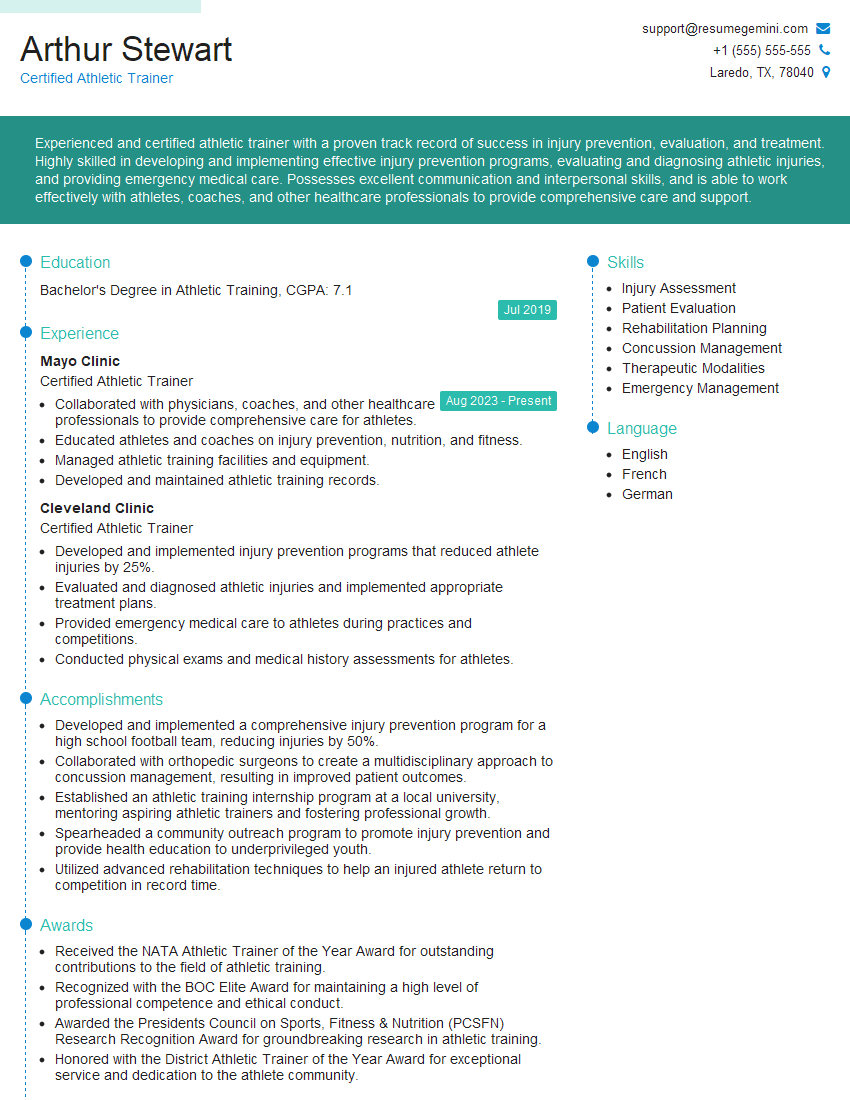
Certified Athletic Trainer Resume Sample
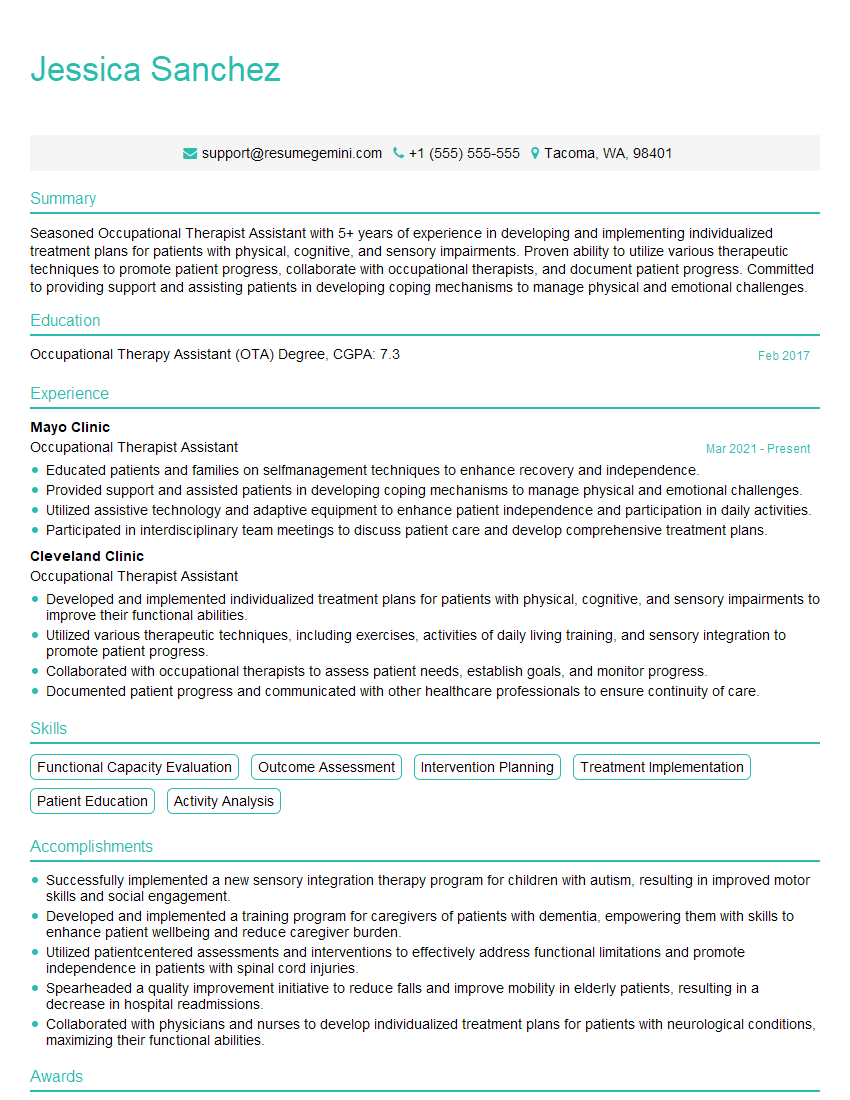
Occupational Therapist Assistant Resume Sample
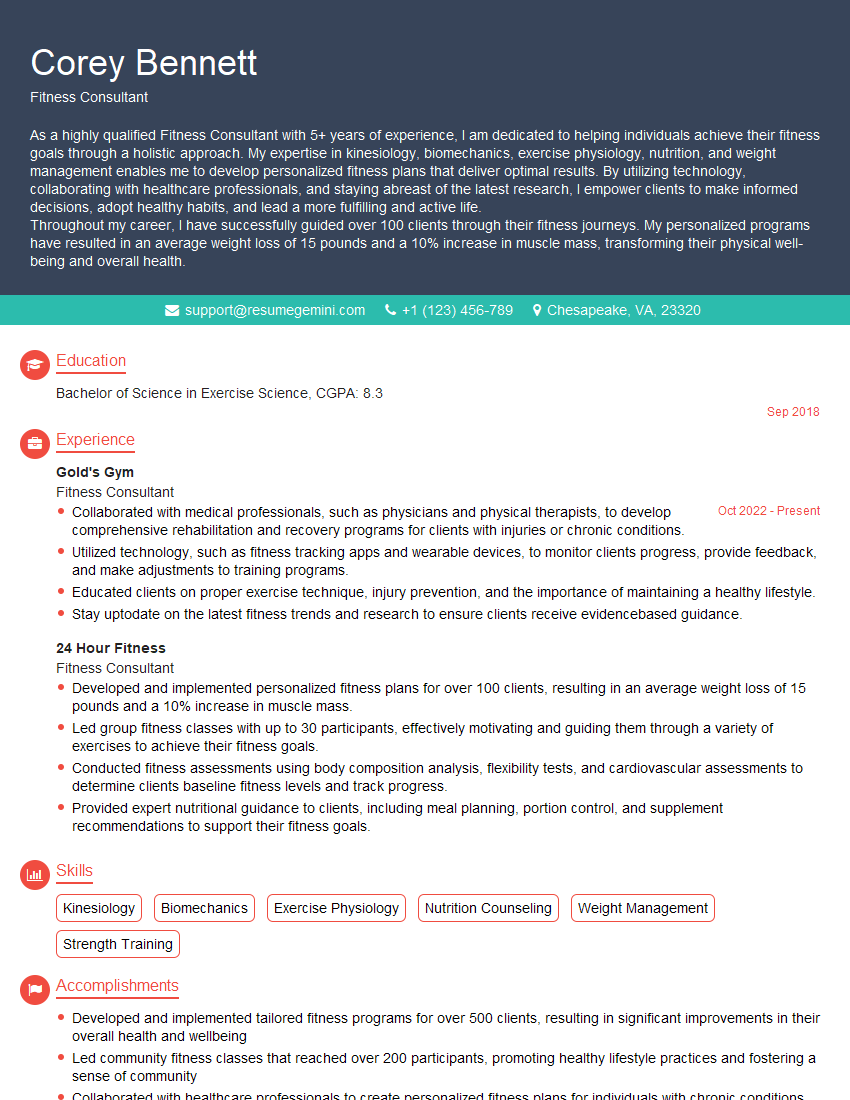
Fitness Consultant Resume Sample
Explore more articles
Users Rating of Our Blogs
Share Your Experience
We value your feedback! Please rate our content and share your thoughts (optional).
What Readers Say About Our Blog
To the interviewgemini.com Webmaster.
Very helpful and content specific questions to help prepare me for my interview!
Thank you
To the interviewgemini.com Webmaster.
This was kind of a unique content I found around the specialized skills. Very helpful questions and good detailed answers.
Very Helpful blog, thank you Interviewgemini team.