Preparation is the key to success in any interview. In this post, we’ll explore crucial Crane and Winch Operation interview questions and equip you with strategies to craft impactful answers. Whether you’re a beginner or a pro, these tips will elevate your preparation.
Questions Asked in Crane and Winch Operation Interview
Q 1. Describe the different types of cranes and their applications.
Cranes are lifting machines used across various industries. They’re broadly categorized based on their structure and operating mechanism. Here are some common types:
- Tower Cranes: These are tall, freestanding cranes commonly used in construction projects for lifting heavy materials like concrete beams and steel sections to high altitudes. Their versatility allows for reaching significant heights and covering a wide working area.
- Mobile Cranes: These cranes are mounted on a chassis with wheels or tracks, offering excellent mobility on construction sites or industrial settings. They come in various sizes, from smaller truck-mounted cranes to large all-terrain cranes used for heavy lifting.
- Overhead Cranes: These cranes are typically found in factories and warehouses. They consist of a bridge structure spanning the workspace, with a hoist trolley moving along the bridge to lift and move materials along a specific track. Their efficiency makes them ideal for repetitive material handling tasks.
- Floating Cranes: These are specialized cranes mounted on barges or ships, used for construction and maintenance of offshore structures, bridges, and other maritime projects. Their ability to operate in water environments is crucial for their unique applications.
- Gantry Cranes: Similar to overhead cranes, but instead of a bridge, they have a rigid gantry structure that can span a wide area, often used for large-scale projects.
The choice of crane depends entirely on the specific project requirements, considering factors like lifting capacity, reach, maneuverability, and the environment in which it will operate.
Q 2. Explain the load chart and its importance in crane operation.
A load chart is a crucial document that shows the crane’s safe working load (SWL) for different boom lengths and radii. It’s essentially a table or graph depicting the maximum weight the crane can safely lift under specific configurations. Think of it as a crane’s ‘instruction manual’ for safe lifting.
Its importance cannot be overstated. Operating a crane beyond its SWL significantly increases the risk of catastrophic failure – accidents like structural collapse, load dropping, or even crane tipping. The load chart ensures that the crane operator remains within safe operational parameters, minimizing the risks to personnel, equipment, and the surrounding environment. Any deviation from the load chart mandates immediate action and re-evaluation of the lifting plan.
Q 3. What are the safety regulations and procedures you follow during crane operation?
Safety is paramount in crane operation. My adherence to regulations and procedures includes:
- Pre-operation inspection: Thoroughly checking the crane’s components (brakes, ropes, hooks, etc.) before each lift.
- Following the load chart: Never exceeding the safe working load capacity under prevailing conditions.
- Proper signaling: Using clear and concise hand signals or radio communication with the signal person.
- Maintaining a safe working radius: Keeping a safe distance from obstacles and ensuring clear lift paths.
- Weather awareness: Suspending operations during adverse weather conditions like high winds or storms.
- Personal Protective Equipment (PPE): Wearing appropriate PPE, such as safety helmets, high-visibility clothing, and safety shoes.
- Emergency procedures: Familiarization with and readiness to implement emergency procedures in the event of any malfunction or accident.
- Adhering to company and industry regulations: Keeping abreast of all relevant safety legislation and best practices.
Regular training and certification are vital in maintaining a high standard of safety and proficiency.
Q 4. How do you inspect a crane before operation?
A pre-operation crane inspection is a crucial safety measure. My inspection covers the following key areas:
- Structural inspection: Checking for any signs of damage, cracks, or corrosion on the boom, jib, and other structural members.
- Mechanical inspection: Evaluating the condition of brakes, gears, hoisting mechanisms, and other moving parts. I’d check for proper lubrication and smooth operation.
- Electrical inspection: Verifying the integrity of wiring, controls, and safety devices like overload protection systems.
- Rope inspection: Carefully inspecting the wire ropes for wear and tear, fraying, kinks, or broken strands. I’d note the rope diameter and ensure it meets the required specifications.
- Hook inspection: Checking the hook for cracks, deformation, or damage, and verifying the latch mechanism is secure and functioning correctly.
- Load-indicating devices: Testing and calibrating load-indicating devices to ensure they accurately reflect the weight being lifted.
- Safety devices: Checking the functionality of limit switches, emergency stops, and other safety systems to confirm they’re working as intended.
Any issues discovered during the inspection necessitate immediate repair or replacement before operation can commence. Documentation of the inspection is essential.
Q 5. What are the different types of winch systems and their functionalities?
Winch systems are integral components of many cranes and lifting devices. They vary in their design and functionality:
- Mechanical Winches: These rely on gears and a drum to lift or lower loads. They are usually more robust and can handle heavier loads, but they’re generally less precise than electric winches.
- Electric Winches: These use an electric motor to power the drum, offering more precise control and variable speeds. They are commonly used in smaller cranes and hoists, where precise control is crucial.
- Hydraulic Winches: These utilize hydraulic power to drive the drum, offering high lifting capacities and smooth operation, often used in heavy-duty applications such as offshore cranes.
- Manual Winches: These are hand-operated winches employing a crank to rotate the drum. They’re mainly used in low-capacity applications where power sources are limited or not available.
The choice of winch depends on factors such as the required lifting capacity, lifting speed, control precision, and the power source available.
Q 6. How do you calculate the safe working load of a crane?
Calculating the safe working load (SWL) of a crane isn’t a simple calculation you do on your own; it’s determined by the manufacturer and provided in the crane’s load chart. This chart considers numerous factors such as the crane’s design, material strength, and stability at different configurations.
However, understanding the factors involved is crucial. The SWL depends on:
- Boom length: Longer booms reduce the crane’s lifting capacity.
- Boom angle: Lifting at a greater boom angle reduces the SWL.
- Radius: The distance from the crane’s center to the load also affects the SWL.
- Wind speed: High winds drastically reduce the safe load.
- Crane type and model: Each crane model has different specifications and load capacities.
Attempting to calculate the SWL yourself without using the manufacturer’s load chart is extremely dangerous and could lead to catastrophic accidents.
Q 7. Explain the concept of swing radius and its implications.
The swing radius refers to the horizontal distance from the crane’s center of rotation to the furthest point of the load being lifted. Understanding the swing radius is critical for safe crane operation.
Implications of the swing radius include:
- Obstacle clearance: The swing radius needs to be carefully assessed to ensure the load doesn’t collide with any structures, equipment, or personnel during the lift. A larger swing radius necessitates a wider clear area.
- Crane stability: Exceeding the allowable swing radius can compromise the crane’s stability, especially when lifting heavy loads. This can lead to tipping or structural damage.
- Load swing: Unexpected movements or oscillations of the load are more likely with longer swing radii, potentially resulting in accidents.
- Site planning: Accurate determination of the swing radius is essential during site planning and pre-lift assessments. Adequate space must be allocated to accommodate the crane’s full swing range.
Before any lift, a thorough assessment of the swing radius and potential obstacles within that radius is a non-negotiable safety precaution.
Q 8. What are the common causes of crane accidents and how can they be prevented?
Crane accidents, unfortunately, are often preventable. They stem from a combination of human error, equipment malfunction, and inadequate safety procedures. Common causes include:
- Operator error: This encompasses exceeding weight limits, improper rigging, insufficient training, ignoring safety protocols, and operating under the influence of drugs or alcohol. I’ve personally witnessed an incident where an operator, unfamiliar with the crane’s load chart, overloaded it, resulting in a near-miss.
- Mechanical failure: Faulty brakes, worn cables, hydraulic leaks, and structural damage can lead to catastrophic accidents. Regular inspections and preventative maintenance are crucial. I recall a case where a neglected hydraulic leak led to a sudden loss of lifting power.
- Environmental factors: High winds, poor visibility, and unstable ground conditions significantly impact crane stability. Operating in challenging conditions requires extra vigilance and potentially the use of auxiliary equipment like outriggers.
- Inadequate planning and communication: Poorly planned lifts, insufficient site risk assessments, and lack of clear communication between the crane operator and the ground crew can lead to accidents. A well-defined signal system is absolutely critical.
Prevention involves rigorous training programs, pre-operation inspections, regular maintenance, adherence to safety regulations, and fostering a strong safety culture on site. Using checklists, implementing a permit-to-work system, and employing skilled supervisors can dramatically reduce risk.
Q 9. How do you handle emergency situations during crane operation?
Emergency situations demand quick, decisive action. My approach is based on a structured process:
- Immediate shutdown: My first priority is to secure the load and bring the crane to a complete stop using the emergency stop mechanism. Safety is paramount.
- Assessment: Quickly assess the situation – what caused the emergency, what’s the extent of the damage, are there any injuries?
- Evacuation: If necessary, safely evacuate the area, ensuring everyone is clear of any potential hazards. I’ve had to coordinate this during a sudden power outage.
- Emergency services: Contact emergency services if required, providing them with the location, the nature of the emergency, and the number of people involved. Clear communication is vital here.
- Investigation: Once the emergency is under control, conduct a thorough investigation to determine the root cause. This helps to prevent similar incidents in the future. I meticulously document all aspects of the incident.
- Reporting: Complete a detailed accident report, including all relevant information, photos, and witness statements. This is essential for learning from the incident.
Regular emergency drills and training help to prepare for these situations, ensuring a swift and efficient response.
Q 10. Describe your experience with different types of crane controls.
Throughout my career, I’ve worked with various crane control systems, from traditional lever-operated controls to sophisticated computer-aided systems.
- Lever controls: These are commonly found on older cranes and require precise hand-eye coordination. Understanding the response of each lever to the crane’s movements is crucial. I’ve used these extensively on smaller tower cranes.
- Joystick controls: These offer greater precision and are more ergonomic. Many modern cranes use joystick controls, providing finer control over movements.
- Computerized controls: These systems offer advanced features like load moment indicators (LMIs), which constantly monitor the crane’s load and stability, alerting the operator to potential dangers. Working with LMIs has significantly improved my ability to operate safely under challenging conditions. I’ve found them particularly helpful on large-scale construction projects.
Regardless of the type, familiarity and proficiency are vital. I always take the time to familiarize myself with a new system’s operation before commencing any lifting operation.
Q 11. Explain the importance of proper signaling in crane operation.
Proper signaling is absolutely critical in crane operation, acting as the lifeblood of communication between the crane operator and the ground crew. Miscommunication can lead to catastrophic accidents.
Standardized hand signals are used to communicate instructions, such as hoisting, lowering, swinging, and moving the crane. These signals need to be clear, unambiguous, and universally understood by everyone involved in the lift. I’ve personally developed a system for my teams that incorporates both hand and verbal signals to reduce the chance of misinterpretation, particularly in noisy environments.
In addition to hand signals, we often employ radio communication, particularly on larger sites or when operating in poor visibility. This allows for quicker and clearer communication, reducing delays and potential risks.
Regular training on signaling procedures is essential. My team routinely practices signal recognition and execution to ensure everyone is proficient and understands the nuances of each signal. A well-trained team is a safe team.
Q 12. How do you maintain a crane’s operational efficiency?
Maintaining a crane’s operational efficiency involves a multifaceted approach encompassing proactive maintenance, operator training, and efficient logistical planning.
- Preventative Maintenance: Regular inspections, lubrication, and component replacements according to the manufacturer’s recommendations are crucial. This helps identify and address potential problems before they lead to downtime or accidents. I strictly adhere to a preventative maintenance schedule, documenting all inspections and repairs.
- Operator Proficiency: Skilled and well-trained operators are vital. Training should cover all aspects of safe operation, including emergency procedures and preventative maintenance. I always ensure my team receives regular refresher training.
- Efficient Planning: Careful planning of lifts minimizes idle time and ensures smooth operations. This includes proper rigging, load calculations, and clear communication with the ground crew. Understanding load charts and crane limitations is key to efficiency and safety.
- Technological advancements: Employing advanced technologies like load moment indicators (LMIs) can enhance efficiency by providing real-time data on load limits and crane stability.
By integrating these elements, we can ensure the crane operates reliably, safely, and cost-effectively. A well-maintained crane contributes directly to the overall project success.
Q 13. What is your experience with different types of lifting gear?
My experience with lifting gear is extensive, encompassing a wide variety of equipment tailored to different lifting needs and conditions.
- Steel wire ropes: These are ubiquitous in crane operations, but require careful inspection for wear and tear. I always check for kinks, broken wires, and corrosion.
- Synthetic slings: These offer advantages like lighter weight and higher strength-to-weight ratio, but are susceptible to UV degradation and chemical damage. Proper selection and inspection are crucial.
- Chain slings: Durable and strong, chain slings require careful inspection for elongation, deformation, and wear. I always check for any signs of damage or weakness.
- Shackles, hooks, and other hardware: All hardware must be inspected regularly for cracks, wear, and proper functionality. Damaged components must be immediately replaced.
Choosing the right lifting gear for each job is paramount. I always conduct thorough risk assessments to ensure the chosen gear is suitable for the load, the environment, and the lifting method. Incorrect selection can lead to catastrophic failure. I maintain meticulous records of each piece of equipment’s inspection and usage history.
Q 14. How do you ensure the stability of the crane during operation?
Ensuring crane stability is paramount for safe operation. My approach focuses on several key aspects:
- Proper Ground Conditions: The ground must be level, firm, and capable of supporting the crane’s weight and the load. Unstable ground can lead to tipping. I always check ground conditions before setting up a crane. In soft soil, outriggers are essential.
- Outrigger Deployment: Outriggers significantly enhance stability, particularly on uneven ground. They provide a wider base, distributing the weight and reducing the risk of tipping. I ensure outriggers are fully extended and properly leveled before lifting operations.
- Load Moment Indicator (LMI): LMIs provide real-time feedback on the crane’s load moment and capacity, helping operators avoid exceeding safe limits. I rely heavily on the LMI’s alerts to maintain stability.
- Weather Conditions: High winds can significantly impact crane stability, potentially causing the crane to tip over. Wind speed and direction must be considered before and during operations. Lifting operations are often suspended during high winds.
- Load Distribution: Improperly distributed loads can negatively affect stability. The load must be properly balanced and secured to prevent swaying or shifting during the lift. I always ensure the load is properly secured and centered.
By carefully considering these factors and using appropriate safety measures, I can significantly reduce the risk of crane instability and ensure safe operation.
Q 15. Describe your experience with troubleshooting crane malfunctions.
Troubleshooting crane malfunctions requires a systematic approach combining practical experience with a thorough understanding of the crane’s mechanics and safety regulations. My approach begins with a comprehensive safety assessment, ensuring the area is secured and personnel are at a safe distance. I then proceed with a methodical investigation, starting with the obvious – checking for any visible damage to cables, hooks, or structural components. I’ll then systematically check the control system, hydraulics (if applicable), and electrical components, looking for leaks, loose connections, or unusual sounds. For example, if the crane refuses to lift, I might check the power supply, the condition of the brake system, and the load’s weight against the crane’s capacity. If a problem persists after initial checks, I’d consult the crane’s operational manual and potentially utilize diagnostic tools to pinpoint the exact issue. I always prioritize safety and, if unsure of the problem’s root cause, I will immediately shut down the crane and call for qualified maintenance personnel.
During my time at [Previous Company Name], I successfully diagnosed and resolved a malfunction where the crane’s hoisting mechanism suddenly stopped responding. After eliminating simple issues like power failure and loose connections, a closer examination revealed a faulty hydraulic valve. Replacing the faulty component quickly restored functionality, minimizing downtime and preventing potential safety hazards.
Career Expert Tips:
- Ace those interviews! Prepare effectively by reviewing the Top 50 Most Common Interview Questions on ResumeGemini.
- Navigate your job search with confidence! Explore a wide range of Career Tips on ResumeGemini. Learn about common challenges and recommendations to overcome them.
- Craft the perfect resume! Master the Art of Resume Writing with ResumeGemini’s guide. Showcase your unique qualifications and achievements effectively.
- Don’t miss out on holiday savings! Build your dream resume with ResumeGemini’s ATS optimized templates.
Q 16. How do you conduct a pre-lift plan?
A pre-lift plan is critical for ensuring a safe and efficient lift. It’s essentially a detailed checklist that outlines every aspect of the lift, from start to finish. First, I’d thoroughly assess the load itself: its weight, dimensions, center of gravity, and any unique characteristics that might affect the lift. Next, I inspect the crane and its components, verifying its capacity exceeds the load weight and that all components are in good working order. I’ll then carefully evaluate the lifting environment: the ground conditions, any obstructions, wind speed and direction (crucial for safety), and the proximity of power lines or other hazards. The plan also defines the lifting path, considering any obstacles, swing radii, and potential conflicts with other equipment or personnel. Finally, I would create a communication plan to ensure seamless coordination between the crane operator and the ground crew. This includes establishing clear hand signals, using radio communication for larger jobs, and defining emergency procedures.
For instance, when lifting a particularly large or heavy object, I’d create a detailed diagram of the lift path, noting the precise location of all support points and the movement sequence. I’d also incorporate a risk assessment, anticipating potential problems and outlining mitigation strategies.
Q 17. What is your understanding of load charts and weight distribution?
Load charts are essential documents that specify a crane’s lifting capacity under various conditions – radius, boom angle, etc. They’re crucial for safe operation because exceeding the crane’s rated capacity can lead to catastrophic failure. Understanding load charts requires knowing how to interpret their data, including the relationship between the load weight, the boom length (or radius), and the crane’s overall stability. Weight distribution is equally vital, as unevenly distributed loads can cause instability and toppling. I always ensure the load’s center of gravity is properly centered to minimize the risk of tipping. For example, I might use rigging techniques such as slings or spreader beams to distribute the weight of a large, oddly shaped object evenly.
Imagine lifting a heavy steel beam. A load chart will dictate the maximum allowable weight the crane can lift at a particular radius. If the beam’s weight exceeds the chart’s value for the chosen radius, I’d either use a different crane with greater capacity or adjust the boom length to operate within the safe limits.
Q 18. Describe your experience with different types of winch drums and their maintenance.
Winch drums come in various designs, including cylindrical, conical, and grooved drums. The choice depends on the application and the type of rope used. Cylindrical drums are common for general-purpose applications, while conical drums provide better rope winding, minimizing rope damage and wear. Grooved drums are designed for specific rope types, ensuring optimal grip and preventing rope slippage. Maintenance of winch drums is crucial and involves regular inspections for wear and tear, corrosion, and damage to the drum surface. I check for rope damage or fraying and ensure the drum is correctly spooled, avoiding overlapping or uneven winding. Lubrication of moving parts is crucial, preventing friction and wear. I also inspect the drum’s braking system, regularly testing its functionality to guarantee safe operation.
During my career, I’ve worked with both cylindrical and conical drums. In one instance, I noticed uneven wear on a cylindrical drum, indicating a possible issue with the rope or the drum itself. Further inspection revealed a slightly bent drum flange, requiring replacement to prevent potential accidents.
Q 19. How do you handle different types of weather conditions during crane operation?
Weather conditions significantly impact crane operation safety. High winds pose the greatest risk, causing instability and increasing the potential for load swing. I would always consult up-to-date weather forecasts before commencing any lift. If wind speeds exceed safe operating limits (specified in the crane’s manual and local regulations), I’d postpone the lift. Heavy rain and snow can reduce visibility and affect ground conditions, potentially increasing the risk of accidents. I’d take extra precautions such as using additional lighting, implementing ground control measures and potentially using anti-slip materials. Extreme temperatures can affect the crane’s components, requiring modifications to operation parameters or delays. I’d always prioritize safety and defer lifts until conditions are favorable.
For example, during a particularly windy day, I reduced the crane’s load capacity based on the wind speed and ensured a larger safety margin during the lift. I also had ground personnel monitor the load for any unexpected swing.
Q 20. How do you communicate effectively with ground personnel?
Effective communication with ground personnel is paramount to safe crane operation. Clear, concise, and unambiguous communication is essential, using a combination of hand signals, radio communication (for larger or more complex jobs), and pre-determined verbal commands. Before the lift begins, I establish a clear communication plan, ensuring everyone understands their roles and responsibilities. Hand signals should be consistent with industry standards and clearly visible. Radio communication allows for real-time feedback and coordination, especially in noisy environments or when distances are significant. I also emphasize the importance of reporting any potential hazards or concerns immediately. Open communication and mutual respect create a safe and efficient working environment.
In one project, we established a series of hand signals and radio callouts to coordinate the movement of the load around multiple obstacles. This ensured smooth operation and prevented any delays or accidents.
Q 21. What are the different types of crane hooks and their applications?
Crane hooks are essential lifting components and come in various types, each suited to specific applications. Standard hooks are generally used for lifting simple, symmetrical loads. Clevis hooks provide a better gripping method for lifting heavy loads. Grab hooks, often used in demolition or scrapyard operations, are designed to clamp onto loads. Safety hooks offer enhanced safety features, such as latch mechanisms that prevent accidental disengagement. The choice of hook depends on the load’s characteristics, the lifting environment, and safety regulations. Selecting the wrong type of hook can lead to catastrophic failures and accidents.
For example, while lifting a bundle of steel bars, I’d choose a hook with sufficient strength and a design that ensures even load distribution to prevent the bars from shifting during the lift. If the load was particularly unstable, I’d use a safety hook with a latch to ensure it remains securely attached throughout the lift.
Q 22. Describe the different types of wire rope and their maintenance.
Wire ropes are the lifeline of any crane or winch system, and their type significantly impacts performance and safety. Different types are chosen based on the application’s demands for strength, flexibility, and resistance to abrasion or corrosion.
- 6×19: This is a common type, offering a good balance of strength and flexibility. The ‘6’ refers to six strands, and the ’19’ indicates 19 wires per strand. It’s versatile and suitable for general lifting.
- 6×36: A more flexible option than 6×19, often preferred for applications requiring frequent bending, such as on winches with smaller drums. However, it’s slightly less strong.
- 6×7: Stronger and more resistant to abrasion than 6×19 or 6×36, but significantly less flexible. It’s used where durability is paramount, even at the cost of reduced bending cycles.
- Stainless Steel: Used in corrosive environments, offering superior resistance to rust and weathering compared to standard steel ropes. However, it can be more expensive.
Maintenance is crucial for extending the lifespan and ensuring the safety of wire ropes. This includes regular inspections for broken wires, corrosion, kinks, and deformation. Lubrication is key to reducing wear and tear. Proper storage, away from harsh weather and sharp objects, is also vital. A damaged wire rope should be immediately replaced, never repaired.
For example, during a recent project involving offshore lifting, we opted for stainless steel wire ropes due to the saltwater environment. Regular inspections revealed minor corrosion on a few sections, prompting immediate lubrication and close monitoring.
Q 23. How do you conduct a thorough inspection of wire ropes and slings?
A thorough inspection is non-negotiable for safe crane and winch operation. It should be conducted before each use and after any significant event, such as a near miss or heavy impact.
Wire Ropes: I start by carefully examining the entire length of the rope, looking for:
- Broken wires: Even a small number of broken wires indicates significant weakening.
- Corrosion: Rust weakens the rope’s structure, especially in strands where it’s concentrated.
- Kinks or deformations: These stress points drastically reduce strength.
- Bird-caging: This is a dangerous condition where the rope strands separate, compromising its integrity.
- Wear on the outer wires: Excessive wear shows repeated stress and indicates potential internal damage.
Slings: Similar to ropes, I check slings for:
- Tears or cuts: Any damage compromises the load-bearing capacity.
- Burns: These weaken the fibers and should be cause for immediate replacement.
- Excessive wear: Fraying or deterioration at attachment points needs attention.
- Proper tagging and certifications: Ensure slings are rated for the appropriate weight limit and have valid certifications.
I document all findings and make recommendations for repair or replacement as needed. A systematic approach ensures all potential hazards are identified.
Q 24. What is your understanding of the different types of crane brakes?
Crane brakes are critical for controlling the load and preventing accidents. Several types exist, each with its strengths and weaknesses:
- Mechanical Brakes: These are often drum brakes, relying on friction to stop the load. They are robust and reliable but require regular maintenance and can be subject to wear and tear. Regular inspection of the brake linings and adjustments are crucial.
- Electric Brakes: These use electric motors to engage and disengage the brake. They offer precise control and can be easily integrated with automatic safety systems. However, they rely on power, and a power failure can lead to brake failure.
- Hydraulic Brakes: These use hydraulic pressure to activate the brakes, providing smooth and powerful stopping. They are often used on larger cranes and require regular inspection of hydraulic fluid levels and pressure. Leaks can be hazardous.
- Regenerative Brakes: These are found on more advanced systems, converting kinetic energy into electrical energy during braking, improving efficiency and reducing wear on the mechanical brakes.
Understanding the specific type of brake on each crane is crucial for safe operation and maintenance. I always refer to the crane’s maintenance manual to confirm the type of brake and the associated maintenance procedures. In case of brake failures, emergency procedures are rigorously followed.
Q 25. Explain your experience with using different types of rigging equipment.
My experience encompasses a wide range of rigging equipment, including:
- Wire rope slings: Used frequently for various lifting tasks, requiring careful selection based on load capacity and sling angle. I’m adept at using different types of wire rope slings, including single-leg, two-leg, three-leg, and four-leg slings.
- Synthetic slings: These are lighter than wire rope slings and offer flexibility. They are used in situations where abrasion resistance and impact resistance are important, but careful inspection is needed for wear and tear.
- Chain slings: Strong and durable but can be susceptible to damage from impact. I pay careful attention to the condition of the hooks and links and ensure the chain is properly lubricated.
- Shackles: Used to connect different rigging components. I ensure that shackles are appropriately rated for the load and are correctly sized.
- Eye bolts and hooks: These are used as attachment points and require careful attention to their condition.
I have experience selecting the right rigging equipment for different jobs, considering factors such as load weight, load characteristics, and environmental conditions. I always prioritize safety, ensuring that all components are in good condition and within their working load limits.
For example, in one project, we used synthetic slings for handling delicate equipment, avoiding any damage caused by abrasion during lifting.
Q 26. Describe your experience with load testing cranes and winches.
Load testing is a critical aspect of ensuring crane and winch safety and compliance. I have extensive experience in performing and overseeing load tests for both cranes and winches, following established safety protocols and regulatory requirements.
The process typically involves:
- Planning: Determining the test load, selecting appropriate instrumentation (load cells, strain gauges), and ensuring the presence of qualified personnel.
- Preparation: Properly rigging the test load and establishing communication between the crane operator and the test team.
- Execution: Gradually lifting the test load to the specified weight, monitoring the crane’s behavior throughout the process. This includes checking for deflection, stability, and any unusual sounds or vibrations.
- Documentation: Meticulously recording all observations, including the load applied, crane response, and any anomalies detected. All data is recorded and compared against the crane’s specifications.
- Post-Test Inspection: Thorough inspection of all components after the test, checking for signs of damage or stress.
I have conducted load tests on various types of cranes and winches, including overhead cranes, tower cranes, and mobile cranes. A recent load test on an overhead crane revealed a slight deflection exceeding the acceptable limit, leading to further inspection and minor adjustments to the crane’s structure. This prevented a potential hazard.
Q 27. What safety measures would you take while operating a crane near power lines?
Operating a crane near power lines is extremely hazardous due to the risk of electrocution. Strict safety measures must be followed:
- Maintain a safe distance: The minimum safe distance depends on the voltage of the power lines and should be determined based on local regulations and best practices. This distance is never underestimated.
- Utilize spotters: Dedicated spotters are essential to monitor the crane’s position relative to the power lines, providing continuous communication with the operator.
- Employ power line safety procedures: These procedures often involve de-energizing the power lines, if possible, or using specialized equipment to maintain a safe distance.
- Utilize non-conductive materials: Non-conductive materials should be used wherever possible in the rigging process.
- Crane operator training: Operators must receive specific training on how to safely operate near power lines, emphasizing the risks and mitigation strategies.
In any situation involving proximity to power lines, the risk assessment must prioritize safety above all else. If there is any uncertainty about the safety of an operation, the work should be halted immediately.
Q 28. Explain your experience with maintaining accurate crane logbooks and records.
Accurate crane logbooks and records are essential for safety, maintenance, and compliance. I have consistently maintained detailed and accurate records throughout my career, adhering to company policies and industry best practices.
My record-keeping typically includes:
- Pre-operational inspections: Recording details of pre-operational inspections, including any findings and corrective actions.
- Operating hours: Tracking the operating hours of each crane and winch.
- Maintenance records: Documenting all scheduled and unscheduled maintenance activities, including parts replaced and repairs made.
- Load details: Recording the weight and nature of each load lifted, ensuring consistency with rated capacities.
- Incident reports: Any near misses or accidents are thoroughly documented, along with the investigation findings and corrective measures.
- Operator certifications: Maintaining records of the certifications and training of all crane operators.
Maintaining such records not only fulfills regulatory requirements but also aids in identifying potential problems early, improves maintenance planning, and contributes significantly to preventing accidents. It serves as an invaluable resource in any investigation or analysis.
Key Topics to Learn for Crane and Winch Operation Interview
- Crane and Winch Mechanics: Understanding the fundamental principles of load bearing, weight distribution, and the mechanical advantages provided by different crane and winch systems. Consider exploring different types of cranes (tower, mobile, etc.) and their unique operational characteristics.
- Safe Operating Procedures (SOPs): Thorough knowledge of industry-standard safety protocols, including pre-operational checks, load securing techniques, emergency procedures, and hazard identification. Be prepared to discuss practical application of these procedures in various scenarios.
- Load Calculations and Stability: Mastering the ability to accurately calculate load weights, center of gravity, and ensure structural stability during lifting operations. This includes understanding the impact of wind, terrain, and other environmental factors.
- Signal Communication and Teamwork: Demonstrate understanding of effective communication methods with crane operators and ground crew, including hand signals, radio communication, and the importance of clear and concise instructions.
- Troubleshooting and Maintenance: Familiarity with common crane and winch malfunctions, basic troubleshooting techniques, and preventative maintenance procedures. Be ready to discuss your problem-solving approach in hypothetical situations.
- Regulations and Compliance: Knowledge of relevant safety regulations, industry standards, and legal requirements pertaining to crane and winch operation in your region. This demonstrates your commitment to safety and responsible operation.
Next Steps
Mastering Crane and Winch Operation opens doors to rewarding and high-demand careers in construction, manufacturing, and logistics. A strong foundation in these skills translates to increased earning potential and career advancement opportunities. To secure your dream role, a well-crafted resume is essential. Creating an ATS-friendly resume that highlights your skills and experience effectively is crucial for getting noticed by potential employers. ResumeGemini is a trusted resource to help you build a professional and impactful resume that showcases your qualifications in the best possible light. Examples of resumes tailored specifically for Crane and Winch Operation positions are available through ResumeGemini, giving you a head start in your job search.

Equipment Inspector Resume Sample

Crane Operator Resume Sample

Heavy Equipment Operator Resume Sample

Hoisting Engineer Resume Sample

Rigger Resume Sample

Crane Mechanic Resume Sample
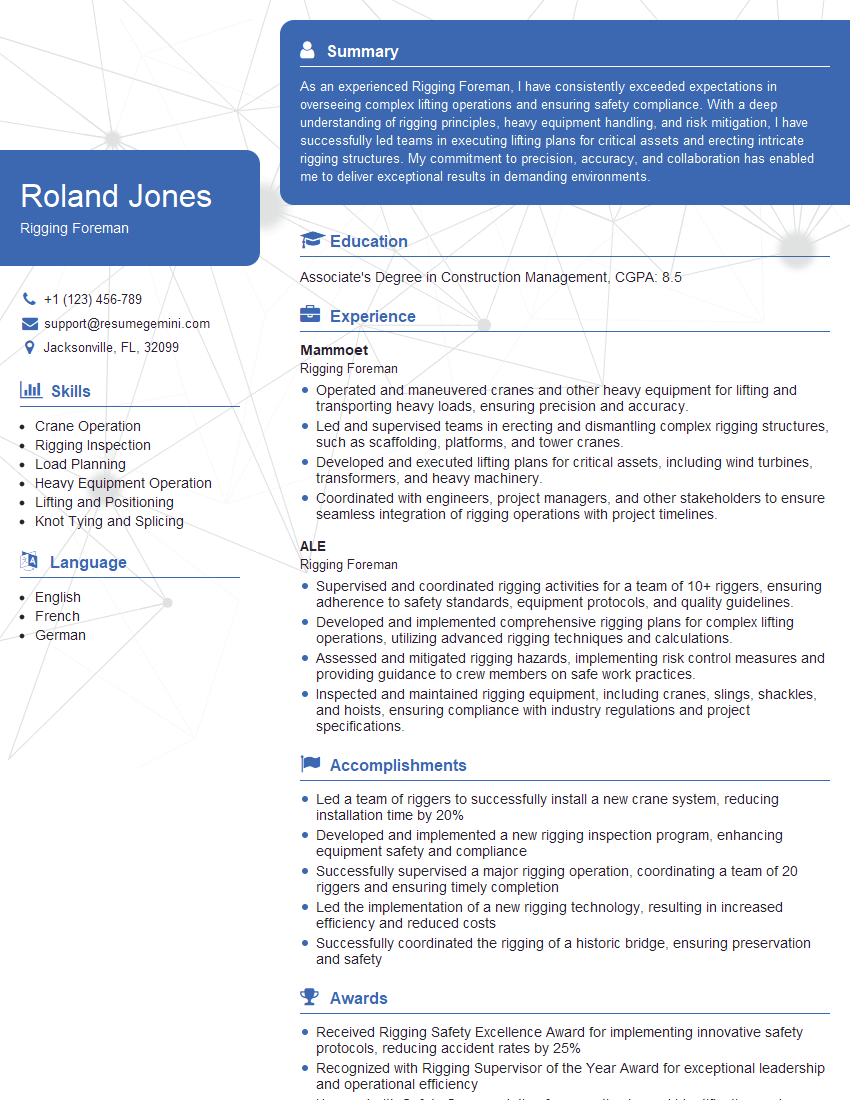
Rigging Foreman Resume Sample

Derrickman Resume Sample

Gantry Crane Operator Resume Sample

Mobile Crane Operator Resume Sample

Overhead Crane Operator Resume Sample

Tower Crane Operator Resume Sample

Winch Operator Resume Sample
Explore more articles
Users Rating of Our Blogs
Share Your Experience
We value your feedback! Please rate our content and share your thoughts (optional).
What Readers Say About Our Blog
To the interviewgemini.com Webmaster.
Very helpful and content specific questions to help prepare me for my interview!
Thank you
To the interviewgemini.com Webmaster.
This was kind of a unique content I found around the specialized skills. Very helpful questions and good detailed answers.
Very Helpful blog, thank you Interviewgemini team.