Cracking a skill-specific interview, like one for Customs and Regulations, requires understanding the nuances of the role. In this blog, we present the questions you’re most likely to encounter, along with insights into how to answer them effectively. Let’s ensure you’re ready to make a strong impression.
Questions Asked in Customs and Regulations Interview
Q 1. Explain the difference between Harmonized System (HS) codes and country-specific tariff codes.
The Harmonized System (HS) codes and country-specific tariff codes are both crucial for classifying goods in international trade, but they operate at different levels. Think of the HS code as the global language, while country-specific codes are the local dialects.
The HS code is a standardized, six-digit code developed by the World Customs Organization (WCO). It provides a common classification system for goods across most countries, facilitating smoother international trade. It’s the foundation upon which national tariff codes are built.
Country-specific tariff codes expand on the HS code. Each country adds its own digits to the six-digit HS code, creating a more detailed classification that reflects its specific tariff rates, regulations, and trade policies. This means a product might have an HS code of 8471.30 (Automatic data processing machines and units), but the United States might have its own tariff code, which could be 8471.30.5000 for example, with those extra digits adding specificity and reflecting US import duties.
In essence, the HS code is the universal starting point, while the country-specific code adds the country-specific details necessary for customs processing.
Q 2. Describe the process of classifying goods under the HS Code system.
Classifying goods under the HS Code system involves a careful examination of the product’s characteristics and a systematic search through the HS nomenclature. It’s like solving a puzzle, where each piece of information points to the correct code.
The process typically involves:
- Detailed product description: Start with a precise description of the goods, including materials, function, and intended use.
- Consulting the HS Nomenclature: Use the official HS code publication or online databases to locate the appropriate section, chapter, heading, and subheading based on the product characteristics.
- Legal interpretation of headings and subheadings: Pay close attention to the wording of each heading and subheading, as the language is precise and legalistic. Look for terms like ‘including,’ ‘excluding,’ ‘consisting of,’ which guide interpretation.
- Considering binding rulings: If there’s ambiguity, seeking a binding ruling from the customs authority of the importing country can provide a definitive classification. This is like getting a professional opinion to resolve a puzzle.
- Referencing explanatory notes: The WCO publishes explanatory notes for each heading, providing guidance on the interpretation of the code. These notes offer valuable insights and practical examples.
For example, classifying a ‘wooden chair’ would involve navigating through the HS chapters on furniture, considering the type of wood used, its construction, and intended use before arriving at the correct HS code. Inconsistencies can lead to delays and disputes.
Q 3. What are the key components of an import/export declaration?
An import/export declaration is a critical document submitted to customs authorities detailing the goods being shipped. Imagine it as the customs officer’s passport for your goods, ensuring they can cross borders legally.
Key components typically include:
- Importer/Exporter information: Contact details and business registration numbers.
- Consignee/Shipper information: Details of the party receiving/sending the goods.
- HS Code: The correct Harmonized System code for the goods.
- Quantity and description of goods: Precise details about the items being shipped.
- Country of origin: Where the goods were manufactured or produced.
- Incoterms: The agreed-upon international commercial terms that define responsibilities of the buyer and seller.
- Mode of transport: How the goods are being transported (sea, air, land).
- Value of goods: The declared commercial invoice value.
- Invoice and supporting documents: Proof of purchase and other relevant documentation.
Providing inaccurate information in an import declaration can result in delays, penalties, and even seizure of goods.
Q 4. Explain the concept of ‘rules of origin’ and their importance in international trade.
‘Rules of origin’ are regulations that determine the national origin of goods. They’re essential because they determine the preferential tariff treatments available under trade agreements and are essentially the ‘birth certificate’ of your product in trade.
Imagine importing furniture. The rules of origin dictate whether the furniture is eligible for reduced tariffs under a free trade agreement. If the furniture is manufactured mainly in a country with a preferential trade agreement, it may enjoy lower import duties, and this is critical for competitiveness. If not, standard tariffs apply.
The importance of rules of origin in international trade is multifaceted:
- Tariff preferences: They determine eligibility for lower or zero tariffs under free trade agreements.
- Trade statistics: They allow for the accurate tracking of trade flows between countries.
- Anti-dumping measures: They help to prevent unfair trade practices like dumping (selling goods below cost).
- Trade restrictions: They can influence quotas and other trade restrictions.
Rules of origin can be quite complex, often involving percentage thresholds of local content, processing requirements, and other criteria. Non-compliance leads to penalties and loss of tariff benefits.
Q 5. What are the different types of customs duties and how are they calculated?
Customs duties are taxes levied on imported goods. They’re a significant source of government revenue and can significantly impact import costs.
Different types of duties include:
- Ad valorem duties: A percentage of the value of the goods. For example, a 10% ad valorem duty on a $100 item would be $10.
- Specific duties: A fixed amount per unit of goods. For instance, $1 per kilogram of imported sugar.
- Compound duties: A combination of ad valorem and specific duties. This offers a more nuanced approach for customs valuation.
- Anti-dumping duties: Additional duties imposed to counter unfair trade practices.
- Countervailing duties: Duties levied to offset government subsidies in the exporting country.
Calculating duties usually involves applying the appropriate tariff rate (determined by the HS Code) to the declared value of the goods and any additional taxes or fees like VAT (Value Added Tax).
For instance, if an ad valorem rate is 5% and the value of the goods is $1000, the duty would be $50. Different countries have different duty calculation methods, so it is always important to understand the specific rules and regulations of the importing country.
Q 6. What are free trade agreements (FTAs) and how do they impact import/export processes?
Free Trade Agreements (FTAs) are treaties between two or more countries that eliminate or reduce tariffs and other trade barriers. They’re like mutual agreements to foster trade cooperation and reduce friction for smoother international exchange.
The impact on import/export processes is substantial:
- Reduced tariffs: Lower or zero tariffs on goods traded between FTA member countries, resulting in lower import costs and increased competitiveness.
- Simplified customs procedures: FTAs often include streamlined customs procedures to accelerate clearance of goods.
- Rules of origin: Specific rules of origin are defined to determine eligibility for preferential tariff treatment.
- Increased trade volume: FTAs tend to boost trade volumes as businesses take advantage of the reduced barriers.
- Investment opportunities: FTAs often stimulate foreign direct investment by providing greater market access.
For example, the EU’s FTA with several African countries allows preferential access to their markets, which can improve export opportunities for businesses in the EU. However, understanding and meeting the rules of origin under an FTA are crucial for businesses to fully benefit.
Q 7. Explain the importance of maintaining accurate records for customs compliance.
Maintaining accurate records is paramount for customs compliance. It’s like keeping a detailed logbook for your trade journey, demonstrating that your business operates with integrity and transparency.
The importance lies in:
- Avoiding penalties and fines: Accurate records facilitate smooth customs clearances and prevent penalties for non-compliance.
- Facilitating audits: Well-maintained records enable efficient customs audits and demonstrate adherence to regulations.
- Supporting claims: Accurate documentation helps support any claims for duty refunds or drawback benefits.
- Demonstrating compliance: Comprehensive records provide concrete evidence that your business complies with customs laws and regulations.
- Risk management: Robust record-keeping minimizes the risk of disputes or legal challenges.
Imagine a scenario where a customs audit requires proof of origin for imported materials. Without meticulous records, it would be very difficult to defend the classification of products and demonstrate compliance. Companies should implement a robust record-keeping system to manage import and export documentation, including invoices, certificates of origin, packing lists, and transport documents.
Q 8. How do you handle a customs audit?
A customs audit is a thorough examination of a company’s import and export records by customs authorities to verify compliance with regulations. Think of it like a tax audit, but focused on international trade. Handling one effectively requires meticulous preparation and proactive collaboration with the auditing team.
My approach involves:
- Pre-audit preparation: This includes a comprehensive review of all relevant documentation – invoices, packing lists, certificates of origin, etc. – to identify and rectify any potential inconsistencies or discrepancies before the audit begins.
- Organized record-keeping: Maintaining a well-organized, easily accessible system for all import/export records is crucial. I utilize a combination of electronic and physical filing systems, ensuring all data is readily available.
- Clear communication: Open and transparent communication with the auditors is paramount. I ensure prompt responses to their queries and provide clear explanations for any questionable entries. I often create a detailed presentation summarizing our compliance efforts.
- Professional representation: In complex cases, engaging a qualified customs attorney or consultant can be beneficial to navigate legal intricacies and ensure the best possible outcome.
- Post-audit review: After the audit, a thorough review of the findings is crucial. This helps identify weaknesses in internal controls and implement improvements to prevent future issues.
For example, during a recent audit, we proactively identified a minor discrepancy in the classification of a specific product. By addressing this immediately, we avoided any penalties and demonstrated our commitment to compliance.
Q 9. What are some common customs violations and their penalties?
Common customs violations often stem from unintentional errors or a lack of understanding of regulations. However, the penalties can be substantial, ranging from financial fines to legal repercussions.
- Incorrect classification of goods: Misclassifying goods under the wrong Harmonized System (HS) code can lead to significant penalties because duties and taxes are directly tied to the classification. For instance, misclassifying a product could result in higher tariffs or even the triggering of import restrictions.
- Valuation discrepancies: Incorrectly declaring the value of goods can lead to underpayment of duties and fines. This includes undervaluing goods to evade taxes or overvaluing them to claim unjustified benefits.
- Failure to provide proper documentation: Missing or incomplete documentation, such as certificates of origin or permits, can delay shipments and lead to penalties. Think of it as having an incomplete application – it won’t be processed.
- Sanctions violations: Exporting goods to sanctioned countries or entities can have severe legal consequences, including heavy fines and criminal charges. This area requires exceptional diligence and adherence to constantly evolving regulations.
- Fraudulent activities: Intentionally misrepresenting goods or engaging in other fraudulent activities is a serious offense with severe consequences, including hefty fines, criminal prosecution and potential business closure.
Penalties vary by jurisdiction and the severity of the violation. They can include monetary fines, seizure of goods, delays in processing shipments, and even criminal prosecution in severe cases. Understanding these risks is crucial to building a strong compliance program.
Q 10. Describe your experience with different Incoterms (Incoterms 2020).
Incoterms 2020 are standardized trade terms that define responsibilities of buyers and sellers in international transactions. My experience encompasses a broad range of these terms, understanding their nuances and implications for risk allocation and cost management.
- EXW (Ex Works): The seller’s responsibility is minimal; the buyer bears all costs and risks from the seller’s premises. I’ve used this term in situations where the buyer has its own logistics system and wants maximum control.
- FCA (Free Carrier): The seller is responsible for delivering goods to the specified carrier. This is commonly used for shipments where the buyer arranges freight forwarding.
- CPT (Carriage Paid To): The seller pays for carriage to a named destination. I find this useful for smaller businesses lacking extensive logistics experience.
- CIP (Carriage and Insurance Paid To): Similar to CPT, but the seller also procures insurance. This provides extra security for the buyer, particularly in high-value shipments.
- DAP (Delivered at Place): The seller delivers goods to the named place, cleared for import. This is helpful when the buyer wants to minimize their involvement in import processes.
- DPU (Delivered at Place Unloaded): Similar to DAP but includes unloading the goods at the named place. This is beneficial for buyers needing assistance with unloading large or heavy goods.
- DDP (Delivered Duty Paid): The seller bears all costs and risks until the goods reach the buyer’s premises, including import duties and taxes. This is often used in transactions where a high degree of responsibility lies with the seller.
Selecting the appropriate Incoterm is critical for clear contractual terms and avoiding disputes. I always ensure that the selected Incoterm aligns with the specific needs and risk tolerance of both the buyer and seller. The selection process includes a detailed analysis of transportation modes, insurance requirements, and import/export regulations.
Q 11. How do you ensure compliance with sanctions and embargo regulations?
Ensuring compliance with sanctions and embargo regulations is critical for avoiding severe legal and financial repercussions. This requires a multi-layered approach:
- Due diligence: This involves thoroughly screening all business partners and customers to identify any links to sanctioned entities or countries. I utilize specialized screening databases and regularly update our screening protocols.
- Transaction monitoring: Continuous monitoring of all transactions is necessary to identify any red flags, such as unusual patterns or high-risk transactions.
- Regulatory updates: Sanctions and embargo regulations are constantly evolving. Staying informed about these changes through regular briefings and subscription to relevant updates is paramount.
- Internal controls: Strong internal controls, including documented procedures and regular audits, are essential to maintaining compliance. These controls ensure that the screening and monitoring processes are effective.
- Training and awareness: Regular training programs educate employees about sanctions compliance. This helps to build a culture of compliance within the organization.
For example, if a shipment destination is flagged as being in a sanctioned territory, we will immediately halt the process and conduct a thorough review. This proactive approach minimizes the risk of violations and safeguards our business’ reputation.
Q 12. What is the difference between formal and informal entry processes?
The choice between formal and informal entry processes depends on the value and type of goods being imported. Essentially, formal entry is more thorough and required for higher-value or more complex shipments.
- Formal Entry: This involves a detailed declaration submitted electronically through a designated customs system, usually requiring extensive documentation and a higher level of scrutiny. It’s mandatory for goods exceeding a certain value threshold (specific limits vary by country). Think of this as a comprehensive application for importing something valuable.
- Informal Entry: This is a simplified process for lower-value goods, often involving a streamlined declaration and less rigorous documentation requirements. It is faster but has limitations in the types and value of goods that can be processed. This is like a simplified form for less important imports.
The choice between these methods impacts the time it takes to process the shipment and the amount of paperwork required. Accuracy in selecting the appropriate entry process is vital to avoid delays and penalties. An experienced customs professional can help businesses determine the best approach for each specific shipment.
Q 13. Explain the process of obtaining a customs broker license.
The process for obtaining a customs broker license varies by country but generally involves meeting specific educational and experience requirements, passing an exam, and undergoing a background check.
Typically, the steps include:
- Meeting eligibility criteria: This often includes possessing a certain level of education, relevant experience in international trade, and demonstrating financial stability.
- Submitting an application: The application process involves completing detailed forms and providing supporting documentation, such as references and background checks.
- Passing a licensing examination: A comprehensive exam tests knowledge of customs laws, regulations, and procedures.
- Background check and fingerprinting: Thorough background checks are conducted to ensure the applicant’s suitability for handling sensitive customs information.
- Bonding and insurance: Providing a surety bond or insurance guarantees the applicant’s financial responsibility for potential errors or violations.
- License issuance and ongoing compliance: Once approved, the license is issued, subject to ongoing compliance with professional standards and regulations.
The process is rigorous to ensure only qualified professionals handle sensitive trade information and uphold the integrity of customs processes. Failure to adhere to these requirements can result in license revocation.
Q 14. How do you determine the correct valuation of goods for customs purposes?
Determining the correct valuation of goods for customs purposes is crucial for accurate duty and tax calculations. The World Customs Organization (WCO) provides guidelines, with the primary method being the transaction value. This means the price actually paid or payable for the goods when sold for export to the country of importation.
However, other methods can be applied if the transaction value cannot be reliably determined, including:
- Transaction value of identical goods: If the transaction value isn’t readily available, the value of identical goods sold to the same buyer at the same time is used.
- Transaction value of similar goods: If neither identical nor comparable transactions exist, similar goods may be used, with necessary adjustments.
- Deductive value: This method deducts the value of profit, transportation, and other costs from the price at which the imported goods are first resold in the country of importation.
- Computed value: This is used as a last resort when other methods aren’t applicable and involves determining the value based on factors such as the cost of production and expenses incurred.
Accurate valuation requires careful consideration of all costs and charges associated with the goods, including insurance, freight, and other incidental expenses. Misvaluing goods leads to either underpayment or overpayment of customs duties which is why meticulous record-keeping and professional expertise are essential.
Q 15. What are the implications of misclassifying goods for customs purposes?
Misclassifying goods for customs purposes has severe implications, potentially leading to significant financial penalties and legal repercussions. It’s like trying to sneak a prohibited item onto a plane – you’ll face consequences.
Incorrect classification can result in:
- Higher duties and taxes: If you understate the value or incorrectly categorize your goods, you’ll likely pay less than the legally required amount, leading to hefty back taxes and penalties once discovered.
- Delays in shipment: Customs authorities will hold the shipment for further investigation, disrupting your supply chain and potentially impacting deadlines.
- Legal action: In severe cases, particularly involving intentional misclassification or fraudulent activity, you could face criminal charges and hefty fines.
- Reputational damage: Being flagged for customs violations can severely damage your company’s reputation, making it harder to secure future business.
Example: Importing a product classified as ‘toys’ when it actually contains hazardous materials (requiring a different, more stringent classification) could result in significant fines and the potential recall of the product.
Career Expert Tips:
- Ace those interviews! Prepare effectively by reviewing the Top 50 Most Common Interview Questions on ResumeGemini.
- Navigate your job search with confidence! Explore a wide range of Career Tips on ResumeGemini. Learn about common challenges and recommendations to overcome them.
- Craft the perfect resume! Master the Art of Resume Writing with ResumeGemini’s guide. Showcase your unique qualifications and achievements effectively.
- Don’t miss out on holiday savings! Build your dream resume with ResumeGemini’s ATS optimized templates.
Q 16. What are your preferred resources for staying up-to-date on customs regulations?
Staying current on customs regulations requires a multi-pronged approach. I rely on several key resources:
- Official government websites: These provide the most accurate and up-to-date information on regulations specific to each country’s customs authority.
- Specialized trade publications and journals: Publications like the Journal of International Trade Law offer in-depth analysis and commentary on changes and emerging trends in customs law.
- Industry associations and professional networks: Organizations such as the Customs Brokers and Forwarders Association of America (CBFAA) offer educational resources, networking opportunities, and insights into regulatory developments.
- Customs brokers and consultants: These experts provide guidance on navigating customs procedures and staying updated on the latest regulations. They are invaluable partners in reducing customs-related risk.
- Legal counsel specialized in international trade law: For complex issues, their expertise is crucial for correct interpretations and risk mitigation.
Q 17. Explain the process of appealing a customs decision.
Appealing a customs decision is a formal process, typically involving several steps and a specific timeframe. Think of it as a carefully structured legal process, similar to appealing a court ruling.
The process usually involves:
- Filing a formal appeal: This requires a detailed explanation of the reasons for disagreeing with the customs decision, supported by evidence.
- Providing supporting documentation: This includes any documentation relevant to the case, such as invoices, certificates of origin, or expert opinions.
- Review by the customs authority: The appeal is reviewed by a higher authority within the customs agency.
- Mediation or hearing: In some cases, mediation or a formal hearing may be necessary to resolve the dispute.
- Final decision: The customs authority issues a final decision on the appeal, which may uphold the original decision or overturn it.
- Further legal action: If dissatisfied with the final decision, legal action in the appropriate court system could be pursued.
Each country has its own specific procedures for appealing customs decisions; therefore, understanding the local rules is crucial. Seeking advice from a customs law specialist can significantly aid in this process.
Q 18. How do you manage customs documentation effectively?
Effective customs documentation management is crucial for smooth processing and avoiding delays or penalties. Imagine building a house – you need the right blueprints and materials in the right place at the right time.
My approach involves:
- Centralized system: I use a secure, centralized system (electronic or physical) to store all customs documentation, ensuring easy access and organization.
- Clear naming conventions: Consistent and descriptive file names make it simple to find specific documents when needed. This prevents time-consuming searches.
- Version control: Tracking document versions helps avoid confusion and ensures that everyone is working with the latest information.
- Automated workflows: Automating tasks like generating shipping labels or preparing customs declarations helps streamline the process and minimize errors.
- Regular audits: Periodic audits of documentation ensure completeness and compliance with regulations.
- Data backup and recovery: Having secure backups safeguards against data loss due to technical issues or other unforeseen events.
Using a well-defined system minimizes risks of delays and ensures regulatory compliance.
Q 19. What is your experience with various customs software or systems?
My experience encompasses various customs software and systems, including:
- ACS (Automated Commercial System): I am proficient in using ACS for submitting customs entries and managing related documentation.
- Tradelink: I have extensive experience utilizing Tradelink for electronic data interchange (EDI) with customs authorities.
- Specialized customs brokerage software: I’m familiar with several industry-leading software solutions designed to manage customs declarations, track shipments, and automate various customs processes.
- Enterprise Resource Planning (ERP) systems with customs modules: I can integrate customs data and processes into ERP systems for comprehensive supply chain management.
My proficiency extends beyond mere software use. I understand the underlying processes and data structures, enabling efficient and error-free operation.
Q 20. How do you identify and mitigate customs-related risks in the supply chain?
Identifying and mitigating customs-related risks is a proactive and ongoing process that requires a risk-based approach. It’s like navigating a minefield – careful planning and awareness are crucial.
My approach involves:
- Risk assessment: Regularly assessing potential risks throughout the supply chain, identifying areas of vulnerability, and prioritizing those that require immediate attention.
- Due diligence on suppliers: Ensuring that all suppliers comply with relevant customs regulations and have a proven track record of compliance.
- Accurate classification of goods: Thoroughly researching and accurately classifying goods to ensure correct duty payments and avoid potential penalties.
- Proper documentation: Maintaining meticulous and accurate documentation for all imports and exports, including certificates of origin, commercial invoices, and packing lists.
- Compliance training: Providing regular compliance training to employees involved in international trade processes.
- Contingency planning: Developing and practicing contingency plans for potential customs-related disruptions, such as delays, seizures, or audits.
- Staying updated on regulations: Continuously monitoring changes in customs regulations and adapting procedures accordingly.
Proactive risk mitigation minimizes the likelihood of disruptions and ensures compliance.
Q 21. Describe your experience with bonded warehouses and their benefits.
Bonded warehouses provide a secure and cost-effective way to store imported goods temporarily, deferring the payment of duties and taxes until the goods are released for domestic consumption. Think of it as a temporary holding area where goods can ‘wait’ before entering the market.
My experience with bonded warehouses includes:
- Managing the entry and exit of goods: I’ve overseen the efficient and compliant movement of goods into and out of bonded warehouses.
- Tracking inventory: Maintaining accurate records of goods stored in bonded warehouses to ensure proper accounting and stock management.
- Compliance with regulations: Ensuring strict adherence to all regulations pertaining to the operation of bonded warehouses.
- Cost optimization: Leveraging the benefits of bonded warehousing to minimize duties and taxes while maintaining operational efficiency.
- Negotiating with warehouse operators: Securing favorable terms and conditions with bonded warehouse operators.
The benefits of using bonded warehouses include reduced duty and tax costs, simplified customs procedures, and improved cash flow management. They are a powerful tool for managing the complexities of international trade.
Q 22. What are the differences between temporary and permanent importations?
The core difference between temporary and permanent importations lies in the intended duration and purpose of the goods’ stay within a country. Permanent importation signifies the goods are intended for sale, use, or consumption within the importing country, becoming part of its economic landscape. This usually requires paying import duties and taxes, and often complying with specific import regulations based on the goods’ nature. Temporary importation, conversely, means the goods are brought in for a specific, limited purpose—like repair, exhibition, or temporary use—and are expected to be re-exported within a defined timeframe. This often allows for duty and tax suspensions or exemptions, contingent on proving the temporary nature of the import and fulfilling all related customs procedures.
- Permanent Importation Example: Importing furniture to be sold in a retail store.
- Temporary Importation Example: Bringing specialized equipment into a country for a short-term construction project, with plans to return it to its origin country upon completion.
Q 23. How do you handle discrepancies between shipping documents and customs declarations?
Discrepancies between shipping documents (like packing lists, commercial invoices, bills of lading) and customs declarations are a frequent challenge. My approach is methodical and involves several steps. Firstly, I meticulously compare all documents to identify the exact nature and extent of the discrepancy. This might involve anything from minor differences in quantity or description to significant omissions or conflicting information. Once identified, I investigate the root cause. Was it a clerical error? Was there a change in shipment during transit? Understanding the cause informs the solution. For minor discrepancies, a simple amendment to the declaration with supporting documentation might suffice. For major ones, more extensive action might be required—this could involve contacting the shipper, providing additional evidence, or seeking clarification from customs authorities. Open communication with all parties is vital. Delaying response is rarely the best solution; proactively addressing discrepancies minimizes potential penalties and delays.
For example, if the declared weight differs from the shipping documents, I would request a weight verification certificate from the carrier or a re-weighing at the customs port. Thorough documentation and record-keeping are crucial throughout the process, forming a clear audit trail.
Q 24. Explain your understanding of anti-dumping and countervailing duties.
Anti-dumping and countervailing duties are trade remedies imposed to protect domestic industries from unfair foreign competition. Anti-dumping duties target situations where foreign goods are sold in the importing country at a price lower than their normal value (often below the cost of production or significantly less than in their home market), a practice known as dumping. This undermines local producers. Countervailing duties address situations where foreign goods receive unfair government subsidies (e.g., grants, loans, tax breaks) in their home country, giving them an artificial price advantage in the export market. Both are designed to level the playing field by adding a tariff to the imported goods, effectively neutralizing the unfair pricing advantage. The imposition of these duties typically follows an investigation by the relevant authorities to determine if dumping or subsidization actually occurred and caused material injury to the domestic industry. These processes often involve detailed economic analysis and legal review.
Q 25. How do you manage the complexities of customs regulations in multiple countries?
Navigating the complexities of customs regulations across multiple countries requires a highly organized and adaptable approach. I employ several strategies: Firstly, a strong understanding of international trade principles and harmonized systems is crucial. Secondly, I leverage technology; using specialized software and online resources that provide up-to-date information on specific country regulations is essential. Thirdly, establishing relationships with customs brokers and legal professionals in different jurisdictions is key. These local experts can provide invaluable insight into nuances, interpret regulations, and navigate local procedures. Finally, thorough planning and proactive communication are paramount, as is detailed documentation of each shipment’s journey and all applicable documentation. Think of it as constructing a detailed roadmap for every shipment, adapted to each destination’s specific regulations.
Q 26. What is your experience working with different government agencies related to customs?
Throughout my career, I’ve collaborated extensively with various government agencies related to customs, including customs and border protection agencies, revenue agencies (responsible for collecting duties and taxes), and trade regulatory bodies (involved in anti-dumping and countervailing duty investigations). My interactions have spanned seeking clarification on regulations, submitting documentation, addressing discrepancies, and participating in audits. Building strong working relationships with these agencies is essential for efficient and effective customs compliance, fostering clear communication and ensuring prompt resolution of any issues that arise. Building trust and demonstrating professionalism is key; a positive rapport allows for smoother processes and more effective problem-solving.
Q 27. Describe a situation where you had to resolve a complex customs issue.
In one instance, we faced a significant delay with a shipment of high-value medical equipment due to a misclassification of the goods within the Harmonized System (HS) code. The initial classification led to significantly higher duties than what was appropriate. I carefully reviewed the product specifications, consulted the HS Nomenclature, and researched relevant case law. I then prepared a detailed appeal to the customs authority, meticulously substantiating our proposed alternative HS code with technical documentation and legal precedents. This required collaborative effort with the supplier’s technical experts and our legal team. The successful appeal resulted in a significant reduction in duties and avoided substantial financial losses, underscoring the importance of detailed product knowledge and a thorough understanding of international trade regulations.
Q 28. How do you stay updated on changes in international trade policy?
Staying abreast of changes in international trade policy demands a multi-pronged approach. I subscribe to reputable trade publications and newsletters, attend industry conferences and webinars, and actively monitor government websites of key trade jurisdictions. I use online legal databases to track changes in legislation and case law. Furthermore, actively participating in professional organizations within the customs and international trade field helps me network with peers and stay informed about the evolving regulatory landscape. It is a continuous learning process; the field is ever-changing and requires ongoing dedication to professional development.
Key Topics to Learn for Customs and Regulations Interview
- International Trade Regulations: Understanding the intricacies of international trade agreements, tariffs, and quotas. Practical application: Analyzing a hypothetical import scenario and determining applicable duties and restrictions.
- Customs Procedures and Documentation: Mastering the processes involved in importing and exporting goods, including proper documentation and declarations. Practical application: Preparing a sample customs declaration for a specific product.
- Risk Management and Compliance: Identifying and mitigating risks associated with non-compliance, including penalties and legal ramifications. Practical application: Developing a risk assessment plan for a fictional import/export business.
- Classification of Goods: Accurately classifying goods according to the Harmonized System (HS) codes. Practical application: Researching and correctly classifying various product types using the HS nomenclature.
- Customs Valuation: Determining the correct value of goods for customs purposes. Practical application: Calculating the customs value of a shipment considering all relevant factors.
- Trade Security and Enforcement: Understanding measures to combat smuggling, fraud, and other security threats. Practical application: Analyzing a case study involving customs violations and potential solutions.
- Trade Facilitation and Technology: Exploring the role of technology in streamlining customs processes and improving efficiency. Practical application: Researching the use of electronic data interchange (EDI) in customs procedures.
Next Steps
Mastering Customs and Regulations opens doors to exciting and rewarding careers in international trade, logistics, and government service. A strong understanding of these principles is crucial for demonstrating your expertise and securing your desired role. To maximize your job prospects, crafting an ATS-friendly resume is paramount. ResumeGemini can help you build a professional and impactful resume that highlights your skills and experience effectively. We offer examples of resumes tailored to the Customs and Regulations field to guide you through the process. Take advantage of this resource to present yourself as the ideal candidate.
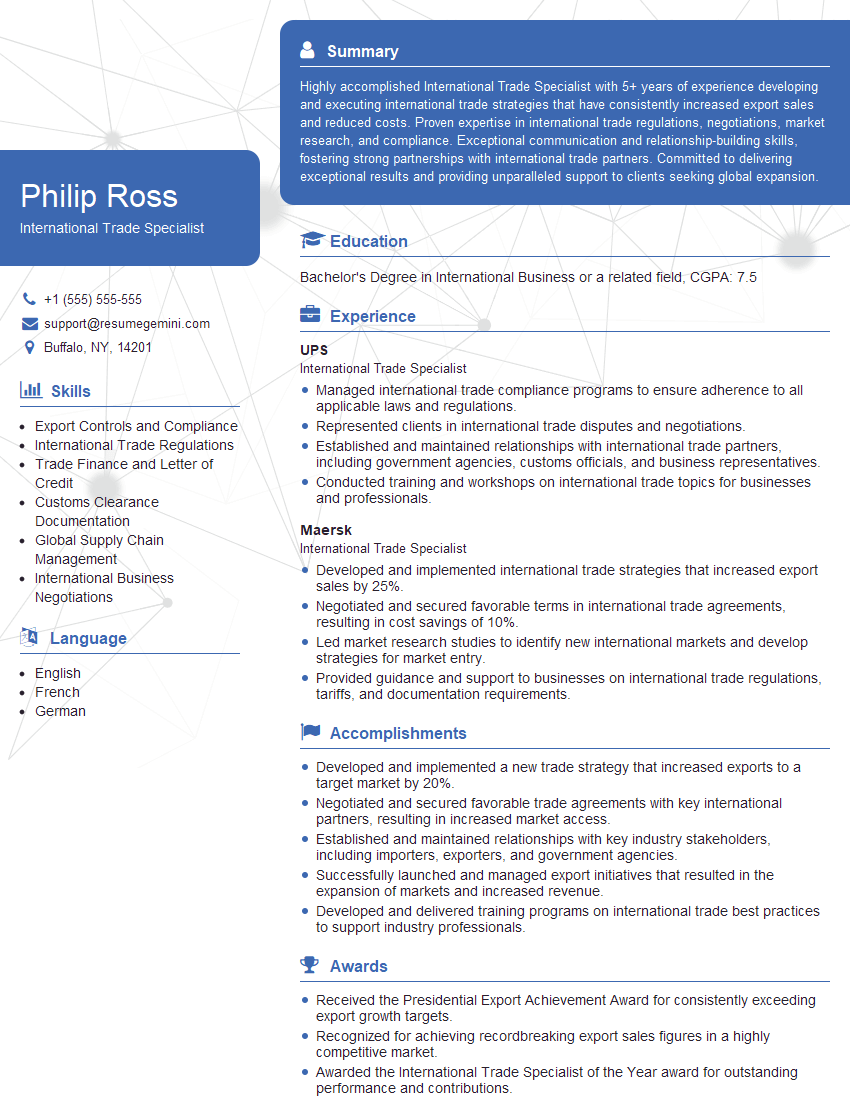
International Trade Specialist Resume Sample
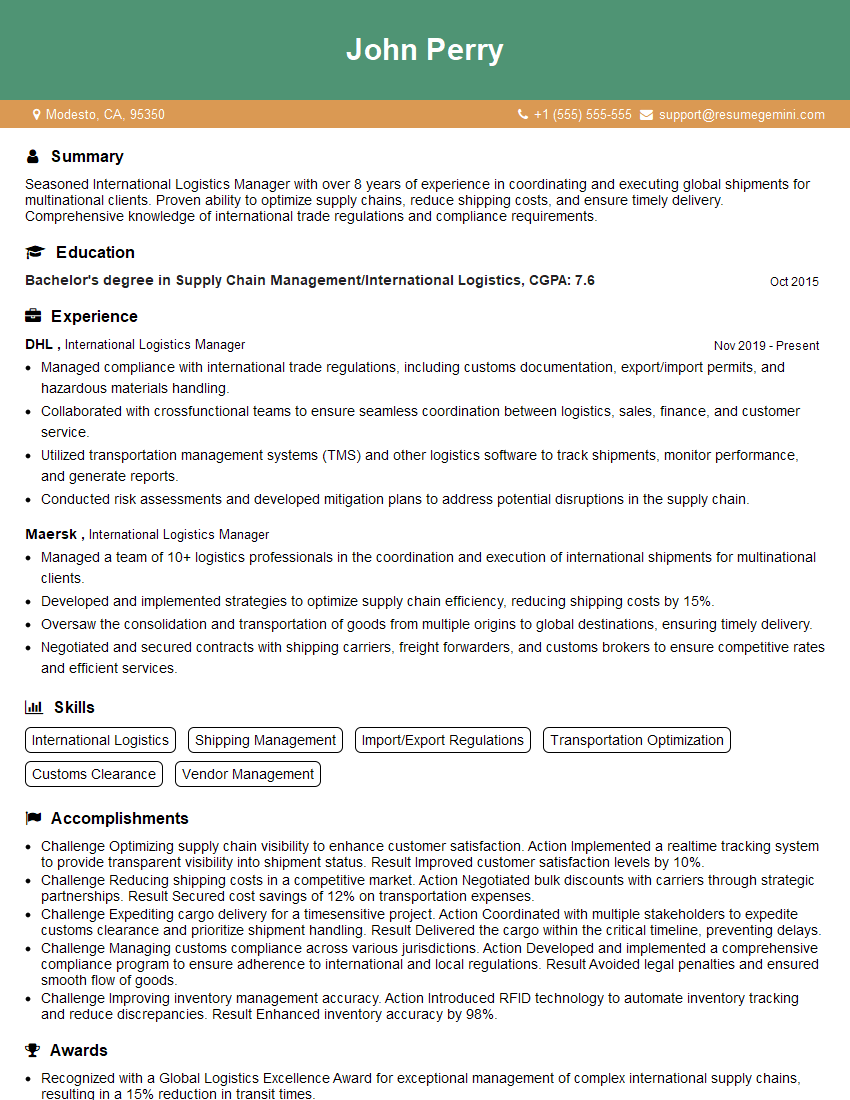
International Logistics Manager Resume Sample
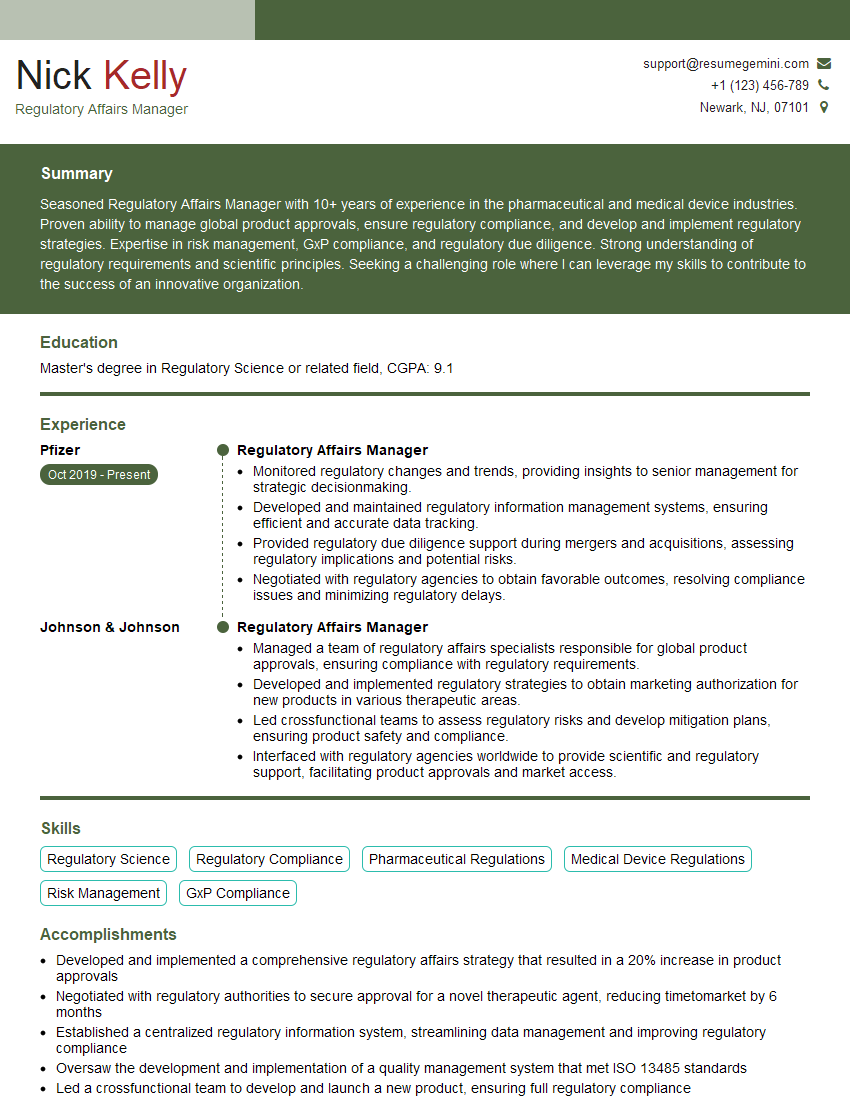
Regulatory Affairs Manager Resume Sample
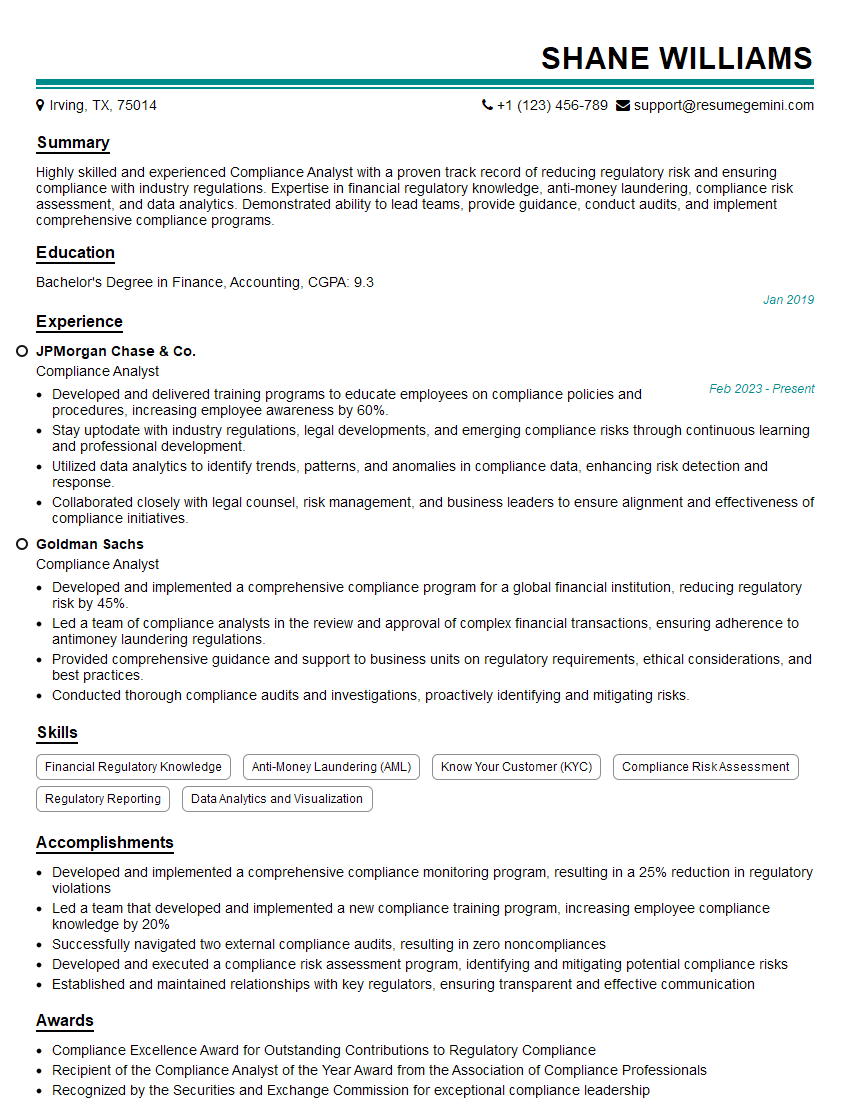
Compliance Analyst Resume Sample
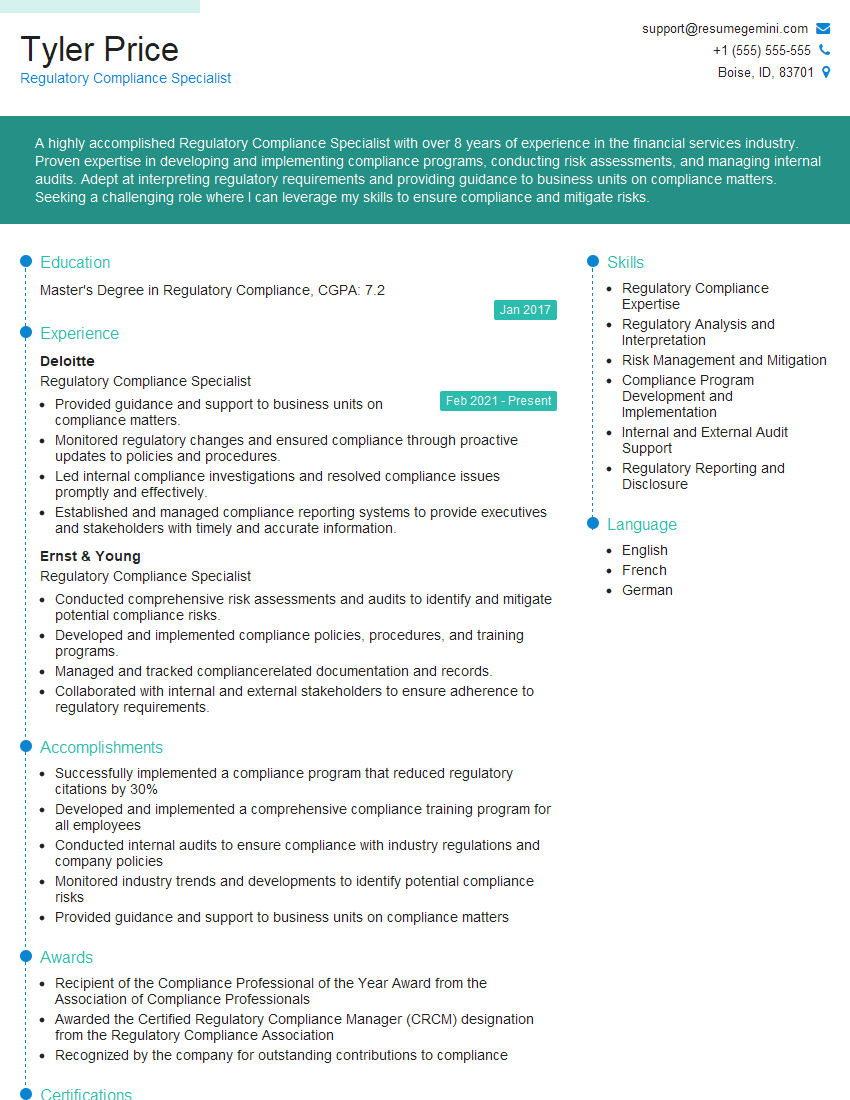
Regulatory Compliance Specialist Resume Sample
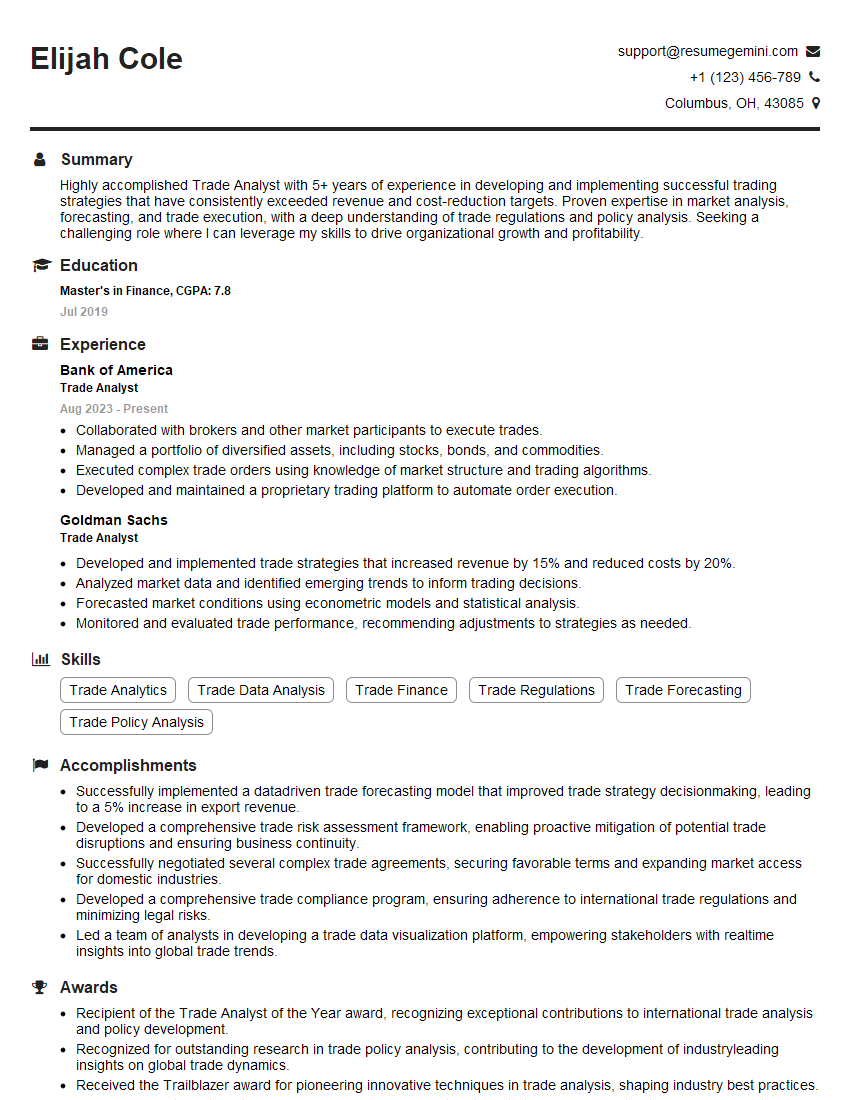
Trade Analyst Resume Sample
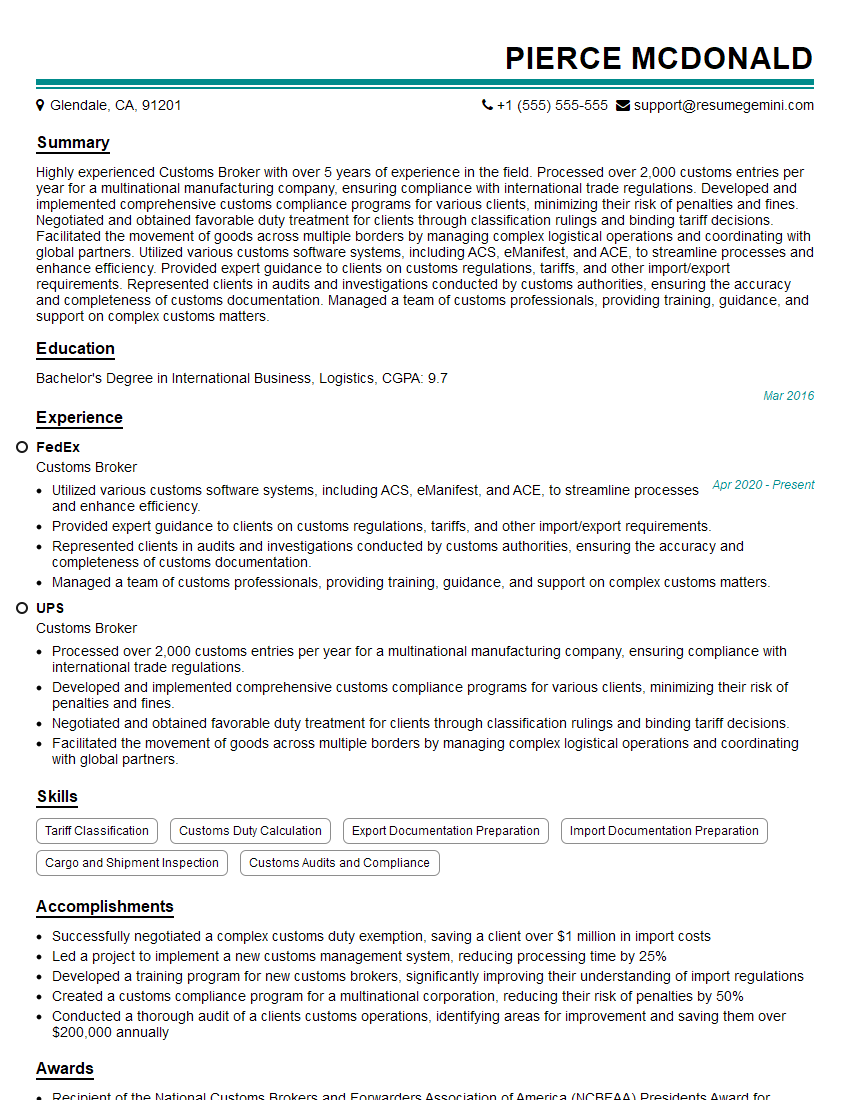
Customs Broker Resume Sample
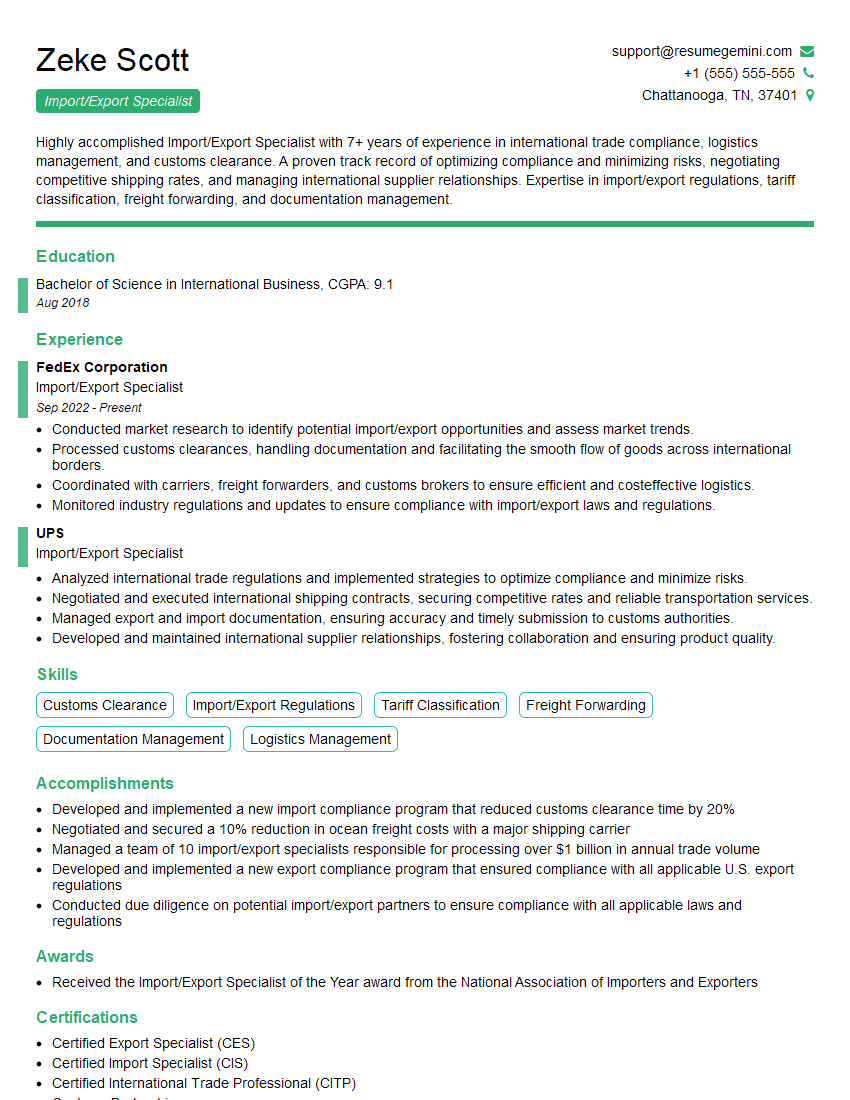
Import/Export Specialist Resume Sample
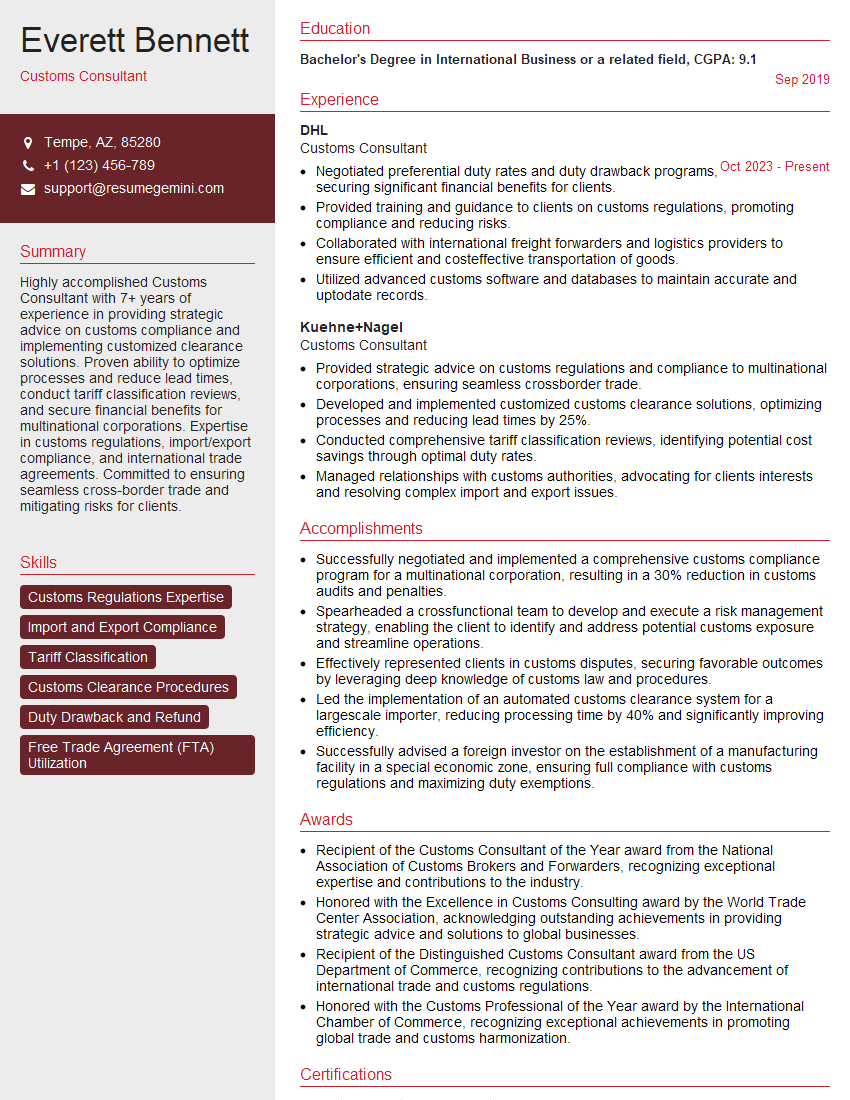
Customs Consultant Resume Sample
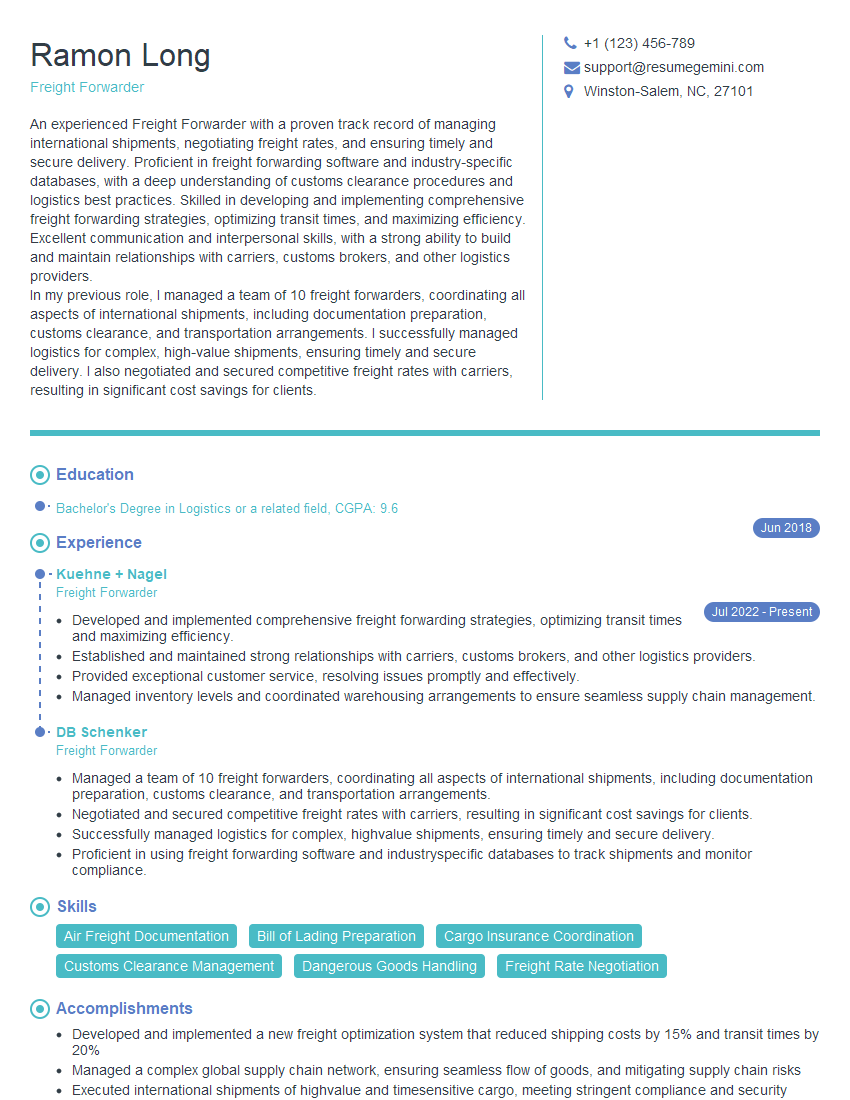
Freight Forwarder Resume Sample
Explore more articles
Users Rating of Our Blogs
Share Your Experience
We value your feedback! Please rate our content and share your thoughts (optional).
What Readers Say About Our Blog
To the interviewgemini.com Webmaster.
Very helpful and content specific questions to help prepare me for my interview!
Thank you
To the interviewgemini.com Webmaster.
This was kind of a unique content I found around the specialized skills. Very helpful questions and good detailed answers.
Very Helpful blog, thank you Interviewgemini team.