Interviews are opportunities to demonstrate your expertise, and this guide is here to help you shine. Explore the essential Fermentation Technologie interview questions that employers frequently ask, paired with strategies for crafting responses that set you apart from the competition.
Questions Asked in Fermentation Technologie Interview
Q 1. Explain the difference between batch, fed-batch, and continuous fermentation.
Fermentation processes are broadly categorized into batch, fed-batch, and continuous modes, each with distinct operational characteristics impacting productivity and product quality.
Batch Fermentation: Think of baking a cake. You mix all ingredients at once, let it ferment (bake), and then take it out. In batch fermentation, all substrates are added initially to the bioreactor. The process runs for a specific duration, after which the entire contents are harvested. This method is simple, but less efficient for long fermentation times and requires complete sterilization between batches.
Fed-Batch Fermentation: Similar to gradually adding ingredients to a cake batter, fed-batch fermentation involves adding substrates incrementally throughout the process. This prevents substrate inhibition (where high substrate concentrations hinder microbial growth) and allows for better control over the fermentation. Harvest occurs only at the end.
Continuous Fermentation: Imagine a never-ending cake-baking conveyor belt. Continuous fermentation maintains a constant volume in the bioreactor by simultaneously feeding fresh media and withdrawing fermented broth. This method offers higher productivity than batch and fed-batch but requires precise control and can be more challenging to maintain sterility.
Choosing the optimal fermentation mode depends on factors like the organism’s growth characteristics, substrate cost, desired product concentration, and overall process economics.
Q 2. Describe the different types of bioreactors used in fermentation.
Bioreactors are the vessels where fermentation occurs. Their design significantly influences the success of the process. Several types exist:
Stirred Tank Bioreactors (STRs): These are the most common type, employing impellers for mixing and aeration. They are versatile but can cause shear stress on cells.
Airlift Bioreactors: These use air to create circulation and mixing. They generate less shear stress, making them suitable for delicate cells.
Fluidized Bed Bioreactors: Immobilized cells are suspended in a fluidized bed, enhancing cell density and productivity. They are particularly useful for processes with high cell density demands.
Photobioreactors: Used for photosynthetic microorganisms, they are designed to optimize light penetration and distribution.
Fixed-film bioreactors: These bioreactors use a fixed support material for the micro-organisms to adhere to, promoting cell growth and increasing the surface area for better product yield. Examples include packed bed, trickling filter, rotating disc, etc.
The choice of bioreactor depends on factors such as the type of microorganism, the desired product, and the scale of production. Larger scale operations often employ STRs due to their robust design and scalability.
Q 3. What are the key parameters monitored during a fermentation process?
Monitoring key parameters is crucial for optimizing fermentation and ensuring product quality. These parameters include:
pH: Maintaining optimal pH is essential for enzyme activity and microbial growth.
Dissolved Oxygen (DO): Sufficient oxygen is crucial for aerobic fermentations.
Temperature: Temperature affects metabolic rates and enzyme activity.
Substrate Concentration (e.g., glucose): Monitoring substrate levels helps in adjusting feed rates in fed-batch operations.
Product Concentration: Tracking product formation determines the fermentation’s progress and end point.
Biomass (Cell Density): Monitoring cell growth helps optimize the fermentation process.
Foam level: Excessive foaming can cause problems; therefore, monitoring and control is critical.
Pressure and agitation speed: Both factors influence cell growth and product yield.
Real-time monitoring and control of these parameters allow for timely adjustments and prevent process deviations, thus maximizing efficiency and product quality.
Q 4. How do you control pH and dissolved oxygen in a fermenter?
Controlling pH and dissolved oxygen (DO) is crucial for successful fermentation. This is achieved through feedback control loops:
pH Control: pH is typically controlled by adding acid (e.g., sulfuric acid) or base (e.g., sodium hydroxide) solutions automatically via automated systems that monitor the pH and actuate the addition of the reagent when required. These systems use probes to measure pH and sophisticated algorithms to adjust the addition rates appropriately.
Dissolved Oxygen (DO) Control: DO is controlled by adjusting the airflow rate to the fermenter. In some cases, pure oxygen is used to increase the oxygen transfer rate. The DO concentration is continuously monitored by a DO probe, and the airflow rate is adjusted automatically to maintain the desired level.
Advanced bioreactors often use cascade control systems where one parameter influences another. For example, pH changes can influence DO levels, requiring a sophisticated control strategy to maintain both within optimal ranges.
Q 5. Explain the importance of sterilization in fermentation.
Sterilization is paramount in fermentation to prevent contamination by unwanted microorganisms. Contamination can lead to reduced yields, product spoilage, and even the production of harmful byproducts. Several methods ensure sterility:
Media Sterilization: This can be achieved through autoclaving (high-pressure steam sterilization), filtration (using membrane filters to remove microorganisms), or other thermal treatments depending on media stability.
Bioreactor Sterilization: Bioreactors are typically sterilized using steam-in-place (SIP) methods where high-pressure steam is used to sterilize the vessel and all associated components. In-situ sterilization is common where the bioreactor vessel is sterilized before starting a new process without emptying.
Air Sterilization: Air entering the bioreactor is often sterilized using HEPA (high-efficiency particulate air) filters to remove bacteria and spores.
Careful adherence to sterilization protocols is crucial to maintain aseptic conditions and prevent contamination, thereby ensuring consistent and reliable fermentation results.
Q 6. Describe different methods for cell disruption.
Cell disruption is a downstream processing step used to release intracellular products from microbial cells. Methods include:
Mechanical Methods: These methods use physical forces to break open cells. Examples include high-pressure homogenization (forcing cells through a small orifice under high pressure), bead milling (using glass beads or other abrasive materials to shear cells), and sonication (using ultrasound waves to disrupt cells).
Enzymatic Methods: Enzymes such as lysozyme (for bacterial cell walls) or other specific enzymes are used to digest cell walls, releasing intracellular contents. This method is gentler than mechanical methods.
Chemical Methods: Chemical agents like detergents or organic solvents can disrupt cell membranes, releasing intracellular components. This approach needs careful optimization to avoid product denaturation.
The choice of method depends on factors such as the type of cells, the nature of the target product, and the scale of the operation. Often, a combination of methods may be used to maximize cell disruption and product recovery.
Q 7. What are the common downstream processing steps in fermentation?
Downstream processing in fermentation involves several steps to purify and recover the desired product from the fermented broth. These include:
Cell Separation: Removing cells from the broth, often using centrifugation or filtration.
Product Purification: Techniques such as chromatography (various types, like ion-exchange, affinity, and size-exclusion chromatography), precipitation, crystallization, extraction, and membrane filtration are employed to separate the target product from other components in the broth. The choice depends on product properties and desired purity.
Product Formulation: The purified product is formulated into its final form (e.g., liquid, powder, tablet) for storage, distribution, and use. This stage might involve adding stabilizers, preservatives, or other excipients.
Quality Control (QC): Rigorous testing is performed at each stage of downstream processing to ensure product quality, purity, and safety. This may involve tests for sterility, potency, identity, and other relevant quality attributes.
Efficient downstream processing is critical for achieving high product yields and meeting regulatory requirements for purity and quality.
Q 8. Explain the principles of chromatography used in fermentation purification.
Chromatography is a crucial downstream processing technique in fermentation, used to purify the desired product from the complex mixture of cells, media components, and byproducts. It leverages the differential affinity of molecules for a stationary phase and a mobile phase to separate them. Think of it like a race where different molecules travel at different speeds depending on how strongly they ‘stick’ to the track (stationary phase) and how much they’re pushed along by the ‘current’ (mobile phase).
Several chromatography types are employed in fermentation purification:
- Ion-exchange chromatography: Separates molecules based on their net charge. Molecules with opposite charges to the stationary phase bind, while others pass through. This is often used to separate proteins based on their isoelectric point (pI).
- Size-exclusion chromatography (gel filtration): Separates molecules based on their size. Larger molecules elute first because they can’t penetrate the pores of the stationary phase, while smaller molecules take longer to travel through the column.
- Affinity chromatography: This highly specific technique uses a ligand (a molecule that binds specifically to the target molecule) attached to the stationary phase. Only the target molecule will bind strongly, allowing for high purity isolation. This is especially useful for purifying enzymes or antibodies.
- Hydrophobic interaction chromatography (HIC): This separates molecules based on their hydrophobicity. Molecules with hydrophobic regions interact more strongly with a hydrophobic stationary phase.
For example, in the purification of a therapeutic enzyme produced via fermentation, we might use affinity chromatography first to isolate the enzyme with high specificity, followed by ion-exchange chromatography to further remove impurities and achieve higher purity.
Q 9. How do you troubleshoot a fermentation process with low yield?
Low yield in fermentation is a common problem with multiple potential causes. Troubleshooting requires a systematic approach, investigating factors throughout the entire process.
- Microbial growth issues: Is the inoculum healthy and at the correct concentration? Are the growth conditions (temperature, pH, aeration, nutrient availability) optimal? Microscopy examination of the broth can help identify problems like contamination or poor cell viability.
- Substrate utilization: Is the carbon source being efficiently metabolized? Analyze the concentrations of substrates and byproducts in the fermentation broth. Incomplete utilization suggests issues with nutrient uptake or metabolic pathways.
- Product formation: Is the product being produced at the expected rate? Analyze the fermentation broth for product concentration using techniques like HPLC or spectrophotometry. Low product formation could indicate issues with the production pathway or environmental stress on the cells.
- Inhibition or stress: Are there any inhibitory byproducts accumulating in the broth? Excessive heat, low pH, or toxic metabolites can significantly reduce yield. Monitor critical parameters throughout the fermentation run.
- Genetic factors: Does the organism produce the desired product at the expected level under the given conditions? Check for possible mutations or genetic instabilities that might affect production efficiency. Consider using a different strain or optimizing the genetic pathway.
For example, if I observe low yield and high byproduct accumulation, I’d investigate potential inhibition, perhaps by analyzing the broth for specific toxic metabolites and adjusting the fermentation conditions to mitigate their formation or improve their removal.
Q 10. Describe your experience with scale-up of fermentation processes.
I have extensive experience in scaling up fermentation processes, from lab-scale shake flasks to 10,000-liter bioreactors. Successful scale-up requires careful consideration of several critical factors to ensure consistent product quality and yield.
My approach typically involves:
- Scale-down modeling: Conduct experiments at various scales to identify potential issues early. This helps avoid costly mistakes during large-scale production.
- Geometric similarity: Maintain similar geometric ratios (e.g., height-to-diameter ratio) between different bioreactor sizes to ensure consistent mixing and oxygen transfer.
- Mass and energy transfer: Ensure adequate oxygen transfer, nutrient supply, and heat removal at larger scales. This may involve optimizing impeller design, aeration rates, and cooling systems.
- Process control: Implement robust process control strategies to maintain consistent environmental parameters (temperature, pH, dissolved oxygen) despite changes in scale. This might involve advanced control systems and sensors.
- Monitoring and data analysis: Closely monitor all critical parameters during scale-up and analyze the data to identify any deviations from expected performance. This data-driven approach ensures process optimization.
In a recent project scaling up a bacterial fermentation process for producing a therapeutic protein, we faced challenges with oxygen transfer in the larger bioreactor. By optimizing the impeller design and aeration rate based on careful scale-down modelling and experimentation, we successfully maintained consistent cell growth and product yield.
Q 11. Explain the concept of metabolic engineering in fermentation.
Metabolic engineering involves modifying an organism’s metabolism to enhance the production of a desired compound or improve other aspects of the fermentation process. This is achieved through genetic manipulation, often using techniques like gene knockout, gene overexpression, or pathway engineering.
For example, in the production of ethanol from glucose, metabolic engineering might involve:
- Overexpressing genes encoding enzymes involved in the glycolysis pathway to increase the rate of glucose conversion to pyruvate.
- Deleting genes encoding enzymes involved in competing metabolic pathways to divert more carbon flux towards ethanol production.
- Introducing genes from other organisms to enhance ethanol tolerance and productivity.
Metabolic engineering is a powerful tool for improving fermentation efficiency, yields, and the production of high-value compounds. It allows us to ‘fine-tune’ the metabolism of a microorganism to optimally produce our desired product. The results are often more sustainable and economically viable fermentation processes.
Q 12. What are the common challenges in scaling up fermentation processes?
Scaling up fermentation processes presents numerous challenges, many stemming from the increased complexity of larger bioreactors and the need for robust process control.
- Oxygen transfer limitations: Maintaining adequate oxygen supply becomes more difficult in larger bioreactors due to decreased surface area-to-volume ratio. This can lead to oxygen limitation and reduced cell growth and productivity.
- Heat removal: Larger bioreactors generate more heat, requiring efficient cooling systems to prevent overheating and cell damage.
- Mixing efficiency: Ensuring uniform mixing of nutrients and oxygen becomes more challenging in larger systems, potentially leading to concentration gradients and reduced yield.
- Process consistency: Maintaining consistent process parameters (temperature, pH, dissolved oxygen) across different scales can be difficult due to variations in mixing, aeration, and heat transfer.
- Scale-up costs: Scaling up can be expensive, requiring larger bioreactors, increased media volumes, and more sophisticated control systems.
For example, in scaling up a fungal fermentation, we encountered challenges with maintaining consistent pH due to localized variations in nutrient concentration. Implementing a more sophisticated bioreactor control system with multiple pH probes and localized pH adjustment solved this problem.
Q 13. How do you ensure the quality and consistency of fermentation products?
Ensuring the quality and consistency of fermentation products is paramount for safety and efficacy. A multifaceted approach is crucial.
- Strain selection and maintenance: Employing well-characterized, stable strains minimizes variation in product quality and yield. Strict maintenance protocols prevent contamination and genetic drift.
- Process validation: Rigorous validation of the fermentation process ensures reproducibility and consistent product characteristics. This involves demonstrating that the process consistently produces the desired product within pre-defined specifications.
- Quality control testing: Implement a robust quality control system with multiple checkpoints throughout the fermentation process. This includes regular testing for contamination, cell viability, substrate utilization, and product quality (e.g., purity, potency, identity).
- Documentation and traceability: Maintaining detailed records of all process parameters and test results enables traceability and facilitates troubleshooting.
- Continuous improvement: Regularly review and refine the fermentation process to optimize yield, quality, and consistency. Data analysis and statistical process control (SPC) are valuable tools for continuous improvement.
For instance, in producing a pharmaceutical protein, we implement a stringent quality control program involving HPLC analysis for purity, mass spectrometry for confirmation of identity, and biological assays to measure potency. This ensures consistent delivery of a safe and effective product.
Q 14. Describe your experience with GMP (Good Manufacturing Practices) in fermentation.
GMP (Good Manufacturing Practices) are crucial for ensuring the quality, safety, and efficacy of fermentation-derived products, particularly those intended for human or animal use. My experience spans various aspects of GMP compliance, from designing and implementing GMP-compliant facilities to training personnel and managing documentation.
Key aspects of my GMP experience include:
- Facility design and validation: Ensuring the fermentation facility meets GMP requirements for cleanliness, sanitation, and equipment validation. This includes proper design of cleanrooms, sterile processing areas, and equipment qualification.
- Personnel training: Providing comprehensive GMP training to personnel involved in fermentation, ensuring they understand and adhere to GMP principles and procedures.
- Documentation and record-keeping: Implementing and maintaining a robust system for documentation, ensuring all process parameters, testing results, and deviations are meticulously recorded and tracked.
- Change control: Establishing a formal change control process to manage and approve changes to the fermentation process or facility. This ensures that changes do not negatively affect product quality or safety.
- Deviation management: Developing procedures for investigating and documenting deviations from established operating procedures. Root cause analysis and corrective actions are implemented to prevent recurrence.
In a previous role, I was responsible for implementing a comprehensive GMP system for a large-scale fermentation facility producing a therapeutic antibody. This involved close collaboration with regulatory authorities and ensured the production of a high-quality, safe, and efficacious product meeting international GMP standards.
Q 15. Explain different methods for strain improvement in fermentation.
Strain improvement in fermentation is crucial for enhancing productivity, yield, and the quality of the desired product. We achieve this through various methods, broadly categorized as:
- Classical mutagenesis: This involves using mutagens like UV radiation or chemical agents (e.g., N-methyl-N’-nitro-N-nitrosoguanidine) to randomly induce mutations in the microorganism’s genome. We then screen the resulting mutants for improved characteristics. Think of it like randomly shuffling a deck of cards – some shuffles might produce a better hand (improved strain).
- Directed evolution: This more targeted approach involves creating a library of mutant strains through random mutagenesis, followed by iterative rounds of selection and screening based on desired traits. It’s like breeding better crops – selecting the best plants and crossing them to create superior offspring. This method is commonly coupled with high-throughput screening techniques.
- Genetic engineering: This precise method uses recombinant DNA technology to introduce specific genes into the microorganism, conferring desired traits such as increased enzyme activity or resistance to inhibitors. This involves cloning desired genes, often from other organisms, and integrating them into the host genome. It’s analogous to precisely changing specific cards in the deck for an optimal hand.
- Genome editing (CRISPR-Cas9): A revolutionary technique allowing for highly precise gene modification. CRISPR-Cas9 enables us to introduce specific mutations or delete genes with remarkable accuracy. This is a highly refined method compared to random mutagenesis, like having a precise tool to customize each card in the deck.
The choice of method depends on several factors including the desired trait, the organism’s genetic tractability, and available resources. Often a combination of these approaches is used for optimal results. For example, we might use random mutagenesis followed by CRISPR-Cas9 to refine a promising mutant.
Career Expert Tips:
- Ace those interviews! Prepare effectively by reviewing the Top 50 Most Common Interview Questions on ResumeGemini.
- Navigate your job search with confidence! Explore a wide range of Career Tips on ResumeGemini. Learn about common challenges and recommendations to overcome them.
- Craft the perfect resume! Master the Art of Resume Writing with ResumeGemini’s guide. Showcase your unique qualifications and achievements effectively.
- Don’t miss out on holiday savings! Build your dream resume with ResumeGemini’s ATS optimized templates.
Q 16. What are the common types of microbial contamination in fermentation?
Microbial contamination is a significant challenge in fermentation, potentially leading to product spoilage, reduced yield, and even safety hazards. Common contaminants include:
- Bacteria: A wide range of bacteria can contaminate fermentation processes, including lactic acid bacteria, Gram-negative bacteria, and spore-forming bacteria. These can compete with the production organism for nutrients, produce unwanted byproducts, or even create toxins.
- Yeasts: Yeasts are opportunistic organisms that can readily contaminate fermentation broths, often outcompeting the production organism and altering the product characteristics.
- Molds (Fungi): Molds are also frequent contaminants and can produce mycotoxins, posing severe health risks. Their presence requires immediate corrective actions.
- Viruses: While less common in industrial settings, bacteriophages (viruses infecting bacteria) can significantly affect bacterial fermentations by lysing the production strain.
- Mycoplasmas: These wall-less bacteria can be extremely difficult to eliminate, leading to persistent contamination.
The specific contaminants encountered depend largely on the raw materials, the fermentation environment, and the hygiene practices employed.
Q 17. How do you prevent and control microbial contamination?
Preventing and controlling microbial contamination is paramount for successful fermentation. This is achieved through a multi-faceted approach encompassing:
- Good Manufacturing Practices (GMP): Strict adherence to GMP guidelines, including hygiene protocols, cleaning procedures (CIP – Clean-in-Place), and personnel training, forms the backbone of contamination control. Regular sanitation of equipment and facilities is crucial.
- Sterilization: Sterilization of all equipment, media, and inocula is vital. Methods include autoclaving (high-pressure steam), filtration (for heat-sensitive materials), and gamma irradiation.
- Aseptic techniques: Maintaining sterile conditions during all operations, such as inoculum preparation and media transfer, is crucial to avoid introducing contaminants.
- Environmental control: Controlling environmental parameters like temperature, humidity, and airflow within the fermentation facility helps to minimize the risk of contamination. Cleanroom technology plays a significant role in highly sensitive fermentations.
- Media optimization: Designing media with selective components that inhibit the growth of contaminants while supporting the growth of the production organism is a crucial aspect of control. For example, adjusting the pH can inhibit the growth of certain bacteria.
- Regular monitoring: Consistent monitoring of the fermentation process through regular sampling and microbial analysis allows for the early detection of any contamination event, enabling timely corrective action.
Proactive measures are far more effective and cost-efficient than reactive responses to contamination. A robust contamination control program requires continuous vigilance and adaptation.
Q 18. Describe your experience with data analysis and interpretation in fermentation.
Data analysis and interpretation are integral to successful fermentation. My experience involves extensive use of statistical methods and software to analyze data from various fermentation parameters. This includes:
- Kinetic modeling: Developing and applying mathematical models to describe the growth kinetics of microorganisms and product formation. This helps to optimize process parameters and predict fermentation outcomes. For example, using Monod kinetics to model substrate utilization.
- Statistical process control (SPC): Employing SPC charts and methods to monitor process variations and identify potential problems early on. This involves analyzing data from sensors monitoring pH, temperature, dissolved oxygen, etc.
- Multivariate data analysis (MVDA): Using techniques like Principal Component Analysis (PCA) and Partial Least Squares (PLS) to analyze complex datasets and identify key factors affecting fermentation performance. This allows for understanding interactions between different parameters.
- Data visualization: Creating informative graphs and charts to visualize trends, identify outliers, and communicate results effectively to stakeholders.
For example, in a recent project, we used PCA to analyze data from a large-scale fermentation, identifying a critical temperature fluctuation as the main contributor to decreased yield. This allowed for implementing corrective measures and improving process consistency.
Q 19. What software or tools are you familiar with for fermentation process monitoring and control?
I am proficient in using several software tools and platforms for fermentation process monitoring and control:
- Supervisory Control and Data Acquisition (SCADA) systems: Experience in using SCADA systems for real-time monitoring and control of various process parameters, including temperature, pressure, pH, dissolved oxygen, and agitation speed. These systems typically feature user-friendly interfaces with visual displays of process data.
- Process analytical technology (PAT) software: Experience using PAT software to integrate data from various sensors and analytical instruments to provide a comprehensive overview of the fermentation process. This enables more detailed process understanding and optimization.
- Statistical software packages (e.g., R, Python with libraries like Pandas, Scikit-learn): Proficient in statistical software packages for data analysis, model building, and statistical process control.
Example in Python: import pandas as pd; data = pd.read_csv('fermentation_data.csv') - Fermentation process simulation software: Experience using simulation software to predict fermentation behavior and optimize process parameters before implementation at the industrial scale. This minimizes risks and maximizes efficiency.
- Laboratory Information Management Systems (LIMS): Familiar with LIMS for managing and tracking samples, tests, and results, ensuring data integrity and traceability throughout the fermentation process.
My expertise covers both the use of commercial software packages and the development of custom scripts and tools to meet specific project requirements.
Q 20. Explain the principles of sterilization techniques used in fermentation.
Sterilization is crucial to eliminate microorganisms and ensure a contaminant-free environment for fermentation. Common methods include:
- Autoclaving: This is a widely used method involving high-pressure saturated steam (typically 121°C at 15 psi for 15-20 minutes). It effectively destroys microorganisms by denaturing their proteins and disrupting cell membranes. It’s like pressure cooking, but far more intense and effective in killing microorganisms.
- Filtration: This is employed for heat-sensitive materials like some media components or enzyme solutions. Sterile filtration uses filters with pore sizes small enough (typically 0.22 µm or 0.45 µm) to remove bacteria and other microorganisms. It’s like using a fine-mesh sieve to separate unwanted particles.
- Gamma irradiation: This high-energy radiation method is effective for sterilizing single-use equipment, such as plastic bags and containers. It damages microbial DNA, preventing replication and growth. This is like using radiation to completely destroy the microorganisms.
- Dry heat sterilization: This method uses high temperatures (typically 160-180°C for 2-4 hours) for sterilizing glassware and other heat-resistant materials. It’s less effective than autoclaving and requires longer exposure times.
- Gas sterilization (e.g., ethylene oxide): This method is employed for sterilizing heat-sensitive materials and equipment that cannot be autoclaved or filtered. However, it has safety concerns due to the toxicity of the gas, requiring careful handling and aeration.
The choice of sterilization method depends on the material to be sterilized, its heat sensitivity, and the desired sterility assurance level (SAL).
Q 21. How do you design and optimize a fermentation media?
Designing and optimizing fermentation media is critical for maximizing productivity and product quality. It’s a multi-step process:
- Defining the nutritional requirements: A thorough understanding of the microorganism’s nutritional needs is essential. This includes identifying the carbon source, nitrogen source, vitamins, minerals, and other growth factors necessary for optimal growth and product formation. Different strains might require different media compositions.
- Selecting the carbon source: The carbon source provides the energy for microbial growth and is typically a carbohydrate (e.g., glucose, sucrose, lactose) or a more complex substrate like molasses or whey.
- Selecting the nitrogen source: The nitrogen source is essential for protein synthesis and can be inorganic (e.g., ammonium salts) or organic (e.g., amino acids, yeast extract).
- Adding growth factors and vitamins: Some microorganisms require specific growth factors or vitamins that are not synthesized by the organism itself.
- Controlling pH and buffering capacity: Maintaining a suitable pH range is crucial for optimal growth and product formation. Buffers are often added to maintain pH stability.
- Optimization: Once a basic medium is developed, it is often optimized through experimental design techniques such as Design of Experiments (DOE). This involves systematically varying media components to determine their effects on growth and product yield. Techniques like response surface methodology (RSM) are commonly used to find the optimal media composition.
- Cost-effectiveness: While optimizing for yield, the cost of media components must be considered for economic feasibility at large scale.
For instance, in designing a media for penicillin production, we would carefully select the carbon and nitrogen sources, adding precursors to enhance penicillin synthesis and include appropriate buffers to maintain optimal pH. DOE would then allow us to refine the composition for maximum antibiotic production.
Q 22. Explain the importance of aseptic techniques in fermentation.
Aseptic techniques are paramount in fermentation because they prevent contamination of the fermentation broth by unwanted microorganisms. Imagine trying to bake a cake – if you introduce unwanted ingredients, the final product will be ruined. Similarly, in fermentation, contamination can lead to reduced yields, spoilage of the product, and even the production of harmful substances. Maintaining sterility ensures the desired microorganism thrives and produces the intended product.
- Sterilization of equipment and media: This involves using autoclaves (high-pressure steam sterilization) for equipment and media sterilization to eliminate all forms of microbial life. For heat-sensitive materials, filtration using 0.22 µm filters is employed.
- Sterile transfer techniques: Methods like using sterile pipettes, laminar flow hoods, and proper aseptic handling practices prevent introduction of contaminants during the process.
- Environmental control: Maintaining a clean and disinfected fermentation environment is crucial. This might involve using HEPA filters in the air supply and regular disinfection of surfaces.
- Personnel hygiene: Strict adherence to hygiene protocols, including wearing appropriate protective gear like gowns, gloves, and masks, is vital in preventing contamination.
Failure to maintain aseptic conditions can have serious consequences, ranging from product loss and economic setbacks to potential health risks in cases where the fermented product is intended for human or animal consumption.
Q 23. Describe your experience with different types of sensors used in fermentation.
My experience encompasses a wide range of sensors used in fermentation monitoring and control. These sensors provide real-time data, enabling optimization of the process and ensuring consistent product quality. Think of them as the vital signs monitoring system for your fermentation ‘patient’.
- pH sensors: These are essential for monitoring and controlling the acidity or alkalinity of the fermentation broth. Many microorganisms have optimal pH ranges for growth and product formation; deviations can negatively impact the process. I’ve worked extensively with both in-situ and online pH probes, comparing their performance and accuracy.
- Dissolved oxygen (DO) sensors: Monitoring DO is crucial, particularly in aerobic fermentations. Adequate oxygen supply is essential for microbial respiration and the production of desired metabolites. I have experience using different types of DO probes, including amperometric and optical sensors, each with their pros and cons regarding sensitivity, response time, and maintenance requirements.
- Temperature sensors: Precise temperature control is critical for optimal microbial growth and metabolic activity. I’ve used various temperature sensors, including thermocouples and resistance temperature detectors (RTDs), for different applications depending on accuracy requirements and the fermentation setup.
- Foam sensors: Excessive foaming can cause problems in bioreactors, leading to loss of volume and even damaging equipment. I have experience using ultrasonic and capacitance-based foam sensors for real-time monitoring and control of foam levels using anti-foaming agents.
- Biomass sensors: Measuring biomass (the total mass of microorganisms) is important for process monitoring and yield estimation. I’ve used optical density (OD) measurements and more advanced techniques like near-infrared (NIR) spectroscopy to estimate biomass concentration.
The choice of sensor depends on the specific fermentation process, the microorganism used, and the desired level of control. Integrating these data streams through process analytical technology (PAT) systems allows for sophisticated process optimization and control.
Q 24. What are the regulatory requirements for fermentation products?
Regulatory requirements for fermentation products vary depending on their intended use (food, pharmaceutical, industrial enzymes, etc.) and the geographical region. However, some common regulations include:
- Good Manufacturing Practices (GMP): These guidelines ensure consistent product quality and safety throughout the manufacturing process. GMP compliance involves stringent quality control measures, documentation, and validation procedures.
- Current Good Manufacturing Practices (cGMP): These are particularly relevant for pharmaceutical products derived from fermentation, ensuring they meet strict purity, potency, and safety standards.
- Food safety regulations: For food-grade fermentation products (e.g., yogurt, beer, bread), compliance with regulations like HACCP (Hazard Analysis and Critical Control Points) is vital to prevent contamination and ensure product safety. Regulations often involve stringent microbial limits and allergen controls.
- Environmental regulations: Disposal of waste streams from fermentation processes must adhere to environmental regulations, minimizing the environmental impact of the manufacturing process.
- Specific product regulations: Some fermentation products may be subject to specific regulations related to their composition, labeling, and use (e.g., genetically modified organisms [GMOs] in food and pharmaceuticals).
Navigating these regulations requires a strong understanding of the applicable legal frameworks and implementing appropriate quality management systems throughout the fermentation process.
Q 25. Explain your experience with process validation in fermentation.
Process validation in fermentation involves systematically demonstrating that the fermentation process consistently produces a product that meets predetermined quality attributes. It’s like proving your recipe works every time, not just once.
My experience in process validation includes designing and executing validation protocols, documenting results, and preparing validation reports. This involves various stages:
- Process design: Defining critical process parameters (CPPs) and critical quality attributes (CQAs) that need to be controlled.
- Validation plan: Developing a comprehensive plan that outlines the scope of validation activities.
- Installation qualification (IQ): Verifying that the equipment is properly installed and functions as intended.
- Operational qualification (OQ): Demonstrating that the equipment operates consistently within its specified parameters.
- Performance qualification (PQ): Producing multiple batches under representative operating conditions to demonstrate consistent product quality and confirm the process meets the required specifications.
- Documentation: Meticulous record-keeping is essential. This includes batch records, validation reports, and SOPs (Standard Operating Procedures).
Through rigorous process validation, we ensure product consistency, reduce risks, and meet regulatory requirements, ultimately safeguarding the quality and safety of the final product.
Q 26. Describe your experience working with different types of microorganisms in fermentation.
My experience spans a variety of microorganisms used in fermentation, each with unique characteristics and requirements. Understanding these nuances is key to successful fermentation.
- Bacteria: I’ve worked with bacteria like Escherichia coli (E. coli) for the production of recombinant proteins and other metabolites, and Lactobacillus species for the production of yogurt and other fermented dairy products. These require careful control of nutrient supply, temperature, and pH to ensure optimal growth and product formation.
- Yeasts: Saccharomyces cerevisiae (baker’s yeast and brewer’s yeast) is a workhorse in fermentation for bread-making, brewing, and the production of ethanol. I have experience optimizing fermentation conditions for different yeast strains to maximize ethanol yield or improve bread texture.
- Filamentous fungi: These include species like Aspergillus niger (used for citric acid production) and Penicillium chrysogenum (used for penicillin production). Fermentations with filamentous fungi often present unique challenges like shear stress and oxygen transfer limitations that require specialized bioreactor design and operational strategies. I’ve explored strategies to improve oxygen transfer and reduce clumping in such systems.
Choosing the appropriate microorganism and optimizing the fermentation conditions for its growth and product formation are crucial for achieving high yields and quality.
Q 27. How do you troubleshoot a fermentation process with high viscosity?
High viscosity in a fermentation process can significantly hinder oxygen transfer, nutrient transport, and mixing, ultimately impacting product yield and quality. It’s like trying to stir a very thick pudding – it’s difficult to get the ingredients evenly distributed.
Troubleshooting high viscosity involves a systematic approach:
- Identify the cause: High viscosity can be caused by several factors including high cell density, the production of exopolysaccharides (EPS) by the microorganism, or the use of a thick medium. Careful analysis of the fermentation broth is needed to determine the primary contributor.
- Adjust the fermentation parameters: This may involve reducing the initial cell density, adjusting the nutrient feed strategy, or modifying the fermentation medium composition to reduce EPS production. In some cases, enzymatic treatment to reduce the viscosity may be considered.
- Optimize the bioreactor design and operation: Using specialized bioreactors with improved mixing capabilities, such as stirred tank bioreactors with optimized impeller design or airlift bioreactors, can mitigate high viscosity issues. Improving aeration rates can also help.
- Employ anti-foaming agents: While primarily used for foam control, some anti-foaming agents can also help reduce viscosity slightly. However, this must be carefully considered, as the anti-foaming agent itself could affect the process.
- Strain engineering: In certain cases, genetic modification of the microorganisms to reduce EPS production could be a long-term solution. This is a more complex and time-consuming approach, but could result in a more robust fermentation process.
A combination of these strategies is often needed to effectively manage high viscosity in fermentation processes. Real-time monitoring using viscosity sensors is crucial for early detection and timely intervention.
Q 28. What are some examples of industrial applications of fermentation technology?
Fermentation technology has broad industrial applications across various sectors:
- Food and beverages: Production of bread, beer, wine, yogurt, cheese, and many other fermented foods and beverages relies heavily on fermentation.
- Pharmaceuticals: Fermentation is used for producing antibiotics (like penicillin), vaccines, and other therapeutic proteins (like insulin).
- Industrial enzymes: Fermentation is used to produce enzymes used in various industries, including detergents, textiles, and food processing.
- Biofuels: Ethanol and other biofuels can be produced via fermentation of biomass.
- Bioplastics: Certain bioplastics are produced via fermentation of renewable resources.
- Wastewater treatment: Fermentation processes are used for efficient treatment of organic wastes.
The versatility and sustainability of fermentation make it a powerful tool for producing a wide range of valuable products while minimizing environmental impact. Continuous research and development are further expanding its applications in various sectors.
Key Topics to Learn for Fermentation Technologie Interview
- Microbial Physiology and Metabolism: Understanding microbial growth kinetics, metabolic pathways (e.g., glycolysis, TCA cycle), and the influence of environmental factors on fermentation processes.
- Bioreactor Design and Operation: Knowledge of different bioreactor types (stirred tank, airlift, etc.), their operational parameters (pH, temperature, dissolved oxygen), and process control strategies.
- Fermentation Kinetics and Modeling: Ability to analyze fermentation data, develop kinetic models, and predict process performance. This includes understanding Monod kinetics and other relevant models.
- Downstream Processing: Familiarization with techniques for separating and purifying fermentation products, including cell separation, filtration, chromatography, and crystallization.
- Sterilization and Aseptic Techniques: Understanding principles and practices to maintain sterility throughout the fermentation process, minimizing contamination risks.
- Process Optimization and Scale-up: Ability to optimize fermentation processes for maximum yield and productivity, and to scale up laboratory-scale processes to industrial settings.
- Quality Control and Assurance: Knowledge of relevant quality control measures, regulatory compliance (e.g., GMP), and documentation practices in the fermentation industry.
- Specific Fermentation Applications: Deep understanding of at least one area of application, such as food and beverage fermentation, pharmaceutical production (antibiotics, enzymes), or biofuel production.
- Troubleshooting and Problem-Solving: Ability to identify and address common challenges encountered in fermentation processes, such as contamination, low yields, and process instability.
Next Steps
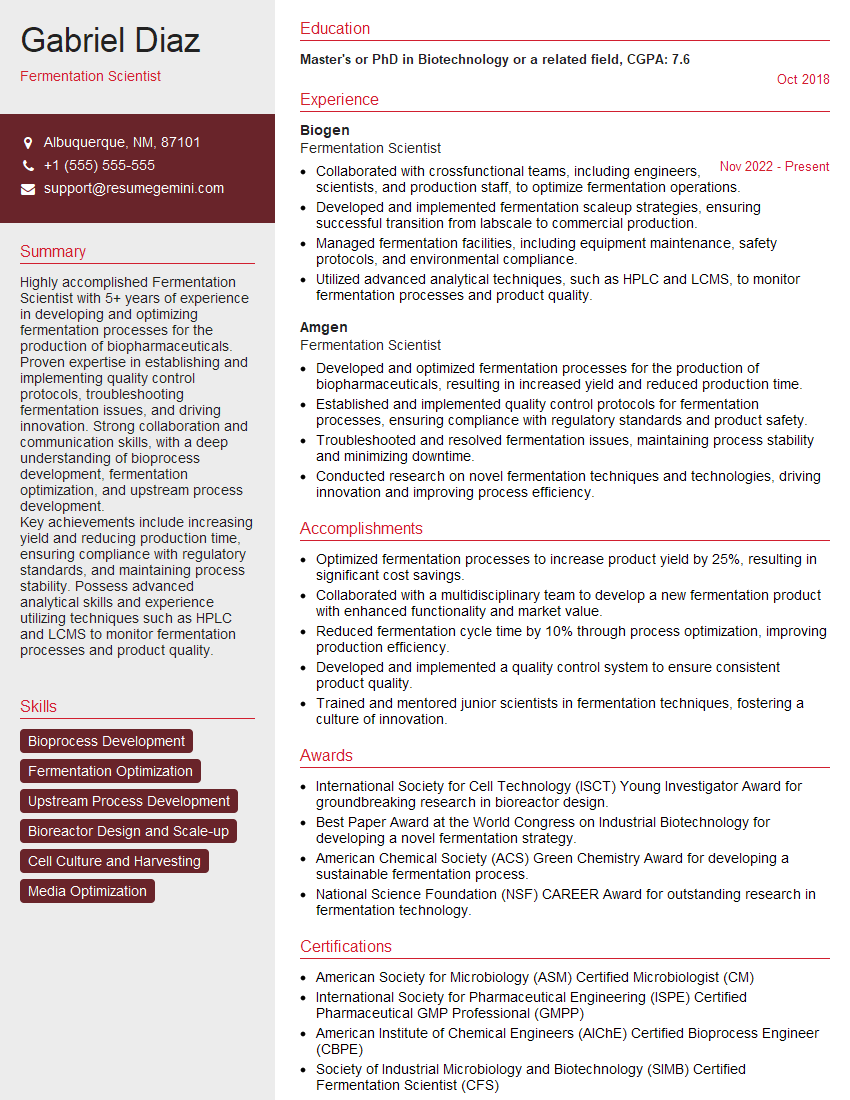
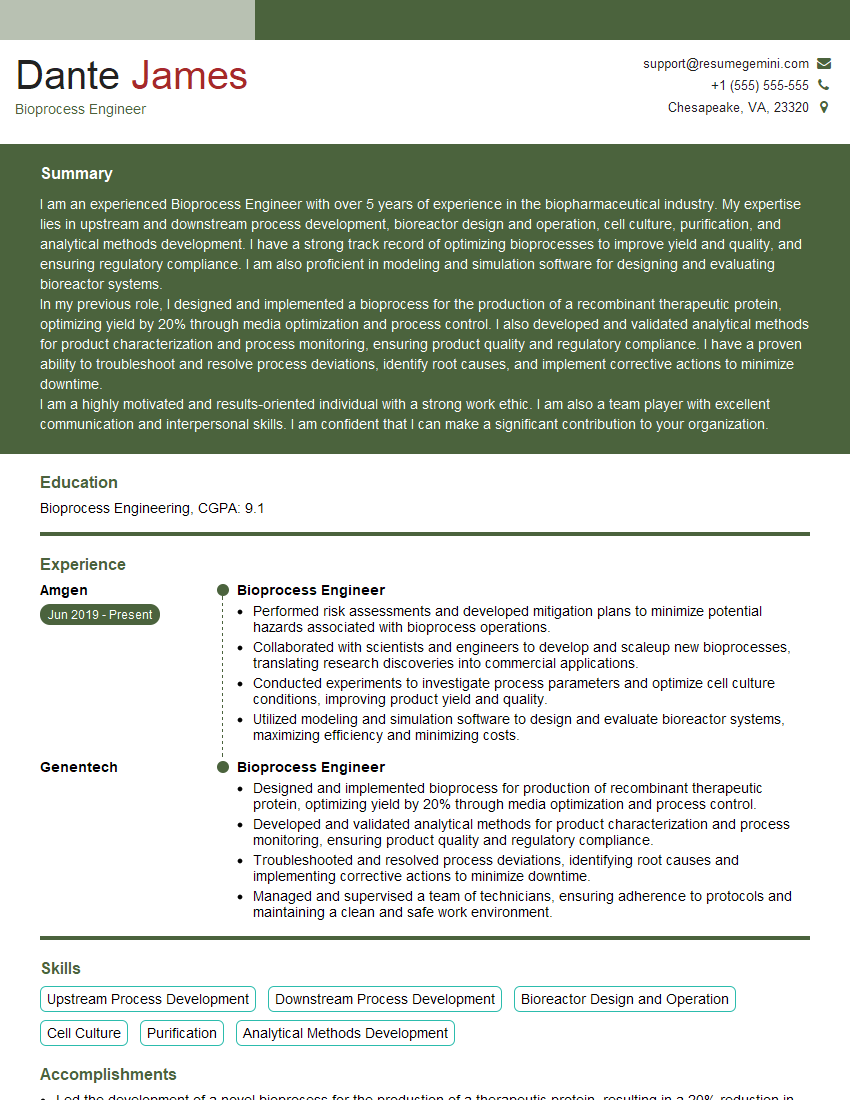
Mastering Fermentation Technologie opens doors to exciting and impactful careers in various industries. A strong understanding of these principles is highly valued by employers, leading to greater job opportunities and career advancement. To maximize your chances of landing your dream role, creating a compelling and ATS-friendly resume is crucial. ResumeGemini can help you build a professional and effective resume that highlights your skills and experience in the best possible light. We provide examples of resumes tailored to Fermentation Technologie to guide you through the process. Invest in your future—build a standout resume with ResumeGemini today!
Explore more articles
Users Rating of Our Blogs
Share Your Experience
We value your feedback! Please rate our content and share your thoughts (optional).
What Readers Say About Our Blog
To the interviewgemini.com Webmaster.
Very helpful and content specific questions to help prepare me for my interview!
Thank you
To the interviewgemini.com Webmaster.
This was kind of a unique content I found around the specialized skills. Very helpful questions and good detailed answers.
Very Helpful blog, thank you Interviewgemini team.