Feeling uncertain about what to expect in your upcoming interview? We’ve got you covered! This blog highlights the most important Guide Skills (e.g., hiking, biking, snorkeling) interview questions and provides actionable advice to help you stand out as the ideal candidate. Let’s pave the way for your success.
Questions Asked in Guide Skills (e.g., hiking, biking, snorkeling) Interview
Q 1. Describe your experience with wilderness first aid and emergency procedures.
My wilderness first aid and emergency procedures expertise stems from my certifications in Wilderness First Responder (WFR) and Wilderness Advanced First Aid (WFA). I’m proficient in assessing and managing a wide range of injuries and illnesses in remote environments, including trauma, hypothermia, dehydration, and altitude sickness. My training emphasizes a systematic approach: Scene safety is paramount – always assessing potential hazards before approaching a patient. Then comes patient assessment, using the SAMPLE mnemonic (Symptoms, Allergies, Medications, Past medical history, Last meal, Events leading to illness/injury) to gather crucial information.
Next is the primary assessment, focusing on life-threatening conditions (ABCs: Airway, Breathing, Circulation). Finally, the secondary assessment involves a thorough head-to-toe exam, followed by treatment and evacuation plans. I’m experienced in utilizing improvised equipment and making difficult decisions under pressure, such as deciding between in-situ treatment and evacuation, considering factors like terrain, weather, and patient condition. For example, during a recent backpacking trip, a participant suffered a severe ankle sprain. I stabilized the injury using a makeshift splint from branches and hiking poles, then communicated with emergency services to arrange a helicopter evacuation due to the remote location.
Q 2. How do you assess and manage risk in a guided outdoor activity?
Risk assessment and management are central to my guiding philosophy. My approach is a three-step process: Identify potential hazards; this involves considering environmental factors (weather, terrain, wildlife), human factors (participant experience, fitness levels, group dynamics), and equipment factors (gear condition, redundancy). Analyze the likelihood and severity of each hazard; I use a risk matrix to visually represent this, allowing me to prioritize risks. For example, a sudden thunderstorm poses a higher likelihood and severity risk than a minor ankle twist in a beginner’s hike.
Finally, mitigate identified risks; this involves implementing preventive measures. It could be carrying extra rain gear, using appropriate navigation tools, conducting pre-trip fitness assessments, providing thorough safety briefings, or adjusting the route based on real-time conditions. Adaptability is key. I’m always monitoring the environment and participant behavior, adjusting strategies accordingly. Imagine guiding a rock climbing group – I’d assess the rock face for instability, check weather forecasts for potential lightning storms, and ensure every climber has the correct safety equipment and sufficient climbing expertise for the chosen route.
Q 3. Explain your approach to trip planning and route selection.
Trip planning is meticulous and involves several stages. First, I gather information on the desired location, considering accessibility, permits, regulations, and potential challenges. I use topographic maps, guidebooks, and online resources to research routes and gather weather forecasts. Next, I develop a detailed itinerary, including daily objectives, estimated travel times, rest stops, and potential campsites. I always have backup plans in place for various contingencies – alternative routes, emergency shelters, and communication strategies.
Route selection takes into account the participants’ skill level and experience. For instance, a beginner’s hike requires a less challenging and shorter trail, emphasizing safety and minimizing risk. Experienced hikers might opt for a more strenuous journey. Environmental factors also play a key role – I’d avoid trails known for frequent flash floods or wildlife encounters during specific seasons. I meticulously document the planned route, sharing it with relevant authorities and keeping a digital copy for myself. Finally, I conduct a pre-trip briefing to ensure participants understand the itinerary, safety protocols, and expected challenges.
Q 4. What are the key safety considerations for hiking in different terrains?
Hiking safety varies significantly depending on the terrain.
- Mountainous terrain requires advanced planning, awareness of altitude sickness, and proper gear (hiking boots, trekking poles, layers of clothing). The potential for falls and exposure to harsh weather conditions needs careful consideration.
- Forest trails present risks of getting lost, encountering wildlife, and dealing with uneven ground and potential hazards like fallen trees. Proper navigation skills and awareness of local wildlife are essential.
- Desert hiking demands careful attention to hydration and sun protection, with the potential for extreme heat and dehydration. Carrying sufficient water and knowing how to identify and treat heatstroke are vital.
- Coastal trails might involve navigating cliffs, exposed areas susceptible to sudden weather changes and tides. Knowledge of tides and safe climbing practices are crucial.
Regardless of the terrain, essential safety practices include informing someone of your hiking plans, carrying a first-aid kit, being aware of your surroundings, and having reliable communication methods.
Q 5. How do you communicate effectively with diverse groups of participants?
Effective communication with diverse groups involves adapting my approach to individual needs and communication styles. Before the trip, I conduct a brief pre-trip meeting to assess participants’ experience levels, expectations, and any special needs. During the trip, I use clear, concise language, avoiding technical jargon unless appropriately explained. I encourage questions and actively listen to concerns, ensuring everyone feels heard and understood.
I employ a variety of communication methods – group discussions, individual check-ins, and visual aids like maps and diagrams. I’m mindful of body language and tone, ensuring my communication is both informative and reassuring. In a recent multi-generational snorkeling trip, I communicated detailed safety instructions using visuals and simple language, accommodating both beginners and experienced snorkelers. Building a sense of camaraderie and teamwork is key to managing a diverse group effectively.
Q 6. Describe your experience leading groups in various outdoor settings.
I have extensive experience leading groups in various settings: from multi-day backpacking trips in mountainous regions to guided rock climbing expeditions and snorkeling tours in coastal waters. I’ve led groups of varying sizes and experience levels, ranging from small family groups to larger corporate team-building events. My leadership style prioritizes safety, participation, and building camaraderie. I clearly define roles and responsibilities, provide adequate training, and foster a supportive environment where participants feel comfortable contributing and asking questions.
A memorable experience was leading a group of novice hikers on a challenging trail. Through clear communication, encouragement, and celebrating small successes along the way, we completed the hike safely and with a strong sense of accomplishment. This highlights the importance of understanding different skill levels and adapting my guidance accordingly. I always maintain a flexible mindset and prioritize open communication and team spirit.
Q 7. What’s your method for adapting a trip plan based on weather conditions or participant capabilities?
Adapting trip plans involves continuous monitoring of weather conditions and participant capabilities. I utilize multiple sources for weather forecasts, including official weather services and local reports. For example, I wouldn’t hesitate to postpone a hike if a severe thunderstorm warning is issued. Similarly, if I observe participants struggling beyond their capabilities, I would alter the route to make it less challenging, adjust the pace, or incorporate more rest stops.
Participant capabilities are assessed throughout the trip. I’m vigilant to signs of fatigue, dehydration, or injuries. This might lead to shortening the planned route, changing the itinerary, or adjusting objectives. Effective communication is crucial here. I actively seek feedback from participants and make collaborative decisions based on their physical and emotional state. Flexibility and a willingness to deviate from the original plan are paramount to ensuring the safety and enjoyment of the entire group. I always prioritize the well-being of everyone above adhering strictly to a pre-planned itinerary.
Q 8. How do you maintain the safety and well-being of participants during challenging situations?
Maintaining participant safety and well-being during challenging situations is paramount. My approach is multifaceted and prioritizes proactive risk assessment and mitigation. It begins before the trip even starts, with thorough pre-trip briefings that cover potential hazards specific to the location and activity, proper gear checks, and ensuring participants understand the inherent risks and their responsibilities. During the activity, constant monitoring of participants’ physical and mental states is crucial. I look for signs of fatigue, dehydration, hypothermia (in cold conditions), heat exhaustion (in hot conditions), or injuries. I always carry a comprehensive first-aid kit and am certified in wilderness first aid and CPR. In case of emergencies, I have pre-established communication protocols, including emergency contact numbers and satellite communication devices (where necessary) to quickly contact emergency services. For example, during a challenging hike in a remote area, if a participant suffers a sprained ankle, I immediately assess the injury, provide first aid, and then decide whether to proceed with evacuation using my communication device to call for assistance, or to wait for rescue.
Q 9. What are your strategies for preventing and addressing injuries or illnesses during a guided trip?
Injury and illness prevention is a top priority. My strategies include detailed pre-trip physical assessments where I’ll ask about any pre-existing medical conditions, and thorough gear checks to ensure participants have appropriate clothing and equipment for the activity and conditions. I also provide pre-trip briefings covering nutrition, hydration, and safe practices for the specific activity. For example, I’ll emphasize proper hydration for hikers in desert climates and safe snorkeling techniques to avoid encounters with marine life. During the activity, I regularly check-in with participants and enforce safety protocols. If someone experiences an injury or illness, my response follows a clear protocol: Assess the situation, provide immediate first aid, communicate with emergency services if necessary, and implement the appropriate emergency plan. I also teach participants how to self-assess for symptoms of illness, and remind them about things like sun protection and altitude sickness prevention as appropriate.
Q 10. Explain your experience with navigation tools (map, compass, GPS).
I’m proficient in using a variety of navigation tools, understanding their strengths and limitations. Maps are fundamental, allowing me to plan routes, understand terrain, and identify landmarks. I use a compass in conjunction with a map to determine bearing and orientation, especially in areas with limited visibility or GPS signal. GPS devices are helpful for precise location tracking, route recording, and navigation, particularly in unfamiliar or challenging terrain. However, I always emphasize the importance of redundancy. I don’t solely rely on GPS, because batteries can fail. A memorable experience involved navigating a challenging mountain trail during a sudden fog using a map and compass when GPS failed due to poor satellite reception. The compass allowed me to maintain our heading and successfully guide the group to safety.
Q 11. How do you ensure environmental sustainability during your guided activities?
Environmental sustainability is deeply integrated into my guiding philosophy. I prioritize minimizing the impact of our activities on the environment. This includes using reusable water bottles and reducing single-use plastics, leaving no trace behind, and educating participants about responsible wildlife viewing and interaction. For example, during snorkeling trips, I emphasize maintaining a safe distance from coral reefs and marine life, and educating about the importance of not touching or disturbing anything underwater. For hiking trips, I stress trail etiquette (staying on marked trails, avoiding disturbing plants and animals) and pack out everything we pack in. Using sustainable transportation options whenever possible is also part of my commitment.
Q 12. Describe your experience with Leave No Trace principles.
Leave No Trace (LNT) principles are the cornerstone of my guiding practices. I’m deeply familiar with the seven principles: Plan ahead and prepare, travel and camp on durable surfaces, dispose of waste properly (pack it in, pack it out), leave what you find, minimize campfire impacts, respect wildlife, and be considerate of other visitors. Before each trip, I explain these principles to participants, and reinforce them throughout the activity. For example, I’ll demonstrate proper waste disposal techniques and emphasize the importance of respecting wildlife by observing animals from a distance and avoiding feeding them. I always model LNT behavior myself, ensuring that our group leaves no negative impact on the environment.
Q 13. How do you handle conflicts or disagreements within a group?
Conflicts or disagreements are sometimes unavoidable in group settings. My approach focuses on early intervention and conflict resolution through open communication and empathy. I encourage participants to express their concerns respectfully, actively listen to all perspectives, and facilitate a collaborative discussion to find mutually agreeable solutions. If necessary, I’ll mediate, using conflict resolution techniques to help everyone find common ground. A key strategy is to establish clear expectations and guidelines from the beginning. For example, establishing a code of conduct and expectations regarding group dynamics helps set a positive tone and minimizes the chance of misunderstandings.
Q 14. What is your approach to dealing with difficult or unprepared participants?
Dealing with difficult or unprepared participants requires a combination of patience, diplomacy, and firm yet supportive guidance. I assess the situation to understand the root cause of the difficulty (e.g., lack of experience, physical limitations, personal issues). I then adapt my approach to address the specific needs of the individual. This might involve providing additional instruction, offering alternative activities, or adjusting the itinerary to ensure everyone’s safety and enjoyment. For example, if a participant lacks experience in a particular activity, I’ll provide extra coaching and guidance, and might modify the planned route or activity to reduce difficulty. However, If a participant’s behavior compromises the safety or enjoyment of others, then I would need to address the situation directly and firmly, possibly involving a discussion about expectations and consequences.
Q 15. What are some common hazards associated with hiking, biking, and snorkeling, and how do you mitigate them?
Hiking, biking, and snorkeling, while enjoyable, present various hazards. Mitigation strategies are crucial for safety.
- Hiking Hazards: Falls, dehydration, exposure to elements (sun, cold, rain), wildlife encounters, getting lost. Mitigation: Proper footwear, ample water, appropriate clothing for conditions, map and compass/GPS navigation skills, awareness of wildlife and safe distances, informing someone of your route and estimated return time.
- Biking Hazards: Collisions with vehicles or other cyclists, falls, mechanical failure of the bike, injuries from road debris or rough terrain. Mitigation: Wearing a helmet, bright clothing, following traffic laws, regular bike maintenance, choosing appropriate trails for skill level, carrying a repair kit.
- Snorkeling Hazards: Strong currents, marine life encounters (stingrays, jellyfish), boat traffic, equipment failure, seasickness. Mitigation: Snorkeling in calm waters, checking weather conditions, wearing a rash guard for sun protection, using properly fitting equipment, understanding hand signals for communication with buddies, staying within designated areas.
For example, during a recent hiking trip, we encountered a sudden downpour. Having prepped with rain gear and checked the weather forecast beforehand allowed us to continue safely, unlike another group who were unprepared and had to cut their trip short.
Career Expert Tips:
- Ace those interviews! Prepare effectively by reviewing the Top 50 Most Common Interview Questions on ResumeGemini.
- Navigate your job search with confidence! Explore a wide range of Career Tips on ResumeGemini. Learn about common challenges and recommendations to overcome them.
- Craft the perfect resume! Master the Art of Resume Writing with ResumeGemini’s guide. Showcase your unique qualifications and achievements effectively.
- Don’t miss out on holiday savings! Build your dream resume with ResumeGemini’s ATS optimized templates.
Q 16. Describe your knowledge of local flora and fauna.
My knowledge of local flora and fauna is extensive. I can identify common plants and animals, understand their behavior, and communicate relevant safety information to participants. For instance, I’m familiar with poisonous plants like poison oak and its identifying characteristics (three-leaf clusters), teaching participants how to recognize and avoid them. I can also identify edible plants, but always emphasize caution and proper identification techniques before consumption. Regarding fauna, I understand the behaviors of local wildlife; for example, I know bears are attracted to food smells, and it’s crucial to store food properly in bear canisters. I’m adept at recognizing signs of wildlife activity, like tracks or scat, which informs my decisions about route selection and participant safety.
Q 17. How do you conduct pre-trip briefings?
Pre-trip briefings are vital for ensuring safety and setting expectations. I start with an overview of the planned activity, highlighting key aspects like distance, terrain, and estimated time. I then discuss specific hazards, providing clear instructions on how to mitigate them. This includes covering topics like navigation techniques, emergency procedures (e.g., contacting emergency services), first aid basics, and environmental awareness and Leave No Trace principles. I also answer questions from participants, fostering an open dialogue and addressing any concerns they may have. Finally, I emphasize teamwork and the importance of communication throughout the activity.
For example, before a snorkeling trip, I show participants how to use their snorkels and masks, demonstrate proper finning techniques, and practice emergency ascent procedures. I ensure everyone knows the buddy system and our pre-determined meeting point.
Q 18. What is your process for ensuring participants have appropriate equipment?
Ensuring participants have the right equipment is paramount. Before each activity, I provide a detailed equipment list, specifying what’s required. I check each participant’s gear, ensuring everything functions correctly and fits properly. I also offer rentals or loaner equipment if participants are missing anything crucial. For example, if someone is missing hiking boots, I won’t let them participate. I explain why the appropriate gear is so critical for safety and comfort, emphasizing aspects like proper fit of hiking boots to prevent blisters or the importance of a helmet for biking. I also suggest they bring a repair kit for bicycles or snorkeling gear.
Q 19. How do you manage participant expectations and communicate potential challenges?
Managing participant expectations and communicating potential challenges starts with transparent communication. I explain the physical demands of the activity, including estimated difficulty level and potential obstacles (e.g., steep inclines, strong currents). I offer alternative options if the activity is deemed too challenging for someone. I also actively listen to participant concerns and adapt the plan where appropriate, perhaps adjusting the pace or choosing a shorter route. Building a rapport with participants, understanding their skill levels, and maintaining open communication throughout helps resolve any issues that arise.
I once had a participant who was afraid of heights. Instead of dismissing their concerns, I adjusted our hiking route to avoid high-altitude trails, which allowed them to participate and have a positive experience. It’s crucial to listen to people’s limitations and work together to manage expectations.
Q 20. How familiar are you with different types of outdoor gear and its maintenance?
I am very familiar with various types of outdoor gear, ranging from hiking boots and backpacks to snorkeling masks and fins and bike repair kits. I understand the features, benefits, and limitations of different brands and models. My knowledge extends to gear maintenance; I can advise on cleaning, storing, and repairing equipment. I understand the importance of proper gear care to extend its lifespan and ensure its optimal performance, ensuring safety and reliability. For example, I know how to properly clean and dry hiking boots to prevent mildew and extend their lifespan. I also teach participants basic maintenance procedures relevant to the planned activity.
Q 21. Describe your experience with various group dynamics.
I have extensive experience managing various group dynamics. I can adapt my leadership style to different personalities and skill levels, fostering collaboration and ensuring everyone feels comfortable and included. I’m proficient in conflict resolution and conflict avoidance. I use positive reinforcement, recognizing contributions and achievements to build morale. I understand that building trust among participants through open communication and respecting individual preferences is fundamental to fostering a cohesive and safe group dynamic. For example, I’ve led groups with wide ranges of experience, from novice hikers to seasoned outdoor enthusiasts. I’ve successfully managed situations where differing opinions or skill levels emerged and ensured a productive, enjoyable experience for all participants.
Q 22. What is your approach to providing an educational and engaging experience for participants?
My approach to providing an educational and engaging experience centers on creating a dynamic learning environment tailored to the specific activity and participants. This involves a blend of pre-trip briefings, hands-on demonstrations, interactive discussions, and storytelling. For example, before a hiking trip, I’ll provide a detailed map briefing, explaining route options, potential challenges, and points of interest. During the hike, I weave in information about local flora, fauna, geology, and history, prompting questions and encouraging observations. I also incorporate interactive elements; for snorkeling trips, I might demonstrate proper finning techniques and then have participants practice, providing immediate feedback. Afterward, I share photos and recap key learning points, reinforcing the experience and encouraging further learning.
Q 23. How do you adapt your guiding style to different age groups and fitness levels?
Adapting my guiding style involves a thoughtful assessment of the group’s age, fitness level, and experience. With younger children, I prioritize shorter outings, frequent breaks, and age-appropriate activities, focusing on fun and engagement. I simplify instructions, use games, and incorporate storytelling. For older adults or those with lower fitness levels, I offer modifications to routes, activities, and pace, prioritizing safety and comfort. For highly experienced groups, I’ll incorporate more challenging activities and deeper dives into technical aspects. A biking trip with families, for example, might involve frequent stops and a relaxed pace, while a trip with experienced mountain bikers would focus on challenging terrain and advanced techniques. Communication is crucial; I always check in with participants to ensure they are comfortable and adjust plans accordingly.
Q 24. What resources do you utilize to stay up-to-date on safety protocols and best practices?
Staying updated on safety protocols and best practices is paramount. I regularly consult resources from organizations like the American Hiking Society, Leave No Trace Center for Outdoor Ethics, and relevant national park services. I also attend workshops and training sessions focusing on wilderness first aid and rescue techniques, as well as specific skills relevant to each activity, like advanced rock climbing techniques or aquatic rescue skills. Professional journals and online forums dedicated to outdoor recreation and safety also provide valuable insights into emerging trends and best practices. For instance, recent changes to bear safety protocols in specific regions are always tracked carefully. Continuous learning is vital to ensuring client safety.
Q 25. Describe your knowledge of relevant environmental regulations and permits.
My understanding of environmental regulations and permits is extensive. I’m familiar with Leave No Trace principles, and always emphasize responsible travel behavior, including proper waste disposal and minimizing environmental impact. Before undertaking any guided trip, I meticulously research and obtain all necessary permits and licenses required by the governing bodies, whether it’s a national park, state forest, or private land. I’m also aware of specific regulations relating to sensitive ecosystems, protected species, and fire prevention, and I communicate these to participants before and during the activity. For example, knowledge of specific regulations regarding trail closures or restricted areas is crucial to planning and executing safe and legal guided trips.
Q 26. How do you build rapport and trust with clients?
Building rapport and trust is achieved through open communication, empathy, and demonstrating expertise. I begin by actively listening to client needs and expectations. I clearly articulate the plan, addressing any concerns or questions. During the activity, I maintain a supportive and encouraging atmosphere. I celebrate successes and navigate challenges collaboratively. Sharing personal experiences, while maintaining professional boundaries, can create a sense of connection. For example, sharing a past challenge on a hike and how it was overcome helps illustrate problem-solving skills and builds trust. Showing genuine care for the safety and enjoyment of my clients strengthens the bond and fosters a positive experience.
Q 27. What are your strengths and weaknesses as a guide?
My strengths lie in my adaptability, strong communication skills, and extensive knowledge of diverse outdoor activities. I thrive in dynamic situations and excel at tailoring experiences to different groups. However, my weakness is occasionally over-planning; I sometimes need to remind myself to embrace spontaneity and adapt to unexpected circumstances more readily. I’m actively working on this by practicing flexibility and delegation when appropriate. While I am meticulous in my planning and preparation, I recognize the importance of allowing room for improvisation and enjoying the unplanned moments.
Q 28. Where do you see yourself in 5 years within the guiding industry?
In five years, I envision myself as a highly respected and sought-after guide, possibly specializing in a niche area, such as leading multi-day adventure trips in remote locations. I aspire to develop leadership skills further by mentoring other guides and contributing to the industry through workshops or educational programs. I’d also like to integrate sustainability initiatives more deeply into my guiding practices and potentially collaborate with conservation organizations to promote responsible outdoor recreation. Continuous professional development and a commitment to excellence are guiding principles for my future aspirations.
Key Topics to Learn for Guide Skills (e.g., hiking, biking, snorkeling) Interview
- Safety Procedures and Risk Management: Understanding and implementing safety protocols for each activity, including first aid and emergency response procedures. This includes recognizing and mitigating potential hazards.
- Environmental Awareness and Conservation: Demonstrating knowledge of Leave No Trace principles and responsible environmental practices. This involves understanding local ecosystems and wildlife.
- Navigation and Route Planning: Proficiency in map reading, compass use, and GPS navigation for various terrain and conditions. This includes planning routes based on participant skill levels and weather forecasts.
- Group Management and Leadership: Techniques for effective communication, conflict resolution, and motivating a group while maintaining safety and a positive experience. This includes adapting to diverse personalities and skill levels.
- Technical Skills Specific to Activity: Demonstrating expertise in the specific techniques of hiking (e.g., proper hiking techniques, identifying trail markers), biking (e.g., bike maintenance, trail etiquette), or snorkeling (e.g., safe snorkeling practices, marine life identification).
- Customer Service and Communication: Excellent interpersonal skills, active listening, and the ability to build rapport with clients of varying backgrounds and experience levels.
- Problem-Solving and Decision-Making: Ability to quickly assess and respond to unexpected situations, such as injuries, equipment malfunctions, or changes in weather conditions.
Next Steps
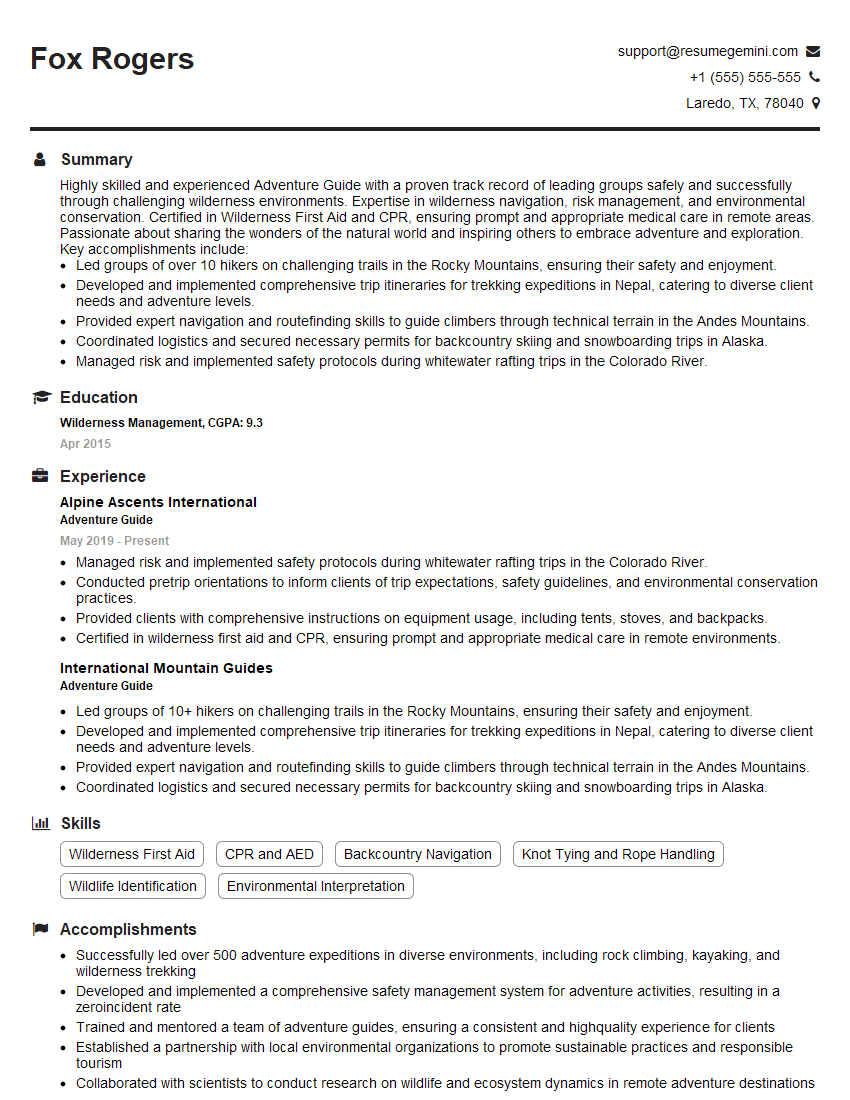
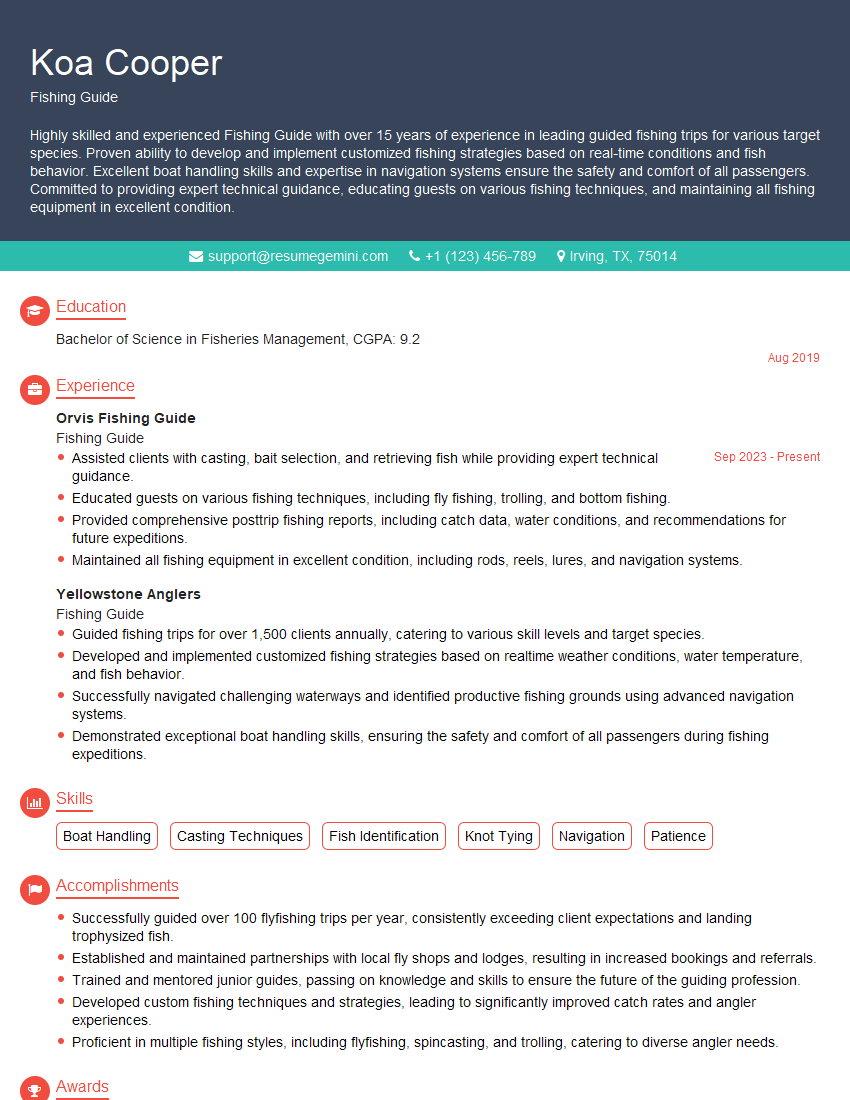
Mastering guide skills opens doors to rewarding careers offering adventure, personal growth, and the chance to share your passion. A strong resume is crucial to showcasing your abilities and landing your dream job. Crafting an ATS-friendly resume that highlights your relevant skills and experience is essential. ResumeGemini is a trusted resource to help you build a professional and impactful resume tailored to the specific requirements of guide positions in hiking, biking, snorkeling, and other outdoor activities. Examples of resumes tailored to these Guide Skills are available to help you get started.
Explore more articles
Users Rating of Our Blogs
Share Your Experience
We value your feedback! Please rate our content and share your thoughts (optional).
What Readers Say About Our Blog
To the interviewgemini.com Webmaster.
Very helpful and content specific questions to help prepare me for my interview!
Thank you
To the interviewgemini.com Webmaster.
This was kind of a unique content I found around the specialized skills. Very helpful questions and good detailed answers.
Very Helpful blog, thank you Interviewgemini team.