Every successful interview starts with knowing what to expect. In this blog, we’ll take you through the top Independent Component Analysis (ICA) interview questions, breaking them down with expert tips to help you deliver impactful answers. Step into your next interview fully prepared and ready to succeed.
Questions Asked in Independent Component Analysis (ICA) Interview
Q 1. Explain the core principle behind Independent Component Analysis (ICA).
Independent Component Analysis (ICA) is a powerful computational method for separating a multivariate signal into additive subcomponents. Imagine a cocktail party: you hear a mix of overlapping voices (the mixed signal). ICA aims to recover the individual voices (the independent components) from this mixture. The core principle is that it assumes the observed data is a linear mixture of statistically independent source signals, and it then seeks to uncover these underlying sources. It doesn’t assume anything about the distribution of the sources, unlike many other methods.
Q 2. What are the assumptions made in ICA?
ICA relies on several key assumptions:
- Linearity: The observed data is a linear mixture of the independent components. This means the sources are simply added together, not multiplied or interacted in complex ways.
- Statistical Independence: The underlying source signals are statistically independent. This means knowing the value of one source gives no information about the value of another. This is the most crucial assumption.
- Non-Gaussianity: At most one source can be Gaussian distributed. If all sources were Gaussian, separating them would be impossible as Gaussian mixtures are indistinguishable.
- More observations than sources: The number of observed mixtures must be greater than or equal to the number of independent components to ensure solvability. The more observations we have the more robust is the estimation.
Violating these assumptions can lead to inaccurate or misleading results. For instance, if the mixing process isn’t linear, ICA will fail to recover the true sources.
Q 3. Describe the difference between PCA and ICA.
Both Principal Component Analysis (PCA) and ICA are dimensionality reduction techniques, but they operate under different assumptions and aim for different goals.
- PCA seeks orthogonal components that maximize variance. It focuses on finding the directions of greatest spread in the data. Think of it as finding the axes that best describe the data’s ‘shape’. It doesn’t necessarily give statistically independent components.
- ICA aims to find statistically independent components. It looks for sources that are as unrelated as possible, even if they don’t explain the most variance. It focuses on the statistical properties of the sources.
An analogy: PCA is like finding the best-fitting ellipse around a scatter plot. ICA is like finding the underlying sources generating the scatter plot, regardless of the shape they make.
Q 4. Explain the concept of statistical independence in the context of ICA.
In ICA, statistical independence means the probability of observing a particular value for one source is unaffected by the value of any other source. Mathematically, this translates to the joint probability distribution of the sources being equal to the product of their individual probability distributions: P(s1, s2, ..., sn) = P(s1)P(s2)...P(sn), where si are the independent components. This implies zero correlation between sources, but it’s a stronger condition; uncorrelated variables are not necessarily independent.
For example, consider two sources: one representing the amplitude of a voice and another representing a background noise. If these are truly independent, knowing the loudness of the voice tells us nothing about the level of background noise.
Q 5. What are some common algorithms used for ICA?
Several algorithms are used to perform ICA, each with its strengths and weaknesses:
- FastICA: A fixed-point iteration algorithm, known for its speed and efficiency.
- Infomax: Based on maximizing the information transfer between the input and output of a neural network.
- JADE (Joint Approximate Diagonalization of Eigenmatrices): Uses higher-order cumulants for separation.
- Extended Infomax: A modification of Infomax that incorporates a non-linearity for robustness.
The choice of algorithm often depends on the specific application and dataset characteristics.
Q 6. Compare and contrast FastICA and Infomax algorithms.
Both FastICA and Infomax are popular ICA algorithms, but they differ in their approaches:
- FastICA is a computationally efficient fixed-point iteration algorithm. It directly aims to minimize the non-Gaussianity of the estimated sources using a contrast function. Its speed makes it suitable for large datasets.
- Infomax uses a neural network approach. It maximizes the information transfer (entropy) between the mixed signals and the estimated sources. It’s more robust to noise but can be slower than FastICA.
In practice, both algorithms often produce similar results, but the choice depends on computational constraints and the nature of the data. FastICA is usually preferred for its speed, while Infomax might be considered when robustness is paramount.
Q 7. How do you determine the number of independent components in a dataset?
Determining the number of independent components is crucial for successful ICA. There are several approaches:
- Prior knowledge: If you have information about the underlying sources (e.g., the number of speakers in a cocktail party), this can directly guide your choice.
- Eigenvalue analysis of the covariance matrix: A significant drop-off in eigenvalues can suggest the number of relevant components. However, this is not always reliable with ICA because the focus is not variance.
- Parallel analysis (Monte-Carlo): This method generates random datasets with the same dimensions as your data and compares the eigenvalues. Components with eigenvalues exceeding those of the random data are considered significant.
- Information theoretic criteria: Like AIC or BIC can also be employed to estimate the model order.
It’s often an iterative process involving experimentation with different numbers of components and evaluating the results using various metrics to assess the quality of separation, such as examining the independence and Gaussianity of the estimated components.
Q 8. Explain the role of pre-processing in ICA.
Pre-processing in ICA is crucial for ensuring the algorithm’s effectiveness and obtaining reliable results. Think of it as preparing the ingredients before cooking a delicious meal – you wouldn’t start without cleaning and chopping vegetables, would you? Similarly, raw data often contains noise, artifacts, and trends that can confound ICA. Pre-processing steps help to mitigate these issues.
Centering: Subtracting the mean from each signal ensures that the signals have a zero mean, which is a common assumption in many ICA algorithms. This removes any DC offset or baseline drift.
Whitening (or sphering): This process decorrelates the data and scales each dimension to have unit variance. This helps to improve the algorithm’s convergence speed and makes the independent components easier to separate. It essentially normalizes the data, ensuring no single component dominates due to its scale.
Filtering: Band-pass or other filters can be applied to remove unwanted frequencies outside the range of interest, reducing noise and improving signal-to-noise ratio (SNR). For example, removing 50Hz noise from EEG data is a common pre-processing step before ICA application.
The specific pre-processing steps needed depend heavily on the nature of the data and the application. Improper pre-processing can lead to incorrect or unreliable results, so careful consideration is necessary.
Q 9. How do you handle non-stationary signals in ICA?
Handling non-stationary signals in ICA is a significant challenge because ICA assumes that the statistical properties of the sources remain constant over time. Non-stationary signals, however, exhibit time-varying statistical characteristics. This means the sources’ statistical properties change over time.
Short-time ICA: One common approach is to divide the non-stationary signal into short, overlapping segments. We then apply ICA to each segment individually, assuming stationarity within each short window. This approach gives a time-evolving representation of the independent sources. It’s like taking snapshots of a moving scene – each snapshot captures a moment in time.
Adaptive ICA algorithms: These algorithms are designed to track the changing statistical properties of the sources in real-time. They continuously adjust their parameters to accommodate the non-stationarity. This is more sophisticated than segmenting the data, as it avoids potential artefacts from segmentation.
Time-frequency analysis: Combining ICA with time-frequency representations, like wavelets, allows for the analysis of non-stationary signals in both time and frequency domains. This provides insights into how the sources change over time and across frequencies.
The choice of method depends on the degree of non-stationarity and the computational resources available. Adaptive methods are more computationally expensive but can handle more severely non-stationary signals more effectively.
Q 10. Discuss the limitations of ICA.
While ICA is a powerful technique, it’s not a silver bullet. Several limitations need careful consideration:
Permutation ambiguity: ICA cannot determine the order of the independent components. The algorithm may successfully separate the sources, but the resulting order might be arbitrary. Imagine separating colored candies – ICA might successfully separate them by color, but it doesn’t tell you which color was originally in which container.
Scaling ambiguity: ICA cannot determine the exact scaling of each independent component. The amplitudes of the separated sources are not unique. This is because a scaled version of an independent component is also independent.
Assumption of statistical independence: ICA relies on the assumption that the sources are statistically independent. If this assumption is violated, the results can be inaccurate. Subtle dependencies between sources can significantly affect the separation quality.
Sensitivity to noise: Like any signal processing technique, ICA is susceptible to noise. High levels of noise can significantly degrade the quality of the separation and lead to inaccurate results. Preprocessing steps aiming to improve SNR are important.
Understanding these limitations is vital for interpreting ICA results and ensuring that the technique is applied appropriately.
Q 11. What are some real-world applications of ICA in signal processing?
ICA finds applications in various signal processing domains:
Audio signal processing: Separating multiple speakers in a cocktail party scenario or removing background noise from a music recording.
Telecommunications: Separating multiple signals transmitted over a single channel, a key application in radio communications.
Financial data analysis: Identifying independent factors influencing stock prices or other financial instruments.
Seismic data processing: Separating different seismic sources (like earthquakes or explosions) recorded by multiple sensors.
In each of these scenarios, ICA excels in its ability to uncover hidden signals from a mixture, making it a valuable tool for analyzing complex systems.
Q 12. How is ICA used in biomedical signal processing?
ICA is widely used in biomedical signal processing, particularly in:
Electroencephalography (EEG): Separating brain activity from artifacts such as eye blinks, muscle movements, and heartbeats, leading to clearer and more accurate analysis of brain signals. Removing artifacts is crucial to diagnose neurological disorders.
Magnetoencephalography (MEG): Similar to EEG, ICA helps to remove artifacts from MEG recordings to enhance the signal related to brain activity.
Electrocardiography (ECG): Identifying and separating different heart signals for more accurate diagnosis of cardiac conditions.
Functional magnetic resonance imaging (fMRI): ICA can help to identify independent brain networks responsible for specific cognitive functions.
ICA’s ability to separate overlapping signals makes it invaluable for analyzing complex biomedical data, paving the way for improved diagnostics and understanding of biological systems.
Q 13. Explain the application of ICA in image processing.
In image processing, ICA is used to separate mixed sources in images. For instance, it can be used for:
Image denoising: ICA can separate noise from the actual image signal, improving image quality.
Facial image analysis: ICA can separate different components of a facial image, such as lighting conditions, facial expressions, and the underlying facial structure, enabling better facial recognition and analysis.
Texture separation: ICA can separate different textures in an image, for example, separating the texture of a fabric from the background in a photograph.
Blind source separation in hyperspectral imaging: ICA can separate different materials in a hyperspectral image based on their spectral signatures.
By separating the independent components of an image, ICA provides a more structured and informative representation, facilitating better image analysis and interpretation.
Q 14. Describe how ICA can be used for blind source separation.
Blind source separation (BSS) is the problem of recovering multiple source signals from a set of mixed observations when little or nothing is known about the mixing process. ICA is a powerful tool for BSS because it utilizes only the statistical properties of the mixed signals to separate the sources. Imagine receiving multiple radio channels mixed together – ICA aims to separate those channels back to their original, individual broadcasts.
The process involves applying an ICA algorithm to the mixed signals. The algorithm searches for statistically independent components that, when linearly mixed, recreate the original observations. The estimated independent components are then interpreted as estimates of the original sources, though the order and scaling of the components remain ambiguous.
In a mathematical sense, let’s say we have a mixing matrix A and source signals s. Our observations x are given by x = As. ICA aims to estimate A and s from x alone, without knowledge of A or s. It’s a powerful illustration of uncovering underlying hidden structure from mixed data.
Q 15. What are some common challenges encountered when implementing ICA?
Implementing ICA, while powerful, presents several challenges. One major hurdle is the permutation ambiguity. Since ICA only recovers sources up to an arbitrary permutation and scaling, we can’t definitively say which independent component corresponds to which original source. For example, if we’re separating audio sources, we might get the vocals and music separated, but we don’t know *a priori* which component represents the vocals and which represents the music.
Another challenge is the assumption of statistical independence. Real-world data rarely perfectly meets this assumption; subtle dependencies between sources can lead to inaccurate separation. Imagine trying to separate individual instruments in a recording – there’s almost always some level of interaction between them.
Non-Gaussianity of sources is also crucial. If the sources are Gaussian, ICA fails because Gaussian distributions are rotationally invariant and therefore indistinguishable.
Finally, the sensitivity to noise is a significant concern. Noise can corrupt the observed mixtures, making it harder for ICA to accurately recover the independent components. Robustness to noise is a key requirement for real-world applications.
Career Expert Tips:
- Ace those interviews! Prepare effectively by reviewing the Top 50 Most Common Interview Questions on ResumeGemini.
- Navigate your job search with confidence! Explore a wide range of Career Tips on ResumeGemini. Learn about common challenges and recommendations to overcome them.
- Craft the perfect resume! Master the Art of Resume Writing with ResumeGemini’s guide. Showcase your unique qualifications and achievements effectively.
- Don’t miss out on holiday savings! Build your dream resume with ResumeGemini’s ATS optimized templates.
Q 16. How do you evaluate the performance of an ICA algorithm?
Evaluating ICA performance is multifaceted. A common approach involves calculating metrics on the separated sources, comparing them to the ground truth (if available). Key metrics include:
- Amari’s index: Measures the distance between the estimated mixing matrix and the true mixing matrix, closer to 0 indicating better performance.
- Signal-to-interference ratio (SIR): Quantifies the ratio of the power of a desired signal to the power of interfering signals in each separated source.
- Signal-to-noise ratio (SNR): Measures how much the signal is corrupted by noise.
- Mutual information: Measures the statistical dependence between the estimated independent components; lower values imply better independence.
Visual inspection of the separated components can also be invaluable. If we’re dealing with images, for instance, we might look for artifacts or distortions that suggest suboptimal separation.
In situations without ground truth, we rely on qualitative assessments and the application context. For example, if ICA is used for blind source separation of audio, we might subjectively assess the clarity and intelligibility of the separated audio streams. A good ICA method will ensure that the separated components are readily interpretable in context.
Q 17. Explain the concept of kurtosis and its relevance to ICA.
Kurtosis is a statistical measure that describes the ‘tailedness’ of a probability distribution. A high kurtosis indicates a heavy-tailed distribution (many outliers), while low kurtosis suggests a light-tailed distribution (few outliers). In the context of ICA, kurtosis plays a central role because it helps distinguish between sources. ICA algorithms often assume that the independent components have non-zero kurtosis (i.e., they are not Gaussian). This is because Gaussian distributions have kurtosis of 3, and ICA algorithms usually seek to maximize or minimize this measure across identified sources.
For example, consider separating two images: one with a sharp, highly contrasted foreground and a uniform background, and another with a fairly uniform intensity distribution. The first image is likely to have components with high kurtosis, while the second would have components with kurtosis close to 3. The ICA algorithm leverages this difference in kurtosis to separate the sources effectively.
Q 18. How does ICA handle noisy data?
ICA is inherently sensitive to noise, but several strategies mitigate its impact. Preprocessing steps, such as filtering, are crucial. We can use techniques like low-pass or band-pass filters to remove frequencies containing mostly noise. Robust ICA algorithms designed to handle noisy data, such as algorithms using M-estimators, are also effective. These estimators are less sensitive to outliers, which are often manifestations of noise.
Another approach is to use regularization techniques that add penalties to the ICA objective function to prevent overfitting to noisy data. This reduces the model’s sensitivity to noise. Furthermore, incorporating a noise model in the ICA framework itself can help improve the separation of signals in noisy conditions.
Q 19. Discuss the role of whitening in ICA.
Whitening (also known as sphering) is a crucial preprocessing step in ICA. It transforms the observed data into a representation where the components are uncorrelated and have unit variance. This simplifies the subsequent ICA calculations significantly. Imagine the data as a cloud of points; whitening essentially stretches and rotates this cloud so that it’s perfectly round and centered, simplifying the search for independent components.
By removing correlation and scaling the data, whitening reduces the computational complexity and improves the performance of ICA algorithms, preventing overemphasis on directions with high variance that might be caused by noise.
Q 20. Explain the difference between sub-Gaussian and super-Gaussian distributions in ICA.
In ICA, the terms ‘sub-Gaussian’ and ‘super-Gaussian’ refer to the shape of the probability distribution of independent components. A super-Gaussian distribution is characterized by heavy tails and a sharp peak; think of a distribution resembling a sharp spike with long tails. Examples include Laplacian and uniform distributions. These distributions are often associated with signals containing sharp transitions or sparse components.
A sub-Gaussian distribution has light tails and a relatively flat peak; it’s less peaked than a Gaussian. A good example is a uniform distribution. These distributions typically represent signals with smoother transitions or relatively dense components. The distinction between sub-Gaussian and super-Gaussian distributions is vital in ICA because it influences the choice of the contrast function and the algorithm used for separation.
Q 21. What is the impact of the choice of non-linearity function in ICA?
The choice of non-linearity function (also known as contrast function) significantly impacts ICA’s performance. The contrast function measures the non-Gaussianity of the data. Different functions are better suited to different types of sources. For example, the commonly used cubic function is suitable for signals with super-Gaussian distributions, while a tanh function may be more appropriate for signals with sub-Gaussian distributions. The selection hinges on the characteristics of the underlying sources. A poorly chosen contrast function can fail to separate sources or even lead to inaccurate component estimation. A common strategy is to experiment with different non-linearity functions and evaluate their performance based on the specific dataset and application to find the optimal fit.
Q 22. How do you select the appropriate ICA algorithm for a given problem?
Choosing the right ICA algorithm depends heavily on the characteristics of your data and your computational resources. There isn’t a one-size-fits-all answer, but we can consider key factors.
- Data size and dimensionality: For massive datasets, algorithms with lower computational complexity like FastICA are preferable. For smaller datasets, more computationally expensive algorithms might be suitable if they offer better performance.
- Non-Gaussianity of sources: ICA’s core assumption is that the source signals are non-Gaussian. If your data strongly deviates from this assumption, you might need to explore algorithms robust to violations of this assumption or pre-process your data accordingly. For example, if sources are close to Gaussian, you might want to try algorithms designed for this case, or consider alternative techniques.
- Noise level: Noisy data requires algorithms with built-in robustness to noise. Some algorithms incorporate noise reduction techniques directly.
- Computational resources: As mentioned, the computational cost varies significantly. FastICA is known for its speed, while others like Infomax might require more processing power and time.
- Specific needs: Some algorithms offer specific features, such as handling temporal dependencies or dealing with outliers. Consider if your data or application demands such capabilities.
In practice, I often start with FastICA due to its speed and efficiency. If the results are unsatisfactory, I’ll explore other algorithms, possibly trying JADE or Infomax, evaluating the results based on metrics like signal-to-interference ratio (SIR) or other application-specific measures.
Q 23. Discuss the computational complexity of ICA algorithms.
The computational complexity of ICA algorithms varies considerably. It’s generally dependent on the number of samples (N) and the dimensionality of the data (M). Many algorithms have a time complexity that scales at least linearly with N and often quadratically or cubically with M.
- FastICA: Typically exhibits a complexity of O(MNk), where k is the number of iterations needed for convergence. This makes it relatively fast, especially for high-dimensional data.
- Infomax: Often has a higher computational cost compared to FastICA. The complexity can vary depending on the specific implementation, but it tends to be more computationally intensive.
- JADE: This algorithm involves eigenvalue decomposition, which has a complexity of approximately O(M3). This can be computationally expensive for high-dimensional data.
It’s important to note that the actual computation time also depends on factors like the implementation (optimized code vs. naive implementation), the hardware used, and the convergence speed for a given dataset. In many applications, the choice between different algorithms often involves a trade-off between accuracy and computational cost.
Q 24. How can you assess the convergence of an ICA algorithm?
Assessing the convergence of an ICA algorithm is crucial to ensure reliable results. We typically monitor several indicators:
- Iteration-based convergence criteria: Many algorithms iterate until a predefined convergence criterion is met. This often involves checking the change in the estimated source signals or the mixing matrix between successive iterations. If the change falls below a threshold, the algorithm is considered converged.
- Reconstruction error: This involves reconstructing the original mixed signals from the estimated sources and mixing matrix and comparing them to the original mixed signals. A small reconstruction error indicates good convergence.
- Non-Gaussianity measures: We can measure the non-Gaussianity of the estimated sources. ICA aims to maximize non-Gaussianity, so a high degree of non-Gaussianity suggests good convergence. Kurtosis or negentropy are commonly used measures.
- Visual inspection: For simpler cases, visual inspection of the estimated source signals can provide valuable insight into convergence. Stable and meaningful source signals suggest successful convergence.
It’s essential to carefully choose convergence criteria and thresholds. Too strict criteria might lead to unnecessary computations, while too lenient ones might result in premature termination and inaccurate results. Often a combination of these methods offers the most robust convergence assessment.
Q 25. Explain the concept of ICA for fMRI data analysis.
ICA is a powerful tool in fMRI data analysis because it helps separate independent brain activity patterns from noisy fMRI signals. fMRI data typically shows activity from numerous brain regions simultaneously, and these activities are mixed in the measured signal. ICA aims to decompose these mixed signals into a set of spatially independent components, representing distinct patterns of brain activation.
The process usually involves several steps: pre-processing the fMRI data (e.g., motion correction, spatial smoothing), applying ICA to decompose the data into independent components, and then interpreting the resulting spatial maps and time courses. Each component represents a spatially independent pattern of brain activation. The spatial map indicates the brain regions involved in that pattern, and the time course shows how the activity changes over time. By identifying these independent components, researchers can investigate various brain networks and their interactions during cognitive tasks or in resting state.
For instance, ICA can be used to identify the default mode network (DMN), a network of brain regions active during rest, or to identify specific patterns associated with particular cognitive functions. It’s vital to remember that interpretation of ICA components often requires expert domain knowledge and validation using other methods.
Q 26. What are some recent advancements in ICA research?
Recent advancements in ICA research include:
- Robust ICA algorithms: New algorithms are being developed to handle noisy and contaminated data more effectively, improving robustness to outliers and artifacts.
- Nonlinear ICA: Traditional ICA assumes linear mixing. Research into nonlinear ICA extends its applicability to scenarios with nonlinear relationships between sources and observations.
- ICA for high-dimensional data: With the increasing availability of high-dimensional data (e.g., in genomics and neuroscience), efficient algorithms are being developed to handle the computational challenges posed by such data.
- Constrained ICA: Incorporating prior knowledge or constraints into ICA algorithms can lead to more accurate and interpretable results. For example, imposing sparsity constraints on the sources can improve the identification of relevant components.
- Applications in new domains: ICA is being applied to increasingly diverse areas, such as signal processing, image analysis, and finance. This leads to the development of ICA variants tailored to the specific challenges of these domains.
The field is continuously evolving, with ongoing research focused on improving the efficiency, robustness, and interpretability of ICA methods.
Q 27. How does ICA relate to other dimensionality reduction techniques?
ICA is related to other dimensionality reduction techniques but differs significantly in its goal. While techniques like Principal Component Analysis (PCA) aim to find orthogonal components that maximize variance, ICA aims to find statistically independent components. This is a crucial distinction.
- PCA: Focuses on explaining the variance in the data. It finds uncorrelated components, but these components aren’t necessarily independent.
- ICA: Focuses on uncovering statistically independent sources. It assumes that the observed data is a linear mixture of independent sources, and it seeks to separate these sources. The components found by ICA are not necessarily orthogonal.
- Non-negative Matrix Factorization (NMF): Similar to ICA in aiming for source separation, but NMF assumes non-negativity constraints on both the sources and the mixing matrix. This makes it particularly useful for data where negative values are not meaningful, such as image processing.
In essence, PCA prioritizes variance, ICA prioritizes statistical independence, and NMF combines source separation with non-negativity constraints. The choice of the method depends on the specific problem and the nature of the underlying data and the goals of the analysis.
Q 28. Describe a situation where you used ICA to solve a real-world problem.
During my work on a biomedical signal processing project, we were tasked with analyzing EEG data recorded from patients with epilepsy. The EEG signals are complex mixtures of brain activity from various sources, including artifacts from eye movements and muscle activity. Direct analysis of the raw EEG signals made it challenging to identify epileptic activity reliably.
We employed ICA to separate the independent components from the mixed EEG signal. By carefully analyzing the spatial patterns and time courses of the identified components, we were able to isolate the components associated with epileptic seizures and those related to artifacts. This allowed us to filter out the artifacts and focus on the epileptic activity, significantly improving the accuracy of seizure detection and analysis. The use of ICA resulted in a more robust and effective algorithm for identifying epileptic seizures than methods that relied on simpler filtering techniques.
This successfully demonstrated the power of ICA in separating overlapping sources from noisy data, leading to a valuable clinical application.
Key Topics to Learn for Independent Component Analysis (ICA) Interview
- Core ICA Principles: Understand the fundamental assumptions of ICA (statistical independence, non-Gaussianity). Be prepared to explain the difference between ICA and PCA.
- Algorithms: Familiarize yourself with common ICA algorithms like FastICA and Infomax. Be able to discuss their strengths and weaknesses, and when one might be preferred over another.
- Preprocessing Techniques: Understand the importance of data preprocessing steps like centering and whitening before applying ICA. Be able to explain why these are necessary.
- Applications of ICA: Discuss real-world applications of ICA, such as blind source separation in audio signals, image processing, and biomedical signal analysis. Prepare examples to illustrate your understanding.
- Model Selection and Evaluation: Be ready to discuss methods for evaluating the performance of an ICA model and selecting the optimal number of independent components.
- Limitations of ICA: Understand the limitations and potential pitfalls of ICA, such as the issue of permutation ambiguity and the impact of non-stationarity.
- Mathematical Foundations: Have a solid grasp of the underlying linear algebra and probability theory concepts that underpin ICA. Be prepared to explain key equations and their significance.
- Software Implementation: Demonstrate familiarity with using ICA algorithms through software packages such as MATLAB, Python (scikit-learn), or R.
Next Steps
Mastering Independent Component Analysis (ICA) significantly enhances your prospects in fields like signal processing, machine learning, and data science. A strong understanding of ICA demonstrates advanced analytical skills highly sought after by employers. To maximize your job search success, crafting an ATS-friendly resume is crucial. This ensures your qualifications are effectively communicated to recruiters and hiring managers. We recommend using ResumeGemini, a trusted resource for building professional and impactful resumes. ResumeGemini provides examples of resumes tailored to Independent Component Analysis (ICA) to guide you in creating a compelling document that highlights your unique skills and experience.

Financial Analyst Resume Sample

Data Analyst Resume Sample

Quantitative Analyst Resume Sample

Data Scientist Resume Sample

Research Scientist Resume Sample
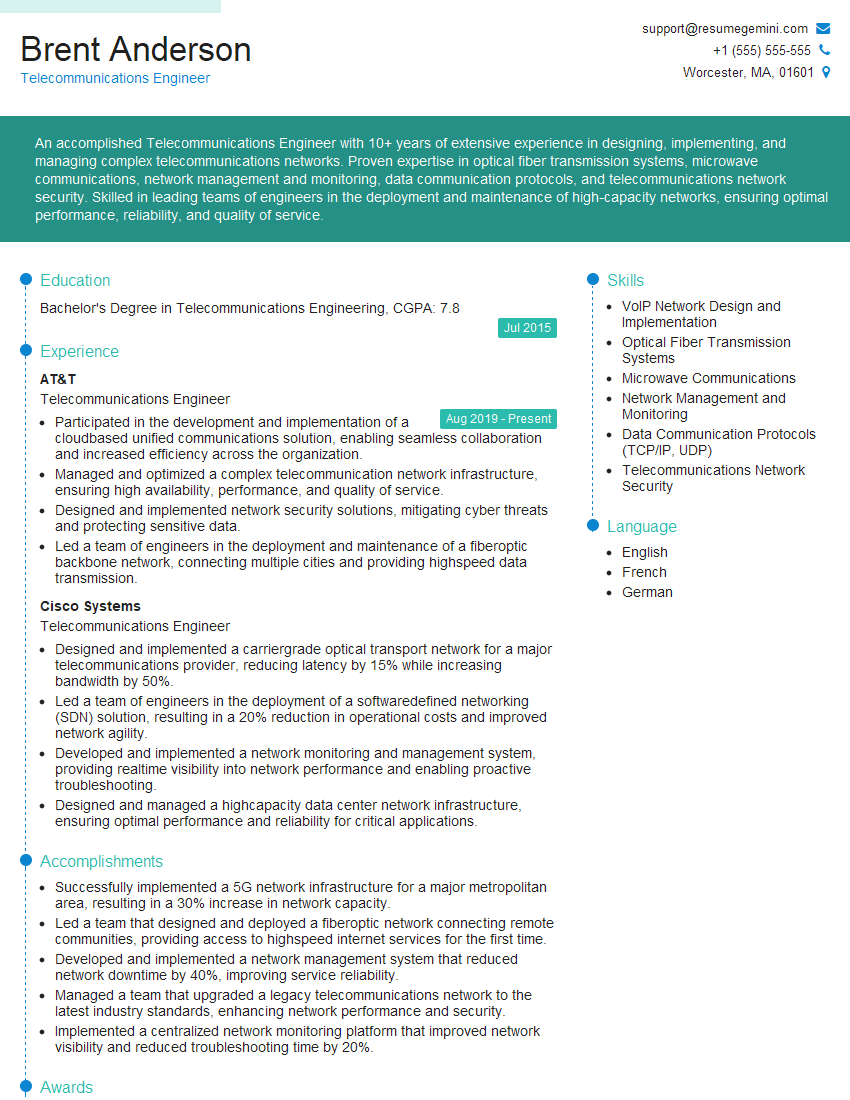
Telecommunications Engineer Resume Sample

Statistician Resume Sample

Robotics Engineer Resume Sample
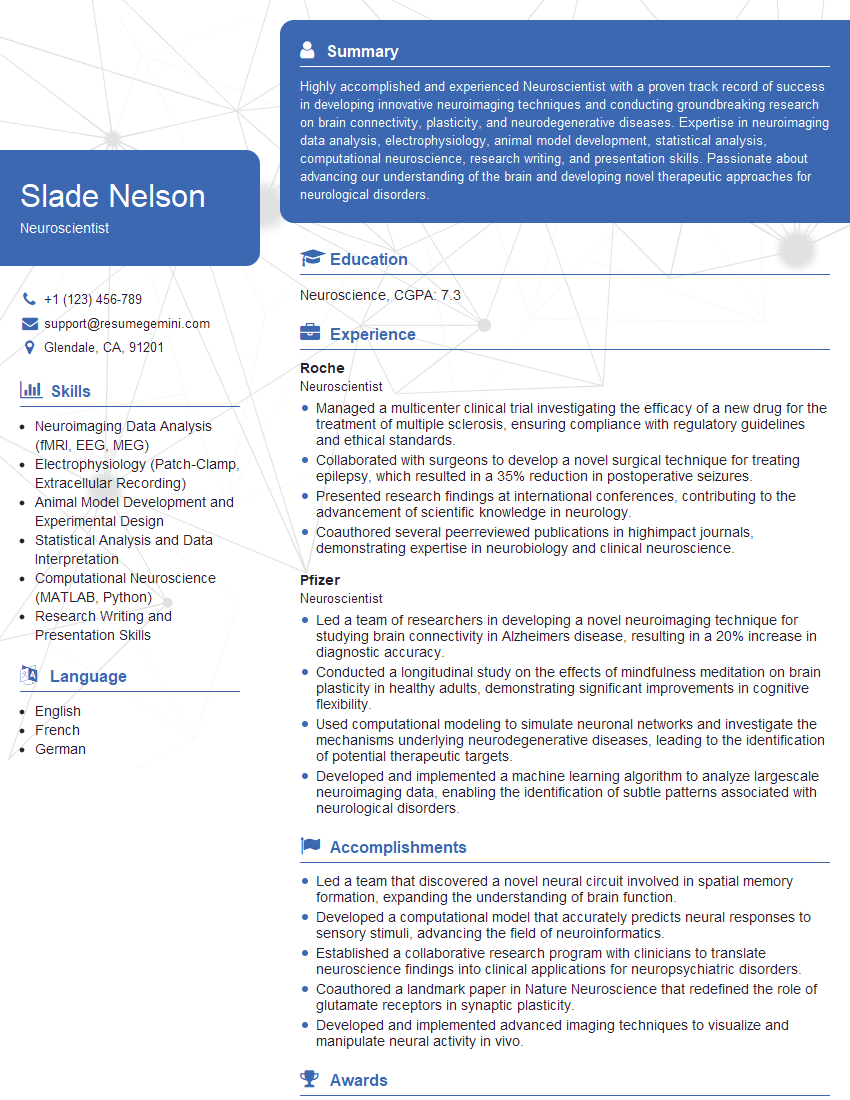
Neuroscientist Resume Sample

Principal Scientist Resume Sample
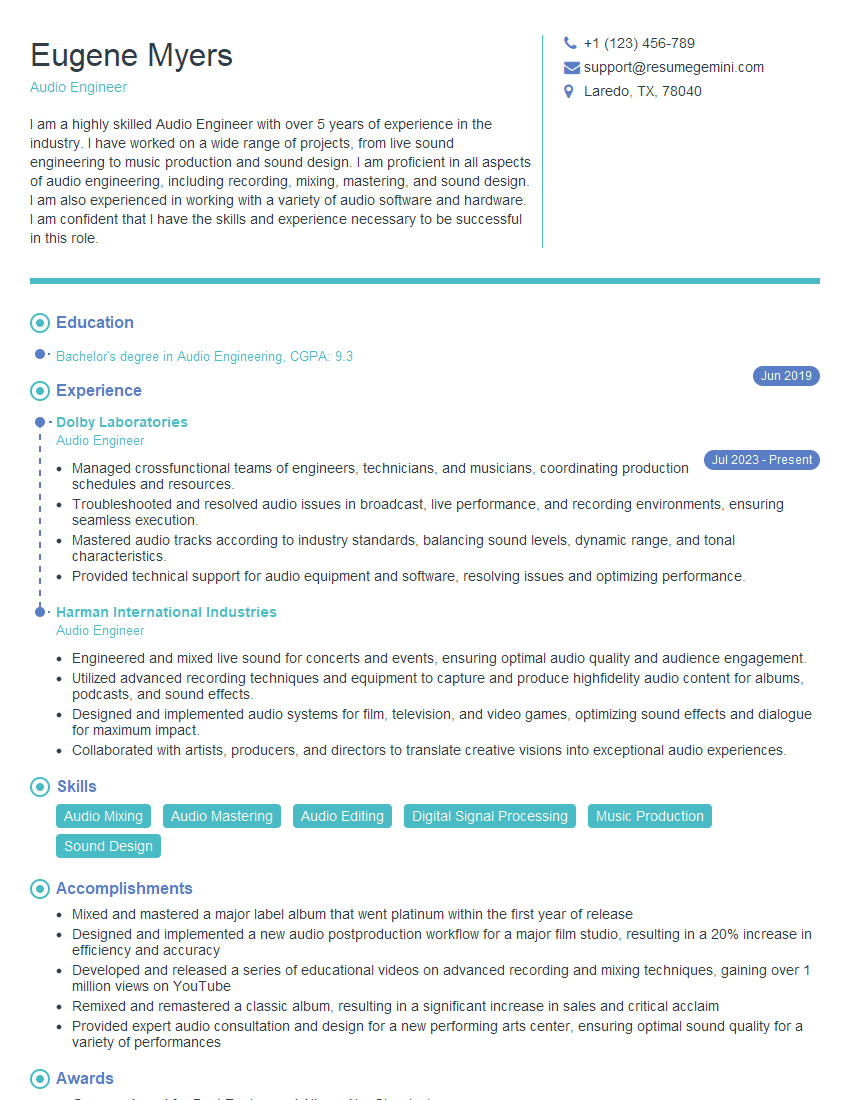
Audio Engineer Resume Sample

Machine Learning Engineer Resume Sample

Big Data Engineer Resume Sample
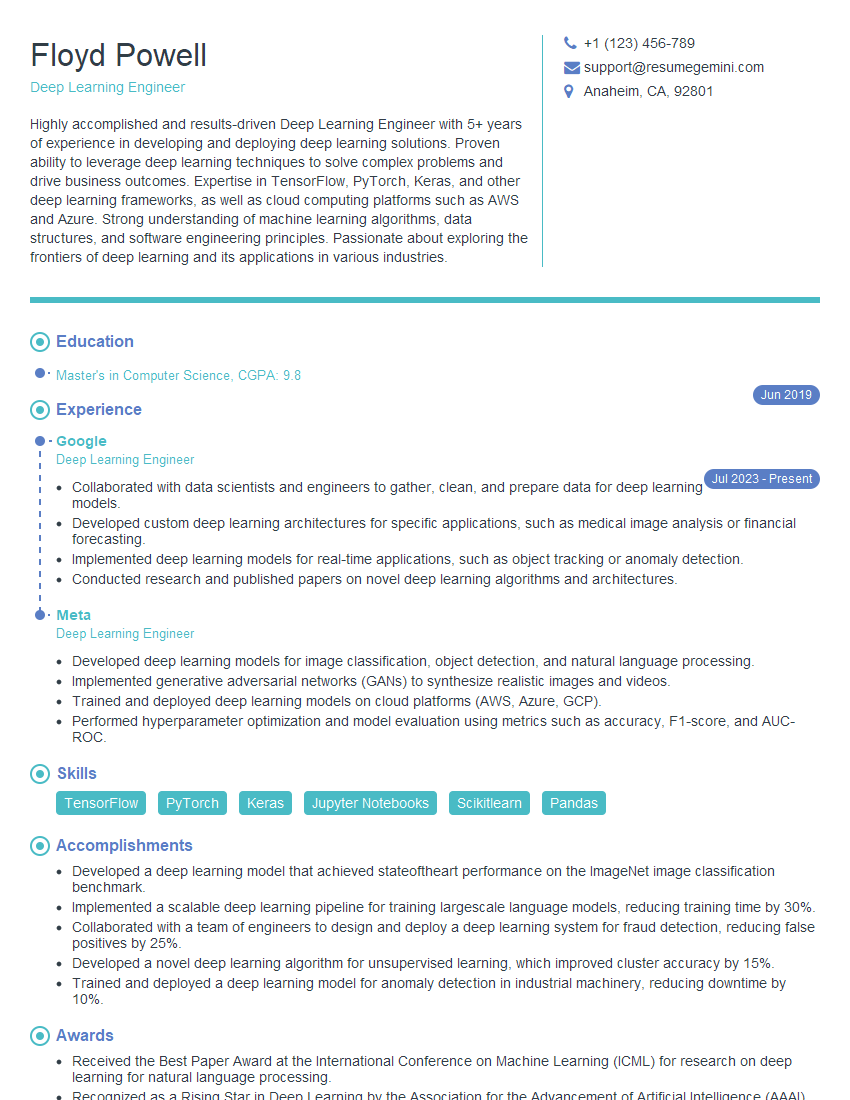
Deep Learning Engineer Resume Sample

Computer Vision Engineer Resume Sample
Explore more articles
Users Rating of Our Blogs
Share Your Experience
We value your feedback! Please rate our content and share your thoughts (optional).
What Readers Say About Our Blog
To the interviewgemini.com Webmaster.
Very helpful and content specific questions to help prepare me for my interview!
Thank you
To the interviewgemini.com Webmaster.
This was kind of a unique content I found around the specialized skills. Very helpful questions and good detailed answers.
Very Helpful blog, thank you Interviewgemini team.