The right preparation can turn an interview into an opportunity to showcase your expertise. This guide to Installed drywall interview questions is your ultimate resource, providing key insights and tips to help you ace your responses and stand out as a top candidate.
Questions Asked in Installed drywall Interview
Q 1. Describe your experience with different types of drywall.
My experience encompasses a wide range of drywall types, each suited for different applications. Standard drywall, also known as gypsum board, is the most common; it’s readily available and cost-effective. I’ve worked extensively with this, from the typical 1/2” thickness for residential walls to thicker 5/8” sheets for added sound dampening or fire resistance in commercial projects. Moisture-resistant drywall (MR) is crucial in areas prone to humidity like bathrooms and kitchens. It features a green-colored core and is designed to resist mold and mildew. Fire-resistant drywall (FR), usually pink or purple, offers superior fire protection, commonly used in hallways, stairwells, and other critical areas. Finally, I’ve worked with specialized types like soundproof drywall, featuring higher density and multiple layers for superior noise reduction in home theaters or recording studios. Choosing the right type is key to building a structure that’s both safe and durable.
Q 2. Explain the process of installing drywall in a typical room.
Installing drywall in a typical room is a multi-step process. First, I’d ensure the framing is square and plumb, a crucial step for a flawless finish. Next, I begin cutting the drywall sheets to the appropriate size, always aiming to minimize waste. Remember, you need to account for door and window openings. Then, I lift and secure the sheet onto the studs, starting at the corners, using drywall screws spaced approximately 6-8 inches apart. It’s important to drive the screws just deep enough to countersink them slightly, preventing them from poking through the surface. After the first sheet is up, I carefully fit the following sheets, ensuring proper alignment and minimizing seams. Using a utility knife, I cut any excess and carefully prep the seams for taping and mudding. Remember, proper planning and measuring will ensure a smooth and efficient installation.
Q 3. What are the different types of drywall tape used, and when would you use each?
Drywall tape comes in a few varieties, each serving a different purpose. Paper tape is the most common and is quite versatile. It’s affordable and easy to work with, ideal for most interior wall applications. Mesh tape, on the other hand, is incredibly strong and less prone to cracking over time. I prefer this for areas subject to movement or stress, such as exterior walls or areas with significant temperature changes. Self-adhesive tape, while convenient, is generally used for smaller repairs or patching and isn’t suitable for larger projects due to its fragility. The choice of tape often depends on the project’s specific demands and the desired finish quality.
Q 4. How do you prepare the surface before applying drywall?
Proper surface preparation is critical for a successful drywall installation. I always start by inspecting the framing for any obstructions, ensuring all studs are properly spaced and secured. Loose nails need to be driven in, and any protruding elements removed. I then remove dust, debris, and loose materials from the framing using a brush or vacuum. For very porous surfaces, it might be necessary to prime them before drywall application to promote better adhesion and to prevent the drywall from absorbing too much moisture from the joint compound.
Q 5. What tools and equipment are essential for drywall installation and finishing?
The right tools are essential for efficient and quality drywall work. This includes a utility knife for cutting drywall, a measuring tape and pencil for accurate measurements, a drywall square for consistent angles, a level to ensure everything is plumb and straight, a drywall lift for handling large sheets, a screw gun with a drywall bit for driving in screws efficiently, putty knives of various sizes for applying joint compound, sanding tools (either hand sanding blocks or electric sanders) for smoothing surfaces, and various containers and trays for mixing mud. Safety equipment like safety glasses and a dust mask are non-negotiable.
Q 6. Describe your experience with mudding and taping drywall.
Mudding and taping are critical finishing stages. First, I apply a thin coat of joint compound (mud) over the tape, embedding it completely into the surface. This coat is often referred to as the ‘bedding coat’. Once dry, I apply a second coat, feathering the edges out to blend seamlessly with the drywall. Several coats may be necessary, depending on the severity of the seam. After each coat, thorough sanding is crucial for achieving a smooth surface. I always focus on feathering the edges to create a seamless transition, avoiding ridges or bumps that will show through the paint. A final light sanding reveals the perfectly smooth surface ready for painting.
Q 7. How do you ensure the proper alignment of drywall sheets?
Ensuring proper alignment is paramount for a professional finish. I use a level to check both the vertical and horizontal alignment of each sheet before securing it. Carefully spacing the seams and paying attention to the positioning of the first sheet establishes a foundation for the rest. Accurate measuring and cutting are key to avoiding gaps or misalignments. Using shims to adjust spacing between sheets helps to create a straight, even surface. Remember, consistently referencing the level throughout the process guarantees a flawless finish, free from crooked or misaligned sheets.
Q 8. Explain your method for finishing drywall corners.
Finishing drywall corners is crucial for a professional-looking and durable finish. There are two main methods: using corner bead and using a hand-finished method. Corner bead is a metal or plastic L-shaped profile that’s applied to the corner to protect it and create a straight edge. The hand-finished method involves carefully applying joint compound to the corner, creating a smooth, rounded edge.
Using Corner Bead: This is the preferred method for most situations due to its strength and ease of application. First, you apply a thin coat of joint compound to the corner, then firmly press the corner bead into the compound, ensuring it’s flush with the drywall. After it dries, you apply additional coats of compound, feathering them out onto the surrounding drywall to create a seamless transition.
Hand-Finished Corners: This technique is more time-consuming and requires a skillful hand. It involves applying multiple layers of joint compound, carefully building up the corner in a smooth, rounded profile. Each coat needs to dry before applying the next, and you’ll need to use a taping knife to create the desired shape. This method is often chosen for aesthetic reasons, especially in areas where a softer, less defined corner is desired.
In both methods, proper sanding is essential to achieve a perfectly smooth finish. Always use fine-grit sandpaper to avoid creating scratches or imperfections.
Q 9. How do you handle drywall repairs, such as holes and cracks?
Repairing holes and cracks in drywall depends on the size and type of damage. Small holes, like those from a picture hook, can often be patched using spackling paste. Larger holes require a more substantial repair.
Small Holes/Cracks: For small imperfections, simply clean the area, apply spackling paste using a putty knife, let it dry completely, and then sand smooth. This is a quick and easy fix for minor damage.
Larger Holes: Larger holes (e.g., from plumbing repairs) necessitate a more involved approach. You’ll need to cut away any loose or damaged drywall around the hole, creating a clean, square edge. Then, cut a piece of drywall to fit the hole, ensuring a snug fit. Secure this patch using drywall screws and then cover the seams with joint compound, sanding smooth as you apply multiple coats until seamless.
Cracks: Cracks often indicate underlying structural issues. Before patching, address the cause of the crack. Once the structural issue is solved, use a crack-filling compound to ensure durability and prevent re-cracking. Multiple coats and proper sanding will ensure an invisible repair.
Remember to always prime the repaired area before painting to ensure proper adhesion and prevent the patch from showing through the paint.
Q 10. What are common problems encountered during drywall installation, and how do you address them?
Several common problems can arise during drywall installation. Here are a few, along with solutions:
- Uneven Walls: Improper framing or uneven studs can result in an uneven drywall surface. The solution is to address the framing before hanging the drywall, ensuring the studs are plumb and straight. Shims can be used to compensate for minor imperfections.
- Gaps and Seams: Gaps between drywall panels are unsightly and can compromise the finish. Using the correct size and type of screws, and careful planning of cuts, can minimize this issue. Larger gaps need to be filled with joint compound.
- Nail Pops: These occur when drywall screws are driven in too tightly, causing the drywall to bulge out. Avoid over-tightening screws, and if pops occur, simply countersink the screw and apply joint compound to the affected area.
- Drywall Damage: Handling drywall requires caution to prevent dents and tears. Always use proper lifting techniques and avoid dropping the sheets. Minor damage can often be repaired using patching techniques.
Proactive planning and attention to detail are key to avoid these issues, but knowing how to address them is critical for a successful installation.
Q 11. What safety precautions do you take while installing drywall?
Safety is paramount during drywall installation. Here are some essential precautions:
- Personal Protective Equipment (PPE): Always wear safety glasses or goggles to protect your eyes from flying debris. Wear a dust mask or respirator to prevent inhaling drywall dust, which can be irritating to the lungs. Hearing protection is also important, especially when using power tools.
- Lifting Techniques: Drywall sheets are heavy and awkward to handle. Use proper lifting techniques to avoid back injuries. Use a helper whenever possible and utilize lifting devices when necessary.
- Power Tool Safety: Always follow manufacturer’s instructions when using power tools. Ensure the tools are properly maintained and in good working order. Never operate power tools while fatigued.
- Working at Heights: If working at heights, use appropriate fall protection equipment such as harnesses and safety lines.
- Clean-up: Clean up debris and dust regularly to prevent accidents and maintain a safe workspace.
A safe work environment is a productive work environment. By adhering to these precautions, you minimize the risk of injury and ensure a successful project.
Q 12. What is your experience with different types of drywall fasteners?
My experience encompasses various drywall fasteners, each suitable for different applications.
- Drywall Screws: These are the most common fasteners, offering superior holding power compared to nails. Different screw lengths are used depending on the thickness of the drywall and the framing members.
- Drywall Nails: While less common now, drywall nails are still used in some applications, particularly for thinner drywall. However, screws are generally preferred due to their superior holding power and reduced risk of nail pops.
- Specialty Fasteners: There are specialized fasteners for specific applications, such as self-tapping screws for metal studs or heavy-duty screws for high-traffic areas.
Choosing the right fastener is crucial. Incorrect fastener selection can lead to issues such as nail pops or loose drywall, compromising the integrity of the wall.
Q 13. How do you achieve a smooth, even finish on drywall?
Achieving a smooth, even finish on drywall involves careful attention to detail throughout the entire process. This starts with proper installation, ensuring the drywall sheets are hung correctly and seams are properly taped and mudded.
The key is using the right technique for applying the joint compound. Thin coats are essential; thick coats are more likely to crack and require extensive sanding. Multiple thin coats are far superior to one or two thick coats. The use of appropriate tools like taping knives and broad knives greatly impacts the quality of the finish.
Sanding between coats is crucial. Start with coarser grit sandpaper for removing major imperfections and gradually switch to finer grits for a smooth surface. Proper sanding techniques ensure a smooth, even finish, avoiding swirl marks or uneven patches.
Finally, priming and painting help to create a uniform, professional-looking finish that conceals any remaining imperfections.
Q 14. Explain your understanding of drywall joint compound.
Drywall joint compound, often called mud, is a crucial material in finishing drywall. It’s a paste-like substance used to fill seams, cover screw heads, and create a smooth surface. Several types exist, each with different properties:
- All-Purpose Compound: This is the most common type, suitable for most applications. It offers a good balance of strength and ease of application.
- Lightweight Compound: This is easier to sand and less prone to cracking, but it might not be as strong as all-purpose compound.
- Fast-Setting Compound: This dries quickly, reducing project time, but it’s crucial to work swiftly to avoid it setting too fast.
Understanding the properties of each type is vital. The choice depends on the project’s specific needs and the skill level of the installer. The right compound, when applied correctly, contributes significantly to a successful, high-quality finish.
Q 15. Describe your experience with using different types of sanding equipment.
My experience with sanding equipment spans a wide range, from hand-held sanding blocks for fine finishing to powerful orbital sanders for larger areas. I’m proficient with various grits, understanding that the right grit is crucial for achieving a smooth, flawless finish. For example, I’ll start with a coarser grit (like 80 or 100) to remove significant imperfections and gradually move to finer grits (up to 220 or higher) for a final, smooth surface. I also have experience using long-arm sanders for reaching difficult areas like ceilings, and vacuum-attached sanders which greatly improve dust control, a crucial aspect of maintaining a clean and safe work environment. I regularly maintain and clean my equipment to ensure optimal performance and longevity.
- Hand sanding blocks: Ideal for detailed work and hard-to-reach areas.
- Orbital sanders: Efficient for covering large, flat surfaces quickly.
- Long-arm sanders: Essential for overhead work, reducing strain and improving reach.
- Vacuum-attached sanders: Minimize dust, improving air quality and worker health.
Career Expert Tips:
- Ace those interviews! Prepare effectively by reviewing the Top 50 Most Common Interview Questions on ResumeGemini.
- Navigate your job search with confidence! Explore a wide range of Career Tips on ResumeGemini. Learn about common challenges and recommendations to overcome them.
- Craft the perfect resume! Master the Art of Resume Writing with ResumeGemini’s guide. Showcase your unique qualifications and achievements effectively.
- Don’t miss out on holiday savings! Build your dream resume with ResumeGemini’s ATS optimized templates.
Q 16. What is your experience with drywall finishing techniques such as skim coating?
Skim coating is a crucial drywall finishing technique I’ve mastered. It involves applying a thin layer of joint compound to create a smooth, seamless surface over existing drywall, covering imperfections and providing a flawless base for painting. I’m experienced in applying multiple thin coats rather than one thick coat, allowing each coat to dry properly and preventing cracking. The key is using a wide blade, smooth strokes, and proper drying time between coats. I’ve used this technique extensively on everything from small repairs to entire room renovations. For instance, on a recent project with heavily textured walls, skim coating allowed us to achieve a perfectly smooth, modern look, ready for a fresh coat of paint. My approach ensures minimal waste and a high-quality, professional finish.
Q 17. How do you measure and cut drywall accurately?
Accurate measurement and cutting are fundamental. I start by carefully measuring the wall or ceiling area using a tape measure, always double-checking my measurements to avoid costly mistakes. For cutting, I use a utility knife with a sharp blade, scoring the drywall first and then snapping it along the score line. For more intricate cuts, I employ a drywall saw, which provides better control and precision for curves or angles. I always ensure the cut is clean and straight, using a sanding block to smooth any rough edges afterwards. For instance, when working around windows or doorways, precise cutting is paramount for a perfect fit and a professional finish. To avoid waste, I plan my cuts strategically, maximizing material usage while minimizing scraps.
Q 18. How do you manage your time and workload during a drywall project?
Effective time management is key. Before starting a project, I thoroughly review the blueprints and specifications, creating a detailed schedule that breaks down the work into manageable tasks. This includes estimating the time needed for each stage – from hanging the drywall to finishing and sanding. I prioritize tasks based on their urgency and dependencies, focusing on the most critical aspects first. I also factor in potential delays, such as material delivery or unexpected issues. Regular communication with the project manager keeps everyone informed of progress and any potential roadblocks. Throughout the process, I remain flexible and adaptable, adjusting the schedule as needed to ensure timely completion.
Q 19. Describe your experience working with other tradespeople on a construction site.
Collaboration is essential on a construction site. I have extensive experience working alongside electricians, plumbers, painters, and other tradespeople. Effective communication is key – I clearly communicate my needs and timelines to other trades, ensuring we coordinate our work efficiently, avoiding conflicts and delays. Respectful and professional collaboration helps maintain a positive work environment and deliver a successful outcome. For example, I always coordinate with electricians before installing drywall, ensuring that electrical boxes are properly positioned and accessible. Clear communication and teamwork ensure everyone works safely and efficiently.
Q 20. How do you handle challenging or complex drywall installations?
Challenging installations often involve complex angles, curves, or unusual architectural features. My approach is methodical and problem-solving oriented. I meticulously plan the layout, considering the best way to cut and install the drywall to achieve the desired outcome. I may use specialized tools or techniques, such as using templates or creating custom cuts to fit non-standard shapes. For example, installing drywall around a curved staircase requires careful planning and precise cutting to ensure a seamless, aesthetically pleasing result. I don’t shy away from challenges; rather, I view them as opportunities to demonstrate my skills and problem-solving abilities. Thorough preparation and a flexible approach are crucial in these situations.
Q 21. What is your understanding of building codes related to drywall installation?
I have a solid understanding of building codes concerning drywall installation, including fire-resistance ratings, proper fastening techniques, and moisture barriers in specific areas. These codes vary by location, so I always ensure I’m familiar with the requirements for the project’s jurisdiction. I understand the importance of using approved materials and adhering to specified procedures to ensure structural integrity, fire safety, and overall code compliance. For example, I know the requirements for fire-rated drywall in specific locations like stairwells, and I meticulously follow these guidelines to meet the necessary safety standards. Staying current with building code updates is an ongoing commitment for me.
Q 22. How do you maintain the quality of your work throughout a project?
Maintaining quality in drywall installation is a multi-faceted process that begins even before the first sheet is hung. It involves meticulous planning, precise execution, and constant attention to detail.
- Careful Planning and Preparation: This includes thoroughly reviewing blueprints, ensuring all materials are on-site and in good condition, and properly preparing the framing (checking for plumbness and squareness). Skipping this step is like trying to build a house on a shaky foundation – the cracks will show later.
- Precise Measurement and Cutting: Accuracy is paramount. Using measuring tools correctly and employing proper cutting techniques minimizes waste and ensures a perfect fit, preventing gaps or uneven seams that compromise the final aesthetic and structural integrity.
- Consistent Application of Mud and Tape: Applying thin coats of joint compound (mud) and embedding the tape properly are crucial for achieving a seamless finish. Multiple thin coats, as opposed to one thick coat, reduce cracking and create a smooth surface.
- Thorough Sanding and Cleaning: Sanding eliminates bumps and ensures a smooth surface before painting. A clean work area prevents debris from compromising the final finish.
- Quality Control Checks: Regularly inspect your work to catch and correct minor imperfections before they become major problems. Think of it as editing your work; the sooner you fix minor errors, the less time you spend on major revisions later.
Q 23. Explain your experience with different drywall textures.
My experience encompasses a wide range of drywall textures, from the smooth, clean look of Level 5 finishes to the more textured options like knockdown, orange peel, and skip trowel. Each texture presents unique challenges and requires specific techniques for application.
- Level 5 (Smooth): This requires meticulous sanding and multiple thin coats of joint compound for an impeccable, flawless finish. It’s perfect for modern, minimalist designs.
- Knockdown: This texture is created by applying a thicker coat of mud and then using a knockdown knife to create a subtle, textured surface. It hides minor imperfections better than a smooth finish.
- Orange Peel: A more heavily textured finish, orange peel is sprayed using a hopper gun and results in a consistent, textured surface. It’s a popular choice for its durability and ability to mask wall imperfections.
- Skip Trowel: This involves applying a thick layer of mud and then dragging the trowel across it, leaving a distinct pattern. It offers a more dramatic, rustic look.
Choosing the right texture depends on the project’s aesthetic requirements, the condition of the walls, and the client’s preferences. I’ve successfully completed projects using all of these textures, always adhering to best practices and ensuring a professional, consistent finish.
Q 24. Describe your knowledge of fire-resistant drywall.
Fire-resistant drywall, also known as fire-rated drywall or Type X drywall, is a crucial component in enhancing building fire safety. It’s designed to resist the spread of fire for a specified period, providing valuable time for evacuation and fire suppression.
- Composition: Type X drywall contains gypsum core embedded with fibers that enhance its fire-resistant properties. This material significantly reduces the rate at which heat penetrates the wall.
- Installation: The installation process for Type X is similar to standard drywall, but it’s even more crucial to follow proper procedures for taping and finishing to maintain its fire-resistant properties. Any gaps or inconsistencies can compromise its effectiveness.
- Code Compliance: The use of Type X drywall is often mandated by building codes, especially in areas like stairwells, corridors, and around fire-rated openings. Understanding local building codes and applying them properly is essential.
- Special Considerations: It’s heavier than standard drywall, requiring careful handling and potentially needing additional structural support in certain applications.
I have extensive experience installing and finishing Type X drywall, ensuring compliance with all relevant building codes and safety regulations.
Q 25. How do you manage waste materials during a drywall project?
Waste management is an integral part of responsible drywall installation. Minimizing waste reduces environmental impact, lowers project costs, and maintains a clean, safe worksite.
- Careful Measurement and Cutting: Accurate measurements and precision cutting techniques significantly reduce scrap material. This involves using proper tools and planning out cuts carefully before starting.
- Recycling and Disposal: Drywall scraps can often be recycled through local recycling facilities. Knowing the options in your area and following proper procedures is important. Any unusable materials must be disposed of according to local regulations, often at designated waste disposal sites.
- Cleanup and Organization: Keeping the work area organized throughout the project helps minimize waste and makes clean-up much easier. This includes regularly disposing of debris, keeping materials neatly stored, and properly containing dust during sanding.
I prioritize efficient waste management practices on every project to minimize environmental impact and ensure a clean, professional outcome.
Q 26. What is your experience working with acoustical drywall?
Acoustical drywall is specialized drywall designed to improve sound absorption and reduce noise transmission within a building. It plays a significant role in creating quieter and more comfortable spaces.
- Types: Various types of acoustical drywall exist, often incorporating perforated surfaces or other features to enhance sound absorption. The choice of specific product depends on the desired level of sound reduction and the application.
- Installation: Installation is similar to standard drywall, but it’s crucial to ensure proper sealing of seams and edges to maximize sound dampening. Any gaps can compromise the acoustical performance.
- Applications: Common applications include home theaters, recording studios, offices, and apartments where soundproofing is a priority.
- Other Considerations: The cost of acoustical drywall is generally higher than standard drywall. Therefore, accurate planning and efficient installation are crucial to minimize waste and ensure the budget is respected.
I’ve worked on several projects requiring acoustical drywall installation, paying close attention to detail to ensure superior noise reduction and client satisfaction.
Q 27. How do you identify and address potential problems before they become major issues?
Proactive problem identification is key to avoiding costly rework and delays. This starts with a thorough understanding of the project specifications and anticipating potential issues.
- Pre-Installation Inspection: Before hanging the first sheet of drywall, I carefully inspect the framing to ensure it’s plumb, square, and free of any defects that could cause problems later. This might include checking for gaps, weak points, or irregularities.
- Material Assessment: I carefully inspect all materials for any damage or defects before installation. Damaged or defective materials can lead to significant problems down the line.
- Communication and Collaboration: Clear communication with other tradespeople working on the project is vital. For example, coordinating with electricians and plumbers to ensure that all wiring and plumbing is complete and properly routed before drywall installation begins.
- Regular Checks During Installation: Regularly checking for alignment, squareness, and proper spacing during the installation process can help identify and correct small issues before they become major problems. This might involve using a level, square, or measuring tape at various stages.
By implementing these measures, we can preempt many potential issues, ensuring a smoother and more efficient process.
Q 28. Describe a time you had to troubleshoot a drywall installation problem.
On a recent project, we encountered a significant issue with bowed studs in a section of the wall. This caused the drywall to bulge and created an uneven surface. Simply ignoring it would have led to a very noticeable and unacceptable final finish.
Troubleshooting Steps:
- Identification: We carefully identified the extent of the bowing using a level and straight edge.
- Assessment: We determined that the bowing was too severe to simply be corrected through mudding and taping.
- Solution: We carefully removed the affected drywall sections. Then, we used shims to correct the bowing of the studs. After ensuring the studs were straight and the wall was plumb, we carefully installed new drywall sections, ensuring proper taping and mudding to create a smooth and seamless finish.
This proactive approach not only solved the immediate problem but also prevented larger issues down the road. The client was very satisfied with the outcome, highlighting the importance of effective troubleshooting in ensuring a high-quality finish.
Key Topics to Learn for Installed Drywall Interview
- Drywall Types and Properties: Understanding different types of drywall (e.g., standard, fire-resistant, moisture-resistant) and their respective applications, including their strengths, weaknesses, and appropriate uses in various settings.
- Installation Techniques: Mastering various hanging and finishing techniques, including proper use of tools, fasteners, and joint compound. This includes understanding the importance of straight seams, consistent tape application, and proper mudding and sanding techniques.
- Safety Procedures and Regulations: Familiarity with OSHA regulations and safety protocols related to drywall installation, including fall protection, proper use of personal protective equipment (PPE), and awareness of potential hazards.
- Tools and Equipment: Demonstrating knowledge of common tools used in drywall installation (e.g., tape measures, levels, knives, saws, sanders) and their proper use and maintenance.
- Estimating and Costing: Understanding how to accurately estimate material quantities and labor costs for drywall projects of varying sizes and complexity.
- Troubleshooting and Problem-Solving: Ability to identify and resolve common problems encountered during drywall installation, such as uneven surfaces, cracks, and damage repair. This includes understanding how to diagnose and address issues efficiently and effectively.
- Building Codes and Regulations: Familiarity with local building codes and regulations pertaining to drywall installation and finishing. This ensures compliance and adherence to standards.
- Finishing Techniques: Understanding the process of taping, mudding, sanding, and priming drywall for a professional and seamless finish. Knowing the difference between different finishing techniques and when each is appropriate.
Next Steps
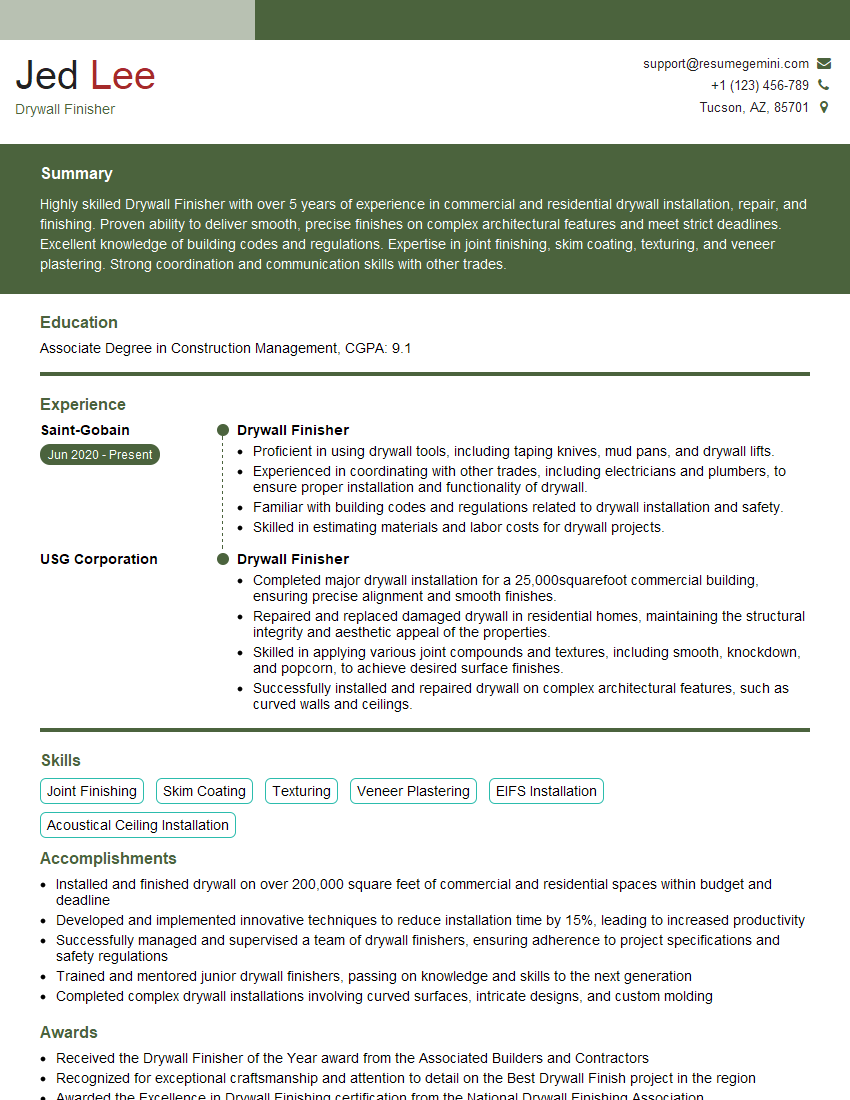
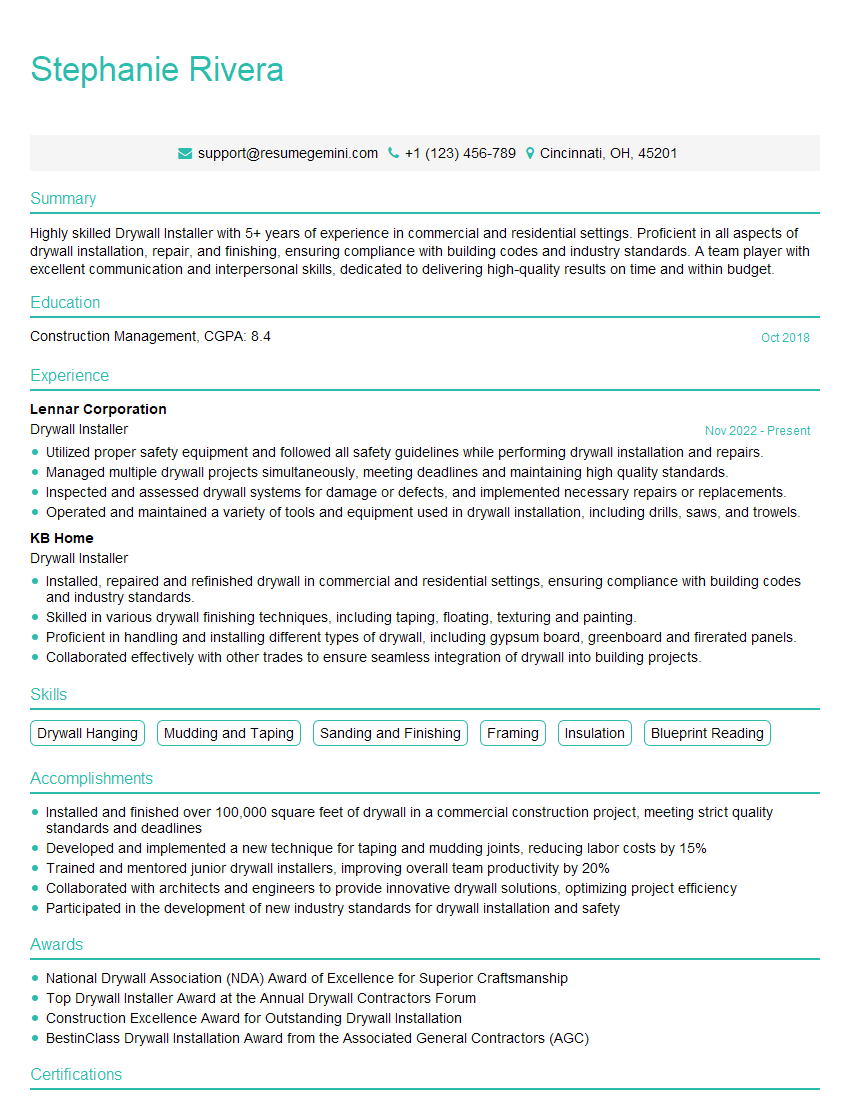
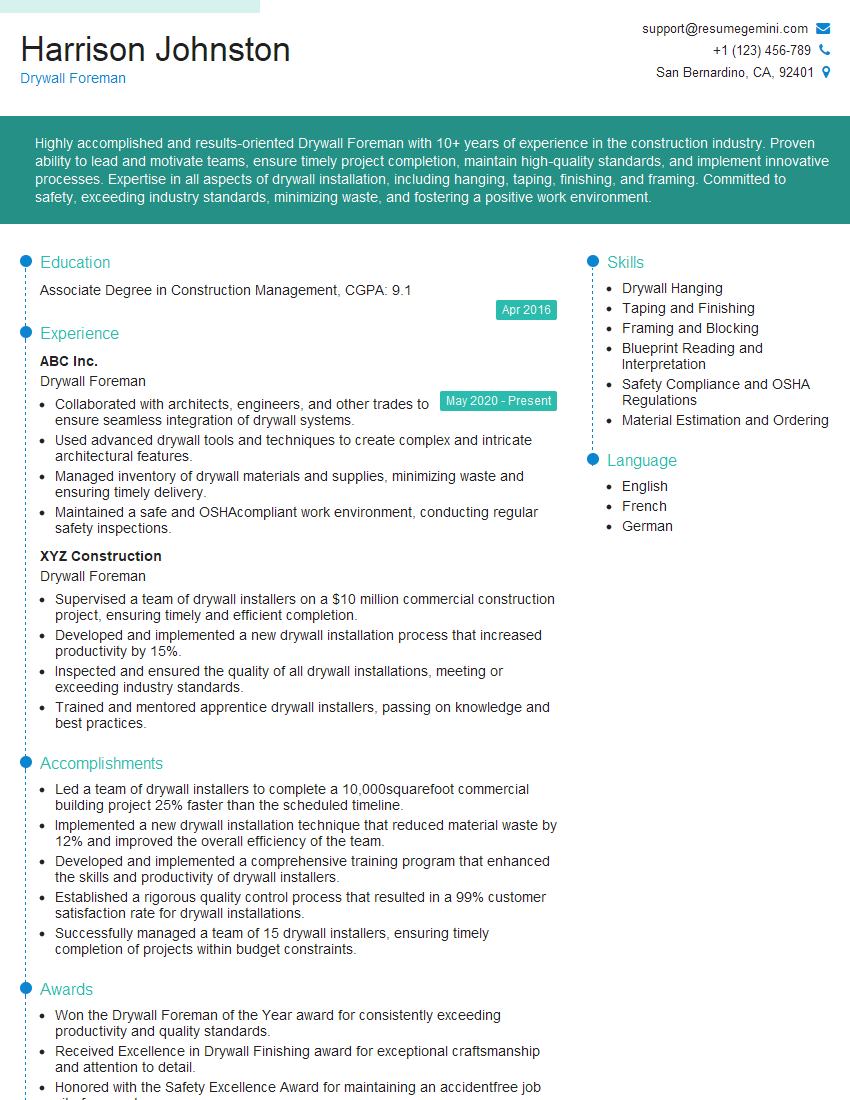
Mastering the art of installed drywall significantly enhances your career prospects in the construction industry, opening doors to higher-paying positions and increased responsibility. To make the most of your skills, an ATS-friendly resume is crucial for getting your application noticed. ResumeGemini is a trusted resource to help you create a compelling resume that highlights your expertise and catches the recruiter’s eye. ResumeGemini provides examples of resumes tailored specifically to the Installed Drywall field, giving you a head start in showcasing your capabilities. Invest the time in building a strong resume – it’s your first impression!

Explore more articles
Users Rating of Our Blogs
Share Your Experience
We value your feedback! Please rate our content and share your thoughts (optional).
What Readers Say About Our Blog
To the interviewgemini.com Webmaster.
Very helpful and content specific questions to help prepare me for my interview!
Thank you
To the interviewgemini.com Webmaster.
This was kind of a unique content I found around the specialized skills. Very helpful questions and good detailed answers.
Very Helpful blog, thank you Interviewgemini team.