Interviews are opportunities to demonstrate your expertise, and this guide is here to help you shine. Explore the essential Landfill Gas Collection System Operations interview questions that employers frequently ask, paired with strategies for crafting responses that set you apart from the competition.
Questions Asked in Landfill Gas Collection System Operations Interview
Q 1. Describe your experience with different types of landfill gas collection systems.
My experience encompasses a wide range of landfill gas (LFG) collection systems. I’ve worked with everything from simple, passive systems utilizing vertical wells in smaller landfills to complex, active systems with extensive horizontal collection networks in large, modern facilities. These active systems often incorporate vacuum pumps, blower systems, and sophisticated piping networks to efficiently extract LFG. I’m also familiar with hybrid systems combining aspects of both passive and active approaches. For instance, I worked on a project where we transitioned a primarily passive system to a hybrid one by strategically adding vacuum points in areas with lower extraction efficiency. This significantly improved LFG capture rates.
- Passive Systems: Rely on natural pressure gradients to move gas to collection points. Simpler design but less efficient at higher gas generation rates.
- Active Systems: Employ vacuum pumps or blowers to create pressure differentials that draw LFG to collection points. More complex but can achieve higher extraction rates.
- Hybrid Systems: Combine passive and active elements for optimal performance. This is often cost-effective and adaptable to changing landfill conditions.
Q 2. How do you monitor and maintain vacuum pressures within a landfill gas collection system?
Monitoring and maintaining vacuum pressure is crucial for optimal LFG extraction and to prevent emissions. We use a network of pressure gauges strategically located throughout the collection system. These gauges provide real-time data on pressure at various points, allowing us to identify potential blockages or leaks. A typical system might involve a central control panel that displays readings from multiple gauges. We establish and maintain target vacuum pressures (usually expressed in inches of water column or Hg) based on system design and operational goals.
Maintenance involves regular inspections of the entire system, including piping, valves, and pumps. We also schedule routine maintenance on vacuum pumps to ensure their optimal performance and longevity, including oil changes, filter replacements and belt adjustments. If a pressure drop is detected, we implement a systematic investigation to pin-point the source of the issue, often utilizing pressure testing and leak detection tools.
Q 3. Explain the process of troubleshooting a malfunctioning vacuum pump.
Troubleshooting a malfunctioning vacuum pump is a systematic process. First, we’ll check the obvious: power supply, motor operation, and any audible cues indicating a problem (unusual noises, vibrations). A visual inspection for leaks or damage to the pump and its associated piping is also critical.
Next, we’ll use diagnostic tools, such as pressure gauges to pinpoint whether the issue is within the pump itself or downstream in the system. If the problem is with the pump, it could involve issues like worn bearings, faulty seals, or a problem with the impeller. If the vacuum is low system-wide, that points to a potential blockage or a large leak in the collection system rather than solely the pump. Regular maintenance helps in minimizing the frequency of such issues.
Our approach is always to identify the root cause before undertaking repairs. This often involves pressure testing specific sections of the pipeline and using specialized equipment to detect leaks. We always prioritize safety and follow all lock-out/tag-out procedures before working on any equipment.
Q 4. What are the common causes of leaks in a landfill gas collection system, and how are they detected and repaired?
Leaks are a major concern in LFG collection systems, as they lead to methane emissions and reduce collection efficiency. Common causes include:
- Damaged pipes: Physical damage from settling or other disturbances can create cracks or holes.
- Failed seals: Wear and tear on gaskets and seals in valves and fittings are common leak points.
- Corrosion: Corrosive gases can degrade pipes over time.
- Improper installation: Faulty workmanship during initial construction can lead to poorly sealed joints.
Leak detection often involves using pressure testing, smoke testing (for smaller scale investigations), and thermal imaging to pinpoint locations. Repair involves either patching, replacing sections of pipe or fittings, or improving seals depending on the severity and location of the leak. Using leak detection and repair techniques to maintain an efficient system is not merely an operational necessity, but a critical part of meeting environmental regulations.
Q 5. How do you ensure compliance with environmental regulations related to landfill gas emissions?
Compliance with environmental regulations regarding LFG emissions is paramount. This involves regular monitoring of LFG composition (methane and carbon dioxide concentrations), flow rates, and emissions from the flare system. We meticulously maintain detailed records of all monitoring activities, including pressure and gas composition data, and submit these reports to regulatory agencies as required. This includes adherence to permit limits on methane emissions and ensuring our operational practices remain in compliance. We use certified monitoring equipment and adhere to standard testing protocols to guarantee the accuracy and reliability of our data.
Furthermore, we proactively implement best management practices, such as regular system maintenance, leak detection programs, and efficient flare operation, to minimize emissions and ensure that we remain in compliance. Failure to meet regulations can lead to significant penalties and potential legal actions.
Q 6. What safety procedures do you follow when working with landfill gas?
Safety is the utmost priority when working with LFG. LFG is a highly flammable mixture of gases, primarily methane, that can be explosive at certain concentrations. Our safety procedures involve:
- Personal Protective Equipment (PPE): Wearing appropriate PPE, including respirators, safety glasses, and flame-resistant clothing.
- Confined Space Entry Procedures: Following strict protocols for confined space entry, including atmospheric monitoring, ventilation, and use of safety harnesses and lifelines.
- Lockout/Tagout Procedures: Properly locking out and tagging out equipment before performing maintenance or repairs to prevent accidental starts.
- Emergency Response Plan: Having a comprehensive emergency response plan in place to handle potential incidents like gas leaks or equipment malfunctions.
- Regular Training: Providing regular safety training to all personnel on proper procedures and handling of potential hazards.
We conduct regular safety audits and maintain detailed safety records to ensure a safe working environment for everyone.
Q 7. Describe your experience with landfill gas flare systems.
I have extensive experience with LFG flare systems. These systems are designed to safely combust LFG, converting it into carbon dioxide and water vapor. This is essential for reducing the environmental impact of LFG emissions. I’ve worked with various types of flare systems, including ground flares, elevated flares, and enclosed combustion systems. I understand the crucial role of proper design, maintenance, and operation to ensure efficient combustion and to minimize the risk of incomplete combustion or flare failures.
My experience includes overseeing the installation, commissioning, and operation of flare systems, including conducting regular inspections to check for proper functionality and to identify potential issues such as pilot light failures, inadequate airflow, or incomplete combustion. Regular maintenance on flare systems such as cleaning the pilot assembly and burner tip is essential to maintain efficient operation. We meticulously document all maintenance activities and flare system performance, including data on fuel flow rates, combustion efficiency, and emissions.
Q 8. Explain the function of various components within a landfill gas collection system (e.g., wellheads, collection pipes, blowers).
A landfill gas (LFG) collection system is like a giant vacuum cleaner for a landfill. It’s designed to capture the methane and carbon dioxide produced by decomposing waste, preventing them from escaping into the atmosphere and contributing to climate change. Several key components work together to achieve this:
- Wellheads: These are essentially the intake points of the system, strategically placed throughout the landfill. Imagine them as the nozzles of our vacuum cleaner, sucking up the LFG from the waste. They’re usually vertical pipes extending from the landfill surface down into the waste mass, perforated to allow gas to enter. Proper spacing and depth are crucial for efficient gas capture.
- Collection Pipes: These pipes form a network, connecting the wellheads to a central collection point. They’re like the hoses of our vacuum cleaner, transporting the collected gas. These pipes are usually high-density polyethylene (HDPE) for durability and resistance to corrosion. Their diameter and layout are designed to minimize pressure drop and ensure efficient gas flow.
- Blowers: These are the ‘motors’ of the system. They create a vacuum, pulling the LFG through the pipes and preventing the build-up of pressure within the landfill. The blower capacity needs to be carefully selected based on the gas production rate and the overall system design. Regular maintenance and monitoring are critical for optimal blower performance.
- Header Pipes and Manifolds: These larger pipes connect the collection pipes from various sections of the landfill, aggregating the gas flow into a single stream before it goes to the blower or other processing systems. They act as a central collection point, similar to how a main drain collects water from various sinks and toilets.
The efficiency of the entire system depends on the proper functioning and maintenance of each of these components. A leak in any part of the system can significantly reduce its effectiveness, leading to uncontrolled emissions of LFG.
Q 9. How do you interpret data from monitoring equipment (e.g., pressure gauges, gas analyzers)?
Monitoring equipment is crucial for ensuring the safe and efficient operation of an LFG collection system. Data interpretation involves a combination of understanding the system’s design, recognizing normal operating parameters, and identifying potential problems.
- Pressure Gauges: These measure the pressure within the collection system at various points. Lower-than-expected pressure in a specific area might indicate a leak, while higher pressure could suggest a blockage. Regular pressure readings help establish a baseline and identify deviations from the norm.
- Gas Analyzers: These instruments measure the composition of the collected gas, primarily the concentration of methane (CH4) and carbon dioxide (CO2). This data is crucial for assessing the quality of the gas for energy production or other uses. Unexpected changes in the gas composition might indicate issues with the waste decomposition process or potential contamination.
For example, if we observe a sudden drop in pressure at a specific wellhead combined with a decrease in methane concentration, it strongly suggests a leak in that area. We would immediately initiate investigations and repairs to prevent uncontrolled emissions and safety hazards.
The data is typically logged electronically and analyzed using specialized software, which allows for trend analysis and early warning of potential issues. This proactive approach minimizes downtime and environmental risks.
Q 10. Describe your experience with preventive maintenance schedules for landfill gas collection systems.
Preventive maintenance is paramount for the longevity and efficiency of an LFG collection system. Our schedule involves regular inspections and servicing of all components, following manufacturer recommendations and industry best practices. We typically implement a combination of routine and predictive maintenance approaches.
- Routine Maintenance: This includes visual inspections of pipes and wellheads for leaks, cracks, or corrosion; checking blower operation and performance; and testing the functionality of monitoring equipment. This is carried out on a monthly or quarterly basis, depending on the criticality of the system components.
- Predictive Maintenance: This is a more data-driven approach, using monitoring data to predict potential failures before they occur. For example, vibration analysis on blowers can help identify wear and tear, allowing for timely repairs before catastrophic failure.
We maintain detailed records of all maintenance activities, including dates, tasks performed, and any issues identified. This documentation is essential for tracking system performance, optimizing maintenance strategies, and meeting regulatory requirements. A well-documented maintenance program demonstrates responsibility and minimizes potential environmental and safety risks.
Q 11. How do you handle emergency situations, such as a major gas leak?
Emergency situations, like a major gas leak, require immediate and decisive action. Our emergency response plan follows a structured approach:
- Detection and Assessment: Immediate isolation of the affected area, utilizing emergency shutdown procedures. Rapid assessment of the leak’s extent and potential impact using specialized gas detection equipment.
- Containment and Mitigation: Implementing temporary measures to contain the leak, such as plugging or sealing affected pipes. Evacuation of personnel if deemed necessary, based on gas concentration levels and potential risks.
- Notification and Support: Notifying relevant authorities (e.g., fire department, environmental agencies) and initiating emergency response protocols. Coordinating with external support teams for repair work.
- Repair and Restoration: Once the immediate danger is mitigated, a thorough investigation is undertaken to identify the root cause of the leak. Necessary repairs are carried out following safety protocols and industry best practices.
- Post-Incident Review: A comprehensive review of the incident is conducted to identify areas for improvement in the emergency response plan and preventive maintenance procedures. This is done to avoid similar incidents in the future.
Safety is our top priority during emergency situations. Our team receives regular training in emergency response procedures and the use of safety equipment.
Q 12. What is your experience with gas compression and upgrading technologies?
My experience encompasses various gas compression and upgrading technologies. Compression is essential for transporting LFG over long distances or for its efficient utilization in energy generation. We have worked with reciprocating compressors, centrifugal compressors, and screw compressors, each with its own advantages and disadvantages.
- Reciprocating Compressors: Suitable for smaller-scale applications and offer good compression ratios but can be noisy and less energy-efficient than other types.
- Centrifugal Compressors: More efficient for larger volumes of gas and offer higher flow rates, but they require higher initial investment.
- Screw Compressors: A good compromise between reciprocating and centrifugal compressors, offering good efficiency and reliability.
Gas upgrading technologies are needed to increase the methane concentration in LFG, enhancing its value as a fuel source. I’m familiar with various upgrading methods including membrane separation and amine absorption. These technologies remove CO2 and other impurities, resulting in a higher-quality biogas or biomethane that meets pipeline specifications.
Choosing the appropriate technology depends on several factors including gas composition, required methane content, capacity, and budget considerations. We often perform detailed feasibility studies and cost-benefit analyses to optimize our choices.
Q 13. Describe your understanding of biogas upgrading processes.
Biogas upgrading is the process of refining raw biogas, primarily composed of methane and carbon dioxide, into a higher-quality product, often referred to as biomethane. This upgrading is crucial to make the biogas suitable for injection into natural gas pipelines or use as a vehicle fuel.
Several methods are used for biogas upgrading, each with its advantages and limitations:
- Pressure Swing Adsorption (PSA): This method uses specialized materials to selectively adsorb (bind) CO2 under pressure, while allowing methane to pass through. It’s relatively simple to operate but can be energy-intensive.
- Membrane Separation: This involves using semi-permeable membranes that preferentially allow methane to pass through while retaining CO2 and other impurities. It’s energy-efficient but may require larger membrane areas for high throughput.
- Water Scrubbing: CO2 is absorbed into water under pressure. This is a relatively simple and mature technology, but the volume of water required can be substantial.
- Amine Absorption: This uses specialized amine solvents to selectively absorb CO2 from the biogas. It’s efficient but requires regeneration of the solvent, often involving energy consumption.
The choice of technology depends on factors such as biogas composition, desired methane purity, and cost considerations. Each method has its strengths and weaknesses, and a detailed assessment is required to select the most suitable option for a particular application.
Q 14. What are the different methods for landfill gas analysis?
Landfill gas analysis is vital for monitoring the gas quality, assessing its potential for energy generation, and ensuring compliance with environmental regulations. Several methods are employed, ranging from simple field tests to sophisticated laboratory analyses.
- Gas Chromatography (GC): This is the gold standard for accurate and detailed analysis of LFG composition. It can precisely quantify the concentrations of various components, including methane, carbon dioxide, oxygen, nitrogen, and other trace gases.
- Portable Gas Analyzers: These are handheld devices used for quick on-site measurements of methane and other key gases. While not as precise as GC, they are valuable for rapid assessment and monitoring during routine inspections and emergencies.
- Infrared Spectroscopy (IR): This method measures the absorption of infrared light by different gas molecules to determine their concentrations. It’s useful for continuous monitoring of gas composition.
- Flame Ionization Detection (FID): This method specifically measures the concentration of hydrocarbons, including methane. It’s commonly used in conjunction with GC.
The choice of method depends on the desired accuracy, the need for on-site or laboratory analysis, and the specific parameters that need to be measured. Regular gas analysis is crucial for ensuring safe and efficient operation of the LFG system and for optimizing its utilization for energy production.
Q 15. How familiar are you with various types of landfill gas monitoring equipment?
My familiarity with landfill gas monitoring equipment is extensive. I’ve worked with a wide range of technologies, from basic hand-held instruments to sophisticated automated systems. This includes:
- Gas Chromatographs (GCs): These are crucial for analyzing the composition of landfill gas, specifically the methane (CH4) and carbon dioxide (CO2) concentrations, which are key for determining energy potential and environmental compliance.
- Fixed Gas Detectors: These continuously monitor gas concentrations at various points within the collection system, providing real-time data and triggering alarms if dangerous levels are reached. For example, I’ve used detectors that measure CH4, CO2, O2, and H2S.
- Flow Meters: Essential for measuring the volume of gas extracted from the landfill. I’ve experience with both ultrasonic and thermal mass flow meters, each having its own strengths and weaknesses in different applications.
- Pressure Sensors/Transducers: Used to monitor pressure within the collection system’s piping network, helping identify blockages or leaks. Accurate pressure readings are critical for efficient gas extraction.
- Vacuum Gauges: These indicate the level of vacuum within the extraction system, a vital parameter for maintaining efficient gas collection.
Beyond individual instruments, I’m also well-versed in data acquisition systems that integrate readings from multiple sensors and provide a comprehensive overview of the landfill’s gas production and collection efficiency.
Career Expert Tips:
- Ace those interviews! Prepare effectively by reviewing the Top 50 Most Common Interview Questions on ResumeGemini.
- Navigate your job search with confidence! Explore a wide range of Career Tips on ResumeGemini. Learn about common challenges and recommendations to overcome them.
- Craft the perfect resume! Master the Art of Resume Writing with ResumeGemini’s guide. Showcase your unique qualifications and achievements effectively.
- Don’t miss out on holiday savings! Build your dream resume with ResumeGemini’s ATS optimized templates.
Q 16. What are the key performance indicators (KPIs) you use to assess the efficiency of a landfill gas collection system?
Key Performance Indicators (KPIs) for a landfill gas collection system are vital for assessing its efficiency and environmental impact. I typically focus on:
- Gas Capture Rate: This measures the percentage of generated landfill gas that is successfully captured and collected. A high capture rate indicates efficient system performance and minimizes emissions.
- Methane Recovery Rate: This KPI focuses specifically on the amount of methane captured, which is the primary greenhouse gas of concern. Optimizing this rate is crucial for environmental responsibility.
- Gas Flow Rate: Monitoring the volume of gas extracted per unit time helps identify potential issues like system blockages or reduced gas production.
- Vacuum Levels: Maintaining appropriate vacuum levels in the collection network is essential for optimal gas extraction. Low vacuum indicates potential problems, while excessively high vacuum can damage the system.
- System Uptime: Minimizing downtime due to maintenance or repairs is crucial for maintaining consistent gas capture and avoiding environmental consequences.
- LFG Energy Production: If the gas is used for energy generation, measuring the amount of energy produced per unit volume of gas provides an indication of system effectiveness.
Regularly tracking and analyzing these KPIs helps proactively identify and address potential issues, leading to improved system performance and environmental sustainability. For example, a drop in gas capture rate might indicate a leak in the collection network requiring immediate attention.
Q 17. How do you manage and document maintenance activities?
Maintenance activities are meticulously documented using a Computerized Maintenance Management System (CMMS). This ensures a comprehensive record of all maintenance tasks, including preventative and corrective actions. Our CMMS typically includes:
- Work Order System: All maintenance tasks are documented through work orders, specifying the task, assigned personnel, materials used, and completion date.
- Preventative Maintenance Schedules: A detailed schedule is established for regular inspections and preventative maintenance, such as pump inspections and line cleaning, to avoid major issues and extend the life of the equipment. These schedules are typically based on manufacturer recommendations and experience.
- Corrective Maintenance Records: Detailed records of all repairs, including the cause of the failure, repair procedures, and parts replaced, are kept to identify patterns and prevent future occurrences.
- Inspection Reports: Regular inspections of the entire system (pipes, wells, flare stacks, etc.) are conducted and documented with photographs and detailed observations.
- Inventory Management: The CMMS tracks the inventory of spare parts, ensuring timely repairs when equipment fails.
This system provides a robust audit trail, facilitating regulatory compliance and allowing for effective analysis of maintenance trends and optimization of maintenance schedules. We also use this data to improve predictive maintenance capabilities.
Q 18. Explain your understanding of the relationship between landfill design and gas collection system performance.
Landfill design plays a critical role in determining the effectiveness of the gas collection system. A well-designed landfill incorporates features that facilitate efficient gas extraction and minimize environmental impact. Key considerations include:
- Waste Placement and Compaction: Proper waste placement and compaction are crucial for creating a continuous gas flow path. Uneven compaction can create dead zones where gas accumulates without being collected.
- Collection Network Design: The design of the collection network, including the layout of extraction wells and piping, significantly influences the effectiveness of gas removal. Well spacing and pipe diameter are carefully determined to optimize gas flow.
- Gas Extraction Well Design and Placement: The type, number and placement of extraction wells influence the collection efficiency. Factors such as well depth, diameter, and screen design are critical for effective gas extraction.
- Liner System Integrity: A robust liner system is crucial to prevent gas leakage and protect groundwater. Any compromise in liner integrity can severely impact gas capture and environmental safety.
- Final Cover Design: The design of the final cover must allow for gas collection while minimizing emissions and maintaining overall landfill stability.
A poorly designed landfill will result in low gas capture rates, increased greenhouse gas emissions, and increased maintenance costs. For example, insufficient well spacing can lead to ‘dead zones’ where gas accumulates, reducing the overall efficiency of the system. Proper design is essential for long-term performance and environmental protection.
Q 19. How do you address issues related to condensate management in a landfill gas system?
Condensate management is a critical aspect of landfill gas system operation. Condensate, a mixture of water and various organic compounds, forms within the gas collection system due to temperature changes and gas condensation. Improper management can lead to corrosion, blockages, and environmental problems. My approach involves:
- Regular Monitoring and Inspection: Condensate levels are regularly monitored using appropriate sensors and visual inspections. Early detection of excessive condensate is crucial for preventing issues.
- Condensate Removal Systems: Implementing systems for condensate removal is crucial. This can include automated condensate pumps, sumps, and collection tanks. The system design must account for varying condensate volumes.
- Condensate Treatment and Disposal: Condensate should be treated appropriately before disposal to comply with environmental regulations. Treatment may involve filtration, neutralization, and/or biological treatment to remove harmful compounds.
- System Design Considerations: Careful design of the gas collection system can help minimize condensate formation. This includes using appropriate pipe slopes and materials to facilitate condensate drainage.
- Regular Maintenance: Regular maintenance of condensate removal systems, including cleaning and pump maintenance, is crucial for ensuring their effective operation.
Ignoring condensate management can lead to significant problems, including system malfunctions, environmental contamination, and safety hazards. A proactive approach, incorporating regular monitoring, effective removal, and proper treatment, is essential for efficient and environmentally responsible operation.
Q 20. Describe your experience with SCADA systems used in landfill gas management.
My experience with Supervisory Control and Data Acquisition (SCADA) systems in landfill gas management is extensive. SCADA systems provide centralized monitoring and control of the entire gas collection system, enhancing efficiency and safety. My experience includes:
- Data Acquisition and Monitoring: SCADA systems gather data from various sensors and instruments throughout the system (flow meters, pressure sensors, gas analyzers), providing a real-time overview of system performance.
- Alarm and Event Management: SCADA systems generate alarms and event logs for critical events such as high gas concentrations, low vacuum, or pump failures. This allows for prompt response to prevent serious incidents.
- Remote Control and Automation: SCADA systems offer the capability to remotely control key components of the gas collection system, such as pumps and valves, optimizing operation and reducing response times to emergencies.
- Data Reporting and Analysis: SCADA systems generate reports on system performance, aiding in the analysis of KPIs and identification of trends to optimize operations and maintenance.
- Integration with other Systems: SCADA systems can be integrated with other systems such as energy management systems or environmental monitoring platforms for a more comprehensive overview of landfill operations.
I’ve used SCADA systems to improve the efficiency and safety of numerous landfill gas systems. For instance, remote monitoring via SCADA allowed for immediate detection and resolution of a pump failure at a remote landfill site, minimizing downtime and preventing potential environmental consequences. The data analysis capabilities of SCADA have also been essential for optimizing the operation of gas extraction wells.
Q 21. What are the challenges associated with maintaining gas collection infrastructure in challenging terrain?
Maintaining gas collection infrastructure in challenging terrain presents unique challenges. These challenges often require specialized techniques and equipment. I’ve encountered and successfully addressed several issues, including:
- Accessibility: Steep slopes, rugged terrain, and remote locations can make access to certain parts of the collection system difficult, complicating maintenance and repairs. This often necessitates the use of specialized equipment such as all-terrain vehicles or helicopters.
- Ground Instability: Unstable ground conditions can damage pipelines and well casings, leading to leaks and system failures. This requires careful site selection, robust pipeline installation techniques, and regular inspections for any signs of ground movement.
- Environmental Concerns: Challenging terrain can increase the environmental risks associated with gas collection system failures. Preventing leaks and spills is paramount to protecting sensitive ecosystems.
- Erosion and Weathering: Exposure to harsh weather conditions can accelerate the deterioration of pipelines and other components. Using corrosion-resistant materials and employing robust protective measures are critical.
- Difficult Installation: Installing pipelines and wells in challenging terrain can be complex and costly, requiring specialized techniques and equipment. Careful planning and engineering design are essential for minimizing risks and costs.
In one project, we successfully navigated steep slopes and unstable ground by using directional drilling techniques to install pipelines, minimizing ground disturbance and protecting the environment. Thorough site assessments and risk mitigation strategies are essential for successful project implementation in challenging terrain.
Q 22. How do you ensure the integrity of the gas collection system piping and infrastructure?
Ensuring the integrity of a landfill gas collection system’s piping and infrastructure is paramount for safety and efficient gas recovery. We employ a multi-pronged approach, starting with meticulous design and material selection. This includes using corrosion-resistant materials like high-density polyethylene (HDPE) for pipes and robust, well-sealed fittings. Regular inspections are critical. We utilize a combination of visual inspections, pressure testing, and leak detection surveys, often employing acoustic methods or specialized cameras to identify even minor leaks. A comprehensive monitoring program is essential. This includes regularly checking pressure gauges at various points in the system, monitoring gas flow rates, and analyzing gas composition. Any anomalies trigger immediate investigation and prompt repair. Furthermore, preventative maintenance is key. This includes regular cleaning of pipes to remove debris and condensate, which can impede flow and promote corrosion. We also implement a schedule for replacing aging or damaged components before failure occurs. Think of it like regular car maintenance – proactive measures save time and money in the long run and prevent catastrophic failures. Finally, detailed record-keeping of all inspections, maintenance, and repairs is crucial for tracking system performance and demonstrating compliance with regulations.
Q 23. What is your experience working with different types of gas extraction wells?
My experience encompasses a wide range of gas extraction well types. I’ve worked extensively with vertical wells, which are commonly used in many landfills. These wells are relatively straightforward to install and maintain, and are effective for collecting gas from deeper waste layers. However, they can be less effective in areas with low permeability. I’ve also worked with horizontal wells, which are particularly useful in areas with heterogeneous waste or where gas migration is predominantly lateral. Horizontal wells offer greater surface area for gas collection but can be more challenging and expensive to install. My experience further includes working with vacuum extraction wells, which use vacuum pumps to enhance gas extraction from low-permeability zones or to improve collection in areas where natural pressure gradients are low. Choosing the right type of well depends heavily on site-specific factors, including waste composition, depth, and heterogeneity, as well as the overall design goals of the landfill gas management system. Each type necessitates different installation procedures, monitoring strategies, and maintenance considerations.
Q 24. How do you manage the risk of corrosion in a landfill gas collection system?
Corrosion is a major concern in landfill gas collection systems due to the presence of moisture, various chemicals, and acidic gases in the landfill gas itself. We combat corrosion through a layered approach. Firstly, we use materials inherently resistant to corrosion, such as HDPE pipes and stainless steel components. Secondly, we design the system to minimize moisture accumulation through proper grading, effective drainage, and efficient condensate removal systems. Regularly scheduled inspections visually assess corrosion and identify areas needing attention. Thirdly, we employ cathodic protection in certain areas, particularly metallic components buried in the ground, to prevent corrosion. This involves using sacrificial anodes or impressed current systems to protect the metal from electrochemical degradation. Finally, coating pipes and fittings with protective materials further enhances corrosion resistance. Think of it as applying a protective layer of skin to vulnerable components. Careful selection of appropriate coatings and regular monitoring are vital to ensure their effectiveness. Regular monitoring and maintenance are crucial in mitigating corrosion and ensuring the longevity of the gas collection system.
Q 25. Describe your understanding of methane emission reduction strategies within landfills.
Methane emission reduction is central to responsible landfill management. Strategies involve optimizing gas collection and maximizing its beneficial use. Improved collection efficiency is achieved by utilizing dense well networks, properly designed extraction wells, and robust piping infrastructure, as discussed previously. Furthermore, optimizing vacuum levels in extraction systems ensures optimal gas retrieval and minimizes fugitive emissions. In addition to collection, beneficial use, such as using the gas to generate electricity or for other industrial processes, significantly reduces methane emissions. This ‘energy recovery’ approach transforms a potent greenhouse gas into a valuable resource, effectively mitigating its climate impact. Beyond these, several innovative strategies are gaining traction. Landfill mining, where older landfill sections are excavated and improved for better gas recovery, is being increasingly employed. Also, bioreactor landfills, which actively manage waste decomposition through the introduction of water and air, can accelerate gas production and improve its capture. These multifaceted strategies demonstrate a commitment to a sustainable approach, turning a waste management problem into an opportunity for resource recovery.
Q 26. How do you conduct site assessments to determine the adequacy of existing systems?
Site assessments for existing landfill gas collection systems involve a thorough evaluation of the entire system, from the well field to the flare or utilization point. We begin with a review of all available documentation, including design plans, as-built drawings, operational records, and maintenance logs. A visual inspection of the entire system is critical, noting the condition of wells, pipes, fittings, and any associated equipment. We perform pressure tests on various sections of the piping network to identify leaks or blockages. Gas flow rates are measured at various points to assess the effectiveness of the system. Soil gas surveys using probes are conducted to identify areas of potential gas migration outside the designed collection area, indicating potential leaks or areas for system improvement. Finally, we analyze gas composition to ensure it aligns with expectations and to assess the potential for energy recovery or other beneficial uses. The data collected is analyzed to determine if the system is performing to the design specifications and if upgrades or repairs are needed to enhance efficiency and ensure environmental compliance. This often includes identifying potential areas for improvement in gas capture, reducing leaks, or enhancing the overall system design to optimize performance.
Q 27. What is your experience with the design and implementation of new landfill gas collection systems?
My experience with designing and implementing new landfill gas collection systems is extensive. The process starts with a thorough site characterization, including a detailed geological survey, waste characterization analysis, and assessment of potential gas generation rates. Based on this information, we design a robust and efficient system that considers factors like well spacing, pipe diameters, and the overall network configuration. Our designs incorporate redundancy and maintainability to ensure long-term system performance. We carefully select materials resistant to corrosion and ensure proper drainage to mitigate risks. Detailed engineering plans and specifications are developed to guide the construction process. During construction, we perform rigorous quality control to confirm adherence to design specifications and ensure proper installation. Once operational, we monitor the system closely to identify any issues and perform ongoing maintenance and upgrades as needed. A recent project involved designing a system for a new municipal landfill, incorporating advanced gas extraction techniques and an energy-recovery system to generate electricity. The project’s success hinged on careful planning, material selection, and rigorous quality control. The system was built with future expansion in mind, to adapt to the evolving needs of the landfill over its projected operational lifetime. The whole process emphasized safety, efficiency and environmental compliance.
Q 28. Describe your familiarity with relevant industry standards and regulations (e.g., EPA regulations).
I am thoroughly familiar with relevant industry standards and regulations, particularly those set by the Environmental Protection Agency (EPA) in the United States. This includes a deep understanding of the 40 CFR Part 60 Subpart WWW – National Emission Standards for Hazardous Air Pollutants: Landfill Gas Emissions. I am proficient in interpreting and applying these standards to design, operate, and maintain landfill gas collection systems that meet or exceed regulatory requirements. My experience also encompasses knowledge of other relevant standards and guidelines from organizations such as the American Society of Civil Engineers (ASCE) and industry best practices. Furthermore, I understand state and local regulations that may apply, ensuring compliance with all levels of environmental oversight. Understanding and adhering to these standards and regulations isn’t just about compliance; it’s integral to responsible environmental stewardship and the protection of human health and the environment. We consistently incorporate these regulations and guidelines into our design specifications, operation procedures, and maintenance protocols, ensuring that the systems we manage meet the highest environmental standards.
Key Topics to Learn for Landfill Gas Collection System Operations Interview
- Gas Generation & Composition: Understanding the biological processes leading to methane and other gas production within landfills, and the implications for collection system design.
- Collection System Components: Detailed knowledge of well design, piping networks, headers, blowers, and flare/energy recovery systems. Include practical experience in installation, maintenance, and troubleshooting.
- Vacuum/Pressure Systems: Understanding the principles of vacuum and pressure collection systems, their relative advantages and disadvantages, and how to optimize their performance.
- Monitoring & Control: Familiarization with various gas monitoring techniques (e.g., sensors, chromatographs), data logging, and control systems used to ensure safe and efficient operation.
- Safety Procedures & Regulations: In-depth understanding of safety protocols for working with flammable gases, including lockout/tagout procedures, emergency response plans, and relevant environmental regulations (e.g., methane emissions limits).
- Troubleshooting & Maintenance: Practical experience in identifying and resolving common issues such as leaks, blockages, and equipment malfunctions. Describe your problem-solving methodology.
- Data Analysis & Reporting: Ability to interpret gas flow data, identify trends, and generate reports to monitor system performance and compliance.
- Sustainability & Environmental Impact: Understanding the role of landfill gas collection in reducing greenhouse gas emissions and mitigating environmental impacts.
- Economic Considerations: Understanding the capital and operational costs associated with landfill gas collection systems and the potential for revenue generation through energy recovery.
Next Steps
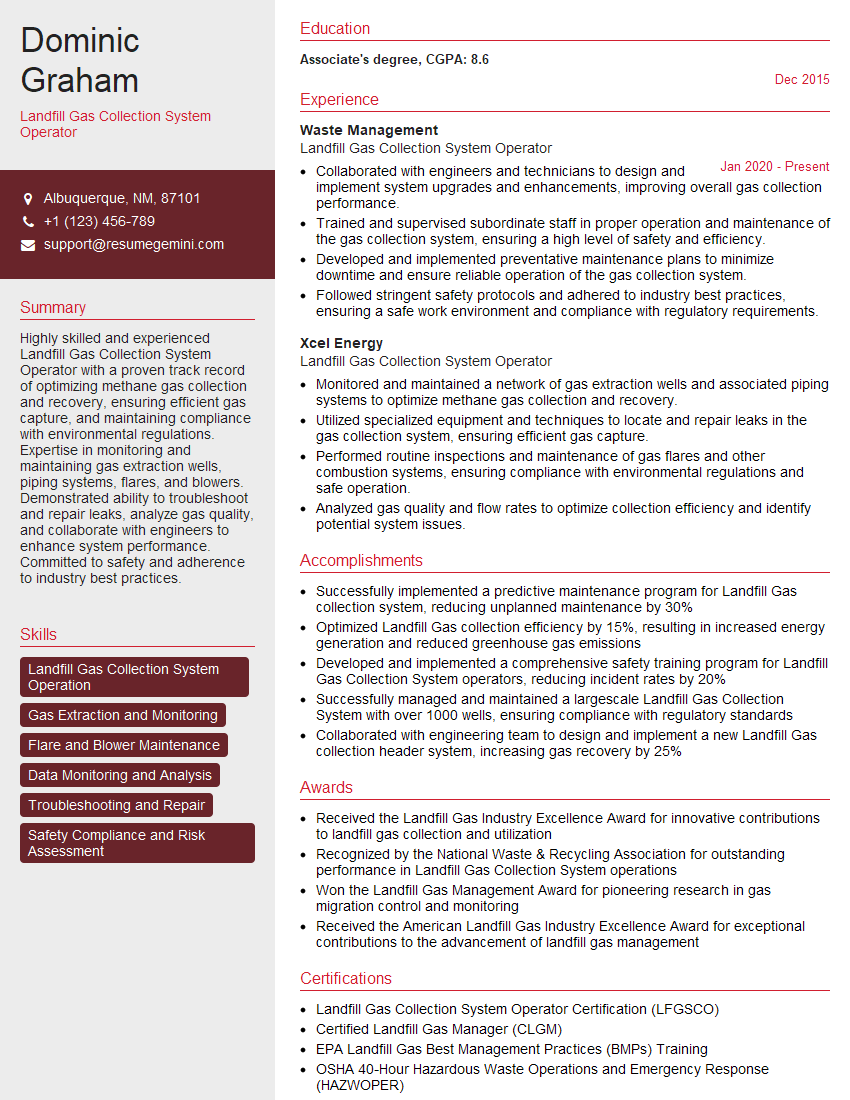
Mastering Landfill Gas Collection System Operations is crucial for career advancement in the environmental and energy sectors, opening doors to specialized roles and increased earning potential. To maximize your job prospects, focus on building a strong, ATS-friendly resume that showcases your skills and experience effectively. ResumeGemini is a trusted resource to help you craft a professional and impactful resume that highlights your qualifications. We provide examples of resumes tailored specifically to Landfill Gas Collection System Operations to help guide you. Take the next step towards your dream job – build a winning resume with ResumeGemini today!
Explore more articles
Users Rating of Our Blogs
Share Your Experience
We value your feedback! Please rate our content and share your thoughts (optional).
What Readers Say About Our Blog
To the interviewgemini.com Webmaster.
Very helpful and content specific questions to help prepare me for my interview!
Thank you
To the interviewgemini.com Webmaster.
This was kind of a unique content I found around the specialized skills. Very helpful questions and good detailed answers.
Very Helpful blog, thank you Interviewgemini team.