Feeling uncertain about what to expect in your upcoming interview? We’ve got you covered! This blog highlights the most important Motor Speech Disorders Treatment interview questions and provides actionable advice to help you stand out as the ideal candidate. Let’s pave the way for your success.
Questions Asked in Motor Speech Disorders Treatment Interview
Q 1. Define dysarthria and describe its different types.
Dysarthria is a group of motor speech disorders caused by weakness, incoordination, or paralysis of the muscles used for speech production. Think of it like this: your speech muscles are the instruments in an orchestra, and dysarthria is like having some of those instruments damaged or out of tune. This affects articulation (forming sounds), phonation (voice quality), respiration (breath support), and resonance (the quality of sound in the vocal tract).
- Flaccid Dysarthria: This results from damage to the lower motor neurons, causing weakness and hypotonia (low muscle tone). Speech might sound breathy, weak, and imprecise.
- Spastic Dysarthria: Damage to the upper motor neurons leads to spasticity (increased muscle tone) and weakness. Speech can be strained, slow, and monotonous.
- Ataxic Dysarthria: Cerebellar damage causes incoordination. Speech is characterized by irregular articulation, with varying stress and intonation, often described as ‘drunk-sounding’.
- Hypokinetic Dysarthria: Associated with Parkinson’s disease, it involves rigidity and reduced movement. Speech is often quiet, monotonous, and rapid, with reduced volume and articulation.
- Hyperkinetic Dysarthria: Involuntary movements (e.g., chorea, dystonia) disrupt speech. Sounds might be interrupted by involuntary movements or grimaces.
- Mixed Dysarthria: This is the most common type, involving features of two or more types of dysarthria. For instance, a patient might exhibit both spastic and ataxic characteristics.
The specific type of dysarthria depends on the location and extent of neurological damage.
Q 2. Explain the difference between apraxia of speech and dysarthria.
While both apraxia of speech and dysarthria are motor speech disorders, they have distinct underlying causes and characteristics. Dysarthria results from weakness or incoordination in the muscles responsible for speech, making it difficult to *execute* speech movements. Imagine a musician struggling to play their instrument due to weak or damaged fingers. Apraxia of speech, on the other hand, is a neurological disorder affecting the *planning and programming* of speech movements, rather than the muscles themselves. It’s like the musician knowing the song but struggling to translate that knowledge into coordinated finger movements on the instrument.
In dysarthria, the speech sounds ‘slurred’ or ‘weak’ because of muscle impairment. In apraxia, the speech sounds ‘inconsistent’ and ‘effortful’ because of difficulties in planning and sequencing speech movements. For example, a person with apraxia might struggle to say the word ‘banana’, sometimes producing it correctly and other times producing a distorted version, reflecting an inconsistent ability to sequence the necessary articulatory gestures. A person with dysarthria would consistently have difficulty with articulation, perhaps producing a consistently distorted ‘banana’, due to muscle weakness or incoordination.
Q 3. What assessment tools do you use to evaluate motor speech disorders?
Assessment of motor speech disorders is a multifaceted process requiring a comprehensive approach. I typically use a combination of tools and techniques, including:
- Oral-Mechanism Examination: A visual inspection of the structures involved in speech production (lips, tongue, jaw, palate) to assess their range of motion, strength, and coordination.
- Formal Articulation Testing: Standardized tests like the Apraxia Battery for Adults or the Frenchay Dysarthria Assessment help quantify speech sound errors and identify patterns.
- Perceptual Speech Assessment: I listen to the patient’s speech, noting characteristics like rate, rhythm, intonation, and the quality of individual sounds. This subjective assessment is crucial to capturing the overall impression of the speech disorder.
- Acoustic Analysis: Sophisticated technologies like spectrograms can objectively measure aspects of speech, such as frequency, intensity, and duration, offering quantitative data to complement perceptual judgments.
- Instrumental Assessments: Electromyography (EMG) may be used in some cases to measure muscle activity during speech. Kinematic analysis can objectively assess articulatory movements.
The specific tools used depend on the suspected diagnosis and the patient’s individual needs. The goal is to develop a comprehensive profile of the patient’s speech strengths and weaknesses to guide treatment planning.
Q 4. Describe your approach to treating childhood apraxia of speech (CAS).
My approach to treating Childhood Apraxia of Speech (CAS) is highly individualized and intensive, focusing on improving the child’s ability to plan and program motor movements for speech. The treatment emphasizes:
- Dynamic Temporal and Tactile Cueing (DTTC): This approach provides specific, multisensory cues to help the child produce accurate sound sequences. It may involve tapping, gestures, and auditory cues.
- Repetitive Practice and Drill Work: Consistent practice helps the child establish motor patterns and improve consistency in speech production.
- Focus on Multisyllabic Words and Phrases: Working on longer units of speech helps improve the child’s ability to sequence sounds and movements.
- Use of Visual and Tactile Feedback: Mirrors and other visual aids, as well as tactile cues, provide the child with feedback on their articulatory movements.
- Play-Based Activities: Incorporating play helps maintain engagement and motivation, particularly important for young children.
Treatment intensity varies depending on the severity of CAS and the child’s individual response. Consistent parental involvement and collaboration are crucial for success. Regular progress monitoring is essential to make necessary adaptations to the treatment plan. Often, collaboration with other professionals such as occupational therapists is vital.
Q 5. How do you differentiate between dysphagia and motor speech disorders?
While both dysphagia (difficulty swallowing) and motor speech disorders affect the motor systems involved in oral functions, they target different outcomes. Dysphagia affects the ability to safely and efficiently move food and liquid from the mouth to the stomach. Motor speech disorders affect the ability to produce clear and understandable speech. In essence, dysphagia affects the *ingestion* of material and motor speech disorders affect the *expression* of speech.
Many individuals with neurological conditions may have both dysphagia and motor speech disorders. For instance, a stroke affecting the brainstem might impair both swallowing and articulation. However, a person can have one without the other. A person might have a motor speech disorder from a cerebellar stroke without swallowing issues and conversely, a person with a neuromuscular disease could have difficulties swallowing without necessarily having impaired speech.
Q 6. What are the common causes of neurogenic speech disorders?
Neurogenic speech disorders arise from damage to the nervous system. Common causes include:
- Stroke: Damage to areas of the brain controlling speech can cause various types of dysarthria or apraxia.
- Traumatic Brain Injury (TBI): The severity of speech impairment depends on the location and extent of brain damage.
- Neurodegenerative Diseases: Diseases like Parkinson’s disease, multiple sclerosis, amyotrophic lateral sclerosis (ALS), and Huntington’s disease progressively damage the nervous system, causing various motor speech disorders.
- Brain Tumors: Tumors can compress or invade brain areas involved in speech production.
- Infections: Encephalitis or other infections affecting the brain can cause temporary or permanent speech impairments.
Identifying the underlying neurological condition is essential for appropriate treatment and management.
Q 7. Explain the principles of Lee Silverman Voice Treatment (LSVT) and its application.
Lee Silverman Voice Treatment (LSVT) is an intensive, highly structured treatment program primarily designed for individuals with Parkinson’s disease who exhibit hypokinetic dysarthria. Its core principles revolve around maximizing vocal loudness and improving speech clarity through intensive, high-effort exercises.
The principles of LSVT include:
- High-Intensity Therapy: Sessions are typically 4-6 days a week for 4-6 weeks. This intensive approach is crucial for inducing neuroplasticity and producing lasting changes.
- Maximum Effort: Patients are encouraged to use their maximum vocal loudness during exercises. This emphasizes increasing vocal intensity to improve speech intelligibility and overall vocal quality.
- Carryover Strategies: Patients are taught to apply the learned strategies into their daily communication.
- Calibrated Loudness: Patients learn to use a ‘loud’ voice as a target.
- Systematic Task Progression: Exercises systematically progress from simple tasks to more complex speech tasks.
LSVT isn’t a quick fix but rather a rigorous training program that requires active patient participation and commitment. It’s proven effective in improving voice loudness, clarity, and overall speech quality in individuals with Parkinson’s disease and other related conditions. The success of LSVT relies on trained therapists following a structured approach and careful monitoring of progress.
Q 8. Describe your experience with augmentative and alternative communication (AAC) systems.
Augmentative and Alternative Communication (AAC) systems are crucial for individuals with motor speech disorders who experience significant difficulties with verbal communication. My experience encompasses a wide range of AAC modalities, from low-tech options like picture exchange systems (PECS) and communication boards to high-tech options such as speech-generating devices (SGDs) with synthesized speech or digitized recordings of the individual’s own voice.
I assess each patient’s individual needs, considering their cognitive abilities, physical limitations, and communication goals. For example, a patient with apraxia of speech might benefit from a SGD with customizable vocabulary and visual supports, whereas a patient with limited hand mobility might find a head-tracking system more suitable. I collaborate closely with the patient, family, and other therapists to select and implement the most effective AAC system, providing ongoing training and support to ensure successful integration into daily life. This includes strategies for partner-assisted communication and techniques to seamlessly blend AAC with natural speech attempts whenever possible.
Furthermore, my experience includes training on how to effectively transition from one AAC system to another as the patient’s needs change or they gain more communication skills. This ensures the AAC system remains a valuable tool in supporting their communication development and independence.
Q 9. How do you adapt treatment approaches for patients with co-occurring disorders?
Many patients with motor speech disorders also present with co-occurring conditions such as dysphagia (swallowing difficulties), cognitive impairments, or neurological disorders like Parkinson’s disease or cerebral palsy. Adapting treatment approaches necessitates a holistic perspective. It’s crucial to understand how these co-occurring disorders interact and impact the patient’s ability to participate in speech therapy.
For instance, a patient with apraxia of speech and dysphagia will require careful coordination between speech-language pathology and occupational therapy to ensure that swallowing exercises don’t interfere with speech therapy progress, and vice versa. Treatment may involve modifying the intensity and duration of therapy sessions to accommodate fatigue or cognitive limitations.
A collaborative approach is essential. I work closely with other healthcare professionals, such as neurologists, physiatrists, and occupational therapists, to develop an integrated treatment plan that addresses all the patient’s needs. This team approach allows us to optimize therapy and ensure the best possible outcome for each individual. The ultimate goal is to enhance the patient’s overall quality of life and functional communication.
Q 10. What is your experience with evidence-based practice in motor speech disorders?
Evidence-based practice (EBP) is the cornerstone of my approach to motor speech disorder treatment. I consistently integrate the best available research evidence with my clinical expertise and the patient’s unique circumstances. This means staying current with the latest research in journals, attending professional development workshops and conferences, and critically evaluating the effectiveness of different treatment approaches.
For example, when treating dysarthria, I rely on evidence supporting specific techniques like articulation exercises tailored to the type and severity of the dysarthria, or the use of pacing techniques like metronome-based therapy. Similarly, for apraxia of speech, I incorporate research-supported methods such as melodic intonation therapy or the use of visual cues and tactile feedback. I regularly assess the efficacy of these interventions and make adjustments based on the patient’s response.
Furthermore, I document my treatment plan, rationale for selecting specific interventions, and the outcomes of those interventions. This thorough documentation allows for ongoing assessment of EBP and contributes to the broader body of knowledge in the field of motor speech disorders.
Q 11. Explain your understanding of the neurological bases of speech production.
Speech production is a complex process involving multiple brain regions and intricate neural pathways. The neurological basis of speech begins with the conceptualization of the message in higher-level cognitive areas, such as the prefrontal cortex. Then, this message is translated into a plan for articulation, involving areas like Broca’s area (for planning and sequencing movements) and the premotor cortex (for motor programming).
The motor commands are then transmitted to the motor cortex, where signals are sent to the cranial nerves that control the muscles of the tongue, lips, jaw, and larynx. The cerebellum plays a crucial role in coordinating and refining these movements, ensuring smooth and accurate speech production. The basal ganglia contributes to the automaticity and fluency of speech. Damage to any of these areas can result in different types of motor speech disorders.
For example, damage to Broca’s area can lead to Broca’s aphasia, characterized by non-fluent speech with impaired grammatical structure, while cerebellar damage can result in ataxic dysarthria, marked by irregular articulation and impaired coordination of speech movements.
Q 12. How do you measure treatment progress and modify interventions as needed?
Measuring treatment progress and modifying interventions are ongoing processes. I use a variety of objective and subjective measures to track progress. Objective measures include standardized assessments such as the Frenchay Dysarthria Assessment or the Apraxia Battery for Adults. These provide quantifiable data on speech intelligibility, articulation accuracy, and rate.
Subjective measures include observation of the patient’s communication skills in naturalistic settings and feedback from the patient and their caregivers regarding functional improvements in their communication abilities. For instance, I might record the patient’s speech before and after treatment to assess improvements in intelligibility, or observe their participation in conversations with family members to gauge their communication success in real-world contexts.
Based on this data, I regularly evaluate the effectiveness of the interventions and modify them as needed. This might involve adjusting the intensity, frequency, or type of therapy activities, introducing new techniques, or focusing on specific aspects of speech production that require more attention. This iterative process ensures that treatment remains targeted and effective, maximizing the patient’s progress.
Q 13. Describe a challenging case of motor speech disorder and how you addressed it.
One particularly challenging case involved a 65-year-old man with severe apraxia of speech and significant cognitive impairment following a stroke. His speech was severely unintelligible, making communication extremely difficult. He also experienced frustration and emotional lability. Initial attempts at traditional articulation therapy were largely unsuccessful due to his cognitive limitations.
My approach involved adapting the treatment to his cognitive abilities. I started with highly structured and repetitive exercises, using visual cues and hand-over-hand assistance to guide his articulatory movements. We began with single sounds, then syllables, and gradually progressed to words and short phrases. Melodic intonation therapy (MIT) proved particularly effective in improving his speech fluency and intelligibility. MIT utilizes the natural melodic patterns of speech to facilitate motor planning.
Furthermore, I involved his family in the treatment process, training them to use strategies such as augmentative communication and cueing techniques to support communication at home. Throughout treatment, patience, creativity, and consistent reinforcement were key to progress. While he didn’t achieve perfectly intelligible speech, he made significant functional improvements, enabling better communication with his family and improved quality of life.
Q 14. What are the ethical considerations in treating patients with motor speech disorders?
Ethical considerations in treating patients with motor speech disorders are paramount. Respect for patient autonomy is essential. This means ensuring that patients understand their diagnosis, treatment options, and potential risks and benefits before making informed decisions about their care. Informed consent must be obtained before initiating any intervention.
Confidentiality is another crucial ethical consideration. All patient information must be kept strictly confidential in accordance with HIPAA regulations and professional ethical standards. Maintaining professional boundaries and avoiding any conflicts of interest are also essential.
Cultural competence is also a significant ethical consideration. I ensure that my treatment approach respects and accommodates the cultural background and beliefs of each patient. This may involve tailoring communication styles and considering cultural differences in attitudes toward disability and healthcare. Finally, cultural sensitivity extends to respecting the wishes of the patient and their families regarding treatment goals and desired outcomes.
Q 15. How do you collaborate with other healthcare professionals (e.g., neurologists, occupational therapists)?
Collaboration is paramount in treating motor speech disorders. I work closely with a multidisciplinary team, including neurologists, occupational therapists, and sometimes even psychologists and social workers, depending on the patient’s needs.
Neurologists provide crucial information about the underlying neurological condition causing the speech disorder, such as stroke, Parkinson’s disease, or cerebral palsy. This understanding helps me tailor therapy to the specific neurological impairment. For example, if a neurologist indicates significant muscle weakness, I’ll focus on exercises that target strengthening and improving motor control.
Occupational therapists often address related issues like swallowing difficulties (dysphagia) or fine motor skills that impact communication. We coordinate our interventions to ensure a holistic approach. If an occupational therapist identifies difficulties with hand-eye coordination, I can incorporate activities that improve this, which may indirectly benefit speech production. We regularly meet to discuss progress, adjust treatment plans, and share insights. This integrated approach ensures the best possible outcome for the patient.
Career Expert Tips:
- Ace those interviews! Prepare effectively by reviewing the Top 50 Most Common Interview Questions on ResumeGemini.
- Navigate your job search with confidence! Explore a wide range of Career Tips on ResumeGemini. Learn about common challenges and recommendations to overcome them.
- Craft the perfect resume! Master the Art of Resume Writing with ResumeGemini’s guide. Showcase your unique qualifications and achievements effectively.
- Don’t miss out on holiday savings! Build your dream resume with ResumeGemini’s ATS optimized templates.
Q 16. What technology and software are you proficient in using for assessment and treatment?
Technology plays a significant role in both assessment and treatment. I utilize several software programs for analysis and therapy delivery.
- Praat: This software is invaluable for acoustic analysis of speech, allowing me to objectively measure parameters like pitch, intensity, and jitter, providing quantifiable data on treatment progress.
- Computerized speech programs: I use programs that offer interactive exercises for articulation, fluency, and prosody (the melody and rhythm of speech). These programs often incorporate game-like elements to increase patient engagement and motivation.
- Video recording and analysis: I use video recordings to capture patients’ speech samples, allowing for detailed analysis of articulatory movements and overall communication effectiveness. We can then review these videos together, enabling the patient to better understand their speech patterns and progress.
- Telehealth platforms: As you’ll see in my answer to a later question, I’m proficient in various telehealth platforms that allow for remote assessments and treatment sessions.
The ability to use these technologies effectively is crucial for delivering data-driven, personalized treatment plans.
Q 17. What are your strategies for motivating patients and promoting their adherence to therapy?
Motivating patients and ensuring adherence to therapy requires a multifaceted approach. I believe in building a strong therapeutic relationship based on trust and mutual respect.
- Setting realistic goals: I work collaboratively with the patient to set achievable, short-term goals, building confidence and momentum. For instance, if a patient struggles with pronouncing a specific sound, we might begin with exercises focusing on the sound in isolation before incorporating it into words and sentences.
- Using positive reinforcement: I regularly provide positive feedback and celebrate successes, no matter how small. This fosters a positive learning environment and encourages continued participation.
- Incorporating patient interests: Tailoring therapy to the patient’s interests and incorporating activities they enjoy can dramatically increase their engagement. For example, for a patient who enjoys singing, I might use singing exercises to improve breath control and vocal quality.
- Providing education and empowering patients: I make sure patients understand their condition and the rationale behind each exercise. Feeling in control of their treatment plan can boost their motivation and adherence.
Ultimately, the key is to create a collaborative, supportive environment where the patient feels empowered and motivated to work towards their goals.
Q 18. Describe your approach to working with families of patients with motor speech disorders.
Family involvement is critical in the successful treatment of motor speech disorders, especially in cases involving children or patients with cognitive impairments. I educate family members about the disorder, its impact, and the treatment process.
I involve families in setting realistic goals and help them understand the importance of consistent practice and reinforcement at home. Regular communication, often through scheduled meetings or email updates, ensures everyone is on the same page. I also provide family members with strategies for supporting their loved one’s communication and participation in daily activities. This can include modifying their communication style, using visual aids, and creating a supportive environment. For example, I might teach the family strategies for prompting the patient’s speech participation and reducing communication frustration in everyday conversations. Open communication and collaboration with the family are essential for optimizing outcomes.
Q 19. How do you manage challenging patient behaviors during therapy sessions?
Managing challenging patient behaviors requires patience, understanding, and a flexible approach. The first step is to identify the underlying cause of the behavior. Is it related to frustration, fatigue, pain, or a cognitive impairment?
Once the cause is understood, I adjust the therapy session accordingly. This might involve shortening the session, modifying activities, providing more frequent breaks, or incorporating strategies to improve communication and reduce frustration. For example, if a patient is experiencing cognitive fatigue, I might break down tasks into smaller, more manageable units or use visual cues to improve comprehension. If frustration is the issue, I might encourage a more relaxed approach, focusing on positive reinforcement and building success experiences. If necessary, I consult with other professionals, like psychologists, to address underlying emotional or cognitive challenges.
The goal is always to create a safe and supportive environment where the patient feels comfortable and able to participate in therapy.
Q 20. What is your experience with telehealth and its application in motor speech disorder treatment?
Telehealth has revolutionized access to speech therapy, particularly for individuals in remote areas or those with mobility limitations. I am proficient in using various telehealth platforms, including video conferencing software, to deliver assessment and treatment remotely.
While in-person interaction is ideal, telehealth allows for ongoing care and maintenance, minimizing disruptions to treatment. I use screen sharing capabilities to present exercises, share visual aids, and review progress data. I adapt my assessment methods to suit the telehealth environment using online questionnaires, speech samples recorded remotely, and remote observation of motor performance. However, telehealth is not without challenges. Maintaining engagement and addressing technical issues requires careful planning and flexibility. It’s important to ensure patients have adequate internet access, appropriate technology, and a quiet space for sessions.
Q 21. Describe your understanding of the impact of motor speech disorders on quality of life.
Motor speech disorders significantly impact a person’s quality of life. Difficulties with communication can lead to social isolation, decreased self-esteem, and reduced participation in daily activities.
The challenges extend beyond the individual, affecting families and caregivers who may bear the burden of increased communication demands and emotional stress. Employment prospects may be affected, social relationships strained, and general emotional well-being diminished.
Understanding the broader consequences of these disorders is crucial for comprehensive treatment. My approach focuses not only on improving speech production but also on supporting patients in adapting to their communication challenges, building confidence, and fostering a sense of empowerment to participate more fully in life. This includes providing strategies for improving communication in various social and occupational contexts.
Q 22. How do you address the emotional and psychosocial impact of motor speech disorders on patients?
Motor speech disorders often carry a significant emotional and psychosocial burden. Patients may experience frustration, anxiety, depression, social isolation, and decreased self-esteem due to communication difficulties. Addressing these challenges is crucial for successful therapy. My approach involves a multi-faceted strategy. Firstly, I create a safe and supportive therapeutic environment where patients feel comfortable expressing their feelings. I actively listen and validate their concerns, acknowledging the impact of their condition on their daily lives. Secondly, I integrate emotional coping strategies into therapy, such as relaxation techniques, cognitive behavioral therapy (CBT) principles, and stress management strategies. For instance, I might teach a patient deep breathing exercises to manage anxiety before a social interaction. Thirdly, I collaborate with other healthcare professionals, such as psychologists or social workers, when necessary to provide comprehensive support. Finally, I encourage participation in support groups, connecting patients with others facing similar challenges and fostering a sense of community and shared experience. This holistic approach helps patients manage their emotional well-being alongside their speech therapy goals.
Q 23. Explain your knowledge of different types of dysphagia and their management.
Dysphagia, or swallowing difficulty, encompasses a range of disorders affecting different stages of the swallowing process. These can be broadly categorized as oropharyngeal dysphagia (problems in the mouth and throat), esophageal dysphagia (problems in the esophagus), and a combination of both. Oropharyngeal dysphagia can stem from neurological conditions like stroke, Parkinson’s disease, or multiple sclerosis, or from structural issues like head and neck cancer. Esophageal dysphagia might be caused by esophageal spasms, achalasia (failure of the esophagus to relax), or structural abnormalities. Management varies depending on the cause and severity. For neurological dysphagia, therapy might focus on exercises to improve muscle strength and coordination, postural adjustments to optimize swallowing mechanics, and compensatory strategies like altering food consistency. For structural issues, medical interventions like surgery or dilation may be necessary, often in conjunction with therapy. For instance, a patient with post-stroke dysphagia might benefit from exercises to improve tongue strength and coordination, while a patient with achalasia may require endoscopic dilation along with dietary modifications. A thorough assessment is crucial to determine the appropriate management plan.
Q 24. Describe your experience with oral-motor exercises and their role in speech therapy.
Oral-motor exercises form a cornerstone of speech therapy for many motor speech disorders. These exercises target the muscles involved in speech production, including the tongue, lips, jaw, and soft palate. They aim to improve strength, range of motion, coordination, and accuracy of these movements. I frequently use a variety of exercises tailored to the patient’s specific needs and deficits. For example, tongue strengthening exercises might involve pushing the tongue against a tongue depressor or pushing it against the inside of the cheeks. Lip exercises can involve pursing the lips, blowing air through a straw, or smiling broadly. Jaw exercises might involve opening and closing the mouth against resistance. The effectiveness of oral-motor exercises is often evaluated through observation of improved motor control during speech tasks and standardized assessments. It’s important to note that the effectiveness of oral-motor exercises is debated and should be integrated within a holistic treatment approach, not used in isolation. For example, a patient with apraxia of speech might benefit from oral-motor exercises alongside articulatory practice and melodic intonation therapy.
Q 25. What is your familiarity with various assessment tools for swallowing disorders?
Assessment of swallowing disorders utilizes various tools to obtain a comprehensive understanding of the patient’s swallowing function. Clinical bedside swallow evaluations (BSEs) are frequently employed, involving observation of the patient’s swallowing behavior, along with assessment of oral cavity structures and functions. Instrumental assessments, such as videofluoroscopic swallow study (VFSS) and fiberoptic endoscopic evaluation of swallowing (FEES), provide detailed visual information about the swallowing process. VFSS uses X-rays to visualize the movement of the bolus during swallowing. FEES uses a flexible endoscope to view the pharynx and larynx during swallowing. Other assessment tools might include questionnaires, such as the Eating Assessment Tool (EAT-10), to assess patients’ self-perception of swallowing difficulties. The choice of assessment tools depends on the specific clinical questions, patient characteristics, and availability of resources. For instance, a patient with suspected aspiration might undergo a VFSS to visualize the bolus entering the airway, while a patient with mild dysphagia might be assessed primarily with a BSE and EAT-10.
Q 26. How do you ensure patient safety during swallowing assessments and treatment?
Patient safety is paramount during swallowing assessments and treatment. During a bedside swallow evaluation, I closely monitor the patient for signs of aspiration (food or liquid entering the airway), choking, or other adverse reactions. If there is any concern for aspiration, I immediately cease the assessment or treatment. Instrumental assessments like VFSS and FEES are performed in settings equipped to handle potential complications, with readily available emergency response systems. Before initiating any swallowing exercises or dietary modifications, I carefully consider the patient’s medical history and current condition. Patients are often educated on recognizing signs of aspiration (e.g., coughing, gurgling, wet voice) and how to respond. A collaborative approach involving the patient, caregiver, and other healthcare professionals is crucial to ensure optimal safety. For example, I may work with a nutritionist to develop a safe and appropriate diet for a patient with dysphagia. If a patient displays signs of aspiration during a therapy session, I immediately stop the exercise, and may re-evaluate the treatment plan, possibly recommending a modified diet or further assessment.
Q 27. What are the principles of compensatory strategies for swallowing difficulties?
Compensatory strategies for swallowing aim to improve swallowing safety and efficiency by modifying the way the patient eats and drinks, rather than directly addressing underlying muscle weakness. These strategies focus on adapting the bolus (food or liquid), the patient’s posture, and swallowing maneuvers. Modifications to the bolus include altering food consistency (e.g., pureed, thickened liquids), temperature, and volume. Postural adjustments, such as head turning or chin tuck, can help improve swallowing mechanics. Swallowing maneuvers, such as the Mendelsohn maneuver (prolonged elevation of the larynx), can facilitate better laryngeal closure and reduce aspiration risk. The choice of compensatory strategies depends on the specific swallowing difficulties. For example, a patient who aspirates thin liquids might benefit from thickened liquids and chin tuck. A patient experiencing difficulty with bolus propulsion might benefit from the Mendelsohn maneuver. It’s important to note that compensatory strategies are typically temporary, supporting the patient until underlying issues can be addressed through more restorative interventions or that they provide a means to maintain safety.
Q 28. Describe your experience with different types of feeding tubes and their management.
Feeding tubes provide an alternative means of nutrition when oral intake is insufficient or unsafe. There are various types of feeding tubes, including nasogastric (NG) tubes (inserted through the nose), nasojejunal (NJ) tubes (inserted into the jejunum), gastrostomy tubes (G-tubes, surgically placed directly into the stomach), and jejunostomy tubes (J-tubes, surgically placed into the jejunum). NG and NJ tubes are temporary, often used for short-term nutritional support. G-tubes and J-tubes are long-term options for patients who require ongoing nutritional assistance. Management of feeding tubes involves proper insertion, secure placement, regular maintenance (e.g., flushing, checking for placement), monitoring for complications (e.g., infection, tube displacement, clogging), and appropriate feeding techniques. Specific training is required for the proper insertion and management of feeding tubes and this is usually undertaken by a medical professional with relevant expertise. I work closely with other healthcare professionals like gastroenterologists and nurses to ensure that patients receive the appropriate feeding tube placement and ongoing management. For instance, I collaborate with nurses to ensure the proper administration of feeding formulas and monitor for potential complications. Careful monitoring and patient education are key to ensuring safe and effective use of feeding tubes.
Key Topics to Learn for Motor Speech Disorders Treatment Interview
- Neuroanatomy of Speech Production: Understand the neural pathways involved in speech motor control, including the cortical and subcortical structures, and their impact on various speech disorders.
- Types of Motor Speech Disorders (Dysarthria & Apraxia): Differentiate between various dysarthrias (flaccid, spastic, ataxic, hypokinetic, hyperkinetic, mixed) and apraxia of speech, including their underlying neurological mechanisms and characteristic speech features. Be prepared to discuss diagnostic criteria and assessment tools.
- Assessment Procedures: Master the practical application of various assessment methods, including oral-motor examinations, perceptual analyses of speech, acoustic analyses, and instrumental assessments (e.g., using acoustic analysis software).
- Treatment Approaches: Familiarize yourself with a range of evidence-based treatment techniques for different types of motor speech disorders. This includes articulatory exercises, respiratory and phonatory techniques, strategies for improving prosody and intelligibility, and the use of augmentative and alternative communication (AAC) when necessary.
- Evidence-Based Practice: Demonstrate understanding of the importance of evidence-based practice in motor speech disorder treatment. Be prepared to discuss research articles and clinical guidelines related to specific interventions.
- Case Management & Collaboration: Understand the importance of collaborating with other healthcare professionals (e.g., SLPs, neurologists, otolaryngologists) and developing comprehensive treatment plans that address the individual needs of patients. Discuss strategies for effective communication and collaboration within a multidisciplinary team.
- Technology in Motor Speech Treatment: Explore the role of technology in assessment and treatment, including speech synthesis, voice banking, and the use of digital tools for data collection and analysis.
- Ethical Considerations: Be prepared to discuss ethical dilemmas related to the assessment and treatment of individuals with motor speech disorders, such as informed consent, confidentiality, and culturally sensitive practices.
Next Steps
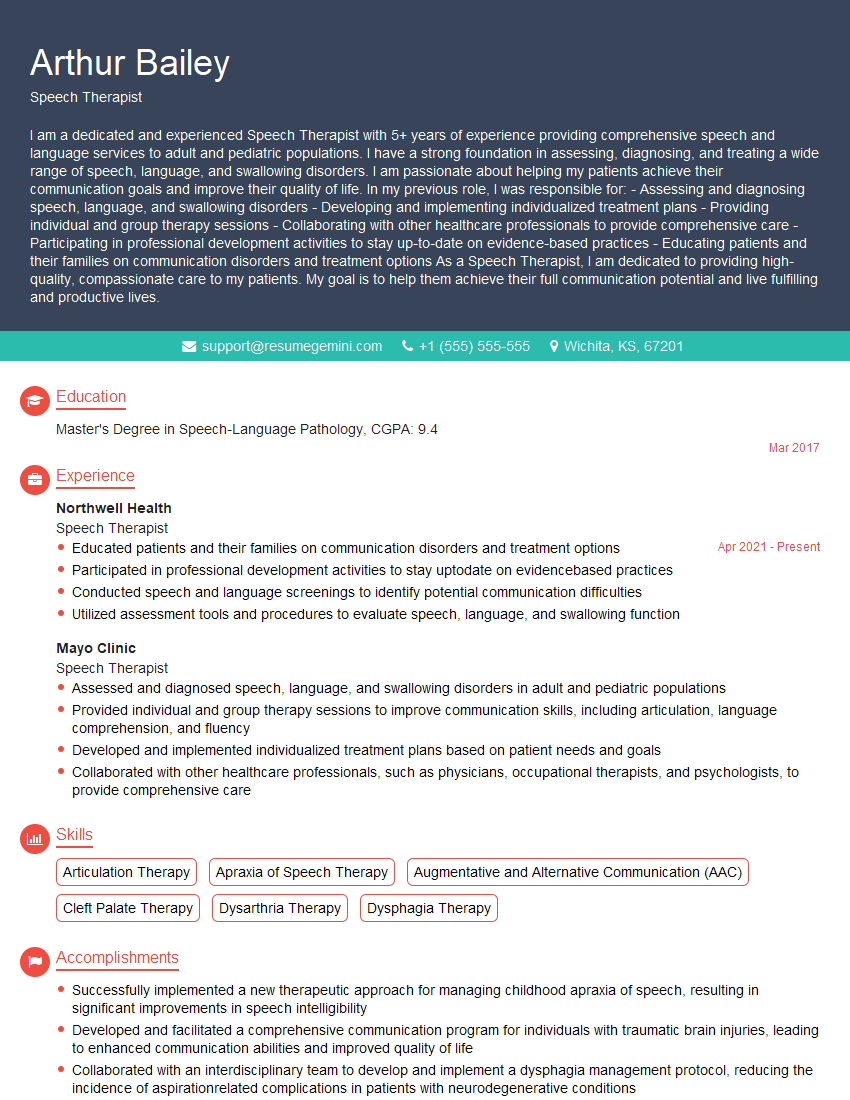
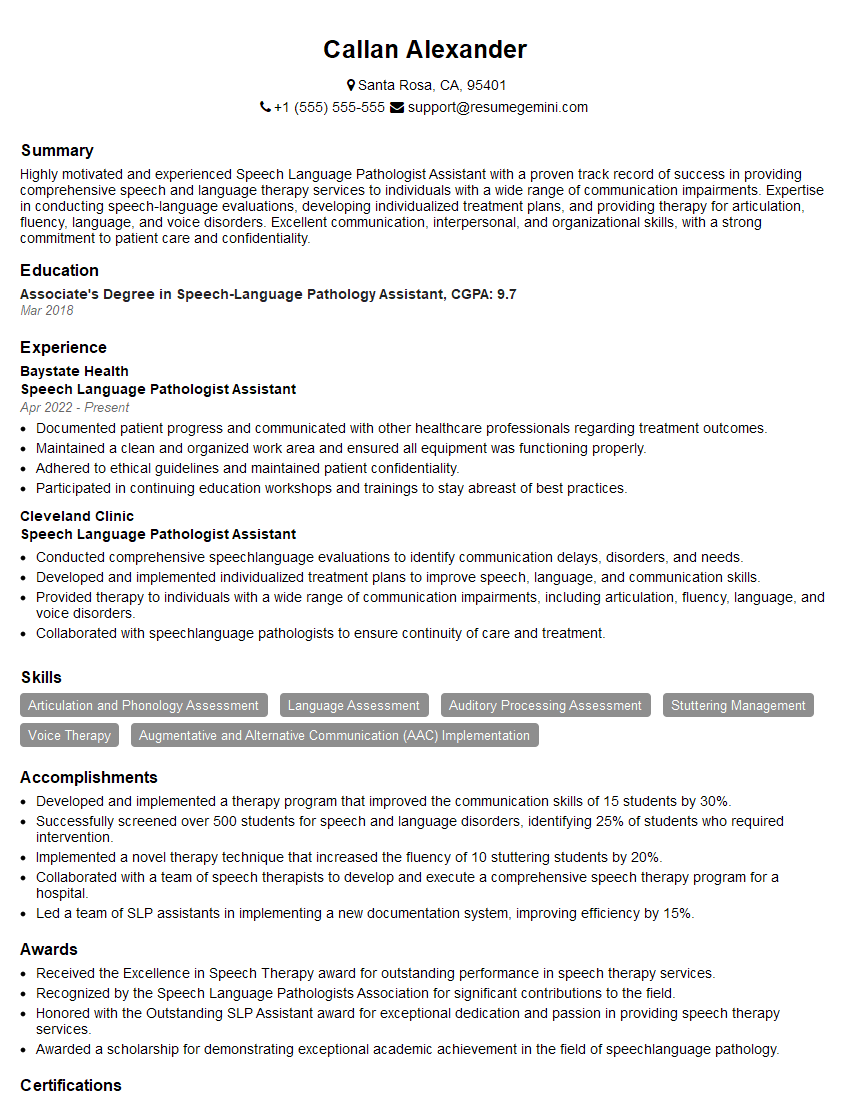
Mastering Motor Speech Disorders Treatment is crucial for a successful and rewarding career in speech-language pathology. A strong understanding of these concepts will significantly enhance your job prospects and allow you to provide effective and compassionate care to your patients. To increase your chances of landing your dream role, it’s vital to present your skills and experience effectively. Creating an ATS-friendly resume is paramount. ResumeGemini is a trusted resource that can help you build a professional and impactful resume, optimized to get noticed by employers. Examples of resumes tailored to Motor Speech Disorders Treatment are available to guide you.
Explore more articles
Users Rating of Our Blogs
Share Your Experience
We value your feedback! Please rate our content and share your thoughts (optional).
What Readers Say About Our Blog
To the interviewgemini.com Webmaster.
Very helpful and content specific questions to help prepare me for my interview!
Thank you
To the interviewgemini.com Webmaster.
This was kind of a unique content I found around the specialized skills. Very helpful questions and good detailed answers.
Very Helpful blog, thank you Interviewgemini team.