Cracking a skill-specific interview, like one for Power distribution system management, requires understanding the nuances of the role. In this blog, we present the questions you’re most likely to encounter, along with insights into how to answer them effectively. Let’s ensure you’re ready to make a strong impression.
Questions Asked in Power distribution system management Interview
Q 1. Explain the difference between a radial and a network power distribution system.
The key difference between radial and network power distribution systems lies in their topology and redundancy. Imagine a radial system like a tree: power flows from a single source (the substation) down branches to individual consumers. If a branch fails, everything downstream is affected. This is simple and cost-effective for smaller areas but lacks resilience.
A network system, on the other hand, is more like a mesh. Power can flow from multiple sources and through multiple paths to reach consumers. If one path is interrupted, the power can reroute, ensuring continuous supply. This is far more robust and reliable, often used in densely populated areas or critical infrastructure. Think of it like a highway system with alternate routes. A blockage on one road doesn’t necessarily stop all traffic.
- Radial System: Simple, cost-effective, less robust.
- Network System: More complex, costly, highly reliable, better fault tolerance.
Q 2. Describe the function of a substation transformer.
A substation transformer is the heart of a distribution system, responsible for stepping down the high voltage electricity from the transmission system to a lower voltage suitable for distribution to homes and businesses. Transmission lines carry electricity at very high voltages (hundreds of kilovolts) to minimize power loss over long distances. However, this high voltage is dangerous and impractical for residential and commercial use. The substation transformer reduces this voltage to a safer and more usable level (e.g., 11kV, 33kV), making it ready for distribution to local areas.
Think of it as an adapter: you have a high-voltage plug (transmission) that needs to be converted to a low-voltage socket (distribution) to power your appliances (consumers). The substation transformer performs this crucial conversion, ensuring safe and efficient power delivery.
Q 3. What are the common protection schemes used in power distribution systems?
Power distribution systems employ several protection schemes to safeguard equipment and ensure safety. These include:
- Overcurrent Protection: Circuit breakers and fuses are designed to trip or melt when the current exceeds a safe level, preventing overheating and fire. This is the most common protection method.
- Differential Protection: This compares the current entering and leaving a piece of equipment (like a transformer). A mismatch signals a fault within the equipment, triggering a rapid shutdown. It’s extremely sensitive and fast.
- Distance Protection: This measures the impedance between the relay and the fault location along a transmission line. It’s particularly effective in protecting long transmission lines.
- Ground Fault Protection: Detects current leakage to ground, which can be dangerous and damaging. Ground fault relays trip the circuit breaker, minimizing the risk of electric shock or equipment damage.
- Busbar Protection: Protects the main busbars within a substation from faults. It uses various schemes like differential protection to ensure the busbar’s integrity.
These protection schemes work in coordination to ensure a multi-layered defence against faults and ensure system stability.
Q 4. Explain the concept of power factor correction and its importance.
Power factor correction improves the efficiency of power distribution systems by reducing the reactive power component. Reactive power is needed for inductive loads (like motors) but doesn’t contribute to useful work. A low power factor means a higher current is drawn for the same amount of actual work, leading to increased losses in the system (higher energy bills and heat generation).
Power factor correction involves adding devices like capacitors to the system to compensate for the reactive power demand. This brings the power factor closer to 1 (unity), minimizing current flow and improving efficiency. Think of it like reducing friction in a machine; you get the same output with less input.
Importance: Reduced energy losses, lower electricity bills, improved system efficiency, increased capacity of existing equipment, reduced voltage drops, and improved system stability.
Q 5. How do you calculate voltage drop in a power distribution system?
Voltage drop calculation is crucial in ensuring adequate voltage at the end of the distribution line. Several methods exist, depending on the complexity of the system, but the most common is using Ohm’s Law and considering the impedance of the conductors.
Simplified Calculation: Voltage drop (Vd) = I * Z, where I is the current flowing through the conductor and Z is the conductor’s impedance (resistance + reactance). Impedance depends on the conductor material, length, cross-sectional area, and operating frequency.
More Complex Systems: For complex networks, software tools using sophisticated algorithms are used, accounting for factors like line configuration, load distribution, and voltage regulation devices. Accurate voltage drop calculations are vital in planning, designing, and operating distribution networks.
Q 6. What are the different types of faults that can occur in a power distribution system?
Power distribution systems are susceptible to several types of faults, broadly categorized as:
- Phase-to-phase faults: A short circuit between two phases. This results in a high fault current.
- Phase-to-ground faults: A short circuit between a phase and the ground. These are common due to insulation failure or lightning strikes.
- Three-phase faults: A simultaneous short circuit involving all three phases. This is the most severe type of fault, resulting in extremely high fault currents.
- Open-circuit faults: A break in a conductor, interrupting the power flow. This can be caused by damage to the conductor or faulty connections.
The type of fault dictates the protection scheme required and the severity of its impact on the system.
Q 7. Describe the operation of a circuit breaker.
A circuit breaker is an electromechanical switch designed to automatically interrupt the flow of current in a circuit when a fault occurs. Imagine it as a safety valve in a pipe; if the pressure gets too high (fault current), the valve opens (circuit breaker trips), preventing damage to the system.
Operation: When a fault is detected by a protection relay, a signal is sent to the circuit breaker. This activates a mechanism that quickly interrupts the circuit, usually by forcefully separating contacts. The mechanism varies based on the type of circuit breaker (e.g., air, oil, vacuum). After the fault is cleared, the circuit breaker can be manually or automatically reset to restore power.
Circuit breakers are essential components in power distribution systems for ensuring safety and protecting equipment from damage due to overcurrent, short circuits, and other faults. They play a critical role in maintaining the reliability and stability of the power system.
Q 8. Explain the role of SCADA in power distribution system management.
SCADA, or Supervisory Control and Data Acquisition, is the nervous system of a power distribution system. It’s a centralized system that allows operators to monitor and control the entire network remotely. Think of it as a massive, sophisticated dashboard showing real-time data from thousands of points across the grid – voltage levels, current flows, equipment status, and more.
SCADA systems use various communication protocols (like Modbus, DNP3, and IEC 61850) to collect data from Remote Terminal Units (RTUs) and Intelligent Electronic Devices (IEDs) located throughout the distribution network. This data is then processed and displayed on operator consoles, providing a comprehensive overview of the system’s health. Operators can then use this information to make informed decisions, such as switching equipment on or off, adjusting voltage levels, or dispatching crews to address problems.
For example, if a fault occurs on a feeder, SCADA will immediately alert operators, pinpoint the location of the fault, and allow them to remotely isolate the affected section, minimizing the impact on customers. This rapid response is crucial for maintaining grid reliability and reducing outage duration.
Q 9. What are the key performance indicators (KPIs) used to assess the performance of a power distribution system?
Key Performance Indicators (KPIs) for a power distribution system are crucial for evaluating its efficiency and effectiveness. They provide quantifiable metrics to track performance and identify areas for improvement. Some key KPIs include:
- System Average Interruption Duration Index (SAIDI): The average duration of interruptions experienced by each customer per year. Lower is better.
- System Average Interruption Frequency Index (SAIFI): The average number of interruptions experienced by each customer per year. Lower is better.
- Customer Average Interruption Duration Index (CAIDI): The average time it takes to restore service after an interruption. Lower is better.
- Power Quality Metrics: These include metrics like voltage sags, swells, and harmonic distortion, which impact the quality of power delivered to customers. Lower values are desirable.
- Energy Losses: Percentage of energy lost during transmission and distribution. Lower is better, indicating efficient system operation.
- Outage Restoration Time: Average time taken to restore power after an outage. A shorter time indicates efficient outage management.
By regularly tracking these KPIs, utilities can identify trends, pinpoint weaknesses in the system, and implement targeted improvements to enhance reliability and efficiency.
Q 10. How do you manage power outages and restore service quickly?
Managing power outages and restoring service quickly requires a well-defined plan and efficient execution. The process typically involves these steps:
- Fault Detection and Isolation: Utilize SCADA and other monitoring systems to quickly detect the outage and pinpoint its location. This often involves isolating the faulted section of the network to prevent further damage or wider outages.
- Crew Dispatch: Dispatching field crews to the affected area with the necessary equipment and expertise to diagnose and repair the fault. Prioritization based on the number of customers affected is crucial.
- Fault Repair: Identifying the cause of the outage (e.g., damaged equipment, tree contact, animal interference) and performing the necessary repairs. This might involve replacing damaged components, clearing debris, or making other necessary fixes.
- Service Restoration: Once the repairs are complete, safely restore power to the affected areas, verifying the system’s stability and ensuring that no further damage has occurred.
- Post-Outage Analysis: Conduct a thorough analysis to determine the root cause of the outage. This may involve reviewing SCADA data, inspecting equipment, and interviewing field crews. The aim is to prevent similar outages in the future.
Effective communication with customers during the outage is also critical, keeping them informed of the progress and estimated restoration time.
Q 11. Describe your experience with power system analysis software.
I have extensive experience with several power system analysis software packages, including ETAP, PSS/E, and PowerWorld Simulator. These tools are indispensable for planning, designing, and operating power distribution systems. For example, using ETAP, I’ve conducted short-circuit studies to determine fault currents and ensure protective devices are adequately sized. With PSS/E, I’ve performed load flow studies to analyze system voltage profiles and identify potential overloading issues. PowerWorld Simulator has been used for dynamic stability simulations, assessing the system’s response to various disturbances.
My experience extends beyond simple analyses. I have used these tools to develop optimized operating strategies, evaluate the impact of renewable energy integration, and assess the effectiveness of different protection schemes. I am proficient in interpreting the results, translating complex technical data into actionable insights for improving system reliability and efficiency. For instance, in one project, a load flow analysis using PSS/E revealed an impending voltage collapse in a specific area of the grid during peak demand. This early warning allowed us to implement preventive measures such as capacitor bank installation, preventing a major disruption.
Q 12. Explain the importance of grounding in power distribution systems.
Grounding in power distribution systems is absolutely essential for safety and reliable operation. It provides a low-impedance path for fault currents to flow back to the source, protecting personnel and equipment. Without proper grounding, stray voltages can create dangerous situations, and faults may not be effectively cleared. Think of grounding as a safety valve, preventing dangerous voltage buildup and ensuring equipment operates within safe parameters.
Grounding systems typically consist of grounding electrodes (such as ground rods or buried conductors) connected to various points within the system, including transformers, switchgear, and overhead lines. The design of the grounding system depends on several factors, including soil resistivity, fault current levels, and safety regulations. Inadequate grounding can lead to equipment damage, electrical shocks, and even fires. Proper grounding is crucial for protecting personnel, equipment and ensuring the safe and reliable operation of the power distribution system.
Q 13. What are the challenges associated with integrating renewable energy sources into the power distribution grid?
Integrating renewable energy sources, like solar and wind power, into the distribution grid presents several significant challenges:
- Intermittency: Renewable energy sources are inherently intermittent, meaning their output fluctuates depending on weather conditions. This variability makes it difficult to maintain grid stability and balance supply and demand.
- Voltage Fluctuations: The intermittent nature of renewable energy can cause voltage fluctuations in the grid, potentially damaging sensitive equipment and impacting power quality.
- Protection Coordination: Integrating renewable energy requires careful coordination of protection schemes to ensure that faults are cleared quickly and safely, without disrupting the flow of renewable energy.
- Grid Infrastructure Limitations: Existing grid infrastructure may not be adequately designed to handle the bidirectional power flows associated with renewable energy integration.
- Reverse Power Flow: Renewable energy sources can sometimes inject more power into the grid than is being consumed, leading to reverse power flow which requires sophisticated control systems to manage.
Addressing these challenges often involves implementing advanced technologies such as smart inverters, energy storage systems, and sophisticated grid management systems.
Q 14. How do you ensure the reliability and safety of a power distribution system?
Ensuring the reliability and safety of a power distribution system is a multifaceted task that requires a holistic approach. It involves a combination of proactive measures and reactive responses to maintain optimal system performance.
Proactive Measures: These include regular inspections and maintenance of equipment, implementing robust protection schemes, investing in advanced monitoring and control systems (like SCADA), and adhering to strict safety regulations and codes. This proactive approach helps prevent faults and minimizes the impact of those that do occur. For example, scheduled maintenance of transformers reduces the risk of failures.
Reactive Measures: These focus on responding effectively to faults and outages. This includes efficient fault detection and isolation, rapid dispatch of field crews, and effective communication with customers. A well-defined emergency response plan is critical for minimizing the impact of unexpected events. Regular training of personnel on safety procedures and equipment handling is paramount.
Furthermore, continuous system monitoring and analysis help identify weak points and potential problems before they escalate into major outages. This might involve using advanced analytics to predict equipment failures or identify areas needing improvement.
Q 15. Describe your experience with fault location and isolation techniques.
Fault location and isolation are critical for maintaining the reliability and safety of power distribution systems. My experience encompasses a range of techniques, from traditional methods to advanced technologies. This includes using protective relays to identify the faulted section, then employing techniques like impedance measurements, line-to-ground fault location, and using sophisticated software packages for analyzing data from various sources (SCADA systems, protective relay logs). For example, I’ve used distance protection relays in conjunction with fault recorders to pinpoint a fault on a 33kV feeder within minutes during a major storm, preventing a widespread outage. In another instance, I utilized a combination of pilot wire and synchronized phasor measurements to isolate a fault on a long transmission line, significantly reducing repair time.
The process generally involves these steps:
- Fault Detection: Protective relays detect the fault condition.
- Fault Isolation: Circuit breakers isolate the faulted section.
- Fault Location: Employing various methods (impedance, time domain reflectometry – TDR, etc.) to pinpoint the fault location.
- Repair and Restoration: Repair the fault and restore power.
Career Expert Tips:
- Ace those interviews! Prepare effectively by reviewing the Top 50 Most Common Interview Questions on ResumeGemini.
- Navigate your job search with confidence! Explore a wide range of Career Tips on ResumeGemini. Learn about common challenges and recommendations to overcome them.
- Craft the perfect resume! Master the Art of Resume Writing with ResumeGemini’s guide. Showcase your unique qualifications and achievements effectively.
- Don’t miss out on holiday savings! Build your dream resume with ResumeGemini’s ATS optimized templates.
Q 16. What are the different types of insulators used in power distribution systems?
Insulators are crucial components in power distribution systems, preventing current leakage and ensuring safe operation. Different types are chosen based on voltage levels, environmental conditions, and cost considerations. Common types include:
- Porcelain Insulators: These are widely used, known for their high dielectric strength, good mechanical properties, and relatively low cost. They are susceptible to damage from extreme temperature changes and mechanical stress.
- Glass Insulators: Offering high dielectric strength and good resistance to thermal shock, glass insulators are a robust choice. However, they can be more fragile than porcelain.
- Polymer Insulators (Composite): These are increasingly popular due to their high strength-to-weight ratio, hydrophobicity (water repellency), and resistance to pollution. They can be cost-effective for high voltage applications.
- Long Rod Insulators: Used for high voltage applications, these insulators are designed to withstand high electrical stresses and provide increased creepage distance.
The selection process involves careful consideration of factors like voltage level, pollution level (salt fog, industrial dust), and environmental conditions (temperature, humidity).
Q 17. Explain the concept of load balancing in a power distribution system.
Load balancing ensures that the electrical load is evenly distributed across all available phases in a power distribution system. This prevents overloading of individual phases and improves the efficiency and reliability of the system. Think of it like distributing weight evenly in a car; an unbalanced load could damage parts or cause instability. Uneven load distribution can lead to higher losses, reduced lifespan of equipment, and increased risk of equipment failure.
Techniques for load balancing include:
- Careful Planning of Distribution Network: Designing the system with balanced loads in mind from the outset.
- Load Monitoring and Control: Utilizing smart meters and advanced metering infrastructure (AMI) to continuously monitor load and dynamically adjust distribution to balance phases.
- Load Shifting: Adjusting the timing of energy-intensive processes (like industrial operations) to shift load away from peak periods.
- Phase Balancing Transformers: Employing special transformers that can redistribute the load between phases.
Real-world example: A manufacturing facility experienced frequent blown fuses on one phase due to an unbalanced load from several high-power machines all connected to that single phase. Implementing a load balancing strategy that involved phase shifting and a reconfiguration of machine connections completely resolved the issue.
Q 18. What are the different types of cables used in power distribution systems?
Power distribution systems utilize various cable types, each chosen based on voltage level, current carrying capacity, installation environment, and cost. Key types include:
- Copper Conductors: These are commonly used due to their excellent conductivity. They are more expensive than aluminum but have better current-carrying capacity for the same size.
- Aluminum Conductors: A lighter and less expensive alternative to copper, aluminum is often used in overhead distribution lines.
- XLPE (Cross-linked Polyethylene) Insulated Cables: Commonly used for underground distribution due to their superior insulation properties, resistance to moisture and chemicals, and longer lifespan.
- PVC (Polyvinyl Chloride) Insulated Cables: Often used for lower voltage applications due to its affordability and ease of installation. However, it has lower temperature resistance than XLPE.
- High Voltage Cables: These are specialized cables, often oil-filled or gas-filled, for high-voltage applications, requiring robust insulation and shielding.
Choosing the right cable type is critical for safety and efficiency. For instance, using a PVC cable in a high-temperature environment would lead to insulation failure, while using an undersized cable could cause overheating and fire hazards.
Q 19. How do you perform load flow analysis?
Load flow analysis is a crucial tool for analyzing the steady-state operation of power systems. It determines voltage magnitudes, voltage angles, and power flows throughout the entire network under a given load condition. This helps engineers assess the system’s performance, identify potential bottlenecks, and plan for future expansion.
The process typically involves using specialized software packages that employ iterative techniques (like Gauss-Seidel or Newton-Raphson methods) to solve a set of power flow equations. These equations represent the relationship between voltage, current, and impedance throughout the network. Input data includes network topology, generator specifications, and load demands.
The output provides valuable information about:
- Voltage Profiles: Ensuring voltage levels are within acceptable limits at all buses (nodes) in the system.
- Line Flows: Identifying overloaded lines or transformers and potential areas of instability.
- Power Losses: Assessing system efficiency and identifying areas for improvement.
I’ve utilized load flow analysis extensively in planning new substations, sizing transformers, and evaluating the impact of adding renewable energy sources to the grid. It’s an essential step in ensuring reliable and efficient power delivery.
Q 20. Explain the concept of power system stability.
Power system stability refers to the system’s ability to maintain synchronism between generators following a disturbance. It’s like a group of dancers who, even after stumbling, can quickly recover their balance and continue the performance. Loss of stability can lead to cascading outages and widespread blackouts. Several types of stability are considered:
- Angle Stability (Rotor Angle Stability): Concerns the ability of synchronous generators to remain in synchronism after a disturbance. This is closely related to the inertia of the rotating machinery.
- Frequency Stability: Relates to the system’s ability to maintain frequency within acceptable limits after a disturbance. This is influenced by the balance between generation and load.
- Voltage Stability: Focuses on the system’s ability to maintain voltage magnitudes within acceptable limits. This is affected by reactive power balance and network strength.
Maintaining stability requires robust control systems, adequate generation reserves, and a well-designed transmission network. Factors influencing stability include generator inertia, transmission line impedance, and the strength of the control systems. Studies involving time-domain simulations and eigenvalue analysis are commonly used to assess stability and design appropriate control strategies.
Q 21. Describe your experience with power system protection relays.
My experience with power system protection relays is extensive. I’ve worked with a wide range of relays, from older electromechanical devices to sophisticated numerical relays incorporating advanced algorithms and communication capabilities. These relays are the first line of defense against faults, safeguarding equipment and maintaining the integrity of the power system. My experience includes specification, selection, testing, and commissioning of these relays. I’ve overseen the implementation of digital protection schemes with integrated communication for enhanced situational awareness and faster fault clearing.
Examples of relay types I’m proficient with:
- Overcurrent Relays: Detect overcurrent conditions and trip circuit breakers to isolate faults.
- Distance Relays: Measure the impedance to the fault and trip circuit breakers to isolate faulted sections.
- Differential Relays: Compare currents entering and leaving a protected zone to detect internal faults.
- Ground Fault Relays: Detect ground faults and provide protection for grounded systems.
In one project, I upgraded an aging protection system with modern numerical relays incorporating communication capabilities. This provided improved fault detection, faster fault clearing times, and enhanced data logging for analysis and improved maintenance strategies. Understanding the various characteristics and settings of relays is critical for effective system protection and coordination.
Q 22. What are the regulatory compliance requirements for power distribution systems?
Regulatory compliance for power distribution systems is crucial for ensuring safety, reliability, and efficiency. It involves adhering to a complex web of local, regional, and national standards and regulations. These regulations vary geographically but generally cover aspects like:
- Safety Standards: These dictate safe operating procedures, equipment design, and worker protection, often referencing standards like IEEE, IEC, and OSHA guidelines. For instance, arc flash hazard analysis and mitigation are mandatory to protect workers from electrical burns.
- Reliability Standards: These aim to ensure consistent power delivery, setting targets for outage frequency and duration. NERC (North American Electric Reliability Corporation) standards are a prime example, emphasizing grid stability and cybersecurity.
- Environmental Regulations: These address environmental impacts, such as minimizing electromagnetic interference (EMI), managing waste from equipment disposal, and adhering to emission standards for power plants.
- Metering and Billing Accuracy: Regulations ensure accurate metering and billing practices, preventing revenue loss and ensuring fair pricing for consumers.
- Permitting and Licensing: Obtaining necessary permits and licenses for construction, operation, and maintenance of power distribution infrastructure is a critical compliance aspect.
Non-compliance can lead to significant penalties, including fines, legal action, and damage to reputation. A robust compliance program involves regular audits, training, and documentation to maintain adherence to all applicable regulations.
Q 23. How do you manage the lifecycle of power distribution equipment?
Managing the lifecycle of power distribution equipment is a systematic process that ensures optimal performance, safety, and longevity. It typically involves these key phases:
- Planning and Procurement: This phase involves needs assessment, specification development (considering factors such as capacity, reliability, and environmental impact), vendor selection, and contract negotiation.
- Installation and Commissioning: This stage focuses on proper installation according to manufacturer specifications and safety standards, followed by rigorous testing and commissioning to verify functionality and adherence to design parameters.
- Operation and Maintenance: This is the longest phase, involving regular inspections, preventive maintenance (like cleaning, lubrication, and thermal imaging), corrective maintenance (repairing faults), and performance monitoring to identify potential issues early.
- Upgrade and Modernization: As technology advances or demand increases, upgrading or replacing equipment may be necessary. This involves careful planning to minimize disruption and maximize the benefits of new technology (like smart grid integration).
- Decommissioning and Disposal: This final phase involves safely removing equipment from service, disposing of hazardous materials responsibly, and adhering to environmental regulations during decommissioning.
Utilizing a Computerized Maintenance Management System (CMMS) is crucial for tracking equipment history, scheduling maintenance, and managing inventory, optimizing the lifecycle process.
Q 24. Explain the concept of smart grid technologies and their applications.
Smart grid technologies represent a paradigm shift in power distribution, enhancing efficiency, reliability, and sustainability. It’s essentially a modernized power grid that leverages advanced technologies to improve its operation and interaction with consumers. Key components include:
- Advanced Metering Infrastructure (AMI): Smart meters provide real-time data on energy consumption, enabling time-of-use pricing and better demand management.
- Distribution Automation: Systems automate switching, voltage regulation, and fault detection, improving reliability and reducing outage durations. Think of self-healing grids that isolate faults and restore power automatically.
- Renewable Energy Integration: Smart grids seamlessly integrate renewable energy sources like solar and wind power, improving sustainability and grid resilience.
- Communication Networks: High-bandwidth communication networks (like fiber optics and cellular) enable real-time data exchange between grid components and control centers.
- Data Analytics and Machine Learning: Data analytics and machine learning algorithms optimize grid operation, predict potential issues, and improve overall performance.
For example, a smart grid can dynamically adjust power flow based on real-time demand and renewable energy generation, minimizing transmission losses and improving stability. It also enables better integration of electric vehicles and other distributed energy resources.
Q 25. Describe your experience with demand-side management programs.
Demand-side management (DSM) programs aim to influence consumer energy consumption patterns to optimize grid performance and reduce peak demand. My experience includes designing and implementing several DSM initiatives, such as:
- Time-of-Use (TOU) Pricing: Implementing tiered pricing structures that incentivize consumers to shift energy consumption to off-peak hours.
- Load Control Programs: Utilizing smart meters and communication networks to remotely control loads during peak demand periods, reducing strain on the grid.
- Energy Efficiency Programs: Offering rebates and incentives to consumers who adopt energy-efficient appliances and practices.
- Demand Response Programs: Encouraging consumers to reduce their energy consumption during peak demand events, often through financial incentives or other rewards.
In one project, we implemented a TOU pricing program that resulted in a 15% reduction in peak demand, significantly improving grid stability and reducing the need for expensive peak power generation. Success requires careful communication and education of consumers to ensure program participation and effectiveness.
Q 26. How do you handle emergencies and critical situations in a power distribution system?
Handling emergencies and critical situations in a power distribution system requires a well-defined emergency response plan and a highly trained team. My experience involves:
- Rapid Fault Location and Isolation: Utilizing sophisticated monitoring and diagnostic tools to quickly identify the source of the outage and isolate the affected area, minimizing the impact on consumers.
- Restoration Planning and Execution: Developing and implementing a step-by-step plan for restoring power safely and efficiently, prioritizing critical loads.
- Communication and Coordination: Maintaining clear and effective communication with consumers, utility personnel, and emergency services during an outage.
- Post-Outage Analysis: Conducting a thorough investigation of the cause of the outage to identify areas for improvement in system design, operation, and maintenance.
During a major storm, I was responsible for coordinating the restoration of power to a large area affected by downed power lines. Our coordinated efforts, using a combination of mobile repair crews and remote switching operations, minimized the duration of the outage and ensured public safety.
Q 27. What are the safety protocols you follow when working on power distribution equipment?
Safety is paramount when working on power distribution equipment. Our protocols strictly adhere to industry best practices and regulatory requirements, including:
- Lockout/Tagout Procedures: Ensuring that all power sources are de-energized and locked out before any work is performed on equipment.
- Personal Protective Equipment (PPE): Requiring the use of appropriate PPE, including insulated gloves, safety glasses, arc flash suits, and safety footwear.
- Grounding and Bonding: Implementing proper grounding and bonding techniques to prevent electrical shocks and arc flash hazards.
- Training and Competency: Providing comprehensive training to all personnel on safe work practices, emergency response procedures, and hazard recognition.
- Permit-to-Work Systems: Utilizing formal permit-to-work systems that document work activities, hazards, and safety precautions.
Regular safety audits and training sessions are conducted to ensure that all personnel are up-to-date on the latest safety standards and procedures. We believe a culture of safety is crucial and actively promote reporting of near misses and incidents to learn and improve.
Q 28. Explain your understanding of power system harmonics and their mitigation techniques.
Power system harmonics are distortions in the sinusoidal waveform of the power supply, caused by non-linear loads like rectifiers, variable speed drives, and electronic ballasts. These harmonics can lead to increased equipment heating, malfunction, and reduced efficiency. They manifest as multiples of the fundamental frequency (typically 50Hz or 60Hz).
Understanding harmonic content is crucial for assessing the impact on equipment and the grid. We use harmonic analysis techniques, often employing power quality meters and specialized software, to measure and identify harmonic distortion.
Mitigation techniques include:
- Passive Filters: These are tuned circuits that absorb specific harmonic frequencies, effectively reducing their presence in the power system. They are cost-effective for addressing specific harmonics.
- Active Filters: These sophisticated devices actively inject current to counteract harmonic distortion, offering greater flexibility and adaptability.
- Harmonic Load Balancing: Distributing harmonic loads evenly across the system can reduce localized harmonic distortion.
- Using harmonic-mitigating equipment: Selecting equipment with inherent low harmonic generation reduces the problem at its source.
For instance, in one project, we installed active filters at a large industrial facility to mitigate significant harmonic distortion caused by variable speed drives. This improved equipment lifespan and reduced energy waste. The choice of mitigation technique depends on the level of distortion, cost considerations, and specific system requirements.
Key Topics to Learn for Power Distribution System Management Interview
- Power System Analysis: Understanding load flow studies, fault analysis (symmetrical and unsymmetrical faults), and power system stability. Practical application includes optimizing network performance and predicting system behavior under various conditions.
- Protection and Relaying: Knowledge of protective devices (relays, circuit breakers), their operation, and coordination. Practical application involves ensuring the safe and reliable operation of the power system by preventing cascading failures.
- Substation Design and Operation: Familiarization with different substation configurations, equipment (transformers, switchgear), and operational procedures. Practical application includes planning and managing substation upgrades and maintenance.
- Distribution Automation and Smart Grid Technologies: Understanding the principles and applications of advanced metering infrastructure (AMI), SCADA systems, and distribution automation systems. Practical application involves improving grid efficiency, reliability, and responsiveness.
- Power Quality and Harmonics: Knowledge of power quality issues (voltage sags, swells, harmonics), their causes, and mitigation techniques. Practical application includes improving the quality of power delivered to consumers.
- Economic Dispatch and Optimal Power Flow: Understanding the principles of economic dispatch and optimal power flow for efficient power system operation. Practical application involves minimizing operating costs while maintaining system reliability.
- Renewable Energy Integration: Understanding the challenges and solutions related to integrating renewable energy sources (solar, wind) into the distribution system. Practical application includes planning for future grid modernization to accommodate renewable energy growth.
- Grid Modernization and Infrastructure Planning: Understanding the key aspects of modernizing the power distribution system, including infrastructure upgrades and smart grid technologies. Practical application involves long-term planning to meet future energy demands and enhance grid resilience.
Next Steps
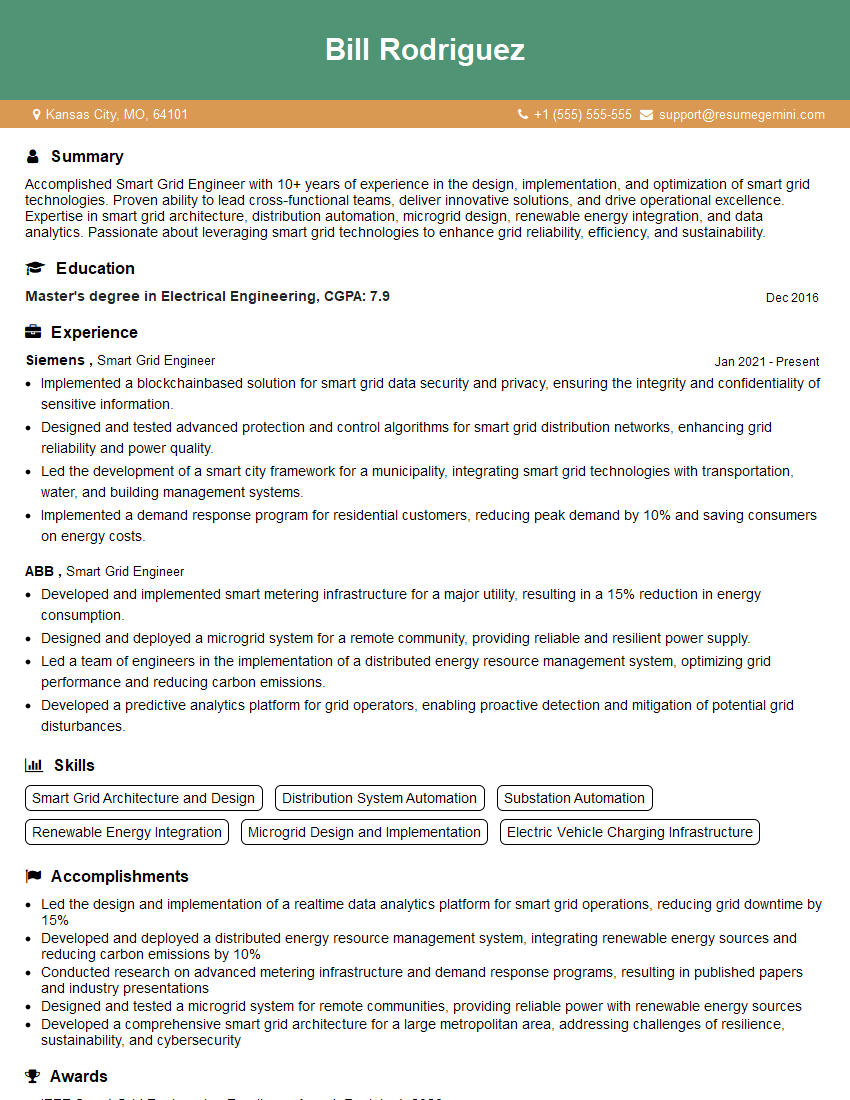
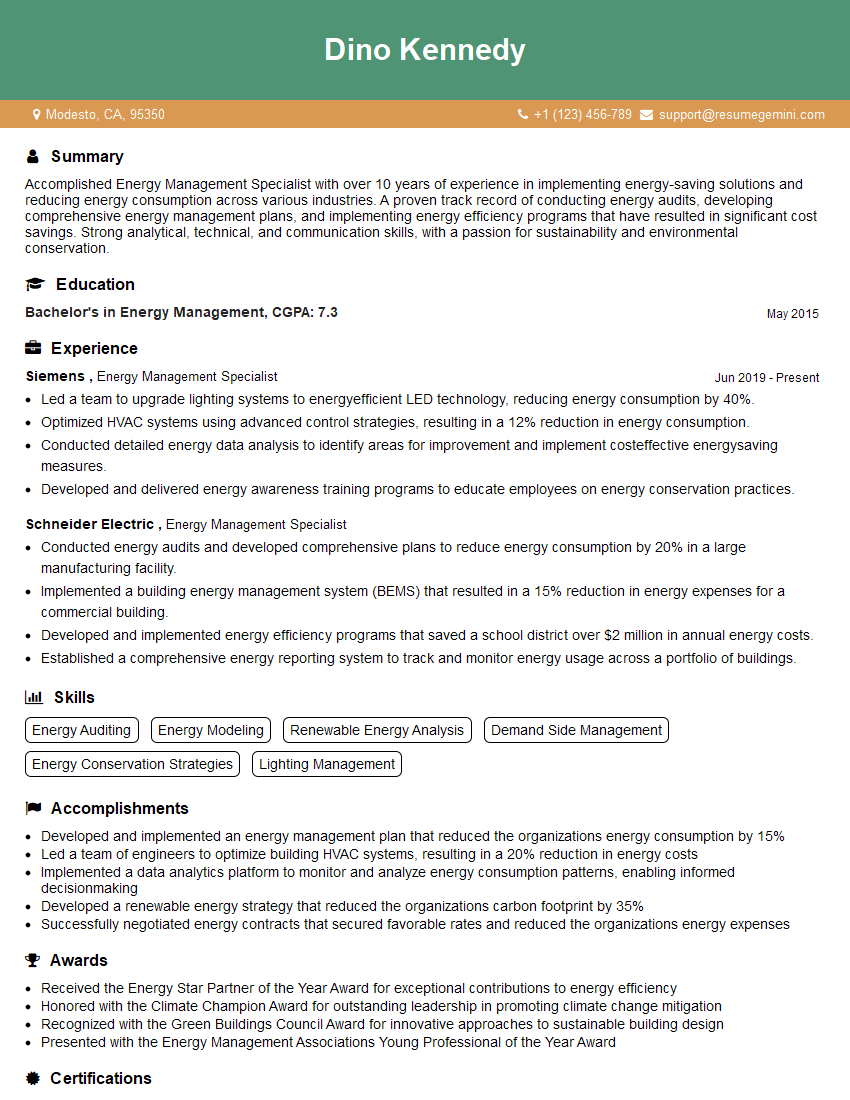
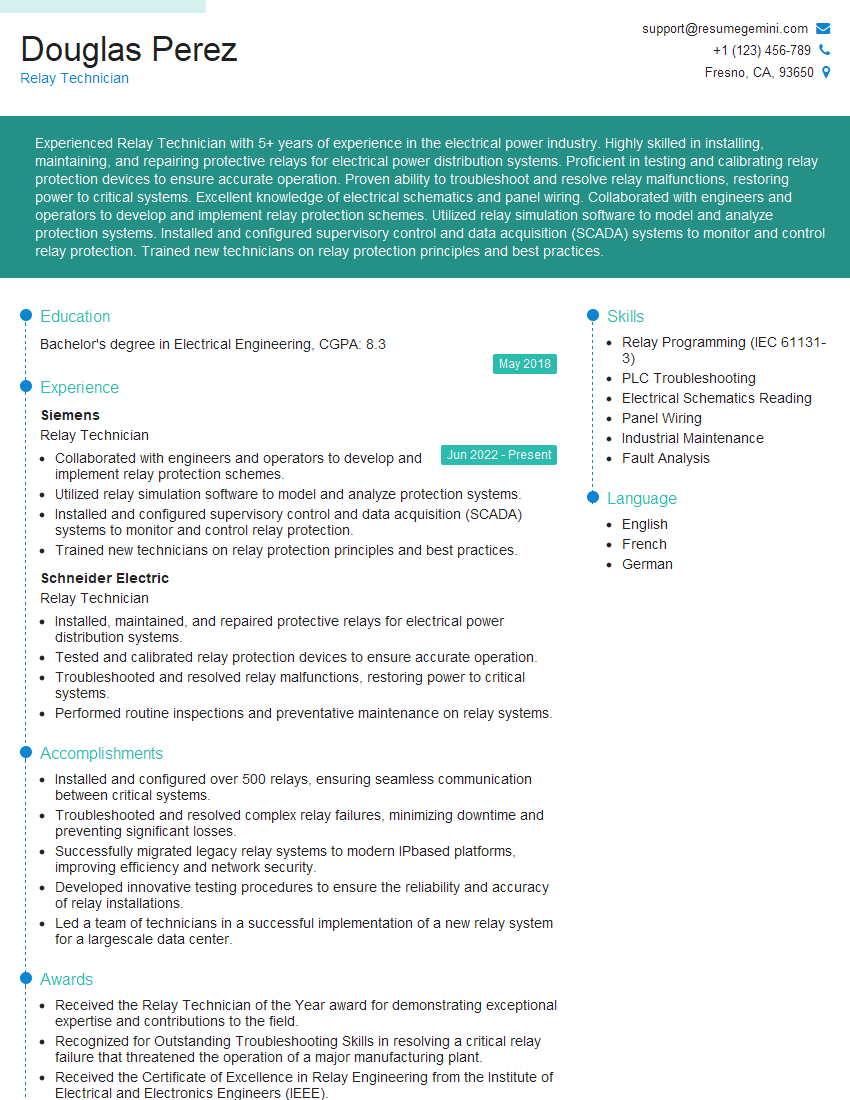
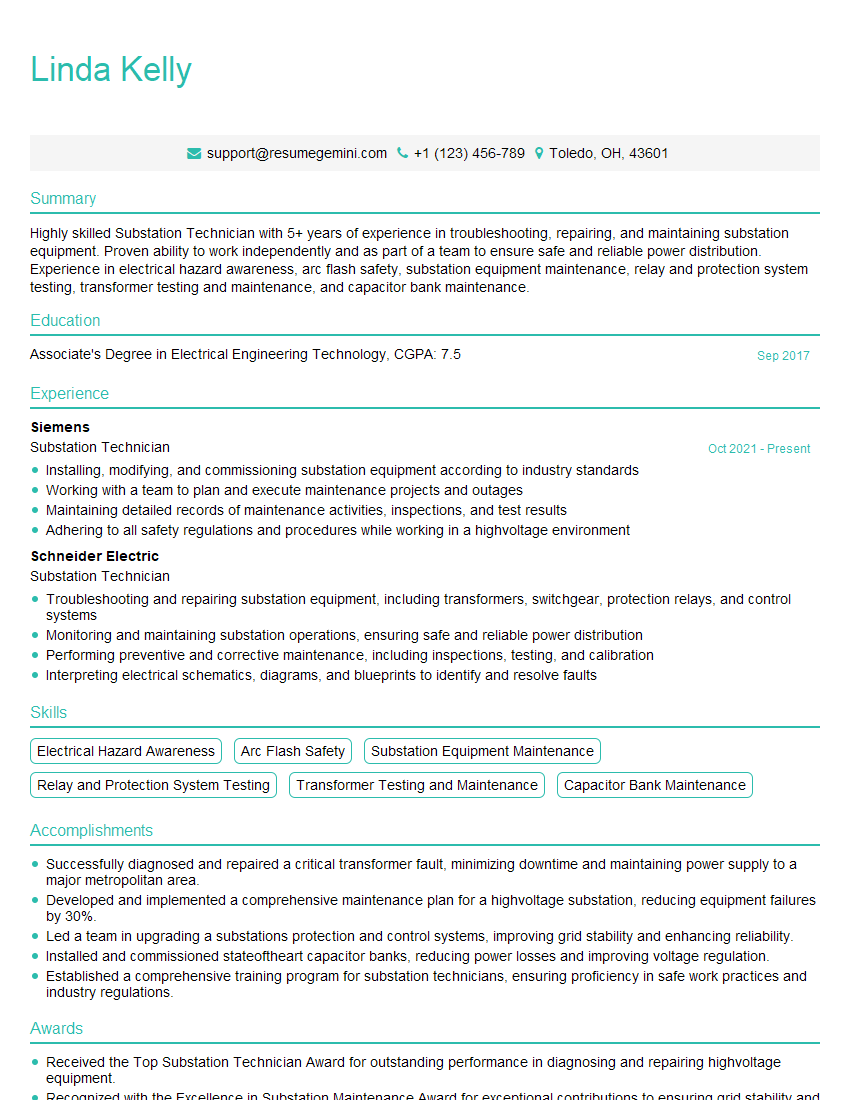
Mastering Power distribution system management opens doors to exciting and impactful careers in the energy sector, offering opportunities for leadership, innovation, and contributing to a sustainable energy future. To significantly boost your job prospects, crafting a strong, ATS-friendly resume is crucial. ResumeGemini is a trusted resource that can help you create a professional and effective resume tailored to highlight your skills and experience. We provide examples of resumes specifically designed for Power distribution system management roles to help you build a compelling application.

Explore more articles
Users Rating of Our Blogs
Share Your Experience
We value your feedback! Please rate our content and share your thoughts (optional).
What Readers Say About Our Blog
To the interviewgemini.com Webmaster.
Very helpful and content specific questions to help prepare me for my interview!
Thank you
To the interviewgemini.com Webmaster.
This was kind of a unique content I found around the specialized skills. Very helpful questions and good detailed answers.
Very Helpful blog, thank you Interviewgemini team.