Feeling uncertain about what to expect in your upcoming interview? We’ve got you covered! This blog highlights the most important Process Control Applications interview questions and provides actionable advice to help you stand out as the ideal candidate. Let’s pave the way for your success.
Questions Asked in Process Control Applications Interview
Q 1. Explain the difference between PID controllers and advanced process controllers.
PID controllers, or Proportional-Integral-Derivative controllers, are the workhorses of basic process control. They use a simple algorithm to adjust a control element (like a valve) based on the difference between a desired setpoint and the actual process variable. Think of it like a thermostat: it measures the temperature (process variable), compares it to the desired temperature (setpoint), and adjusts the heating/cooling (control element) accordingly.
Advanced process controllers, however, go beyond the simple PID algorithm. They incorporate more sophisticated control strategies, such as model predictive control (MPC), adaptive control, or fuzzy logic control. These methods use more information about the process – often including a dynamic model of the process itself – to predict future behavior and optimize control performance. For example, MPC can anticipate disturbances and proactively adjust the control action, minimizing deviations from the setpoint even before they occur. This makes them particularly suitable for complex processes with significant interactions or delays.
The key difference boils down to sophistication and capability. PID controllers are simple, reliable, and widely applicable, but advanced controllers offer superior performance and robustness for more challenging control problems.
Q 2. Describe your experience with tuning PID controllers.
Tuning PID controllers is an art and a science. I’ve extensively used various tuning methods, including Ziegler-Nichols (both ultimate gain and reaction curve methods), Cohen-Coon, and auto-tuning features available in modern DCS systems. My experience has shown that the best method depends heavily on the process dynamics. A fast process might benefit from a quick Ziegler-Nichols tuning, while a sluggish process might require a more methodical approach with manual adjustments.
I typically start with an auto-tuning feature to get a baseline, then refine the tuning parameters based on process response. I look for minimal overshoot, fast settling time, and good disturbance rejection. If there’s significant oscillation, I reduce the proportional gain (Kp). If the response is too slow, I increase the integral gain (Ki). The derivative gain (Kd) helps to dampen oscillations and improve response speed, but needs careful adjustment to avoid derivative kick.
In one project involving a level control loop in a chemical reactor, initial auto-tuning resulted in significant oscillations. By carefully reducing Kp and Kd while slightly increasing Ki, we achieved a stable and responsive control loop with minimal overshoot. This process often involves iterative adjustment and careful observation of the process behavior. Data logging and analysis are essential for documenting the tuning process and identifying areas for improvement.
Q 3. What are the common types of process control loops?
Common types of process control loops include:
- Level Control: Maintaining a desired liquid level in a tank. This often involves a level sensor (e.g., ultrasonic, radar) and a control valve regulating inflow or outflow.
- Temperature Control: Regulating the temperature of a process stream or vessel. Thermocouples, RTDs, and other temperature sensors are commonly used, along with heating or cooling elements controlled by a valve or other actuator.
- Pressure Control: Maintaining a desired pressure in a vessel or pipeline. Pressure transmitters and control valves are crucial components.
- Flow Control: Regulating the flow rate of a liquid or gas. Flow meters (e.g., orifice plates, Coriolis flow meters) and control valves are used to maintain the desired flow.
- Composition Control: Maintaining the desired concentration of a component in a mixture. This often requires more advanced analytical instruments (e.g., gas chromatographs, spectrometers) and sophisticated control strategies.
These loops can be single loops or part of more complex multivariable control systems.
Q 4. Explain the concept of feedback control and feedforward control.
Feedback control is a closed-loop system where the controller measures the process variable and adjusts the manipulated variable to maintain the desired setpoint. Think of the thermostat example again: the measured temperature is fed back to the controller, which adjusts the heating or cooling accordingly. It’s reactive; it responds to deviations from the setpoint.
Feedforward control is an open-loop system that anticipates disturbances before they affect the process variable. It uses a measurement of a disturbance variable (e.g., feed flow rate) to adjust the manipulated variable proactively. For example, if you know the feed flow rate to a reactor is about to increase, you can preemptively adjust the cooling system to compensate for the expected temperature rise. It’s proactive and aims to prevent deviations from the setpoint.
Often, the most effective control strategies combine both feedback and feedforward control to achieve optimal performance. The feedback loop handles unforeseen disturbances, while the feedforward loop mitigates predictable ones.
Q 5. How do you handle process upsets and disturbances?
Handling process upsets and disturbances requires a combination of good control system design, robust control strategies, and effective operator training. When a disturbance occurs (e.g., a sudden change in feed composition or a equipment malfunction), the control system needs to respond quickly and effectively to minimize the impact on the process variable.
Strategies for handling upsets include:
- Robust controller tuning: Well-tuned PID controllers or advanced control strategies are less sensitive to disturbances.
- Feedforward control: As mentioned previously, anticipating disturbances and adjusting the manipulated variable proactively can significantly reduce the impact of upsets.
- Alarm systems: Effective alarm systems alert operators to critical deviations from setpoints, allowing for timely intervention.
- Operator training: Operators need to be trained to recognize and respond appropriately to process upsets and disturbances.
- Safety systems: Safety instrumented systems (SIS) are essential for preventing hazardous situations resulting from process upsets.
For example, in a distillation column, a sudden increase in feed flow rate would be an upset. A well-designed control system, utilizing both feedback and feedforward control, would adjust the reflux flow and reboiler duty to maintain product quality and avoid flooding or weeping in the column.
Q 6. What is a control valve and how does it work?
A control valve is a final control element that adjusts the flow of a fluid (liquid or gas) in response to signals from a controller. It acts as the muscle of the control system, translating the controller’s commands into physical changes in the process.
Control valves operate on various principles, including:
- Globe valves: A plug moves up and down to regulate flow.
- Ball valves: A rotating ball with a hole regulates flow.
- Butterfly valves: A rotating disc partially blocks the flow.
The controller sends a signal (typically 4-20 mA or digital communication) to the valve’s actuator (e.g., pneumatic, electric, hydraulic), which positions the valve to the appropriate level. The valve’s position directly affects the flow rate, influencing the process variable. Proper sizing and selection of the control valve are crucial for effective process control.
Q 7. Explain the importance of instrumentation in process control.
Instrumentation is the backbone of any process control system. It provides the necessary information about the process – measurements of temperature, pressure, flow, level, composition, etc. – that the controller uses to make decisions and adjust the manipulated variable. Without accurate and reliable instrumentation, effective process control is impossible.
The importance of instrumentation stems from its ability to:
- Provide accurate measurements: This is essential for effective control, allowing the controller to make informed decisions.
- Enable monitoring and diagnostics: Instrumentation allows for real-time monitoring of process variables, aiding in troubleshooting and process optimization.
- Ensure safety: Instrumentation provides critical data for safety systems, preventing hazardous situations.
- Improve efficiency: Precise control, enabled by accurate instrumentation, can improve process efficiency and reduce waste.
Imagine trying to control the temperature of an oven without a thermometer. It would be highly inefficient and potentially dangerous. Similarly, in industrial processes, accurate and reliable instrumentation is critical for safe, efficient, and effective operation.
Q 8. What are the different types of sensors used in process control applications?
Sensors are the eyes and ears of a process control system, providing crucial data about the process variables. Different types of sensors are needed to monitor various parameters. These can be broadly categorized as follows:
- Temperature Sensors: Thermocouples, Resistance Temperature Detectors (RTDs), and Thermistors are commonly used to measure temperature. For example, a thermocouple might monitor the temperature inside a reactor to ensure it stays within the optimal range for a chemical reaction.
- Pressure Sensors: Diaphragm pressure gauges, strain gauge pressure transducers, and piezoelectric sensors measure pressure. These are vital in applications like pipeline monitoring, where pressure changes can indicate potential leaks or blockages.
- Flow Sensors: These measure the volumetric flow rate of fluids. Common types include Coriolis flow meters, ultrasonic flow meters, and orifice plates. A Coriolis meter, for instance, might monitor the flow rate of a reactant in a manufacturing process.
- Level Sensors: These measure the level of liquids or solids in tanks or vessels. Examples include ultrasonic level sensors, radar level sensors, and float switches. A radar level sensor could monitor the level of a chemical in a storage tank to prevent overflow.
- pH Sensors: These measure the acidity or alkalinity of a solution. They are crucial in chemical processes where pH needs to be tightly controlled.
- Analytical Sensors: These measure the composition of a process stream. Gas chromatographs and mass spectrometers are examples of sophisticated analytical sensors used for complex applications. These might be used in refining to monitor the composition of different fuel fractions.
The choice of sensor depends heavily on the specific application, factors like accuracy required, operating conditions (temperature, pressure), and cost considerations.
Q 9. Describe your experience with Programmable Logic Controllers (PLCs).
I have extensive experience working with Programmable Logic Controllers (PLCs) in various industrial settings. My experience encompasses PLC programming, troubleshooting, and system integration. I’m proficient in several programming languages commonly used with PLCs, including ladder logic, structured text, and function block diagrams.
For example, in a previous role, I was responsible for designing and implementing a PLC-based control system for a packaging line. This involved programming the PLC to control conveyor belts, robotic arms, and labeling machines, ensuring synchronized operation and efficient product packaging. I utilized ladder logic to create the control program, incorporating safety interlocks and fault detection mechanisms. I also developed HMI (Human Machine Interface) screens for easy monitoring and control of the process. In another project, I successfully troubleshooted a PLC malfunction in a wastewater treatment plant, identifying a faulty input module and implementing a fix to prevent further disruptions. This experience honed my skills in troubleshooting PLC hardware and software issues effectively.
// Example Ladder Logic snippet (Illustrative) // --|---|---(Output Coil) // | | // --[Input Switch]-- My expertise extends to various PLC brands, including Siemens, Allen-Bradley, and Omron, allowing me to adapt to different project requirements efficiently. I’m also familiar with various communication protocols used in PLC networks such as Ethernet/IP, Profibus, and Modbus.
Q 10. Explain your experience with Supervisory Control and Data Acquisition (SCADA) systems.
Supervisory Control and Data Acquisition (SCADA) systems are essential for monitoring and controlling large-scale industrial processes. My experience with SCADA systems includes design, implementation, and maintenance of SCADA systems for diverse applications, from water treatment plants to manufacturing facilities.
In one project, I was involved in the design and implementation of a SCADA system for a large oil refinery. This involved configuring various hardware components, including PLCs, RTUs (Remote Terminal Units), and communication networks. I then developed the SCADA software application to monitor process parameters, such as temperature, pressure, and flow rate, and to provide operators with real-time process visualization and control. I utilized historical data logging and reporting capabilities within the SCADA system to aid in process optimization and troubleshooting. The system incorporated alarm management functionalities to notify operators of any deviations from setpoints and potential issues. Effective alarm management is crucial in ensuring prompt response to critical process events.
My experience encompasses working with various SCADA platforms, including Wonderware, Ignition, and Rockwell Automation’s FactoryTalk SCADA. I’m adept at handling data acquisition, historical trending, alarm management, and report generation. I understand the importance of security and redundancy in SCADA systems and have implemented appropriate measures in my projects to ensure reliable and secure operation.
Q 11. What are Distributed Control Systems (DCS) and their advantages?
Distributed Control Systems (DCS) are advanced process control systems that utilize a network of interconnected controllers to manage complex industrial processes. Unlike centralized systems, the control functions are distributed among multiple controllers, improving redundancy and scalability.
Advantages of DCS:
- Redundancy and Reliability: DCS systems are inherently more reliable because of their distributed architecture. If one controller fails, the others can continue to operate, minimizing downtime.
- Scalability and Flexibility: DCS systems can easily be expanded to accommodate larger processes or incorporate new equipment.
- Advanced Control Algorithms: DCS systems can support sophisticated control algorithms, like model predictive control (MPC), for improved process optimization.
- Improved Safety: The distributed nature of DCS improves safety by providing localized control and minimizing the impact of single-point failures.
- Enhanced Data Management: DCS systems offer superior data management capabilities, providing real-time process visibility and historical data analysis.
I’ve worked with DCS systems in various industrial settings including power generation and chemical manufacturing. In a power plant project, I helped implement a DCS system for boiler control, incorporating advanced control algorithms to optimize fuel efficiency and emissions. The distributed architecture facilitated easy expansion and modification as the plant operations evolved.
Q 12. Explain the concept of process safety and your role in ensuring it.
Process safety is paramount in process control applications. It encompasses the identification and mitigation of hazards to prevent accidents and protect personnel, equipment, and the environment. My role in ensuring process safety involves several key aspects:
- Hazard Identification and Risk Assessment: I actively participate in HAZOP (Hazard and Operability) studies and other risk assessment methodologies to identify potential hazards and their associated risks.
- Safety Instrumented Systems (SIS): I have experience designing, implementing, and maintaining SIS, which are safety-critical systems designed to mitigate process hazards. This includes ensuring the SIS meets industry standards and regulations, such as IEC 61508.
- Emergency Shutdown Systems (ESD): I’m familiar with ESD system design, testing, and maintenance. ESD systems are designed to safely shut down a process in case of an emergency.
- Alarm Management: Effective alarm management is essential to prevent alarm fatigue. I work to ensure alarm systems are designed and implemented appropriately to minimize false alarms and provide timely alerts of significant events.
- Safety Training and Procedures: I contribute to developing safety training programs and procedures for plant personnel, ensuring they are aware of potential hazards and safety protocols.
Process safety is not just a checklist; it’s a continuous process requiring vigilance and a proactive approach. I always prioritize safety in my work, advocating for robust safety systems and procedures.
Q 13. How do you troubleshoot process control problems?
Troubleshooting process control problems requires a systematic and methodical approach. My approach typically involves the following steps:
- Gather Information: The first step is to collect data about the problem. This includes reviewing alarm logs, historical data trends, and operator logs. Talking to plant operators is also crucial to gain insights from their observations.
- Identify the Problem: Based on the gathered information, I identify the root cause of the problem. This might involve analyzing process variables, checking sensor readings, and examining the control logic.
- Develop a Hypothesis: I formulate a hypothesis about the root cause of the problem based on my analysis. This hypothesis guides the subsequent troubleshooting steps.
- Test the Hypothesis: I design and conduct tests to verify the hypothesis. This might involve modifying control parameters, conducting simulated tests, or replacing suspected faulty components.
- Implement a Solution: Once the root cause is confirmed, I implement a solution to address the problem. This could be a simple parameter adjustment or a more significant system modification.
- Verify the Solution: After implementing the solution, I verify its effectiveness by monitoring the process and ensuring the problem is resolved and doesn’t reoccur.
- Document the Findings: Finally, I document the problem, the troubleshooting steps, and the implemented solution for future reference. This helps prevent similar problems in the future.
A structured approach, combined with a solid understanding of process control principles, is essential for effective troubleshooting. I utilize tools like loop tuning software and process simulators to aid in troubleshooting and optimization.
Q 14. Describe your experience with process control software and programming languages.
I have extensive experience with various process control software and programming languages. My experience encompasses the following:
- SCADA software: Wonderware, Ignition, FactoryTalk SCADA
- PLC programming languages: Ladder logic, Structured text, Function Block Diagram
- HMI software: Various HMI packages integrated with SCADA and PLC systems
- Process simulation software: Aspen Plus, Honeywell UniSim
- Data analysis tools: Matlab, Python (with libraries such as Pandas and Scikit-learn)
I’m proficient in using these tools to develop, implement, and maintain process control systems. For instance, I’ve used Python for data analysis from SCADA systems for purposes of process optimization, building predictive models using machine learning techniques and creating custom visualization tools. My experience spans from developing simple control programs to implementing complex process optimization strategies using advanced control algorithms. I continually strive to stay current with new technologies and advancements in the field.
Q 15. What is your experience with process simulation and modeling?
Process simulation and modeling are crucial for designing, optimizing, and troubleshooting process control systems before implementation. I’ve extensive experience using tools like Aspen Plus, MATLAB/Simulink, and Honeywell UniSim Design R400 to create dynamic models of chemical processes, refineries, and power plants. This involves defining process units, specifying their parameters (e.g., heat transfer coefficients, reaction kinetics), and connecting them to represent the overall system.
For example, in a recent project involving an ethylene cracker, we used Aspen Plus to simulate the effects of varying feedstock composition and operating temperatures on product yields and purity. The simulation helped us identify optimal operating conditions and predict potential bottlenecks. Another example involved using MATLAB/Simulink to design and test advanced control algorithms for a wastewater treatment plant before deploying them on the actual system, significantly reducing the risk of operational disruptions during the commissioning phase.
My work also involves model validation. This is where simulated results are compared against real-world data to ensure accuracy and reliability. Discrepancies between simulated and actual results highlight areas needing refinement in the model, leading to more accurate predictions and better decision-making.
Career Expert Tips:
- Ace those interviews! Prepare effectively by reviewing the Top 50 Most Common Interview Questions on ResumeGemini.
- Navigate your job search with confidence! Explore a wide range of Career Tips on ResumeGemini. Learn about common challenges and recommendations to overcome them.
- Craft the perfect resume! Master the Art of Resume Writing with ResumeGemini’s guide. Showcase your unique qualifications and achievements effectively.
- Don’t miss out on holiday savings! Build your dream resume with ResumeGemini’s ATS optimized templates.
Q 16. What is your experience with data acquisition and analysis in process control?
Data acquisition and analysis form the backbone of effective process control. I’m proficient in using various hardware (e.g., PLCs, sensors, actuators) and software (e.g., historians, SCADA systems, statistical packages) to collect, store, and analyze real-time process data.
My experience includes working with historians like OSIsoft PI, where I’ve developed custom data analysis scripts (e.g., using Python with the PI SDK) to identify trends, anomalies, and potential process deviations. These scripts helped us detect and address subtle issues that might have otherwise gone unnoticed, preventing costly downtime. For instance, we used statistical process control (SPC) techniques like control charts to monitor key process variables and alert operators to potential problems in a petrochemical plant. We also implemented machine learning algorithms to predict equipment failures and optimize maintenance schedules, leading to significant cost savings.
Further, I am familiar with various data formats, such as CSV, XML, and databases such as SQL, and adept at managing the complex data streams generated by modern process control systems.
Q 17. How do you ensure the reliability and maintainability of process control systems?
Reliability and maintainability are paramount in process control. My approach involves a multi-faceted strategy focusing on robust design, preventative maintenance, and effective diagnostics.
- Redundancy and fail-safes: Implementing redundant hardware and software components ensures that the system continues operating even if one component fails. This includes using dual processors, backup power supplies, and fail-safe mechanisms in critical control loops.
- Preventative Maintenance: Scheduled maintenance, based on manufacturer recommendations and historical data analysis, helps identify potential problems before they escalate. This includes regular calibration of instruments and thorough inspection of equipment.
- Diagnostics and fault detection: Implementing sophisticated diagnostic tools and algorithms enables rapid identification of faults and allows operators to take prompt corrective action, minimizing the impact of downtime. This may include self-diagnostic features in PLCs, as well as advanced analytics to detect anomalies in process data.
- Documentation: Thorough documentation of the control system’s architecture, configuration, and maintenance procedures is crucial for long-term reliability and simplifies troubleshooting.
For example, in a food processing plant, we implemented a predictive maintenance strategy using machine learning to anticipate equipment failures based on sensor data, reducing unscheduled downtime by 30%.
Q 18. Explain the concept of control system architecture.
A control system architecture describes the overall structure and organization of hardware and software components within a process control system. It defines how these components interact and communicate to achieve the desired control objectives.
A typical architecture might include:
- Field devices: Sensors, actuators, and other devices directly interacting with the process.
- PLCs (Programmable Logic Controllers): These are the brains of the operation, executing control algorithms and managing data acquisition.
- SCADA (Supervisory Control and Data Acquisition) system: This provides a human-machine interface (HMI), allowing operators to monitor and control the process remotely.
- Distributed Control System (DCS): A DCS is a more advanced version of a PLC system, designed for larger and more complex processes, often with redundancy and failover capabilities.
- Advanced Process Control (APC) systems: These employ sophisticated algorithms, such as model predictive control (MPC), to optimize process performance and efficiency.
The choice of architecture depends on factors like process complexity, safety requirements, and budget. A simple process might use a single PLC, while a large-scale operation would necessitate a distributed architecture with multiple PLCs and a DCS.
Q 19. How familiar are you with different communication protocols used in process control?
I’m familiar with a wide range of communication protocols used in process control, including:
- Profibus: A fieldbus widely used in industrial automation for communication between PLCs and field devices.
- Profinet: An Ethernet-based industrial networking protocol offering high speed and bandwidth.
- Modbus: A widely adopted serial communication protocol for connecting PLCs, HMIs, and other devices.
- Ethernet/IP: An industrial Ethernet protocol providing high-speed communication and robust networking capabilities.
- Foundation Fieldbus: A digital fieldbus providing advanced functionalities like smart devices and distributed control.
Understanding these protocols is essential for designing and implementing reliable and efficient process control systems. Protocol selection depends on factors such as speed requirements, data volume, network topology, and compatibility with existing equipment. For example, in a high-speed application requiring real-time data transfer, Profinet or Ethernet/IP might be preferred. In applications with legacy equipment, Modbus might be more suitable due to its compatibility.
Q 20. What is your experience with safety instrumented systems (SIS)?
Safety Instrumented Systems (SIS) are critical for preventing accidents in hazardous process industries. My experience includes designing, implementing, and testing SIS for various applications, ensuring compliance with safety standards like IEC 61508 and ISA 84.
This includes selecting appropriate safety instrumented functions (SIFs), specifying safety instrumented devices (SIDs) like emergency shutdown valves, and designing the logic solver and safety system architecture. I’m proficient in using safety lifecycle tools and performing safety integrity level (SIL) calculations to verify the system’s ability to meet the required safety requirements. For instance, I’ve worked on projects involving high-pressure gas pipelines, where the design and implementation of SIS were crucial to mitigate the risk of catastrophic failures.
Testing of SIS is crucial, and I have considerable experience in performing functional safety tests such as proof testing and SIL verification tests. Thorough testing and documentation are vital to ensure compliance and maintain the safety of the process.
Q 21. Describe your experience with process control projects from initiation to completion.
My involvement in process control projects spans the entire lifecycle, from initial concept and design to commissioning and ongoing support.
The process generally involves:
- Requirements Gathering: Understanding the client’s needs, defining process objectives, and establishing performance criteria.
- Process Design: Developing the process control strategy, selecting appropriate hardware and software, and designing the control system architecture.
- System Integration: Integrating various components of the system, ensuring seamless communication and data exchange.
- Testing and Commissioning: Rigorous testing of the system to ensure proper functionality and safety before handover.
- Ongoing Support and Maintenance: Providing ongoing support to the client, addressing operational issues, and implementing improvements.
For example, I led a project involving the modernization of a chemical plant’s control system. This involved replacing outdated equipment, upgrading the SCADA system, and implementing advanced control algorithms. The project resulted in improved process efficiency, reduced downtime, and enhanced safety. Through careful planning, risk management, and effective communication with the client and team members, we successfully delivered the project on time and within budget.
Q 22. What are the key performance indicators (KPIs) you use to measure the effectiveness of a process control system?
Measuring the effectiveness of a process control system requires a multifaceted approach using several Key Performance Indicators (KPIs). These KPIs should reflect both the efficiency and stability of the system, as well as its impact on the overall production process.
Production Rate/Yield: This is a fundamental KPI, measuring the output of the process. A well-tuned control system will maximize yield while minimizing waste. For example, in a chemical plant, we’d track kilograms of product produced per hour. A decrease in this KPI could signal a problem in the control system.
Quality Metrics: The consistency and quality of the product are crucial. KPIs here could include measures of purity, particle size distribution, or other relevant quality parameters. Deviations from the target specifications might indicate control loop issues.
Process Variability: A good control system minimizes fluctuations in key process variables. We use KPIs like standard deviation or control limits to assess variability. Lower variability translates to better product quality and less downtime.
Downtime: Unscheduled downtime due to process upsets is costly. Tracking downtime frequency and duration is crucial for evaluating system performance. A high rate of downtime points to problems needing immediate attention within the control loops.
Energy Consumption: Efficient control systems minimize energy waste. Monitoring energy usage per unit of production helps assess the system’s efficiency and environmental impact. We might compare energy consumption against a baseline to identify areas of improvement.
Maintenance Costs: Preventative and corrective maintenance costs, alongside the frequency of interventions, are critical for long-term evaluation of the control system’s reliability and efficiency. High maintenance cost could indicate poor design or tuning of control loops.
By monitoring these KPIs, we gain a comprehensive understanding of the control system’s performance and can identify areas for improvement.
Q 23. How do you handle conflicts between different control loops or systems?
Conflicts between different control loops or systems are a common challenge in process control. These conflicts can arise from competing objectives, poorly designed interactions, or unforeseen disturbances. Effective conflict resolution requires a structured approach.
Prioritization: The first step is to establish a clear hierarchy of control loops based on their criticality. For example, safety systems will always take precedence over optimization loops. This prioritization is often implemented through logic within the control system, ensuring that conflicting commands are resolved based on predefined rules.
Cascade Control: This technique uses the output of one controller as the setpoint for another. This approach ensures that the higher-level control loop dictates the behavior of the lower-level loop, preventing conflicts. For example, a higher-level loop might control the overall process temperature, while a lower-level loop controls the flow rate of a heating medium, cascading down to control temperature more precisely.
Decoupling: If control loops interact strongly and negatively, decoupling techniques can reduce the impact of one loop on another. This often involves modifying the control algorithms or adding compensatory actions. This is a more complex solution that requires a deep understanding of the process dynamics.
Advanced Control Strategies: Techniques like Model Predictive Control (MPC) can handle complex interactions between multiple control loops by explicitly considering the interactions within a predictive model. MPC is a more advanced strategy typically used for complex systems.
Simulation and Testing: Before implementing any changes, simulating the process with the proposed conflict resolution strategy is crucial. This allows for the evaluation of the solution’s effectiveness and identification of potential problems before they occur in the real process.
In practice, a combination of these methods is often necessary to effectively manage conflicts between control loops. A thorough understanding of the process, coupled with robust control system design, is key to preventing and mitigating such conflicts.
Q 24. What is your experience with predictive maintenance in process control?
Predictive maintenance in process control is critical for minimizing downtime and optimizing maintenance schedules. Instead of relying on fixed maintenance intervals, predictive maintenance leverages data analysis to anticipate potential equipment failures.
Data Acquisition: The process starts with collecting data from various sensors and instruments within the control system. This data can include vibration levels, temperature, pressure, and current consumption from motors and other equipment.
Data Analysis: Sophisticated algorithms and machine learning techniques are then applied to analyze the collected data, identifying patterns and anomalies that could indicate impending failures. For example, increasing vibration levels in a pump could indicate bearing wear, triggering a preventive maintenance action.
Predictive Models: These models predict the remaining useful life of equipment components. This allows for planned maintenance activities at the optimal time, minimizing the risk of unexpected failures. The models are often updated continuously to improve their accuracy.
Alerting and Scheduling: The system generates alerts when a potential failure is detected, providing ample time for scheduled maintenance. This ensures maintenance is performed proactively, preventing disruptive unplanned downtime.
My experience includes implementing predictive maintenance systems using vibration analysis, thermal imaging, and advanced data analytics in several industrial applications. In one project, implementing a predictive maintenance system based on vibration analysis reduced unplanned downtime by 40%, leading to significant cost savings.
Q 25. Explain your understanding of cyber security in the context of process control systems.
Cybersecurity in process control systems (PCS) is paramount, given the potential consequences of a successful cyberattack. These systems often control critical infrastructure, and compromising them could lead to safety hazards, production losses, and significant economic damage.
Network Segmentation: Isolating the control system network from the corporate network is crucial. This limits the impact of a breach, preventing attackers from easily accessing critical control components.
Firewall and Intrusion Detection Systems: Robust firewalls and intrusion detection systems are essential to monitor network traffic and block unauthorized access attempts. Real-time monitoring allows for immediate response to suspicious activity.
Access Control: Restricting access to the control system to authorized personnel only is critical. This involves using strong passwords, multi-factor authentication, and regular access reviews. The principle of least privilege should be strictly enforced.
Patch Management: Regularly updating software and firmware with security patches is crucial to address vulnerabilities. A well-defined patch management process ensures all components are kept up-to-date.
Security Awareness Training: Educating personnel on cybersecurity best practices and potential threats is essential. Training should cover topics such as phishing attacks, malware, and social engineering techniques.
Data Encryption: Sensitive data transmitted within the control system network should be encrypted to protect its confidentiality and integrity. Encryption prevents unauthorized access even if data is intercepted.
Implementing comprehensive cybersecurity measures requires a layered approach, combining technical controls with strong operational procedures. A proactive approach, anticipating threats and implementing protective measures, is essential for maintaining the safety and security of process control systems.
Q 26. What are your preferred methods for documenting process control systems?
Effective documentation is crucial for maintaining, modifying, and troubleshooting process control systems. My preferred methods combine graphical and textual representations to ensure clarity and completeness.
Process Flow Diagrams (PFDs): These diagrams provide a high-level overview of the process, showing the flow of materials and energy. They are essential for understanding the overall system architecture.
Instrumentation and Control Diagrams (P&IDs): These detailed diagrams show the location and interconnections of all instruments, valves, and control equipment. They are invaluable for maintenance and troubleshooting.
Control Logic Diagrams (CLDs): These diagrams illustrate the logic used in Programmable Logic Controllers (PLCs) and other control devices. They are essential for understanding the control system’s functionality.
Loop Drawings: Detailed schematics for individual control loops, showing the sensor, controller, and final control element. These drawings are useful for loop tuning and troubleshooting.
Software Documentation: Detailed descriptions of the control software, including the algorithms, parameters, and configuration settings. This often includes comments within the code itself.
Database Management: Using a database to manage all the documentation provides easy access, version control, and search capabilities. This facilitates centralized access to all relevant documentation.
I also believe in clear, concise, and up-to-date documentation. Regular reviews and updates are essential to ensure the documentation remains accurate and relevant.
Q 27. Describe your experience with regulatory compliance in process control.
Regulatory compliance is a critical aspect of process control, varying significantly depending on the industry and geographic location. Non-compliance can lead to severe penalties, operational shutdowns, and reputational damage.
Safety Instrumented Systems (SIS): Many industries have stringent regulations regarding safety instrumented systems, designed to prevent hazardous events. Compliance often involves rigorous testing and validation processes. For example, the IEC 61511 standard provides detailed requirements for the functional safety of process safety instrumented systems (PSIS).
Environmental Regulations: Emission limits and waste disposal regulations significantly impact process control. Monitoring and control systems must ensure compliance with environmental standards, often necessitating precise measurements and control strategies.
Quality Management Systems (QMS): Industries like pharmaceuticals and food processing have strict quality standards. Process control systems must be designed and operated to meet the requirements of standards like ISO 9001 and other relevant certifications.
Data Integrity: Regulations emphasize maintaining data integrity within process control systems. This includes measures to prevent data manipulation, ensure data traceability, and enforce proper documentation practices. This is critical in industries requiring strict data governance, such as pharmaceuticals.
Record Keeping: Detailed records of process parameters, maintenance activities, and safety incidents are essential for compliance. These records are essential during audits and investigations. Often detailed logs and reports are required for regulatory compliance.
My experience includes working with various regulatory bodies and implementing control systems that meet industry-specific requirements. A thorough understanding of the relevant regulations and standards is essential for designing and operating compliant systems.
Q 28. What are your strengths and weaknesses as a process control engineer?
My strengths lie in my ability to combine deep theoretical understanding of process control with practical, hands-on experience. I excel at troubleshooting complex systems, designing effective control strategies, and collaborating with cross-functional teams. I am also proficient in utilizing advanced control techniques, including model predictive control, to optimize process performance. My experience in diverse industrial sectors gives me a broad perspective on the challenges and opportunities in process control.
One area I’m always working to improve is my communication of highly technical information to non-technical audiences. While I understand the underlying concepts deeply, conveying this knowledge clearly and concisely to stakeholders with varying levels of technical expertise is an ongoing goal. I regularly seek opportunities to improve my communication skills through training and by actively seeking feedback on my presentations and explanations. I believe continuous learning and refinement are crucial for success in any engineering role.
Key Topics to Learn for Process Control Applications Interview
- Process Instrumentation: Understanding different types of sensors, transmitters, and actuators used in process control systems. Practical application: Analyzing sensor data to identify process deviations and troubleshoot malfunctions.
- Control Loop Fundamentals: Mastering concepts like PID control, feedback control, and cascade control. Practical application: Designing and tuning PID controllers for optimal process performance and stability.
- Advanced Control Strategies: Exploring model predictive control (MPC), ratio control, and feedforward control. Practical application: Implementing advanced control strategies to improve process efficiency and reduce variability.
- Process Safety and Reliability: Understanding safety instrumented systems (SIS), alarm management, and process hazard analysis (PHA). Practical application: Designing and implementing safety systems to prevent accidents and ensure reliable operation.
- Distributed Control Systems (DCS): Familiarizing yourself with DCS architecture, configuration, and troubleshooting. Practical application: Diagnosing and resolving issues within a DCS environment.
- SCADA Systems: Understanding Supervisory Control and Data Acquisition (SCADA) systems, their functionalities, and integration with DCS. Practical application: Utilizing SCADA for real-time monitoring and control of industrial processes.
- Process Simulation and Modeling: Understanding the use of simulation software for process optimization and design. Practical application: Using simulation to test control strategies before implementation.
- Data Analytics in Process Control: Exploring the use of data analytics techniques for process optimization and predictive maintenance. Practical application: Analyzing historical process data to identify trends and improve efficiency.
Next Steps
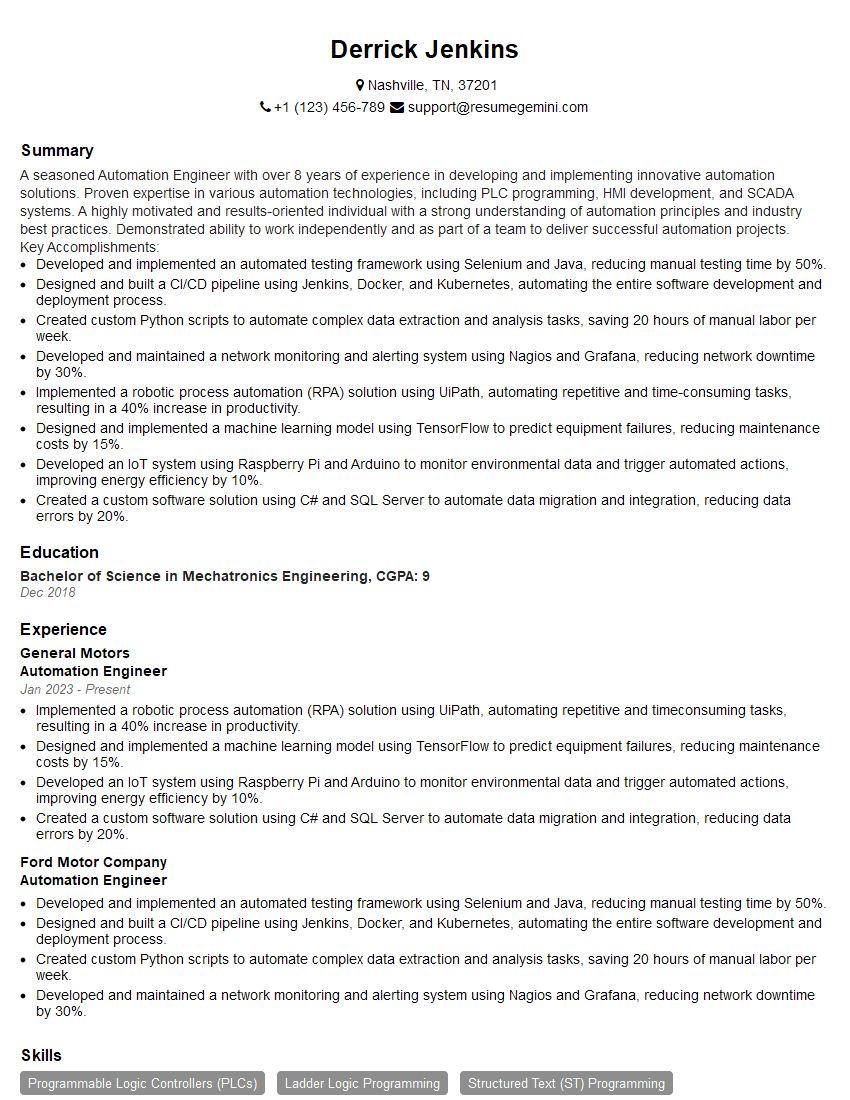
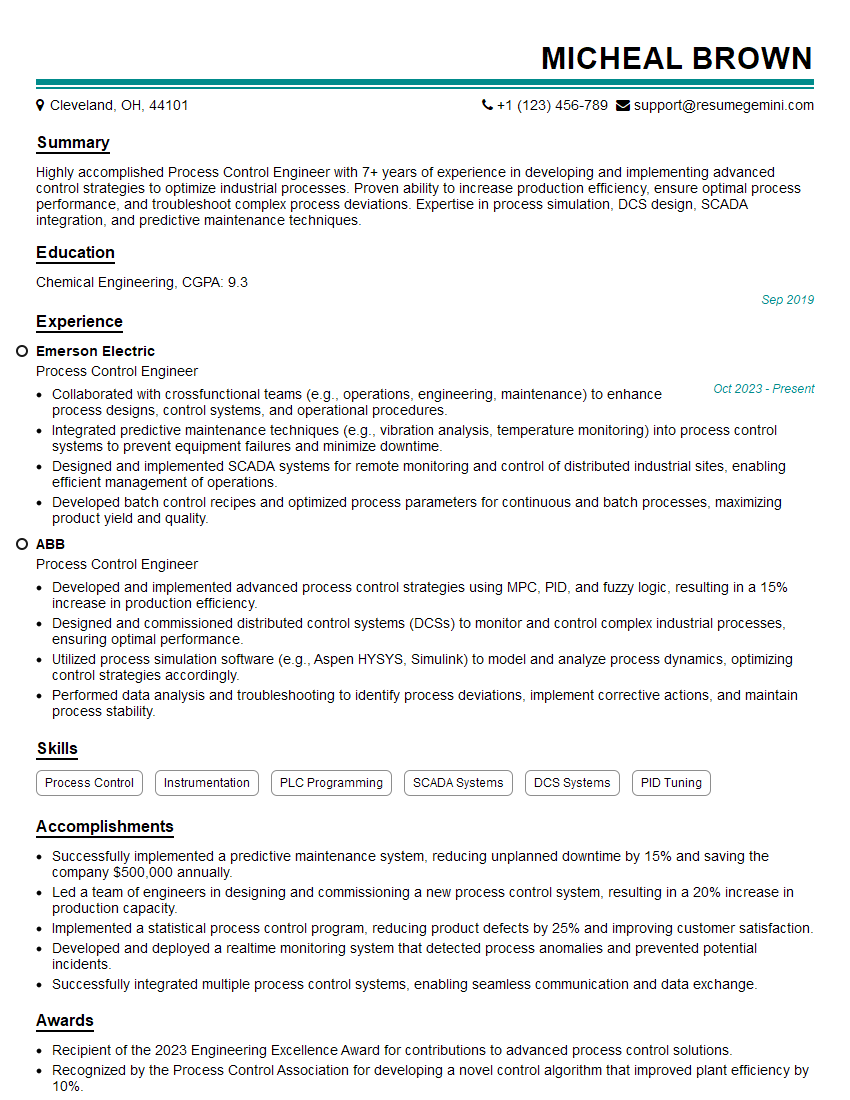
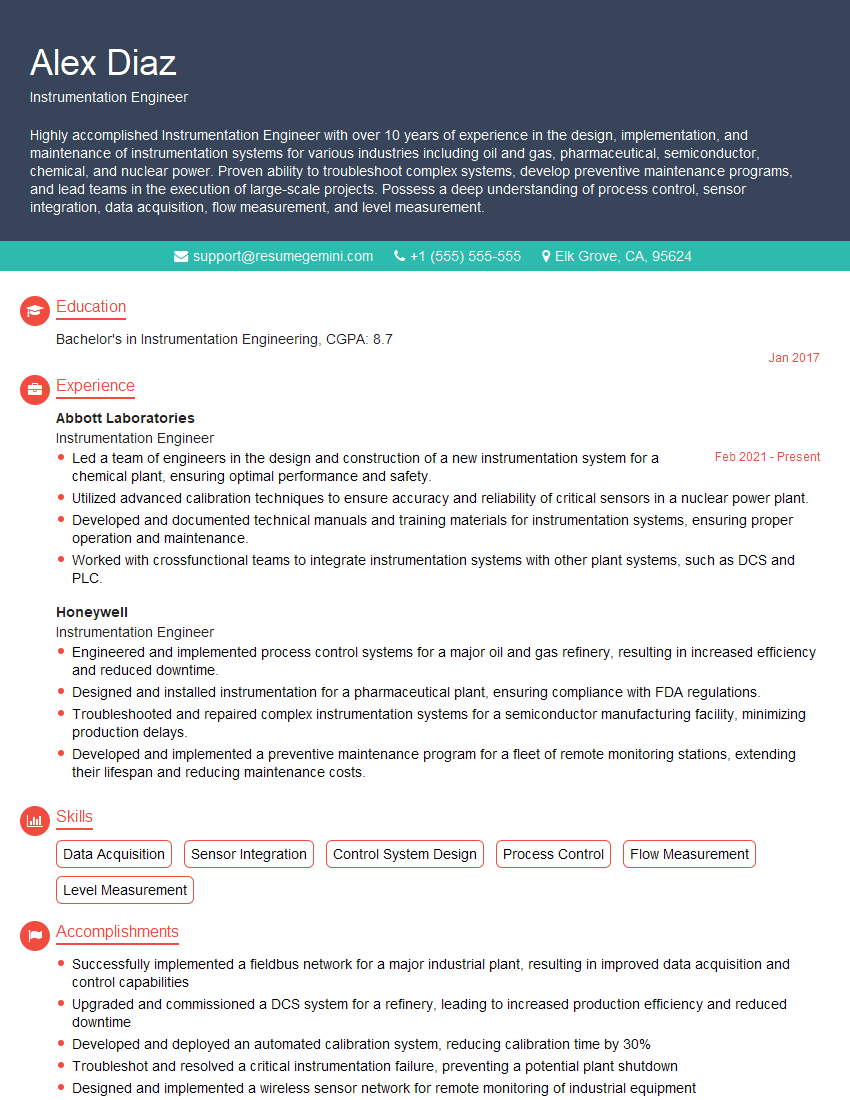
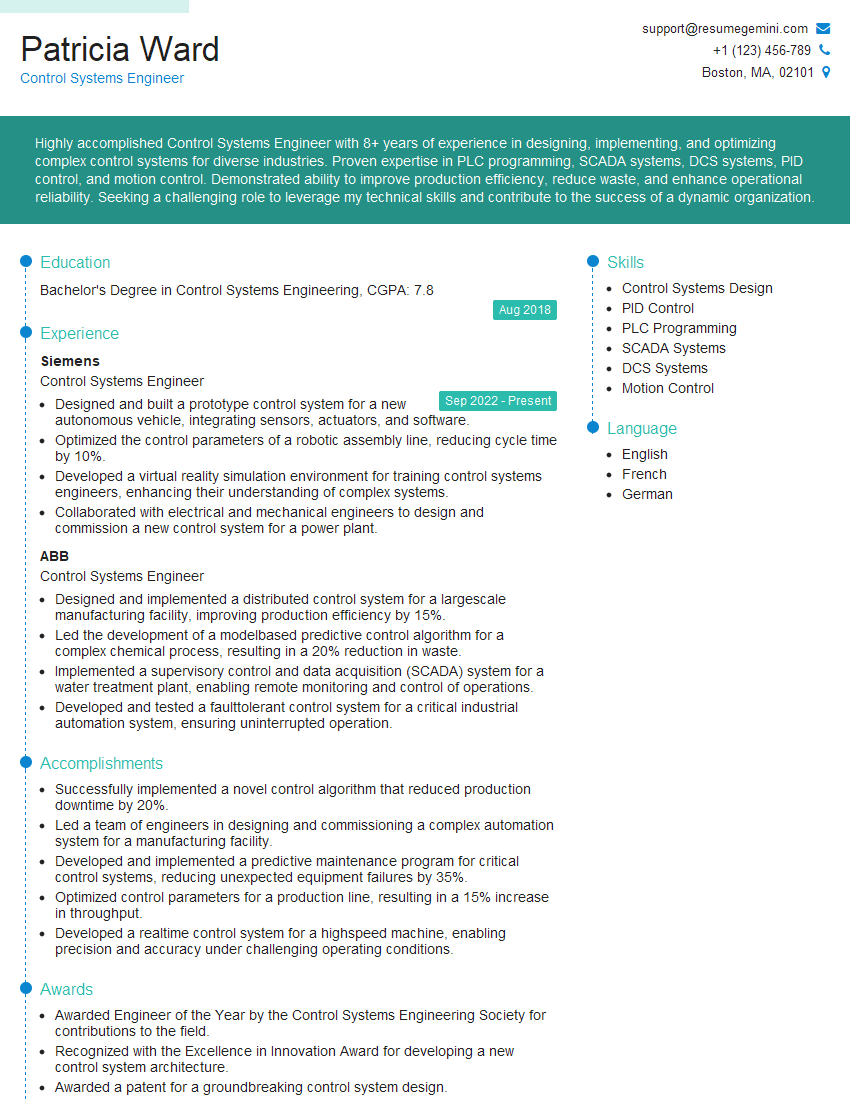
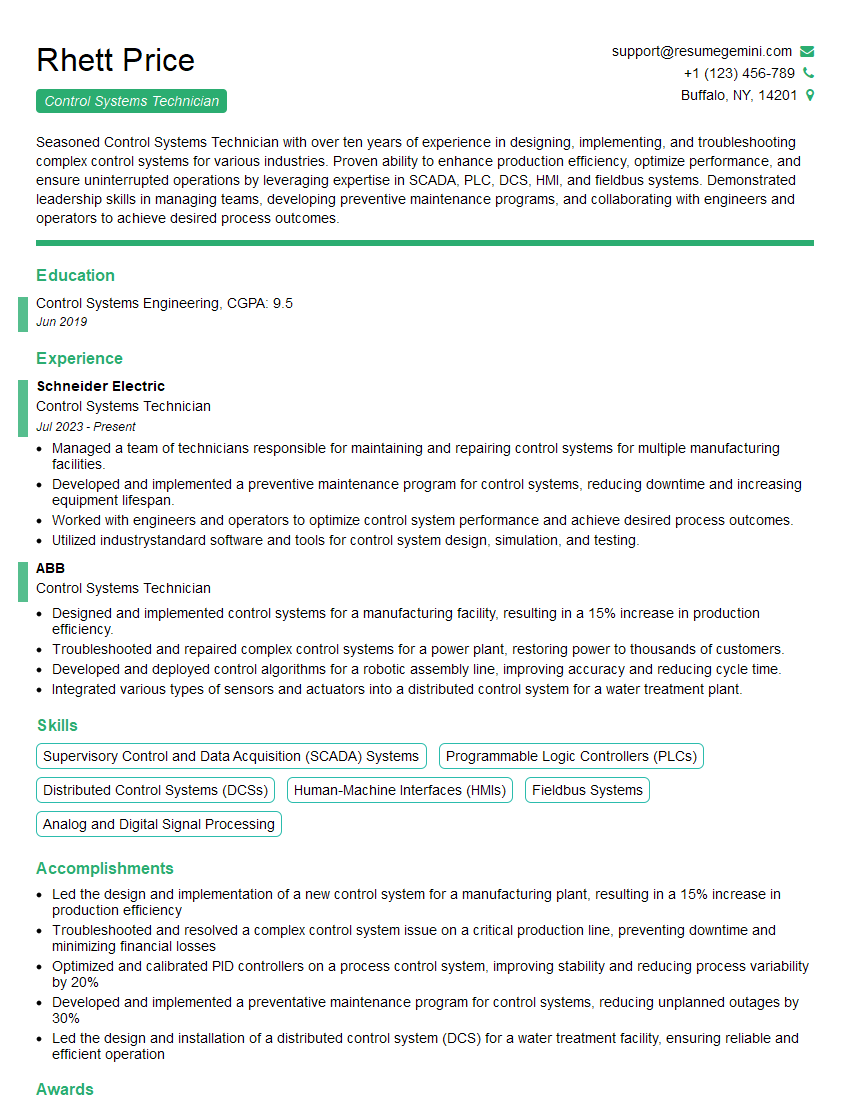
Mastering Process Control Applications significantly enhances your career prospects, opening doors to rewarding roles in various industries. A strong understanding of these principles positions you for leadership and specialized roles, offering increased earning potential and career satisfaction. To maximize your chances of securing your dream job, creating an ATS-friendly resume is crucial. ResumeGemini can help you build a compelling resume that highlights your skills and experience effectively. ResumeGemini provides examples of resumes tailored to Process Control Applications, giving you a head start in showcasing your qualifications to potential employers. Take the next step towards your ideal career – build a winning resume with ResumeGemini today.
Explore more articles
Users Rating of Our Blogs
Share Your Experience
We value your feedback! Please rate our content and share your thoughts (optional).
What Readers Say About Our Blog
To the interviewgemini.com Webmaster.
Very helpful and content specific questions to help prepare me for my interview!
Thank you
To the interviewgemini.com Webmaster.
This was kind of a unique content I found around the specialized skills. Very helpful questions and good detailed answers.
Very Helpful blog, thank you Interviewgemini team.