Preparation is the key to success in any interview. In this post, we’ll explore crucial Proficiency in Necropsy Techniques interview questions and equip you with strategies to craft impactful answers. Whether you’re a beginner or a pro, these tips will elevate your preparation.
Questions Asked in Proficiency in Necropsy Techniques Interview
Q 1. Describe the proper procedure for performing a complete necropsy on a canine.
A complete canine necropsy is a systematic examination of the animal’s body after death to determine the cause of death and identify any underlying diseases. It’s crucial to maintain meticulous records throughout the procedure.
- External Examination: Begin by noting the animal’s overall condition, including weight, body condition score, any external injuries or abnormalities, and the presence of ectoparasites. Take photos as needed.
- Incision and Evisceration: A midline incision is made from the mandible to the pubis, extending laterally to expose the rib cage. The body wall is reflected to expose the thoracic and abdominal cavities. Organs are then systematically examined in situ before removal. Note any abnormalities, such as adhesions, fluid accumulation, or masses.
- Organ Removal and Examination: Organs are removed in a specific order (typically starting with the digestive system) and examined individually. Each organ’s weight, size, color, and texture are recorded, and any lesions are carefully documented. Samples for histology and microbiology are collected at this stage.
- Head Examination: The head is examined last. This involves carefully opening the skull to examine the brain. Note the presence of any lesions or hemorrhage.
- Body Cavity Examination: After evisceration the body cavities are examined for any abnormalities. This might include foreign bodies, abscesses, or fluid.
- Documentation: Detailed photographic documentation and written notes are crucial throughout the entire procedure. A thorough report summarizing the findings is essential.
For example, observing a dilated heart might suggest congestive heart failure, while the presence of multiple intestinal ulcers might point toward inflammatory bowel disease. Every detail, however small, can provide valuable clues.
Q 2. What are the essential tools and equipment required for a necropsy?
A well-equipped necropsy lab is essential for accurate and efficient procedures. The equipment needed can vary based on the size of the animal and the specific tests being performed. However, essential tools include:
- Sharp Scalpel Blades and Scissors: For precise incisions and tissue dissection.
- Dissecting Forceps and Hemostats: For manipulating organs and controlling bleeding.
- Retractors: To maintain a clear view of the internal organs.
- Measuring Tapes and Scales: To accurately record organ weights and measurements.
- Sampling Instruments: Including biopsy punches, curettes, and syringes for collecting tissue samples.
- Specimen Containers: Formalin-filled containers for tissue fixation and other containers for microbiology samples.
- Gloves, Masks, and Protective Clothing: Essential for hygiene and personal safety.
- Camera and Lighting: To document findings with high-quality images.
- Necropsy Table: A sturdy, easily cleanable surface.
Proper sanitation is critical to prevent the spread of infectious diseases. All instruments must be sterilized between necropsies.
Q 3. Explain the differences between necropsy techniques for small and large animals.
Necropsy techniques for small and large animals share many similarities, but there are crucial differences in approach due to size and anatomical variations.
- Scale and Technique: Necropsies on small animals, like rodents or rabbits, require smaller instruments and a more delicate approach. Large animal necropsies, on the other hand, often require specialized equipment and multiple personnel, sometimes using chainsaws or other power tools for opening the carcass.
- Organ Handling: Handling internal organs from large animals demands more strength and care, due to their size and weight. Special attention must be given to prevent tearing of fragile tissues.
- Access and Exposure: Obtaining adequate access to internal organs can be more challenging in large animals. In some cases, evisceration might require specific strategies, such as ventral midline incisions.
- Safety Concerns: Larger animals pose additional safety hazards during the necropsy process. Proper safety protocols and equipment, such as protective gear, are critical to prevent injury.
For instance, a necropsy on a mouse might use fine scissors and forceps, while examining a horse might involve the use of a chainsaw to open the rib cage. Both approaches require similar rigor in observation and sampling, though.
Q 4. How do you collect and preserve samples for histopathology during a necropsy?
Collecting and preserving samples for histopathology is a critical step in necropsy. Proper handling ensures accurate diagnoses.
- Sample Selection: Select representative samples of tissues showing lesions or abnormalities. If no lesions are apparent, samples should be collected from major organs (liver, kidney, heart, lung, spleen).
- Sample Size: Tissue samples should be approximately 1 cm³ in size. Larger samples may not fixate properly.
- Fixation: Immediately place samples in 10% neutral buffered formalin (NBF) at a ratio of 10:1 (formalin:tissue). Ensure complete submersion of the tissue.
- Labeling: Clearly label each sample with the animal’s identification number, tissue type, and date. Avoid using waterproof ink directly on tissue.
- Transportation: Transport samples in leak-proof containers to prevent formalin spills and contamination.
For example, a suspected case of pneumonia would require lung samples, while a suspected case of kidney disease would require kidney samples. Proper labeling and fixation are crucial to prevent misidentification or degradation of samples.
Q 5. Describe the process of tissue fixation and its importance in necropsy.
Tissue fixation is the process of preserving tissue structure and preventing autolysis and putrefaction. It’s essential for histological examination.
Typically, 10% neutral buffered formalin (NBF) is used as a fixative. The process involves immersing the tissue samples in formalin, which cross-links proteins and stabilizes the cellular architecture. Adequate fixation requires a sufficient ratio of formalin to tissue (10:1) and sufficient immersion time (at least 24 hours, often longer for larger samples).
The importance of proper fixation cannot be overstated. Inadequate fixation leads to tissue artifacts, making histological interpretation difficult or impossible. This can result in inaccurate diagnoses and potentially compromise the value of the entire necropsy.
Imagine trying to assemble a puzzle with some pieces crumbled or missing – the picture would be incomplete and misleading. Similarly, poorly fixed tissue makes it impossible to ascertain the true pathological changes.
Q 6. What are the common postmortem changes observed during a necropsy?
Postmortem changes are alterations that occur in the body after death. Recognizing these changes is crucial to differentiate them from antemortem lesions.
- Rigor Mortis: Stiffening of muscles due to depletion of ATP. This begins soon after death and gradually resolves.
- Algor Mortis: Cooling of the body to ambient temperature.
- Livor Mortis: Gravitational pooling of blood in dependent areas, causing discoloration of the skin.
- Autolysis: Self-digestion of tissues by enzymes released from cells after death.
- Putrefaction: Decomposition of tissues by bacteria and other microorganisms.
The rate at which these changes occur is influenced by environmental factors such as temperature and humidity. Understanding these changes is crucial to interpret necropsy findings accurately.
Q 7. How do you differentiate between antemortem and postmortem lesions?
Differentiating between antemortem and postmortem lesions is vital for accurate diagnosis. This requires careful observation and a thorough understanding of both pathological processes.
- Antemortem Lesions: These lesions develop before death. They often show evidence of an inflammatory or reparative response, such as cellular infiltration, fibrosis, or granulation tissue.
- Postmortem Lesions: These lesions develop after death and generally lack the signs of a host response. For example, postmortem blood clots are typically smooth and gelatinous, while antemortem thrombi are often rough and irregular.
For example, a sharply demarcated area of hemorrhage with surrounding inflammation would strongly suggest an antemortem event (trauma, for example), while a diffuse, non-inflammatory discoloration would likely indicate postmortem blood pooling. The context of the findings and correlation with other observations are essential to make this determination.
Q 8. Explain the significance of gross necropsy findings.
Gross necropsy findings are the macroscopic observations made during a necropsy, before any microscopic examination. These are crucial because they provide the initial clues about the cause of death or disease. Think of it like a detective’s first look at a crime scene – it sets the stage for further investigation. These observations significantly influence the direction of further diagnostic testing, such as histopathology or microbiology.
For example, observing a large, firm mass in the liver might suggest a tumor. The presence of fluid in the chest cavity (hydrothorax) indicates a possible cardiovascular or pulmonary issue. The color and consistency of organs – a pale liver suggestive of anemia or a congested lung indicating heart failure – are all critical components of the gross findings. The detailed description of these observations forms the foundation of the necropsy report.
Q 9. Describe your experience with various necropsy techniques (e.g., avian, aquatic).
My experience encompasses a wide range of necropsy techniques, including those for avian, aquatic, and mammalian species. Working with avian species requires a delicate approach due to their smaller size and fragile bones. Specific techniques, such as using smaller instruments and careful dissection of air sacs, are essential. Aquatic species present unique challenges related to handling and preservation; proper techniques are required to minimize autolysis and artifacts. For instance, in fish necropsy, special attention is given to the gills and swim bladder. Mammalian necropsies follow more standardized procedures, but the approach is still species-specific, adapting to size, anatomical differences, and potential biohazards.
I’ve conducted necropsies on various species, from small rodents and birds to larger mammals and fish. Each species requires a unique approach, demanding meticulous attention to detail and anatomical knowledge. This diverse experience has allowed me to adapt my techniques to diverse situations, ensuring accurate and efficient examination in every case.
Q 10. How do you document your findings during a necropsy?
Thorough documentation is paramount in necropsy. My approach uses a standardized format incorporating both written descriptions and photographic evidence. The written record includes detailed descriptions of external findings (body condition, lesions), internal findings (organ weights, size, color, and consistency), and any other relevant observations. For example, I might note ‘Liver: 200g, mottled pale appearance with multiple 1-2cm firm nodules.’ I support this with high-quality photographs that capture the gross lesions from multiple angles and close-ups to emphasize important details. This detailed documentation ensures the findings are clear, comprehensive, and reproducible. All documentation is securely stored and retrievable in a manner compliant with relevant regulations and data protection laws.
Q 11. What are the safety protocols you follow during a necropsy?
Safety is my utmost priority. My protocols adhere to strict biosafety guidelines, starting with appropriate personal protective equipment (PPE). This includes gloves, lab coats, eye protection, and in some cases, masks and respirators, depending on the suspected pathogens. Sharp instruments are handled carefully, and all waste materials are disposed of according to biohazard protocols, ensuring proper sterilization and incineration. The necropsy table is routinely disinfected, and all work is performed within a designated area to prevent cross-contamination. I’m also trained in managing potential exposure incidents and adhere to the relevant emergency response protocols.
Q 12. How do you handle infectious samples during a necropsy?
Handling infectious samples requires meticulous care. Samples are collected and handled using strict aseptic techniques. This involves using sterile instruments, dedicated containers, and proper labeling. Samples are immediately placed into appropriate transport media to prevent degradation and maintain the viability of any pathogens. For example, samples suspected of containing highly infectious agents (e.g., rabies) are handled in a biosafety cabinet under strict containment protocols, with dedicated PPE, and according to established local safety guidelines. Each sample is carefully labelled with unique identifiers linking back to the animal and the necropsy record. All procedures are performed within a designated biosafety area.
Q 13. Explain your understanding of different types of tissue samples and their collection methods.
The types of tissue samples collected depend on the suspected cause of death and the diagnostic questions posed. Common samples include liver, kidney, lung, spleen, heart, brain, and lymph nodes. Collection methods vary depending on the tissue. For example, liver samples are typically collected using a sterile scalpel or biopsy punch, ensuring a representative sample. Lung tissue might be collected by taking wedge biopsies. In certain cases, specific techniques are necessary – such as collecting cerebrospinal fluid via cisternal puncture (a spinal tap) for the brain. Each sample is meticulously labeled and preserved appropriately, either in formalin for histopathology or in specific transport media for microbiology and toxicology tests. The choice of preservation method is crucial for the integrity of the sample and the accuracy of the subsequent analysis.
Q 14. Describe your experience with interpreting necropsy results.
Interpreting necropsy results requires a comprehensive understanding of anatomy, pathology, and disease processes. I correlate gross findings with histopathological results, microbiological cultures, and any other supplementary tests (toxicology, immunohistochemistry). For example, observing macroscopic evidence of liver damage during a necropsy, which is supported by microscopic evidence of inflammation and necrosis in the liver tissue and confirmed by the presence of a specific bacteria through culture, leads to a definitive diagnosis. The interpretation involves a thorough evaluation of all gathered data, ensuring a coherent and accurate diagnosis that explains the cause of death or disease. This often requires integrating various scientific disciplines, and experience is crucial in synthesizing the information effectively and avoiding misinterpretations.
Q 15. How do you handle unexpected findings during a necropsy?
Unexpected findings during a necropsy are common and require a systematic approach. My response involves meticulously documenting the unexpected finding, regardless of its apparent significance. This involves detailed photographic documentation, precise location notations within the body, and careful collection of samples for further analysis (histopathology, microbiology, toxicology etc.).
For example, if I find an unusual mass during a routine avian necropsy, I wouldn’t simply dismiss it. Instead, I would photograph it in situ, note its size, location, color, and consistency. I would then carefully excise it, preserving a portion in formalin for histopathology to determine its cellular composition, and another portion in a sterile container for bacterial culture if infection is suspected. The rest of the necropsy would proceed systematically to explore potential connections between this finding and any other observations. This thorough approach ensures that no crucial information is missed and allows for a more comprehensive diagnosis, even when facing the unexpected.
Further investigation might involve consultation with other specialists if the findings suggest a rare disease or a previously unknown condition. This collaborative approach ensures the most accurate interpretation and contributes to the advancement of veterinary pathology knowledge.
Career Expert Tips:
- Ace those interviews! Prepare effectively by reviewing the Top 50 Most Common Interview Questions on ResumeGemini.
- Navigate your job search with confidence! Explore a wide range of Career Tips on ResumeGemini. Learn about common challenges and recommendations to overcome them.
- Craft the perfect resume! Master the Art of Resume Writing with ResumeGemini’s guide. Showcase your unique qualifications and achievements effectively.
- Don’t miss out on holiday savings! Build your dream resume with ResumeGemini’s ATS optimized templates.
Q 16. Describe your proficiency in using different types of microscopes in a pathology lab.
My experience with microscopy spans across several platforms. I’m proficient with brightfield microscopy, crucial for routine histopathological examination of tissue sections stained with Hematoxylin and Eosin (H&E) or special stains. This allows for visualization of cellular architecture, tissue organization and the identification of various pathologies. I also have extensive experience with fluorescence microscopy, vital for immunohistochemistry (IHC) and immunofluorescence (IF) techniques, enabling the detection and localization of specific proteins within tissues. This aids in diagnosis of various infectious and non-infectious diseases.
Furthermore, I have practical experience with polarized light microscopy which is invaluable in examining birefringent materials like crystals or amyloid deposits. Finally, I am adept at using electron microscopy (both transmission and scanning), allowing for ultrastructural analysis at the cellular and sub-cellular level providing high resolution imaging. This is essential for detecting subtle changes associated with some diseases that are difficult to visualize using standard light microscopy. In all cases, I adhere to strict protocols for microscope maintenance and calibration to ensure accurate and reliable results.
Q 17. How familiar are you with different types of staining techniques used in pathology?
My familiarity with staining techniques in pathology is extensive. I routinely employ H&E staining for general tissue morphology assessment. Beyond H&E, I’m proficient in a wide range of special stains including:
- Periodic acid-Schiff (PAS): Used to detect carbohydrates and glycogen.
- Gram stain: Differentiates between gram-positive and gram-negative bacteria.
- Acid-fast stain: Detects acid-fast organisms like Mycobacterium tuberculosis.
- Giemsa stain: Useful for visualizing blood parasites and other microorganisms.
- Silver stains: Detect fungi, spirochetes, and amyloid deposits.
- Immunohistochemical (IHC) stains: Allows for the visualization of specific proteins in tissues using labeled antibodies.
The choice of staining technique depends on the suspected diagnosis and the type of tissue being examined. I understand the principles underlying each technique and can troubleshoot issues that may arise during staining procedures ensuring accurate interpretation of results.
Q 18. What is your experience with digital imaging and documentation of necropsy findings?
Digital imaging and documentation are integral to modern necropsy procedures. I’m highly proficient in using various digital cameras and imaging software to capture high-resolution images and videos of gross necropsy findings, microscopic sections, and prepared specimens. I employ standardized methods for image annotation and storage. This ensures consistent, reproducible, and easily retrievable records. Our lab uses a dedicated Picture Archiving and Communication System (PACS) which allows for efficient organization, secure storage, and easy retrieval of images for review, consultation, or archival purposes.
For example, when documenting a cardiac lesion, I would capture multiple images at different magnifications and angles, meticulously annotating each image with relevant information such as the species, animal identification number, date, tissue type, and description of the lesion. This detail-oriented approach greatly assists in diagnosis and communication with colleagues or referring veterinarians.
Q 19. What are the ethical considerations involved in performing necropsies?
Ethical considerations in necropsy practice are paramount. Respect for the animal, even in death, is fundamental. Procedures must adhere to established guidelines for animal welfare, minimizing any unnecessary procedures. All work must be conducted with the utmost care and professionalism.
Obtaining informed consent, where appropriate, (such as from pet owners or research sponsors), prior to initiating the necropsy is ethically crucial. This includes transparently explaining the purpose of the procedure and any potential risks or benefits. Confidentiality of findings is also essential, only releasing information to authorized personnel and following established protocols for data security and privacy.
The use of animals in research necessitates strict adherence to ethical guidelines. Necropsies in research settings are crucial for evaluating experimental treatments or assessing disease models, but the welfare of the animals must always be prioritized.
Q 20. Explain your understanding of the legal aspects related to necropsy procedures (if applicable).
The legal aspects surrounding necropsies vary depending on jurisdiction and circumstances. In many cases, necropsies are conducted under specific legal frameworks, especially when related to forensic investigations or suspected animal abuse. It is crucial to understand and adhere to all applicable laws and regulations governing the collection, handling, storage and disposal of specimens and the documentation of findings.
In cases of suspected animal cruelty, for instance, thorough documentation, preservation of evidence, and chain of custody are critical. Collaboration with law enforcement agencies may be required, necessitating strict adherence to legal protocols. Similarly, necropsies related to food safety or public health outbreaks require compliance with specific regulations and procedures to ensure accurate and timely reporting of findings.
Maintaining accurate and detailed records is paramount; these records can be crucial in legal proceedings, providing evidence of professional conduct and assisting in the establishment of causality or in determining the cause of death.
Q 21. Describe your experience with quality control procedures in a pathology lab.
Quality control (QC) in pathology is essential for reliable results and accurate diagnoses. Our lab employs a multi-faceted approach to QC, encompassing every stage of the necropsy and histological processing. This includes regular calibration and maintenance of all equipment, including microscopes, staining machines, and autoclaves. We use control tissues with known characteristics to monitor the performance of staining procedures and other assays. Internal audits are conducted regularly to review procedures and ensure compliance with quality standards.
Participation in external quality assessment (EQA) programs is also integral to our QC strategy. These programs provide external validation of our techniques and identify areas for potential improvement. Our documentation, both of the necropsy procedures and resulting findings, undergoes rigorous review to maintain accuracy, thoroughness and consistency. All personnel receive continuous professional development to keep abreast of best practices and advances in necropsy techniques and pathology ensuring high quality of work.
Q 22. How do you troubleshoot common problems encountered during a necropsy?
Troubleshooting during a necropsy involves a systematic approach, much like detective work. It begins with careful observation and documentation. Common problems include organ degradation, making identification difficult. This can be addressed by using appropriate preservation techniques, such as refrigeration and formalin fixation, and by employing meticulous dissection strategies to fully visualize the affected areas.
Another common issue is incomplete sample collection. This is mitigated by having a detailed necropsy protocol and checklist, ensuring all relevant tissues and fluids are collected. If a specific organ is difficult to locate due to its size or position, we can consult anatomical atlases or images, or potentially perform a second more thorough examination of the body cavities.
Finally, instrument malfunction can hinder the process. This necessitates regular maintenance of instruments and, as a precaution, having backup equipment readily available during a necropsy. For example, a dull scalpel blade can compromise the accuracy of dissection, potentially leading to missed lesions. This situation demands prompt replacement with a sharpened blade.
Q 23. Describe your experience with working as part of a pathology team.
My experience working within pathology teams has been incredibly collaborative and enriching. I’ve been involved in various projects, from routine necropsies on a variety of species to complex diagnostic investigations. I thrive in team environments because a successful necropsy often requires diverse expertise, such as histopathology, microbiology, and toxicology. For example, on a recent case involving a suspected toxin exposure, my role in performing the necropsy and collecting samples was crucial, but the subsequent analysis by our toxicology team provided the conclusive diagnosis. I value open communication and the opportunity to learn from colleagues’ strengths and insights.
I am comfortable both leading a necropsy team and contributing as a valuable member, assisting in data interpretation and reporting. This collaborative aspect is vital in generating precise and comprehensive reports, contributing to the overarching understanding of the cause of death or disease.
Q 24. What is your approach to continuous learning and professional development in the field of necropsy?
Continuous learning is paramount in this dynamic field. My approach involves a multi-faceted strategy. I actively participate in professional development workshops and conferences focused on advanced necropsy techniques and emerging technologies. For instance, I recently attended a course on advanced imaging techniques used in veterinary pathology, expanding my diagnostic capabilities. I also regularly read peer-reviewed journals and textbooks to stay abreast of the latest research and best practices. It’s important to keep expanding knowledge in related fields like histology and pathology to ensure more holistic diagnosis.
Further, seeking mentorship from experienced pathologists is invaluable. This includes both observing experienced colleagues perform necropsies and engaging in discussions about challenging cases, which helps to refine my technique and problem-solving skills. This collaborative learning environment fosters a sense of continuous improvement and refinement.
Q 25. How do you stay updated with the latest advancements in necropsy techniques and procedures?
Staying updated involves active engagement with professional organizations like the American College of Veterinary Pathologists (ACVP). This includes subscriptions to relevant journals like the Veterinary Pathology, attending webinars and online courses, and participating in online forums and discussions. These resources provide insights into the newest research, techniques, and case studies. I also follow leading researchers and institutions in the field, allowing me to be notified of new discoveries and publications through their online platforms.
Besides this, participating in workshops that cover emerging technologies is essential. For example, recent advances in molecular pathology offer new approaches to diagnostics. Keeping updated on such advancements ensures my skills remain relevant and cutting-edge.
Q 26. Describe a challenging necropsy case you encountered and how you addressed it.
One particularly challenging case involved a young, seemingly healthy dog that presented with sudden death. The initial external examination revealed no obvious causes. However, during the necropsy, I discovered subtle petechial hemorrhages in the heart and lungs, along with mild splenomegaly. This hinted at a possible systemic illness, but the lack of more prominent lesions made the cause unclear.
To address this, we took a multifaceted approach. Histopathological examination of the tissues revealed microthrombi (small blood clots) in the blood vessels, which pointed toward disseminated intravascular coagulation (DIC). Further investigation into the animal’s history revealed no clear trigger for DIC, highlighting the importance of understanding the subtle findings of a necropsy and correlating those with more targeted lab tests. This case highlighted the critical role of thorough examination and the integration of ancillary diagnostic tests in reaching a definitive diagnosis.
Q 27. How would you handle a situation where you discover evidence of animal cruelty during a necropsy?
Discovering evidence of animal cruelty during a necropsy is a serious matter, both ethically and legally. My first step would be to meticulously document all findings with photographs and detailed descriptions. This documentation is crucial for any subsequent investigation. The specific injuries and their severity must be documented and precisely described in the necropsy report. The report should follow standard procedures but emphasize the details related to the potential abuse.
I would then immediately report my findings to the appropriate authorities, such as animal control or law enforcement. My role is to provide objective, factual evidence, and I would cooperate fully with their investigation. Maintaining the integrity of the evidence, and not making assumptions or judgments, would be paramount in the reporting and handling of this situation.
Q 28. What are your salary expectations for this role?
My salary expectations are commensurate with my experience and qualifications in the field of necropsy, taking into account the specific demands of this role and the prevailing market rates for similarly experienced professionals in this specialized area. I am open to discussing this further in detail and would appreciate the opportunity to learn more about the compensation and benefits package offered with this position.
Key Topics to Learn for Proficiency in Necropsy Techniques Interview
- Aseptic Techniques and Biosecurity: Understanding and applying sterile procedures to maintain sample integrity and prevent contamination during the necropsy process. This includes proper disinfection protocols and personal protective equipment (PPE) usage.
- External Examination and Gross Pathology: Mastering the systematic approach to external examination, including accurate documentation of macroscopic findings like lesions, trauma, and body condition. Practical application includes detailed descriptions and photographic documentation.
- Internal Examination and Organ Harvesting: Developing proficiency in the precise dissection and organ retrieval techniques for various species. This includes understanding anatomical variations and appropriate sampling methods for histological and microbiological analysis.
- Sample Collection and Preservation: Understanding appropriate methods for collecting and preserving tissues, fluids, and other specimens for subsequent laboratory analysis. This includes selecting appropriate fixatives and storage conditions to maintain sample integrity.
- Data Documentation and Reporting: Developing clear and concise reporting skills, accurately documenting findings and observations in a standardized format. This includes generating comprehensive necropsy reports that are both detailed and readily understandable.
- Troubleshooting and Problem-Solving: Developing the ability to identify and resolve challenges encountered during the necropsy procedure, such as unexpected findings or technical difficulties. This includes critical thinking skills and the ability to adapt techniques as needed.
- Regulatory Compliance and Ethical Considerations: Understanding and adhering to relevant regulations and ethical guidelines concerning animal welfare and the handling of biological materials. This includes following established protocols and maintaining appropriate documentation.
Next Steps
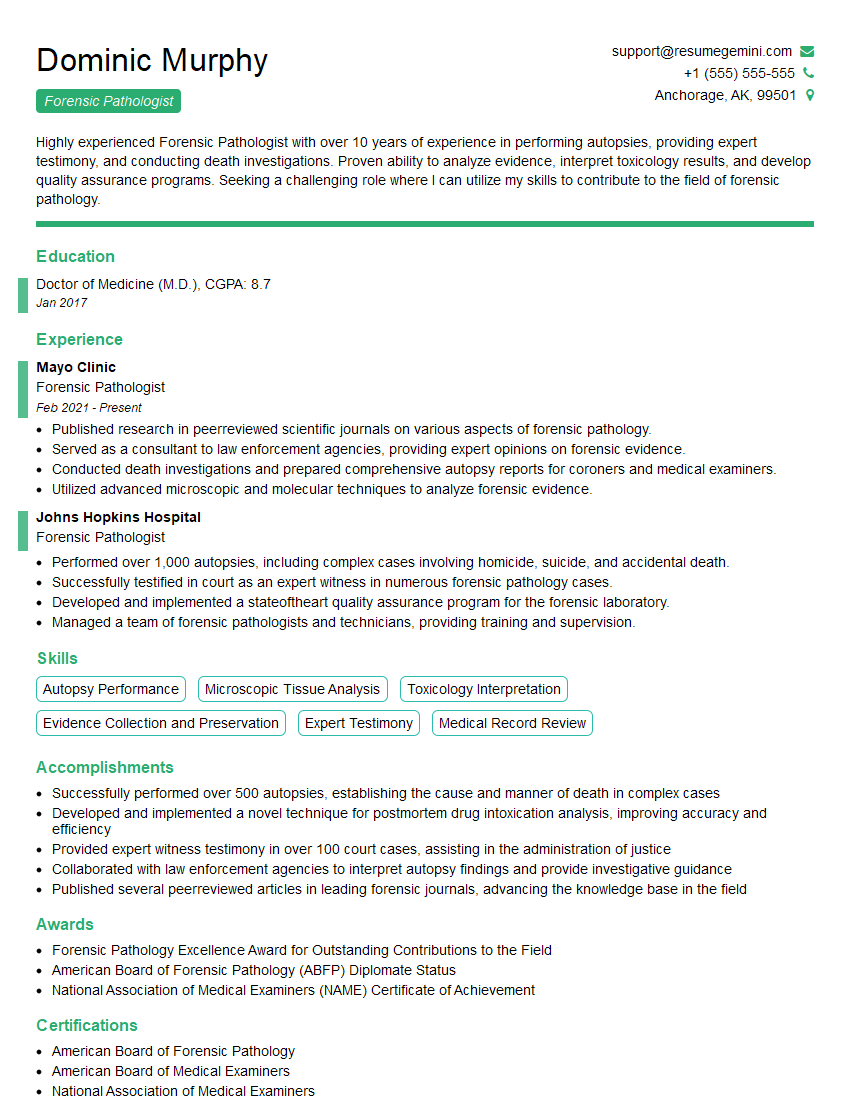
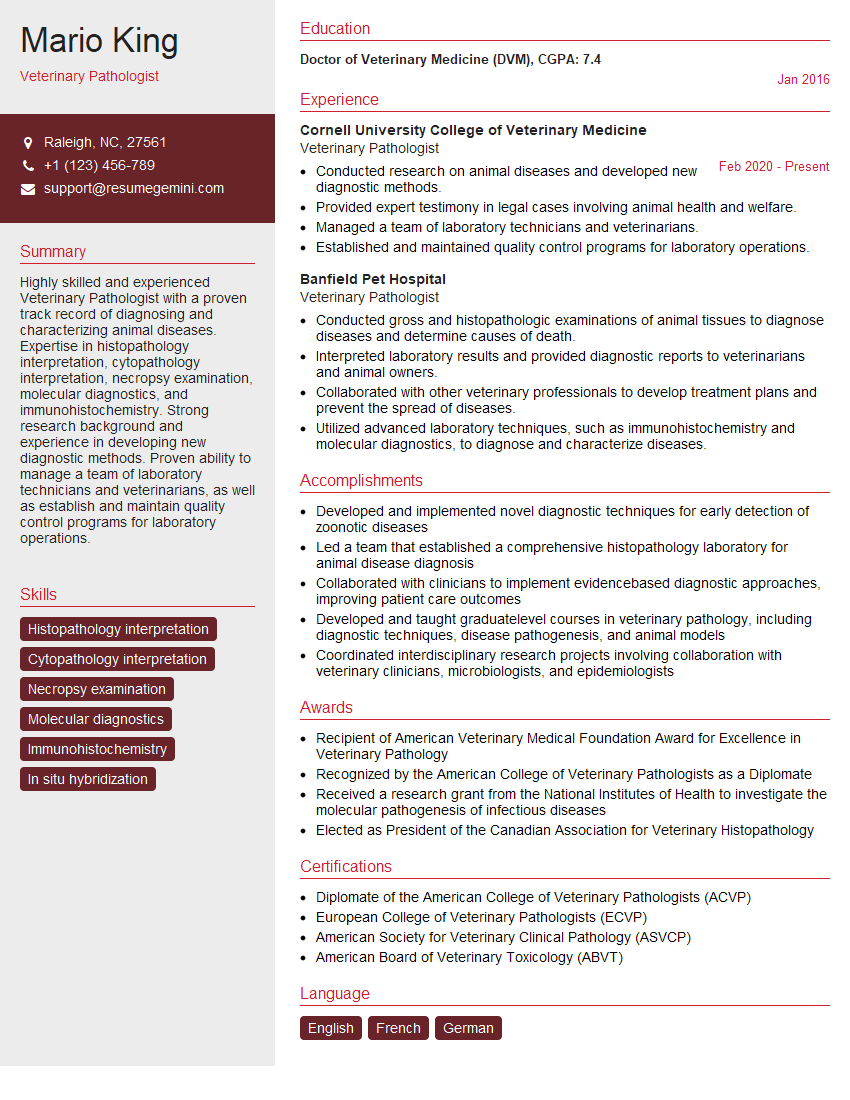
Mastering proficiency in necropsy techniques is crucial for career advancement in veterinary pathology, research, and forensic science. A strong foundation in these skills opens doors to exciting opportunities and allows you to make significant contributions to your field. To maximize your job prospects, create an ATS-friendly resume that highlights your key skills and accomplishments. ResumeGemini is a trusted resource that can help you build a professional and impactful resume. Examples of resumes tailored to Proficiency in Necropsy Techniques are provided to help guide you in crafting your own.
Explore more articles
Users Rating of Our Blogs
Share Your Experience
We value your feedback! Please rate our content and share your thoughts (optional).
What Readers Say About Our Blog
To the interviewgemini.com Webmaster.
Very helpful and content specific questions to help prepare me for my interview!
Thank you
To the interviewgemini.com Webmaster.
This was kind of a unique content I found around the specialized skills. Very helpful questions and good detailed answers.
Very Helpful blog, thank you Interviewgemini team.