Unlock your full potential by mastering the most common Team communication and leadership interview questions. This blog offers a deep dive into the critical topics, ensuring you’re not only prepared to answer but to excel. With these insights, you’ll approach your interview with clarity and confidence.
Questions Asked in Team communication and leadership Interview
Q 1. Describe your experience fostering open communication within a team.
Fostering open communication is paramount for a high-performing team. It’s not just about talking; it’s about creating a safe and inclusive environment where everyone feels comfortable sharing ideas, concerns, and feedback, without fear of judgment or retribution. My approach is multifaceted:
- Regular Check-ins: I implement regular team meetings, both formal and informal. Formal meetings have agendas to ensure productivity, while informal ‘coffee chats’ encourage casual conversations and relationship building.
- Transparent Communication: I believe in open-door policies and proactive communication. I ensure everyone is informed about project updates, challenges, and successes in a timely manner. This might involve using project management tools to share updates visibly.
- Active Listening: I prioritize active listening during conversations. This means paying attention not just to what’s said, but also to body language and unspoken cues. I ask clarifying questions to ensure understanding and encourage others to do the same.
- Feedback Mechanisms: I actively solicit feedback through anonymous surveys, one-on-one meetings, and team retrospectives. This provides valuable insight into team dynamics and areas for improvement.
- Using the Right Tools: Selecting the appropriate communication tools is crucial. For example, using a project management software (like Asana or Trello) for task management, and a communication platform (like Slack or Microsoft Teams) for quick updates and discussions, prevents communication silos.
For example, in my previous role, implementing regular feedback sessions led to a 20% improvement in team morale and a 15% increase in project completion efficiency.
Q 2. How do you handle conflict resolution within a team setting?
Conflict is inevitable in any team, but how it’s handled determines the team’s overall success. My approach focuses on early intervention, collaborative problem-solving, and focusing on the issue, not the individuals involved. I employ the following steps:
- Identify the Root Cause: I work to understand the underlying issue causing the conflict. This often involves active listening to all parties involved.
- Create a Safe Space: I facilitate a discussion where all parties feel heard and respected. I ensure everyone understands the importance of focusing on solutions rather than assigning blame.
- Collaborative Problem Solving: I guide the team towards a solution collaboratively, encouraging brainstorming and compromise. The goal is to find a mutually acceptable outcome.
- Document and Follow Up: Once a solution is agreed upon, I ensure it’s documented clearly. I then follow up to ensure the solution is being implemented effectively and address any further challenges.
For instance, in a past project, a conflict arose between the design and engineering teams regarding project timelines. By facilitating a collaborative meeting where both sides explained their concerns, we identified a bottleneck in the workflow and implemented changes that ultimately saved the project from delay.
Q 3. Explain your approach to delegating tasks effectively.
Effective delegation involves more than just assigning tasks; it’s about empowering team members to succeed. My approach centers around matching tasks to individual skills and strengths, providing clear expectations, and offering support throughout the process.
- Assess Skills and Strengths: I carefully assess each team member’s skills and experience before assigning tasks. This ensures they are given tasks they’re capable of handling and are likely to find engaging.
- Provide Clear Instructions: I communicate clear expectations about the task, including deadlines, deliverables, and required resources. This reduces ambiguity and ensures everyone is on the same page.
- Offer Support and Guidance: I offer regular check-ins and provide support as needed. This ensures they don’t feel overwhelmed and can seek assistance when required.
- Empowerment and Trust: I trust my team members to complete their tasks independently, providing autonomy where appropriate. This fosters ownership and increases motivation.
- Regular Feedback: I provide regular feedback on progress and performance. This helps identify any roadblocks early and allows for timely adjustments.
For example, I once delegated a complex data analysis project to a team member with strong analytical skills. I provided clear guidelines, regular check-ins, and constructive feedback throughout the process, resulting in the successful completion of the project ahead of schedule.
Q 4. How do you motivate team members to achieve common goals?
Motivating a team requires understanding individual needs and providing opportunities for growth and recognition. My approach focuses on creating a positive and supportive work environment, celebrating successes, and offering opportunities for professional development.
- Recognition and Appreciation: I regularly acknowledge and appreciate individual and team accomplishments, both big and small. This can be through verbal praise, written thank-you notes, or public recognition.
- Clear Goals and Objectives: I ensure team members understand the project’s goals and how their individual contributions contribute to the larger picture. This fosters a sense of purpose and ownership.
- Empowerment and Autonomy: I provide team members with autonomy to make decisions and take ownership of their work. This fosters a sense of responsibility and increases engagement.
- Opportunities for Growth: I create opportunities for professional development, including training, mentorship, and challenging assignments. This helps team members enhance their skills and advance their careers.
- Positive and Supportive Environment: I cultivate a positive and supportive work environment where everyone feels valued, respected, and comfortable taking risks.
In one instance, by implementing a system of regular recognition and providing opportunities for skill development, we saw a significant increase in team productivity and overall job satisfaction.
Q 5. What strategies do you use to build strong team cohesion?
Building strong team cohesion requires cultivating trust, fostering collaboration, and creating a sense of shared purpose. My strategies include team-building activities, clear communication, and fostering a culture of inclusivity.
- Team Building Activities: I organize regular team-building activities, both work-related and social. These activities can range from problem-solving exercises to informal social gatherings.
- Encouraging Collaboration: I encourage collaboration by creating opportunities for team members to work together on projects and share their expertise.
- Open Communication: I foster open communication by creating a safe space where team members feel comfortable sharing their ideas and concerns.
- Shared Goals and Vision: I clearly articulate the team’s goals and vision, ensuring everyone understands their role in achieving them. This creates a sense of shared purpose and collective responsibility.
- Celebrating Successes: I celebrate team successes to build morale and reinforce a sense of accomplishment.
In a previous project, implementing team-building exercises and collaborative problem-solving sessions significantly improved team dynamics and resulted in increased efficiency and project success.
Q 6. How do you provide constructive feedback to team members?
Constructive feedback is crucial for individual and team growth. My approach is to focus on specific behaviors, provide actionable suggestions for improvement, and maintain a supportive and respectful tone. I follow these guidelines:
- Be Specific: Instead of general statements, I focus on specific behaviors or incidents. For example, instead of saying ‘You’re not a good communicator,’ I might say, ‘In the last meeting, your presentation could have benefitted from more concise bullet points.’
- Focus on Behavior, Not Personality: I address the individual’s actions rather than making assumptions about their personality. This avoids defensiveness and encourages receptiveness to feedback.
- Provide Actionable Suggestions: I offer concrete suggestions for improvement. For instance, I might suggest attending a presentation skills workshop or reading articles on effective communication techniques.
- Balance Positive and Negative Feedback: I always start with positive feedback to create a supportive environment. I then follow up with constructive criticism and suggestions.
- Be Timely: I provide feedback as soon as possible after the event, while the details are still fresh in everyone’s mind.
- Two-Way Conversation: I make sure feedback is a conversation, not a monologue. I actively listen to their perspective and address their concerns.
For example, when providing feedback on a report, I would start by highlighting its strong points before suggesting improvements in data visualization or clarity.
Q 7. Describe a situation where you had to manage a team under pressure.
In my previous role, we faced a major project deadline crunch when a key supplier unexpectedly delayed a crucial component. The team was under immense pressure to deliver on time, and morale was starting to dip. I addressed the situation by:
- Open Communication: I immediately addressed the team, openly discussing the situation and its implications. Transparency helped to alleviate some of the anxiety.
- Re-prioritization: We collaboratively re-prioritized tasks, focusing on the most critical deliverables first. This ensured we focused our efforts effectively.
- Resource Allocation: I strategically reallocated team members to areas where they were most needed, leveraging individual strengths effectively.
- Extended Working Hours (with flexibility): While we worked extra hours to meet the deadline, I emphasized the importance of breaks and work-life balance to avoid burnout. I offered flexible working arrangements to support this.
- Celebrating Small Wins: We celebrated small milestones achieved along the way, boosting team morale and reinforcing a sense of progress.
Through proactive communication, strategic planning, and a focus on team well-being, we successfully delivered the project on time, even under significant pressure. The experience reinforced the importance of clear communication, adaptability, and maintaining a positive and supportive team environment during challenging times.
Q 8. How do you measure team performance and identify areas for improvement?
Measuring team performance goes beyond simply looking at individual contributions. It requires a holistic approach that considers both quantitative and qualitative data. I typically use a multi-faceted approach:
Key Performance Indicators (KPIs): These are quantifiable metrics directly tied to team goals. For example, in a software development team, KPIs might include lines of code completed, bug fixes per sprint, or successful project deployments. I ensure KPIs are SMART – Specific, Measurable, Achievable, Relevant, and Time-bound.
Qualitative Assessments: This includes regular feedback sessions, 360-degree reviews, and project post-mortems. These allow for a deeper understanding of team dynamics, communication effectiveness, and individual contributions beyond numbers. For instance, we might assess how effectively the team collaborated on a challenging project or how well they adapted to unexpected changes.
Team Surveys/Feedback Mechanisms: Anonymous surveys can provide valuable insights into team morale, satisfaction, and areas needing improvement. These can highlight hidden challenges that aren’t apparent through other methods.
Once data is collected, I analyze it to identify trends and pinpoint areas for improvement. This might involve addressing communication bottlenecks, improving processes, providing additional training, or adjusting individual roles and responsibilities. For example, consistently low scores on collaboration in a survey might indicate a need for team-building activities or clearer communication protocols.
Q 9. Explain your approach to managing remote or geographically dispersed teams.
Managing remote teams requires a proactive approach to communication and relationship building. My strategy centers around:
Over-Communication: Regular check-ins, both individual and team-wide, are crucial. I use a combination of video conferencing, instant messaging, and project management tools to ensure everyone stays informed and connected.
Clear Communication Protocols: Establishing clear guidelines for communication channels (e.g., using Slack for quick questions, email for formal updates, video calls for complex discussions) helps avoid confusion and maintains efficiency.
Leveraging Technology: Project management software (like Asana, Trello, or Jira) is essential for task assignment, progress tracking, and document sharing. Video conferencing tools (Zoom, Google Meet) facilitate face-to-face interaction, building rapport and fostering a sense of community.
Building Trust and Rapport: Regular virtual social events can help strengthen team bonds and foster a positive working environment. Even a quick virtual coffee break can significantly improve team cohesion.
Flexibility and Empathy: Understanding that remote team members have different work styles, schedules, and personal responsibilities is crucial. Flexibility in working hours and task allocation demonstrates trust and respect.
For example, I once managed a team spread across three continents. We used a combination of daily stand-up meetings (via video conferencing), a shared project management board (Asana), and weekly team lunches (virtual, of course) to maintain a strong sense of community and project alignment.
Q 10. How do you utilize different communication channels to ensure effective team collaboration?
Effective team collaboration requires utilizing a range of communication channels, each suited to different purposes. I use a tailored approach that considers the urgency, complexity, and audience for any given communication. This might include:
Instant Messaging (Slack, Microsoft Teams): Ideal for quick questions, sharing updates, and informal communication.
Email: Suitable for formal communication, sharing documents, and keeping a record of decisions.
Video Conferencing (Zoom, Google Meet): Essential for meetings, brainstorming sessions, and fostering personal connections.
Project Management Software (Asana, Trello, Jira): For task assignment, progress tracking, and centralizing project information.
Shared Documents/Wikis: For collaboration on documents and knowledge sharing.
The key is to choose the right tool for the job and to ensure everyone understands the preferred channel for different types of communication. Over-reliance on one channel can lead to communication bottlenecks and misunderstandings.
Q 11. How do you address communication breakdowns within a team?
Addressing communication breakdowns requires a systematic approach focused on identifying the root cause and implementing solutions. My approach involves:
Identifying the Breakdown: First, I pinpoint the specific communication failure. Was there a lack of clarity? A missed deadline? Conflicting information?
Investigating the Cause: This involves talking to team members involved to understand their perspectives. Were there any obstacles or misunderstandings? Was the communication channel inappropriate? Was there insufficient information shared?
Implementing Solutions: Depending on the cause, solutions might include clarifying roles and responsibilities, improving communication protocols, providing additional training, or improving feedback mechanisms.
Following Up: After implementing solutions, I monitor the situation to ensure the problem is resolved and to prevent future occurrences.
For instance, if a project is delayed due to conflicting information from different team members, I might implement a more centralized system for managing project updates and decisions.
Q 12. Describe your experience with mentoring or coaching team members.
Mentoring and coaching are integral parts of my leadership approach. I believe in fostering a culture of continuous learning and development. My approach focuses on:
Individualized Support: I tailor my mentoring and coaching style to the specific needs and learning preferences of each team member. Some thrive on structured feedback, while others benefit from more open-ended discussions and guidance.
Goal Setting: We collaboratively define clear goals for development. This might include improving specific skills, taking on more responsibility, or working towards a promotion.
Regular Check-ins: I schedule regular one-on-one sessions to provide guidance, address challenges, and track progress. These meetings provide a safe space for team members to discuss their career aspirations and overcome obstacles.
Feedback and Recognition: I provide constructive feedback regularly, emphasizing both strengths and areas for improvement. I also celebrate successes and recognize achievements to motivate and encourage continuous growth.
For example, I once mentored a junior developer who was struggling with a specific technology. By providing targeted training, regular feedback, and opportunities to work on challenging projects, I helped them develop the necessary skills and confidence to excel in their role.
Q 13. How do you identify and develop leadership potential within your team?
Identifying and developing leadership potential is a key aspect of building high-performing teams. My strategy focuses on:
Observation and Assessment: I closely observe team members’ performance, paying attention to their problem-solving skills, communication abilities, initiative, and ability to influence others.
Providing Opportunities for Growth: I offer challenging assignments and leadership roles (even small ones) to allow team members to showcase their potential and develop their leadership skills. This could be leading a small project team or mentoring junior colleagues.
Feedback and Coaching: I provide constructive feedback, focusing on both successes and areas for improvement, and offer tailored coaching to help team members develop their leadership skills.
Leadership Training: I encourage and support team members in pursuing leadership training programs or workshops.
Mentorship: Pairing high-potential individuals with experienced leaders for mentorship provides valuable guidance and support.
By providing opportunities, support, and feedback, I help nurture leadership potential within my team, creating a pipeline of future leaders.
Q 14. What is your approach to setting clear expectations and goals for team members?
Setting clear expectations and goals is fundamental to team success. My approach emphasizes:
Collaboration: I involve team members in the goal-setting process. This fosters a sense of ownership and commitment.
SMART Goals: We define goals using the SMART framework (Specific, Measurable, Achievable, Relevant, and Time-bound). This ensures clarity and facilitates progress tracking. For example, instead of a vague goal like “improve customer satisfaction,” a SMART goal would be “increase customer satisfaction scores by 15% by the end of Q3 by implementing a new customer feedback system.”
Regular Review and Adjustment: We regularly review progress towards goals, celebrating successes and addressing challenges proactively. Flexibility is key; goals may need to be adjusted based on changing circumstances.
Open Communication: Maintaining open communication channels ensures that team members understand expectations and have opportunities to ask questions and raise concerns.
Documentation: Clearly documenting goals and expectations helps prevent misunderstandings and ensures everyone is on the same page.
By following this process, I ensure that team members are clear on what’s expected of them, feel empowered to contribute, and understand how their work contributes to broader team objectives.
Q 15. Describe your experience using project management tools and techniques.
Throughout my career, I’ve extensively utilized various project management tools and techniques, adapting my approach based on project needs and team preferences. My experience spans from traditional methods like Gantt charts and Kanban boards to sophisticated software like Jira, Asana, and Trello. I’m proficient in defining project scopes, setting realistic timelines using critical path analysis, and managing resources effectively. For instance, on a recent marketing campaign, we used Jira to track tasks, assign responsibilities, monitor progress, and identify potential roadblocks. The visual representation of tasks on the Kanban board allowed for easy identification of bottlenecks and facilitated quick adjustments to the workflow.
Beyond software, I’m adept at employing agile methodologies, prioritizing iterative development and frequent feedback. This approach allows for flexibility and responsiveness to changing requirements. I also leverage techniques like Work Breakdown Structure (WBS) to break down large projects into smaller, manageable tasks, enhancing team collaboration and accountability.
Career Expert Tips:
- Ace those interviews! Prepare effectively by reviewing the Top 50 Most Common Interview Questions on ResumeGemini.
- Navigate your job search with confidence! Explore a wide range of Career Tips on ResumeGemini. Learn about common challenges and recommendations to overcome them.
- Craft the perfect resume! Master the Art of Resume Writing with ResumeGemini’s guide. Showcase your unique qualifications and achievements effectively.
- Don’t miss out on holiday savings! Build your dream resume with ResumeGemini’s ATS optimized templates.
Q 16. How do you ensure that all team members are fully informed of project updates?
Keeping the team fully informed is paramount. My strategy involves a multi-pronged approach combining different communication channels for optimal reach and accessibility. Regular team meetings, both formal and informal, are crucial for updates, discussions, and brainstorming. I utilize project management software to provide real-time updates on task progress, deadlines, and potential challenges. This allows team members to track their own work and understand the broader project context. In addition, I leverage email and instant messaging for quick updates and announcements. Crucially, I tailor the communication frequency and format to the individual preferences of the team members. Some might prefer detailed email updates, while others might benefit from brief, concise messages.
Transparency is key. Openly sharing both successes and challenges helps build trust and fosters a collaborative environment. I actively encourage questions and feedback, ensuring no one feels left out of the loop.
Q 17. How do you handle disagreements or differing opinions among team members?
Disagreements are inevitable in any team. I view them as opportunities for growth and innovation. My approach is centered around fostering a respectful and constructive dialogue. First, I ensure everyone feels heard and understood. I actively listen to each perspective without judgment, aiming to identify the underlying concerns or assumptions driving the disagreement. Then, I facilitate a structured discussion, encouraging team members to articulate their positions clearly and respectfully. This often involves using techniques like brainstorming to explore alternative solutions and identify common ground.
If the discussion fails to reach a consensus, I may need to mediate, helping the team reach a mutually agreeable decision. In some cases, a structured decision-making process, like voting or using a predefined criteria matrix, might be necessary. The goal is not necessarily to find a solution everyone loves, but rather a solution everyone can support and work with effectively.
Q 18. Explain your approach to managing team dynamics and personalities.
Managing team dynamics requires understanding individual personalities and leveraging their strengths. I believe in creating a psychologically safe environment where team members feel comfortable expressing themselves and taking risks. I start by actively engaging in team-building activities that help build rapport and trust amongst team members. Understanding each team member’s communication style, strengths, and weaknesses is crucial. I use this knowledge to assign tasks and delegate responsibilities effectively, matching individuals to roles that align with their skills and preferences.
I also focus on clear communication of expectations and responsibilities, providing regular feedback and recognition to reinforce positive behaviors and address underperformance constructively. Regular check-ins, both one-on-one and group settings, help me monitor team morale and address any emerging issues before they escalate into major problems. This proactive approach fosters a strong, cohesive team dynamic.
Q 19. How do you adapt your communication style to different team members?
Adapting communication style is essential for effective teamwork. I believe in tailoring my approach to the individual needs and preferences of each team member. For example, some team members may respond well to concise, direct communication, while others may require more detailed explanations and context. I observe their communication patterns – are they more visual, auditory, or kinesthetic learners? Do they prefer written or verbal communication? I actively adjust my delivery to meet these preferences.
I use different communication channels as appropriate – email for formal communication, instant messaging for quick updates, and face-to-face meetings for complex discussions. I actively seek feedback from my team on my communication style, asking them how I can best support their needs. This iterative approach allows me to continuously refine my communication and build stronger working relationships.
Q 20. Describe a time you had to make a difficult decision that impacted your team.
In a previous role, we faced a critical deadline for a major software release. Due to unforeseen technical challenges, it became clear we wouldn’t meet the original launch date. The decision to delay the launch was extremely difficult, as it meant disappointing clients and potentially impacting our company’s reputation. However, releasing a product with known critical flaws would have been far worse in the long run.
I approached the decision-making process strategically. First, I gathered all relevant data, including the extent of the technical issues, the estimated time needed for remediation, and the potential risks of both delaying and launching on time. Then, I convened a meeting with the key stakeholders—development team, marketing, and executive leadership—to present the data and discuss options. I presented a clear rationale for the delay, outlining the potential negative consequences of rushing the launch. The decision to delay was collaborative, fostering a shared understanding and acceptance. Following the decision, I communicated transparently with all stakeholders, ensuring everyone was informed and that mitigation strategies were in place to minimize negative impact.
Q 21. How do you prioritize tasks and manage workload for both yourself and your team?
Prioritizing tasks and managing workload efficiently is a cornerstone of effective project management. I use a combination of techniques to achieve this. First, I employ a prioritization matrix, such as the Eisenhower Matrix (urgent/important), to classify tasks based on their urgency and importance. This helps me focus on high-impact activities first. For the team, I use collaborative tools like project management software to visualize task dependencies and deadlines. This ensures everyone understands priorities and can effectively manage their workload.
Regularly reviewing the project plan, adjusting timelines as needed, and proactively identifying potential bottlenecks is crucial. I encourage the team to flag potential issues early, fostering open communication about capacity and workload. Delegating tasks effectively, matching individuals’ skills and preferences to specific responsibilities, is vital. Finally, I promote a culture of time management and effective workflow within the team, emphasizing the importance of focusing on the most important tasks and avoiding unnecessary multitasking.
Q 22. How do you measure the success of your team’s communication strategies?
Measuring the success of a team’s communication strategies isn’t about vanity metrics; it’s about assessing whether communication facilitates efficient workflow and achieves project goals. I use a multi-pronged approach. First, I track objective metrics like project completion rates within deadlines, the number of resolved issues per week, and customer satisfaction scores. These metrics directly reflect the impact of clear and efficient communication. For instance, a significant drop in project completion time could indicate improved communication and collaboration.
Secondly, I employ subjective measures. This includes regular team surveys assessing communication effectiveness, frequency of misunderstandings, and team members’ perception of communication clarity and transparency. I also conduct informal check-ins and one-on-one meetings to gather qualitative feedback. A consistent theme of feeling heard and informed from these sources strongly points to effective communication.
Finally, I analyze communication channels themselves. Are emails concise and effective? Are meetings productive and focused? Are collaborative tools like Slack or Microsoft Teams being used efficiently and driving progress? Analyzing these factors helps identify bottlenecks or areas needing improvement, like implementing better meeting agendas or choosing more appropriate communication tools for certain tasks.
Q 23. How do you ensure that your team understands the overall organizational goals?
Ensuring team understanding of organizational goals is crucial for alignment and motivation. I utilize a ‘cascade’ approach, starting with clear communication from leadership. This means I actively participate in company-wide meetings and initiatives to fully grasp the overall strategy myself. Then, I translate these overarching goals into tangible, team-specific objectives. This is done through collaborative workshops where we break down large goals into manageable tasks and discuss how each individual role contributes to the bigger picture. Visual aids like roadmaps and progress trackers are also extremely useful in this process.
Furthermore, I ensure regular updates and open dialogue. We use team meetings, both formal and informal, as platforms to review progress, address challenges, and reaffirm our shared objectives. It’s not enough to simply state the goals; we actively discuss their implications, the metrics used to measure success, and celebrate milestones reached. This process helps maintain focus and ensures everyone is working cohesively towards common goals. I also incorporate team-building activities that encourage a shared sense of purpose beyond the individual task level.
Q 24. Describe a situation where you had to deal with a challenging team member.
In a previous role, I had a team member who consistently missed deadlines and displayed a lack of communication regarding roadblocks encountered. Initial attempts at informal feedback weren’t effective. Instead of directly confronting the team member, I first sought to understand the root cause. During a one-on-one meeting, I created a safe space for open communication, focusing on active listening and empathy. It turned out the team member was struggling with personal issues affecting their work.
We collaborated on creating a personalized action plan that included adjusted deadlines and more frequent check-ins to provide support and monitor progress. I also connected the team member with the company’s Employee Assistance Program (EAP) to address the underlying personal issues. This approach, emphasizing understanding and support over immediate blame, led to significant improvement in performance and communication. The situation highlighted the importance of understanding the individual circumstances and employing a supportive, rather than punitive, approach to address performance issues. The resulting improved communication and positive work environment benefitted the entire team.
Q 25. What are your strengths and weaknesses as a team leader?
My strengths as a team leader lie in my ability to foster a collaborative and inclusive environment. I excel at active listening, facilitating open communication, and providing constructive feedback. I’m adept at delegating tasks effectively, matching responsibilities to individual strengths, and empowering team members to take ownership. I also prioritize mentorship and professional development, creating opportunities for growth within the team.
One area I’m continually working on is my delegation style. While I excel at delegating, I sometimes find it challenging to relinquish complete control, particularly on critical projects. I’m actively addressing this by consciously focusing on empowering team members and trusting their abilities to manage their assigned tasks. I actively seek feedback from my team to ensure my leadership style is effectively supporting their needs and maximizing their potential.
Q 26. How do you ensure diversity and inclusion within your team?
Ensuring diversity and inclusion is paramount to creating a high-performing team. I begin by actively recruiting from diverse sources and implementing blind resume screening to mitigate unconscious bias. Once a team is formed, I prioritize creating an inclusive environment where every member feels valued, respected, and heard. This involves setting clear expectations for respectful communication and behavior, establishing zero-tolerance policies for discrimination or harassment, and providing diversity and inclusion training.
Beyond policies, I cultivate a culture of empathy and understanding. We encourage open dialogue about different perspectives and experiences. Team-building activities are carefully chosen to foster inclusivity and highlight the strengths that come from a diverse group. I regularly seek feedback from team members about their experiences, ensuring the team environment is genuinely inclusive for everyone, regardless of background, gender, ethnicity, or any other personal characteristic.
Q 27. What are your salary expectations for this role?
My salary expectations are commensurate with my experience and the requirements of this role. After reviewing the job description and researching industry standards, my expected salary range is between [Insert Salary Range]. However, I’m open to discussing this further based on the specifics of the compensation package and benefits offered.
Q 28. Do you have any questions for me?
I have a few questions to ensure I have a complete understanding of the role and the team. First, could you elaborate on the team’s current structure and the key challenges it is currently facing? Second, what opportunities exist for professional development within the company? Finally, what are the company’s long-term strategic goals, and how does this role contribute to their achievement?
Key Topics to Learn for Team Communication and Leadership Interviews
- Effective Communication Styles: Understanding and adapting your communication approach based on team members’ personalities and preferences. Practical application: Describe a time you successfully navigated a conflict using different communication styles.
- Active Listening & Feedback: Mastering the art of truly hearing and understanding others, providing constructive feedback, and fostering open dialogue. Practical application: Explain your process for giving and receiving feedback in a team setting.
- Conflict Resolution & Negotiation: Developing strategies for identifying, addressing, and resolving conflicts constructively within a team environment. Practical application: Describe a challenging team situation and how you helped resolve it.
- Team Dynamics & Motivation: Recognizing and understanding the dynamics within a team, and employing strategies to motivate and inspire team members to achieve shared goals. Practical application: Explain how you would build a cohesive and high-performing team.
- Delegation & Empowerment: Effectively assigning tasks and responsibilities, while empowering team members to take ownership and develop their skills. Practical application: Discuss your approach to delegating tasks, including factors you consider.
- Decision-Making & Problem-Solving: Employing collaborative problem-solving techniques and making informed decisions as a team. Practical application: Describe a situation where you used a collaborative problem-solving approach.
- Leadership Styles & Adaptability: Understanding various leadership styles (transformational, transactional, servant leadership, etc.) and adapting your approach to different situations and team needs. Practical application: Discuss your preferred leadership style and when you might adjust it.
Next Steps
Mastering team communication and leadership is crucial for career advancement, opening doors to higher-level roles with increased responsibility and influence. A strong resume is your key to unlocking these opportunities. To ensure your skills and experience shine, create an ATS-friendly resume that effectively highlights your accomplishments. ResumeGemini is a trusted resource to help you build a professional, impactful resume that stands out from the competition. We provide examples of resumes tailored to Team Communication and Leadership roles to guide you – use them to inspire your own!
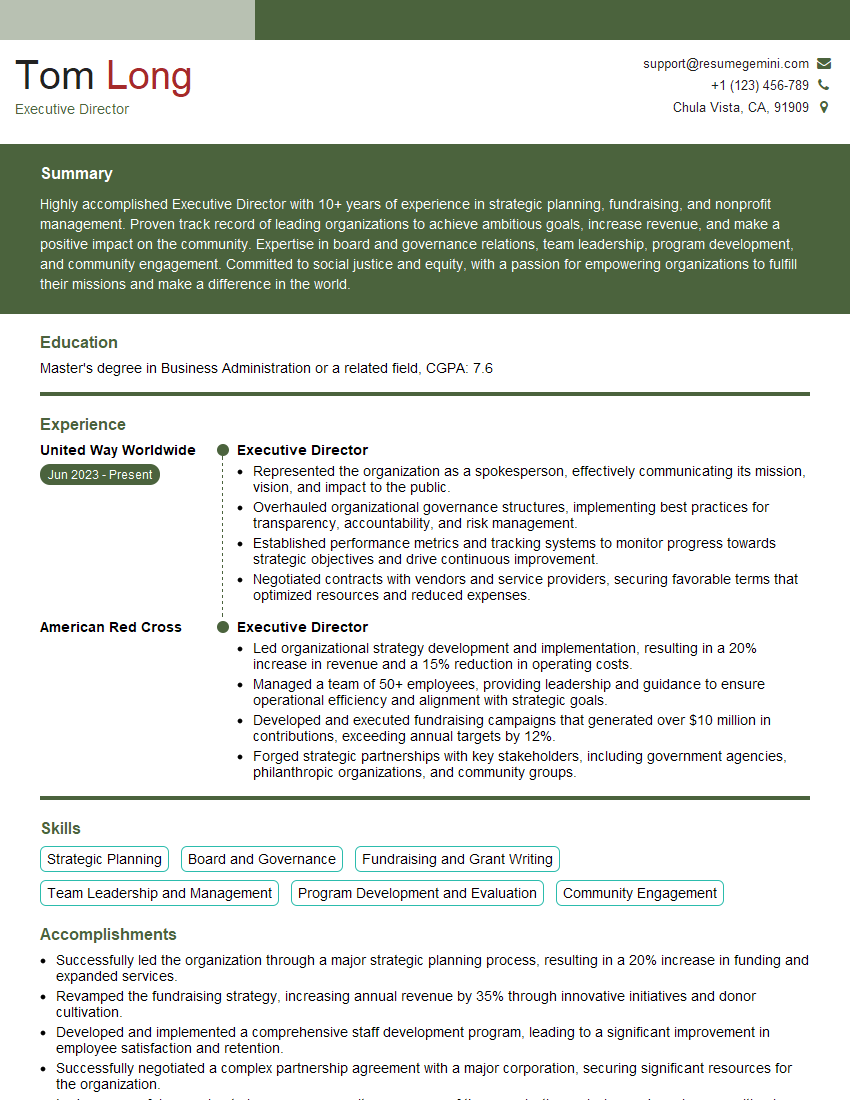
Executive Director Resume Sample
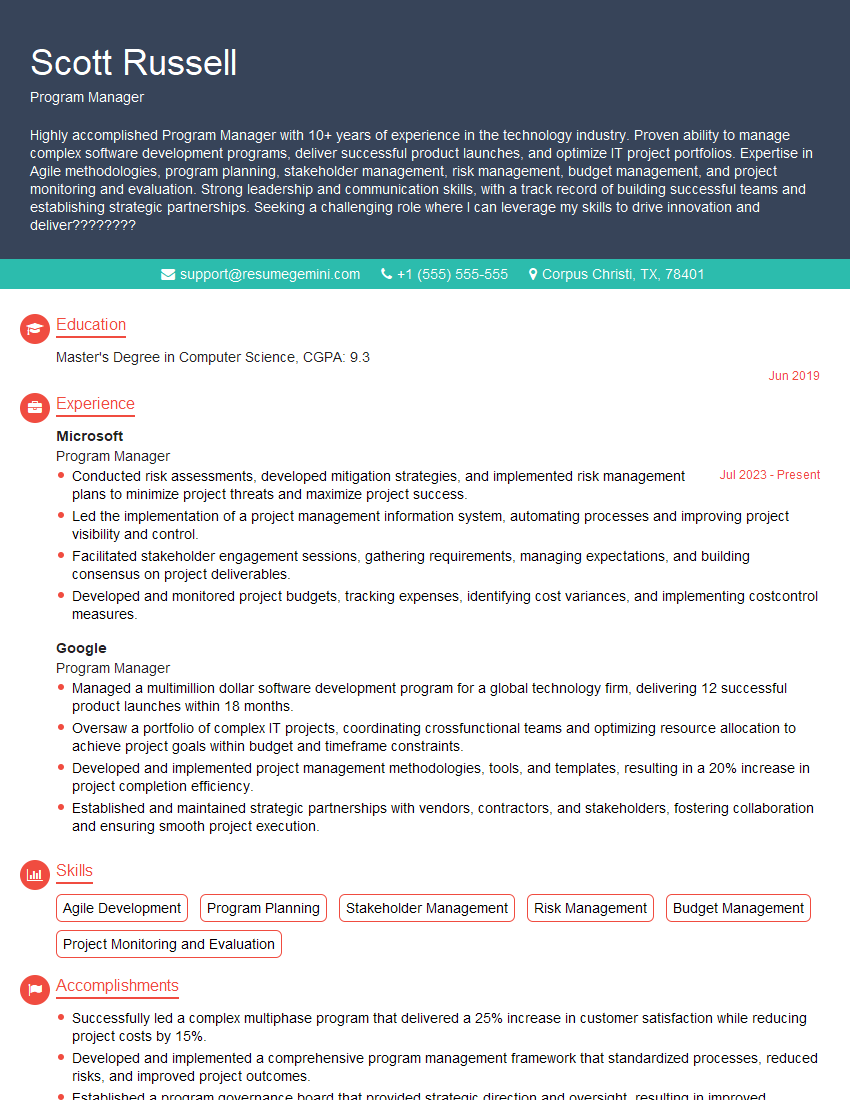
Program Manager Resume Sample

Operations Manager Resume Sample
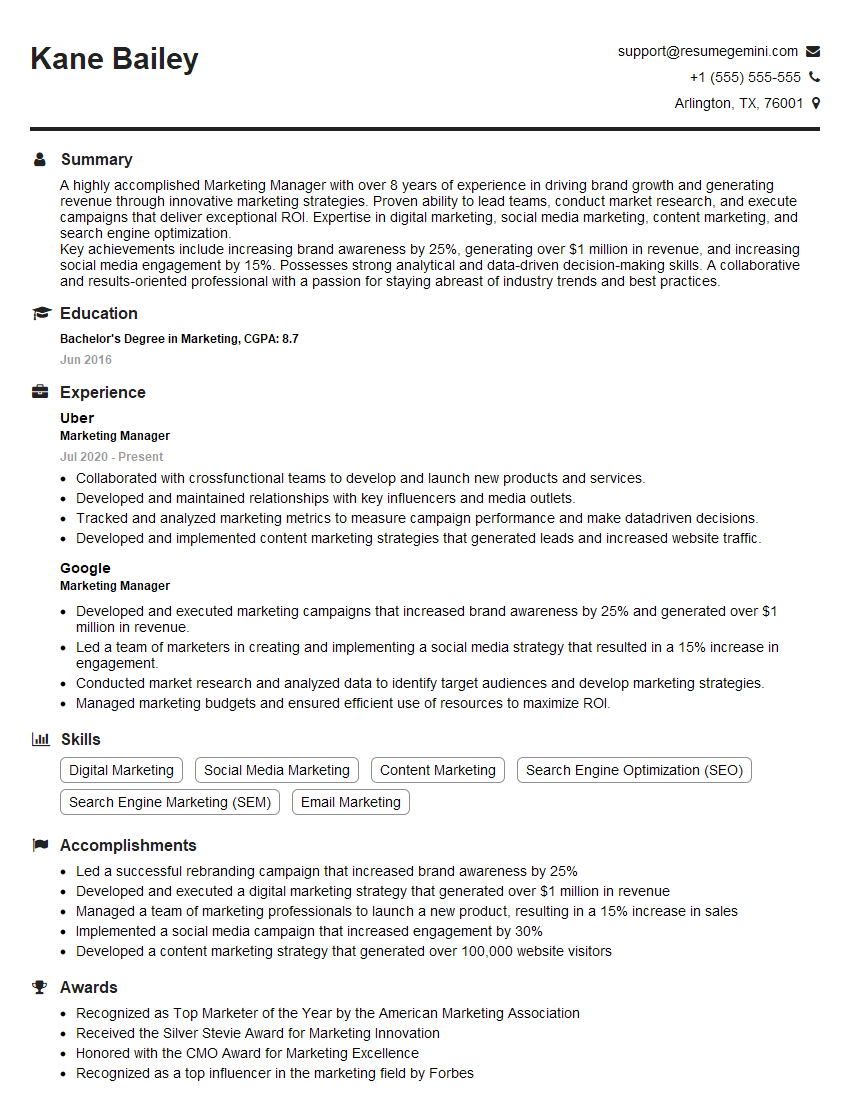
Marketing Manager Resume Sample
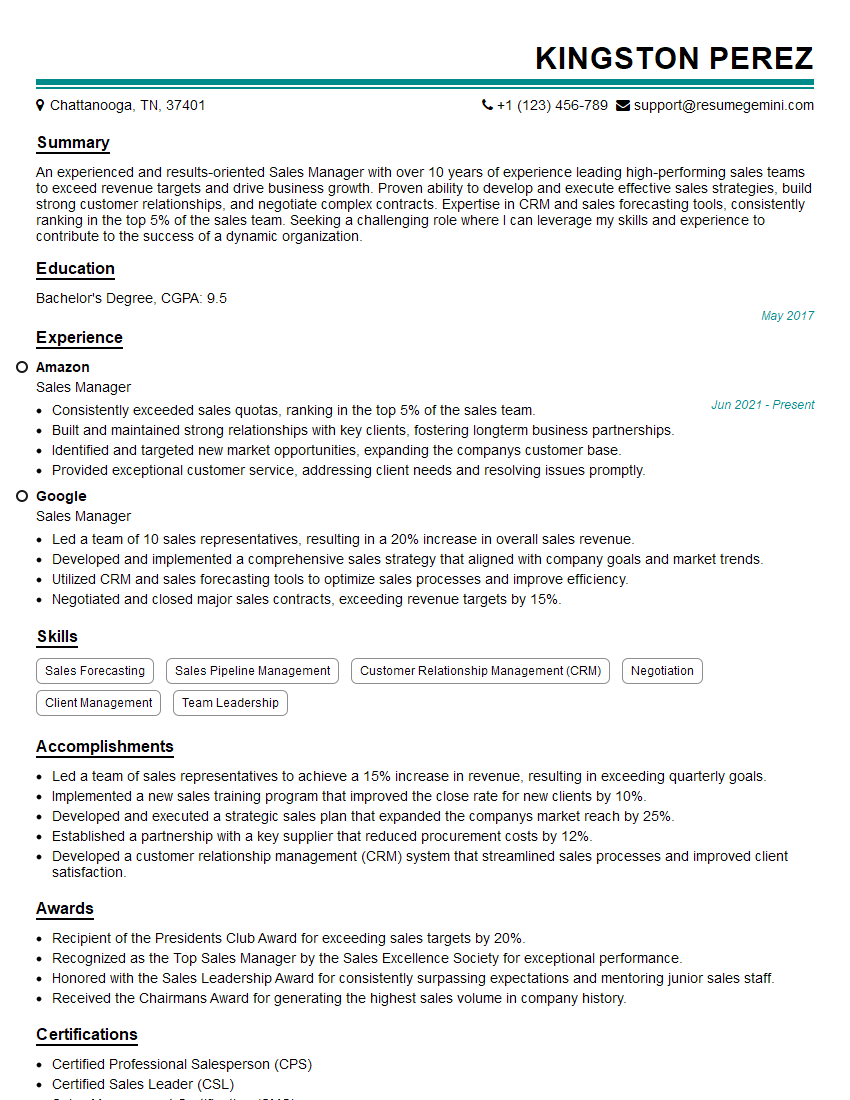
Sales Manager Resume Sample
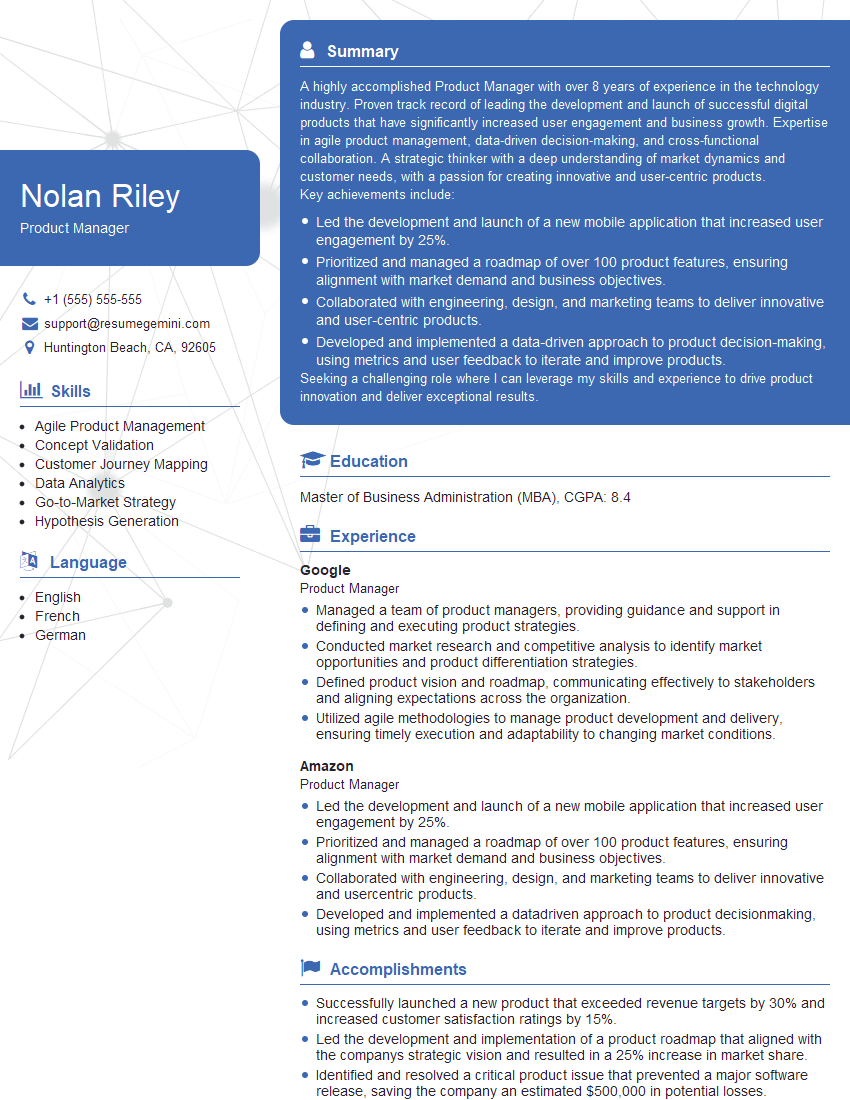
Product Manager Resume Sample

Division Head Resume Sample

Communications Manager Resume Sample
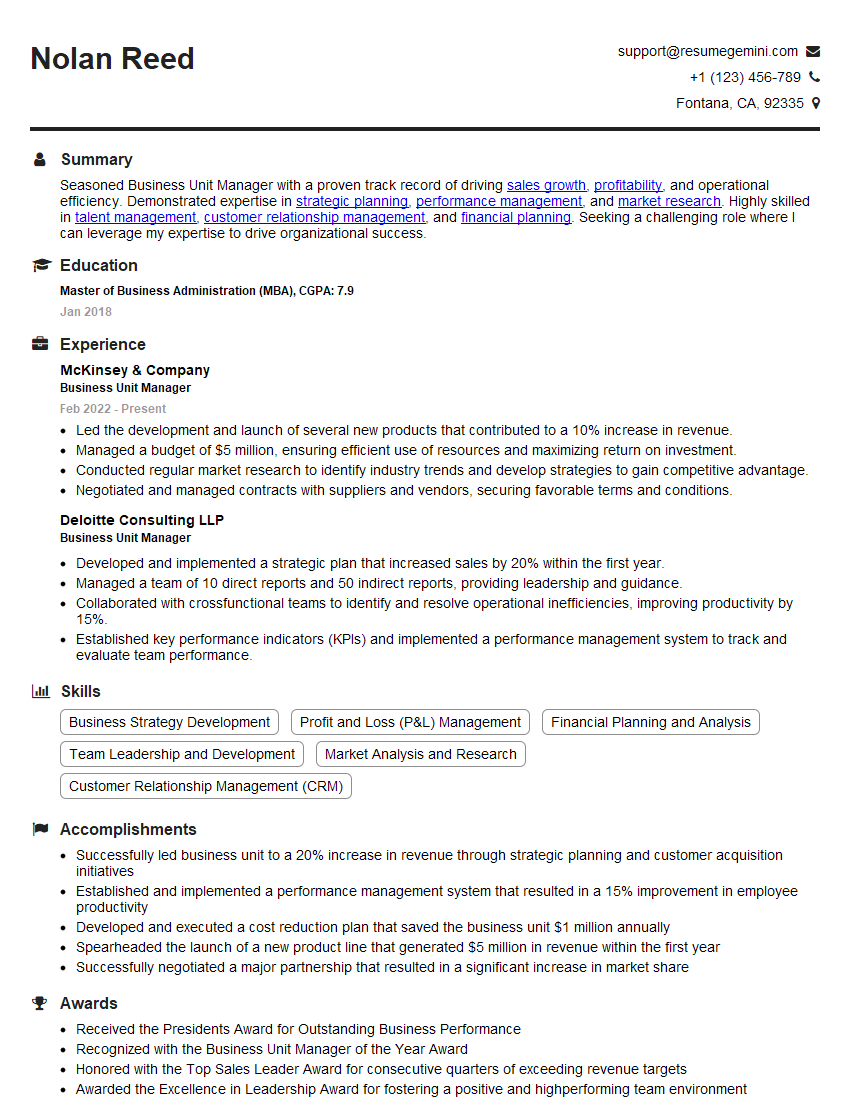
Business Unit Manager Resume Sample
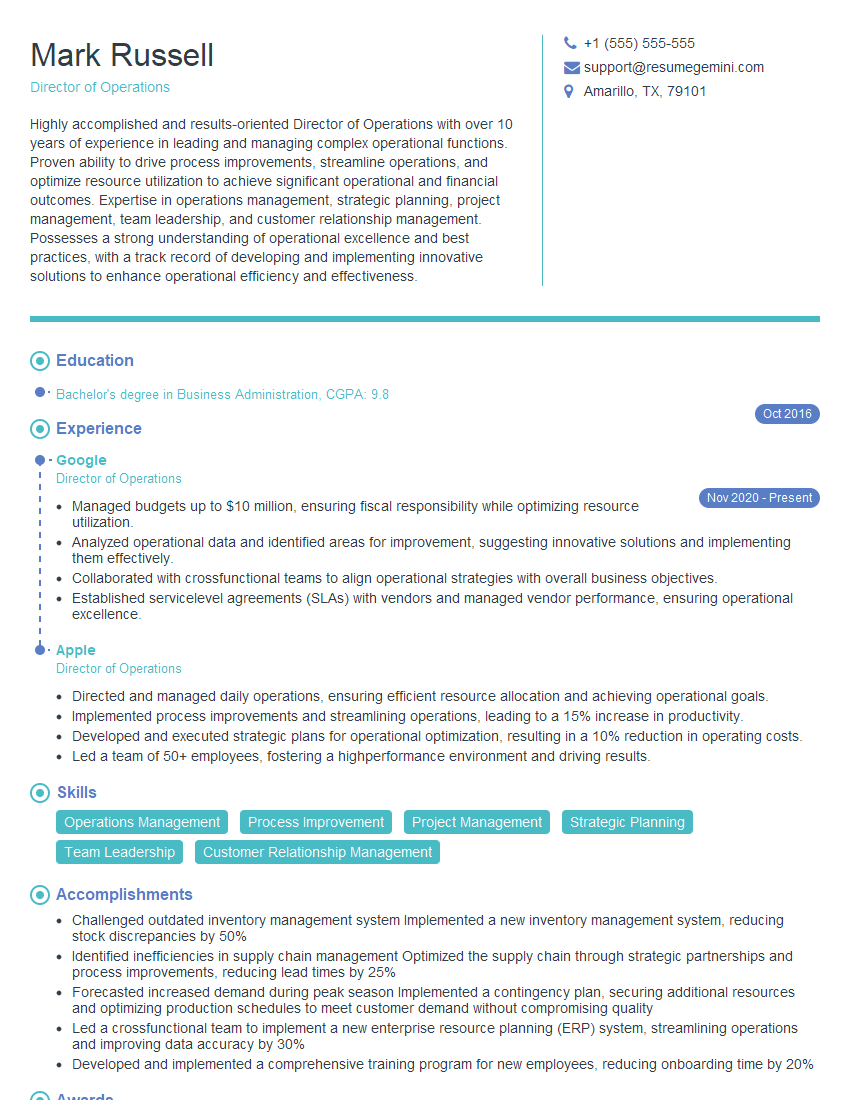
Director of Operations Resume Sample
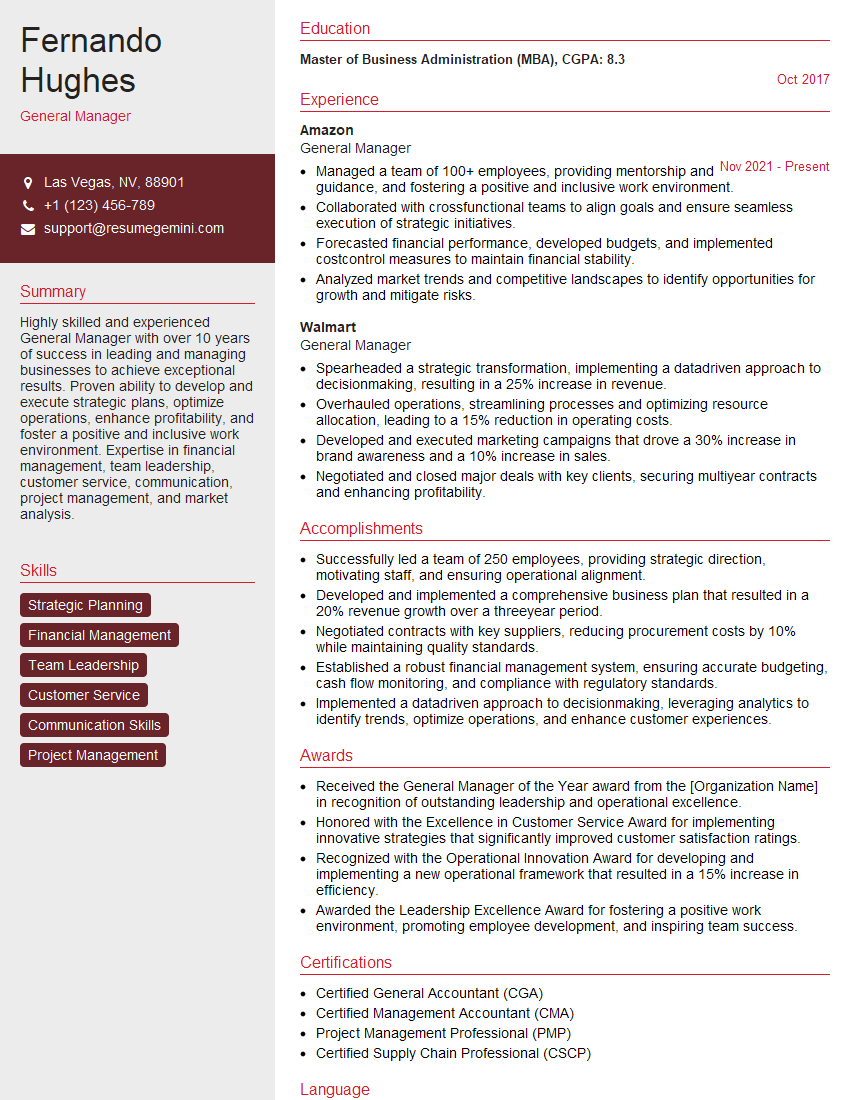
General Manager Resume Sample
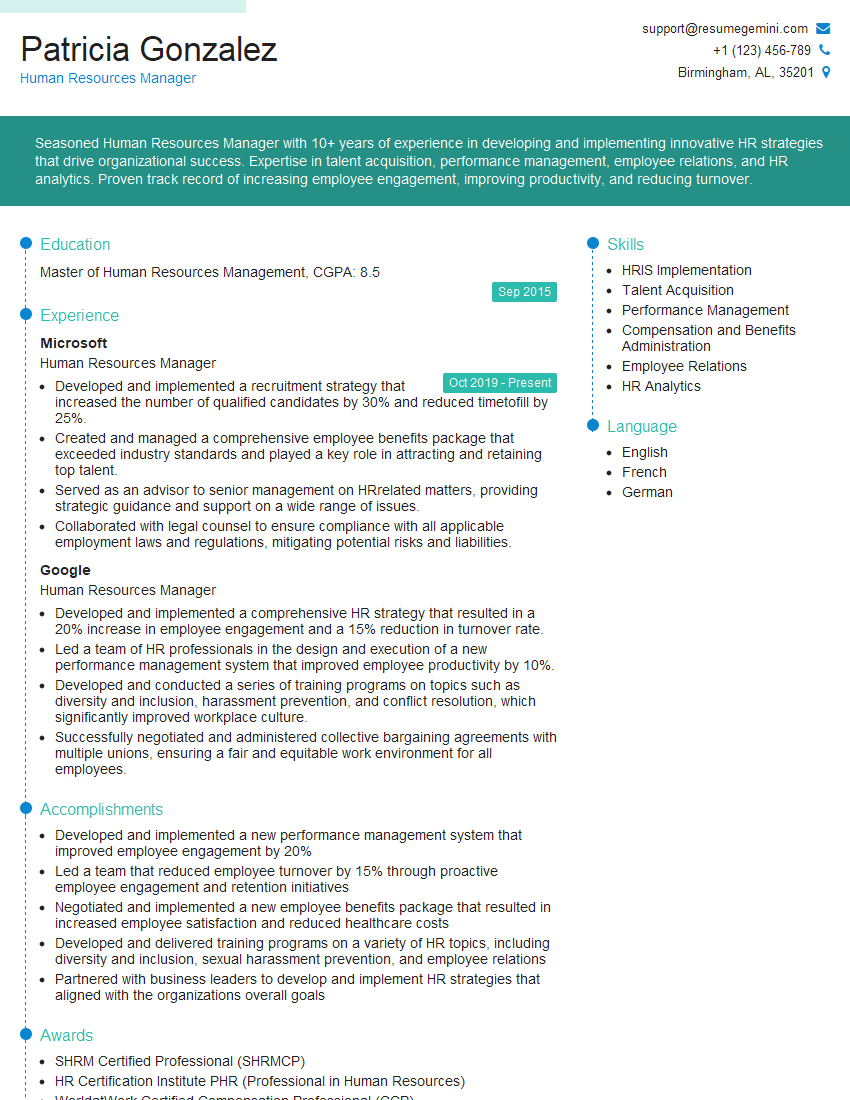
Human Resources Manager Resume Sample
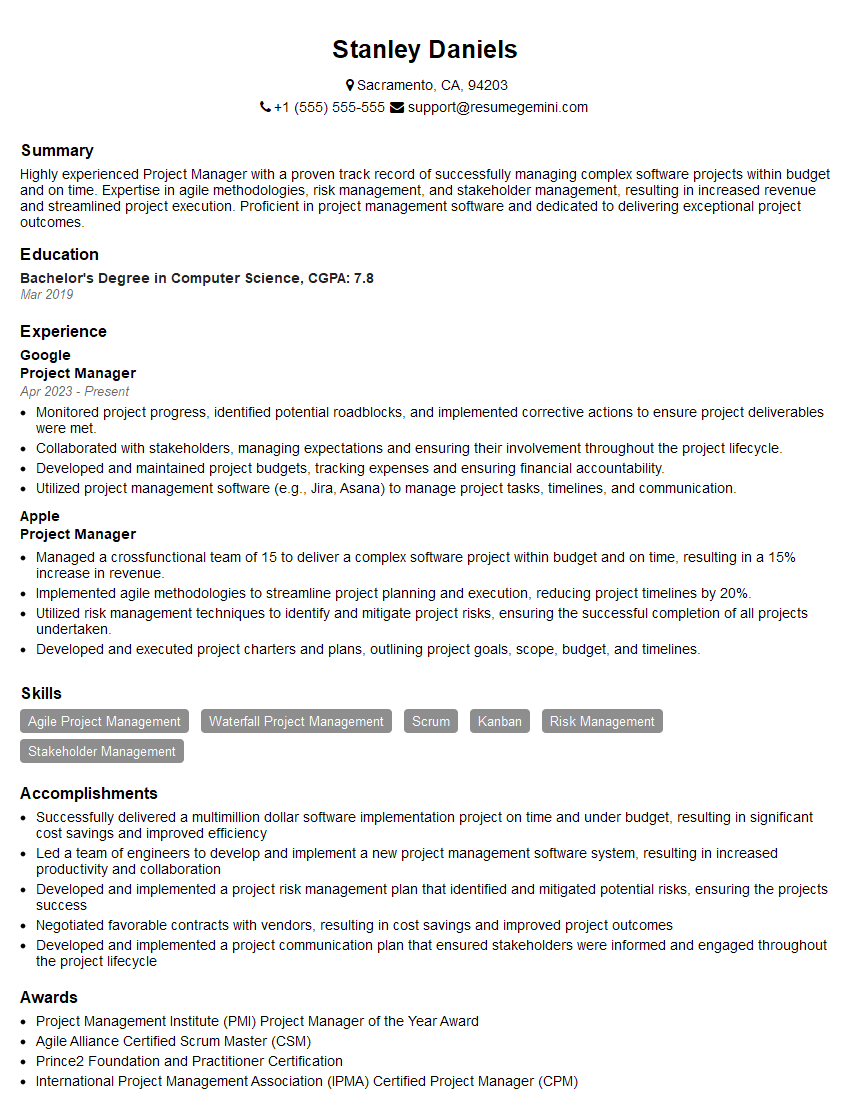
Project Manager Resume Sample
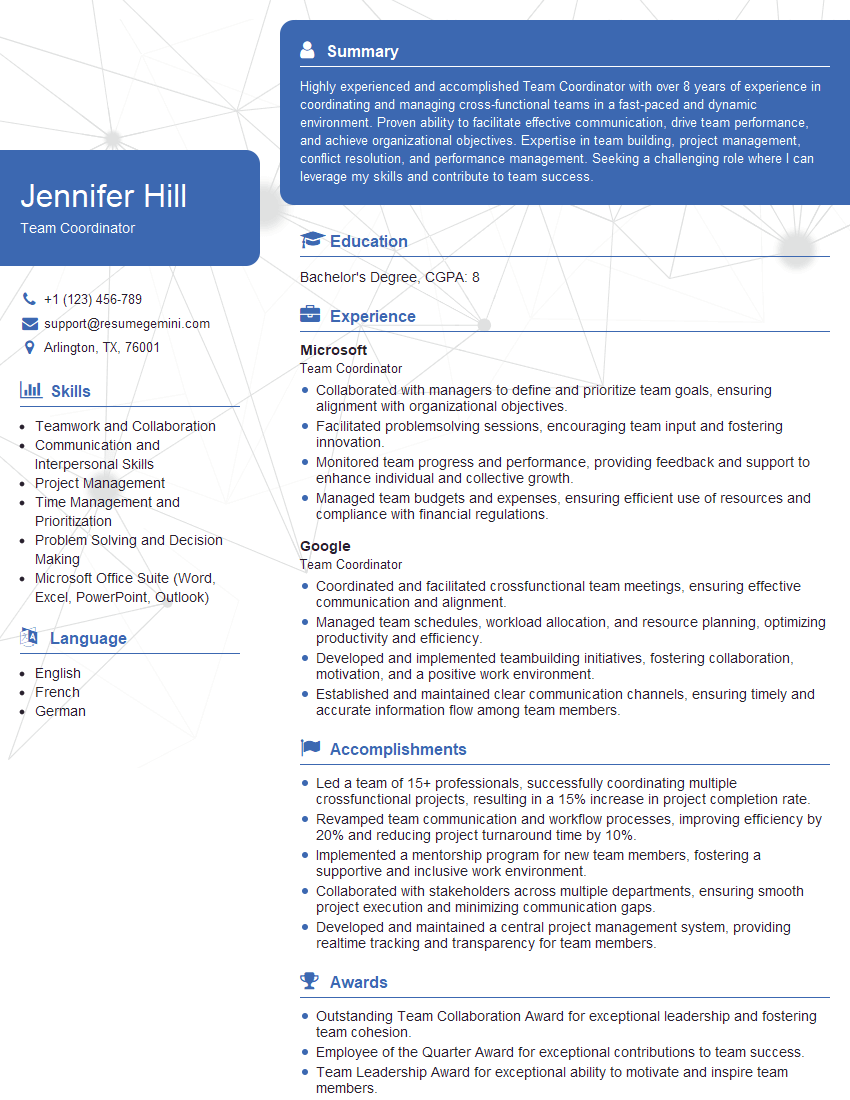
Team Coordinator Resume Sample
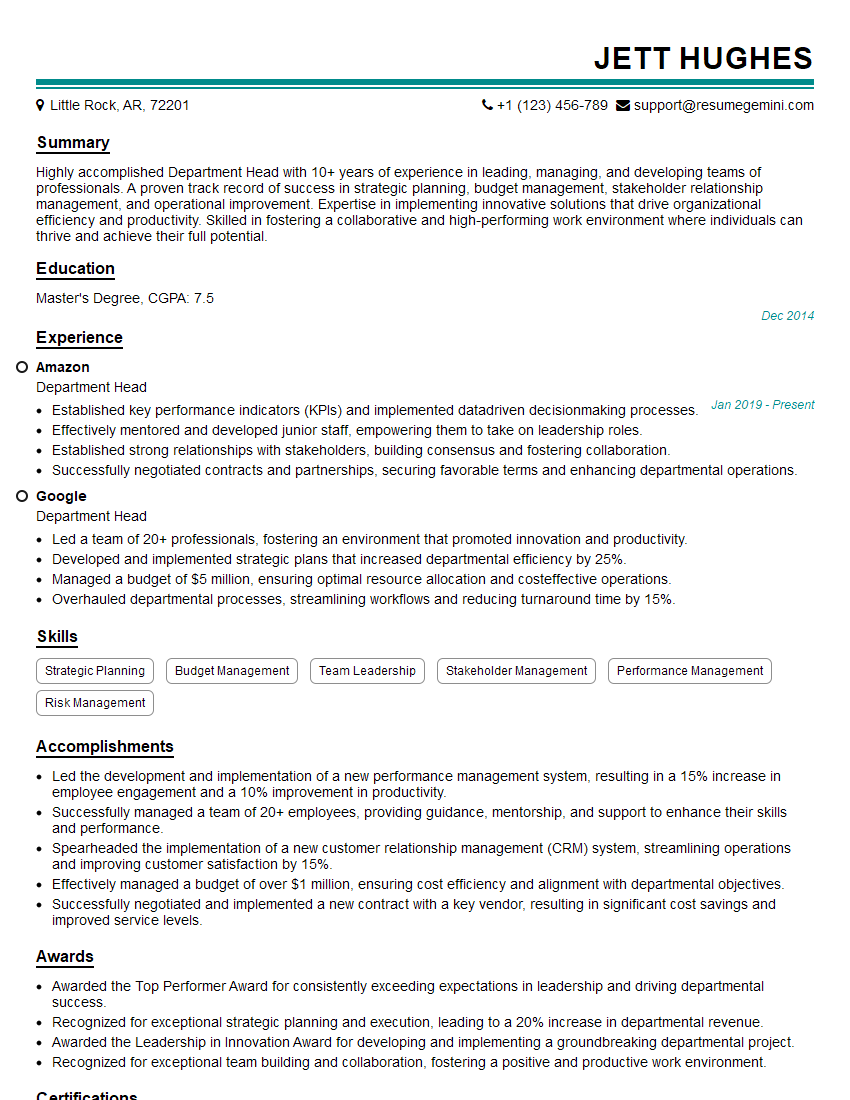
Department Head Resume Sample
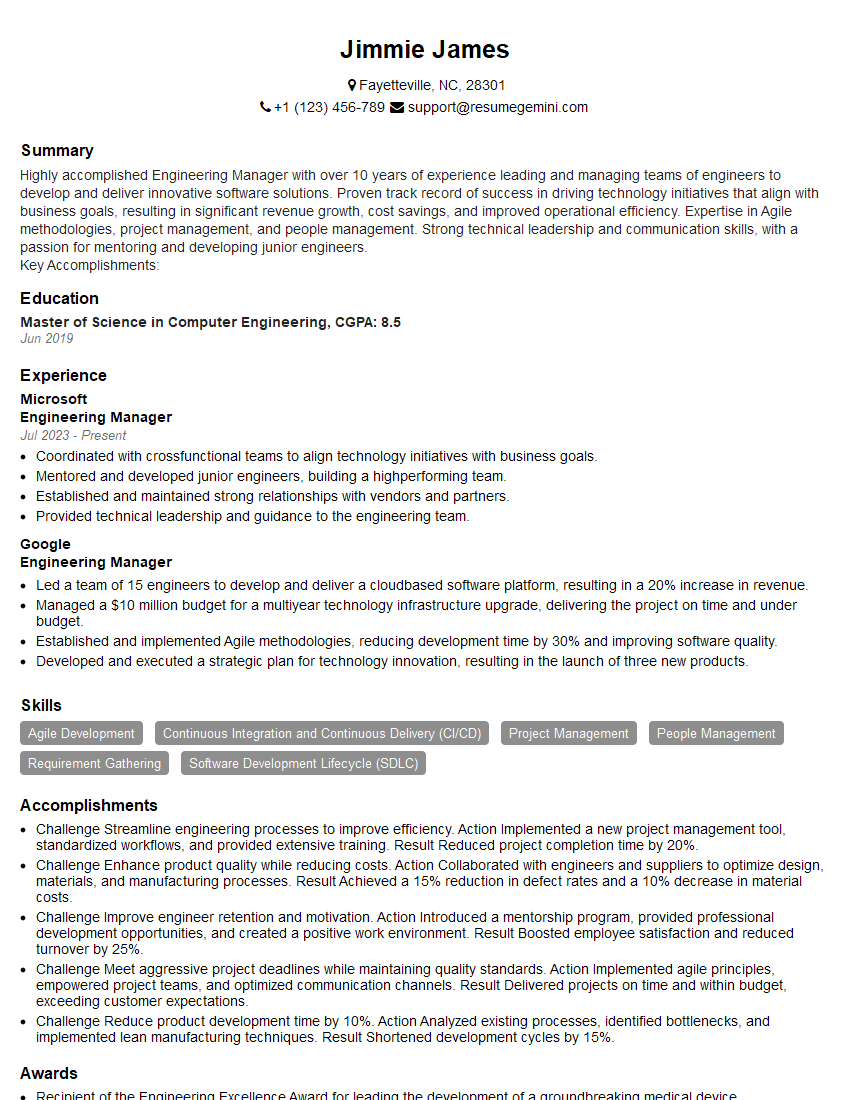
Engineering Manager Resume Sample
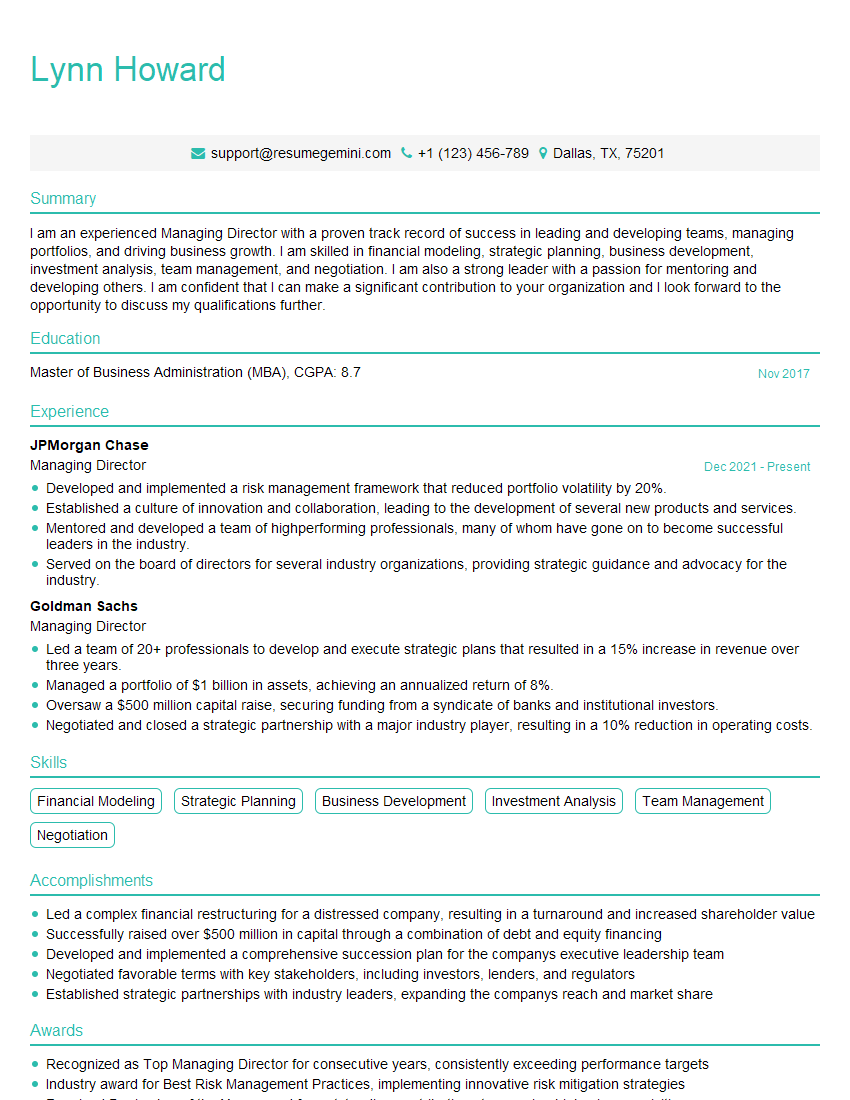
Managing Director Resume Sample

Chief of Staff Resume Sample
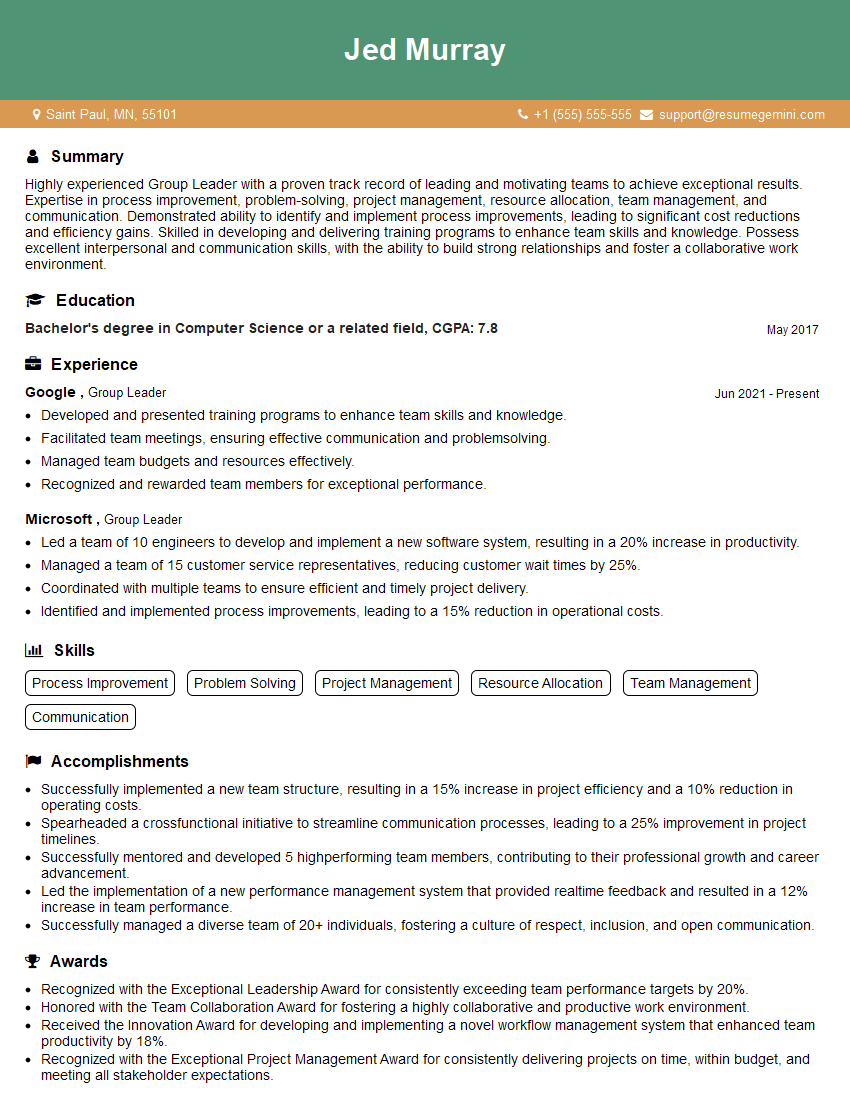
Group Leader Resume Sample
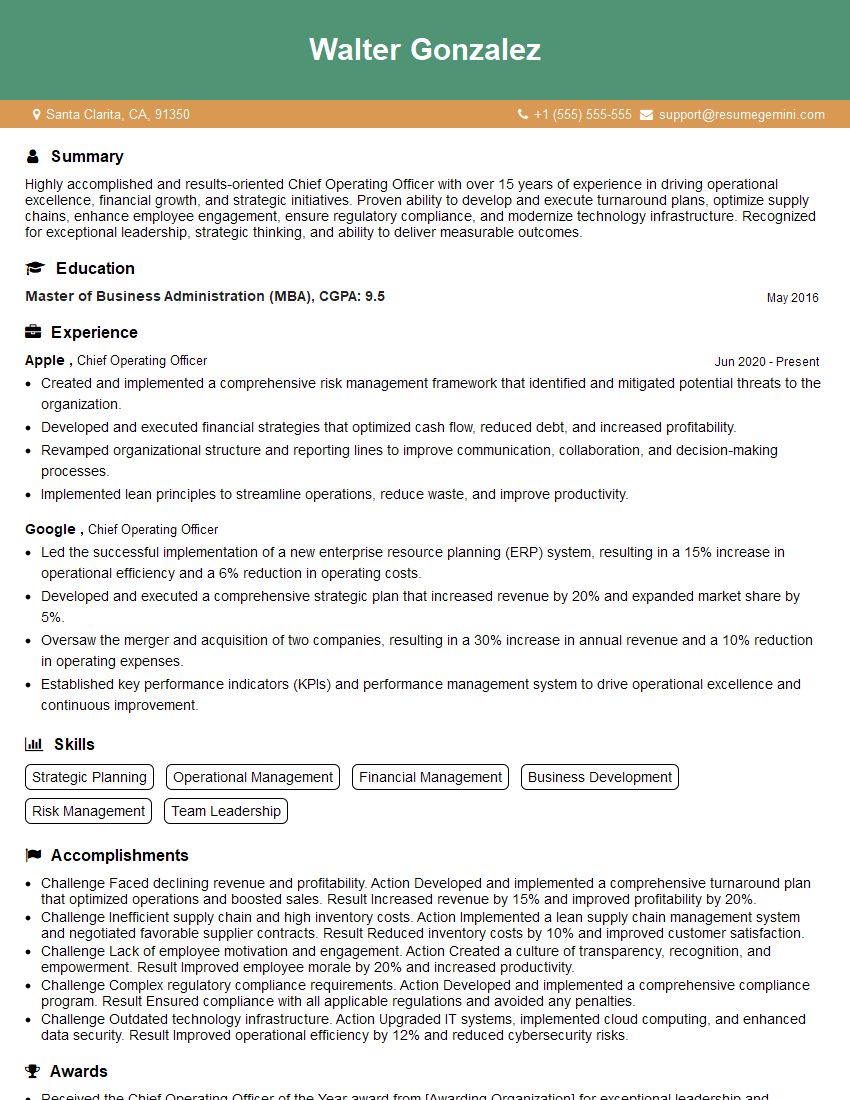
Chief Operating Officer Resume Sample
- Executive Director
- Program Manager
- Operations Manager
- Marketing Manager
- Sales Manager
- Product Manager
- Division Head
- Communications Manager
- Business Unit Manager
- Director of Operations
- General Manager
- Human Resources Manager
- Project Manager
- Team Coordinator
- Department Head
- Engineering Manager
- Managing Director
- Chief of Staff
- Group Leader
- Chief Operating Officer
Explore more articles
Users Rating of Our Blogs
Share Your Experience
We value your feedback! Please rate our content and share your thoughts (optional).
What Readers Say About Our Blog
To the interviewgemini.com Webmaster.
Very helpful and content specific questions to help prepare me for my interview!
Thank you
To the interviewgemini.com Webmaster.
This was kind of a unique content I found around the specialized skills. Very helpful questions and good detailed answers.
Very Helpful blog, thank you Interviewgemini team.