Cracking a skill-specific interview, like one for Radioactive Materials Handling, requires understanding the nuances of the role. In this blog, we present the questions you’re most likely to encounter, along with insights into how to answer them effectively. Let’s ensure you’re ready to make a strong impression.
Questions Asked in Radioactive Materials Handling Interview
Q 1. Explain the ALARA principle and its practical application in radioactive materials handling.
The ALARA principle, short for ‘As Low As Reasonably Achievable,’ is a fundamental tenet of radiation protection. It dictates that all exposures to ionizing radiation should be kept as far below regulatory limits as is reasonably achievable, taking into account economic and social factors. This isn’t about eliminating all radiation exposure – that’s often impossible – but about minimizing it to the extent practical.
Practical Application: Imagine a nuclear medicine lab. ALARA principles would guide decisions like shielding design (using lead or concrete barriers), optimizing procedures to reduce handling time, and utilizing remote handling equipment to keep technicians at a safe distance. For example, if a procedure requires handling a radioactive source for 10 minutes, ALARA would encourage finding a method to reduce that time to 5 minutes, even if both durations are within regulatory limits. The reduction minimizes unnecessary exposure.
Another example is in the decommissioning of a nuclear power plant. ALARA is applied to every step, from careful planning and optimized worker procedures to the use of robots for hazardous tasks, ensuring worker safety remains paramount. Proper planning and using tools such as dose rate meters are critical in achieving ALARA.
Q 2. Describe the different types of radioactive decay and their associated hazards.
Radioactive decay is the process by which unstable atomic nuclei lose energy by emitting radiation. Several types exist:
- Alpha Decay: Emits an alpha particle (two protons and two neutrons), resulting in a decrease of 2 in atomic number and 4 in atomic mass. Alpha particles are highly ionizing but have low penetrating power, easily stopped by skin or paper. Hazards are primarily internal if inhaled or ingested.
- Beta Decay: Emits a beta particle (an electron or positron), changing the atomic number by one without significantly affecting the mass. Beta particles are more penetrating than alpha particles, requiring thicker shielding (e.g., aluminum). External and internal hazards exist.
- Gamma Decay: Emits a gamma ray (high-energy photon), altering neither the atomic number nor mass. Gamma rays are highly penetrating, demanding substantial shielding (e.g., lead or concrete). They pose significant external and internal hazards.
- Neutron Emission: Some isotopes emit neutrons, creating another hazard since neutrons interact strongly with nuclei, causing induced radioactivity.
The hazards associated with each type depend on the energy and the type of radiation. High-energy radiation causes greater ionization, leading to more severe damage to biological tissues, potentially resulting in radiation sickness, cancer, or genetic mutations. The type of radiation and route of exposure (external or internal) greatly impact the hazard level.
Q 3. What are the key safety regulations and standards governing radioactive materials handling in your country/region?
(Note: Regulations vary significantly by country/region. This answer provides a generalized overview, not specific legal advice.)
Many countries have robust regulations and standards governed by national nuclear regulatory agencies. These typically include:
- Licensing and Permitting: Strict procedures are required for acquiring licenses to possess, use, and transport radioactive materials.
- Transportation Regulations: Specific packaging, labeling, and handling procedures exist for transporting radioactive materials, often adhering to international standards like IAEA regulations.
- Radiation Protection Standards: Limits on radiation exposure for workers and the public are established, along with requirements for monitoring, dosimetry (measuring radiation dose), and emergency preparedness.
- Waste Management: Procedures for the safe storage, treatment, and disposal of radioactive waste are mandatory.
- Security: Stringent security measures are in place to prevent unauthorized access, theft, or diversion of radioactive materials.
These regulations involve both national laws and codes of practice that are updated regularly. Consulting specific regulatory authorities (e.g., the NRC in the US or equivalent agencies elsewhere) is essential for compliance.
Q 4. How do you calculate the radiation dose received by personnel during a radioactive materials handling operation?
Calculating radiation dose requires considering several factors: the type and energy of radiation, the duration of exposure, the distance from the source, and any shielding present. Dose is typically measured in Sieverts (Sv) or millisieverts (mSv). There is no single formula, as the calculation is complex and often involves specialized software or dosimeters.
Methods:
- Dosimetry Badges: Personnel often wear dosimeters that measure the absorbed dose directly. These devices are then analyzed in a lab.
- Calculations using Physical Parameters: For simple scenarios (point source, minimal shielding), basic formulas relating dose rate, activity, distance, and shielding can provide an estimate. This often involves radiation transport modelling.
- Monte Carlo Simulations: For more complex situations (complex geometries, varied shielding), sophisticated Monte Carlo simulations are used to estimate dose. These methods use statistical sampling to model radiation interactions.
In practice, regulatory authorities provide detailed guidance and procedures for accurate dose calculations. Experienced health physicists are usually involved in overseeing these calculations and interpreting the results.
Q 5. Explain the different types of radiation detectors and their applications.
Various radiation detectors are used, each suited to different types and levels of radiation:
- Geiger-Müller Counters: Detect beta and gamma radiation; simple, portable, and relatively inexpensive, ideal for quick surveys.
- Scintillation Detectors: Detect alpha, beta, and gamma radiation; offer better energy resolution than Geiger-Müller counters, enabling identification of specific isotopes.
- Ionization Chambers: Measure radiation dose rate; very accurate for high dose rates.
- Proportional Counters: Detect alpha, beta, and gamma radiation; offer better energy resolution than Geiger-Müller counters and can differentiate between radiation types.
- Neutron Detectors: Detect neutrons; various types exist, depending on neutron energy and application.
Applications: These detectors are used in radiation surveys, monitoring personnel exposure, characterizing radioactive sources, and ensuring safety in areas with potential radiation hazards. The selection of the detector depends on factors such as the type of radiation to be measured, the required sensitivity and accuracy, and the environment.
Q 6. What are the procedures for handling and transporting radioactive materials?
Handling and transporting radioactive materials requires meticulous adherence to safety regulations and established procedures. Key steps include:
- Proper Training: Personnel must receive thorough training in radiation safety, handling techniques, and emergency procedures.
- Appropriate Packaging: Radioactive materials must be packaged in specialized containers designed to withstand the rigors of transport and prevent leakage or radiation exposure.
- Labeling and Documentation: Clear labeling indicating the type and quantity of radioactive material, along with comprehensive documentation detailing the transport plan, is mandatory.
- Route Planning: Transportation routes are carefully planned to minimize exposure to the public and environment.
- Security Measures: Security measures are implemented to prevent theft or unauthorized access.
- Monitoring: Radiation levels during handling and transport must be monitored to ensure they stay within safe limits.
- Emergency Response Planning: A detailed emergency response plan must be in place to handle any unexpected incidents or accidents.
These procedures are crucial to ensuring the safety of personnel, the public, and the environment during the entire process.
Q 7. Describe the methods for decontamination of personnel and equipment after exposure to radioactive materials.
Decontamination procedures depend on the type and level of radioactive contamination, as well as the surface area involved. For personnel, this might include:
- Removal of Clothing: Contaminated clothing must be removed immediately and disposed of properly.
- Washing and Showering: Thorough washing with soap and water is essential.
- Monitoring: Radiation monitoring is performed to ensure decontamination has been successful.
For equipment, decontamination methods might involve:
- Washing and Cleaning: Using appropriate detergents and solvents to remove surface contamination.
- Abrasive Cleaning: If necessary, employing abrasive methods to remove more stubborn contamination.
- Chemical Decontamination: Using specialized chemical solutions to remove specific radioactive isotopes.
- Disposal: If decontamination is not feasible, the equipment must be disposed of according to regulations.
Decontamination processes often involve specific techniques and materials chosen based on the radioactive material involved. Always refer to the material safety data sheets (MSDS) for appropriate decontamination strategies.
Q 8. How do you assess and mitigate the risks associated with radioactive materials handling?
Assessing and mitigating risks in radioactive materials handling involves a multi-layered approach focusing on prevention, preparedness, and response. It begins with a thorough risk assessment, identifying potential hazards and vulnerabilities throughout the entire handling process. This includes considering the type and quantity of radioactive material, the potential pathways for exposure (inhalation, ingestion, external irradiation), and the likelihood and consequences of accidents.
Mitigation strategies then focus on eliminating or minimizing these risks. This could involve:
- Engineering controls: Implementing robust containment systems, shielded transport containers, and remote handling equipment to minimize human exposure.
- Administrative controls: Developing and enforcing strict operational procedures, including detailed work instructions, training programs, and regular safety audits. This also includes establishing clear lines of authority and communication during operations.
- Personal protective equipment (PPE): Providing appropriate PPE such as lead aprons, gloves, respirators, and dosimeters to protect personnel from radiation exposure (discussed further in question 5).
- Emergency preparedness: Developing comprehensive emergency response plans that include spill response procedures, evacuation strategies, and medical protocols. Regular drills and training ensure preparedness.
For example, in a nuclear power plant, a risk assessment might highlight the potential for a fuel rod failure. Mitigation strategies would include robust containment structures, regular inspections, and procedures for safely handling damaged fuel. Similarly, in a medical setting using radioactive isotopes, risk assessment focuses on minimizing patient and staff exposure through careful handling, shielding, and waste management.
Q 9. What are the different types of radioactive waste and their appropriate disposal methods?
Radioactive waste is categorized based on its level of radioactivity and physical form. There are three main categories:
- Low-level waste (LLW): This includes materials with low levels of radioactivity, such as contaminated clothing, tools, and some medical supplies. Disposal methods typically involve shallow land burial or incineration, following strict regulatory guidelines.
- Intermediate-level waste (ILW): This category encompasses materials with higher levels of radioactivity, often requiring more robust containment. Disposal methods can include deep geological repositories or specialized engineered facilities.
- High-level waste (HLW): This is the most dangerous category, containing intensely radioactive materials like spent nuclear fuel. Disposal often involves vitrification (converting to a glass-like form for enhanced stability) followed by long-term geological disposal in deep, stable geological formations.
The specific disposal method chosen depends on factors such as the waste’s radioactivity, volume, and physical form. Regulations and licensing are crucial, and each step must be carefully monitored and documented to ensure long-term safety. For instance, spent nuclear fuel, a HLW, requires extremely robust containment to prevent leakage and protect the environment for thousands of years.
Q 10. Explain the concept of shielding and how it is used to protect personnel from radiation.
Shielding is a crucial safety measure that reduces exposure to ionizing radiation. It works by absorbing or scattering radiation, preventing it from reaching personnel. The effectiveness of shielding depends on several factors: the type and energy of the radiation, the shielding material, and the thickness of the shielding.
Different materials are effective against different types of radiation:
- Lead: Excellent for shielding against gamma rays and X-rays.
- Concrete: Cost-effective and widely used for shielding against gamma rays and neutrons.
- Water: Effective at shielding against neutrons and beta particles.
The thickness of the shielding material is also critical. The amount of shielding required is determined by calculations that consider the source’s radioactivity, the distance from the source, and the desired level of radiation reduction. For example, lead aprons worn by radiologists significantly reduce exposure to X-rays during procedures. Similarly, thick concrete walls surround nuclear reactors to protect workers and the surrounding environment from radiation leakage.
Q 11. Describe the emergency procedures for incidents involving radioactive materials.
Emergency procedures for radioactive material incidents are rigorously defined and practiced. These procedures vary based on the type and severity of the incident, but they generally follow a structured approach:
- Immediate Actions: Isolate the affected area, evacuate personnel, and initiate emergency notification procedures.
- Assessment and Control: Identify the nature and extent of the incident. This might involve radiation monitoring to determine the spread of contamination.
- Containment and Decontamination: Implement measures to contain the spread of radioactive material, such as using absorbent materials to soak up spills, and decontamination procedures for affected personnel and equipment.
- Recovery and Investigation: After the immediate threat is controlled, a thorough investigation is conducted to determine the cause of the incident and to implement corrective actions to prevent future occurrences. This often involves detailed documentation and reporting to regulatory agencies.
Regular drills and training are essential to ensure that personnel are familiar with and capable of executing these procedures effectively. A well-rehearsed response is critical in minimizing the consequences of a radioactive material incident.
Q 12. What are the requirements for personal protective equipment (PPE) when handling radioactive materials?
Personal Protective Equipment (PPE) requirements for handling radioactive materials are stringent and depend on the type and level of radioactivity being handled. The goal is to minimize exposure through multiple barriers. Examples of PPE include:
- Lead aprons and gloves: Protect the body from external radiation, particularly gamma rays and X-rays.
- Respirators: Protect against inhalation of radioactive dust or aerosols.
- Protective clothing: Coveralls and shoe covers prevent contamination of skin and clothing.
- Dosimeters: These are personal radiation monitors that measure the accumulated radiation dose received by the wearer.
The selection of PPE is based on a risk assessment, considering the specific hazards involved. It’s crucial to follow established procedures for putting on and taking off PPE to avoid cross-contamination. Regular inspection and maintenance of PPE are also vital to ensure its effectiveness.
Q 13. How do you manage radioactive spills and contamination events?
Managing radioactive spills and contamination events requires a rapid and systematic response. The first step is to isolate the area and evacuate personnel to prevent further exposure. Next, a thorough assessment is conducted using radiation monitoring equipment to determine the extent of the contamination. Specific actions then depend on the nature of the spill:
- Solid materials: These are carefully collected using specialized tools and placed in appropriate containers for disposal.
- Liquid spills: Absorbent materials are used to soak up the liquid, and the contaminated materials are then packaged for disposal.
Decontamination procedures are implemented for personnel and equipment involved. This could involve washing with decontaminants, using special cleaning agents, or even disposing of heavily contaminated items. The area is monitored regularly until radiation levels return to normal. Detailed documentation of the event, including actions taken, is crucial for reporting and analysis. After a thorough clean-up, thorough radiation surveys must be performed to ensure the safety of personnel returning to the area.
Q 14. Explain the role of radiation monitoring and survey instruments in ensuring safety.
Radiation monitoring and survey instruments are indispensable for ensuring safety in radioactive materials handling. These instruments detect and measure radiation levels, providing crucial data for risk assessment, control, and emergency response. Commonly used instruments include:
- Geiger-Müller counters: Detect beta and gamma radiation, providing a quick indication of radiation levels.
- Scintillation detectors: More sensitive and capable of detecting alpha, beta, and gamma radiation, often used for quantitative measurements.
- Survey meters: Portable instruments that measure radiation levels in a specific area.
- Dosimeters: Personal radiation monitors worn by personnel to measure accumulated radiation dose.
These instruments are used to monitor the workplace environment, ensuring that radiation levels remain below regulatory limits. They are also essential during operations, for spill response, and for verifying the effectiveness of shielding and decontamination procedures. Regular calibration and maintenance of these instruments are crucial to ensure accurate measurements.
Q 15. What are the legal and ethical responsibilities of a radioactive materials handler?
Handling radioactive materials comes with significant legal and ethical responsibilities. Legally, handlers must adhere to strict national and international regulations, varying by country and the specific type of material. These regulations often dictate licensing requirements, transportation protocols, storage conditions, and disposal methods. Failure to comply can lead to severe penalties, including hefty fines and imprisonment. Ethically, handlers have a paramount duty of care to protect public health and the environment. This involves minimizing radiation exposure to workers and the public, preventing contamination, and ensuring responsible disposal to avoid long-term environmental damage. Consider, for example, the ethical dilemma of balancing the benefits of using radioactive materials in medicine (e.g., cancer treatment) with the inherent risks. Handlers must always prioritize safety and act with integrity, transparency, and accountability in all their operations.
Career Expert Tips:
- Ace those interviews! Prepare effectively by reviewing the Top 50 Most Common Interview Questions on ResumeGemini.
- Navigate your job search with confidence! Explore a wide range of Career Tips on ResumeGemini. Learn about common challenges and recommendations to overcome them.
- Craft the perfect resume! Master the Art of Resume Writing with ResumeGemini’s guide. Showcase your unique qualifications and achievements effectively.
- Don’t miss out on holiday savings! Build your dream resume with ResumeGemini’s ATS optimized templates.
Q 16. Describe the different types of radioactive sources and their applications.
Radioactive sources are categorized based on their properties and applications. Sealed sources, like those used in medical equipment or industrial gauges, contain radioactive material enclosed in a protective casing to prevent leakage. These are commonly used in radiotherapy, industrial radiography (checking for flaws in welds), and level gauging in various industries. Open sources, on the other hand, have no protective casing, making them more dangerous but useful in research and certain industrial applications, such as radioisotope tracers in biological studies. The type of radiation emitted also varies: alpha particles are highly ionizing but have low penetration; beta particles are moderately ionizing and have medium penetration; and gamma rays are weakly ionizing but highly penetrating. The specific application of a radioactive source directly depends on its type and radiation characteristics. For example, a high-energy gamma emitter would be suitable for industrial radiography due to its penetrating power, whereas a beta emitter might be more appropriate for a thinner material or for specific medical applications.
Q 17. How do you ensure the security of radioactive materials?
Securing radioactive materials is crucial to prevent theft, misuse, and accidental release. Security measures are multi-layered and depend on the material’s radioactivity and the potential consequences of its loss. These measures typically include: physical security (e.g., locked storage facilities, surveillance systems, intrusion alarms); strict access controls (e.g., background checks, limited personnel access); rigorous inventory management (tracking every source throughout its life cycle); and transportation security, following stringent regulations for road, air, and sea shipments, often involving armored vehicles and special containers. For instance, a hospital handling radioactive materials for cancer treatment will employ security protocols different from a research facility using high-activity sources. The level of security directly correlates with the risk associated with the material.
Q 18. Explain the process of radioactive material inventory management.
Radioactive material inventory management is a critical aspect of safety and security. It involves meticulously tracking the location, quantity, and activity of every radioactive source within a facility. This is achieved through a combination of physical inventory checks, detailed record-keeping (both paper and electronic), and potentially specialized software for managing large inventories. The process typically includes regular audits to verify the accuracy of records and detect any discrepancies. A robust inventory management system is vital for regulatory compliance, efficient operational procedures, and preventing loss or theft. Think of it like a highly sophisticated and regulated library system, but instead of books, it’s radioactive materials, each with its own unique ‘call number’ and associated safety protocols.
Q 19. Describe different methods of radioactive waste packaging.
Packaging radioactive waste is a specialized process dictated by the waste’s properties and the regulations of the relevant authorities. The goal is to contain the waste safely and prevent leakage during transportation and storage. Packaging methods depend on the type of waste (e.g., solid, liquid, gas), its activity level, and its physical form. Common methods include using: Rigid containers (steel drums or specialized boxes) for solid waste; Absorbent materials (e.g., vermiculite, sawdust) to soak up liquids; Specialized liners to prevent corrosion and leakage; and Shielding (e.g., lead, depleted uranium) to reduce radiation exposure. The packaging must meet specific design and testing criteria to ensure its integrity under various conditions. Incorrect packaging can lead to contamination and environmental hazards; therefore, rigorous testing and certification are required.
Q 20. What is the importance of documentation in radioactive materials handling?
Documentation is paramount in radioactive materials handling. It serves as a legal record of all activities, ensuring accountability and facilitating regulatory compliance. Comprehensive records are essential for tracking material movements, handling procedures, radiation exposure levels of personnel, and waste disposal processes. Detailed records including permits, training certificates, radiation monitoring data, and disposal records are needed to demonstrate adherence to safety regulations. This documentation is crucial for investigations in case of incidents, assisting in future safety improvements and ensuring the continuous safe management of radioactive materials. Imagine it as a detailed ‘audit trail’ for every single radioactive material, providing a complete history of its journey.
Q 21. What are the health effects of exposure to ionizing radiation?
Exposure to ionizing radiation can have severe health effects, ranging from minor skin irritation to fatal cancers. The severity depends on factors like the radiation dose, the type of radiation, and the duration of exposure. Acute exposure to high doses can cause radiation sickness, characterized by nausea, vomiting, and potentially death. Chronic exposure to low doses over extended periods can increase the risk of developing cancer, genetic mutations, and other health problems, such as cataracts. The effects can be immediate or appear years later. The body’s response varies, and some individuals are more susceptible to radiation damage than others. Radiation protection measures are designed to minimize exposure and mitigate the risks associated with handling radioactive materials. This includes using shielding, limiting exposure time, and maintaining a safe distance from sources.
Q 22. How do you determine the appropriate level of personal protective equipment for a specific task?
Selecting the right Personal Protective Equipment (PPE) for handling radioactive materials is crucial for safety. It depends on the type and amount of radiation, the duration of exposure, and the specific task. A risk assessment is always the first step.
- Radiation Type and Level: Alpha particles are easily stopped by skin, requiring only minimal PPE like gloves. Beta particles penetrate further, necessitating gloves and possibly eye protection. Gamma and X-rays penetrate deeply, demanding lead aprons, thyroid shields, and possibly respirators depending on the energy levels and potential for airborne contamination.
- Exposure Time: A short exposure to a high level of radiation might necessitate heavier PPE than prolonged exposure to a low level. We calculate the dose received, considering time, distance, and shielding.
- Task Type: Handling sealed sources requires less PPE than working with unsealed sources which increases the risk of contamination. Activities involving spills or potential for airborne dispersal will require even more protective measures.
Example: If I’m working with a sealed gamma source for a brief calibration, a lead apron and dosimeter might suffice. However, if I’m handling unsealed radioactive materials in a laboratory setting for an extended period, I’d wear a lead apron, gloves, eye protection, a respirator, and possibly a whole-body suit, plus a second set of monitoring devices.
Q 23. Describe the process of conducting a radiation survey.
A radiation survey involves systematically measuring radiation levels in an area using appropriate instruments to identify and quantify any radiation hazards. The process typically includes:
- Instrument Selection: Choosing the right instrument depends on the type of radiation expected (e.g., Geiger-Müller counter for general radiation detection, scintillation detectors for higher sensitivity and energy discrimination).
- Background Measurement: Establishing a background radiation level – the natural ambient radiation – before surveying the area to account for it later.
- Systematic Survey: Moving the detector in a methodical manner, covering the entire area, paying close attention to potential sources and high-radiation areas. This could include a grid pattern or following a specific workflow.
- Data Recording: Recording the readings at each point, noting location, date, time, and instrument used. Mapping these readings provides a visualization of radiation levels.
- Data Analysis: Comparing measured radiation levels with regulatory limits and background radiation to assess whether the area is safe or requires remediation.
Example: Before entering a room where radioactive materials are stored, I’d conduct a survey using a Geiger-Müller counter, moving it along the walls, floor, and equipment. Readings would be recorded and compared to background levels to identify any areas with higher radiation.
Q 24. How do you interpret radiation monitoring results?
Interpreting radiation monitoring results requires understanding the units (e.g., counts per minute (CPM), microsieverts per hour (µSv/h), Becquerels (Bq)), the type of radiation detected, and regulatory limits.
- Comparison to Background: Subtracting the background radiation level from the measured radiation levels isolates the radiation from the source.
- Regulatory Limits: Comparing the net radiation levels to the allowed limits specified by relevant regulations. Exceeding these limits signals a potential hazard and necessitates corrective actions.
- Trend Analysis: Monitoring radiation levels over time can reveal potential leaks or changes in source activity. An increasing trend is a warning sign.
- Contamination Assessment: If working with unsealed sources, measurements must distinguish between surface contamination and airborne contamination. Smear tests are vital to identify contamination levels on surfaces.
Example: If my survey shows consistently elevated readings in a specific area, exceeding regulatory limits, it indicates a potential leak or a wrongly stored radioactive source. A thorough investigation and remediation would be necessary.
Q 25. What are the limitations of common radiation detection devices?
Common radiation detection devices, like Geiger-Müller counters and scintillation detectors, have limitations:
- Energy Dependence: Some detectors are more sensitive to certain radiation energies than others. A Geiger-Müller counter may not accurately measure the energy of the radiation, only its presence.
- Directional Dependence: The readings can vary depending on the angle of the detector to the source.
- Detector Saturation: At extremely high radiation levels, some detectors can become saturated, meaning they cannot accurately measure the radiation levels.
- Limited Specificity: While they detect radiation, many devices do not identify the specific type of radiation (alpha, beta, gamma) precisely, making the assessment of risk more difficult.
- Calibration: Regular calibration is essential to ensure accuracy. An improperly calibrated device could provide inaccurate readings, resulting in faulty risk assessments.
Example: A Geiger-Müller counter may not detect low-energy alpha particles efficiently even if they are present and pose a potential hazard if ingested.
Q 26. Explain the concept of half-life and its relevance to radioactive materials handling.
Half-life is the time it takes for half the atoms in a radioactive sample to decay. This is an exponential decay process. It’s crucial in radioactive materials handling because it dictates the decay rate and the duration of the hazard.
Relevance: Understanding half-life helps us predict how long a material will remain radioactive, how to schedule handling, storage, and disposal. Substances with short half-lives decay quickly, posing a more intense but shorter-term hazard, while those with long half-lives pose a less intense but longer-term threat.
Example: Iodine-131, used in medical imaging, has a half-life of about 8 days. This means after 8 days, half of the iodine-131 will have decayed, and after 16 days, a quarter will remain. Knowing this helps determine the safe disposal time and necessary shielding requirements.
Q 27. What are your experiences with radioactive materials handling in different environments (e.g., hospitals, laboratories, power plants)?
My experience with radioactive materials handling spans various environments:
- Hospitals: I’ve worked with brachytherapy sources (used for internal radiation treatment) in hospitals, ensuring proper handling, shielding, and disposal procedures are followed meticulously. Safety protocols are paramount due to patient proximity.
- Laboratories: Laboratory work involves a wider range of radioactive isotopes used in research. This includes handling sealed and unsealed sources, meticulous contamination control measures, and waste management practices. Detailed record-keeping is essential for safety and regulatory compliance.
- Nuclear Power Plants: My experience extends to assisting with the safe handling and transportation of spent nuclear fuel. This involves understanding strict regulations, specialized equipment, and highly stringent procedures to prevent accidental releases or contamination. The level of protective measures is extremely high.
Each environment necessitates a unique approach, driven by specific regulations, the types of radioactive materials handled, and the risk levels involved. The underlying principle is always to minimize personnel exposure and prevent environmental contamination.
Q 28. Describe a time you had to handle a challenging situation involving radioactive materials.
During a research project involving unsealed radioactive sources, a small spill occurred. It was a low-activity source, but the potential for contamination was still a concern.
Action Taken: Following established protocols, we immediately evacuated the area, ensuring that no personnel were exposed further. We then donned appropriate PPE, including lab coats, gloves, and shoe covers. The spill was contained using absorbent materials, which were then placed into designated radioactive waste containers. A thorough radiation survey was performed to confirm the area was safe before resuming work. A detailed report of the incident, including corrective actions, was prepared and submitted.
Lessons Learned: This incident reinforced the importance of stringent protocols and meticulous practices, especially with unsealed sources. We implemented additional training sessions to emphasize spill response procedures and reinforced the importance of double-checking work processes before handling radioactive materials.
Key Topics to Learn for Radioactive Materials Handling Interview
- Radiation Safety Principles: Understanding ALARA (As Low As Reasonably Achievable) principles, radiation protection techniques, and regulatory compliance (e.g., NRC regulations).
- Types of Radioactive Materials: Familiarity with various radioactive isotopes, their decay characteristics, and associated hazards. Practical application: Identifying and classifying materials based on activity levels and radiation types.
- Material Handling Techniques: Safe handling procedures for different forms of radioactive materials (solids, liquids, gases), including transport, storage, and disposal. Practical application: Demonstrating knowledge of appropriate containment, shielding, and remote handling techniques.
- Instrumentation and Monitoring: Understanding the principles and operation of radiation detection instruments (e.g., Geiger counters, survey meters). Practical application: Interpreting radiation readings and identifying potential contamination sources.
- Emergency Response Procedures: Knowledge of emergency protocols for spills, accidents, and contamination incidents. Practical application: Describing procedures for containment, decontamination, and personnel protection.
- Waste Management: Understanding the principles and regulations governing radioactive waste management, including classification, packaging, and disposal methods.
- Regulatory Compliance: Demonstrating knowledge of relevant regulations and reporting requirements for radioactive materials handling.
- Health Physics: A foundational understanding of the biological effects of radiation and dose calculations.
Next Steps
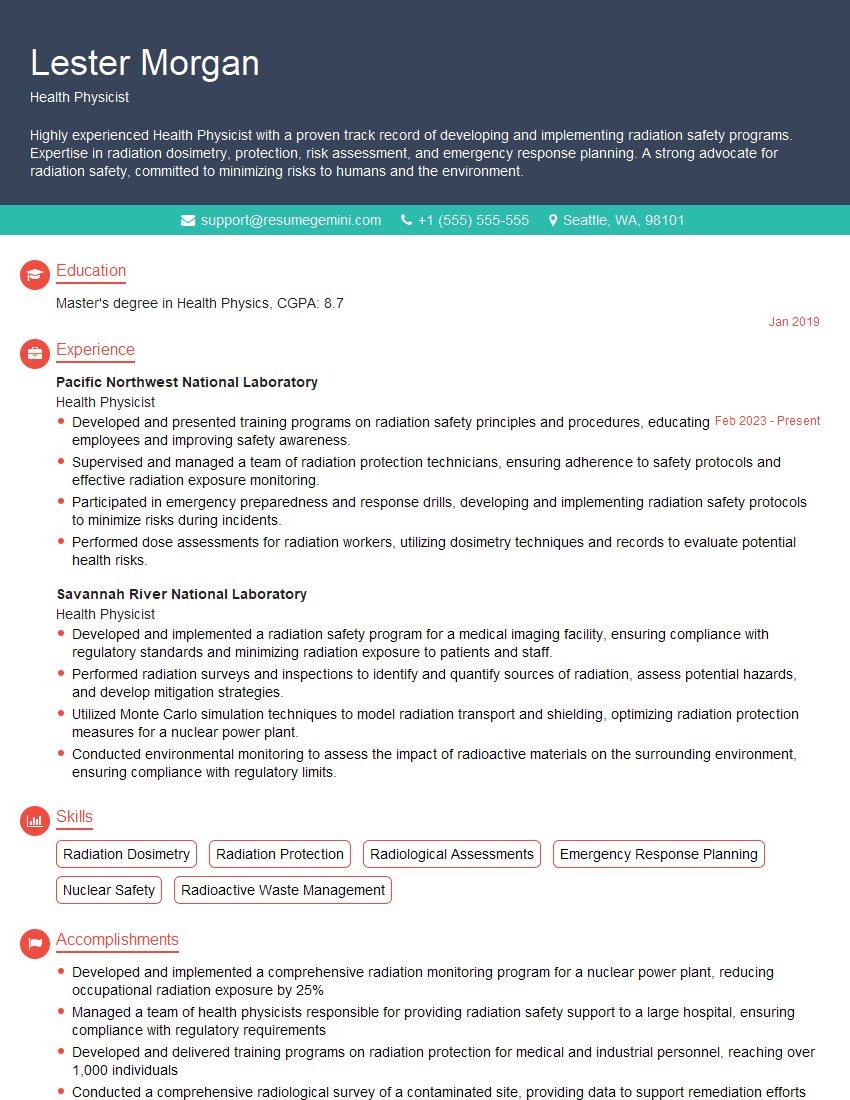
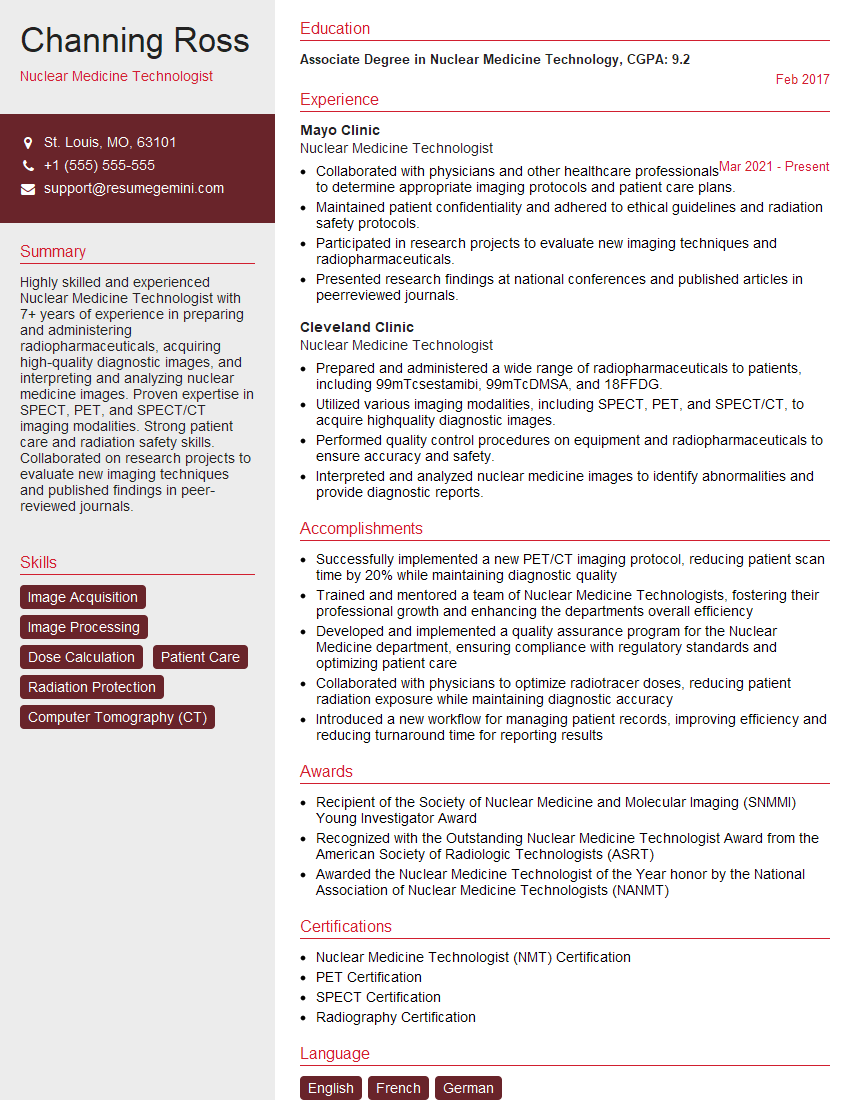
Mastering Radioactive Materials Handling opens doors to rewarding and impactful careers in nuclear energy, medicine, research, and environmental remediation. To significantly boost your job prospects, it’s crucial to present your skills and experience effectively through a well-crafted, ATS-friendly resume. ResumeGemini is a trusted resource to help you build a professional resume that showcases your expertise. We offer examples of resumes tailored to Radioactive Materials Handling to guide you through the process. Invest in a strong resume – it’s your first impression and a key to unlocking your career potential.



Explore more articles
Users Rating of Our Blogs
Share Your Experience
We value your feedback! Please rate our content and share your thoughts (optional).
What Readers Say About Our Blog
To the interviewgemini.com Webmaster.
Very helpful and content specific questions to help prepare me for my interview!
Thank you
To the interviewgemini.com Webmaster.
This was kind of a unique content I found around the specialized skills. Very helpful questions and good detailed answers.
Very Helpful blog, thank you Interviewgemini team.