Interviews are more than just a Q&A session—they’re a chance to prove your worth. This blog dives into essential Speech Therapy Diagnosis interview questions and expert tips to help you align your answers with what hiring managers are looking for. Start preparing to shine!
Questions Asked in Speech Therapy Diagnosis Interview
Q 1. Describe your experience conducting oral-motor assessments.
Oral-motor assessments are crucial for evaluating the structure and function of the oral-motor mechanism, which is essential for speech production. My approach involves a comprehensive examination of the structures involved, such as the lips, tongue, jaw, and palate, assessing their range of motion, strength, and coordination.
I begin with a visual inspection, noting any anatomical variations or abnormalities. Then, I proceed with a series of tasks to evaluate various aspects of oral-motor function. For example, I might assess lip closure by asking the individual to maintain a prolonged /p/ sound, evaluate tongue strength and mobility through tasks such as pushing against a tongue depressor, and assess jaw movement by observing the range of motion during opening and closing. I also evaluate the child’s ability to perform volitional movements like licking lips, blowing bubbles, or sucking through a straw. Throughout the assessment, I observe for any signs of weakness, incoordination, or atypical movement patterns. The results of this assessment help determine whether oral-motor limitations are contributing to speech difficulties, and guide the selection of appropriate intervention strategies.
For example, I recently assessed a child who had difficulty with articulation. The oral-motor assessment revealed weak lip closure and limited tongue mobility. This information informed my treatment plan, which included exercises to improve lip strength and tongue dexterity. The improved oral-motor skills directly contributed to better articulation.
Q 2. Explain the difference between receptive and expressive language disorders.
Receptive and expressive language are two sides of the same coin – the ability to understand and use language. Receptive language refers to the ability to understand what others say or write, while expressive language refers to the ability to communicate one’s thoughts and ideas through speaking, writing, or other means.
A child with a receptive language disorder might struggle to follow instructions, understand complex sentences, or answer simple questions accurately. They may seem inattentive or withdrawn even when they understand. For instance, a child may struggle to comprehend the meaning of a story they are being read. In contrast, a child with an expressive language disorder might have difficulty forming sentences, finding the right words, or expressing their needs and wants effectively. They may use simple sentences, substitute words, or leave out important information. They might understand what they hear and read, but struggle to express it themselves. For example, a child might understand a question but only respond with a single word or a non-specific answer.
It’s important to note that these disorders often coexist, as difficulties in understanding language can impact the ability to express it, and vice versa.
Q 3. What diagnostic tools do you utilize for evaluating articulation disorders?
Assessing articulation disorders involves a multi-faceted approach utilizing several diagnostic tools. A crucial first step is a thorough case history, including information about the child’s developmental milestones, family history of speech disorders, and any medical conditions. Next, I conduct a comprehensive speech sound assessment. This might involve using standardized tests like the Goldman-Fristoe Test of Articulation or the Khan-Lewis Phonological Analysis. These tests allow me to systematically evaluate the child’s production of different sounds in various contexts (words, sentences, spontaneous speech).
In addition to standardized tests, I use informal assessments such as analyzing a spontaneous speech sample to identify patterns of errors, determining the child’s intelligibility and assessing the impact of the articulation disorder on their communication. I also employ tools to assess the child’s phonological awareness— their ability to manipulate the sounds of language, as this is often an important element in articulation disorders. Observing the child’s oral-motor skills and performing an oral mechanism examination can also help to identify any potential anatomical or physiological factors contributing to their speech difficulties.
Q 4. How do you assess language comprehension in preschool-aged children?
Assessing language comprehension in preschoolers requires a playful and engaging approach. I avoid formal testing initially and instead focus on observing the child’s natural communication in various settings. I look at how they respond to simple instructions, follow directions, and answer questions in natural conversations. I might use picture cards to assess their vocabulary and understanding of basic concepts. For instance, I might ask them to point to different objects in a picture or perform actions based on verbal commands (“Show me the big dog,” or “Touch your nose”).
I utilize play-based assessments to evaluate their understanding of language within context. This could involve asking them to follow directions while playing with toys (e.g., “Put the red car on top of the blue truck”). I also use informal measures, such as story retelling, to assess comprehension of narrative structures and vocabulary. More formal, standardized tests are also available for this age group, such as the Preschool Language Scale-5 (PLS-5), which provides standardized scores and detailed information across different areas of language.
Q 5. What are the key indicators of childhood apraxia of speech (CAS)?
Childhood Apraxia of Speech (CAS) is a neurological speech sound disorder characterized by inconsistent errors in speech production. Identifying CAS requires careful observation and a comprehensive assessment. Key indicators include inconsistent errors on repeated attempts of the same word, difficulty with sequencing sounds in syllables or words, problems with prosody (rhythm and intonation), groping behaviors (visible attempts to find the right articulatory position), and difficulty with imitation even when the child understands the target sound or word.
Children with CAS may also exhibit limited consonant and vowel repertoires, and difficulty transitioning between sounds. They may also have difficulties with oral-motor tasks, although this is not always present. It’s crucial to distinguish CAS from other speech sound disorders, like phonological disorders, which have different error patterns. The diagnosis should be made by a speech-language pathologist experienced in identifying and managing childhood apraxia of speech.
Q 6. Describe your approach to diagnosing fluency disorders.
Diagnosing fluency disorders, such as stuttering, involves a multi-step process. First, I gather a detailed case history, including information about the onset and development of disfluencies, family history of stuttering, and any associated factors, such as stressful life events or anxiety. Then, I conduct a comprehensive speech and language evaluation, during which I observe the frequency, type, and duration of disfluencies. I’ll also measure the child’s speech rate, analyze the types of disfluencies (e.g., repetitions, prolongations, blocks), and assess any secondary behaviors, like eye blinks or head movements that the child may use to cope with their disfluencies.
I might use standardized fluency tests, like the Stuttering Severity Instrument-4 (SSI-4), to quantify the severity of the disfluencies. It is also important to determine the impact of the disfluencies on the child’s communication, social interactions, and self-esteem. Understanding the child’s overall communicative competence is crucial to developing a supportive and effective treatment plan.
Q 7. How do you differentiate between dysarthria and apraxia of speech?
Dysarthria and apraxia of speech are both motor speech disorders, meaning they affect the physical ability to produce speech, but they differ significantly in their underlying causes and clinical presentation.
Dysarthria results from weakness, incoordination, or paralysis of the muscles involved in speech production. It’s often caused by neurological damage (e.g., stroke, cerebral palsy, muscular dystrophy). The hallmark feature is weakness, slowness, or imprecise articulation. Speech sounds often sound slurred or mumbled; individuals might have difficulty with respiration, phonation, or articulation. The errors are often consistent and predictable.
Apraxia of speech is a neurological disorder affecting the planning and programming of speech movements, with the muscle strength and coordination themselves being relatively intact. The cause is often neurological damage or developmental issues. The hallmark features are inconsistent errors on repeated attempts of the same word, groping behaviors, difficulty with sound sequencing, and relatively preserved automatic speech compared to volitional speech. Unlike dysarthria, the errors in apraxia are often inconsistent and unpredictable. A key difference is that individuals with apraxia may know what they want to say but struggle to coordinate the necessary movements to say it.
In summary, dysarthria manifests as weakness and imprecise articulation, while apraxia involves difficulty planning and programming speech movements despite relatively intact muscle control. A thorough assessment of speech production, including examination of the oral-motor mechanism and analysis of speech characteristics, is crucial for accurate differential diagnosis.
Q 8. What are the common causes of dysphagia, and how do you assess it?
Dysphagia, or difficulty swallowing, can stem from a variety of causes, broadly categorized as neurological, structural, or functional. Neurological causes include stroke, Parkinson’s disease, multiple sclerosis, and cerebral palsy, which affect the neural pathways controlling swallowing. Structural issues might involve anatomical abnormalities like cleft palate, head and neck cancers, or esophageal strictures that physically obstruct the passage of food. Functional dysphagia encompasses problems not directly tied to neurological or structural impairments, sometimes related to behavioral factors or learned patterns. For instance, rapid eating or lack of awareness of food in the mouth can contribute to dysphagia.
Assessing dysphagia is a multi-faceted process. It begins with a detailed case history, gathering information about the patient’s medical history, dietary habits, and swallowing difficulties (e.g., coughing, choking, food sticking). A clinical bedside examination then follows, observing the patient’s oral motor skills (e.g., lip closure, tongue movement, jaw strength), examining the oral cavity for abnormalities, and assessing the swallow itself through visual inspection (if safe) and palpation. Instrumental assessments like a videofluoroscopic swallow study (VFSS) or fiberoptic endoscopic evaluation of swallowing (FEES) provide detailed visualization of the swallow, identifying precisely where the swallowing difficulties occur. For example, a VFSS may reveal aspiration (food entering the airway), while a FEES can provide close-up views of the pharyngeal phase of swallowing.
Q 9. Explain your experience using standardized assessments for speech and language disorders.
I have extensive experience utilizing standardized assessments for speech and language disorders. My experience includes administering and interpreting tests such as the Goldman-Fristoe Test of Articulation, the Clinical Evaluation of Language Fundamentals (CELF), and the Peabody Picture Vocabulary Test (PPVT). I am proficient in selecting the appropriate assessment based on the client’s age, suspected diagnosis, and referral questions. For example, with a preschool child suspected of having expressive language difficulties, I would choose the CELF-Preschool, focusing on subtests that assess vocabulary, sentence structure, and narrative abilities. In contrast, for an adult with suspected aphasia after a stroke, I would use a more comprehensive aphasia battery such as the Boston Diagnostic Aphasia Examination, focusing on language comprehension, fluency, and repetition. I understand the importance of adhering to standardized procedures to ensure valid and reliable results, meticulously documenting the administration process and scores obtained. Critical analysis of results helps to avoid bias and ensures accurate interpretation for diagnosis and intervention planning.
Q 10. How do you interpret and report assessment results to parents and other professionals?
Reporting assessment results requires sensitivity, clarity, and collaboration. My approach involves conveying findings in a way that parents and professionals can easily understand. I avoid using technical jargon, instead using plain language explanations supported by visual aids, such as graphs or diagrams. For example, instead of saying “The child exhibited significant phonological processes,” I might explain: “Your child is still simplifying some sounds in their words, like saying ‘tat’ instead of ‘cat,’ which is common at their age but we can work on this.” I always start by summarizing the child’s strengths before discussing areas needing improvement, promoting a positive and collaborative atmosphere. I collaborate closely with parents and other professionals (e.g., teachers, physicians) to integrate my findings into a holistic picture of the child’s needs. A written report is provided, including specific recommendations for intervention, realistic goals, and ongoing monitoring strategies. Furthermore, I ensure that the reports are tailored to the audience, providing a more concise summary for parents while including more detailed information for other professionals.
Q 11. Describe your experience with augmentative and alternative communication (AAC) devices.
I have worked extensively with augmentative and alternative communication (AAC) devices, assisting clients with various communication needs, from those with limited verbal skills due to neurological conditions to those with complex communication disorders. My experience includes assessing clients’ communication needs and selecting appropriate AAC systems (e.g., speech-generating devices, picture exchange systems, sign language). I’m proficient in training clients and their families in the effective use of AAC systems, including strategies for vocabulary development, message generation, and social interaction. For example, I’ve worked with a non-speaking individual with cerebral palsy who benefited greatly from a high-tech speech-generating device, allowing them to express their wants and needs. I’ve also worked with children with autism spectrum disorder who responded well to low-tech picture exchange systems to develop their communication skills. A key element of my approach is to integrate AAC into the client’s daily life to maximize its effectiveness and ensure that the client achieves maximum communication potential.
Q 12. How do you adapt your assessment strategies for clients with diverse cultural backgrounds?
Adapting assessment strategies for clients with diverse cultural backgrounds requires cultural sensitivity and awareness. It’s crucial to understand that cultural factors can significantly influence communication styles, language proficiency, and even the expression of symptoms. To avoid bias, I begin by thoroughly researching the client’s cultural background. This includes learning about their language, communication patterns, and any relevant cultural norms that might impact their response during the assessment. For example, I might modify the testing environment to be more comfortable and familiar for the client. I often use interpreters or bilingual assessment materials when needed. Also, I choose assessment tools that are culturally appropriate and sensitive, and I adapt the administration style to accommodate differences in communication preferences. It is critical to avoid relying solely on standardized tests, instead incorporating informal assessments that may reflect the client’s communicative strengths and challenges more appropriately.
Q 13. What are the ethical considerations in speech-language pathology diagnosis?
Ethical considerations are paramount in speech-language pathology diagnosis. These include ensuring cultural competence and avoiding bias in assessment and diagnosis; maintaining confidentiality and client autonomy; providing accurate and comprehensive evaluations; and acting within the scope of my practice. It is crucial to accurately represent my credentials and only use assessments and techniques that I am adequately trained to use. For example, I must ensure that the assessments I use are appropriate for the client’s age, language background, and cognitive abilities. If faced with a situation where I lack sufficient expertise, I must refer the client to a qualified professional. Another important aspect is obtaining informed consent before conducting any assessments or providing services. This includes explaining the purpose of the assessment, the procedures involved, and the potential risks and benefits. Ethical practice also means being honest and transparent with clients, families, and other professionals about the limitations of the assessment process and any uncertainties in the diagnosis.
Q 14. How do you manage a client who exhibits challenging behaviors during assessment?
Managing a client who exhibits challenging behaviors during assessment requires a calm and structured approach. I begin by carefully observing the behavior and identifying any potential triggers. This might involve noting the time of day, the specific tasks that elicit the behavior, or the client’s emotional state. Once triggers are identified, I attempt to modify the assessment environment or procedures to minimize those triggers. This might involve taking more frequent breaks, using shorter assessment sessions, or providing preferred activities to help regulate the client’s behavior. I might also use positive reinforcement techniques to reward appropriate behaviors and de-escalation strategies to manage challenging behaviors. For instance, providing choices, offering breaks, and using a calm and reassuring tone can significantly improve cooperation. If the challenging behaviors persist and pose a safety concern, I would consult with other professionals, such as a behavioral specialist or psychiatrist, to develop a collaborative management plan. Documentation is essential, meticulously recording the behaviors, the strategies employed, and their effectiveness. Safety is always the top priority.
Q 15. How do you determine the appropriate level of intervention intensity for a client?
Determining the appropriate intervention intensity for a client is a crucial aspect of effective speech therapy. It’s not a one-size-fits-all approach; it depends on a multitude of factors specific to the individual. We consider the severity of the communication disorder, the client’s age and developmental stage, their cognitive abilities, their motivation and engagement levels, and the available resources.
For example, a child with a mild articulation disorder might only require one 30-minute session per week, while a child with severe autism spectrum disorder impacting communication may benefit from intensive intervention, possibly multiple sessions a week, possibly incorporating family involvement, combined with other therapeutic modalities. Similarly, an adult who experienced a stroke and has significant aphasia might require several hours of therapy per week, focusing on different aspects of communication.
We use assessment data, such as standardized tests and informal observations, to establish a baseline and measure progress. We regularly monitor the client’s response to treatment, adjusting the intensity as needed. This might involve increasing or decreasing the frequency, duration, or type of therapy to optimize outcomes. Regular progress monitoring is key to ensuring the intervention remains both effective and efficient.
Career Expert Tips:
- Ace those interviews! Prepare effectively by reviewing the Top 50 Most Common Interview Questions on ResumeGemini.
- Navigate your job search with confidence! Explore a wide range of Career Tips on ResumeGemini. Learn about common challenges and recommendations to overcome them.
- Craft the perfect resume! Master the Art of Resume Writing with ResumeGemini’s guide. Showcase your unique qualifications and achievements effectively.
- Don’t miss out on holiday savings! Build your dream resume with ResumeGemini’s ATS optimized templates.
Q 16. What are the different types of aphasia, and how do you differentiate between them?
Aphasia is a language disorder affecting the ability to communicate, caused by damage to the brain, most often from stroke. There are several types, categorized broadly by the affected language modalities (speaking, understanding, reading, writing):
- Broca’s Aphasia (Expressive Aphasia): Characterized by difficulty producing fluent speech, though comprehension is relatively intact. Speech is often slow, labored, and grammatically simplified. Imagine someone struggling to find the right words, even though they understand what you’re saying.
- Wernicke’s Aphasia (Receptive Aphasia): Individuals with this type struggle to understand spoken and written language. They may produce fluent but nonsensical speech (word salad). It’s like they hear the words, but the meaning doesn’t register.
- Global Aphasia: This is a severe form, affecting both expressive and receptive language abilities significantly. Communication is severely impaired.
- Conduction Aphasia: A less common type where comprehension and spontaneous speech are relatively preserved, but repetition is impaired. They might struggle to repeat what they just heard, even though they understood it.
- Anomic Aphasia: Primarily characterized by difficulty retrieving words, leading to frequent pauses and circumlocutions (talking around the word). They know what they want to say, but the specific word eludes them.
Differentiating between these types involves comprehensive language testing, including assessing fluency, comprehension, repetition, naming, reading, and writing abilities. The pattern of strengths and weaknesses helps pinpoint the specific type of aphasia.
Q 17. Describe your experience with cognitive-communication assessments.
My experience with cognitive-communication assessments is extensive. These assessments evaluate the cognitive skills that underpin communication, such as attention, memory, executive function, and processing speed, and how these skills impact daily communication. I frequently use standardized tests like the Cognitive Linguistic Quick Test (CLQT) and the Rivermead Behavioural Memory Test (RBMT), tailored to the specific needs of each client. I also incorporate informal assessments, observing the client’s performance in real-life scenarios to gain a holistic understanding.
For example, I might assess a client’s ability to follow multi-step instructions, their capacity to remember a short story, or their skill in planning and organizing a conversation. The results help determine the nature and severity of cognitive-communication deficits, informing the development of a targeted intervention plan. This ensures treatment isn’t just addressing the immediate communication challenges but also the underlying cognitive factors that may be contributing to these difficulties.
Q 18. How do you assess voice disorders, and what treatment approaches do you consider?
Assessing voice disorders begins with a thorough case history, including information about voice use, onset and progression of symptoms, and any medical history. Then, I conduct a perceptual evaluation, listening to the client’s voice quality, noting characteristics such as hoarseness, breathiness, and strain. Instrumental assessments like acoustic analysis (measuring the physical properties of the voice) and videostroboscopy (visualizing vocal fold vibration) provide objective data, supplementing the perceptual findings.
Treatment approaches vary widely depending on the underlying cause and nature of the voice disorder. For example, vocal hygiene education (techniques for proper voice use) is a foundational element. Other approaches include voice therapy techniques to improve breath support, resonance, and vocal fold coordination; medical interventions such as medication or surgery may be necessary in some cases.
Q 19. Explain your knowledge of different swallowing assessment techniques (e.g., videofluoroscopy, FEES).
Swallowing assessments are crucial for identifying and managing dysphagia (swallowing disorders). Two primary techniques are:
- Videofluoroscopic Swallow Study (VFSS): This is a dynamic imaging technique using X-rays to visualize the entire swallowing process. It provides a detailed view of oral, pharyngeal, and esophageal phases of swallowing, revealing any abnormalities such as aspiration (food or liquid entering the airway) or residue in the pharynx.
- Fiberoptic Endoscopic Evaluation of Swallowing (FEES): FEES uses a thin, flexible endoscope passed through the nose to visualize the pharynx and larynx during swallowing. It allows for direct visualization of the pharyngeal structures and can assess swallowing function. While VFSS provides a broader view, FEES is often preferred for its portability and lack of radiation.
The choice between VFSS and FEES depends on factors like the client’s medical status, the suspected type of dysphagia, and resource availability. Often, a combination of clinical bedside examination, instrumental assessment (VFSS or FEES), and other tests such as a modified barium swallow study is necessary for a comprehensive evaluation.
Q 20. How do you collaborate with other professionals (e.g., occupational therapists, special education teachers)?
Collaboration is essential in providing holistic care for clients with communication disorders. I regularly work with occupational therapists (OTs), special education teachers, and other professionals to ensure a coordinated approach. For example, if a child has both a speech and language impairment and fine motor difficulties, I collaborate with the OT to address both areas simultaneously. We might co-treat the child, working together on tasks that require both communication and motor skills, or we might coordinate our interventions to ensure they complement each other.
With special education teachers, I co-develop individualized education programs (IEPs) to integrate speech therapy goals into the classroom environment. This may involve modifying classroom activities to support communication, providing strategies for the teacher to facilitate communication, or co-teaching specific communication skills within the classroom.
Regular communication with team members, whether through formal meetings or informal discussions, is key to ensuring everyone is on the same page and contributing to the client’s progress. Effective communication ensures a consistent and comprehensive approach.
Q 21. Describe your approach to working with families and caregivers of clients with communication disorders.
Working with families and caregivers is a critical part of my practice. I view them as active participants in the therapy process and provide education and support to empower them to continue assisting their loved ones at home. This includes explaining the diagnosis and prognosis in clear, understandable terms, providing specific strategies for communication support, and addressing any concerns or questions they may have.
For example, I might teach parents specific techniques to encourage their child’s language development during daily routines, such as mealtimes or playtime. I might provide caregivers with strategies for managing challenging communication behaviors, or I might offer resources and support groups to help families cope with the emotional challenges of having a family member with a communication disorder. Regular family meetings are vital for ensuring consistent support and facilitating a successful outcome.
Building a strong, trusting relationship with families is crucial for effective therapy and ensures that individuals receive the support they need within their familiar environment.
Q 22. What are your strategies for monitoring client progress and modifying intervention plans?
Monitoring client progress and adapting intervention plans is crucial for effective speech therapy. It’s not a one-size-fits-all approach; I employ a multi-faceted strategy.
Baseline Assessment and Goal Setting: We begin with a comprehensive evaluation to establish a baseline of the client’s abilities and collaboratively set measurable, achievable, relevant, and time-bound (SMART) goals. For example, a goal might be to increase the child’s expressive vocabulary by 10 words per month.
Regular Data Collection: I consistently track progress using various methods, including formal assessments (e.g., standardized tests), informal measures (e.g., observation checklists, language samples), and client-specific data (e.g., frequency of target behaviors). This data is meticulously documented.
Progress Monitoring Meetings: Regular meetings with the client (age-appropriate) and caregivers are essential for feedback and adjustments. These meetings involve reviewing the data and assessing whether the interventions are effective.
Intervention Plan Modification: Based on the progress data, I modify the intervention plan. This might involve adjusting the intensity of therapy, changing the target behaviors, altering the therapeutic techniques, or introducing new activities. For instance, if a child isn’t responding to one approach, I might switch to a more play-based or technology-integrated method.
Collaboration: I collaborate closely with other professionals, such as educators and therapists, to ensure a cohesive and effective intervention strategy. For instance, if a child has a significant language delay, collaboration with their teacher is critical to support language development across the school setting.
Q 23. How do you stay current with the latest research and best practices in speech-language pathology?
Staying abreast of the latest research and best practices is paramount in speech-language pathology. I employ several strategies to ensure my knowledge remains current.
Professional Organizations: Active membership in the American Speech-Language-Hearing Association (ASHA) provides access to journals, conferences, and continuing education opportunities. I regularly attend webinars and workshops.
Peer-Reviewed Journals: I subscribe to and regularly read leading journals in the field, such as the Journal of Speech, Language, and Hearing Research and Language, Speech, and Hearing Services in Schools.
Conferences and Workshops: Attending national and regional conferences allows me to learn about cutting-edge research and network with other professionals. I actively participate in discussions and workshops.
Online Resources: I utilize reputable online resources, such as ASHA’s website and evidence-based practice databases, to stay informed about new research and treatment techniques.
Mentorship and Collaboration: Engaging in ongoing discussions with colleagues and mentors provides valuable insights and different perspectives on complex cases.
Q 24. Describe a time you had to make a difficult diagnostic decision. What was the process, and what was the outcome?
One challenging case involved a young child exhibiting delayed language development. Initially, the child’s parents attributed it to shyness, but the severity and pattern of the language delay raised concerns about potential underlying conditions.
My diagnostic process included:
Comprehensive Evaluation: I conducted a thorough assessment of the child’s receptive and expressive language skills, phonology, articulation, and fluency. This included standardized tests, language sampling, and play-based assessments.
Case History Review: I carefully reviewed the child’s medical history, developmental milestones, and family history. This helped identify potential risk factors.
Collaboration: I consulted with the child’s pediatrician, who ordered additional medical evaluations to rule out other potential causes.
The outcome was that the child was diagnosed with a mild form of Autism Spectrum Disorder. This allowed me to develop an intervention plan specifically tailored to address their communication needs. This included working on social communication skills, improving verbal and nonverbal communication, and increasing joint attention. The early diagnosis and targeted interventions resulted in significant improvement in the child’s communication skills.
Q 25. How do you handle cases where there is conflicting information regarding a client’s communication abilities?
Conflicting information regarding a client’s communication abilities requires a systematic and objective approach. My strategy involves:
Data Triangulation: I gather information from multiple sources, including standardized testing, informal assessments, parental reports, teacher observations, and medical records. This helps to create a more complete and accurate picture.
Objective Data Prioritization: While considering all information, I prioritize objective data from standardized tests and observational measures. Subjective information, while important, requires careful consideration and validation.
Clarifying Discrepancies: I may conduct additional assessments or seek clarification from different sources if discrepancies persist. For instance, if a parent reports strong communication skills at home but the teacher notes significant difficulties at school, I might observe the child in both settings.
Multidisciplinary Collaboration: In complex cases, collaborating with other professionals, such as psychologists or educators, is crucial to gain diverse perspectives and interpret information accurately.
Transparency and Communication: I maintain clear and open communication with all parties involved, ensuring everyone understands the process and the rationale behind decisions. This collaborative approach builds trust and ensures everyone feels heard.
Q 26. What are your strengths and weaknesses as a diagnostic speech-language pathologist?
My strengths as a diagnostic speech-language pathologist include:
Strong Assessment Skills: I am proficient in administering and interpreting various assessment tools, tailoring my approach to meet individual client needs.
Clinical Reasoning and Problem-Solving: I am adept at analyzing complex information, integrating data from multiple sources, and formulating accurate diagnoses.
Collaboration and Communication: I value teamwork and effectively communicate with clients, families, and other professionals.
Cultural Sensitivity: I am aware of the diverse linguistic and cultural backgrounds of my clients and adapt my approach accordingly.
Areas for improvement include:
Time Management: Balancing multiple clients and administrative tasks can sometimes be challenging, and I am continuously refining my organizational skills.
Technology Integration: While proficient in using various technologies, I am always exploring ways to further integrate technology into my assessment and intervention strategies.
Q 27. What are your salary expectations?
My salary expectations are in line with the average salary for a diagnostic speech-language pathologist with my experience and qualifications in this region. I am open to discussing this further based on the specific details of the position and benefits package.
Q 28. Why are you interested in this specific position?
I am interested in this position because [Insert specific reasons tailored to the job description, highlighting relevant skills and experience. Examples could include: the reputation of the organization, the opportunity to work with a specific population, the innovative approach to therapy, the collaborative team environment, etc.]. I believe my skills and experience align perfectly with the requirements of this role, and I am confident I can make a significant contribution to your team.
Key Topics to Learn for Speech Therapy Diagnosis Interview
- Assessment Methods: Understand the various assessment tools and techniques used in diagnosing speech and language disorders (e.g., standardized tests, informal assessments, observation). Consider the strengths and limitations of each method.
- Differential Diagnosis: Master the ability to distinguish between different types of speech and language disorders, considering overlapping symptoms and comorbidities. Practice identifying key diagnostic features for each disorder.
- Case History & Interviewing: Develop strong skills in gathering comprehensive case histories and conducting effective interviews with clients and families to gain crucial information for diagnosis.
- Norm-Referenced & Criterion-Referenced Testing: Understand the differences and applications of these testing approaches, including interpreting scores and understanding their implications for diagnosis.
- Language Disorders: Deepen your knowledge of various language disorders such as phonological disorders, language delays, aphasia, and fluency disorders. Be prepared to discuss diagnostic criteria and intervention strategies.
- Articulation & Phonological Disorders: Develop expertise in assessing and diagnosing articulation and phonological disorders, including analyzing speech sound production errors and understanding the underlying processes.
- Fluency Disorders (e.g., Stuttering): Understand the assessment and diagnostic process for fluency disorders, including the use of specific assessment tools and the identification of contributing factors.
- Voice Disorders: Familiarize yourself with common voice disorders, their assessment, and diagnostic procedures, encompassing perceptual analysis and instrumental measures where appropriate.
- Ethical Considerations: Understand the ethical implications of diagnosis and the importance of culturally sensitive and evidence-based practice.
- Report Writing & Documentation: Practice writing clear, concise, and comprehensive diagnostic reports that effectively communicate findings and recommendations to clients and other professionals.
Next Steps
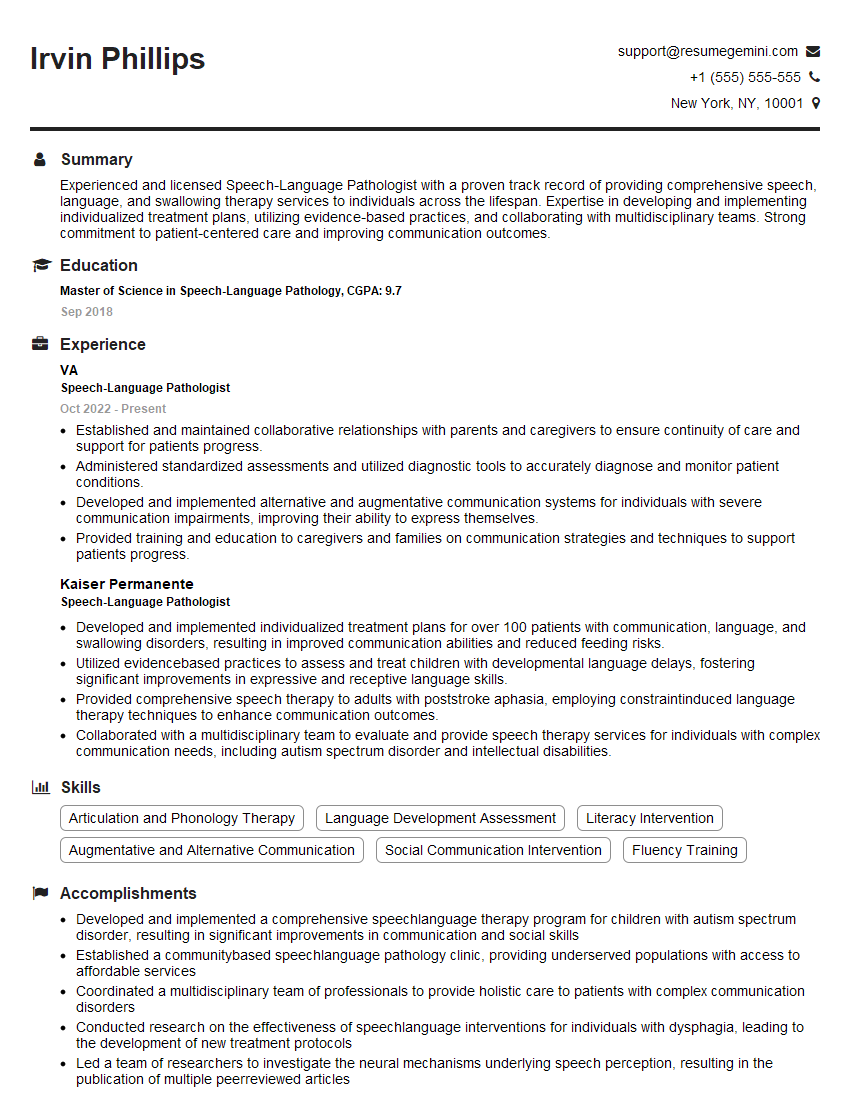
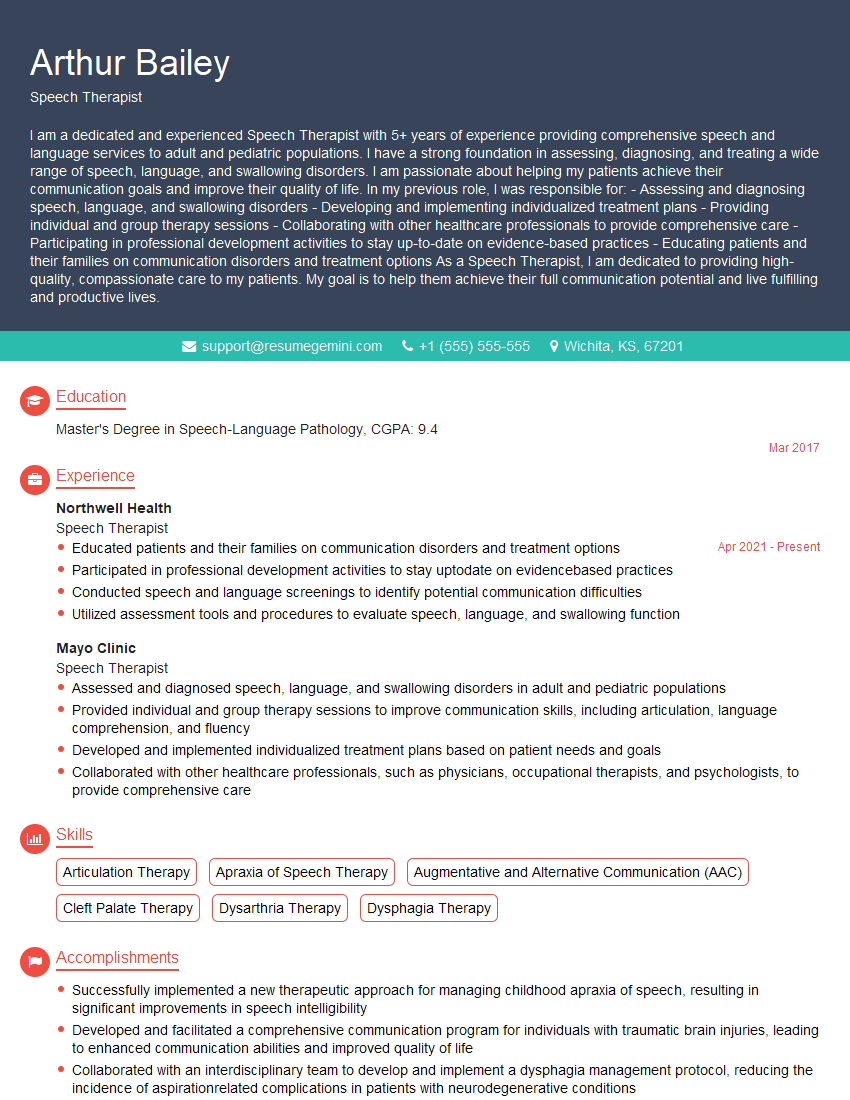
Mastering Speech Therapy Diagnosis is crucial for career advancement, opening doors to specialized roles and increased earning potential. A strong, ATS-friendly resume is your key to unlocking these opportunities. To create a truly impactful resume that highlights your skills and experience, leverage the power of ResumeGemini. ResumeGemini provides a user-friendly platform and offers examples of resumes tailored specifically to Speech Therapy Diagnosis, ensuring your application stands out from the competition. Invest in your future – build a resume that reflects your expertise and secures your dream job.
Explore more articles
Users Rating of Our Blogs
Share Your Experience
We value your feedback! Please rate our content and share your thoughts (optional).
What Readers Say About Our Blog
To the interviewgemini.com Webmaster.
Very helpful and content specific questions to help prepare me for my interview!
Thank you
To the interviewgemini.com Webmaster.
This was kind of a unique content I found around the specialized skills. Very helpful questions and good detailed answers.
Very Helpful blog, thank you Interviewgemini team.