Unlock your full potential by mastering the most common System Assembly interview questions. This blog offers a deep dive into the critical topics, ensuring you’re not only prepared to answer but to excel. With these insights, you’ll approach your interview with clarity and confidence.
Questions Asked in System Assembly Interview
Q 1. Describe your experience with different assembly methods (e.g., manual, automated, robotic).
My experience spans a wide range of assembly methods, from manual assembly to highly automated and robotic systems. In my early career, I focused primarily on manual assembly, where precision and attention to detail were paramount. I honed my skills in hand-tool operation, component handling, and quality inspection in this environment. For example, I was involved in the manual assembly of complex electromechanical devices, where each step required meticulous care to ensure proper function.
Later, I transitioned to working with automated assembly lines, where I gained experience in programming and troubleshooting PLC-controlled systems (Programmable Logic Controllers). This involved understanding the sequence of operations, managing material flow, and diagnosing errors in automated processes. A significant project involved optimizing an automated line for the assembly of circuit boards, resulting in a 20% increase in production efficiency.
More recently, I’ve worked extensively with robotic assembly cells. This requires a deep understanding of robotic programming languages, sensor integration (such as vision systems for part identification), and collaborative robot (cobot) safety protocols. I’ve been instrumental in implementing robotic solutions for tasks requiring high precision and repeatability, such as micro-soldering or delicate component placement, significantly reducing assembly time and human error.
Q 2. Explain your understanding of lean manufacturing principles in system assembly.
Lean manufacturing principles are fundamental to efficient and effective system assembly. The core idea is to eliminate waste (Muda) in all its forms, optimizing value streams to deliver high-quality products quickly and cost-effectively. In the context of assembly, this translates to several key practices:
- Just-in-time (JIT) delivery: Ensuring components arrive at the assembly line precisely when needed, minimizing storage space and reducing the risk of obsolescence.
- 5S methodology: Implementing a systematic approach to workplace organization (Sort, Set in Order, Shine, Standardize, Sustain) to improve efficiency and reduce errors. Imagine a meticulously organized workbench, where every tool and part has a designated place.
- Kaizen (continuous improvement): Constantly seeking ways to refine processes, reduce cycle times, and enhance quality. This involves regular problem-solving sessions and feedback loops to identify and address bottlenecks.
- Value stream mapping: Visualizing the entire assembly process to identify non-value-added activities and opportunities for improvement. This allows for a systematic approach to streamlining operations.
I’ve successfully applied these principles in several projects, leading to significant improvements in throughput, reduced defects, and improved overall efficiency. For instance, by implementing 5S and Kaizen in one project, we reduced assembly time by 15% and improved product quality by 10%.
Q 3. How do you ensure the quality and accuracy of your assembly work?
Quality and accuracy are paramount in system assembly. My approach involves a multi-layered strategy:
- Process control: Implementing standardized procedures and work instructions to ensure consistency and prevent errors. This includes using visual aids, checklists, and detailed documentation.
- Quality checks: Performing regular inspections at various stages of the assembly process, using appropriate tools and techniques (e.g., visual inspection, dimensional measurements, functional testing). Statistical Process Control (SPC) charts can be used to track metrics and identify trends.
- Error-proofing (Poka-yoke): Designing the assembly process to prevent errors from occurring in the first place. This can involve using jigs, fixtures, and other mechanisms to guide assembly steps and prevent misalignments.
- Calibration and maintenance: Regularly calibrating assembly tools and equipment to ensure accuracy and reliability, and conducting preventive maintenance to minimize downtime and prevent malfunctions.
- Root cause analysis: When defects are found, conduct thorough root cause analysis (RCA) using tools like the 5 Whys to identify the underlying causes and implement corrective actions to prevent recurrence.
For example, implementing a poka-yoke device to prevent incorrect component installation reduced our error rate by 30% in one project.
Q 4. What are your experience with different types of assembly tools and equipment?
My experience encompasses a diverse range of assembly tools and equipment, including:
- Hand tools: Screwdrivers, wrenches, pliers, etc. Proficiency in using these tools effectively and safely is essential for many assembly tasks.
- Power tools: Drills, impact wrenches, rivet guns, etc. These tools enhance speed and efficiency, but require careful handling and safety precautions.
- Automated assembly equipment: Automated screwdrivers, robotic arms, dispensing systems, etc. Experience with programming and maintaining this equipment is critical for efficient automated assembly lines.
- Testing equipment: Multimeters, oscilloscopes, functional testers, etc. These tools are used to verify the correct operation of assembled systems.
- Specialized tools: Depending on the product, specialized tools may be needed for specific tasks, such as soldering irons, crimpers, or specialized fixtures.
I am comfortable using a wide range of tools and am proficient in their safe and effective operation. I can also quickly learn to use new tools and adapt to different assembly techniques.
Q 5. Describe your troubleshooting skills in identifying and resolving assembly problems.
Troubleshooting assembly problems requires a systematic and analytical approach. My process typically involves:
- Identifying the problem: Clearly defining the nature and symptoms of the issue. This may involve examining the assembled system, analyzing test data, and reviewing work instructions.
- Gathering information: Collecting relevant data, such as error logs, inspection reports, and operator feedback. Identifying patterns or trends in the occurrences of problems is valuable here.
- Developing hypotheses: Formulating potential causes based on the available information. This often involves considering human error, equipment malfunction, component defects, or design flaws.
- Testing hypotheses: Systematically testing each hypothesis to identify the root cause. This can involve replicating the problem, performing controlled experiments, and analyzing the results.
- Implementing corrective actions: Once the root cause is identified, implementing the appropriate corrective actions, which may involve repairing equipment, replacing components, modifying work instructions, or improving process controls. The goal is to make changes that prevent similar issues from arising in the future.
- Verification: After implementing corrective actions, verifying that the problem is resolved and that the solution does not introduce new problems.
For example, I once identified a recurring assembly problem by meticulously analyzing error logs and conducting a root cause analysis. This led to identifying a poorly designed jig that was causing component misalignment, which was then redesigned to rectify the issue.
Q 6. How do you manage your time and prioritize tasks in a fast-paced assembly environment?
Managing time and prioritizing tasks in a fast-paced assembly environment requires effective planning and organization. I employ several techniques:
- Task scheduling: Utilizing tools such as Kanban boards or project management software to visualize workflows, track progress, and identify potential bottlenecks.
- Prioritization: Focusing on high-priority tasks that directly impact production deadlines or product quality. This often involves understanding the critical path within the assembly process.
- Time management: Using techniques such as timeboxing and the Pomodoro Technique to improve focus and efficiency. Breaking down large tasks into smaller, manageable chunks can also improve overall efficiency.
- Multitasking (with caution): While multitasking can sometimes be useful, it’s important to avoid overloading oneself. Concentrating on one task at a time often yields better results.
- Proactive problem solving: Addressing potential issues before they become major problems is crucial to prevent disruptions and delays.
For example, by using a Kanban board, I was able to effectively visualize our assembly process and identify a bottleneck in the final inspection step, enabling me to implement a solution that improved overall throughput significantly.
Q 7. What are your experience with reading and interpreting assembly drawings and schematics?
Reading and interpreting assembly drawings and schematics is a fundamental skill for system assembly. I’m proficient in interpreting various types of technical drawings, including:
- Assembly drawings: These drawings show the overall configuration of a system and how its individual components are assembled. They often include exploded views, part lists, and detailed dimensions.
- Schematics: These drawings illustrate the electrical or fluid connections between different components in a system. Understanding schematics is crucial for assembling and troubleshooting electrical or electromechanical systems.
- Wiring diagrams: These provide detailed information about the wiring layout of a system, showing how individual wires are connected to each other and to different components.
- Parts lists: These list all the components required for the assembly of a system, including their part numbers, quantities, and specifications.
My experience extends to various standards and formats of technical drawings, including ISO and ASME standards. I can quickly and accurately interpret these drawings to guide the assembly process and ensure that systems are built correctly. I’m adept at identifying discrepancies or unclear details in drawings and seeking clarification when needed.
Q 8. Explain your understanding of different types of fasteners and their applications.
Fasteners are crucial components in system assembly, holding parts together securely. Their selection depends heavily on the application’s requirements for strength, durability, reusability, and cost. Different types offer varying advantages and disadvantages.
- Bolts and Nuts: These are incredibly versatile, providing high clamping force and are easily removable. Think of the bolts securing a car engine or the nuts holding a furniture leg. Variations include hex bolts, carriage bolts, and machine screws, each suited for specific applications.
- Screws: Often used for fastening thinner materials, screws come in numerous types, such as wood screws, self-tapping screws, and machine screws. Wood screws are designed for wood, while self-tapping screws create their own thread in the material. Machine screws, similar to bolts, require pre-existing threaded holes.
- Rivets: Permanent fasteners that create a strong, often vibration-resistant joint. Once installed, rivets cannot be easily removed. Commonly used in aircraft and automotive construction.
- Welding: While not strictly a fastener, welding is a crucial joining method for many systems. It permanently joins parts using heat, creating a strong and continuous bond, suitable for high-strength applications.
- Adhesives: Adhesives are used to bond parts together, especially when high precision or a large contact area is desired. They are useful for joining dissimilar materials and can be particularly effective for lightweight designs. Choosing the correct adhesive is critical for long-term strength and environmental stability.
Selecting the right fastener involves considering factors such as material properties, load requirements, vibration resistance, assembly environment, and cost-effectiveness. A poorly chosen fastener can lead to system failure.
Q 9. How do you maintain a clean and organized workspace in an assembly area?
Maintaining a clean and organized workspace is paramount for efficient and safe system assembly. A cluttered space increases the risk of accidents and slows down production.
- 5S Methodology: I utilize the 5S methodology – Seiri (Sort), Seiton (Set in Order), Seisō (Shine), Seiketsu (Standardize), and Shitsuke (Sustain) – to maintain a structured assembly area. This involves regularly sorting through tools and materials, organizing them logically, cleaning the area thoroughly, standardizing the organization process, and maintaining these standards over time.
- Designated Areas: I establish dedicated areas for specific tasks, tools, and materials. This prevents unnecessary searching and prevents parts from getting lost or mixed up. For instance, a dedicated area for small parts in appropriately labeled containers is essential.
- Regular Cleaning: Regular cleaning of the work area removes debris and prevents contamination. This includes sweeping, vacuuming, and wiping down surfaces.
- Proper Storage: Using appropriate storage solutions, such as tool chests, shelves, and bins, keeps everything neatly organized and accessible. Clear labeling is essential.
- Waste Management: A system for handling waste materials – including proper disposal and recycling – is implemented to maintain a clean and safe work environment.
By consistently following these practices, I can significantly improve the efficiency, safety, and quality of the assembly process.
Q 10. Describe your experience with different types of assembly jigs and fixtures.
Assembly jigs and fixtures are essential tools that guide and hold parts in the correct position during assembly, ensuring consistent accuracy and repeatability. My experience includes working with various types:
- Welding Fixtures: These are used to accurately position parts for welding, ensuring consistent weld quality and preventing warping. They typically incorporate clamping mechanisms and alignment pins.
- Drilling Jigs: These guide drill bits to ensure precise hole placement, preventing damage to parts and ensuring proper alignment. Often used in repetitive manufacturing scenarios.
- Clamping Fixtures: These hold parts together securely during assembly operations, such as gluing or fastening. Different types of clamps can be integrated, such as pneumatic or hydraulic clamps to provide adjustable clamping force.
- Modular Fixtures: These are designed to be adaptable and reusable for multiple assembly operations. Components can be rearranged to accommodate different parts, enhancing flexibility.
In one project involving the assembly of complex electronic components, we designed a custom modular fixture that allowed for quick and precise assembly of various circuit boards. The fixture included adjustable alignment pins and quick-release clamps, reducing assembly time and improving consistency significantly. Understanding the design and application of jigs and fixtures is critical for optimizing the assembly process and achieving high-quality results.
Q 11. Explain your understanding of safety procedures and regulations in system assembly.
Safety is paramount in system assembly. My understanding of safety procedures and regulations is comprehensive and covers several areas:
- Personal Protective Equipment (PPE): Always wearing appropriate PPE, such as safety glasses, gloves, hearing protection, and steel-toed boots, is non-negotiable. The specific PPE required varies depending on the task and materials involved.
- Lockout/Tagout Procedures: Following strict lockout/tagout procedures to isolate energy sources (electrical, pneumatic, hydraulic) before performing maintenance or repairs is crucial to prevent accidents.
- Ergonomics: Maintaining proper posture and using ergonomic tools and equipment to prevent musculoskeletal injuries. This includes regular breaks and adjusting workstation setups.
- Material Handling: Using appropriate lifting techniques and equipment to prevent injuries associated with handling heavy or awkward materials.
- Emergency Procedures: Familiarity with emergency procedures, including fire safety, first aid, and evacuation plans, is essential. Knowing the location of safety equipment and how to use it is crucial.
- Compliance with Regulations: Adherence to all relevant safety regulations, including OSHA (Occupational Safety and Health Administration) guidelines, is strictly enforced.
In my experience, proactive safety measures, including regular safety training and audits, are crucial for maintaining a safe working environment and preventing accidents. Safety is not just a set of rules; it’s a culture that needs to be actively fostered.
Q 12. How do you ensure compliance with quality standards (e.g., ISO 9001) during assembly?
Ensuring compliance with quality standards, such as ISO 9001, requires a systematic approach to assembly.
- Process Control: Implementing documented assembly processes with clear instructions and quality checks at each stage of assembly is critical. This involves detailed work instructions, checklists, and visual aids.
- Inspection and Testing: Regularly inspecting parts and sub-assemblies for defects and conducting necessary tests to ensure they meet specifications. This can involve visual inspections, dimensional checks, and functional testing.
- Calibration of Equipment: Regularly calibrating measuring equipment to ensure accuracy and reliability of inspection results.
- Corrective Actions: Implementing effective corrective actions when non-conformances are identified to prevent recurrence. This involves documenting the root cause, corrective actions, and preventive measures.
- Documentation: Maintaining accurate and complete documentation of all assembly activities, including inspection results, corrective actions, and training records.
- Continuous Improvement: Regularly reviewing assembly processes and identifying areas for improvement to enhance efficiency and quality. This may involve using statistical process control (SPC) techniques.
By adhering to these principles and actively participating in quality improvement initiatives, we ensure consistent compliance with quality standards, leading to improved product quality, reduced defects, and increased customer satisfaction.
Q 13. What is your experience with assembly documentation and record-keeping?
Assembly documentation and record-keeping are essential for traceability, quality control, and continuous improvement. My experience includes:
- Work Instructions: Creating and using detailed work instructions that clearly define the assembly process, including sequence of operations, tools required, and quality checks.
- Bill of Materials (BOM): Using and maintaining accurate BOMs to ensure all necessary parts are available for assembly. This is crucial for preventing delays and ensuring correct part usage.
- Assembly Drawings: Referring to and interpreting assembly drawings to understand the correct assembly sequence and part orientation.
- Inspection Reports: Creating and maintaining inspection reports that document the results of quality checks and any non-conformances identified.
- Traceability Records: Maintaining records that track the origin of parts and the assembly history of the final product, enabling efficient troubleshooting in the event of defects.
In a previous role, we implemented a digital system for managing assembly documentation and records. This improved efficiency, reduced paperwork, and enhanced traceability significantly. The system allowed for easy access to information, simplified reporting, and facilitated better collaboration among team members.
Q 14. How do you handle discrepancies or inconsistencies during the assembly process?
Discrepancies or inconsistencies during assembly require a systematic approach to identify the root cause and implement corrective actions.
- Identify the Discrepancy: First, clearly define the nature of the discrepancy, documenting the specific deviation from the expected outcome.
- Investigate the Root Cause: Investigate the root cause of the discrepancy using a structured approach, such as the 5 Whys technique. Consider factors like incorrect parts, faulty tools, unclear instructions, or inadequate training.
- Implement Corrective Actions: Based on the root cause analysis, implement corrective actions to prevent recurrence. This may involve correcting instructions, replacing faulty parts, retraining personnel, or modifying the assembly process.
- Verify the Correction: After implementing the corrective actions, verify that the issue is resolved and the assembly process is functioning correctly.
- Document the Process: Document the entire process, including the discrepancy, the root cause analysis, corrective actions, and verification results. This ensures traceability and supports continuous improvement efforts.
In one instance, we encountered inconsistencies in the alignment of a key component. Through careful investigation, we discovered that the jig used for assembly was slightly misaligned. By correcting the jig and re-training personnel on its proper usage, we resolved the issue and prevented further inconsistencies.
Q 15. Describe your experience working in a team environment during system assembly.
Teamwork is paramount in system assembly. In my previous role at Acme Robotics, we assembled complex robotic arms. Our team, comprising engineers, technicians, and quality control specialists, followed a meticulously planned assembly process. Each member had specific responsibilities, but we constantly communicated and collaborated. For instance, if a technician encountered a problem during sub-assembly, they’d immediately consult with the lead engineer or other team members to find a solution, preventing delays and ensuring quality. We utilized daily stand-up meetings to track progress, address challenges, and proactively adjust our workflow as needed. This collaborative approach not only improved efficiency but also fostered a supportive environment where everyone felt empowered to contribute their expertise.
- Communication: Daily stand-ups and regular email updates ensured everyone was on the same page.
- Collaboration: Cross-training allowed team members to assist each other when needed.
- Problem-solving: Joint brainstorming sessions resolved intricate assembly challenges.
Career Expert Tips:
- Ace those interviews! Prepare effectively by reviewing the Top 50 Most Common Interview Questions on ResumeGemini.
- Navigate your job search with confidence! Explore a wide range of Career Tips on ResumeGemini. Learn about common challenges and recommendations to overcome them.
- Craft the perfect resume! Master the Art of Resume Writing with ResumeGemini’s guide. Showcase your unique qualifications and achievements effectively.
- Don’t miss out on holiday savings! Build your dream resume with ResumeGemini’s ATS optimized templates.
Q 16. How do you adapt to changes in assembly processes or instructions?
Adaptability is crucial in system assembly. Processes change frequently due to design modifications, material shortages, or updated safety protocols. My approach is three-pronged: Firstly, I actively listen to instructions and clarifying any ambiguities. I meticulously review all updated documentation, paying close attention to revisions and new procedures. For instance, if a new tool is introduced for a specific task, I’ll ensure I’m properly trained on its usage and safety precautions before implementation. Secondly, I’m proactive in identifying potential challenges associated with the changes and proposing solutions before they become major problems. Finally, I embrace a continuous learning mindset, always seeking opportunities to enhance my skills and knowledge base to remain adaptable to new assembly techniques and technologies. I am confident in quickly adapting to change by learning from past experiences and proactively seeking solutions.
Q 17. What is your experience with different types of materials used in system assembly?
My experience encompasses a broad range of materials, including metals (aluminum, steel, titanium), polymers (ABS, polycarbonate), composites (carbon fiber, fiberglass), and various electronics components (circuit boards, sensors, microprocessors). I’m familiar with the unique properties of each material and how these properties influence assembly techniques. For example, when working with delicate electronics, I prioritize anti-static measures to prevent damage. When handling metals, I understand the importance of proper fasteners and torque values to ensure structural integrity. I also have experience with different surface treatments and coatings, like anodizing or powder coating, and understand their effect on the overall system’s performance and durability. Working with composites requires extra care to avoid damage during handling and assembly.
Q 18. Explain your understanding of the importance of proper torque values in assembly.
Proper torque values are critical for system assembly. Applying insufficient torque can lead to loose connections, vibrations, and eventual failure. Conversely, over-tightening can cause damage to components like stripped threads, fractured materials, or even worker injury. I consistently use calibrated torque wrenches to ensure accurate torque application. Torque specifications are always verified against engineering drawings and assembly manuals. Different materials and fastener types (e.g., bolts, screws) require specific torque values, and I carefully consult relevant documentation. Failing to adhere to correct torque specifications can lead to catastrophic consequences, so precision and attention to detail are vital in this aspect of assembly.
Q 19. How do you manage inventory and material handling in an assembly environment?
Efficient inventory and material handling are crucial for smooth assembly processes. My experience includes utilizing Kanban systems for just-in-time delivery of components to the assembly line, reducing storage costs and minimizing waste. I’m also adept at using inventory management software to track material levels, predict demand, and order replenishments. Proper material handling involves employing appropriate tools and techniques to prevent damage. This includes using lift assists for heavy components and protective packaging to avoid scratches or breakage. We also organized our workspace using 5S methodology (Sort, Set in Order, Shine, Standardize, Sustain) for optimum workflow and efficient material flow.
Q 20. What are your experience with different types of assembly testing and inspection methods?
My experience includes various testing and inspection methods throughout the assembly process. This includes visual inspections for defects, dimensional checks using calipers and measuring tools, and functional testing of individual components and the final assembled system. I’ve used specialized testing equipment such as oscilloscopes, multimeters, and automated test equipment (ATE) depending on the complexity of the system. We implemented statistical process control (SPC) techniques to track key metrics and identify potential issues early on. For example, during the assembly of circuit boards, we would conduct functional tests to verify signal integrity and proper operation of each component. Following a complete assembly, we run the system through a rigorous series of tests to confirm its conformance to specified parameters.
Q 21. How do you identify and report potential safety hazards in the assembly area?
Safety is paramount in system assembly. I actively identify and report potential hazards by conducting regular safety inspections of the work area, checking for things like loose wires, damaged equipment, or trip hazards. I’m trained in the use of personal protective equipment (PPE), and I ensure all team members are using the appropriate gear, such as safety glasses, gloves, and hearing protection. If I observe unsafe practices, I immediately address them with the individual, and if necessary, escalate the concern to my supervisor. Regular safety training keeps me updated on potential risks and mitigations. I actively participate in safety meetings and contribute to creating a culture of safety awareness within the team. Reporting is crucial; we maintain detailed records of any incidents or near misses to learn from them and prevent future occurrences.
Q 22. Describe your experience with using computerized maintenance management systems (CMMS).
My experience with Computerized Maintenance Management Systems (CMMS) spans several years and various implementations. I’ve used CMMS software to schedule preventative maintenance, track repairs, manage inventory, and generate reports on equipment performance. For example, in my previous role at Acme Corporation, we utilized a CMMS called ‘Maintainer’ to optimize our assembly line’s uptime. This involved inputting data on equipment, scheduling routine maintenance (like lubrication and cleaning of robotic arms), and tracking the replacement of parts. The system provided insightful analytics such as mean time between failures (MTBF) for our key machines, allowing us to proactively address potential issues and avoid costly downtime. Another crucial aspect was the ability to generate detailed reports for management, justifying maintenance budget requests and showcasing the positive impact of our proactive strategies. I am proficient in using CMMS software to improve efficiency and reduce maintenance costs.
Q 23. How do you contribute to continuous improvement efforts in system assembly?
Continuous improvement in system assembly is a core tenet of my approach. I actively contribute through several key methods. Firstly, I actively participate in Kaizen events, brainstorming with teams to identify bottlenecks and inefficiencies in our assembly processes. For example, in one project, we identified a significant delay caused by manual component feeding. By implementing a simple automated feeder, we reduced assembly time by 15%. Secondly, I leverage data analysis from our CMMS and other sources to pinpoint areas needing improvement. This often involves analyzing failure rates, identifying trends, and suggesting preventative measures. Finally, I’m a strong proponent of lean manufacturing principles, constantly searching for ways to eliminate waste, minimize movement, and streamline workflows. I regularly suggest and implement improvements, which are documented and tracked to measure their effectiveness. This iterative approach ensures continuous refinement of our processes.
Q 24. Explain your understanding of root cause analysis and its application in assembly.
Root cause analysis (RCA) is a crucial problem-solving methodology used to identify the fundamental cause of a problem rather than just addressing its symptoms. In system assembly, this is vital for preventing recurring defects and improving overall quality. My approach typically involves using the ‘5 Whys’ technique, repeatedly asking ‘why’ to drill down to the root of the issue. For instance, if we experience a high failure rate in a specific solder joint, asking ‘why’ might reveal inadequate training for operators, leading to inconsistent soldering techniques. Further ‘whys’ might uncover a lack of clear work instructions or insufficient inspection procedures. Once the root cause is identified, we can develop and implement effective countermeasures, such as improved training, revised work instructions, or enhanced inspection processes. Other RCA techniques like Fishbone diagrams and Fault Tree Analysis are also valuable tools in my toolkit, depending on the complexity of the issue.
Q 25. Describe your experience with preventative maintenance of assembly equipment.
Preventative maintenance (PM) of assembly equipment is critical for ensuring consistent production and minimizing downtime. My experience includes developing and implementing PM schedules based on manufacturer recommendations and historical data. This involves regularly inspecting and lubricating equipment, replacing worn parts before failure, and conducting periodic functional tests. For example, in a previous role, I developed a detailed PM schedule for our automated pick-and-place machines, including daily lubrication, weekly visual inspections, and monthly functional tests. This proactive approach significantly reduced unscheduled downtime and extended the lifespan of the equipment. I also train assembly technicians on proper PM procedures, emphasizing the importance of adhering to the schedule and reporting any anomalies promptly. Effective PM is essential for maintaining high production efficiency and reducing maintenance costs over the long term.
Q 26. What is your experience with Six Sigma or other quality improvement methodologies?
I have extensive experience with Six Sigma methodologies, particularly DMAIC (Define, Measure, Analyze, Improve, Control). I’ve led several projects using this framework to improve assembly processes and reduce defects. One successful project involved reducing the defect rate in a complex circuit board assembly. We used statistical process control (SPC) charts to monitor the process and identify key variables impacting defect rates. Through data analysis, we determined that temperature variations during the soldering process were the main culprit. By implementing a temperature control system and refining our process parameters, we reduced the defect rate by 60%, achieving significant cost savings and improved customer satisfaction. I’m also familiar with other quality improvement methodologies such as Lean Manufacturing and Kaizen, often integrating them with Six Sigma for a holistic approach to process optimization.
Q 27. How familiar are you with different types of soldering techniques?
I’m proficient in various soldering techniques, including through-hole soldering, surface mount technology (SMT) soldering, and specialized soldering techniques like reflow soldering and wave soldering. My expertise extends to different solder types, including lead-free solder. I understand the importance of proper soldering techniques to ensure reliable and durable connections. For example, I am adept at using different soldering irons, hot air stations, and reflow ovens to create high-quality solder joints. I also understand the critical aspects of flux selection and cleaning procedures to prevent defects. Safety is paramount in my approach; I always adhere to proper safety guidelines when handling soldering equipment and materials.
Q 28. Describe your experience with automated assembly equipment and programming.
I possess significant experience with automated assembly equipment and programming, including robotic systems, pick-and-place machines, and automated guided vehicles (AGVs). My programming skills encompass various industrial automation languages like ladder logic (PLC programming) and robotic control languages such as RAPID (ABB robots). In a previous project, I programmed a robotic arm to perform a complex assembly task, significantly improving both speed and accuracy compared to manual assembly. This involved creating a detailed program incorporating motion control, sensor integration, and error handling routines. I have a strong understanding of system integration, connecting different automated components to create efficient and streamlined assembly lines. Troubleshooting and maintaining automated equipment is also a core part of my expertise, enabling me to quickly resolve malfunctions and minimize production downtime.
Key Topics to Learn for System Assembly Interview
- Hardware Components & Integration: Understanding motherboards, CPUs, RAM, storage devices, and their interconnectivity. Practical application: troubleshooting hardware failures and optimizing system performance.
- BIOS/UEFI Setup & Configuration: Knowledge of the boot process, BIOS/UEFI settings, and their impact on system functionality. Practical application: configuring boot order, optimizing system performance, and securing the system.
- Operating System Installation & Configuration: Proficiency in installing and configuring various operating systems (Windows, Linux, macOS). Practical application: creating and managing user accounts, installing drivers, and troubleshooting OS issues.
- Peripheral Device Installation & Troubleshooting: Understanding various peripherals (printers, scanners, network devices) and their connectivity. Practical application: diagnosing and resolving connectivity issues and optimizing peripheral performance.
- Networking Fundamentals: Basic understanding of network configurations (IP addresses, subnets, DNS). Practical application: configuring network connections, troubleshooting network problems, and ensuring system security.
- System Diagnostics & Troubleshooting: Proficiency in using diagnostic tools to identify and resolve system issues. Practical application: effectively utilizing event logs, system monitors, and troubleshooting guides to resolve hardware and software problems.
- Data Backup & Recovery: Understanding data backup strategies and recovery procedures. Practical application: implementing robust backup solutions to prevent data loss and ensure business continuity.
Next Steps
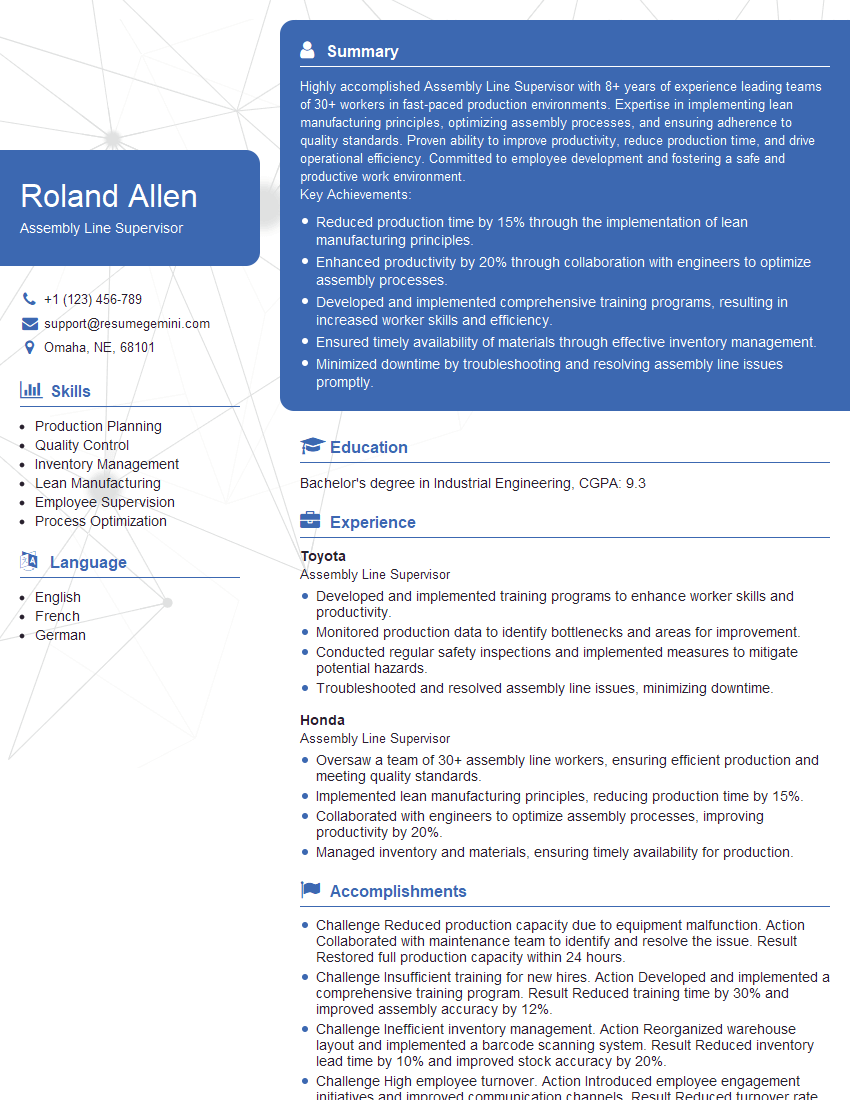
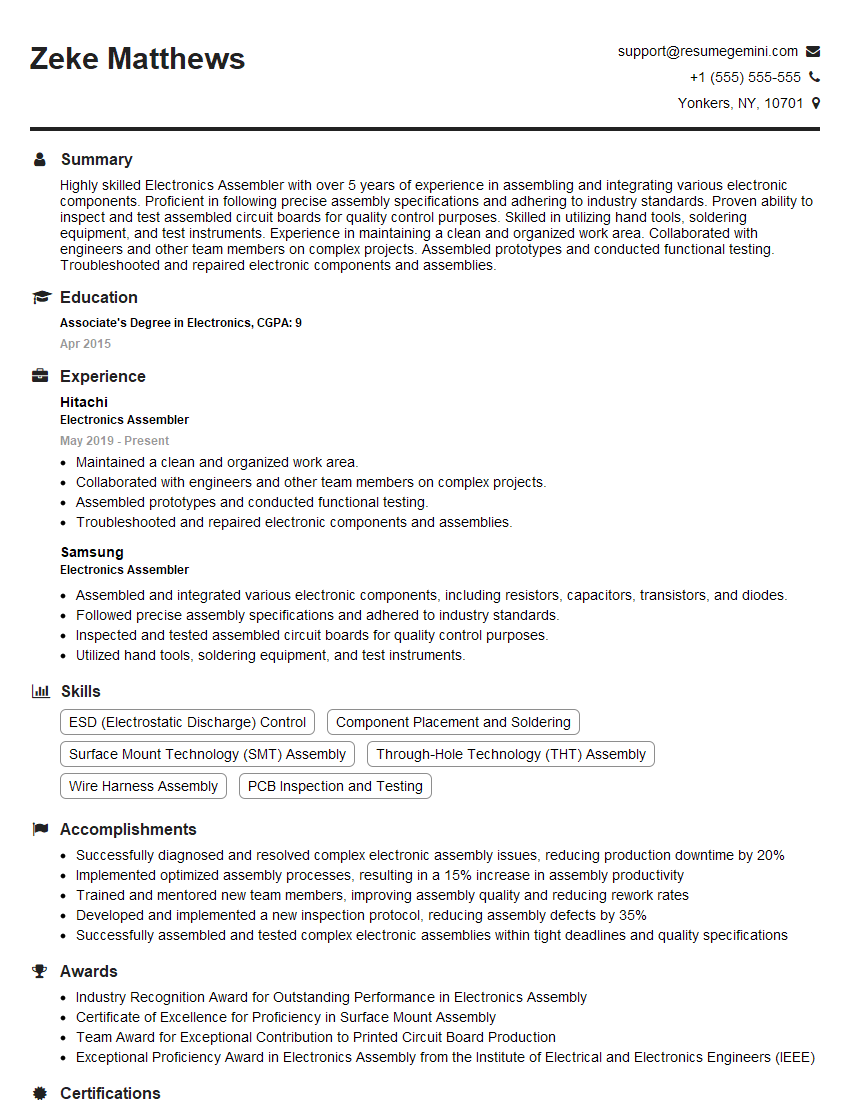
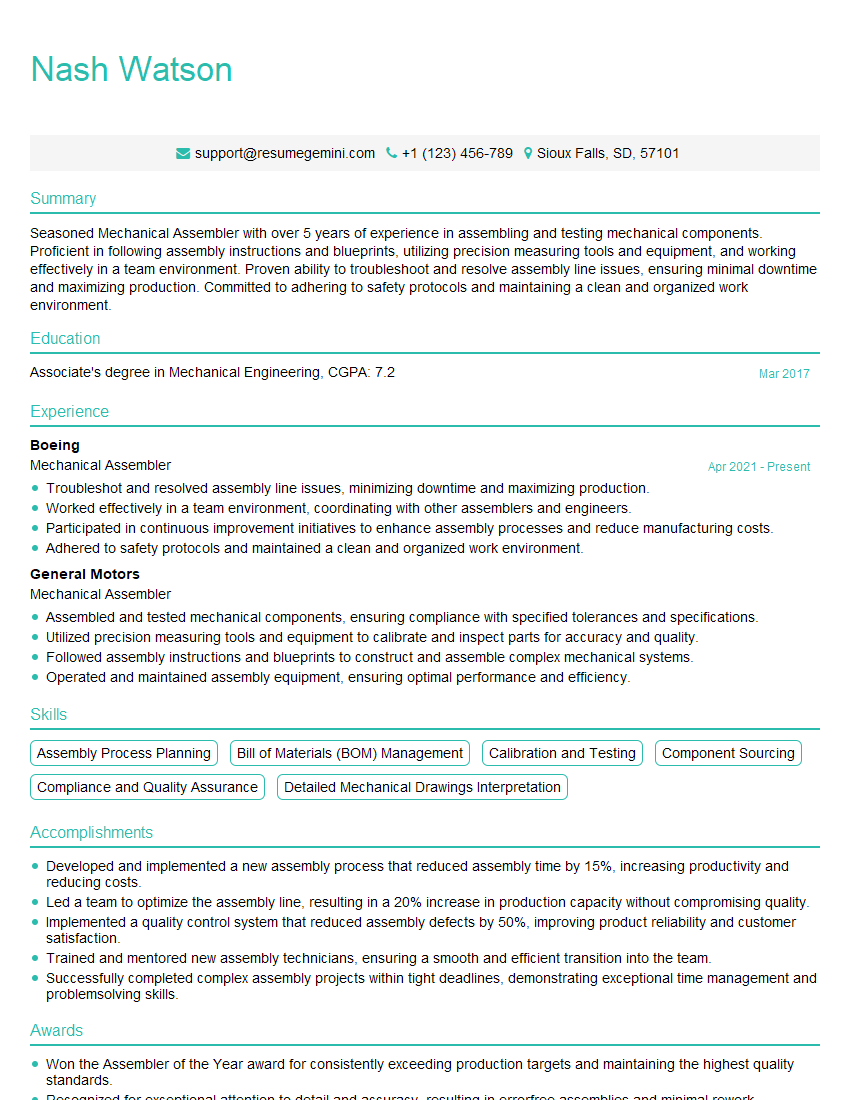
Mastering system assembly is crucial for a successful career in IT, opening doors to diverse roles and opportunities for advancement. A strong understanding of these fundamental concepts demonstrates valuable technical skills and problem-solving abilities highly sought after by employers. To significantly increase your job prospects, it’s essential to create a resume that is ATS-friendly and highlights your unique qualifications. We recommend using ResumeGemini, a trusted resource for building professional resumes. ResumeGemini provides tools and examples of resumes tailored to System Assembly, helping you present your skills effectively to potential employers. Take advantage of these resources to build a winning resume and launch your career in System Assembly!
Explore more articles
Users Rating of Our Blogs
Share Your Experience
We value your feedback! Please rate our content and share your thoughts (optional).
What Readers Say About Our Blog
To the interviewgemini.com Webmaster.
Very helpful and content specific questions to help prepare me for my interview!
Thank you
To the interviewgemini.com Webmaster.
This was kind of a unique content I found around the specialized skills. Very helpful questions and good detailed answers.
Very Helpful blog, thank you Interviewgemini team.