Every successful interview starts with knowing what to expect. In this blog, we’ll take you through the top Tile Grouting and Finishing interview questions, breaking them down with expert tips to help you deliver impactful answers. Step into your next interview fully prepared and ready to succeed.
Questions Asked in Tile Grouting and Finishing Interview
Q 1. What types of grout are best suited for different tile types (e.g., ceramic, porcelain, natural stone)?
Choosing the right grout for your tile is crucial for longevity and aesthetics. Different tiles have different porosity and expansion/contraction rates, influencing grout selection.
- Ceramic Tile: Standard cement-based grouts (both sanded and unsanded) work well with ceramic tile. Sanded grout is preferred for wider grout lines (1/8” and above) due to its increased strength. Unsanded grout is better for smaller grout lines and prevents a gritty texture.
- Porcelain Tile: Porcelain is denser than ceramic, often requiring a grout with excellent stain resistance. Epoxy grout is an excellent choice, offering superior durability and stain protection, though it is more expensive and requires specialized application techniques. Cement-based grouts can also be used, provided they are sealed properly.
- Natural Stone (Marble, Granite, Travertine, etc.): Natural stone is often more porous and delicate. Epoxy grout is a great option here too due to its non-porous nature. However, carefully select a grout color that complements the stone’s color. Cement-based grouts can work, but they absolutely *must* be sealed to prevent staining and damage to the stone.
In short, consider the tile’s porosity, the grout line width, and your budget when making your selection. For high-traffic areas or areas prone to moisture, epoxy grout offers superior performance.
Q 2. Explain the process of mixing grout to achieve the correct consistency.
Mixing grout correctly is paramount for achieving the right consistency and preventing cracking or crumbling. Imagine making a cake – you wouldn’t just throw all the ingredients together! The manufacturer’s instructions should always be followed, but here are some general guidelines:
- Use clean tools: Start with a clean bucket and mixing paddle. Any debris will affect the consistency.
- Add water gradually: Pour the dry grout into the bucket and *slowly* add water while mixing thoroughly. Don’t add all the water at once. It’s better to add more water gradually until you reach the desired consistency.
- Achieving the right consistency: The grout should be smooth and creamy, like thick peanut butter. It should not be runny, nor should it be so stiff that it’s difficult to work with. A good test is to scoop some up and see if it holds its shape for a few seconds before slumping slightly.
- Mix thoroughly: Use a drill with a mixing paddle to ensure a uniform mixture. Avoid mixing for excessively long periods, as this can introduce air bubbles.
- Let it rest: After mixing, let the grout rest for 5-10 minutes (check manufacturer’s instructions) to allow the water to fully hydrate the mix.
A poorly mixed grout will lead to problems down the line. Taking the time to get this step right saves time and frustration later.
Q 3. Describe your experience with different grout application techniques (e.g., floating, sponging).
Grout application techniques depend on the project’s scale and the desired finish. I’ve extensive experience with several techniques:
- Floating: This involves using a rubber grout float to force the grout into the joints at a 45-degree angle, working it thoroughly to ensure complete filling. This is the most common method for larger projects and provides a consistent finish.
- Sponging: This involves using a damp sponge to remove excess grout from the tile surface, immediately after floating. It requires a light touch to avoid digging out the grout from the joints. Timing is key here: remove the excess grout before it sets, but don’t remove too much grout from the joints.
- Grout bag (for intricate designs): A grout bag is ideal for filling narrow or intricate grout lines, offering greater precision. This is especially useful in mosaic work or installations with decorative tile patterns.
The ‘best’ technique is chosen based on the specific tile size, grout line width, and design of the installation. Each technique demands practice and attention to detail to achieve a professional finish.
Q 4. How do you ensure proper grout joint width and spacing?
Maintaining consistent grout joint width is critical for both aesthetics and structural integrity. Several methods ensure proper spacing:
- Spacers: Plastic or tile spacers are placed between tiles during installation. These come in various thicknesses, enabling precise control over joint width.
- Tape: For certain designs, using tape along the edges can create perfectly straight and uniform lines, particularly with larger tiles. This method requires careful attention to ensure the tape does not interfere with grout placement.
- Experience and skill: With enough experience, a skilled tiler can visually maintain consistent grout line spacing, even without spacers. However, spacers are always recommended for consistent results.
Consistency in grout joint width ensures a professional and even appearance. Varying widths will result in a messy and uneven look.
Q 5. What are the common problems encountered during grout installation, and how do you address them?
Several common problems can arise during grout installation. Identifying and addressing these promptly is key to a successful project:
- Cracking grout: This often happens due to improper grout mixing, inadequate curing, or excessive movement in the substrate. Solutions include ensuring proper grout mixing and using appropriate expansion joints where necessary.
- Uneven grout lines: This typically results from inconsistent application or incorrect spacer usage. Careful attention to technique and the use of spacers can prevent this.
- Grout haze/residue: This occurs if grout is not cleaned up properly and promptly. Regular cleaning with a damp sponge and appropriate grout cleaning solutions can prevent haze.
- Staining: This is especially common with natural stone. Proper sealing of grout and using a grout appropriate for the tile type are essential for stain prevention.
Prevention is always better than cure. Careful planning, attention to detail, and the selection of correct materials minimize the chance of encountering these problems.
Q 6. How do you clean excess grout from tile surfaces effectively?
Cleaning excess grout from tile surfaces effectively requires timing and the right tools. Waiting too long will make it much harder!
- Immediate cleaning: As soon as the grout is set enough to hold its shape in the joints, begin cleaning. Don’t wait until it hardens completely.
- Damp sponge: Use a clean, damp sponge to gently wipe away excess grout. Avoid scrubbing vigorously as this can dig out grout from the joints.
- Clean water: Rinsing the sponge frequently with clean water is vital to prevent smearing and haze formation.
- Grout haze remover: For stubborn residue, a commercial grout haze remover can be used according to the manufacturer’s instructions. Apply, allow it to dwell, and then rinse thoroughly.
The goal is to remove excess grout without disturbing the grout in the joints. This requires a gentle touch and prompt action.
Q 7. What are the different types of grout sealers, and when would you use each?
Grout sealers protect grout from staining, moisture damage, and wear. Several types exist:
- Solvent-based sealers: These offer excellent protection, but they have a strong odor and require good ventilation during application.
- Water-based sealers: These are easier to apply and have a less harsh odor, making them suitable for indoor use. They generally offer good protection, but may not be as durable as solvent-based sealers.
- Epoxy sealers: These provide the highest level of protection, particularly against stains and moisture. However, they are more expensive and require specific application techniques.
The choice depends on the project’s requirements and location. Solvent-based sealers are better for high-traffic areas, water-based sealers for interior spaces with less wear, and epoxy sealers are best for areas prone to high moisture or staining, such as showers or kitchens. Always follow the manufacturer’s instructions for application.
Q 8. Describe your experience with grout color matching and blending.
Grout color matching and blending is crucial for achieving a visually appealing and uniform finish. It’s an art that combines precision and experience. I start by carefully examining the tile’s color and shade variations to select the closest grout match. This often involves comparing multiple grout samples under various lighting conditions. If a perfect match isn’t available, I expertly blend different grout colors to create a custom shade. This involves carefully measuring and mixing small batches until I achieve the desired color consistency. I often use a small, clean container and a mixing stick for this. For example, I recently worked on a project with multi-toned tiles, and by subtly blending a light beige and a slightly warmer off-white grout, I created a stunning and natural-looking finish that perfectly complemented the tile’s variations. The key is patience and incremental adjustments. It’s better to mix small quantities and gradually refine the color than to mix a large batch incorrectly and waste material.
Q 9. Explain the importance of proper grout curing and maintenance.
Proper grout curing and maintenance are essential for the longevity and aesthetic appeal of your tile installation. Grout needs time to fully hydrate and harden; this process, known as curing, typically takes several days. During this period, it’s vital to keep the grout moist (but not saturated) to prevent cracking and shrinking. This can be done by misting the grout with water or using a grout curing sealant. Once cured, regular cleaning prevents staining and deterioration. Regular sweeping or vacuuming removes loose debris, while periodic scrubbing with a grout cleaner removes embedded dirt and grime. A protective sealant applied after curing further enhances stain resistance and makes cleaning much easier, similar to how you’d seal a countertop to protect it from spills. Think of grout curing and maintenance as ongoing preventative measures—preventative maintenance prevents major costly repairs later on.
Q 10. What safety precautions do you take when working with grout and tile?
Safety is paramount in tile and grout installation. I always wear safety glasses to protect my eyes from dust and debris, especially during the mixing and application process. A dust mask is essential to prevent inhaling the fine grout powder, which can irritate the lungs. Gloves protect my hands from the alkaline nature of many grouts, and long sleeves and closed-toe shoes help protect my skin and feet from splashes and spills. Furthermore, good ventilation is crucial; if I’m working indoors, I always ensure there’s adequate airflow, often using fans to help remove dust and fumes. When working with epoxy grouts, additional precautions like ventilation and chemical-resistant gloves are critical due to their stronger chemical properties.
Q 11. How do you handle challenging grout installations (e.g., curved surfaces, intricate designs)?
Challenging installations require specialized techniques and tools. For curved surfaces, I use flexible grout floats or specialized tools to ensure even application and avoid gaps. Intricate designs may require applying grout in small sections, carefully cleaning excess grout, and potentially using a grout bag for more precise application in tight areas. I often use masking tape or painter’s tape to protect adjacent areas and maintain clean lines, especially when working with contrasting grout colors. A recent project involved a mosaic with extremely small tiles and curved lines. I used a grout bag to carefully fill the tiny gaps, ensuring a precise and neat finish. Patience and meticulous attention to detail are key for these intricate jobs.
Q 12. What tools and equipment are essential for efficient and high-quality grout installation?
Essential tools for efficient and high-quality grout installation include: a grout float (various sizes and types for different applications), a rubber grout sponge, a bucket, a mixing paddle (for power mixers or manual mixing), measuring cups, safety glasses, a dust mask, gloves, and a grout saw or knife for removing excess grout. For larger projects, a power mixer can significantly speed up the process. Cleaning tools like grout brushes, grout haggers, and a wet/dry vacuum are essential for post-installation cleanup. In addition, depending on the project, specialized tools like grout bags or flexible floats might be necessary. Choosing the right tools is crucial for efficient and clean work and reduces time and effort.
Q 13. How do you determine the appropriate amount of grout needed for a project?
Determining the correct grout quantity depends on several factors: the tile size and spacing, the grout type (cement-based, epoxy, etc.), and the surface area. I generally calculate the grout requirement based on the manufacturer’s recommendations and the total area to be grouted. I always add a small extra amount to account for waste and potential errors. For example, when working with 12×12 inch tiles with a 1/8-inch grout line, I will calculate the total grout area, and then use the manufacturer’s instructions to determine the yield rate per bag or container to determine the number of containers needed. I also factor in overages for spillage or unexpected issues. It’s always better to have a little extra rather than run short mid-project.
Q 14. Describe your experience with repairing damaged grout.
Damaged grout repair involves carefully removing the damaged sections using a grout saw or specialized tools. The area is then cleaned thoroughly before applying fresh grout. It’s important to ensure a proper bond between the new and existing grout by wetting the area first. I often match the existing grout color as closely as possible or advise the client on appropriate color changes if the grout is discolored or significantly faded. For larger repairs, or for areas where the grout is deeply damaged, it may be necessary to completely regrout the area to ensure a cohesive and visually consistent finish. In some cases, it might be easier and more effective to regrout a section rather than attempting spot repairs on heavily damaged grout.
Q 15. How do you address grout haze or efflorescence?
Grout haze, also known as efflorescence, is a whitish powdery residue that appears on the surface of grout after it’s dried. It’s caused by salts migrating to the surface from within the grout or the underlying substrate. Think of it like sweat on a muggy day – the salts are trying to escape. To address this, I first determine the cause. Is it a poor-quality grout, improper mixing, or excess water used during installation? The solution often involves cleaning the affected area with a grout haze remover, following the manufacturer’s instructions carefully. This usually involves applying the cleaner, letting it dwell, scrubbing gently, and rinsing thoroughly. In severe cases, I may need to repeat the process or consider more aggressive methods like acid washing (always taking the necessary safety precautions!). Prevention is key: using a high-quality grout, proper mixing ratios, and allowing adequate drying time are essential.
For example, on a recent job, we encountered significant grout haze on a bathroom floor. We used a commercially available grout haze remover, and after two applications and thorough rinsing, the haze disappeared, restoring the original color and finish of the grout.
Career Expert Tips:
- Ace those interviews! Prepare effectively by reviewing the Top 50 Most Common Interview Questions on ResumeGemini.
- Navigate your job search with confidence! Explore a wide range of Career Tips on ResumeGemini. Learn about common challenges and recommendations to overcome them.
- Craft the perfect resume! Master the Art of Resume Writing with ResumeGemini’s guide. Showcase your unique qualifications and achievements effectively.
- Don’t miss out on holiday savings! Build your dream resume with ResumeGemini’s ATS optimized templates.
Q 16. What are the signs of improper grout installation?
Improper grout installation manifests in several ways. Cracking is a major red flag – indicating either shrinkage due to improper mixing or insufficient curing time, or stress from movement in the substrate. Inconsistencies in color or texture across the grouted areas show that the grout wasn’t applied evenly or that the mixing wasn’t consistent. Crumbly or powdery grout suggests poor-quality grout or incorrect mixing ratios. Additionally, grout that doesn’t fully fill the joints between tiles will leave gaps, compromising the water resistance and the overall aesthetics. Finally, if grout is not properly cleaned after installation, it will leave a hazy or dull appearance.
Imagine baking a cake – if you don’t use the right ingredients or follow the recipe, the result will be unsatisfactory. Similarly, grout needs the right mix and careful application to deliver a professional, lasting finish.
Q 17. What is your experience with epoxy grout versus cement-based grout?
I have extensive experience with both epoxy and cement-based grouts. Cement-based grout is the more common and cost-effective option, ideal for most residential applications. It’s relatively easy to work with, but it’s more porous and susceptible to staining and moisture damage. Epoxy grout, on the other hand, is more expensive and requires specialized tools and techniques for application, but it’s far superior in terms of durability, stain resistance, and water resistance. It’s a preferred choice for high-traffic areas, commercial settings, and wet environments like showers and pools. The choice depends entirely on the project requirements and the client’s budget and expectations.
For example, in a recent kitchen renovation, the client opted for cement-based grout, while in a subsequent pool installation, epoxy grout was the clear winner due to its superior water resistance properties.
Q 18. Describe your experience with different types of tile cutting and installation techniques.
My experience with tile cutting and installation encompasses various techniques. I’m proficient with wet saws for precise cuts on ceramic and porcelain tiles, and I use angle grinders with diamond blades for more aggressive cuts or when working with tougher materials. For smaller tiles or intricate designs, I employ manual tile cutters for accuracy and control. When it comes to installation, I utilize various methods including thin-set mortar application for larger tiles and mastic for smaller ones, always ensuring proper bonding and level setting. I am also experienced in different layout techniques, such as running bond, herringbone, and diagonal patterns, and I can adapt to any surface, whether it’s a concrete subfloor or a wooden one, using appropriate techniques for each.
I consider myself well-versed in troubleshooting common challenges that arise in cutting and installation. For example, I know how to adjust the blade on a wet saw for optimal cutting performance and how to handle specific issues, like chipping on delicate tiles or adjusting for uneven substrate surfaces. This ensures consistent and professional results.
Q 19. How do you prepare a surface before tile installation?
Surface preparation is paramount for successful tile installation. A poorly prepared surface can lead to cracking, delamination, and uneven tile surfaces. The process typically involves cleaning the surface thoroughly to remove any dirt, debris, loose material, or old adhesive. Any cracks or imperfections in the substrate should be repaired and leveled using appropriate patching compounds. For a concrete substrate, this could involve self-leveling compound to ensure a perfectly flat surface. Once the surface is clean and level, a primer is typically applied to improve adhesion and prevent moisture issues, The choice of primer depends on the substrate material. Finally, I thoroughly inspect the prepared surface to ensure it is clean, dry, flat, and fully prepared to receive the tile adhesive.
Think of it like painting a house – if you don’t prepare the walls correctly, the paint won’t adhere properly. Similarly, preparing the substrate is critical to the longevity of the tile installation.
Q 20. How do you ensure proper ventilation during grout installation?
Proper ventilation during grout installation is crucial, especially when using cement-based grouts which release moisture as they cure. Inadequate ventilation can lead to slower drying times, increased risk of cracking, and the development of mold or mildew. For smaller projects, opening windows and doors is usually sufficient. For larger jobs or those in enclosed spaces, I might use exhaust fans to actively remove moisture-laden air. Maintaining good airflow prevents moisture buildup, ensuring the grout cures properly and avoiding any potential issues with the tile installation or the surrounding area.
In one instance, working in a basement bathroom with limited natural ventilation, we used a powerful exhaust fan throughout the grout installation and curing process to prevent moisture problems.
Q 21. What are your methods for ensuring a consistent grout finish across large areas?
Ensuring a consistent grout finish across large areas requires meticulous planning and execution. I begin by establishing a consistent grout mix, following the manufacturer’s instructions precisely to avoid variations in color or consistency. I use a consistent technique for applying the grout, maintaining uniform pressure and tool angles. Frequent checks throughout the process help identify any variations early, allowing for timely adjustments. I also utilize tools like grout floats and sponges to achieve a uniform, smooth surface. Cleaning is equally important – using consistent cleaning methods and materials ensures that the grout color remains even. Finally, I always make sure the project lighting is consistent to accurately assess the grout finish and ensure uniformity.
Think of it as painting a wall – you want the color and texture to be the same throughout. Achieving a consistent grout finish requires the same attention to detail and consistent methodology.
Q 22. Explain your experience with using different types of grout removal tools.
Grout removal is a crucial step in many tile projects, whether it’s for repairs, replacements, or complete renovations. The tools used depend heavily on the type of grout and its condition. My experience spans a range of tools, from simple hand tools to power equipment.
Hand Tools: For softer, older grouts, I often start with a grout saw or a utility knife. These are great for precise work and minimizing damage to the surrounding tiles. A specialized grout rake can also be effective for removing larger quantities of grout.
Power Tools: For tougher grouts, or large areas, I utilize rotary tools with various attachments like diamond grinding bits or carbide scrapers. These are significantly faster but require more care to avoid damaging tiles. I always start with lower speeds and lighter pressure to gauge the effectiveness and prevent chipping.
Chemical Methods: In some cases, a grout removal chemical is used to soften the grout before scraping, making the process easier and less damaging. This requires careful application and adherence to manufacturer’s safety guidelines to avoid damaging the tiles or harming myself.
Choosing the right tool is critical. A wrong choice could lead to cracked tiles, uneven surfaces, or a prolonged and frustrating process. I always assess the grout type, its hardness, and the condition of the tiles before selecting my tools and approach.
Q 23. How do you manage time effectively on a tile installation project?
Effective time management on tile projects hinges on meticulous planning and execution. It’s not just about speed, but about optimizing workflow to avoid delays and ensure quality.
Detailed Planning: Before starting, I thoroughly review the project scope, material requirements, and potential challenges. Creating a detailed schedule with realistic timelines for each stage—from tile preparation to grout application and finishing—is essential.
Efficient Material Handling: I ensure all materials are readily available at the worksite, minimizing wasted time searching for supplies. Prepping materials like mixing grout in advance streamlines the process.
Organized Workflow: I work methodically, focusing on one section at a time to avoid confusion and ensure a consistent finish. This prevents backtracking and helps maintain momentum.
Effective Communication: Clear communication with clients and team members helps anticipate and address potential delays early on. Regular progress updates keep everyone informed and aligned.
I’ve found that proactive planning and a structured approach significantly reduce project completion time without compromising quality. For instance, on a recent bathroom renovation, a detailed schedule allowed us to finish a day ahead of schedule, exceeding client expectations.
Q 24. Describe your experience working in a team environment on tile and grout projects.
Teamwork is integral to successful tile and grout projects, especially in large-scale installations. My experience involves collaborating with diverse team members, from fellow installers to subcontractors.
Clear Roles and Responsibilities: Effective teamwork starts with clearly defined roles and responsibilities. This prevents duplication of effort and ensures everyone understands their contributions.
Open Communication: Maintaining open and transparent communication is crucial. Regular check-ins, sharing updates, and addressing concerns proactively prevent misunderstandings and potential conflicts.
Collaborative Problem-Solving: When challenges arise (and they inevitably do!), I believe in collaborative problem-solving. Brainstorming solutions as a team often leads to more creative and effective outcomes.
Mutual Respect and Support: Respecting each team member’s skills and experience fosters a positive and productive work environment. Supporting colleagues when needed helps maintain morale and efficiency.
For example, on a recent commercial project, our team’s collaborative approach – efficiently delegating tasks and problem-solving together – resulted in completing the installation ahead of schedule, leaving the client highly satisfied.
Q 25. How do you handle unexpected problems or changes during a project?
Unexpected problems are inevitable in any construction project. My approach involves a systematic process for handling them efficiently and effectively.
Assessment: The first step is a thorough assessment of the problem. This involves identifying its root cause, its impact on the project, and potential safety concerns.
Problem-Solving: Based on the assessment, I develop potential solutions. This might involve consulting technical resources, seeking input from colleagues, or contacting suppliers for assistance.
Implementation: The chosen solution is implemented, paying close attention to detail and ensuring that it addresses the root cause of the problem.
Documentation: The problem, its solution, and any lessons learned are documented. This aids in preventing similar issues in future projects.
Communication: Regular communication with the client keeps them informed throughout the process and minimizes potential disruption.
For instance, once, I discovered a mismatch in tile sizes mid-installation. By carefully assessing the issue, sourcing replacement tiles, and adjusting the layout, we successfully resolved the problem without significant delays or compromising the project’s aesthetic.
Q 26. How do you maintain quality control throughout the grout installation process?
Maintaining quality control during grout installation is critical for a beautiful and long-lasting finish. My approach involves a multi-step process ensuring consistent quality.
Surface Preparation: Thorough cleaning and preparation of the tile surface before grouting is paramount. This prevents debris from compromising the grout’s adhesion and appearance.
Grout Mixing: Following the manufacturer’s instructions precisely when mixing grout is essential for achieving the desired consistency and preventing issues like cracking or discoloration.
Grout Application: Using proper techniques for applying the grout, such as filling the joints completely and avoiding excess grout, ensures an even and seamless finish.
Grout Removal: Employing the right tools and techniques for removing excess grout before it sets prevents staining and makes cleaning easier.
Grout Sealer: Applying a high-quality grout sealer protects against water damage and staining, extending the life of the grout and maintaining its appearance.
Regular Inspection: Regularly inspecting the work during and after installation helps identify any flaws or inconsistencies early on, enabling timely corrective action.
Consistent application of these steps assures a high-quality finish that meets or exceeds client expectations. For example, using a consistent grout application pressure prevents unevenness, and using the correct sealer prevents the grout from absorbing moisture and staining.
Q 27. What are your preferred methods for cleaning and maintaining grout after installation?
Post-installation cleaning and maintenance are crucial for preserving the beauty and longevity of grout. My preferred methods focus on both immediate cleaning and long-term maintenance.
Immediate Cleaning: After the grout has set, I use a soft sponge and clean water to remove any excess residue. I avoid harsh chemicals at this stage, as they could damage the grout.
Regular Cleaning: Regular cleaning with a soft brush, mild detergent, and warm water helps prevent dirt and grime buildup. It’s crucial to avoid abrasive cleaners, which can scratch the grout.
Sealing: Applying a high-quality grout sealer immediately after installation and reapplying every few years is crucial to prevent water and stain penetration.
Specialized Cleaners: For stubborn stains, I utilize specialized grout cleaners designed to remove specific types of stains without damaging the grout.
This approach keeps the grout looking its best for years to come. For example, using a pH-neutral cleaner prevents damage to the grout and keeps it looking clean. Regular sealing is also essential because it protects the grout from absorbing stains and moisture.
Q 28. Describe a time you had to troubleshoot a grout installation problem. What was the issue, and how did you resolve it?
One time, I encountered a problem with efflorescence – a whitish, powdery deposit – on the grout after installation. This is often caused by salts migrating to the surface from the substrate.
Issue: The efflorescence was unsightly and marred the overall aesthetic of the newly installed tile. Initial cleaning attempts were ineffective.
Resolution: I identified the root cause as moisture trapped in the substrate. After researching different solutions, I used a specialized cleaner designed for efflorescence removal, following the manufacturer’s instructions carefully. This involved thorough cleaning and allowing the area to dry completely. Once dry, I reapplied a high-quality grout sealer to prevent future efflorescence. The problem was effectively resolved, restoring the grout to its original pristine condition.
Key Topics to Learn for Your Tile Grouting and Finishing Interview
- Understanding Tile Types and Their Grouting Needs: Explore the properties of various tile materials (ceramic, porcelain, natural stone) and how these influence grout selection and application techniques.
- Grout Selection and Preparation: Learn about different grout types (cement-based, epoxy, sanded, unsanded), their advantages and disadvantages, and proper mixing techniques for optimal consistency and workability.
- Grout Application Techniques: Master various application methods, including tools and techniques for achieving consistent grout lines, minimizing voids, and ensuring proper depth and width.
- Cleaning and Finishing: Understand the importance of proper cleaning techniques to remove excess grout and achieve a smooth, polished finish. Learn about different cleaning agents and methods for various grout types.
- Troubleshooting Common Issues: Develop problem-solving skills to address challenges such as grout haze, cracking, staining, and uneven application. Knowing how to identify and rectify these issues demonstrates practical expertise.
- Safety Procedures and Regulations: Familiarize yourself with relevant safety regulations, personal protective equipment (PPE), and handling of grout materials.
- Tools and Equipment: Demonstrate knowledge of the various tools and equipment used in tile grouting and finishing, understanding their purpose and proper use.
- Project Management and Time Estimation: Learn how to effectively plan and execute grouting projects, accurately estimate time requirements, and manage resources efficiently.
Next Steps
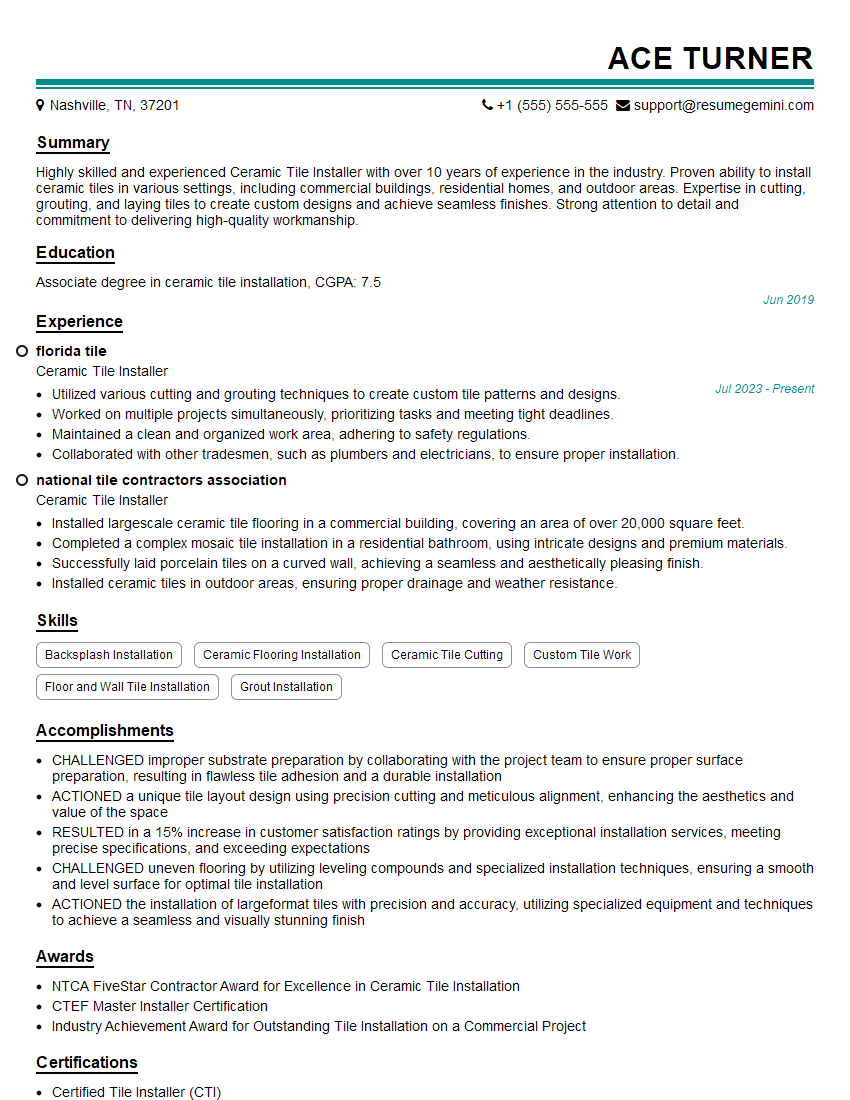
Mastering tile grouting and finishing opens doors to exciting career opportunities with excellent growth potential. A strong understanding of these skills makes you a highly sought-after candidate in the construction and renovation industries. To significantly boost your job prospects, invest time in creating an ATS-friendly resume that highlights your abilities effectively. ResumeGemini is a trusted resource to help you build a professional and impactful resume. They provide examples of resumes tailored to the Tile Grouting and Finishing field, helping you showcase your skills and experience to potential employers in the best possible light.


Explore more articles
Users Rating of Our Blogs
Share Your Experience
We value your feedback! Please rate our content and share your thoughts (optional).
What Readers Say About Our Blog
To the interviewgemini.com Webmaster.
Very helpful and content specific questions to help prepare me for my interview!
Thank you
To the interviewgemini.com Webmaster.
This was kind of a unique content I found around the specialized skills. Very helpful questions and good detailed answers.
Very Helpful blog, thank you Interviewgemini team.