Cracking a skill-specific interview, like one for Voltage and Current Measurements, requires understanding the nuances of the role. In this blog, we present the questions you’re most likely to encounter, along with insights into how to answer them effectively. Let’s ensure you’re ready to make a strong impression.
Questions Asked in Voltage and Current Measurements Interview
Q 1. Explain Ohm’s Law and its applications in voltage and current measurements.
Ohm’s Law is a fundamental principle in electronics that describes the relationship between voltage (V), current (I), and resistance (R) in a circuit. It states that the voltage across a conductor is directly proportional to the current flowing through it, provided the temperature remains constant. The formula is expressed as: V = IR.
Applications in Voltage and Current Measurements: Ohm’s Law is crucial for various measurements. For example, if we know the resistance of a resistor and measure the voltage across it, we can calculate the current flowing through it using I = V/R. Conversely, if we know the current and resistance, we can calculate the voltage using V = IR. This allows for indirect measurement of one quantity if the other two are known. This is incredibly useful in troubleshooting circuits where one component’s value might be unknown or difficult to measure directly. Imagine a scenario where you suspect a resistor is faulty in a circuit. By measuring the voltage across it and knowing its nominal resistance, you can determine if the current flowing through it is within acceptable limits, confirming or ruling out a fault.
Q 2. Describe different methods for measuring voltage and current.
Several methods exist for measuring voltage and current. The most common methods involve using:
- Multimeters: These versatile instruments can measure voltage, current, and resistance. For voltage measurement, the multimeter is connected in parallel with the component; for current measurement, it’s connected in series. Analog multimeters use a moving needle, while digital multimeters display the readings digitally. Digital multimeters offer higher accuracy and ease of reading.
- Clamp Meters: These are particularly useful for measuring current without interrupting the circuit. A clamp is placed around the wire carrying the current, making it non-invasive and safe. This is extremely helpful when dealing with high-current circuits where disconnecting wires could be hazardous.
- Oscilloscope: While primarily used for observing waveforms, oscilloscopes can also measure voltage. They display the voltage signal over time, offering insights into the signal’s shape and frequency. This is essential for analyzing AC signals.
- Specialized Measurement Equipment: For high-voltage or high-frequency applications, specialized equipment like high-voltage probes, current transformers, and spectrum analyzers might be necessary to ensure accurate and safe measurements.
Q 3. What are the limitations of different measurement techniques?
Each measurement technique has limitations:
- Multimeters: Accuracy is limited by the multimeter’s resolution and precision. Loading effects can occur, particularly when measuring high-impedance circuits, as the multimeter draws a small current.
- Clamp Meters: Accuracy is affected by the presence of multiple conductors within the clamp’s range and environmental factors like electromagnetic interference. They’re generally less precise than multimeters for voltage measurements.
- Oscilloscopes: They’re expensive and require expertise to interpret the displayed waveforms accurately. Bandwidth limitations restrict their use for high-frequency signals.
- Specialized Equipment: These instruments are often costly and may require specific training for operation. Their use is often justified only in specialized applications.
It’s crucial to select a measurement technique considering the limitations and the specific needs of the measurement task. For instance, using a multimeter to measure high voltage without a high-voltage probe could damage the instrument.
Q 4. How do you select appropriate measuring instruments for a given task?
Selecting appropriate measuring instruments depends on several factors:
- Quantity to be measured: Voltage, current, resistance, frequency, etc.
- Magnitude of the quantity: Voltage range (mV, V, kV), current range (mA, A, kA).
- Accuracy required: The acceptable level of error in the measurement.
- Type of signal: AC or DC.
- Frequency of the signal: For AC measurements.
- Safety considerations: The voltage and current levels involved necessitate appropriate safety precautions and potentially specialized instruments.
For example, measuring the current in a low-voltage DC circuit might require a standard multimeter. However, measuring high-voltage AC in a power transmission line demands a specialized high-voltage clamp meter and strict safety protocols.
Q 5. Explain the concept of voltage drop and how it’s calculated.
Voltage drop refers to the decrease in voltage across a component or section of a circuit due to the resistance it encounters. It’s the voltage difference between two points in a circuit. It’s analogous to the pressure drop in a water pipe; the narrower the pipe, the greater the pressure drop.
Calculation: Voltage drop is calculated using Ohm’s Law: Vdrop = IR, where I is the current flowing through the component and R is its resistance. For example, if a 10-ohm resistor has a current of 2 amperes flowing through it, the voltage drop across the resistor is Vdrop = 2A * 10Ω = 20V.
Understanding voltage drop is crucial for circuit design. Excessive voltage drop can lead to malfunctioning components or inefficient power delivery. This is why engineers carefully choose component values and wire gauges to minimize voltage drop.
Q 6. What is the difference between AC and DC voltage and current?
The key difference lies in the direction and nature of the flow:
- Direct Current (DC): The current flows in one direction only. The voltage is constant over time. Examples include batteries and solar cells.
- Alternating Current (AC): The current periodically reverses its direction. The voltage also changes periodically, typically following a sinusoidal waveform. Household electricity is an example of AC.
Measuring DC voltage and current is relatively straightforward using multimeters. Measuring AC requires instruments capable of handling the changing voltage and current and often requires consideration of the frequency and waveform.
Q 7. How do you measure voltage and current in a high-voltage environment?
Measuring voltage and current in a high-voltage environment requires specialized equipment and stringent safety precautions. Never attempt such measurements without proper training and safety gear.
- High-voltage probes: These probes are designed to withstand high voltages and isolate the measuring instrument from the high-voltage source. They significantly reduce the risk of electrical shock.
- Insulation: All equipment and personnel must be properly insulated to prevent electrical shock. This includes using insulated tools, rubber gloves, and safety mats.
- Current transformers (CTs): These devices measure current without direct contact, greatly reducing the risk of electrical shock. They provide a safe and isolated way to measure high currents.
- Safety procedures: Lockout/Tagout procedures are crucial to ensure the power is completely disconnected before any measurements are made. Proper grounding and use of personal protective equipment (PPE) are mandatory.
- Specialized meters: High-voltage multimeters and clamp meters are designed to handle the voltage and current levels safely. They typically have higher insulation ratings and safety features.
Always prioritize safety when dealing with high-voltage environments. Incorrect procedures can result in serious injury or death. Consult with qualified professionals before undertaking any measurements in such environments.
Q 8. Describe the safety precautions you would take when measuring voltage and current.
Safety is paramount when dealing with voltage and current. Think of electricity like a powerful, invisible force – respect it! Before even touching a circuit, always visually inspect it for any obvious damage. Never assume a circuit is de-energized; always verify using a voltage tester.
- Always de-energize the circuit: Turn off the power supply at the source (breaker box, main switch) before making any measurements. Double-check with a non-contact voltage tester to ensure the circuit is truly dead.
- Use insulated tools: Employ insulated screwdrivers, pliers, and probes. Ensure the insulation is intact and not cracked or damaged.
- Wear appropriate PPE: Safety glasses protect your eyes from sparks or debris. Rubber gloves provide an extra layer of protection, especially when working with higher voltages. Safety shoes are also recommended.
- Work with a partner: It’s best practice to have someone else present, especially when working on potentially dangerous circuits. They can offer assistance or call for help in an emergency.
- Understand the circuit diagram: Before starting any measurements, familiarize yourself with the circuit’s schematic to avoid accidentally causing shorts or damage.
For instance, I once witnessed a colleague nearly suffer an electric shock because he rushed the process and didn’t properly de-energize the circuit. He was lucky, but the incident served as a crucial reminder of the importance of meticulous safety procedures.
Q 9. Explain the concept of impedance and its effect on measurements.
Impedance is the opposition to the flow of alternating current (AC) in a circuit. It’s a combination of resistance, inductance, and capacitance. Unlike resistance (which only affects DC current), impedance influences both the magnitude and phase of the current. This effect is critical in AC measurements because it influences the accuracy of readings.
High impedance in a measuring instrument is desirable to minimize its impact on the circuit under test. A high-impedance voltmeter, for example, draws very little current from the circuit, ensuring the voltage reading accurately reflects the circuit’s actual voltage. Conversely, a low-impedance instrument can significantly alter the circuit’s behavior, leading to inaccurate readings. Imagine trying to measure the water level in a tank using a large, heavy pipe – you would significantly alter the water level itself! Similarly, a low-impedance instrument can disrupt the circuit’s normal operation.
For instance, when measuring the voltage across a high-impedance component like a capacitor, a low-impedance voltmeter might significantly discharge the capacitor and provide an inaccurate reading. Using a high-impedance voltmeter is crucial in such cases to obtain an accurate measurement.
Q 10. What is the purpose of a multimeter and how it is used?
A multimeter is a versatile instrument used to measure various electrical properties, including voltage, current, resistance, and often capacitance and frequency. It’s an indispensable tool for electricians, technicians, and hobbyists.
To use a multimeter:
- Select the appropriate function: Turn the dial to the desired function (e.g., voltage, current, resistance).
- Select the appropriate range: Choose a range that is appropriate for the expected value. Starting with a higher range and working your way down is a good practice to avoid damaging the multimeter.
- Connect the probes: Connect the red probe to the positive (+) terminal and the black probe to the negative (-) terminal (this is usually indicated on the multimeter). For current measurements, you’ll typically need to insert the probes into the appropriate current measuring jacks.
- Take the measurement: Make the necessary connections to the circuit and read the displayed value.
For example, to measure the voltage across a resistor, you would connect the probes across the resistor’s terminals after setting the multimeter to the appropriate voltage range. To measure the current flowing through the resistor, you’d need to break the circuit and insert the multimeter in series with the resistor, again selecting the appropriate current range. Incorrect connection of the probes can lead to incorrect readings or even damage the meter.
Q 11. How do you troubleshoot a faulty measurement?
Troubleshooting a faulty measurement involves a systematic approach. First, verify the instrument’s calibration and check the probes for damage or poor connections. Next, review the measurement setup – are the probes correctly connected? Is the range selected appropriate? Is there any interference from other circuits or electromagnetic fields?
A systematic troubleshooting approach might be:
- Verify the instrument: Check if the multimeter is properly functioning by measuring a known voltage source (e.g., a battery).
- Check connections: Ensure that all probes are firmly connected and that there are no loose wires or poor contacts.
- Verify the range: Confirm that the selected range is appropriate for the expected measurement value.
- Check for interference: Look for sources of interference, such as nearby electrical equipment or electromagnetic fields.
- Try a different instrument: Use another calibrated multimeter to confirm the reading. This eliminates any possibility of a faulty instrument.
For example, if you’re getting an erratic reading when measuring current, it might be due to a poor connection between the probe and the circuit. A simple tightening of the connections could resolve the issue. If the issue persists, it points to either a faulty multimeter or a problem with the circuit itself.
Q 12. What is the significance of grounding in electrical measurements?
Grounding provides a safe return path for electrical current. In measurements, a proper ground connection minimizes the risk of electric shock and reduces the effect of stray voltages or noise. It creates a reference point for all electrical potential measurements, ensuring accurate and reliable results. Without proper grounding, measurements can be significantly affected by noise and stray voltages, leading to inaccurate results.
For example, imagine measuring the voltage between two points in a circuit without grounding. Any stray voltage from nearby sources could affect your measurements. Grounding creates a stable reference point, allowing for precise voltage measurements. In the case of a high voltage situation, grounding is absolutely critical for safety. It provides a low impedance path to earth, preventing dangerous voltage buildup.
Q 13. Explain the concept of current leakage and its dangers.
Current leakage refers to the unintended flow of current from a circuit to ground or another unintended path. This can occur due to insulation breakdown, faulty wiring, or other defects. Current leakage, even in small amounts, can be extremely dangerous. It can cause electric shock, damage equipment, and even start fires.
The dangers of current leakage depend on several factors, including the amount of current leaking, the duration of the leakage, and the path the current takes through the body (high current through the heart is particularly dangerous). Even a seemingly small leakage current can be fatal if it passes through vital organs. For example, a faulty appliance with significant leakage current can deliver a potentially lethal shock to anyone touching it. Therefore, regular testing for current leakage is essential for safety and preventative maintenance of electrical systems.
Q 14. How do you calibrate measurement instruments?
Calibrating measurement instruments ensures their accuracy. This involves comparing the instrument’s readings to a known standard and adjusting it to match. The calibration frequency depends on the instrument’s type, usage, and required accuracy. Calibration typically involves using a precision voltage source, current source, or resistance standard.
The procedure generally involves:
- Using a calibration standard: A traceable and certified standard (e.g., a precision voltage source) is used as a reference.
- Adjusting the instrument: The multimeter’s readings are compared to the standard. Adjustments are made to the instrument’s internal settings to minimize any deviation from the standard.
- Recording the calibration data: The calibration results, including date, time, and any adjustments made, are meticulously recorded to maintain a history of instrument performance.
Regular calibration is crucial. An uncalibrated instrument can lead to inaccurate readings, potentially resulting in faulty designs, inefficient operation, or safety hazards. Calibration ensures that the readings are reliable and trustworthy. In many industries, calibration certificates are required to ensure compliance with safety and quality standards.
Q 15. What is the difference between precision and accuracy in measurement?
Accuracy refers to how close a measurement is to the true value, while precision refers to how close repeated measurements are to each other. Think of it like archery: high accuracy means your arrows are clustered around the bullseye, while high precision means your arrows are clustered together, regardless of whether they hit the bullseye. A precise measurement might be inaccurate if the measuring instrument is improperly calibrated. Conversely, a highly accurate measurement might not be precise if there’s significant variability in the measurement process.
For example, if the true voltage is 10V, a series of measurements of 9.9V, 10.1V, and 10.0V would be both precise (closely grouped) and accurate (close to the true value). However, measurements of 9.5V, 10.5V, and 11.0V are neither precise nor accurate. Measurements of 9.8V, 9.9V, and 9.7V are precise but not entirely accurate.
Career Expert Tips:
- Ace those interviews! Prepare effectively by reviewing the Top 50 Most Common Interview Questions on ResumeGemini.
- Navigate your job search with confidence! Explore a wide range of Career Tips on ResumeGemini. Learn about common challenges and recommendations to overcome them.
- Craft the perfect resume! Master the Art of Resume Writing with ResumeGemini’s guide. Showcase your unique qualifications and achievements effectively.
- Don’t miss out on holiday savings! Build your dream resume with ResumeGemini’s ATS optimized templates.
Q 16. Explain the concept of signal-to-noise ratio in measurements.
The signal-to-noise ratio (SNR) is a measure of the strength of the desired signal relative to the background noise. A high SNR indicates a strong signal with minimal interference, leading to more reliable measurements. A low SNR means the signal is weak or heavily contaminated by noise, making it difficult to extract meaningful data. It’s often expressed in decibels (dB).
Imagine listening to a radio station. A high SNR means you hear the music clearly; a low SNR means you hear mostly static. In voltage measurements, noise can be introduced by various factors, including electromagnetic interference, thermal noise in the measuring circuit, and even power supply fluctuations. To improve SNR, techniques like averaging multiple measurements, using shielded cables, and employing filtering circuits are often employed.
Q 17. Describe different types of transducers used for voltage and current measurement.
Various transducers are used for voltage and current measurement, each with strengths and weaknesses. For voltage, common transducers include:
- Potentiometers: These convert voltage into a mechanical displacement, often used in older analog systems.
- Hall-effect sensors: These exploit the Hall effect to measure magnetic fields proportional to current (and indirectly voltage in a known resistor).
- Voltage dividers: A simple resistive network used to scale down high voltages to a measurable range.
For current measurement:
- Current transformers (CTs): These use electromagnetic induction to measure current without directly connecting to the circuit, ideal for high-current applications.
- Shunt resistors: A low-resistance resistor placed in series with the circuit; the voltage drop across it is proportional to the current.
- Hall-effect sensors: Again, these can indirectly measure current by measuring the magnetic field generated.
The choice of transducer depends heavily on the specific application, factors such as the magnitude of the signal, required accuracy, frequency range, and isolation requirements.
Q 18. What are the effects of temperature on voltage and current measurements?
Temperature significantly affects voltage and current measurements. Most components have temperature coefficients (TC), meaning their characteristics change with temperature. For example, resistors exhibit changes in resistance, leading to inaccurate voltage measurements if used in voltage dividers. Semiconductors like transistors and integrated circuits (ICs) are even more sensitive to temperature variations.
In voltage measurements, temperature can cause drift in the output voltage of the measurement instrument itself or in the circuit being measured. In current measurements, temperature-induced changes in resistance (of shunt resistors, for example) directly impact the accuracy of the current reading. To mitigate these effects, temperature compensation techniques such as using thermistors or employing temperature-stable components are commonly used. Many modern digital multimeters (DMMs) incorporate automatic temperature compensation.
Q 19. How to calculate power using voltage and current measurements?
Power (P) is calculated using the simple formula: P = V * I, where V is voltage in volts and I is current in amperes. The resulting power is measured in watts (W).
For example, if a circuit has a voltage of 12V and a current of 2A, the power is calculated as:
P = 12V * 2A = 24WIt’s crucial to ensure the voltage and current measurements are taken simultaneously and accurately to obtain a reliable power calculation. In AC circuits, apparent power, reactive power, and power factor must be considered, leading to more complex calculations involving root-mean-square (RMS) values and phase angles.
Q 20. Explain the concept of Kirchhoff’s laws and their applications.
Kirchhoff’s laws are fundamental to circuit analysis. Kirchhoff’s Current Law (KCL) states that the sum of currents entering a node (junction) is equal to the sum of currents leaving that node. This essentially represents the conservation of charge.
Kirchhoff’s Voltage Law (KVL) states that the sum of voltages around any closed loop in a circuit is zero. This reflects the conservation of energy. These laws are crucial for analyzing complex circuits and determining unknown voltages and currents. They are used extensively in circuit design, fault finding, and network analysis.
Example: Consider a simple series circuit. Using KVL, you can find the voltage across one resistor if you know the voltage source and the voltage across another resistor. Using KCL at a node where several branches meet, you can determine the current in an unknown branch given the currents in other branches.
Q 21. Describe different types of voltage and current sources.
Voltage and current sources can be broadly classified as:
- Ideal sources: These are theoretical sources that maintain a constant voltage (ideal voltage source) or current (ideal current source) regardless of the load. In reality, these are approximations.
- Real sources: These sources have internal resistance or impedance which affects their output voltage or current under load. An ideal voltage source has zero internal resistance, while an ideal current source has infinite internal resistance.
- DC sources: Provide a constant voltage or current, like batteries.
- AC sources: Provide a voltage or current that varies sinusoidally with time, like household power outlets.
- Controlled sources: Their output voltage or current depends on another voltage or current in the circuit (e.g., operational amplifiers).
Understanding the type of source is crucial for accurate circuit analysis and design. Real-world sources always have limitations, and their internal resistance needs to be considered for precise calculations and simulations.
Q 22. What is a Wheatstone bridge and how is it used?
The Wheatstone bridge is a simple yet powerful circuit used for precise resistance measurement. It’s based on the principle of balancing two legs of a bridge circuit. Imagine a diamond shape, where each corner represents a resistor. One resistor is the unknown resistance (Rx) we want to measure; the others are known resistances (R1, R2, R3). A galvanometer (a very sensitive current detector) is connected between the two middle corners.
To use it, we adjust one of the known resistances (usually R3, a variable resistor) until the galvanometer reads zero current. This means the voltage at the middle corners is equal, and the bridge is ‘balanced’. When balanced, the ratio of resistances is equal: R1/R2 = Rx/R3. Since R1, R2, and R3 are known, we can easily calculate the unknown resistance Rx.
Example: If R1 = 100 ohms, R2 = 1000 ohms, R3 is adjusted to 1000 ohms for a zero galvanometer reading, then Rx = (R1 * R3) / R2 = (100 * 1000) / 1000 = 100 ohms.
Wheatstone bridges are used in various applications, including strain gauge measurements, temperature sensing (using thermistors), and precision resistance calibration.
Q 23. What are the advantages and disadvantages of digital and analog multimeters?
Both analog and digital multimeters (DMMs) measure voltage, current, and resistance, but they differ significantly in their approach and capabilities.
- Analog Multimeters: These use a moving pointer against a calibrated scale. They’re generally simpler, more rugged, and often cheaper. However, their accuracy is limited by the resolution of the scale and the user’s ability to precisely read the pointer’s position. They’re also more susceptible to parallax error (incorrect reading due to viewing angle).
- Digital Multimeters: These use an analog-to-digital converter (ADC) to display the measurement numerically. They offer higher accuracy, better resolution, and often include automatic ranging. Digital multimeters are generally easier to read and less prone to human error. They can also measure other quantities like capacitance and frequency. However, they can be more expensive and are susceptible to damage from overvoltage or incorrect usage.
In short: Analog DMMs are simpler and robust, while Digital DMMs are more accurate and versatile.
Q 24. Explain the concept of voltage dividers and current dividers.
Voltage and current dividers are fundamental circuit concepts that allow us to obtain specific voltages or currents from a larger source.
- Voltage Divider: A voltage divider uses two resistors (R1 and R2) in series to reduce the input voltage (Vin) to a lower output voltage (Vout). The output voltage is a fraction of the input voltage, determined by the ratio of the resistors:
Vout = Vin * (R2 / (R1 + R2)). This is like a water tap – controlling the flow (voltage) by adjusting the resistance (tap position). - Current Divider: A current divider uses two resistors (R1 and R2) in parallel. When a current (Iin) enters the parallel combination, it splits into two currents (I1 and I2) flowing through R1 and R2, respectively. The current through each resistor is inversely proportional to its resistance:
I1 = Iin * (R2 / (R1 + R2))andI2 = Iin * (R1 / (R1 + R2)). Think of it as a river splitting into two streams – the wider stream (lower resistance) gets more water (current).
Both are essential in various applications, including biasing transistors, creating reference voltages, and designing attenuators.
Q 25. How would you measure the current flowing through a specific component in a complex circuit?
Measuring current through a specific component in a complex circuit requires careful planning to avoid disrupting the circuit’s operation. The most common and accurate method is to use an ammeter in series with the component of interest. However, simply inserting an ammeter can alter the circuit’s current if the ammeter’s internal resistance is significant. Here’s a step-by-step approach:
- Identify the component: Clearly define the component whose current needs to be measured.
- Break the circuit: Carefully disconnect one of the wires connected to the component.
- Insert the ammeter: Connect the ammeter in series with the component, ensuring correct polarity (+ and – terminals aligned with current flow direction).
- Check the range: Select the appropriate current range on the ammeter. Starting with a higher range and then reducing it helps prevent damage to the meter.
- Reconnect the circuit: Reconnect the circuit and observe the ammeter reading.
- Consider using a current probe: For high-frequency currents or when breaking the circuit is inconvenient, a current probe (a clamp-on ammeter) can be used without disturbing the circuit’s wiring. However, it has limitations concerning accuracy and frequency response.
For very sensitive measurements, using a high-impedance current-to-voltage converter can minimize the impact of the measuring instrument on the circuit’s operation.
Q 26. Describe a situation where you had to troubleshoot a faulty measurement system and how you resolved it.
During a project involving a temperature sensing system, the readings from our thermocouples were consistently erratic. Initial checks of the thermocouples themselves showed no obvious faults.
My troubleshooting involved a systematic approach:
- Inspect wiring: I carefully examined all wiring connections, looking for loose contacts, breaks, or poor soldering. I discovered a faulty connection at the junction box leading to the data acquisition system.
- Check the data acquisition system (DAQ): I tested the DAQ’s functionality by connecting a known stable voltage source. This confirmed the DAQ was functioning correctly, ruling it out as a primary cause.
- Investigate signal conditioning: The system included signal conditioning circuitry to amplify and filter thermocouple signals. By carefully testing the amplifier’s gain and offset, we found a small drift in the amplifier’s offset voltage causing the erroneous readings.
- Calibration: After repairing the faulty connection and readjusting the amplifier’s offset, a recalibration of the entire system was performed, significantly improving the accuracy and stability of temperature readings.
This experience highlighted the importance of systematic troubleshooting, starting with the simplest components and moving towards the more complex ones.
Q 27. Explain how you would ensure the accuracy and reliability of your measurements in a laboratory setting.
Ensuring accurate and reliable measurements in a laboratory setting requires attention to detail and adherence to best practices:
- Calibration: All measuring instruments (multimeters, oscilloscopes, etc.) should be regularly calibrated using traceable standards. Calibration certificates are essential to demonstrate measurement traceability.
- Proper instrument selection: Choosing instruments with appropriate accuracy and resolution is crucial. A high-precision instrument is needed for precise measurements, while a less precise one might suffice for rough estimates.
- Environmental factors: Temperature, humidity, and electromagnetic fields can all affect measurement accuracy. These factors should be controlled or accounted for during measurements.
- Measurement technique: Proper techniques are essential. For example, using appropriate lead lengths, minimizing contact resistance, and avoiding parasitic capacitances.
- Data recording and analysis: Maintaining a detailed log of measurements, including date, time, instrument used, and environmental conditions, is essential for data traceability and analysis. Statistical analysis can help identify outliers and assess measurement uncertainty.
- Proper grounding: Ensuring a proper ground connection is critical to prevent noise and interference affecting the measurements.
A well-maintained and properly calibrated laboratory setup is essential for reliable measurements.
Q 28. Discuss various error sources in voltage and current measurements and how to minimize them.
Several error sources can affect the accuracy of voltage and current measurements:
- Systematic errors: These are consistent errors that occur repeatedly. They include instrument calibration errors, loading effects (the meter itself drawing current affecting the measurement), and offset voltages in amplifiers. These are minimized through calibration, using high-impedance instruments, and proper circuit design.
- Random errors: These are unpredictable variations in the measurements due to noise, thermal fluctuations, or human errors. These can be minimized by averaging multiple readings, using shielding, and employing proper statistical analysis techniques.
- Environmental errors: Temperature, humidity, and electromagnetic interference can significantly affect measurements, especially for sensitive instruments. Shielding, temperature control, and proper grounding help reduce these errors.
- Human errors: Incorrect connection of instruments, improper use of the instrument’s functions, incorrect reading of the display, and parallax error are all examples of human-related errors. Careful attention to detail, proper training, and using digital instruments help mitigate these.
By employing proper calibration, signal conditioning techniques, and careful attention to detail, we can significantly reduce error and obtain reliable measurements.
Key Topics to Learn for Voltage and Current Measurements Interview
- Ohm’s Law and its Applications: Understanding the fundamental relationship between voltage, current, and resistance is crucial. Explore practical applications in circuit analysis and troubleshooting.
- Measurement Techniques: Master various methods for measuring voltage and current, including the use of multimeters, oscilloscopes, and other relevant instruments. Practice interpreting readings and identifying potential sources of error.
- Kirchhoff’s Laws: Understand and apply Kirchhoff’s voltage and current laws to solve complex circuit problems. This demonstrates a solid grasp of circuit fundamentals.
- Series and Parallel Circuits: Be able to analyze and calculate voltage and current in both series and parallel circuits, including combinations of both. Practice identifying voltage dividers and current dividers.
- AC vs. DC Circuits: Differentiate between alternating current (AC) and direct current (DC) circuits and understand how voltage and current are measured and behave differently in each. This is vital for many applications.
- Safety Precautions: Demonstrate a thorough understanding of safety procedures when working with electrical circuits and measurement equipment. This shows responsibility and professionalism.
- Troubleshooting Techniques: Develop your ability to diagnose and troubleshoot common issues in circuits based on voltage and current measurements. Explain your problem-solving approach.
- Data Acquisition and Analysis: Familiarize yourself with data acquisition techniques and the analysis of voltage and current waveforms. This is particularly important for more advanced roles.
Next Steps
Mastering voltage and current measurements is fundamental to success in many electrical engineering and related fields. A strong understanding of these concepts will significantly enhance your career prospects and open doors to exciting opportunities. To further improve your chances, focus on creating an ATS-friendly resume that effectively highlights your skills and experience. ResumeGemini is a trusted resource that can help you build a professional and impactful resume. They offer examples of resumes tailored to roles involving Voltage and Current Measurements, giving you a head start in crafting a winning application.

Project Engineer Resume Sample
Process Engineer Resume Sample

Research Scientist Resume Sample

Automation Engineer Resume Sample

Test Engineer Resume Sample
Design Engineer Resume Sample

Maintenance Technician Resume Sample

Field Service Engineer Resume Sample

Electronics Engineer Resume Sample

Electrical Engineer Resume Sample
Instrumentation Engineer Resume Sample
Power Systems Engineer Resume Sample

Manufacturing Engineer Resume Sample

Metrologist Resume Sample

Quality Control Engineer Resume Sample
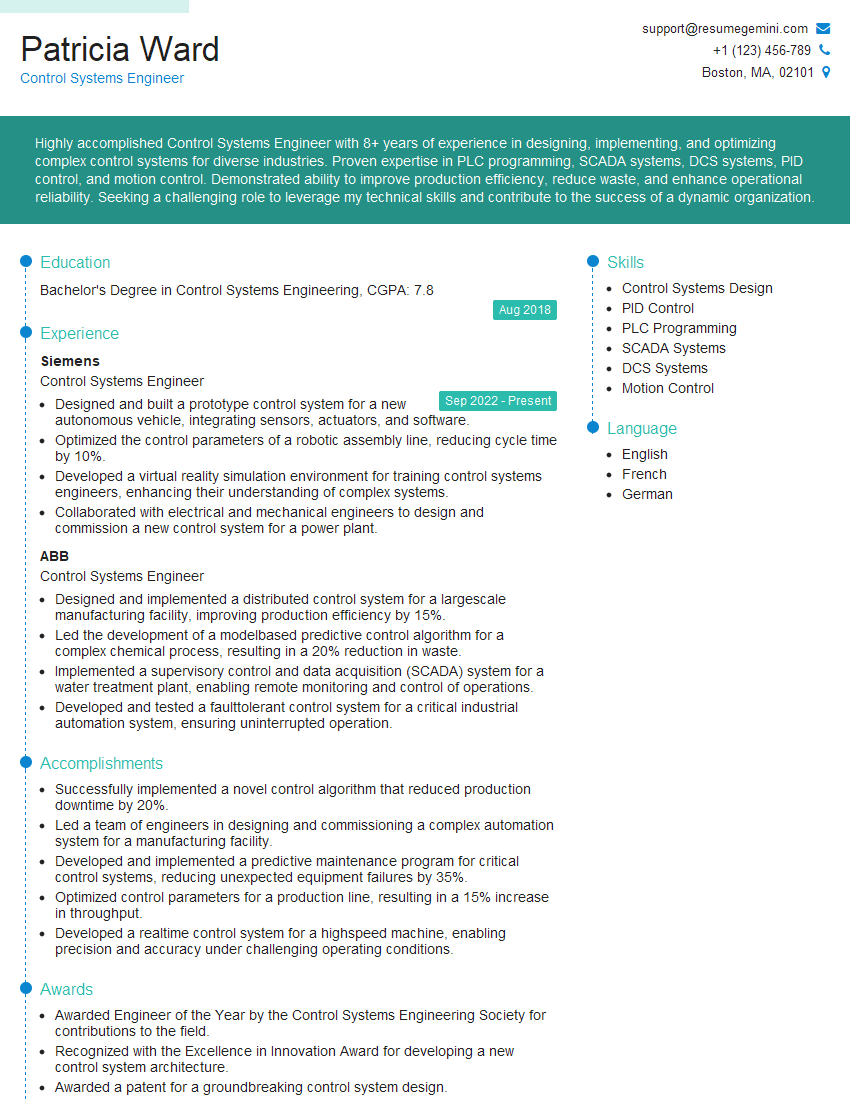
Control Systems Engineer Resume Sample
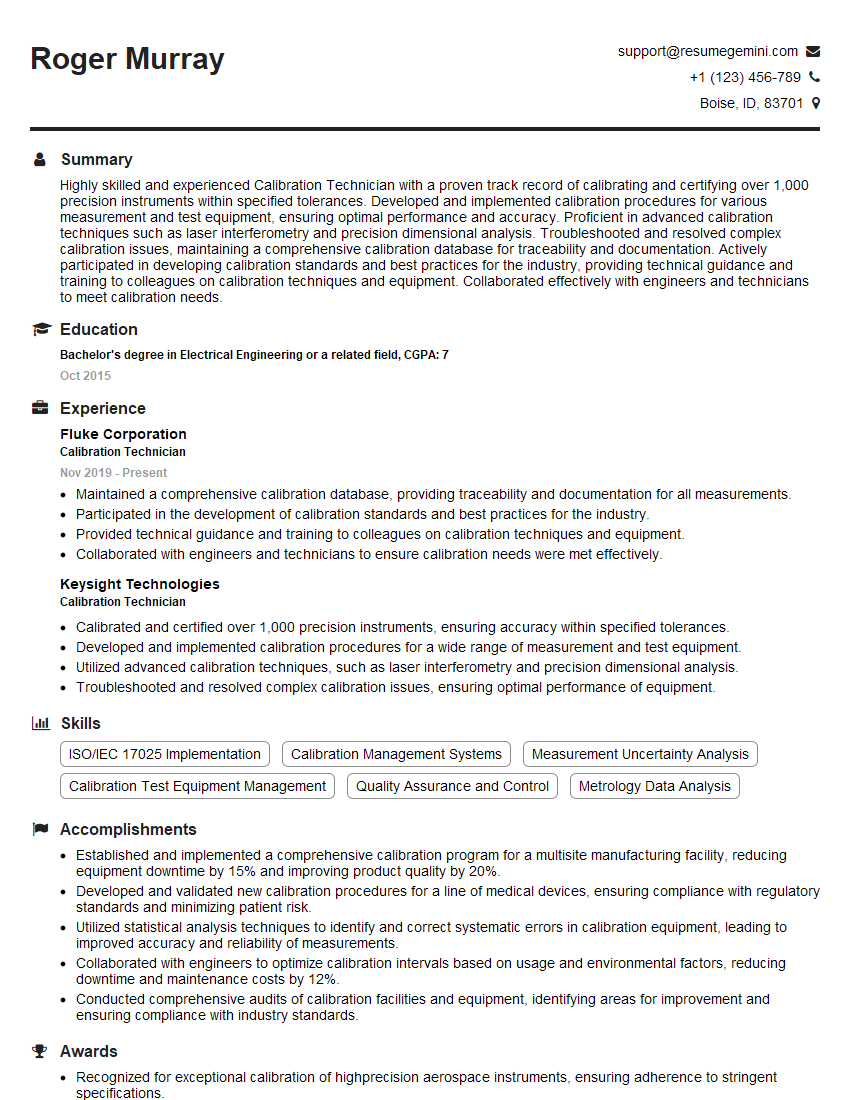
Calibration Technician Resume Sample

Electronics Technician Resume Sample
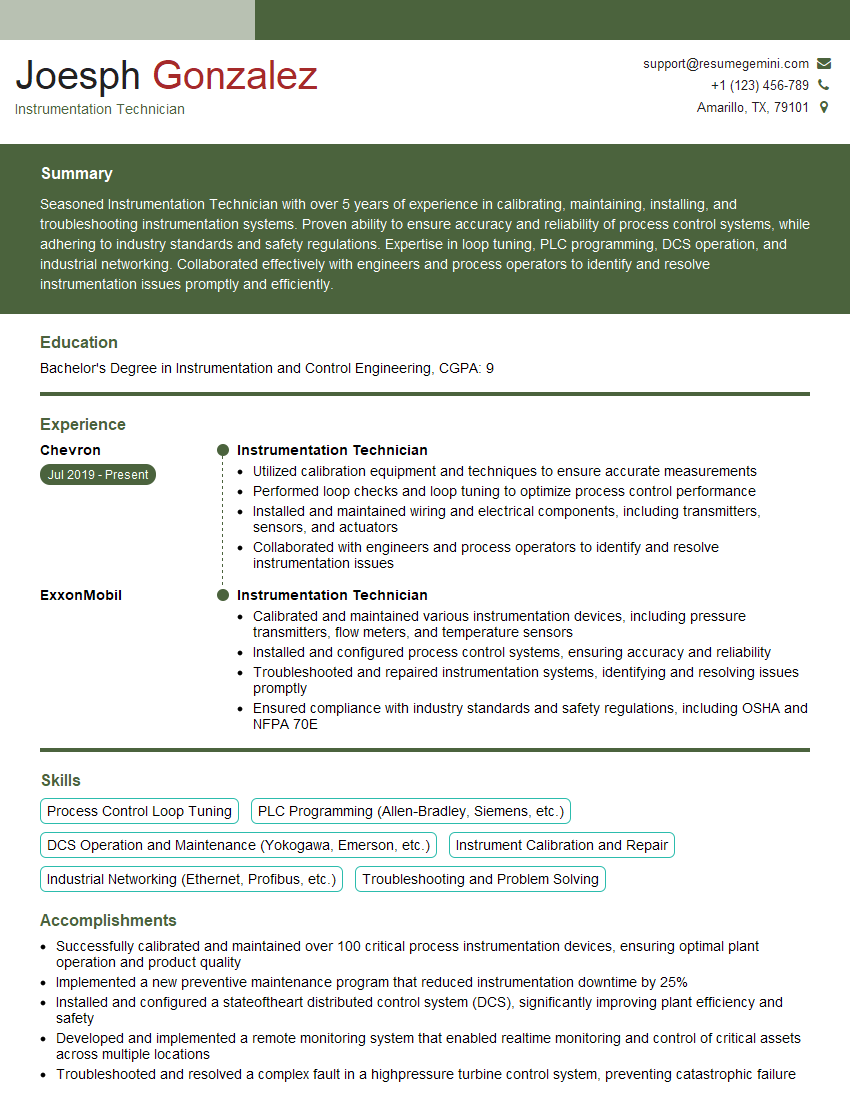
Instrumentation Technician Resume Sample

Electrical Technician Resume Sample

Laboratory Technician Resume Sample
- Project Engineer
- Process Engineer
- Research Scientist
- Automation Engineer
- Test Engineer
- Design Engineer
- Maintenance Technician
- Field Service Engineer
- Electronics Engineer
- Electrical Engineer
- Instrumentation Engineer
- Power Systems Engineer
- Manufacturing Engineer
- Metrologist
- Quality Control Engineer
- Control Systems Engineer
- Calibration Technician
- Electronics Technician
- Instrumentation Technician
- Electrical Technician
- Laboratory Technician
Explore more articles
Users Rating of Our Blogs
Share Your Experience
We value your feedback! Please rate our content and share your thoughts (optional).
What Readers Say About Our Blog
To the interviewgemini.com Webmaster.
Very helpful and content specific questions to help prepare me for my interview!
Thank you
To the interviewgemini.com Webmaster.
This was kind of a unique content I found around the specialized skills. Very helpful questions and good detailed answers.
Very Helpful blog, thank you Interviewgemini team.